
Research Article 
 Creative Commons, CC-BY
An Investigation of a Novel Formulation of Traditional Chinese Food and Medicinal Plants Extracts Nourishing for Qi and Blood and its Beneficial Effects on Facial Appearance Regarding Skin Whitening - a Vivo and Mechanism Study
*Corresponding author: Yan Li, R&D Center, Shanghai Tong Han Chun Tang Health Technology, Shanghai, China.
Received: August 08, 2024; Published: August 13, 2024
DOI: 10.34297/AJBSR.2024.23.003108
Abstract
Tradition Chinese medicinal (TCM) concept of qi and blood that are essential in nourishing host physiology and very important in human life activities is kind of intricate due to the perceiving limitations from the objective world. Qi is used to describe the refined nutritious substances constituting the human body and maintaining life activities and the functions of Zang-Fu organs, such as heart Qi and liver Qi. The clearer concept of blood in TCM is also used to describe body’s functions. The normality of Qi-Blood Circulation (QBC) is strikingly critical as pathogenesis of qi stagnation and blood stasis would lead to quite a few clinical symptoms from all parts of body. In our study, our ginseng drink consisting of traditional Chinese food and medicinal plants extracts including ginseng, snow lotus, longan, jade bamboo, red dates, licorice was verified to maintain the homeostasis of qi and blood circulation in terms of improved blood circulation by 14% in a modern vivo zebra fish model. Undoubtedly, the host physiology would be benefited from the oral administration of such a formulation by balanced qi and blood circulation, resulting in more efficient transmission of nutritious components such as collagen peptides and antioxidants to the biological sites such as skin extracellular matrix and discharge of toxic metabolites in a timely manner. Specifically in our case, it was observed that this creative composition has reduced the melanin generation with improved skin complexion. It is the first study that clearly demonstrated the importance of enhanced qi and blood circulation by an orally supplemented drink consisting of food and medicinal plant for the homeostasis of host physiology.
Introduction
According to the traditional Chinese medicine theory, the body are mainly composed of three essential substances: qi, blood, and body fluids [1]. For instance, qi is considered as the fundamental source of growth, the prime mover that consolidates the force of the blood, warms and nourishes the tissues, resists against disease, as well as stimulates the physiological functions of the Zang-fu organs. Qi protects the inner body against the entry of negative pathological agents and serves to harmonize in the body. It is the balance of individual’s qi, blood, yin and yang as well as their functions that basically determines whether or not they maintain a healthy physiological conditions or not [2]. Especially for female individuals, qi and blood are particularly crucial for the facial appearance as well as their mental state [3].
During the past several years, the Chinese market for beauty from within has been exploding as young female individual are very generous in supplements that can reverse aging especially regarding skin elasticity and skin whitening [4]. However, the advantages of such products have dwindled gradually due to undifferentiated formulation and biological pathways targeting on antioxidant, collagen and melanin [5]. Here we hypothesize a product that targeting qi and blood should generate advantageous benefits including better facial appearance as the body is a holistic system. Although the traditional Chinese Medicine is increasingly obtaining clinical applications worldwide with the development of nearly 100,000 classical and effective TCM formulations, the effective mechanisms remain to be investigated because of the abstract and subjective theory of qi-blood [6]. Actually, qi deficiency and blood deficiency have characteristic clinical manifestations regarding objective pathological changes at gene or protein level [7].
In this study, we aim to investigate a novel ginseng drink of traditional Chinese medicinal plants extracts nourishing for qi and blood and its beneficial effects on facial appearance regarding skin whitening. In trying to discover its potential biologic mechanisms in balancing qi deficiency and blood deficiency through biomedical approaches, we chose different models of zebra fish in blood circulation, anti-oxidation and skin whitening. Our ginseng drink consisted of traditional Chinese medicinal plants extracts including ginseng, snow lotus, longan, jade bamboo, red dates, licorice, which have been used in China and other Asian countries for about 1,000 years.
Materials and Methods
Animals
Wild-type AB strain zebrafish (Danio rerio) with good reproductive ability at 6 to 12 months with reliable source (e. g., National Zebrafish Resource Center, China) was used in this study. Side crossing is used as far as possible to maintain genetic diversity. Parent fish of pure strains should be replaced with a new batch after 5 generations of breeding. They should not have clearly visible infection, disease characteristics or experienced any medical treatment within 2 months. Domestication of parent fish for more than 14 days was needed before the reproductive spawning test.
Testing Material
A novel ginseng drink of traditional Chinese medicinal plants extracts consisting of ginseng, snow lotus, longan, jade bamboo, red dates, licorice under the brand of Han Chun Zai Zao was provided and used as the testing material.
Blood Flow Velocity Test
The test established three groups including a blank control group (fish embryo culture medium/solvent solution), a positive control group (caffeine solution), and a test substance group with 20 fish embryos in each group. For positive control and testing substance groups, 8mL of 0.05g/L caffeine solution and 8mL of testing material solution were added respectively. All groups were placed in a constant temperature at 28±1℃ for 2±0.5h. The fish embryos were then anesthetized with tricaine for 2 minutes, and the aortic blood vessels in the tail were pictured for 20 s under a microscope. Danio Scope was used to measure the relative velocity of blood flow in the tail aorta of each fish embryo (Figure 1). Statistical software was used to perform a two-tailed t-test on the blood flow velocity between the test material group and the blank control group (or solvent control group). The p-values that were less than 0.05 indicated significant difference (Figure 1).
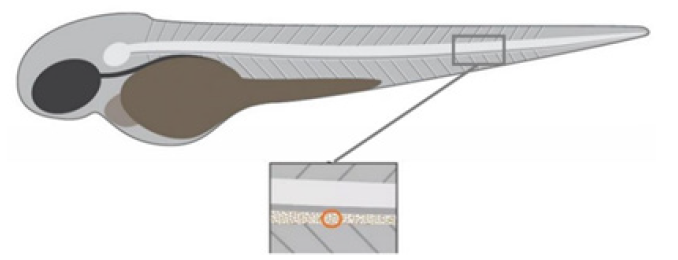
Figure 1: Measurement location (tail aorta) of relative velocity of blood flow in zebra fish embryos.
Skin Whitening Test
The test set up a blank/solvent control group (fish embryo culture medium/solvent solution), a 100% melanin inhibition model group (phenylthiourea working solution), a positive control group (kojic acid solution), and a test substance group (test substance). All the zebrafish embryos were incubated in a constant temperature incubator at 28 ± 1℃ for 48± 1 hours after fertilization. At least 12 fish embryos were randomly selected from each group and were carefully peel off the embryo shells with tweezers under a microscope, without damaging the fish body, and placed under a stereomicroscope for photography using uniform camera parameters (Figure 2). The software such as Image J was used for the results as the melanin content index, including steps of marking the head and yolk back area of each fish embryo, then selecting “Measure Average Intensity” in the “Measurement” column, and choosing “Average Signal Intensity”. The statistical results were calculated and represented as mean ± standard error. A two tailed t-test on the intensity of melanin signals between the test substance group and the blank control group (or solvent control group) was conducted to obtain p-values, which indicated a significant difference for a value of less than 0.05 (Figure 2).

Figure 2: The testing area for melanin synthesis (red dotted lines).
Reactive Oxygen Species (ROS) Clearance Test
The test required setting up a blank control group (fish embryo culture medium), a positive control group (glutathione working solution), and a test substance group. 24 fish embryos were randomly select into a 96 well plate for each group, each well containing one fish embryo. For each of the three groups, 0.2 mL of fish embryo culture medium, 0.2 mL glutathione working solution, and 0.2 mL of test substance solution were added respectively. All the plates were incubated in a constant temperature incubator at 28±1℃ until 72 ± 1 hour after fertilization and were transferred to a 24 well plate, each well containing 12 fish embryos and 2 mL of Reactive Oxygen Species (ROS) test solution in a constant temperature incubator at 28 ± 1℃ for 2±1 hour. Sideways pictures of fish embryos were taken under a fluorescent stereomicroscope using uniform photography parameters, and then analyzed by software such as Image J in which “Average Signal Intensity” were used for the calculation as the ROS signal intensity. Variance analysis was performed by a two tailed t-test on the average ROS signal intensity between the test substance group and the blank control group (or solvent control group) to obtain p-values. The p-values that were less than 0.05 indicated significant difference.
Results
Blood Flow Velocity Test
After exposure of 20 3-day-old zebrafish embryos to a sample solution of 3.57g/L ginseng drink for 2 hours, the blood circulation in the tail aorta of zebrafish embryos was promoted by14% (p=0.0016) under a microscope for 20 seconds before both software and statistical analysis (Figure 3).

Figure 3: Relative velocity of blood flow in zebra fish embryos.
Skin Whitening Test
After 24 8-hour zebrafish embryos were exposed to a sample solution of 3.57g/L ginseng drink for 48 hours, the melanin synthesis in zebrafish embryos was inhibited by 25% (p=0.000050) through a microscope for photographs of melanin signals with statistical analysis (Figure 4, Figure 5A and 5B).
Reactive Oxygen Species (ROS) Clearance Test
After 24 hours of exposure 24 embryos of 48hour zebrafish to a sample solution of 3.57g/L ginseng drink, the fish embryos were stained to show the ROS signal intensity through the fluorescence photography. The sample showed a 20% (p=0.0000036) clearance rate of ROS in zebrafish embryos at a test concentration of 3.57g/L (Figure 6, Figure 7A and 7B).
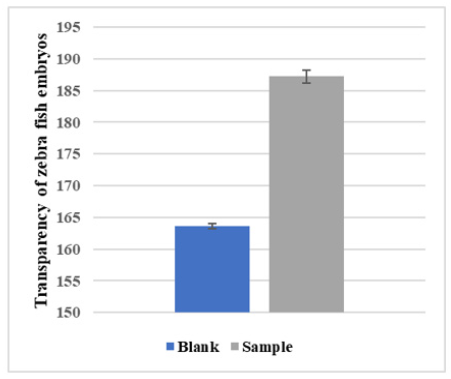
Figure 4: The transparency of zebra fish embryos.
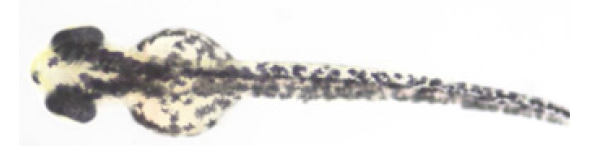
Figure 5A: Blank control group: No significant whitening effect (0% melanin inhibition rate).
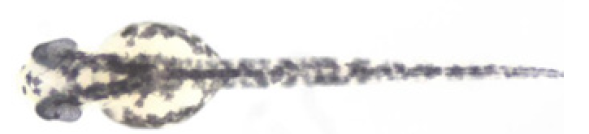
Figure 5B: Test sample group: Ginseng drink with significant whitening effect (25% melanin inhibition rate).
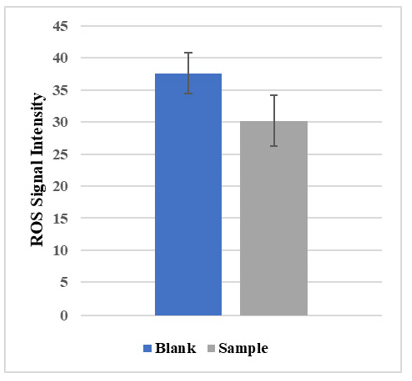
Figure 6: Reactive oxygen species (ROS) clearance.

Figure 7A: Blank control group: No significant antioxidant effect (0% ROS clearance rate).

Figure 7B: Test sample group: Ginseng drink with significant antioxidant effect (20% ROS clearance rate).
Discussion and Conclusion
According to the traditional Chinese medical theory, qi is an extremely delicate substance with strong vitality and continuous operation in the human body, maintaining human life activities [8]. Blood is a nutrient rich red liquid substance that circulates in the veins, serving as fundamental substances that also sustain human life activities. Qi and blood deficiencies usually lead to imbalance of host physiology especially for women. For instance, during women’s menses, they become susceptible to external factors such as cold that can weaken the natural flow of blood and qi, causing blood stagnation and depletion and bringing internal pain [9,10].
However, the theory of qi and blood is kind of abstract and elusive while scientific evaluations are urgently needed [11]. In our study, zebrafish embryos were creatively used as a classic research model for evaluating the operation of qi and blood by measuring and testing the blood circulation promoting rate of the sample on the tail artery of zebrafish embryos. The advantages of using zebrafish embryos include their transparency throughout the body and the clearly visible flow of blood cells in the blood vessels under the microscope [12].
Prescription drugs containing warming properties to counteract the cold effect are usually used to fight off stagnation and depletion through the revitalization of the qi and blood, but side-effects have made consumers cast more attentions on natural food supplements [13]. In our study, a ginseng drink consisting of traditional Chinese medicinal and food plants extracts including ginseng, snow lotus, longan, jade bamboo, red dates, licorice was demonstrated effective in increasing the qi and blood circulation for the reason that it improved the blood circulation rate by 14%.
Since the formulation are composed of several medicinal and food herbs, and each herb normally has many ingredients and each ingredient has a lot of targets, a formulation is a complex biologic active network [14]. We have previously used our high-throughput zebra fish screening platform for the optimized formulation targeting qi and blood balance regarding the Chinese medical theory of Junchenzuoshi and western medical theory targeting at biopathways for blood circulation.
Actually, there was little research literature associating traditional Chinese medical theory as qi and blood to the beauty from within as skin whitening before our research was conducted. There were already several pathways targeting skin whitening such as antioxidation, inhibition of melanin synthesis, inhibition of melanin transfer and so on. However, the host physiology is a holistic system and a more profound and essential health philosophy is preferred for maintaining the homeostasis and persistent healthy conditions. It is believed the recovery of qi and blood result in a balance for the physiological operation including improved efficiency in nutrient transportation and waste materials discharge to and from the skin. The free radical theory proposes that aging is the cumulative result of oxidative damage to the cells and tissues of the body that arises primarily as a result of aerobic metabolism [15,16]. It is found that the phytochemicals such as anthocyanins from cranberry and pomegranate should be more readily and actively transmitted to the targeted cellular sites for scavenging free radicals by enhanced qi and blood circulation. Therefore, it is not difficult to observe in our study that the ginseng drink had a whitening effect on zebrafish embryos with an inhibition on melanin synthesis by 25% and a reactive oxygen clearance rate of 20%.
As qi and blood are two essential substances critical for the host physiology especially of female subjects, it is meaningful for us to demonstrate homeostasis and balance of qi and blood facilitate the illness recovery and health maintenance in a holistic manner by the traditional Chinese medical theory. The zangfu doctrine, the key content in the basic TCM theory, holds that the human body is an organic whole taking zangfu as its central part regulated by qi and blood through bringing their functions into full play and coordinating with each other [17]. Also, referring to the market for beauty from within especially in skin whitening is huge and still expanding quickly, it can be seen that the ginseng drink can be a promising and therapeutic food supplement for female subjects with facial appearance issues.
Acknowledgement
None.
Conflict of Interest
None.
References
- Li L, Wang L, Fan W, Jiang, Y., Zhang, C, et al. (2020) The Application of Fermentation Technology in Traditional Chinese Medicine: A Review. Am J Chin Med 48(4): 899-921.
- Li S, Wu Z, Le W (2021) Traditional Chinese medicine for dementia. Alzheimer's & dementia : the journal of the Alzheimer's Association 17(6): 1066-1071.
- Meng H, Li J, Dong Y, He Y, Ren H, et al. (2020). Poly traditional Chinese medicine formulation prepared with skin moisturizing properties. Dermatologic therapy 33(6): e14105.
- Liu JK (2022) Natural products in cosmetics. Natural products and bioprospecting12(1): 40.
- Zhu Q, Chen Z, Paul PK, Lu Y, Wu W, et al. (2021) Oral delivery of proteins and peptides: Challenges, status quo and future perspectives. Acta pharmaceutica Sinica B 11(8): 2416-2448.
- Sun J, Zhang L, He Y, Zhang K, Wu L, et al. (2016) To Unveil the Molecular Mechanisms of Qi and Blood through Systems Biology-Based Investigation into Si-Jun-Zi-Tang and Si-Wu-Tang formulae. Scientific reports 6: 34328.
- Yang M, Chen JL, Xu LW, Ji G (2013) Navigating traditional chinese medicine network pharmacology and computational tools. Evidence-based complementary and alternative medicine 2013: 731969.
- Zhang J, Li Y, Zhang B, Chen K, Wang Q,, et al. (2020) Evidence-based traditional Chinese medicine research: Beijing Declaration. Journal of evidence-based medicine 13(2): 91-92.
- Zhang QL, Lei YL, Deng Y, Ma RL, Ding XS, et al. (2023) Treatment Progress in Diminished Ovarian Reserve: Western and Chinese Medicine. Chinese journal of integrative medicine 29(4): 361-367.
- Peng W, Sibbritt DW, Hickman L, Kong X, Yang L, (2014). A critical review of traditional Chinese medicine use amongst women with menopausal symptoms. Climacteric: the journal of the International Menopause Society 17(6): 635-644.
- Jin F, Ruan X, Qin S, Xu X, Yang Y, et al. (2023) Traditional Chinese medicine Dingkun pill to increase fertility in women with a thin endometrium-a prospective randomized study. Frontiers in endocrinology 14: 1168175.
- Greiling, TM, Clark JI (2012) New insights into the mechanism of lens development using zebra fish. International review of cell and molecular biology 296: 1-61.
- Jiang M, Zhou B, Chen L (2022) Identification of drug side effects with a path-based method. Mathematical biosciences and engineering: MBE 19(6): 5754-5771.
- Jiashuo WU, Fangqing Z, Zhuangzhuang LI, Weiyi J, Yue S (2022) Integration strategy of network pharmacology in Traditional Chinese Medicine: a narrative review. Journal of traditional Chinese medicine 42(3): 479-486.
- Wickens AP (2001) Ageing and the free radical theory. Respiration physiology 128(3): 379-391.
- He X, Wan F, Su W, Xie W (2023) Research Progress on Skin Aging and Active Ingredients. Molecules 28(14): 5556.
- Zhang ZF (2008) A study on the relations between channels and zangfu organs. Journal of traditional Chinese medicine, 28(4): 286-288.




 We use cookies to ensure you get the best experience on our website.