
Mini Review 
 Creative Commons, CC-BY
Application of Osteopathic and Karabakh Folk Medicine Methods in the Treatment of Facial Nerve Paresis
*Corresponding author: Ahu Musayeva, Doctor-therapist, Osteopath, Naturopath, Phytotherapist Founder and head of Karabakh Folk Medicine and Osteopathy Center, International Speaker.
Received: August 07, 2024; Published: August 13, 2024
DOI: 10.34297/AJBSR.2024.23.003112
Abstract
Purpose: The aim of the study is to develop new methods for muscle restoration in patients with acute facial nerve paralysis.
Material and Methods: 64 patients were involved in the experiment. 19 of them were men, 44 were women, and 1 was a child. Based on clinical and instrumental examination methods, the patients were diagnosed with complete paresis of the facial nerve. As a treatment method, osteopathic and Karabakh folk medicine treatment methods were applied.
Results: Symmetry improved significantly during treatment; the average severity of asymmetry in all movements decreased. The quality of life in patients significantly improved.
Conclusion: During the treatment, according to the requests of the patients at different times, recovery was observed from 7 to 12 months. It was determined that osteopathic and Karabakh folk medicine treatment methods are more effective than existing methods in improving the condition of patients with facial nerve paralysis. Significant changes were observed in many aspects of facial function over a period of approximately 7 months, and the relative position of patients remained stable over time.
Keywords: Facial nerve paresis, Osteopathy, Treatment methods of Karabakh folk medicine, River stones
Introduction
Neuropathy of the facial nerve is today an extremely relevant pathology of the peripheral nervous system. The number of people suffering from this disease is constantly increasing. The frequency of neuropathy of the facial nerve is, for example, in European countries 20 cases, in Japan 30 cases per 100 thousand. the population According to the WHO, the most common type is mononeuropathy of the facial nerve, which is the second most common type of peripheral nervous system disease. The incidence varies from 8 to 240 cases per 100 thousand. population in different countries of the world [1-4].
The relatively high frequency of damage to the facial nerve is caused by its topographical and anatomical features. The facial nerve combines two nerves: the facial nerve itself, formed by motor nerve fibers, and the intermediate nerve, which is the sensitive taste and autonomic (parasympathetic) nerve fibers. In the fallopian tube of the temporal bone, three branches depart from the facial nerve: the large stony nerve, the tympanic nerve, and the stapes nerve. After exiting the stylomastoid foramen, many motor branches depart from the facial nerve to the facial muscles. The intermediate nerve contains afferent fibers (taste sensitivity) going to its sensitive core, and efferent (secretory, parasympathetic) fibers coming from its vegetative core. Both surgical and conservative approaches are used in the treatment of facial nerve injuries [1-7].
There are many causes of damage to the facial nerve. The first place among them is occupied by the inflammatory factor: neuritis, otogenic defeat. The second place is occupied by iatrogenic causes, which is due, on the one hand, to the complexity of the topographical anatomy of the facial nerve, on the other hand, to the necessity of frequent interventions, the peculiarity of the growth of newly formed ears and the base of the skull. The frequency of damage to the facial nerve during otological operations ranges from 0.2 to 10%. In some cases, its function is persistently disturbed after the operation, despite the preservation of anatomical integrity. The presence of facial muscle paresis before the operation, as well as the size of the tumor more than 3 cm, are bad prognostic signs regarding the preservation of the function of the facial nerve. The use of microsurgical technique in the removal of tumors of the pontine angle currently allows the majority of patients to preserve the anatomical integrity of the facial nerve, however, its function is preserved or restored only in no more than 50% of patients.
The facial nerve is also often damaged during surgical interventions on the neck, maxillofacial operations and during operations on the parotid salivary gland, as it is located in its thicker tissue, where it forms the so-called parotid plexus [1,2,4,7,8]. Post-traumatic injuries of the facial nerve take the 3rd place. Damage to the facial nerve occurs in approximately 15% of patients with traumatic brain injury and skull base fracture. Traumatic injuries of the facial nerve make up 5-7% of all its lesions. Transverse fractures of the pyramid of the temporal bone are complicated by damage to the facial nerve in 30-50% of cases, longitudinal fractures in 10-25%, however, 70-90% of paresis of the facial nerve recover independently.
The facial nerve can also be damaged by injuries and closed injuries of the face and neck. The frequency of damage to the maxillofacial region among head injuries is 16.5%. Considering the high level of general traumatism and the tendency to its growth, the problem of traumatic injuries of the facial nerve is undoubtedly relevant and socially significant of all lesions of the facial nerve, 6.5% have single causes, among them - rare infectious diseases, CNS diseases, metastatic lesions. It should be noted that there are several anatomical prerequisites for such frequent damage to the facial nerve: phylogenetically, the nerve is one of the youngest cranial nerves, it has a long and tortuous course in a narrow bony canal, the peculiarity of the nerve's blood supply is that the main vessels in conditions of narrow the bone bed behaves like a finite [2-4,7].
So, etiologically, the following types of lesions of the facial nerve can be distinguished:
a. Idiopathic neuropathy, or Bell's palsy (the most common form - up to 75% of cases), when the exact etiological reasons cannot be established. This form is characterized by seasonality, the development of the disease after cooling and with common cold diseases.
b. Otogenic neuritis (up to 15% of cases), in which the trunk of the facial nerve is more often damaged during operations on the middle ear (obshepolastnye operations, operations on the mastoid process due to purulent mastoiditis).
c. Infectious neuritis, which occur much less often: with Herpes zoster (Hunt's syndrome), poliomyelitis, influenza, parotitis and others.
The method of treating neuropathy of the facial nerve, which includes drug therapy with the use of xidifon by the electrophoresis method, which is distinguished by the fact that in addition, they perform an exercise that includes fixing the gaze for 3-5 seconds outwards and downwards at an angle of 35-50° from the horizontal line of sight, returning the gaze to the initial position and repeat the exercise until the state of physical fatigue of the circular muscles of the eye [8].
Segmental midface paresis with or without synkinesis reflects incomplete recovery from Bell’s palsy, operations on the cranial base or parotid, or trauma, in 25%-30% of cases. To correct the deficit, the masseteric nerve was used to deliver a powerful stimulus to the zygomatic muscle complex, with the addition of a cross-face sural nerve graft to ensure more spontaneous smiling [4]. Because 25-40% of cases of facial nerve palsy are not idiopathic, differential diagnosis is very important; key diagnostic methods include a clinical neurological examination, otoscopy, and a lumbar puncture for cerebrospinal fluid examination. High-level evidence supports corticosteroid treatment for the idiopathic form of the disorder [3]. Considering the large number of lesions of the facial nerve of otogenic origin, this problem should be considered relevant not only for neurologists, but also for otolaryngologists. Knowledge of the features of anatomy, topography and blood supply of the facial nerve helps in correct topical diagnosis and in the appointment of correct and timely treatment, which contributes to a decrease in the number of complications [1,3,6]. Despite the use of various examination methods and drug therapy to eliminate the existing pathology, the problem remains relevant. Taking into account the stated relevance, we set the goal of conducting research using different approaches.
Material and Methods
Positive results of our treatments carried out by Qarabagh Folk medicine and osteopathic methods [9-19] (Figure 1).
River stones are used for diagnostic and therapeutic purposes. The size and surfaces of the stones used vary according to the deformation of the ligaments, muscles and fascia belonging to the pathological department of the spine (Figure 2).
Diagnostic River Stone
They have different sizes, different surfaces, and different weights. According to the diagnostic method, this stone is placed at the bifurcation point of the aorta (at the level of L4 and L5). Normal blood flow rate in the aorta: 0.5m/s Duration of inhalation and exhalation:1-3 seconds the duration of the inhalation and exhalation interval: 0.8-1 second During the time interval between inhalation and exhalation, attention is paid to the movement of the stone according to the normal pulsation of the aorta (0.5m/sec). Violation of the sequence of pulsation is reflected in the movement of the stone, which tells us about the dysfunctions of the heart, blood vessels and digestive system (Figure 3). The diagnostic river stone is spherical in shape and weighs is 1882 grams. This river stone is used for diagnostic purposes Our methodology is universal. The patients belonging to all three groups were treated with the same method and complete recovery was observed.
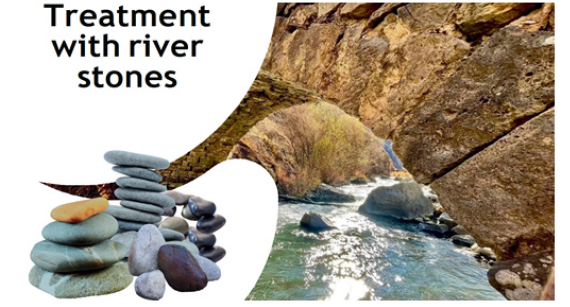
Figure 1:
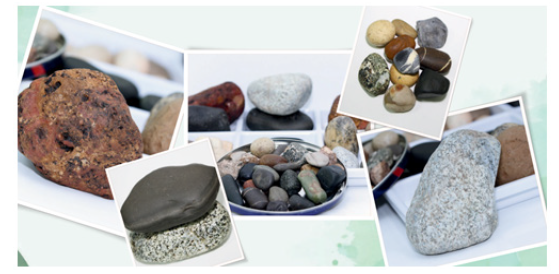
Figure 2:

Figure 3:
Discussions
Positive results were obtained in patients who applied to the clinic with paresis of the facial nerve. We present images of some of them before and after treatment (Figures 4-7).

Figure 4: Facial nerve pareses.

Figure 5: Facial nerve pareses.
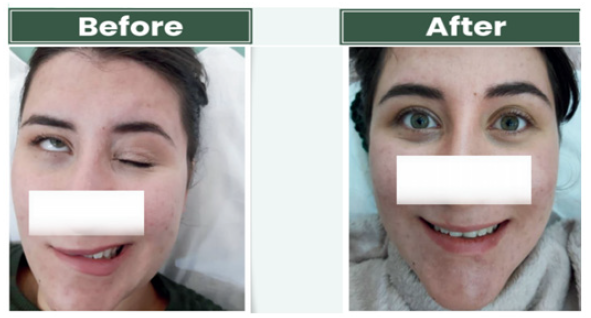
Figure 6: Facial nerve pareses.

Figure 7: Facial nerve pareses.
Conclusion
As in the whole world, the treatment of paresis of the facial nerve, which is widespread in Azerbaijan, was carried out by us with different approaches. I should note that 64 patients, 19 of whom were men, 44 of whom were women, and 1 of whom were children, were involved in the experiment. Based on clinical and instrumental examination methods, the patients were diagnosed with complete paresis of the facial nerve. As a treatment method, osteopathic and Karabakh folk medicine treatment methods were applied. During the treatment, according to the requests of the patients at different times, recovery was observed from 7 to 12 months. It was determined that osteopathic and Karabakh folk medicine treatment methods are more effective than existing methods in improving the condition of patients with facial nerve paralysis. Significant changes were observed in many aspects of facial function over a period of approximately 7 months, and the relative position of patients remained stable over time.
Acknowledgement
None.
Conflict of Interest
None.
Author Information
Dr. Ahu Musayeva has been dealing with this treatment method for 25 years. She belongs to the 10th generation "Genealogy of Doctors". She improves the medicinal products and methods used by the representatives of her generation and applies them in a more modern form. These methods were implemented 6 centuries ago in the land of Karabakh, the ancient region of Azerbaijan. Today, these treatment methods are implemented in the "Osteopathy and Karabakh Folk Medicine" health center founded by Ahu Musayeva.
References
- Svistushkin VM, Slavsky AN (2016) Facial neuropathy: modern approaches to diagnosis and treatment. breast cancer 4: 280-285.
- Gusev EI (2014) Neurology. National Command. A crumb lyric. GEOTAR-Media, 2014. 688 p. [Gusev E.I. Nevrologija. Nacional'noe rukovodstvo. Kratkoe izdanie. GEOTAR-Media 688.
- Josef Georg Heckmann Peter Paul Urban, Susanne Pitz, Orlando Guntinas Lichius, Ildikό Gágyor (2019) The Diagnosis and Treatment of Idiopathic Facial Paresis (Bell’s Palsy). Dtsch Arztebl Int 116(41): 692-702.
- Federico Biglioli, Mahmoud Soliman, Mohamed El Shazly, Wael Saadeldeen, Essam A Abda, et al. (2018) Use of the masseteric nerve to treat segmental midface Paresis Br J Oral Maxillofac Surg 56(8): 719-726.
- https://www.rmj.ru/articles/otorinolaringologiya/Nevropatiya_licevogo_nerva_sovremennye_podhodyk_diagnostike_i_lecheniyu/#ixzz8fGcY1sM
- https://www.sciencedirect.com/science/article/abs/pii/S0901502704000554
- https://www.clinica-tibet.ru/diseases/lechenie-licevogo-nerva/lechenie-nevrita-licevogo-nerva-v-domashnih-usloviyah/
- Alexander NS (1996) Treatment method for facial nerve neuropathy.
- (2019) 17th National Neuroscience Conference. Turkey Trabzon.
- (2019) International Osteopathy OPEN conference. Russia Moscow.
- (2020) International Osteopathy conference Konpal Kom (Tel-Aviv). 1srael.
- (2021) International Osteopathy Karabakh Folk Medicine conference-Speaker and Founder 2021 1srael-International conference of Osteopathy Konpal Kom (Tel Aviv). Azerbaijan.
- Petersburg (2022) International Osteopathy and Manual Therapy conference-Speaker 2022 Turkey-Istanbul, Stem cell transfer conference. Russia.
- (2022) International Conference on Biomedical and Pharmaceutical Sciences (ICBPS-2022). Pakistan.
- (2022) International Turkic World Congress on Science and Engineering. Turkey Nig.
- Azerbaijan Medical University-"Actual problems of biochemistry and medicine". Scientific-practical conference dedicated to the 80th anniversary of Professor AM Efendiyev.
- (2023) International Conference on Recent Trends in Biological Sciences. Pakistan.
- (2023) 1nternational Osteopathy and Karabakh Folk Medicine conference dedicated to the 100th anniversary of Great Leader Heydar Aliyev. Azerbaijan.
- (2023) International Osteopathy conference-Speaker 2023 Azerbaijan-Viva La Vida Anti-Age conference. 1srael.




 We use cookies to ensure you get the best experience on our website.