
Research Article 
 Creative Commons, CC-BY
Assessment of Students’ Awareness of Sexually Transmitted Diseases
*Corresponding author: Manana Machitidze, The University of Georgia,77a Kostava Str. Tbilisi, 0171, Georgia.
Received: July 22, 2024; Published: July 25, 2024
DOI: 10.34297/AJBSR.2024.23.003072
Abstract
Background: Sexually transmitted infections are recorded every day. The public is not informed about the existence of STDs. This indicates insufficient knowledge about sexually transmitted diseases. According to studies conducted worldwide, students have a lack of knowledge about STDs.
Aim: To assess the awareness of sexually transmitted diseases among students of the School of Health Sciences at one of the universities in Georgia.
Methodology: Quantitative research. 115 active-status students of the health school participated in the study. The research results were processed in the IBM SPSS system.
Outcome: The more information and education there is about STDs, the more informed students are about the prevalence, risks, and complications of the disease.
Conclusion: Peer involvement in education and dissemination of information helps reduce and prevent risks.
Keywords: Health school students, STD, STD awareness
Introduction
In recent years, the COVID-19 pandemic has attracted the world's attention, but no less noteworthy are other infectious diseases that continue to persist and increase in frequency. These include the flu, sexually transmitted infections, staph infections, and food and tick-borne illnesses. According to the distribution, globally, sexually transmitted diseases are among the top five infectious diseases, of which there are up to 30 bacterial and viral infections. The disease is transmitted from one person to another during sexual contact, from mother to child and during childbirth [6].
Sexually transmitted diseases - syphilis, gonorrhea, hepatitis B, chlamydia, human immunodeficiency virus, human papillomavirus and trichomoniasis - in many cases the disease is asymptomatic, which increases the risk of infection [15]. In case of sexual intercourse, it is necessary for the couple, partners to be tested for sexually transmitted diseases. It is desirable that they know how to protect themselves from infection and/or spread of disease and when to consult a doctor. Timely referral to medical personnel will prevent complications. There are various reasons for the increase in the incidence of sexually transmitted diseases. Among them, sexual violence, relationships with multiple and diverse partners, intravenous drug use, prostitution, excessive alcohol consumption, unprotected sex [14].
STDs are a global concern. According to the World Health Organization's 2023 report, more than one million sexually transmitted infections are diagnosed every day in the world, most of which are asymptomatic [16]. The statistical rate of the spread of sexually transmitted diseases is increasing every year, which is an indication of the lack of information and education in this direction among the population. According to the research conducted by the European Center for Disease Prevention and Control, the number of gonorrhea cases increased by 70,881 cases in European countries in 2021, which is 48% higher than the figures of 2022, and the age index ranged from 20 to 24 years. According to the same study, there were 35,391 confirmed cases of syphilis, which is 34% higher than in previous years. Syphilis cases were recorded in males and the age limit is 25-34 years [14].
Sexually transmitted diseases, chlamydia, syphilis and gonorrhea are treatable, but if not treated late, they can cause serious health problems. The diseases mentioned above can cause pelvic inflammatory diseases, infertility, neurological and cardiovascular problems [9]. Unfortunately, in the 21st century, society does not know what causes sexually transmitted diseases, what complications it causes, when to consult a doctor, and more. Although it is now much more accessible to find information, lack of awareness also prevails among the youth. According to research, more than 20 million sexually transmitted diseases are diagnosed in the United States each year, with the highest incidence among young adults. 36% of the population knows that sexually transmitted diseases have become more common in recent years. Also, they have information that chlamydia, syphilis and gonorrhea are curable, while genital herpes is not subject to treatment. 48% of black adults and youth are informed about sexually transmitted infections, and 33% of white adults and youth [3]. According to the same study, adults and youth respondents also expressed concern about the statistics because they thought their generation was more informed about sexually transmitted diseases than other age groups. Reasons that lead to incomplete awareness may be: limited and uncomfortable conversations about intimate topics, both with partners, parents, as well as with medical personnel, which at the same time causes a feeling of shame. Females are more open about their sexual partners and sexually transmitted diseases among their friends than men [3,4]. Based on studies, the number of cases of sexually transmitted infections has been increasing in Georgia for several years. In Georgia, in 2020, 5034 cases of sexually transmitted infections were recorded. According to the distribution of diseases, the largest number of cases was trichomoniasis, - 2462 cases, chlamydia infection - 1310, syphilis - 863 and gonococcal infection - 396. In 2021, the number of cases increased, a total of 5110 sexually transmitted infections were confirmed. 2405 people were diagnosed with trichomoniasis, 1111 were infected with chlamydia infection, 1096 with syphilis and 498 with gonococcal infection [10,11].
According to the main data of the National Center for Disease Control and Public Health, more than 290 million women are infected with papillomavirus infection, up to 900,000 pregnant women are infected with syphilis, after giving birth, the fetus had birth defects and among them stillbirths were detected, their number was about 350 thousand [11,12].
Methodology
The research was conducted among the students of the health school of one of the universities of Georgia. Its purpose was to assess students' awareness of the prevalence and complications of sexually transmitted diseases. It was developed as a research hypothesis that students of the School of Health Sciences are not fully informed about sexually transmitted diseases. Quantitative research was defined as research methodology. Google Forms. Developed questionnaire distributed through university student base. The criteria for the selection of the respondents were students with an active status of the health school.
The questionnaire included closed questions. For a deeper analysis of the issue, several open questions were used. In order to consider the elimination of risks, in addition to Google Forms, a printed questionnaire was also used. The research questionnaire included 10 questions, including 7 closed and 3 open. 115 students of the School of Health Sciences participated in the study. The results of the research were processed in the IBM SPSS Statistics system according to programs, respondents' age, gender. It was possible to compare the result of cross-examination with the research hypothesis.
Results
According to the analysis of the research results, out of 115 respondents participating in the research, 44 (38.1%) of the students participating in the study were male, and 71 (61.9%) were female. 8.2% of the students participating in the study were under 18 years old, 82.5% were between 19-24 years old, 8.2% were 25-30 years old, and 1% were over 30 years old. 81.4% of the respondents from the School of Health Sciences studied medicine, 12.4% - nursing, 5.2% - dentistry, 1% - healthcare management (Table 1).
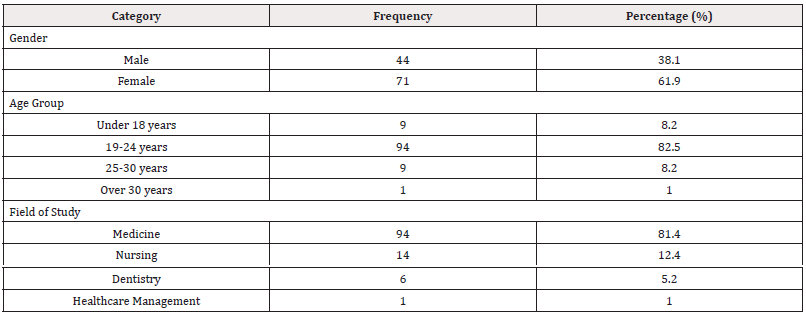
Table 1: Demographic Data of Respondents.
The students participating in the study were studying in 5-8 semesters, they had completed pre-clinical training and 1 year of clinical training. 100 students participating in the research have information about STD, 2 students have not heard and it was difficult for 4 students to answer. When asked which diseases are sexually transmitted diseases, 15 respondents thought that gonorrhea is a contagious disease, 43 respondents - HIV, 3 - papillomavirus, 15 - syphilis, 4 students - hepatitis B, 2 - hepatitis C, 4 respondents Genital warts, one respondent's opinion was staphylococci, as well as stychomoniasis, and 2 students reported urinary tract infection. According to 33 students participating in the study, neglecting safe sex increases the risk of spreading STDs, 12 believe that a weak immune system, 34 - multiple sexual partners increase the risk of spreading, 8 respondents prefer sharing personal items, 5 believe that contaminated food and water are sexual According to 12 respondents, lack of hygiene increases the risk of spread of sexually transmitted diseases, and 2 students think that all the above-mentioned risks mean sexually transmitted diseases (Table 2).
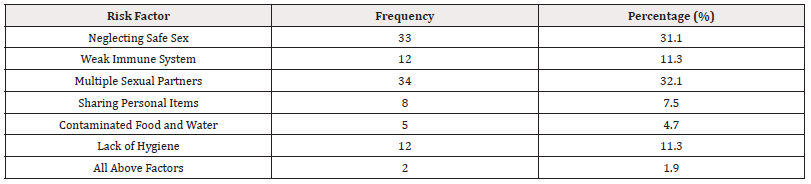
Table 2: Perceived Risk Factors for STDs.
Most of the students have a negative answer about STD prevention means, only 5 respondents. In case of STD, according to 11 students, they should consult a dermatologist-venerologist, according to 24 students, to a urologist, according to 50 respondents, they should consult a gynecologist, 1 to a therapist, 5 to a family doctor, 1 to a sexologist, 12 students to a general practitioner, and one Infectious disease.
In case of desire to get information about STD, 72 out of 106 students chose internet sources to get information, 7 respondents preferred to get information from family members, one respondent wants to get information from friend, 17 from lecturer and 6 from doctors. 7.6% of medical students found that chlamydia belongs to sexually transmitted diseases, 16.5% - gonorrhea, 6.3 7 - herpes, 43.0% HIV disease, 1.3% think that papillomavirus belongs to these diseases, 11.4% found syphilis, 5.1 % genital warts, 3.8% hepatitis B, 1.3% staphylococcus, 1.3% - trichomoniasis and 2.5% infection of the nasal passages belong to sexually transmitted diseases. 16.7% of nursing students believe that chlamydia is a sexually transmitted disease, 8.3% think that gonorrhea is in this group of diseases, 41.7% have identified HIV, 8.3% have papillomavirus and 25.0% think that syphilis is in this group of diseases. Of the dental students, 20.0% found chlamydia to be a sexually transmitted disease, 40.0% thought HIV was in that group, 20.0% found syphilis, and 20.0% thought trichomoniasis was in the group. Differences of opinion of the interviewed students were observed regarding the risk of spreading STDs. There were 69 female representatives, and 37 male representatives (Table 3).

Table 3: Knowledge of Specific STDs by Field of Study.
Unfortunately, only 11 students recorded the correct answer that in case of STD, the patient should consult a dermatologist-venerologist and not a gynecologist, urologist or other specialist doctor. In total, 100 out of 106 students have heard about STD, 43 students consider HIV as a sexually transmitted disease. 33 respondents believe that neglecting safe sex increases the risk of spreading STDs. 101 students have heard about STD prevention methods and 72 respondents consider the Internet as a source of information.
Respondents were not clear about exactly which diseases include sexually transmitted diseases. Students do not know which profile doctor they should contact in case of symptoms. Most of the participants choose the Internet to search for information. Chi-square was used to test the research hypothesis. Confidence limit was defined as: 0.05. Based on the hypothesis testing, it was determined that: at α<0.05 and our alternative hypothesis is true and there is a relationship between the given variables.
Discussion
STD prevention is important to prevent the spread of the disease. For this purpose, raising the education and awareness of the target population is an important step. In 22 states of the United States of America, students are taught lessons about sexually transmitted diseases. This helps young people to become more honest with society, to apply to a medical institution in time and to start treatment in time if sexually transmitted diseases are detected. The Centers for Disease Control and Prevention recommends that sexually active men and women under the age of 25 be screened for sexually transmitted diseases once a year [13]. The most popular source of sexual health information for students is the Internet [7].
According to a study conducted by scientists at Marmara University in Turkey, in which first-year students of science and social sciences took part, students do not have enough information about sexually transmitted diseases [6]. A study conducted at the University of Namibia in South Africa found that nursing program students. Before clinical practice, they underwent theoretical training at the university. According to the data of 2019, the most cases of sexually transmitted diseases were recorded in Nabia, these diseases were chlamydia and gonorrhea. Anob students should learn more about sexually transmitted diseases and their prevention [8]. In India, according to the results of the study, in which 350 students of the Faculty of Engineering participated in different semesters, The survey revealed that while the majority of students were aware of STDs, only 64% knew that HIV is not the only STD. Additionally, 40% were familiar with STD symptoms. Sex education remains a taboo topic within families, prompting students to seek information online or from their teachers. A significant 90% of students expressed a desire for lectures on STDs, emphasizing the need for comprehensive sexual education among youth and beyond [15].
It is also interesting that in the 21st century, when there are many ways to find information, to receive self-information, a large part of the population does not know about the ways of infection. Unfortunately, the analysis of many studies shows that 38.5% of the elderly respondents (>24 years) believe that a person can be infected with STD through superficial contact (kissing, hugging), 27% of the respondents did not understand who is in the risk group. The public only knows about HIV and believes that only this virus causes STDs. Educating the population, especially the target population, will significantly reduce the risk of spreading STDs, since an educated person will not make the same mistakes they did before education. At least knowing that it is possible to treat sexually transmitted diseases with drugs, although timely referral is necessary [1].
According to a study conducted in Taif, 35% of students learned about STDs from a friend, 29.9% received information from the Internet, and 27.7% - from television. 47% knew that condoms do not protect 100% from sexually transmitted diseases [2]. An important factor in the prevention of sexually transmitted diseases is vaccination. Worldwide, vaccination saves millions of lives. A person is protected by vaccination. In order to avoid infection, it is necessary to take preventive vaccinations against papillomavirus, hepatitis A and hepatitis B, currently only these vaccinations are available. Papilloma virus vaccination can be given from 9 to 26 years of age, and hepatitis B vaccination can be administered at any age. It is necessary for the public to understand that vaccination is safe and effective [5].
The WHO fact sheet on STIs provides a comprehensive overview of the global burden, prevention, diagnosis, and treatment of sexually transmitted infections. Over 1 million new curable STIs are acquired daily worldwide, with significant asymptomatic cases. Primary infections include chlamydia, gonorrhea, syphilis, and trichomoniasis. Dissemination of information to the target population and dissemination of information about STD prevention methods remains an essential factor in reducing transmission. Condoms, HPV, and hepatitis B vaccines are effective preventive measures on which it is necessary to focus attention. While advanced diagnostic tests are available in high-income countries, many low-income regions rely on syndromic management. Effective treatments exist, but antimicrobial resistance poses a challenge [16].
In Georgia, as in the world, it is necessary to raise awareness about sexually transmitted diseases. Society needs to forget the stigma, start talking loudly about sexually transmitted diseases, get screened every year, talk openly with everyone about it and consult a doctor on time. Timely referral and treatment will prevent complications. Talking openly about sexually transmitted diseases will help raise awareness and reduce the number of infections.
Conclusion
The study highlights significant gaps in the students' understanding of STDs and the appropriate healthcare providers to consult for STD-related symptoms. Additionally, the preference for using the Internet as a primary information source underscores the need for accessible and accurate online resources. The hypothesis testing confirmed a significant relationship between the variables studied, indicating areas that require targeted educational interventions. Raising awareness of sexually transmitted diseases among students is important, regardless of their teaching profile. It is necessary, in addition to the topics provided by the curriculum, to plan a series of public lectures for students, where invited health professionals will speak and introduce their experience and share knowledge to students. In addition, tailoring information to an age-appropriate and culturally sensitive group will help reduce the risks of STDs. Planning and conducting health school student engagement campaigns and awareness-raising events will contribute to effective peer-to-peer communication. With the help of students, peers should be informed about reliable resources and how to contribute to them.
Acknowledgment
The research team sincerely thanks the respondents for their enthusiastic participation and genuine responses. Furthermore, we appreciate the authors of the literature review articles cited herein and the international organizations that provided open access to their invaluable research findings, recommendations, and opinions.
Conflict of Interest and Ethical Consideration
There were no conflicts of interest, and all ethical standards were strictly followed throughout the research. Before conducting the survey, the questionnaire was meticulously developed and submitted to the Ethics Council of the University for approval. Upon approval, the questionnaire was distributed to the students via the university’s student portal. The questionnaire's introduction clearly outlined the study’s purpose, and respondents' participation was considered as their informed consent. The survey findings were transparently shared in a public report to the respondents, the staff of the participating departments, and the School of Health faculty. Notably, this research was conducted without any financial interests or external funding.
References
- Al Naggar RA, Al Jashamy K (2011) Perception of undergraduate university students towards Sexually Transmitted Diseases: A qualitative study. Journal of Men’s Health 8(S1): 87-90.
- Aseeri IA, Al Otaibi MN, Alzahrani WJ, Althomali MA, Alattar HA et al. (2023) Public awareness about sexually transmitted diseases in Taif, Saudi Arabia. Cureus 15(7): e42302.
- Ashley Kirzinger CM (2020) F Public knowledge and attitudes about sexually transmitted infections: KFF polling and Policy Insights. KFF.
- Centers for Disease Control and Prevention (n.d.). About pelvic inflammatory disease (PID). Centers for Disease Control and Prevention.
- Discover asha, your sexual health resource. American Sexual Health Association. (2024).
- Ekşi Z, Kömürcü N (2014) Knowledge level of university students about sexually transmitted diseases. Procedia-Social and Behavioral Sciences 122: 465-472.
- Gray BJ, Jones AT, Couzens Z, Sagar T, Jones D (2019) University students’ behaviours towards accessing sexual health information and treatment. International Journal of STD & AIDS, 30(7): 671-679.
- Hamunyela LU, Niikondo HN, Nakweenda MN (2024) Nursing students’ knowledge and attitudes on sexually transmitted infections prevention at training institution in Namibia. Health SA Gesondheid 29.
- Kristi A Tough De Sapri M (2024) Pelvic inflammatory disease. Practice Essentials, Background, Pathophysiology.
- Malki BMA (1970) Knowledge and awareness of sexually transmitted disease among male university students in Taif, Saudi Arabia. Pesquisa.
- Ge. (n.d.-a). https://test.ncdc.ge/Pages/User/News.aspx?ID=ea1784b5-d3d0-4dd9-b29f-1369f5d6bbec.
- Ge. (n.d.-b). https://test.ncdc.ge/Pages/User/LetterContent.aspx?ID=7d1d468c-0783-4cc1-a53e-2a5d5c8db1db
- Sifferlin A (2016) Why so many American teens have stds. Time.
- STI cases on the rise across Europe. European Centre for Disease Prevention and Control. (2024).
- Subbarao N, Akhilesh A (2017) Knowledge and attitude about sexually transmitted infections other than HIV among college students. Indian Journal of Sexually Transmitted Diseases and AIDS 38(1): 10-14.
- World Health Organization. (n.d.). Sexually transmitted infections (stis). World Health Organization.




 We use cookies to ensure you get the best experience on our website.