
Clinical Image 
 Creative Commons, CC-BY
Determination of the Qualitative Composition of Gingival Microflora in Patients with Cementum Caries, and Periodontopathogens
*Corresponding author: Babayev HG, Azerbaijan Medical University, 23 Bakikhanov St, Baku, Azerbaijan.
Received: September 18, 2024; Published: October 09, 2024
DOI: 10.34297/AJBSR.2024.24.003196
Abstract
The qualitative composition of the microflora of periodontal pockets and gingival fluid, the composition of periodontopathogens determined by the Polymerase Chain Reaction (PCR) method, the main associations of microorganisms, parocementum caries, dental index were comparatively studiedin patients with external pathological resorption and patients from the comparison group.40 patients were selected for the study, 14 of them with cementum caries, 12 with external pathological root resorption, and 14 without damage to the root of the tooth were in the comparison group. According to the study, all patients with cementum caries and external pathological resorption had pathological processes in the periodontium. According to the results of the microbiological examination in different clinical conditions of the oral cavity, especially with different forms of damage to the periodontum and hard tissues of the teeth, the predominant microbial samples were studied.The study of the qualitative composition of the microflora revealed that the most common pathogens in patients with cementum caries were: Prevotellaintermedia, Tannerella forsythia, Porphyromonas gingivalis, Candida albicans, Treponemadenticola. In patients with external resorption, P. intermedia, Tr. denticola, C. albicans, T. forsythia, P. gingivalis Epstein-Barr viruses were found. These are periodontopathogenic microorganisms and have wide pathogenic properties.
Keywords: Study of microflora, Periodontopathogens, Cementum caries
Introduction
As a result of dystrophic changes of the dental jaw system or periodontal diseases of various origins, cementum caries and external pathological resorption often develop in the dentoalveolar system [1,2]. This pathological process starts from the level of the exposed tooth neck and covers the outer surface of its root, causing a violation of the palatal area. A characteristic clinical sign of cementum caries is the slow development of caries. The pathological process mainly spreads along the surface of the tooth root. Caries cannot spread to a great depth for a long time. Complications of cementum caries can develop in shallow cavities, as well as in the short distance between the root surface and its pulp. At this point, inflammatory processes can be seen in the palate. Clinical teeth with external pathological resorption remain largely unchanged. In most patients, the growth of granulation tissue in the pathological defect and the pink spot on the front part of the tooth are recorded. Besides, the acceleration of the pathological process, continuous inflammation and hyperemia of the gums are observed. Microorganisms play a decisive role in the development of periodontitis. At a certain stage of the development of microorganisms, the body’s defense weakens and causes periodontal inflammation and destruction [3-5].
It was found that bacteria such as Porphyromonas gingivalis, Tannerella forsythia, Aggregatibacter actinomycetemcomitans are involved in the development of periodontitis. Gram-positive bacteria such as Prevotella intermedia, Treponema tdenticola, Actinomyces israelii, Peptococcus niger, Peptostreptococcus micros are involved in the destruction of periodontal tissues [6,7]. Yeast fungi from the genus Candida (C. albicans) are also involved in the de struction of the periodontium and the development of inflammation. Periodontopathogen microorganisms have a wide spectrum of pathogenicity. This feature allows them to induce long-term inflammatory processes [3,4,7]. The main goal of this study was to identify the species of microorganisms that make up the qualitative composition of the microflora of periodontal pockets and gingival fluid and to study their periodontal index and external pathological resorption in patients with cementum caries.
Materials and Methods
40 patients were selected for the study, 14 of them with cementum caries, 12 with external pathological root resorption, and 14 without damage to the root of the tooth were in the comparison group. The PCR method was used to determine pathogenic microorganisms in the oral cavity. Samples were taken on an empty stomach and before brushing, mainly from periodontal pockets and gingiva. First, the teeth are isolated with tightly compressed cotton and dried with a sterile cotton tampon. After that, an absorbent made of sterile paper (No. 25) is placed in the gingival cavity or periodontal pockets at a depth of 1-3mm for 30 seconds. Then the absorbent is removed and placed in a plastic Eppendorf test tube and isotonic NaCl solution is added to it. In this procedure, it is important to take liquid only from the mucous membrane of the oral cavity. Then the tubes are completely sealed, labeled, and placed in a chamber with a constant temperature (+4℃) for 24 hours.
Results and Discussion
Microbiological studies revealed that P. intermedia, T. forsythia, T. denticola, P. gingivalis, C. Albicans were the most common periodontopathogenic microorganisms in patients with cementum caries and external pathological resorption.The frequency of Periodontitis was found to be as follows: in 60-70-year-old patients, 10 patients (55.5%) with periodontitis cementum caries, 8 patients (53.3%) with external cervical resorption, and 2 patients (22.2%) in the comparison group. It can be concluded that the aggravation of such somatic-pathological processes and the decrease in the frequency of periodontal diseases in the 75-99 age group are due to aging and tooth loss (Results are not given) (data are not shown).
The frequency of isolation of periodontopathogenic microorganisms in patients with cementum caries is given in Table 1, and in patients with external pathological resorption in Table 2. It is noted that the pathological change in most cases occurs because of poor oral hygiene, poor-quality prostheses and fillings, tooth-jaw deformities, trauma, the use of drugs, and diseases that lead to the violation of compensatory mechanisms of natural immunity. Many studies show that gingival weakness is considered a major risk factor for the development of cementum caries and external cervical resorption [7,8]. The microflora of the oral cavity of studied patients with cementum caries and external pathological resorption consists ofperiodontopathogenic microorganisms, such as P. intermedia, T. forsythia, T. denticola, P. gingivalis, and C. albicans. The results of the study show that the resorption of facultative gram-positive microorganisms in patients with cementum caries and external pathological resorption lead to an increase in the concentration of obligate gram-positive anaerobes. For example, P. gingivalis changes the structure of the lipid layer, causing a weakening of the immune system and a disruption of the bacterial balance in the microflora. The combination of P. intermedia, T. forsythia, T. denticola, P. gingivalis, and C. albicans causes the acceleration of destructive processes in the periodontium and bone tissue [2,8,9] (Table 1).
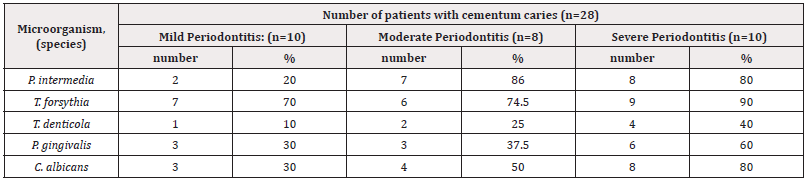
Table 1: Frequency of isolation of pathogens in periodontal diseases in patients with cementum caries.
All patients with cementum caries and external pathological resorption had pathological processes occurring in the periodontium. Cementum caries prevailed in severe periodontitis (35.7%). During the study of the qualitative composition of the microflora, it was found that P. intermedia, T. forsythia, P. gingivalis, C. albicans, T. Denticola were most common in patients with cementum caries, while P. intermedia, Tr. denticola, C. albicans, T. forsythia, P. gingivalis were common in patients with external resorption (Table 2).
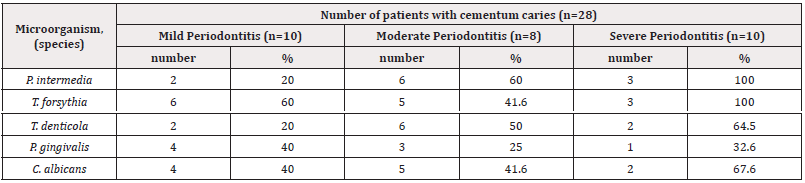
Table 2: Frequency of isolation of pathogens in periodontal diseases in patients with external pathological resorption.
Thus, the characteristics of the microbial landscape depend on the severity of the periodontium, including the hygienic status. Besides, it can be noted that cervical carious lesions are a factor in the retention of microbes in the gum area and play a major role in the development of inflammatory processes. Resorption of the tooth root, caused by the periodontium’s inflammation and root surface decay, later acts as an accelerating factor in the process of destruction of the periodontal tissue.
Acknowledgements
None.
Conflict of Interest
None.
References
- Boykov MI (2010) An experimental study of the effect of filling materials on the dental pulp when fixing a tooth root problem. Kremlin Medicine Clinical Bulletin 1: 6-11.
- (2008) Therapeutic dentistry. Periodontal diseases. Barera GMM: GEOTAR-Media.
- Grudyanov AI, Chepurkova OA (2003) Root caries. Institute of Dentistry 3: 87-90.
- Dedova LN, Kandrukevich OV (2007) Theoretical basis of root caries. Dent jour 3: 34-41.
- (2009) Therapeutic dentistry. Edited by Borovskiy EVМ: Medical Information Agency.
- Alves TP, Soares TRC, Barreto SC, Fried H, Pereira GDS, et al., (2013) Multidisciplinary Approach for the Treatment of Extensive External Cervical Resorption After Dental Trauma. Clin Case Rep Oper Dent 38(4): 349-357.
- Kazeko LA, Fedorova IN, Aleksandrova LL (2010) Resorption of the tooth root. Modern Dentistry 4: 19-25.
- Ospanova GB, Bogatyrkov DV, Bogatyrkov MV, Volchek DA (2004) Resorption of the roots of the teeth. Clin Dent 2: 58-61.
- Bellamy Craig (2015) Root resorption: an overview and case report of endodontic management. Oral Health FRCD 1: 38-40.




 We use cookies to ensure you get the best experience on our website.