
Research Article 
 Creative Commons, CC-BY
Effect of Occupational Activities on the Well-Being of Poultry Workers in Oyo State
*Corresponding author: Ogunleye Kehinde Yewande, Agricultural Extension and Rural Development Department, Ladoke Akintola University of Technology, Ogbomoso, Oyo State, Nigeria.
Received: October 28, 2024; Published: November 06, 2024
DOI: 10.34297/AJBSR.2024.24.003229
Abstract
Poultry occupation has been the most demanding section of animal rearing as regards farm products and occupation in Nigeria though, it offers great potentials for income generation and youth engagement. Despite the positive features of this industry, its growth is invariably dependent on the well-being of the workers, which is greatly affected by the activities done. The study therefore examined the socio-economic characteristics of the Poultry workers, their occupational activities, and the well-being status of the Poultry workers.
A multistage sampling technique was used in selecting two hundred and twelve Poultry workers in Oyo State. However, only two hundred and six interview schedules were analyzed due to incompleteness. The data collected for this study were analyzed using descriptive statistics such as frequency counts, percentages, mean and standard deviation. The well-being status of the poultry worker was measured using the Personal Wellbeing Index and the inferential statistics used was regression analysis.
The result revealed that majority (70.4%) of the respondents were male with the mean age of 28 ±2.03years. The average income of the respondents was ₦41,349 ±₦1.81 and 74.8 percent had no access to extension services. The highest ranked occupational activities of the respondents were feeding and water supply to the birds (WMS=2.00) and cleaning of the poultry pen (WMS=1.99) which were ranked 1st and 2nd respectively. The Personal Well-being Index of the poultry workers indicated that the majority (71.4%) had a compromised well-being level, 16.0 percent had a challenged level and 12.6 percent had normal level of well-being. More than half (52.4%) of the respondents indicated a high effect of occupational activities on their well-being. The result of the regression analysis revealed some selected socio-economic characteristics of the poultry workers such as income, years spent in schooling etc., had a significant relationship with their well-being.
It was concluded that as a result of the effect occupational activities of the poultry workers in the study area, the majority of the poultry workers’ well-being is at a compromised level. It is therefore recommended that poultry farms should consistently review the pay of the workers and consider a shift system of work to allow the poultry workers have time to rest and achieve other things that can improve their well-being.
Keywords: Occupation, Poultry occupation, Well-being, Multistage
Introduction
Occupational activity is a daily pursuit in which people engage with (American Occupation Therapy Association, 2014) [1]. These occupations require job-related activities that involve regular bodily movements, use of considerable large muscle groups, and substantial energy expenditure [2,3]. Many of these occupational skills involve manual labour and sometimes require long hours of activity. Although manual labour increases energy expenditure and higher muscular strength as features commonly seen in manual workers, including well-being which have not been explored among Nigerian poultry workers.
Poultry occupation activities of most poultry farms in Nigeria begin with the acquisition of day-old chicks from a hatchery and undertaking various rearing activities to convert the day-old chicks into full grown poultry bird that produces meat and/or eggs for sale. Throughout these core activities, various decisions are made by farm management officials that may have an impact on well-being of the poultry workers, although, units where individual workers carried out daily management activities are or may be the primary factors of influence of well-being of the Poultry workers in terms of health. National Institute for Occupational Safety and Health [4].
World Health Organization defines well-being as a positive state experienced by individuals and societies. Similar to health (a complete state of physical, mental and social well-being, not just the absence of disease or infirmity), it is a resource for daily life and is determined by social, economic and environmental conditions [5].
Ajani, et al., [6] and Price [7] stressed that poultry occupation has been the most demanding section of animal rearing as regards farm products and occupation in Nigeria which offers great potentials for sustainable development in youth empowerment programs. Despite the positive features of the poultry industry, poultry workers have been shown to be at risk of exposure to physical, chemical and biological hazards daily. Those involved in poultry occupations have a higher rate of work-related ill-health than other sectors, and twice the rate of work-related musculoskeletal disorders [8]. This is partly related to the physical nature of poultry farming, but also to high rates of accidents. Also, HSE [8] emphasized that the most frequent causes of non-fatal injuries are trips or falls, being injured by an animal, among others thus negatively affecting well-being and leading to low productivity at work [9,10]. Therefore, this study aims to investigate the effect of occupational activity on well-being of poultry workers. Based on all these gaps, thus the study therefore will provide answers to the following research objectives:
1. describe the socio-economic characteristics of the poultry workers.
2. ascertain the poultry worker’s occupational activities.
3. evaluate the well-being status of the poultry workers.
Methodology
The study was carried out in Oyo State. The coordinates for Oyo state are approximately 8.15740 N latitude and 3.61470 E longitude. The population of the study comprised of poultry workers in Oyo State. A multistage sampling technique was employed to select respondents for this study. Firstly, purposive sampling technique was used to select Ibadan and Oyo agricultural zones having eleven [11] LGAs and four [4] LGA respectively due to the high presence of poultry farms across the zones [11]. Secondly, 25% LGAs from Ibadan zone and Oyo zone were randomly selected from each of the two agricultural zones to have 4 LGAs from Ibadan/Ibarapa and 1 LGA total of 5 LGAs namely Egbeda, Akinyele, Ona-Ara and Oluyole in Ibadan/Ibarapa while in Oyo LGA Afijio LGA was selected. In the third stage, snowball technique was used to compile the list of poultry farms in the selected LGAs and from the compiled list, purposive sampling technique was used to select farms involved in poultry farming because some farms have become hatcheries. Last stage involved random selection of 10% poultry workers from the sampled farms totaling 212 respondents (poultry workers) however 206 interview schedules were used as the remaining six were not used due to incompleteness. Data for this research was collected from primary sources. Primary data were collected with the aid of a pre-tested structured interview schedule. The descriptive tools that were used include frequency distribution, percentage, mean, standard deviation and weighted mean score (WMS) while the inferential tool that was used was regression model analysis to test the hypothesis of the study.
The activities of the poultry workers were measured on a 3-point rating scale of Always (2), Sometimes (1), and Never (0). The scale of measurement was adapted from challenges of small Poultry farms in layer production in Ikwuano LGA of Abia State [12]. The mean was used to rank the items to determine the most used and the least used. This was measured at the ordinal level.
The well-being of the respondents was measured using the Personal Well-being Index (PWI). The scale measures how satisfied a person feels on a scale from 0 to 10. Zero means no satisfaction at all and 10 means you feel completely satisfied [13]. The PWI comprises seven items assessing satisfaction with the following seven domains: standard of living, health, achieving in life, relationships, safety, community-connectedness, and future security. The scoring of PWI is presented as a standard score between 0 and 100. Standard scores are computed by dividing the raw score by 7 (or 8 if the last item is completed), times 100. Higher scores represent a higher level of personal well-being and vice versa. Scores are also presented in a percentile [14]. Individual scores on the PWI can be interpreted using the following guidelines [15]:
1. 70+=Normal levels of Subjective Well-being.
2. 50 - 69=Compromised levels of Subjective well-being
3. 49 or less=Challenged level of Subjective well-being
The conversion of PWI scores, which have been derived from a 0 to 10 response scale can also be measured on a scale of 1-5. However, for this study a scale of 1 to 5 was used by categorizing their response into 5-point rating scale of Very dissatisfied (1), Dissatisfied (2), Unsure (3), Satisfied (4), Very satisfied (5) adapted from the International Well-being Group [13]. When comparisons are to be made with other data that have been derived from different response scales, such as ones that use a 1-5 rating, then the values derived from the scale can be converted to the standard 0 to 100 formats through the use of the formula below.
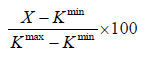
Were,
X=the score or mean to be converted
 =the minimum score possible on the scale ie If a scale is score from 1 to 5, then
  = 1
= 1
 = the maximum score possible on the scale ie If a scale is score from 1 to 5, then
  = 5
= 5
Results and Discussion
Socio-Economic Characteristics of the Respondents
Sex: The result in Table 1 reveals that majority (70.4%) of the respondents were male while few (29.6%) of the respondents were female. This implies that poultry production is male dominated in the study areas probably because of the activities involved in poultry occupation in which most females may not have the strength to cope or withstand the activities. This results likewise agrees with the findings of Ogba, [12] who found that majority of people working in the poultry farm are male in the study area.

Table 1: Socio-economic characteristics of the poultry workers in the study area.
Note*: Source: Field Survey, 2023.
Age: A larger proportion (83.5%) of the respondents were within the age range of about 20-40 years, while few (8.3%) of the respondents were within the age bracket of 41-50 years, 7.3% were within the age range of less than 20 and 1.0% of the respondents were more than 50 years of age. The mean age of about 28 ±03 years indicates that the youths were more involved in poultry activities because they were active and energetic in the study areas. This is in line with Yinusa [16] and Ogba [12] who observed that this age bracket contains the innovative, motivated and adaptable individuals.
Marital Status: A little more than half of the respondents (51.9%) were single, less than half (46.1%) of the respondents were married, while (1.5%) of the respondents were separated and (0.5%) of the respondents were divorced. This implies that most of the poultry workers were single and able to cater for themselves while some of the workers were workers who had the obligation of catering for their family members.
Educational Status: Distribution by educational status revealed that, 47.6% of the respondents had secondary education, 38.3% had tertiary education, and 12.1% had primary education while 1.9% had no formal education in the study areas. This implies that majority of the poultry workers were literate which suggest that they could carry out the poultry activities effectively by taking note of instructions in the poultry farm.
Household Size: The distribution of the household size in Table 1 reveals that majority (70.9%) of the respondents had between 0 to 5 people in their household, 27.7% of the respondents had between 6 to 10 people while 1.5% of the respondents had more or greater than 11 people in their household with a mean household size of 4.6 people. This implies that the poultry workers had a small household size which might not put so much pressure on the respondents working condition to satisfy the needs of the people at home.
Primary Occupation: In the Table 1 almost half (48.5%) and very few (30.1%) of the respondent’s main occupation was working in a poultry farm and farming while 14.1%, 6.8% and 0.5% of the respondents who were living in the poultry farm had trading of commodities, artisan and teacher identified as occupations carried out on the farm.
Years of Working Experience: Distribution by poultry workers working experience in Table 1 reveals that 63.5% of the workers had 1-5 years of working experience, 26.6% had 6-10 years of working experience, and 8.8% of the respondents had 11-20 years of working experience while 1.0% of the respondents had more than 30 years of working experience. The mean years of working experience for the poultry workers was 5.4 years which implies that the respondents are experienced in carrying out poultry production activities.
Income: The distribution of income on Table 1 revealed that less than half (45.6%) of the respondents earn between ₦31,000-₦60,000 monthly, 38.8% of the respondents indicated earn less than ₦30,000 monthly and 11.7% of the respondents earn between ₦61,000-₦90,000 monthly. Meanwhile, 3.9% of the respondents earn above ₦91,000 monthly. The mean income of the respondents was ₦41,349 per month. This implies that the income of the poultry workers differs from each other which can be influenced by several factors.
Level of Position: The Table 1 shows that majority (72.3%) of the respondents were poultry attendants while 27.7% of the respondents were supervisors.
Types of Birds: The distribution of types of birds in the Table 1 reveals that majority (71.4%) of the birds reared are layers accompanied with above average (66.5%) of broilers and 21.8% of noilers while cockerel is 8.3%. This implies that the major types of bird reared in most poultry farms in the study area are layers and broilers.
Size of Poultry farm in Bird Capacity: From the findings on Table 1 less than half (49.9%) of the respondents indicated a bird capacity of 1-10000, 22.0% of the respondents indicated a bird capacity of 11000-50000, 18.8% of the respondents also indicated a bird capacity of 51000-100000, and 9.3% of the respondents indicated more than 100000 bird capacity in their poultry farm. Meanwhile, the mean bird capacity was 33,717.38. This suggests that the poultry farms were large, and commercial poultry production was carried out in the study areas.
Off Days from Work: Larger proportion (90.8%) of the respondents have off days from work while 9.2% of the respondents do not have off days from work. This implies that most of the poultry workers take a break or a day off from the poultry activities to rest or attend other activities that are personal to them.
Occupational Activities of the Poultry Workers
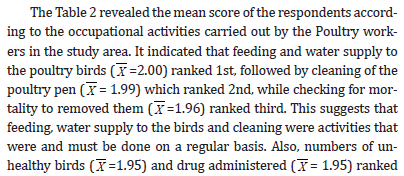

Table 2: Distribution of respondents by their occupational activities.
Note*: Source: Field Survey, 2023.
The Well - Being Indicator Status of the Poultry Workers
Table 3 indicates the well - being status of the poultry workers in the study areas using PWI subjective well - being indicators in which the PWI score of the respondent’s community connectedness was 56. This was subsequently followed by relationship, safety, and religion which had PWI score of 54.75 respectively. Also, the PWI for productivity and future security was 53.25 while that of health status was 51.25. Meanwhile, standard of living had PWI score of 45.75. However, the overall satisfaction with life scale of the respondents had the PWI score of 46.5. The implication of this result is that under the personal well-being index level, the poultry workers had a challenged level of subjective well-being on their standard of living and overall satisfaction with life as a whole. This could be as a result of sudden rise or increment of food, housing and other commodities while salary or income remains the same. While other indicators such as health, productivity, relationship, safety, community connectedness, future security and religion show that the poultry workers had a compromised level of subjective well-being in their pursuit of satisfactory well - being status.
Table 3: The well - being indicator status of the Poultry workers.
Note*: Source: Field Survey, 2023.
Well-Being Status of the Respondents
The result in the Table 4 revealed that less more than half (71.4%) of the respondent had a compromised level of well-being which suggests that a sizable majority of respondents are feeling that the poultry occupational activities are limiting or reducing their overall well-being. This could refer to a number of well-being factors, including safety, standard of living, health, relationships and life satisfaction. The weakened state of well-being may be a sign of conditions like health problems, stress at work, or other problems that lower their quality of life. Meanwhile, few (16.0%) of the respondents had a challenged level of well-being which implies that a lower percentage of respondent’s experience challenges or barriers to reaching their ideal level of well-being because of the nature of the poultry occupational activities. In this instance, the word "challenged" can suggest that these people are facing more significant problems or difficulties than the overall sample of responders. Lastly, 12.6% of the respondents had a normal level of well-being which shows that a small percentage of the respondents believes their degree of well-being is satisfactory. It's possible that the respondent’s poultry occupational activities don't have a major detrimental impact on their standard of living, health, safety and general wellbeing.
Table 4: Well-being status of the respondents.
Note*: Source: Field Survey, 2023.
The results point to a recurring pattern in which a significant portion of Oyo State's poultry workers indicate that their jobs have a compromised impact on their wellbeing. Smaller groups, on the other hand, are also dealing with challenges or continuing to live more normally. It is crucial to comprehend these trends in order to pinpoint problem areas and possible solutions such as working conditions, safety precautions, and support systems may use some improvement to enhance the well-being of poultry workers.
Effect of the Occupational Activities on Well-Being of Poultry Workers
The result of the effect of occupational activities on well-being of poultry workers was derived using the working condition from the activities. The effect was categorized into low effect and high effect using the mean score (= 20.9). The mean and above (= 25) represent high effect of occupational activities on well-being in which 52.4% of the respondent indicated. This suggests that the poultry workers think their employment in the poultry farm will have a significant negative impact on their general well-being. Meanwhile, the mean and below (=16.68) represent low effect of occupational activities on well-being in which 47.6% of the respondents indicated which suggest that some respondents may not believe the activities in the poultry farm have a major influence on their well-being. It's crucial to understand that "low effect" refers to a perceived impact that is lower than that of the group who reported a high effect, not that there is no effect at all (Table 5).
Hypothesis for the Study
HO1: There is no significant relationship between the occupational activities of the poultry workers and their well-being.
Table 5: Level of effect of occupational activities on well-being.
Note*: Source: Field Survey, 2023.
The results of the regression analysis indicates that secondary occupation (t=2.777, p=0.006) was positively related to the well-being of the poultry workers. This implies that having other occupation in addition to working in the poultry farm may provide additional income and a sense of fulfillment that contributes to the well-being of the poultry workers. Years spent in schooling (t=1.703, p=0.090) had a positive significant relationship which suggest that the higher the years spent in receiving formal education may lead to better opportunities or position in the poultry farm and therefore a higher quality of life.
Also, income (t=2.702, p=0.008) was positively significant to the well-being of the poultry workers. This implies that having a higher income in the poultry farm can lead to greater financial security and overall well-being among the poultry workers and Number of birds in the poultry farm (t=1.767, p=0.079) was positively significant which implies that a large number of birds in the poultry farm could lead to more stress for poultry workers, as they may carry out more activities for the birds thus impacting the poultry workers well-being. However, size of poultry farm in hectares (t=-2.374, p=0.019) had a negative association with the well-being of the poultry workers which implies that a larger poultry farm may require more effort and time to manage, which can be stressful and thereby reducing the well-being of the poultry workers in the study area (Table 6).
Table 6: Summary of regression analysis showing the relationship between some selected socio-economic characteristics and well-being of the poultry.
Note*: Source: Field Survey, 2023.
Conclusion
From the research study it can be concluded that majority of the respondents were male, young single, educated and active. The respondents were involved in activities such as feeding the birds, supplying water to the birds, cleaning of the poultry pen etc. which was carried out on the poultry farm. Majority of the respondents indicated that the poultry occupational activities limited their standard of living, health, safety, relationship and life satisfaction which indicates a compromised level of well-being, and more than half of the respondents indicated a high effect of occupational activities on their well-being in the study area.
References
- American Occupation Therapy Association (2014) Occupational Therapy Practice Framework: Domain and Process (3rd Edition). The American Journal of Occupational Therapy 68(1): 1-48.
- Sánchez Sellero MC, Sánchez Sellero P, Cruz González MM, Sánchez Sellero FJ (2014) Organizational Characteristics in the Labour Satisfaction in Spain. Rev Adm Empres.
- Kerner I, Rakovac M, Lazinica B (2017) Leisure-Time Physical Activity and Absenteeism. Arch Ind Hyg Toxicol 68: 159-170.
- National Institute for Occupational Safety and Health (2009) NIOSH Safety and Health Topic: Agriculture Safety. Retrieved July 16.
- WHO (2021) https://www.who.int/activities/promoting-well-being
- Ajani EN, Mgbenka RN, OnahO (2015) Empowerment of Youths in Rural Areas through Agricultural Development Programmes: Implications for Poverty Reduction in Nigeria. International Journal of Research in Agriculture and Forestry 2(2): 34-41.
- Price R (2019) Youth employment needs in Nigeria. Institute of Development Studies. Knowledge, evidence and learning for development (K4D).
- Health and Safety Executive (2018) Workplace Fatalities in Great Britain 2018. Annual Statistics July 4.
- Ekpenyong CE, Inyang UC (2014) Association Between Workers Characteristics, Workplace Factors, And Work-Related Musculoskeletal Disorders: A Cross-Sectional Study of Male Construction Workers in Nigeria. International Journal of occupation safety Ergon 20(3): 447-462.
- Van den Berge M, Hulsegge G, Van den Molen HF, Proper KI, Pasman HRW, et al., (2020) Adapting Citizen Science to Improve Health in an Occupational Setting: Preliminary Results of a Qualitative Study. International Journal of Env Res Public Health 17(19): 4917
- Adeyonu, AG, Ajala AO, Adigun GT, Ajiboye BO and Gbotosho OO (2016) Determinants of Sweet Potato Value Addition Among Smallholder Farming Households In Kwara State, Nigeria. Journal of Tropical Agriculture, Food, Environment and Extension 15(1): 17-22.
- Ogba O, Ahaotu EO, Ihenacho RO, Chukw AO (2020) Challenges of Small Poultry Farms in Layer Production in Ikwuano Local Government Area of Abia State, Nigeria. Sustainability, Agri, Food and Environmental Research 8(3): 194-204.
- International Wellbeing Group (2013) Personal Wellbeing Index-Adult (PWI-A).
- Khor S, Cummins RA, Fuller Tyszkiewicz M, Capic T, Jona C, et al., (2020) Australian Unity Wellbeing: - Report 36: Social connectedness and Wellbeing. Geelong: Australian Centre on Quality of Life, School of Psychology, Deakin University.
- Tomyn A J, Weinberg MK and Cummins RA (2015) Intervention Efficacy Among ‘At Risk’ Adolescents: A Test of Subjective Wellbeing Homeostasis Theory. Social Indicators Research 120(3): 883-895.
- Yinusa MB (1999) North farms alone: A study of rural livelihoods in the middle belt of Nigeria. DARE ASLD working paper 38.




 We use cookies to ensure you get the best experience on our website.