
Research Article 
 Creative Commons, CC-BY
Udder Edema in First-Calvers and its Therapeutic Management for Improved Milk Production
*Corresponding author: Yuldashev AА, Branch of Astrakhan State Technical University in Tashkent region of the Republic of Uzbekistan.
Received: February 02, 2025; Published: February 13, 2025
DOI: 10.34297/AJBSR.2025.25.003372
Abstract
One of the most common problems among first-calf cows is udder swelling. According to a number of authors, this phenomenon is considered a physiological norm, which occurs shortly before calving and goes away on its own by 10 days after calving. Currently, in the conditions of modern cattle breeding, udder edema occurs in 80-90% of first-calf heifers, and often causes behavioral disturbances, pain, diaper rash in hot weather and can cause the development of mastitis and dermatitis of the udder, therefore, this problem requires intervention, which consists in the early treatment of edema. The study, conducted at one of the leading dairy farms in the Chuvash Republic, was aimed at determining the effectiveness of methods for treating udder edema in first-calf cows using the drug Dexavet 0.4, Ketoprof, Mastisept-A ointment, as well as the immunomodulating biological product Bovistim-K. Positive phenomena were noted in the dynamics of biochemical parameters of the blood of animals during therapy, namely an increase in the level of glucose, calcium, phosphorus, total protein and a decrease in AST, ALT, cholesterol and alkaline phosphatase. We have determined that an integrated approach to the treatment of udder edema allows us to reduce the recovery time of the mammary gland, prevents the transition of edema to the subclinical form of mastitis, and also helps to increase the milk productivity of cows during the milking period by eliminating pain and reducing pressure on the capacitive system of the udder.
Keywords: First-calf heifers, Udder Edema, Bovistim-K, Dexavet, Ketoprof, Mastisept A, Somatic Cells
Introduction
Udder edema is an accumulation of lymph in the mammary gland tissues, physiologically normal for heifers during the dry period, but causing discomfort, as with mastitis: reduced lying time, anxiety, pain. Edema can disrupt the structure of the udder and teats, increasing the risk of mastitis and early culling [1].
Risk factors include excess salt in the diet, late insemination, obesity, genetics, glandular tissue development, oxidative stress and stress during regrouping, and heat [2,3].
The mechanism of edema is increased blood flow, which increases pressure, increasing capillary permeability. Fluid effusion in the tissue leads to protein accumulation and, as a result, even greater fluid inflow. Tissue inflammation clogs the vessels, disrupting the outflow [4].
Therapy for udder edema is often not carried out, although its negative impact on productivity, milk quality, and health has been proven. First-calf heifers suffer especially severely, experiencing discomfort, which leads to soreness, decreased productivity, and decreased milk quality [5].
Thus, the aim of our study was to provide a veterinary justification for the appropriateness of using therapeutic measures for udder edema in first-calf heifers.
Materials and Methods
The study was conducted in the conditions of a modern dairy farm of the Tsivilsky municipal district of the Chuvash Republic.
The study involved first-calf heifers of the black-and-white breed (24-28 months, average weight 500 kg). The animals (with pronounced udder edema after calving) were divided into 3 groups based on the pair-analogue principle, based on their clinical status. The control group did not receive any treatment. The first experimental group received: intramuscular Dexavet (2 cm³/100 kg) on the 1st day, Ketoprof (3 ml/100 kg) twice on the 2nd and 3rd days, and externally Mastisept-A for 4 days. The second experimental group additionally received intramuscular Bovistim-K (2 cm³/100 kg) on the 1st and 4th days. Bovistim-K is a suspension based on a polysaccharide complex of yeast cells, benzimidazole and beta-carotene (Federal State Budgetary Educational Institution of Higher Education Chuvashia State Agricultural University).
After calving, all animals were milked three times during the first day, then transferred to the fresh group (transit 1) and milked twice. Blood biochemistry, milk productivity, colostrum and milk parameters were analyzed for 10 days after calving. Milk samples were collected in the morning in disposable test tubes. Udder edema was diagnosed based on signs of inflammation (hyperemia, soreness, compaction, local increase in temperature, diaper rash), taking into account the anamnesis. VetScan VS2 was used for blood analysis (calcium, phosphorus, glucose, total protein, cholesterol, alkaline phosphatase, AST, ALT). Milk productivity was monitored in the Seleks program. Fat and protein were determined on EKOMILKBOND, somatic cells – on Somatos-Mini according to GOST 31449- 2013.
Results and Discussion
During the study of biochemical parameters in experimental animals, we identified patterns in the values between experimental and control animals. According to the data in Table 1, the level of calcium and phosphorus in the blood serum was statistically significantly higher (P < 0.05) compared to the control groups on the 5th and 10th days after calving. At the same time, the calcium level remained below normal in all groups (8-11 mg / dl). In the control cows, the aminotransferase indicators (AST and ALT) were significantly higher than in the experimental ones, which indicate more intense oxidative stress in the control animals. The AST and ALT indicators in all groups were above the reference values. The concentration of glucose in the blood increased in all groups during the experiment. At the same time, in the control and 1st experimental groups, the glucose content on the 5th day after calving was below normal, which indicates a negative energy balance and the need to introduce energy components. The experimental groups had better mineral metabolism (calcium, phosphorus), while the control groups showed more intense oxidative stress and negative energy balance at the beginning of the study.
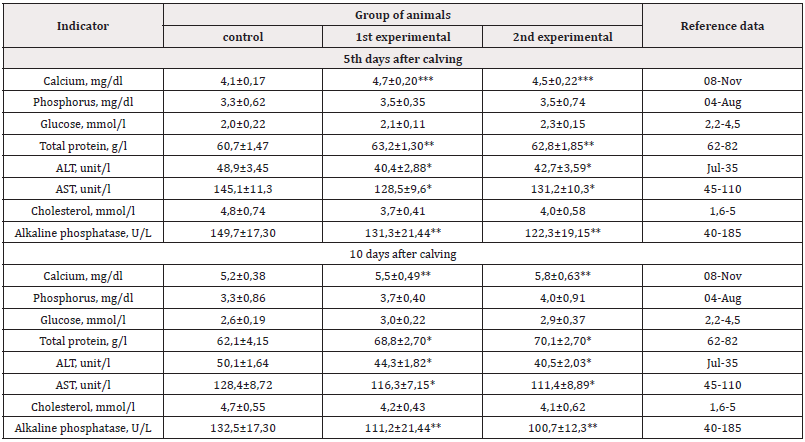
Table 1: Dynamics of biochemical parameters of animals.
Note*: *P≤0,05, **P≤0,01, ***P≤0,001.
The cholesterol level was within the normal range. Its decrease from 5 to 10 days after calving indicates the active use of lipids for milk production.
The ALP level in all cows was within the normal range, but in the control group it was statistically significantly higher than in the experimental ones on the 5th and 10th days after calving. The ALP level decreased from 5 to 10 days in all groups, the decrease was more pronounced in the experimental groups. This dynamics is due to the use of drugs against udder edema, as a result of which lactation is established in animals at an earlier stage, negative consequences such as pain and discomfort are eliminated, and the additional use of the biopreparation Bovistim-K has an antioxidant effect, preventing the destruction of cells of vital organs.
In animals of the experimental groups, the therapeutic efficacy reached 100.0% (n=10). It is important to note that neither latent nor clinically expressed mastitis was registered during the use of therapy. In the control group, the recovery period was 8.8 days, and the therapeutic efficiency was 80%. In this case, we took into account the volume of the udder, folds on the udder after milking, gland density, local temperature, soreness and pressed with a finger, assessing the rate of straightening of the depression. During the treatment with the drugs, not a single case of allergic reaction or side effect was registered.
To assess the effect of treatment of udder edema in first-calf cows, we conducted a study of milk productivity, as well as a number of colostrum and milk indicators. The data are presented in Table 2. Based on the results, it can be concluded that the use of Dexavet + Ketoprof + Mastisept, as well as Bovistim-K, led to an increase in productivity, namely from 16.0 ± 1.1 kg to 25.3 ± 1.7 kg (by 9.3 kg), and from 16.2 ± 1.2 kg to 25.8 ± 2.0 kg (by 9.6 kg), while in cows without treatment, milk yield increased from 16.4 ± 1.2 to 23.2 ± 2.1 kg (by 6.8 kg). At the final stage of observation (10 days after calving), the average daily milk yield in animals of the 1st and 2nd experimental groups was higher than in the control by 2.1 kg (9.1%) and 2.6 kg (11.2%).
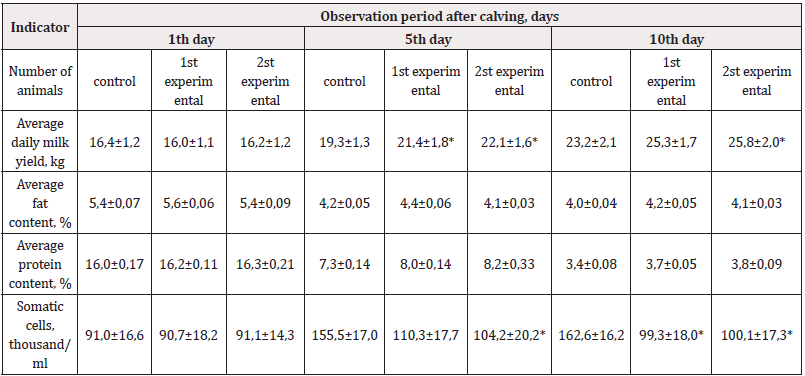
Table 2: Indicator of colostrum and milk.
Note*: *P≤0,05.
In addition, the fat and protein content in the control group milk samples was 4.0±0.04% and 3.41±0.08%, respectively. Samples taken from the 1st and 2nd experimental groups of animals contained more protein throughout the study than cows without therapy - by 0.7%, 0.9% (5 days after calving) and by 0.3%, 0.4% (10 days after calving), and fat on the 10th day of observation by 0.2% and 0.1%, respectively.
Due to the fact that 2 cows with subclinical mastitis were identified in the control, we noted an increase in the number of somatic cells in animals without therapy, namely on the 5th day - by 45.2 - 51.3 thousand / ml, on the 10th day - by 62.5 - 63.3 thousand / ml compared to the experimental animals.
Conclusion
Thus, in the course of our study we determined that early intervention in case of fluid accumulation in the alveolar and connective tissue of the udder of first-calf heifers is effective, according to the results of the study, injections of the glucocorticosteroid drug Dexavet 0.4, the non-steroidal antiinflammatory drug Ketoprof, external treatment with Mastisept-A ointment and intramuscular administration of the complex immunomodulatory biopreparation Bovistim-K allow in the shortest possible time to restore the activity of the mammary gland and obtain the highest milk yields and milk of the best quality.
References
- Gussmann M, Denwood M, Kirkeby C, Farre M, and Halasa T (2019) Associations between udder health and culling in dairy cows Prev Vet Med 171: 104751.
- Morrison EI, DeVries TJ and LeBlanc SJ (2018) Short com-munication: Associations of udder edema with health, milk yield, and reproduction in dairy cows in early lactation J Dairy Sci 101: 9521-9526.
- Tyler HD and Ensminger ME (2006) Dairy Cattle Science Dairy cattle science. 4th Pearson Prentice Hall 417.
- Kondruchina SG, Semenov VG and Larionov GA (2021) Effect of immunoprophylaxis on reproduction function of highly productive cows IOP Conference Series: Earth and Environmental Science Cheboksary, 012037.
- Naqvi SA, De Buck J, Dufour S and Barkema HW (2018) Udder health in Canadian dairy heifers during early lactation 101: 3233-3247.




 We use cookies to ensure you get the best experience on our website.