
Research Article 
 Creative Commons, CC-BY
A Knowledge-Based Ideology as A Basis for Constructing a Complement to The Grounds of Contemporary World Health Care and Health Surveillance Platforms
*Corresponding author: Michael Yu Chernyshov, Siberian Institute of Plant Physiology and Biochemistry, Siberian Branch, Russian Academy of Sciences, Russia.
Received: March 07, 2025; Published: March 19, 2025
DOI: 10.34297/AJBSR.2025.26.003427
Abstract
Discussed is the Knowledge-Based (KB-) ideology proposed by the author and applied for constructing a complement to the grounds of contemporary world health care and health surveillance platforms. The KB-ideology possesses a potential bound up with orienting medical specialists to scientifically grounded treatment of diseases. Furthermore, it may be considered as an approach, which allows the specialist to construct a complement and, so, refine the grounds of the contemporary world health care system and the contemporary health surveillance platform. This is due to the fact that the KB-ideology allows the specialist involved in solving the problems discussed to achieve deeper understanding of the principal issues and, in this connection: (a) Rely upon (proceed from) a sufficiently wide set of possible viewpoints onto the disease (i.e. consider a wider set of approaches to understanding of the problem); (b) Find and apply an approach, which would presume consideration of not simply a set of disease cases (or an epidemic) but the “problem, which is incurred by this set of diseases (/epidemic)”; (c) Take into account Negative Global Health Tendencies (NGHTs), while including those bound up with growth of the number and the diversity of definite classes of diseases in the world and those bound up with health care system shortcomings; (d) Come to deeper understanding of possible consequences of such NGHTs; (e) Formulate a system of priority tasks bound up with the world experience in the measures of health care provision and limited by the KB-ideology under the conditions of growth of the number of diseases and epidemics in the world; on this basis. (f) Formulate global practical tasks of the health care system bound up with possible undertakings considered to be urgent in connection with the observed growth of the number of definite classes of diseases and epidemics in the world.
Keywords: Negative global health tendencies, Health care platform, Health surveillance platform, Knowledge-based ideology, Knowledge-based renovations in medicine
Abbreviations: AIDS: Acquired Immune Deficiency Syndrome; ANN: Artificial Neural Network; CDC: the Center for Disease Control and Prevention; CVD: Cardiovascular Disease; HPV: Human Papillomavirus; KB: Knowledge-Based; KBA: Knowledge- Based Approach; KBTA: Knowledge-Based Treatment Approach; NGHTs: Negative Global Health Tendencies; NGTs: Negative Global Tendencies; NSHLTs: Negative Social Health Level Tendencies; PEPFAR: President’s Emergency Plan for AIDS Relief; PHC: Public Health Care; PHCP: Public Health Care Policy; PHCS: Public Health Care System; PMI: President’s Malaria Initiative; TDSs: Types of Disease Sources; VD: Viral Disease; VID: Virus-Induced Disease; WHO: World Health Organization.
Introduction
The present article discusses application of elements of the Knowledge-Based (KB-) ideology developed by the author [1-3] for solving some core problems of health care and health surveillance, concretely, in (i) Complementing of understanding of such problems and (ii) Finding the approaches to solving such problems. In 2022-2023, six teams of talented researchers-initiated discussions of necessity of KB-approaches (KBAs) to treatment (KBTAs) in medicine. One of such approaches [4] discussed application of a knowledge-based approach, Neural Networks (ANNs) and elements of engineering to clarify understanding of the immune-related processes underlying clinical specificities of breast cancer progression [4]. The researchers discussed the possibility to obtain knowledge mined by ANNs from omics-data available in www to explain clinical problems bound up with definite breast cancer cases. A. Faheem and his co-authors also tried to deepen into cancer biology. Their KB-approach implied a systemic review of computational approaches in order to deepen into cancer biology, while implying informed drug repurposing [5]. Mohammed N [6] joined the discussion bound up with the necessity of KBAs to lung cancer diagnostics and treatment [6].
The idea of necessity of a KBTA was also uttered in V. Gureghian and his co-authors [7]. The initiative of [8] and his co-authors implied transformation of global approaches to prevention of chronic diseases and even health management across the lifespan, all at the expense of the account of (i) Integrating genomics, (ii) Behavior change, (iii) Digital healthcare solutions, and also (iv) Some initiatives bound up with regulation of the patient’s behavior [8].
Analysis of the ideas of outstanding predecessors (who practically implemented their approaches) has stimulated the author of this article to undertake an attempt of a systemic and multi-aspect approach, which would be applicable not only to prevention and treatment of various diseases, but also to problems of health care. This has brought the author to formation of a KB-ideology that presumes operating with multi-aspect knowledge, which may not be reduced only to the knowledge the knowledge bound up with traditional forms of treatment of disease cases. Furthermore, the KB-ideology proposed presumes operating with multi-aspect knowledge, which may not be reduced only to the knowledge about disease cases. The author intends to demonstrate that the KB-ideology can also orient the specialists involved in problems of health care and health surveillance to new approaches.
Application of the KB-ideology was earlier discussed by the author in connection with finding efficient approaches to fighting oncological and other diseases [3]. This ideology has already laid a practical basis for efficient clinical approaches to prophylaxis, prevention and treatment of oncological diseases [3]. It orients medical specialists involved in treatment of various oncogenic diseases.
Problems and Approaches to their Analysis and Solution
Plausible, knowledge-based and reliable biomedical grounds may without doubt form a basis of any treatment method and, surely, a basis for health care and health surveillance approaches. There are the two sides, which influence existing world health problems: human health state problems and healthcare system problems. Consider these problems.
Some factors, which Condition Human Health State Problems
The principal causes of common health problems include the factors external with respect to a person (multi-aspect degradation of the natural environment) and the internal ones (unhealthy diet, unhealthy behaviour, lack of exercise, high stress levels, etc.). There are also internal (biological) problems, which do allow people overcome external problems. These include personal genetic potential and low personal immunity often caused by imperfect genetics.
Nabin Paudyal speaks about necessity of progress in medical science. He discusses the people’s lifestyle, which is becoming increasingly unhealthy [9]. In turn, S. Hameed [10] and M. Steffen [11] emphasize the problem of medicalization, which in their opinion is gradually becoming a growing problem.
Sad Facts of Healthcare Problems with which Humankind Encounters as a Result
There are still the following challenges bound up with health care in the world:
a) One billion people in the world lack access to national health care systems.
b) 36 million deaths each year are caused by cardiovascular diseases, cancer, diabetes and chronic lung diseases; this is almost two-thirds of the 56 million deaths each year worldwide (a quarter of these take place before the age of 60).
c) According to available estimates, over 17 million people yearly die from cardiovascular diseases (CVDs), what makes some 30% of all global deaths (over 80% of CVD deaths occur in low- and middle-income countries.
d) Every year, over 7.5 million children under the age of 5 die from malnutrition and preventable diseases.
e) Every year, over 6 million people die of infectious diseases (see annual data of the World Health Organization (WHO)).
f) AIDS/HIV has been spreading rapidly; according to the UNAIDS estimates, there are roughly 30 million people in the world living with HIV, 2.5 million with new infections of HIV, some 2 million deaths are annually caused by AIDS.
g) Up to 9 million new cases of tuberculosis appear every year; tuberculosis still kills some 1.5 to 1.7 million people every year.
h) Every year 1.2 to 1.5 million people die from pneumococcal- bound diseases, what places these vaccine-preventable diseases to position three among causes of deaths worldwide, over half of the victims being children.
i) Pneumococcus causes such infections as meningitis, pneumonia and sepsis (in developing countries, half of the children; even those who receive medical treatment will die (data of the WHO); every second surviving child acquires some form of disability.
j) Malaria causes some 225 million acute illnesses and over 780,000 deaths, annually.
k) 150,000 people (mostly children under 5) annually die from measles (this takes place despite the fact that immunization costs less than 1 USD and has been available during more than 60 years).
l) Dengue Fever (Thailand).
m) The recent Ebola outbreak in Liberia and similar in some other African countries is one of the most hazardous health-related disasters that readily comes to mind.
n) The period of COVID-19 has substantially influenced the attitude to healthcare problems. A review and reconsideration of healthcare strategies followed. The situations of that period have changed the attitude to public health in principle. Strategies oriented to recovery of understanding of the public health and to some new understandings of the “norms” have appeared [12].
o) In recent years, the issues usually discussed in the articles of numerous authors writing on the problems of health care presumed consideration of such practically (not medically or scientifically) important viewpoints to the problem consideration as economic, political and even environmental ones [13].
Healthcare Problems Bound Up with Clinics
All hospitals in many countries daily encounter numerous problems. Complexity of these problems makes improvements of the health care systems in many aspects and improvements of health institutions (clinics) problematic. But such improvements are quite important.
Below one can find the list of at least 10 obvious (superficial) healthcare problems bound up with hospitals all over the world: (i) Inadequate government financial policy causing financial (and hence functional) instability in functioning of clinics; (ii) Lack of communications between clinics; (iii) Deficit of medical information exchange between clinics; (iv) Absence of adequate technological facilities in many clinics; (v) Deficit of health care system medical specialists; (vi) Inadequate education of health care system specialists and absence of their adequate practical training; (vii) Technological problems arising owing to the absence of properly trained technical staff; (viii) Labour overloads of doctors and other specialists; as a natural result (ix) Numerous problems bound up with inadequate treatment of the patients; (x) Problems bound up with safety of both the patients and the medical staff. It is obvious that solution of these problems is not simple and needs time. For a long time, it was obvious that healthcare systems of the world needed changes [14,15]. During many years, one of the ideas bound up with development of the PHCS was “strengthening weak primary care systems” [16].
Some Economic and Political Issues of Healthcare Problems in Two Highly Developed Countries
Obviously, healthcare problems are numerous, and the tasks of their solving are global in their dimension.
Many authors writing on health care problems in the USA speak exclusively about the healthcare industry problems. Meanwhile, Medicare, Medicaid and Medi Find, which are responsible for health care issues, consider not only levels of federal funding (providing for reimbursement) but also important medical issues. GoInvo is a healthcare design company that crafts innovative digital and physical solutions. And this is also very important.
Naturally, various aspects of the policy and the decisions of abovementioned companies are dependent not only on economic considerations, but also on healthcare political issues. The latter are bound up with the form and the level of healthcare organization, the level of healthcare planning of undertakings and, as far as the author understands, on the level of diverse knowledge (understanding of the problems) employed. This understanding shall include knowledge about healthcare finances, about principles of healthcare organization and planning, and, finally, knowledge about medical issues implied (these issues are usually ignored in discussions).
For example, one of the problems typical of the USA is the lack of transparency in assigning hospitals to customers (potential patients) under the health insurance policy cover. The customers that are under health management organizations have restrictions imposed on where the customers (patients) are to receive treatment.
As it is expected, an average-level health insurance company (or a healthcare organization) would usually work with hospitals and medical centres, which will favour them at the expense of topflight hospitals (perhaps due to their prices and other related expectations). In other words, say, a patient (which is under the health insurance policy coverage) may need to urgently receive treatment in case of a life-threatening emergency at a hospital, which is not listed under his insurance cover. If such a patient goes ahead, he will sooner have to pay for the analyses needed from his pocket. Naturally, the policy of transparency (which is expected from a good healthcare system) shall presume preliminary assigning the hospitals the customer (patient) may potentially deal with.
Another serious political healthcare problem is bound up with the lack of transparency, when it comes to selecting the brand of drugs and medications, which are to be issued to the patient after the doctor’s prescription. The surveys conducted in many hospitals have shown that primary selection criteria are profits and benefits rather than the efficiency of the medications. The government regulatory bodies in charge of the healthcare problems should make sure that they enforce regular disaster preparation policies in the health sector of their country. The truth is that hospitals, medical clinics, and other players in the healthcare system need to go an extra mile with disaster preparedness in order to keep healthcare services going [16].
There is another problem with the healthcare system, which is typical of some countries of the world. When a patient is brought to a hospital (or any other medical facility), he is expected to deposit a definite sum of money before analyses are initiated (or even before he is attended to by doctors). This takes place even if the medical specialists encounter an obvious medical emergency. As a result of this problem, many lives have been wasted because of the delay in raising the cash required for analyses and treatment [17].
There are publications, which discuss main trends of the Public Health Care Policies (PHCPs) and the current problems bound up with healthcare reforms [18] and development of the Public Health Care Systems (PHCSs) [19]. It is not a secret that PHCPs often met public counter-streams in connection with the issues of healthcare inequalities [20]. So, the need in development of, firstly, an adequate policy oriented to support of patients is obvious, and, secondly, the healthcare settings within the frames of the national PHCPs is obvious.
Now consider the main trends of the PHCP and some current problems bound up with development of the national PHCS in Russian Federation. Public health priorities may represent definite interest for the reader. The role and the responsibility of the state authorities and the regional authorities in the field of Public Health Care (PHC) are discussed. The necessity of acceptance of an adequate PHCP on regional levels of Russian Federation has to be emphasized. Such acceptance is important in the aspect of provision of workability of the healthcare system. The issues of accessibility of PHCS for the people, and sufficient quality of PHCS have been discussed earlier [21].
Due to the fact that the subjects of the Russian Federation were pretty much given free rein in decision making concerning development of the healthcare system, the issues of such development of the regional healthcare policy remained unsolved. Analysis of the current healthcare situation in Russia has revealed that during the recent 10 years governmental activity has not been sufficiently systemic. The author is sure that this is partially due to the lack of an efficient knowledge-based PHCP, which should take into account not only the negative impact of, say, some problems bound up with the external environment, which cause healthcare problems, but also the structure and characteristics of the healthcare system’s internal potential. Development of the regional health care policies is needed.
The contemporary Russian conception of sustainable development of the socio-economic system is based on the idea of management of the population life quality, which is determined by the efficiency of functioning of a number of social economic factors. Therefore, the author emphasizes that PHCS in Russian Federation necessitates further deep modernization.
Problems Bound Up with Various Forms of Deficits
In general, medical clinics maintain inpatient beds and usually provide other services such as outpatient services, operating room services, and pharmacy services. Meanwhile, there is indeed a very large market for healthcare service providers in the USA and in other parts of the world. For example, according to the estimates of the WHO, there are about 9.2 million physicians, 19.4 million nurses and midwives, 1.9 million dentists and other dentistry personnel, 2.6 million pharmacists and other pharmaceutical personnel, and over 1.3 million community health workers worldwide. And still there is deficit of medical specialists in all countries of the world. Furthermore, in many cases, the expensive equipment purchased by hospitals is maintained inadequately due to lack of specially refurbished premises and well-trained staff.
All over the world, patients encounter difficulty with finding a good medical doctor. This problem is ever more complex, when the disease case is either complicated or nonstandard. This problem is conditioned not by low salaries paid to the doctors. The term “good doctor” implies “sufficiently qualified and experienced specialist”. One of the problems is that medical doctors receive education in anatomy and human physiology, which is incomparable with the education of graduates from biological faculties. As a result, in many- many cases medical doctors encounter problems with formulation of correct diagnoses. Being obviously helpless, they prefer to act according to the primitive (and limiting) protocol accepted by the clinic they work in. As a result, the statistics are staggering.
For example, in practically all clinics of Russian Federation, medical specialists are unable to recognize calmed lymphorrhea (i.e. lymphorrhea on the stage, when leakage of lymph has been stopped or partially stopped). When observing the red (with a strong shade of blue) colour of the patient’s shin with lymphorrhea craters, these awfully ignorant persons, which do not deserve the title of medical doctors, will (contrary to any logic and common sense) continue to insist that the case observed by them is erysipelas. And any arguments of the patient (despite the fact that he is professor of medicine and professor of biology) are ignored.
It is worth noting that lymphorrhea has not yet been included into the list of diseases officially recognized in Russia. It seems that medical specialists in Russia have never before observed and treated lymphorrhea. Russian medical specialists ignorantly discuss the issue of organizing “lymph drainage” (for prevention of formation of fibrous tissues). Meanwhile, they are not ready to explain the following: drainage (i) Under what conditions; (ii) Where to and (iii) What for. It is natural that the organism decides the issue of drainage. Doctors, which do not possess sufficient competence, may not interfere with drainage processes.
While demonstrating their ignorance, having forgotten that they discuss lymphorrhea (i.e. lymph leakage), such “specialists” recommend (both practically and in their publications) the following three contradictory measures needed (in their opinion) to “reduce tissue swelling”: compression garments, body massage and frequent physical exercises [22]. Such statements reveal obvious inconsistency in the knowledge of these misguided specialists about the intention and the functions of the lymphatic system. These specialists are not ready to answer the following obvious questions: 1) How is it possible to wear compression garments, when lymph is actively flowing out; 2) How is it possible that exercises are recommended, when the patient needs rest and limitation of any activity (activity may provoke increase of the lymph flow); 3) Massage of which parts of the body?
No wonder that lymphorrhea has been described in the literature as “a form of complication of lymphedema” [22]. In many publications, one will encounter the following ignorant statement: “lymphorrhea occurs as a complication of lymphostasis of the lower extremities”. Actually, it is vice versa. No wonder that, as the poor patient encounters the following statement in the medical literature, “lymphorrhea cannot be completely cured” [22]. And the latter is a lie.
It is completely obvious that the situation described is not a result of a particular shortcoming in the knowledge or in the qualification of a definite medical doctor, no. This is a serious knowledge- related defect of the national healthcare system (absence of due physiological knowledge basis in professional medicine; absence of knowledge exchange between specialists in physiology and medicine, and absence of correlation of their efforts in analysis and treatment; superficial education at medical universities; admission of doctors to patients without due verification of their theoretical knowledge and practical qualification; etc.
Psychological, Etic and Some Other Related Problematic Issues Forming Healthcare Problems
These issues are multi-aspect, and these relate to both patients and their doctors.
a) According to the author’s experience, patients often feel themselves lonely during their stay at the hospital. This circumstance slows down their successful healing.
b) Harm to the patients at the hospitals has become a normal phenomenon. Meanwhile, any forms of harm to the patients may be avoided. This is one of healthcare’s most common problems. Consider an example. According to the statistical data, one of four Medicare beneficiaries, which are admitted to a hospital, suffers some form of harm during his (/her) stay.
c) It is known that medical specialists of clinics are emotionally exhausted. Burnout of medical specialists is characterized by emotional exhaustion, depersonalization, and an experienced heavy burden of vain daily efforts (not always bringing desired results) bound up with treatment of several patients simultaneously in the day-to-day work. Sometimes treatment of some disease is difficult and necessitates much time (without any guaranteed result). So, the surgeon is in a hurry to get rid of the patient after the operation, note, without finishing the treatment process. The burnt-out therapist also avoids brining his patients to their really complete recovery. As a result, the patients, who have been incompletely recovered, remain in uncertain situations. They distrust medical specialists. They are losing faith in medicine.
d) Inter-clinical communications (doctor-to-patient; doctorto- nurse; doctor-to-doctor) are not always adequate and ethic.
Organizational and Informational Aspects of The Healthcare Problem
The Center for Disease Control and Prevention (CDC) is often the first call, when disease outbreaks strike globally. This is the result of trusted relationships CDC has built over time with governments of the world, their ministries of health, and with other partners.
CDC cooperates with countries via global initiatives and programs like the U.S. President’s Emergency Plan for AIDS Relief (PEPFAR), the President’s Malaria Initiative (PMI), global health security, influenza, antimicrobial resistance, and immunization. CDC’s global engagements bring the agency’s technical expertise to our counterpart agencies around the world. These partnership relationships form the basic capabilities of many countries’, which enable the governments to pivot swiftly toward identifying, reporting, and controlling outbreaks, under the conditions, when every minute counts. CDC protects the United States by strengthening its real preparedness for any forthcoming health emergency. CDC works on investigation of various infectious diseases emerging. This helps to reduce morbidity and mortality. This helps to eliminate some of the world’s most hazardous diseases and epidemics. CDC forges stronger diplomatic relationships, works on prevention of economic losses, and drives future innovations, which guarantee health safety for the United States and, moreover, all over the world.
In 2024, CDC responded to: (i) new and expanding health threats, like clade I mpox including a case in the USA; (ii) various high-risk pathogens (like Marburg) emerging in new areas of the world; (iii) resurgences of vaccine-preventable diseases (like measles and polio). The stories bound up with these problems may be found in the 2024 CDC report, which highlights the work done in 2024 by CDC. Above problems are seen through the lens of the CDC’s Global Health Strategic Framework. Meanwhile, the CDC’s six core global public health capabilities do not include the capability to rely upon information and upon deep knowledge of diseases and deep knowledge of healthcare issues. Insufficient level of application of information technologies in the world healthcare systems may be noted in the list of their shortcomings. In recent years, there was an obvious deficit of medical publications, which would systemically generalize the knowledge about health care and health surveillance in the medical aspect. The present article describes a modest attempt to propose a complement to the health care and health surveillance platforms, which may be based on KB-renovations in medicine.
The Basis of the Problem Consideration
A practical KB-ideology developed for deeper understanding and treatment of diseases (especially, oncogenic ones) has been applied for the purpose of complementing of health care and health surveillance platforms. The concepts of “deep knowledge” and “deep understanding” of the issues bound up with health care and health surveillance have been interpreted by the author as knowledge and understanding of the problems in a principally enriched (i.e. scientifically extended and multi-aspect) format.
The knowledge-based ideology orients clinics to the need of the patient’s full recovery. The latter is formed of (i) Treatment recovery and (ii) Post-treatment recovery. When speaking about post-treatment recovery, which is needed in addition to the treatment strategy, the author implies re-establishing the patient’s psychological readiness for the full social life. The KB-ideology suggest to finding measures and undertakings addressing several specific recovery issues. This is a way to the true post-clinic recovery.
Problem Statement
Analysis of (i) Ideas of the predecessors (who practically implemented their approaches to development of healthcare and health surveillance systems), and (ii) Problems of the world healthcare systems, policies and strategies revealed by the author in course of analysis has stimulated him to undertake an attempt of a systemic and multi-aspect KB-approach (on the basis of the KB-ideology), which would help to construct just an addition to the grounds of contemporary world health care and health surveillance platforms. The author’s KB-approach presumes operating with multi-aspect knowledge, which would not be reduced to the knowledge about the disease cases only. As far as the aim of the present investigation is concerned, the author intends to make valuable systemic contributions into development of a really efficient and reliable health care and health surveillance systems, i.e., constructing advanced health care and health surveillance platforms.
Approaches to Solving Problems of Health Care
It is possible to state that, ideas represented by KB-approaches of talented predecessors [4-6] have been complemented in several aspects in the KB-ideology, which has been planned by the author to be characterized by its (i) Systemic organization and (ii) Truly multi-aspect character. When proceeding from the aspects of problem analysis in cases of treatment of hazardous diseases earlier discussed by the author in [3], it was possible to move on in understanding of the ways of treatment. But the KB-ideology has become oriented not only to a practicing medical doctor involved in treatment of a definite disease, but to numerous doctors and numerous biomedical researchers involved in solving diverse problems of prophylaxis and prevention, i.e., involved in solving health-care problems.
The KB-ideology orients medical specialists to finding really useful (extended, practically applicable and efficient) systems approaches, which would allow them to (i) Ascertain and formulate each time a set of the multi-aspect global problems to be solved, and (ii) Define the following objectives.
Objective 1
Reconsideration (and extension if necessary) of the system of possible viewpoints onto the “problem bound up with the existing health care system”. This task may be achieved only on an extended basis of scientific knowledge, i.e., within the frames of (at least) the following system of possible viewpoints (in other words, within the frames of a system of possible approaches to reaching the objectives) (see Figure 1).

Figure 1: A system of possible viewpoints onto the problem bound up with analysis, understanding and refinement of various healthcare systems.
Objective 2
Achievement of deep understanding of the problem bound up with the disease to be treated, what would imply, first of all, ascertainment of the Types of Disease Sources (TDSs). Knowledge of TDSs allows the specialists to define practical tasks in connection with the growth of the number and the diversity of types of disease sources or types of epidemics. It is obvious that TDSs influence the organism depending on its immune protective potential and/or its abnormalities.
Objective 3
Achievement of deep understanding of Negative Global Tendencies (NGTs) (Figure 2) bound up with the growth of the diversity of diseases in the world and taking account of these NGTs in complementing of the existing healthcare system and, so, constructing of more adequate healthcare and health surveillance platforms.
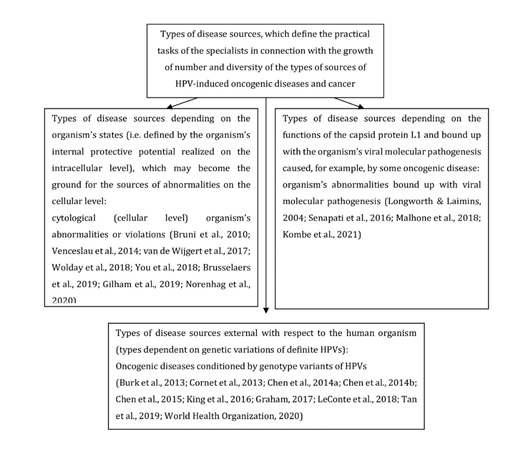
Figure 2: Types of the disease sources, which define the respective practical tasks of specialists in connection with the growth of the number and the diversity of the types of disease sources and epidemics. Such diseases may influence the organism on account of at least 3 above types of disease sources.
Objective 4
Achievement of deep understanding of possible consequences of above NGTs, understood as Negative Social Health Level Tendencies (NSHLTs), which are bound up, for example, with the growth of the diversity of diseases expressed in the form of such negative NGTs as high level of the figures of morbidity cases and mortality cases [23,24] (Figure 3). Now, taking into account possible consequences of these NGTs in the work, which is bound up with complementing of the existing health care system and constructing of adequate healthcare and health surveillance platforms, it is possible to formulate the following NSHLTs.
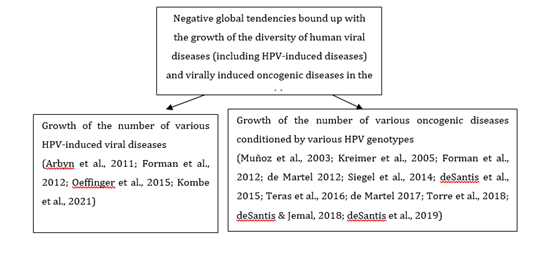
Figure 3: NGTs obvious in connection with the growth of the diversity of human diseases in the world.
Objective 5
Achievement of deep understanding of important practical tasks, which are considered to be urgent in connection with the disease situations in the world. These are various tasks bound up with possible undertakings of the specialists in connection with complementing of the existing health care system and constructing of an adequate healthcare platform.
Objective 6
Achievement of deep understanding (and formulation) of a system of priority tasks (i) defined by the KB-ideology and (ii) bound up with the world experience in the measures of health care provision.
Objective 7
Formulation of global practical tasks of the health care system bound up with possible undertakings considered to be urgent in connection with the observed growth of the number of various diseases and epidemics in the world.
Objective 8
Formulation of a system of priority tasks (i) defined by the KB-ideology and (ii) bound up with the world experience in the measures of health surveillance under the conditions of growth of the number of diseases and epidemics in the world.
Results
The following results may be discussed.
(i) A system of possible viewpoints onto the problem has been formulated. These viewpoints are results of the world experience in the measures of health care under the conditions of growth of hazardous diseases and epidemics in the world. It is necessary to attract the reader’s attention to the following very important issue reflected in Figure 1, and not made obvious. The system of possible approaches to the problems bound up with treatment of various diseases may be limited to scientific, medical and methodological viewpoints (see Figure 1). So, the treatment problems may be solved within the frames of scientific, medical and methodological approaches see Figure 1. Meanwhile, when there are problems bound up with improvement of the healthcare system, social viewpoints (Figure 1) must be added into consideration. Moreover, practical approaches (obtained owing to practical viewpoints see Figure 1 may be interpreted as economic approaches, political approaches and, possibly, also the approaches dictated by environmental factors.
(ii) Attention of the readers (represented, let us hope, by medical specialists and scientists involved in solving the problems discussed) has been attracted to the problems bound up with the hazardous diseases to be treated. Successful treatment shall imply, first of all, (a) ascertainment and deep understanding of
a) types of disease sources Figure 2 [3] (knowledge of these sources allows the specialists to define practical tasks in connection with the growth of the number and the diversity of types of disease sources or types of epidemics).
b) negative global health tendencies Figure 3 bound up with the growth of the diversity of various hazardous diseases and also with variations in the figures of morbidity and mortality cases in connection with various forms of diseases.
c) possible consequences of above negative global health tendencies, understood as Negative Social Health Level Tendencies (NSHLTs) Figure 4, which are bound up with the growth of the diversity of hazardous diseases expressed in the form of the negative global tendencies, i.e. high levels of global figures of morbidity and mortality.
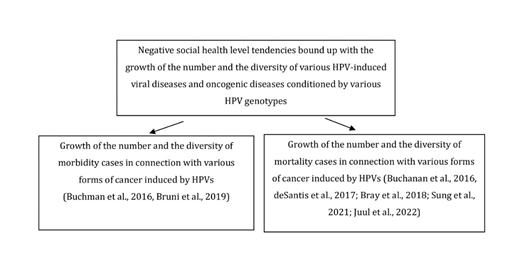
Figure 4: Negative Social Health Level Tendencies obvious in connection with the growth of the number of various diseases.
(iii) On this basis, it is possible to formulate
a) important practical tasks, which are considered to be urgent in connection with the disease conditioned problem (these are various tasks bound up with possible undertakings of the specialists bound up with refinement of the health care system) Figure 5.
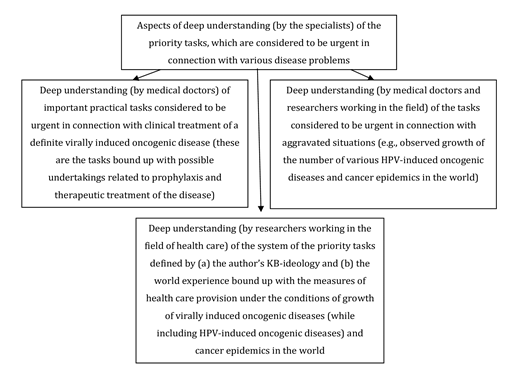
Figure 5: Aspects of deep understanding (by the specialists) of important practical tasks, which are considered to be urgent in connection with the disease and epidemic situations in the world. These are the tasks, which necessitate urgent health care undertakings.
b) priority tasks bound up with the world experience in the measures of health care provision Figure 6 (this system of tasks will orient the specialists in their work bound up with complementing of the existing health care system and constructing of an adequate healthcare platform).
c) global practical tasks of the health care system bound up with possible undertakings considered to be urgent in connection with the observed growth of the number of various diseases and epidemics in the world Figure 7 (this system of tasks will orient the specialists in their work bound up with complementing of the existing health care system and constructing of an adequate healthcare platform).
d) priority tasks defined by the world experience in the measures of health surveillance Figure 8. This system of tasks will orient the specialists in their work bound up with complementing of the existing health care system and constructing of adequate healthcare and health surveillance platforms.
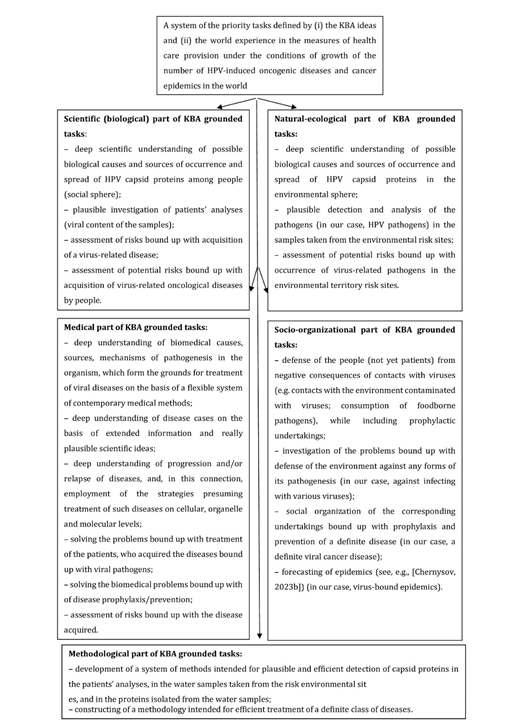
Figure 6: A system of priority tasks (i) Defined by the KB-ideology and (ii) Bound up with the world experience in the measures of health care provision under the conditions of growth of the number of hazardous diseases and epidemics in the world.
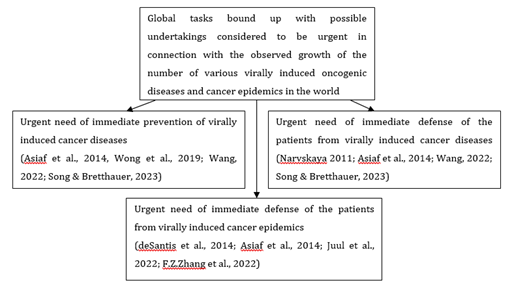
Figure 7: Global practical tasks of the health care system bound up with possible undertakings considered to be urgent in connection with the observed growth of the number of various diseases and epidemics in the world.
Discussion
As noted above, the issues, which are usually considered in medical articles of numerous authors writing about the problem of treatment of hazardous (e.g. oncogenic and viral) diseases (especially heavy forms of such diseases as Viral Diseases (VDs) and Virus-Induced Diseases (VIDs)) and about health care problems in principle, are normally reduced to consideration of the following traditional and very practically important aspects bound up with treatment: improved forms of analyses; practice of application of some new medication, which have appeared to date; unusual treatment techniques, etc. The material of the present publication is based on the author’s clinical experience and his scientific (physiological and psychological) findings. So, the conclusions have been supported by numerous results of clinical treatment processes and scientific investigations. This basis has supported by the author’s idea of KB-ideology, which has formed a complement for the grounds for some principally new attitude to problems of public health. The aspect of the KB-ideology has led to reconsideration of some objectives bound up with health care and health surveillance.
In course of investigations conducted during many years, the author has come to the conclusion that not simply a disease case is to be cured. Consideration of the problems (by the author) through the prism of the KB-ideology has allowed him to understand that it is necessary to search for a global approach (presuming global understanding of health care problems), which would form a complement to the known approaches of talented predecessors also declared as KB-approaches [4-6]. The KB-approach desired should be at least global in some sense (say, likewise in [7,8]) and multi-aspect. Following after useful and perspective KB-approaches developed in [4-6], the author’s KB-ideology has inevitably acquired such traits as (i) Multi-aspect character and (ii) Systemic character. It (iii) Presumes consideration and solving of not simply diseases but global problems bound up with diseases (or with epidemics); (iv) This problem may be represented and solved only on an extended basis of knowledge, i.e. within the frames of a multi-aspect system of possible viewpoints (in other words, within the frames of a system of possible approaches) Figure 1.
To explain above statements more clearly, let us first comprehend the results of this investigation represented above. In the process of investigation of the global problem implied by the disease, defined should be the most important issues, which influence the treatment processes (and, in this connection, define possible healthcare approaches): patterns of a definite disease, which are normally conditioned by the biological underground, first of all, by the types of disease sources, which determine practical tasks of the specialists in connection with the disease problem, i.e. define the most perfect forms of analyses, application of contemporary medication, advanced treatment methods, etc.
The author’s KB-approach is oriented to bringing the researcher closer to understanding of (i) Negative Global Tendencies (NGTs) bound up with the growth of the diversity of diseases; (ii) Global consequences of above NGTs expressed in the form of Negative Social Health Level Tendencies (NSHLTs), which may be bound up with the growth of the number and the diversity of various diseases. An approach within the frames of the KB-ideology stimulates the researcher to move on and (iii) Ascertain important practical tasks considered to be urgent in connection with the disease problem (Figure 5) (these are various tasks bound up with possible undertakings of the specialists directed not simply to prophylaxis, prevention, treatment undertakings, but to refinement of the health care system); (iv) Formulate a system of global priority tasks (for the specialists) bound up with possible undertakings considered as urgent (Figure 6); (v) Formulate a system of global practical tasks (of the health care system) bound up with possible undertakings considered to be urgent (Figure 7); (vi) Formulate a system of priority tasks in the measures of health surveillance (the set of such measures has been complemented on the basis of the world experience in the measures of health surveillance) (Figure 8). The KB-ideology is oriented not only to practicing medical doctors but to the researchers involved in solving global health-care and health-surveillance problems.
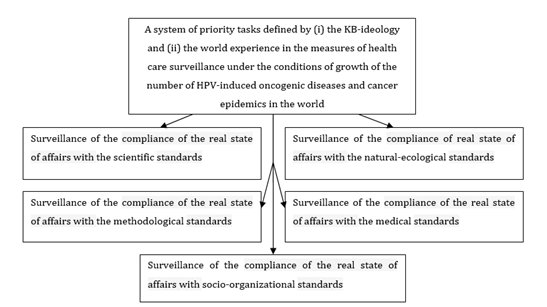
Figure 8: A system of priority tasks defined by the KB-ideology and bound up with the world experience in the measures of health surveillance under the conditions of growth of the number of hazardous diseases and epidemics in the world.
Conclusions
No doubt, plausible knowledge is the only reliable ground of any efficient treatment approach, any strategy of disease prophylaxis and prevention. Meanwhile, not simply knowledge itself may form the ground for moving on in medical treatment methodologies. A real progress in prophylaxis, prevention and treatment of hazardous diseases may be achieved only on the basis of the “knowledge brought into a system and represented in the form of definite conclusions made on a deeply analyzed scientific basis”. Only such multi-aspect and systematized knowledge may serve as a basis for substantial steps forward in the approaches and methods of combatting diseases and epidemics. No doubt, plausible knowledge brought into a system is the only reliable ground of any perspective development, refinement of the health care system and the health surveillance platform. In this connection, known approaches to solving the problems of health care and health surveillance have been analyzed by the author on the basis of application of ideas of the KB-ideology and some biomedical (and related) scientific ideas. Known approaches have been principally complemented in some aspects on account of principles of the KB-ideology.
The main advantage of the KB-ideology is that this ideology allows one to take into account additional explanations of possible approaches to solving complex medical problems. This, surely, relates to the problems of health care and health surveillance. When planning the present article, the author wanted to demonstrate the following advantages of the KB-ideology, which can aid to refinement of health care and health surveillance platforms. On the basis of the KB-ideology a healthcare specialist can achieve deeper understanding of the problem bound up with health care and health surveillance, and, in this connection, (i) Proceed (in investigations) from a useful wider set of possible viewpoints onto the disease (i.e. consider a wider set of approaches to understanding of the problem); (ii) Find and apply an approach, which would presume consideration of not simply a set of disease cases (or an epidemic) but the “problem, which is incurred by this set of diseases (/epidemic)”; (iii) Take into account Negative Global Health Tendencies (NGHTs), while including those bound up with growth of the number, spread and diversity of definite classes of diseases in the world, and those bound up with health care system shortcomings (which in the simplest case are concretely expressed in growth of the number, spread and diversity of definite classes of diseases in the world); (iv) Approach to deeper understanding of possible consequences of such NGHTs; (v) On the basis of deeper understanding formulate a system of priority tasks bound up with the world experience in the measures of health care provision and considered to be urgent in connection with NGHTs revealed (these tasks are especially important under the conditions of growth of the number of diseases and epidemics in the world); (vi) Formulate global practical tasks of the contemporary health care system and the health surveillance system, which are bound up with possible undertakings considered to be urgent in connection with the observed growth of the number of definite classes of diseases and epidemics in the world. On the basis of the approach granted by the KB-ideology, the world health care and health surveillance platforms may be complemented in several aspects.
Conflict of Interest Statement
The author has not any relevant financial or non-financial interests to disclose. The author has no competing interests or conflicts of interest.
Data Sharing Statement
The data bound up with the article will be made available to other researchers via the author’s e-mail addresses in cases of grounded requests.
Funding
No funds, grants or other forms of material support were received by the author during the investigations and writing this manuscript.
Acknowledgements
None.
References
- Chernyshov MY (2023) A systemic knowledge-based approach to understanding and treatment of cancer diseases. Am J Biomed Sci & Res 20(5): 554-563.
- Chernyshov MY (2023) Carcinogenic impact of HPVs upon people, its epidemiological character, and a systemic knowledge-based approach to understanding and treatment of the corresponding cancer diseases. J Clin Case Rep Med Imag Health Sci 6(3): 1-11.
- Chernyshov MY (2025) Key elements of the knowledge-based ideology as a basis for defining the objectives bound up with prevention and treatment of oncogenic diseases. Am J Biomed Sci & Res 26(1): 20-27.
- Zhang C, Correia C, Weiskittel TM, Tan SH, Meng Lin K, et al. (2022) A knowledge-based discovery approach couples artificial neural networks with weight engineering to uncover immune-related processes underpinning clinical traits of breast cancer. Front Immunol 13: 920669.
- Faheem A, Anupama S, Afaque MS, Sejong K, Kyung HC (2023) A systematic review of computational approaches to understand cancer biology for informed drug repurposing. J Biomed Inform 142: 104373.
- Jamala MN, Abu Naser SS (2023) Knowledge based system for diagnosing. Lung cancer diagnosis and treatment. Int J Acad Infor Systems Res 7(6): 38-45.
- Gureghian V, Herbst H, Ines KI, Katarina Mihajlovic, Noël Malod Dogninet, et al. (2023) A multi-omics integrative approach unravels novel genes and pathways associated with senescence escape after targeted therapy in NRAS mutant melanoma. Cancer Gene Ther 30(10): 1330-1345.
- Shane AT, Browning CJ, Charchar F, Len B, Or MG, et al. (2023) Transforming global approaches to chronic disease prevention and management across the lifespan: integrating genomics, behaviour change, and digital health solutions. Front Public Health 11: 1248254.
- Paudyal N (2025) Health, Lifestyle. 8 Major Health Problems in the World Today.
- Hameed S (2020) Medicalization a growing problem. J Scientific Soc 46(3): 75.
- Steffen M (2023) The Challenges for Health Systems and Policies: Growing Medicalization and Global Risks (chapter). In: Governance for a Sustainable Future. 335-364.
- Belita E, Neil Sztramko SE, Miller A, Anderson LN (2022) A scoping review of strategies to support public health recovery in the transition to a “new normal” in the age of COVID-19. BMC Public Health 22(1): 1244.
- Haring R, Kickbusch I, Ganten D, Moeti M (2021) Global Health Systems (chapter) Handbook of Global Health.
- Okma KGH (2014) Health care systems of the world, changing Wiley. Online Library.
- Okma KGH, Paraje G, Chinitz D, Tenbensel T, Ashton T, et al. (2018) Health care reforms across the world. Am Affairs J.
- Groenewegen PP, Dourgnon P, Greß S, Jurgutis A, Willness S (2013) Strengthening weak primary care systems: Steps towards stronger primary care in selected Western and Eastern European countries. Health Policy 113(1-2): 170-179.
- 10 hospital problems and solutions ideal med health (2021). Chibueze uchegbu.
- Health Care Reforms across the World (2018) Am Affairs J 2(1).
- Goh J, Loh E (2019) Health Systems and Policy (chapter). In: Textbook of Medical Administration and Leadership.
- Sundin J (2019) Public Health in Policies. Interchange 50(2).
- Vertakova J, Vlasova O (2014) Problems and trends of Russian health care development. Procedia Econ Finance 16: 34-39.
- Morozov VV, Borodin YI, Lubarskii MS (2016) Handbook of Clinical Lymphology. Med InformAgency Publ 978-5-8948-1823-8.
- DeSantis CE, Ma J, Sauer AG, Newman LA, Jemal A (2017) Breast cancer statistics, 2017, racial disparity in mortality by state. CA Cancer J Clin 67(6): 439-448.
- Pires DC, Arueira Chaves L, Dantas Cardoso CH, Faria LV, Rodrigues Campos S, et al. (2024) Effects of Low Dose Computed Tomography (LDCT) on lung cancer screening on incidence and mortality in regions with high tuberculosis prevalence: A systematic review. PLoS One 19(9): e0308106.




 We use cookies to ensure you get the best experience on our website.