
Review Article 
 Creative Commons, CC-BY
Effects of Exclusion of Wheat-Derived Carbohydrates from the Diet on Total Cholesterol Levels and Metabolic Health of Individuals Over 20 Years of Age
*Corresponding author: José André Barroso, Assistant Professor, Institute Higher Polytechnic Daishar of Youth, Sequele-City, Luanda, Angola
Received: March 12, 2025; Published: March 21, 2025
DOI: 10.34297/AJBSR.2025.26.003433
Abstract
In the literature, little is discussed about the influence of carbohydrates on cholesterol, therefore the present study aimed to evaluate the effects of excluding carbohydrates derived from wheat in the diet on total cholesterol levels and metabolic health of individuals over 20 years of age. 100 individuals were selected, including men and women over 20 years of age who lived on a diet rich in wheat-derived foods such as bread, biscuits, cake, pasta, and others; The total cholesterol test was performed and a diet was defined for the selected individuals, instructing them to eat any type of food, except for wheat-derived foods, for a period of 15 days. It was found that 95% of the participants’ diet was made up of wheat-derived foods, after excluding wheat-derived foods for 15 days the amount of total cholesterol decreased by approximately 7%.
Keywords: Carbohydrates, Glucose, Foods
Introduction
lipid digestion process begins in the duodenum, where bile salts emulsify fats, forming micelles, to facilitate the action of lipase enzymes. The lipases then hydrolyze the ester bonds of saponifiable lipids, releasing fatty acids and other products such as glycerol, which then cross the intestinal mucosa, being converted into triacylglycerols [4].
Triacylglycerols, together with cholesterol, are incorporated into transport proteins, apolipoproteins, forming chylomicrons. Chylomicrons move through the bloodstream until they reach the tissues and organs that metabolize lipids, being hydrolyzed again and penetrating the cells [10].
The main organ that metabolizes lipids is the liver, however they are also metabolized by the heart to produce its own energy. The liver exports metabolized lipids to other tissues such as the brain in the form of ketone bodies, since these do not metabolize lipids but convert ketone bodies into acetyl-CoA, which is metabolized in the citric acid cycle [5].
Cholesterol is a long-chain polycyclic alcohol, usually considered a steroid, found in cell membranes and transported in the blood plasma of all animals. It is an essential component of mammalian cell membranes. Cholesterol is the main sterol synthesized by animals, but small amounts are also synthesized by other eukaryotes, such as plants and fungi. Cholesterol is not found in any plant-based product. Plants have a similar type of compound called phytosterol [5].
Most of the cholesterol present in the body is synthesized by the organism itself, with only a small part being acquired through diet. Therefore, contrary to what was previously thought, the level of cholesterol in the blood does not increase unless additional amounts of cholesterol are ingested through the diet (unless, of course, there is a genetic disorder). Cholesterol is most abundant in tissues that synthesize the most cholesterol or have densely packed membranes in greater numbers, such as the liver, spinal cord, brain and atheromatous plaques (in the arteries). Cholesterol plays a central role in many biochemical processes, but it is best known for the association between cardiovascular diseases and the various lipoproteins that transport it, and high levels of cholesterol in the blood (hypercholesterolemia) [10].
Cholesterol is necessary for the normal functioning of the plasma membrane of mammalian cells, being synthesized in the endoplasmic reticulum of the cells or derived from the diet, and in the latter source it is transported via the bloodstream by low-density lipoproteins and is incorporated by the cells through receptor-mediated endocytosis in clathrin- coated pits in the plasma membrane, and then hydrolyzed in lysosomes [8,9].
Cholesterol is synthesized primarily from acetyl CoA via the HMG-CoA cascade reductase in various cells and tissues. About 20 to 25% of the total daily production (1 g/day) occurs in the liver; other sites of higher synthesis include the intestine, adrenal glands, and reproductive organs. In a person weighing about 150 lb (68 kg), the total amount of cholesterol is 35 g, typical daily internal production is about 1 g, and intake is 200 to 300 mg. Of the cholesterol delivered to the intestine with bile production, 92 to 97% is reabsorbed and recycled via the enterohepatic circulation [4].
Among the transcribed genes are the LDL receptor and HMGCoA reductase. The former searches for circulating LDL in the bloodstream, whereas HMG-CoA reductase leads to increased endogenous cholesterol production. The average amount of cholesterol in the blood varies with age, typically increasing gradually until a person reaches sixty years of age. There appear to be seasonal variations in cholesterol levels in humans, with cholesterol levels increasing on average in the winter [10-12].
In the bibliography, there is little discussion about the influence of carbohydrates on cholesterol, therefore the present study aims to evaluate the effects of excluding carbohydrates derived from wheat in the diet on total cholesterol levels and metabolic health of individuals over 20 years of age.
Methodology
Place of Study
The study was carried out in the laboratories of the Alvorecer da Juventude Polytechnic Higher Institute, located in Luanda, in the Municipality of Kilamba Kiaxi , New Life Project; 100 individuals were selected, including men and women over 20 years old, who lived on a diet rich in wheat-derived foods such as bread, biscuits, cake, pasta, and others; A total cholesterol test was performed and a diet was defined for the selected individuals, advising that they could eat any type of food, except wheat-derived foods, for a period of 15 days.
Results and Discussions
The observations recorded showed that most of the study participants ate bread frequently, this means eating bread every day of the week, but preferably for breakfast. Everyone also stated that, in addition to eating bread in the morning, in other occasional situations, such as work or school, it is more common to eat food accompanied by bread, for example; a sandwich, soup with bread, quick food etc (Graph 1).
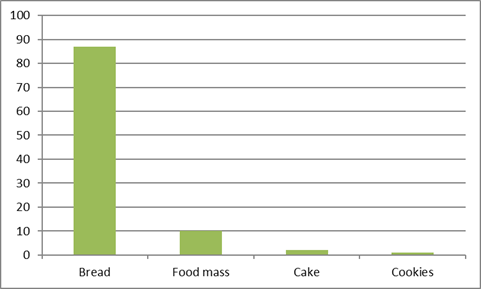
Graph 1: Frequency of consumption of wheat-derived foods before exclusion from the group.
Other foods such as pasta were eaten occasionally at least 2 or 3 times a week. Sometimes they alternated with eating cakes, cookies, or patties, which corresponded to once or twice a week. In our understanding, this means that the majority, corresponding to around 95%, of the participants’ diet consisted of wheat foods and their derivatives.
Controlling and regulating food intake is very important, as there are many studies in the literature on the effects of nutrients on health, for example the UKPDS Study (United Kingdorn Prospective Diabetes Mellitus Study, 1998) and the 4S Study (Simvastatin Survial Study, 1994) showed that the main risk factors for coronary artery disease (CAD) in type 2 DM are elevated LDL cholesterol and reduced HDL. It has been suggested that hypertriglyceridemia also represents a predictive factor for CAD, correlating better with the other components of the “metabolic syndrome” than LDL cholesterol [2,3] (NCEP, 2001) (Graph 1).
It was found that, on average, total cholesterol levels before exclusion were 115 mg/dl. After the exclusion of wheat-derived foods, the average total cholesterol levels in individuals fell to 107 mg/dl, i.e., those who exclude this food group for 15 days have their total cholesterol reduced by 7% (Graph 2).
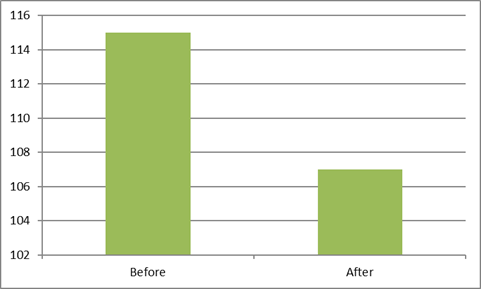
Graph 2: Average total cholesterol values (mg/dl) before and after the exclusion of carbohydrates derived from wheat.
According to the Dietary Guidelines for Americans 2005 and other studies such as that of Polacow and Lancha Jr6, high consumption of saturated fat can increase the risk of CVD. Therefore, one of the recommendations has been to replace fats with carbohydrates, resulting in the adoption of hyperglycemic diets. The effect of diets rich in carbohydrates, especially refined carbohydrates, can increase the incidence of overweight and obesity, generating a metabolic state that can favor the worsening of dyslipidemia. atherogenic, characterized by elevated triglycerides, reduced HDL-c cholesterol levels and increased LDL-c cholesterol concentrations (SORRENTINO, et al. 2000)
biosynthesis pathway occurs in four phases. In the first, acetyl coenzyme A (acetyl-coA) is converted into mevalonate, a compound with six carbons (C-6), in three steps: two molecules of acetyl- coA condense, by the action of the enzyme thiolase (first step), forming acetoacetyl-coA, which condenses with a third molecule of acetyl-CoA. (second step) to form β-hydroxy-β-methylglutaryl-CoA (HMG-CoA), a reaction catalyzed by HMG-CoA synthetase. HMGCoA is then reduced to mevalonate by HMG-CoA reductase (third step) [6,7].
mevalonate is converted into isoprenoid units. Activated by the addition of three phosphate groups to mevalonate, originating from three ATP molecules, in three successive steps. In the third phase, squalene (C-30) is formed, through the condensation of six isoprenoid units (C-5). In the fourth and final phase, cyclization of squalene occurs to form the four rings of the steroid nucleus of cholesterol, at the level of the endoplasmic reticulum [1].
The fact is that in order to produce cholesterol, the formation of acetyl coa, however this compound comes from various sources and carbohydrates, especially those with high glycemic indexes such as those derived from wheat, can have a great influence on the cholesterol production process. In the group of individuals evaluated, it is noted that an exclusion of foods derived from wheat results in a reduction in total cholesterol, which means that there is a great influence on the production of these compounds from the carbohydrates (Graph 2).
It was found that there is a strong correlation between a diet with wheat-derived foods and total cholesterol levels in the blood. It was observed that when this food group is excluded from the diet, total cholesterol levels in the body fall drastically. The coefficient of determination shows us that this correlation is 100%, so it is correct to state that if this food group is excluded, there will certainly be a regression in total cholesterol levels (Graph 3).
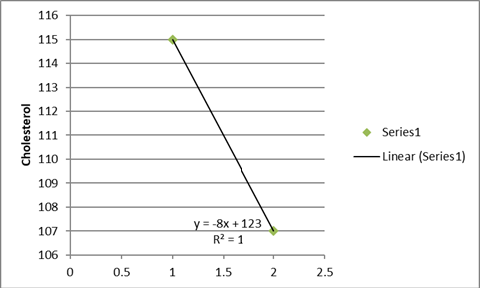
Graph 3: Interrelation between the variation in total cholesterol levels (mg/dl) and the exclusion of carbohydrates derived from wheat.
Conclusion
The study concludes that participants have a diet that consists of about 95% wheat-derived foods. After excluding foods derived from wheat for 15 days, the amount of total cholesterol decreases by around 7%.
References
- BOTHAM K M, MAYES P A (2006) Cholesterol synthesis, transport & excretion. In: Murray, R. K., Granner, D. K. & Rodwell, V. W., Harper’s illustrated biochemistry. USA: The McGraw-Hill Companies, Inc pp. 230-240.
- BRUICE PY (2006) Organic Chemistry. 4th Ed. Pearson Prentice and Hall, São Paolo - SP, 2006. Vol. 2. LEHNINGER, A. L.; NELSON, DL; COX, MM Principles of Biochemistry, 4th Edition, Editora Sarvier chapter 7.
- COUGHLAN B J, SORRENTINO M J (2000) Does hypertriglyceridemia increase risk for CAD? Growing evidence suggest it play a role. Postgrad Med 108(7): 77-1084.
- Daniels SR, Greer FR (2008) Committee on Nutrition. Lipid screening and cardiovascular health in childhood. Pediatrics 122(1): 198-208.
- MASTROENI MF, GERN RMM (2008) Biochemistry: Adapted Practices. Atheneu, São Paulo - SP.
- MEDEIROS RMP (2011) Preliminary characterization of plasma cholesterol levels in dogs according to sex, breed, age and body condition. Master's dissertation. Technical University of Lisbon.
- PAVIA DL, LAMPMAN GM, KRIZ GS, ENGEL RG (2009) Experimental Organic Chemistry: Small-scale Techniques. 2nd. Edn., Bookman, Porto Alegre - RS.
- PETKOWICZ, et. al. (2008) Biochemistry: Practical Classes. 7th Ed. UFPR Publishing House, Curitiba - PR, 2007. SANTOS, PC, BOCK, PM Practical Manual of Biochemistry. Methodist University Ed. IPA, Porto Alegre - RS.
- Parks EJ, Hellerstein MK (2000) Carbohydrate-induced hypertriacylglycerolemia: historical perspective and review of biological mechanisms. Am J Clin Nutr 71(2): 412-433.
- Semenkovich CF (2011) Disorders of lipid metabolism. In: Goldman L, Ausiello D, eds. Cecil Medicine. 23rd Philadelphia, Pa: Saunders Elsevier; 2007: chap 217. Atualizado em 20/5/2011, por: David C. Dugdale, III, MD, Professor of Medicine, Division of General Medicine, Department of Medicine, University of Washington School of Medicine. Also reviewed by David Zieve, MD, MHA, Medical Director, A.D.A.M., Inc
- Siri PW, Krauss RM (2005) Influence of dietary carbohydrate and fat on LDL and HDL particle distributions. Curr Atheroscler Rep 7(6): 455-459.
- US Department of Health and Human Services. Dietary Guidelines for Americans 2005. Washington, DC: USDA, 2005. 6. Polacow VO, Lancha Jr AH (2007) Hyperglycemic diets: effects of isoenergetic replacement of fat by carbohydrates on lipid metabolism, body adiposity and its association with physical activity and the risk of cardiovascular disease. Arq Bras Endocrinol Metab 51(3): 389-400.




 We use cookies to ensure you get the best experience on our website.