
Research Article 
 Creative Commons, CC-BY
Heavy Metals Intake Due to Consumption of Food sources in Duplicate Diet Sampling (DDS) Methods used by Coastal Inhabitants around the Nuclear Power Plants
*Corresponding author: Kantha Deivi Arunachalam, Center for Environmental Nuclear Research, Directorate of Research, SRM Institute of Science and Technology, Kattankulathur, 603203, Chennai, TN, India and Faculty of Sciences, Marwadi University, Rajkot, Gujarat, India, 360 003.
Received: February 27, 2025; Published: March 11, 2025
DOI: 10.34297/AJBSR.2025.26.003415
Abstract
The distribution of heavy metals in the food samples were first records of regional study, the food samples consumed by different age group living around the coastal zone was studied. The average concentration of heavy metals in cupper, chromium, cobalt, cadmium, lead, nickel, zinc, and manganese (n=20) was 0.245, 0.1, 0, 0, 0, 0.1, 1.005 and 0.605 ppm, individually. Specific mean bioaccumulation (IMBI) values were order in Zn ˃ Mn ˃ Cu ˃ Cr and metallic pollution (MPI) values were highest in Zn and Mn were comparing with food sources around the nuclear power plant. Computation of human health risk by uncertainty modelling of food samples (Assessed daily consumption (EDI) values were shown that low risk, Maximum permissible intake rate (CRlim) values were safe for consumption, Target risk measure (THQ) values was assess that expect chromium all other elements safe for consumption and Threat index (HI) values was higher in cupper and chromium) were assessed by diverse age groups (child and adults). The elements based accumulative cancer threat and hospital based tumour registry (HBCR) compares to the coastal zone. Statistical studies such as Pearson correlation, Principle component, and Cluster analysis report check that the concentrations of heavy metals do not bearing an important risk to the consumption of food sources around residents.
Keywords: Heavy metals, Duplicate diet sampling (DDS) methods, Coastal zone, Health risk assessment
Introduction
Food is an important basis of nutrition for the human, but it also includes other substances that are not only excessive but may be hazardous to the creature [1]. Among the numerous minerals ingested on a daily basis, toxic elements should be avoided. These components have no known beneficial purpose and are even poisonous at low levels. As a metal in food is measured a typical toxic pollutant in food products, its material is controlled by acceptable EU regulation [2,3].
Food is the most important basis of acquaintance for human. Despite the fact that these elements are present in somewhat low levels in food products, recent knowledge indicates that they pose a severe threat, particularly when chronic exposure is considered [2,3]. Heavy metals are the most prevalent of few natural elements that are focused in man’s environs [4]. Elements that are not simply degraded or absorbed and are typically determined may be physiologically accrued in food products, imprisoned on the outermost layer, or extra during the developed or dispensation of food products [5]. The levels of heavy metals in food is important because they are whichever toxic or necessary for social health [6,7].
Metals are recognized as one of the oldest environmental concerns. Pollution in the atmosphere, mud, and rainwater all contribute to the occurrence of these risky elements in foodstuff. Rapid industrialization, improvements in agricultural chemical use, and metropolitan activities have all caused in metal contamination of the surroundings [8]. Moreover, elements can enter the humanoid body through the diet sequence, posturing a health risk to beings [9,10].
Elements pollution poses a worldwide health threat, and numerous studies on humanoid exposure to components as a result of eating polluted food have been conducted [11,12]. If contaminated food is consumed on a large scale, human body parts may be contaminated [13]. Several studies have been carried out all over the biosphere [14-20].
As a result, researches focused on the assessment of ingested and investigating the level of consumption of diverse food modules are critical for evaluating dietetic habits, trends, and possible to modify, as well as the threat related with nutritional consumption and exposure to toxic metals. The world health organization was benefit from a greater to conduct a national dietary survey (NDS) to monitor and assess macro- and micronutrient intake [21].
In the coastal area, there has been no accurate study of pollutant stages in food and their risk to customers. Furthermore, a study of metals activity in food may be deliberated due to the health hazards posed by visitors and customers who consume food. As a result, the current study examined the concentrated of elements in cupper, chromium, cobalt, cadmium, lead, nickel, zinc, and manganese in food sources. Heavy metal concentrations are used to evaluate the health risks.
Materials and Methods
Description of the Study Area
A study area was conducted in five villages (Sadras, Meyyar, Wyalli, Mahabalipuram, and Kokkilamedu) Figure 1. The Edaiyur and Sadras river mouth systems are special topographies that are connected to the Buckingham Canal [22]. Furthermore, a veer of small trades have grown up throughout the coastal zone, thereby accumulative the volume of anthropological input into this body of water. The town is home to about 51,546 individuals, but there are also large inhabitants in dual fishing villages on both side of the town.
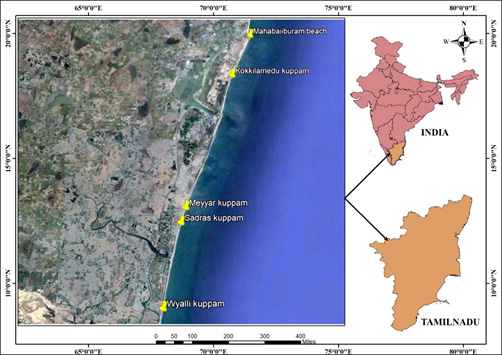
Figure 1: Study area map.
Food samples collection
Identification of Villages and Questionnaire Survey: A preliminary survey was conducted in five villages (Sadras, Meyyar, Wyalli, Mahabalipuram, and Kokkilamedu kuppam). Table 1 shows that 160 volunteers from 80 households of different age groups were identified from four DDS communities. The volunteer participation was confirmed by completing the consent form from the participants. During a 24-hour period, this volunteer participant’s diet was sampled.
Other villages were hesitant to take part in the gathering of diet samples and data. This food intake data is needed to calculate the ingestion dosage and assess the cancer risk of heavy metals discovered in diet samples ingested by the general public. The volunteers were divided into seven age groups, according to the International Commission of Radiological Protection [23]1-4, 5-9, 10-14, 15-17 age groups, adults, and pregnant women (Table 1).
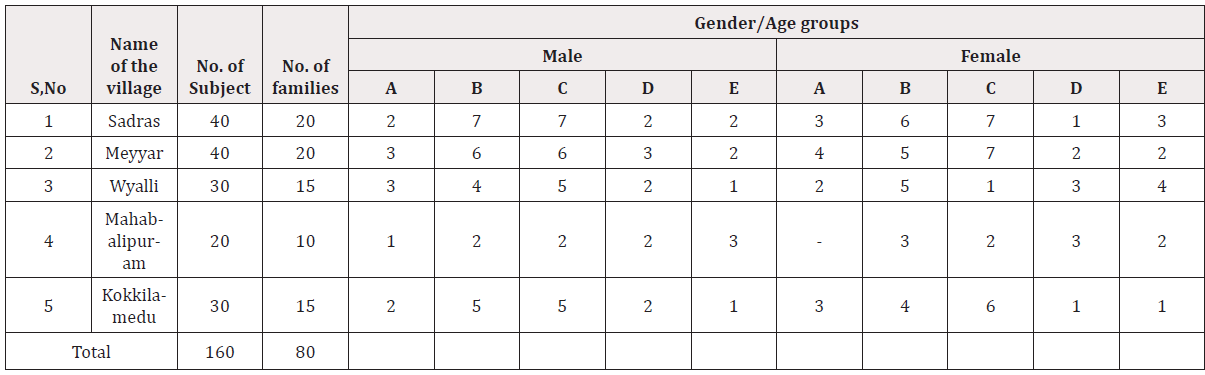
Table 1: List of volunteers surveyed from 5 villages.
IG: intervention group; CG: control group
Note*: (A)1--4 years, (B) 5-9 years, (C) 10-14 years, (D) 15-17 years, (E) adult, and pregnant women.
Duplicate diet sampling (DDS): The duplicate diet strategy is a straight sampling technique that involves obtaining and analyzing an exact duplicate of the food being consumed. This method is appropriate for estimating individual or small group intakes. Because it delivers the concentration of pollutants from the real food ingested, it provides the most precise estimates. The diet samples were obtained in accordance with World Health Organization (WHO) recommendations [24]. The same questionnaire consent form is used to keep track of what each family member eats for 24 hours.
They used the community water supply for cooking and drinking instead of a local well. The weight of the diet of each food product during breakfast, lunch, dinner, and beverages (excluding water) was requested from all participants present in the house, and a representative lunch diet sample. The records were made in the questionnaire form prior to DDS collection. Dietary samples and refreshments were collected in rinsed zip lock bags and LDPE containers that had been pre-rinsed with1 N HNO3. All of the people who took part ate the same thing every day, and each one was carefully chosen to make sure they were not on a special diet because of a health problem.
The details of the cooked food (diet), like the art of preparation, were recorded by the participating adults, who also completed a questionnaire. The detailed preparation of each food item was grouped according to the different food categories. The collections of samples from the villages during the periods 2019 and 2020 are shown in Table 2. The collected food samples were weighed and frozen in closed food bags and transported to our laboratory at SRM University at 4°C in an ice box. The food samples were stored at -20°C in the deep freezer for further processing. From the collected DDS, the heavy metals were accessed.

Table 2: depicts the heavy metals analyzed in DDS sample.
IG: intervention group; CG: control group
Microwave Digestion
500 mg of DDS, samples were processed in a CEM MARS-5 (CEM Corp., Matthews, NC). The food samples were processed at 1601 W by a slope period of 10 minutes. After bringing to the chamber temperature, the digests were sieved with a 0.45 m filter, concentrated to 50 ml with dissolved water, and analyzed in ICPOES with an outright [25].
Quality Assurance
The elements in the sample decided well with the analytical standards of the reference bases. Furthermore, the elimination efficiencies for the particular elements from the orientation normal measurable ranged from 89.82 to 116.83%. Elements recovery was verified by blunder sieved water samples with elements values at almost the similar activities. ICPOES was used to process and analyses the ensuing combinations [26]. The elements recovery fluctuated from 79 to 89%. For each digestion procedure, a blank was run to correct the volumes and to confirm all elements and procedures for intrusion and pollution.
Risk Assessment Model
The current non-carcinogenic risk model was exposed through acquaintance pathways. The USEPA’s condition risk models were simply used to calculate the potential hazard.
Specific means bioaccumulation (IMBI):
The formula [27] was evaluated to measure the individual range bioaccumulation index (IMBI):


Kimax is the maximum activity of heavy components I and 0 identified [28]
Elements contamination index (MPI):
The elements pollution guide (MPI) was evaluated to make assessments between the quantities of entire metal conveyed in many percentages of the food source samples. Allowing to [29], the ensuing calculation was used:


Where Mm is the elements activity.
Predictable daily consumption (EDI):
For the DDS, the measured regular intake of metals through consumption of food, the maximum acceptable DDS, consumption ratio (CRlim), the objective threat measure, and the risk guide were calculated. The consumption threats and limits were designed using the [30], food weight (BW) and grown individual


Where, MS food size, B food source and CW body weight.
Concentrated permissible ingesting percentage (CRlim):


RfD - values of elements [31,32] BW- total weight, and C- food.
Food risk measure (THQ):
The food risk measure value was used to estimate cancer risks. THQ was referred in [31]


The recommended THQ value is 1. EF incident, KD period, MS stands for food size, S activity in DDS, ReD stands for oral reference dosage, BW stands for bodyweight, and MN standard period [33].
Risk guide (HI):
The risk guide is originating by addition up the TMQ for every element [31].


Accumulative Cancer Risk
The possibility of tumor threat


Where, CDI - element risk.


Where, EDI - consumption elements; Efr -365 days/year; EDtot -70.0 years; AT - EFr× EDtot, and 70 years for tumor hazards (Micheal, et al., 2015).


k = 1, 2,..., k single elements.
Hospital Based Tumor Records Office (HBCR)
The hospital tumor records based to assess tumor data particular environment. Using following formula:
TTIR= [New tumor in year/measure that same year] × 1 lakhs
Rajaraman, 2012 [35] also discussed about hospital based tumor records. And maintain the records in all region Office of the Registrar General & Census Commissioner Government of India, 2011 [36].
Statistical Analysis
Used to assess origin 2018 software for person, principal component and cluster analysis.
Result and Discussion
Heavy Metals Concentration in DDS
Accumulations of animal waste, contaminated water, herbicides, and fertilizers, are the key of elements in the ecosystem [37]. Aside from natural contaminants, conventional or human activities pose significant anthropological health hazards through the consumption of food [38]. A total of 20 DDS samples representing 40 volunteers of various ages and genders were analyzed for the elements like cupper, chromium, cobalt, cadmium, lead, nickel, zinc, and manganese. Ten subjects from Kokkilamedu are represented by five samples, ten subjects from Sadras are represented by five samples, ten subjects from Meyyar are represented by five samples, and ten subjects from Wyalli are represented by five samples. Figure 2 depicts the analyzed sample.
Cupper concentrations in Kokkilamedu value from 0.2 to 0.5 ppm, with an average value of 0.32 ppm. Cupper concentrations in Meyyar value from 0.1 to 0.4 ppm, with an average value of 0.2 ppm. Cupper concentrations from Sadras value from 0.1 to 0.3 ppm, with an average values of 0.24 ppm. The amount of cupper in Wyalli value from 0.1 to 0.3 ppm and an average was 0.22 ppm.
The concentration of chromium in the DDS from Kokkilamedu value from 0.1 ppm to 0.1 ppm, with an average value of 0.1 ppm, and 1 sample was in BDL among the 5 samples analyzed. The concentration of chromium in the DDS from value from 0.1 ppm to 0.1 ppm, with an average value of 0.1 ppm, and two of the five samples analyzed were in BDL. The concentration of chromium in the DDS from Sadras value from 0.1 ppm to 0.1 ppm, with an average value of 0.1 ppm, and three of the five samples analyzed were in BDL. The amount of chromium concentration in Wyalli value from 0.1 ppm to 0.1 ppm, with 0.1 ppm being the average. Of the five samples that were tested, two were in BDL.
The BDL had the highest concentrations of cobalt, cadmium, and lead in the village’s DDS. The concentration of nickel in the DDS from Kokkilamedu value from 0.1 ppm to 0.1 ppm, with an average value of 0.1 ppm, and four of the five samples analyzed were in BDL. The concentration of nickel in the DDS from Meyyar and Sadras ranged from less than 0.1 ppm, with the mean being less than 0.1 ppm, and 5 of the analyzed 5 samples were in BDL. Nickel levels in the DDS from Wyalli ranged from 0.1 ppm, with 0.1 ppm being the average. Four of the five samples tested were in BDL.
Zinc concentrations in Kokkilamedu value from 0.7 to 2.1 ppm, with an average value of 1.32 ppm. Zinc concentrations in Meyyar value from 0.6 to 1.1 ppm, with an average value of 0.9 ppm. Zinc concentrations in Sadras value from 0.3 to 1.2 ppm, with an average value of 0.94 ppm. Zinc concentrations in Wyalli value from 0.4 to 1.3 ppm, with an average value of 0.86 ppm.
Manganese concentrations in Kokkilamedu value from 0.4 to 1.5 ppm, with an average value of 0.78 ppm. Manganese concentrations in DDS from Meyyar value from 0.3 to 0.6 ppm, with an average value of 0.48 ppm. Manganese concentrations in DDS from Sadras value from 0.6 to 0.8 ppm, with an average value of 0.7 ppm, and 1 sample was in BDL among the 5 samples analyzed. Manganese levels in Wyalli DDS value from 0.1 ppm to 0.7 ppm, with 0.48 ppm being the average (Figure 2, Table 2).
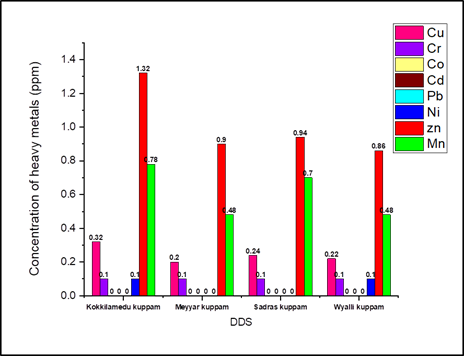
Figure 2: Heavy metal distributed in the DDS.
Assessment with FAO, WHO, EC and FSSAI Limits
The risky permissible limit of metals in DDS was showing Table 3. In this study, we related the diet quality and elements concentration in DDS, to nationwide and universal wide acceptable levels. Also, we turned the substantial standards into dry weight by splitting based on parameters ranging from 4 to 6 [39], with an influence of 4.54 (78%) being a lot. The values were comparing that less than FAO, WHO, EC and FSSAI limits. Also, the current conclusions were related with elements levels in diverse DDS sources, from areas (Table 4).
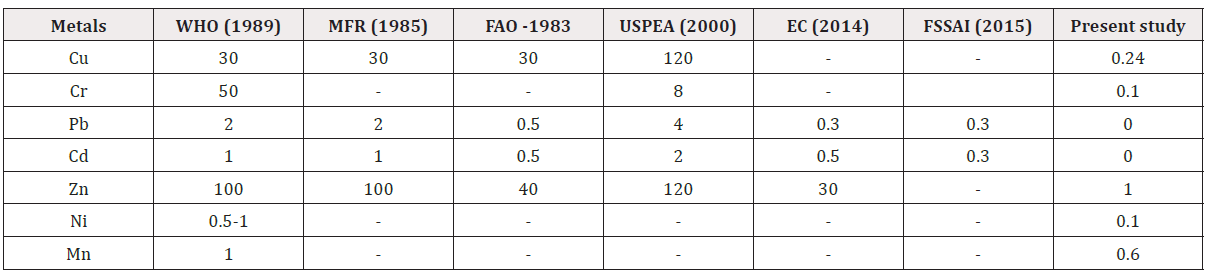
Table 3: Comparison with FAO, WHO, EC and FSSAI limits.
IG: intervention group; CG: control group
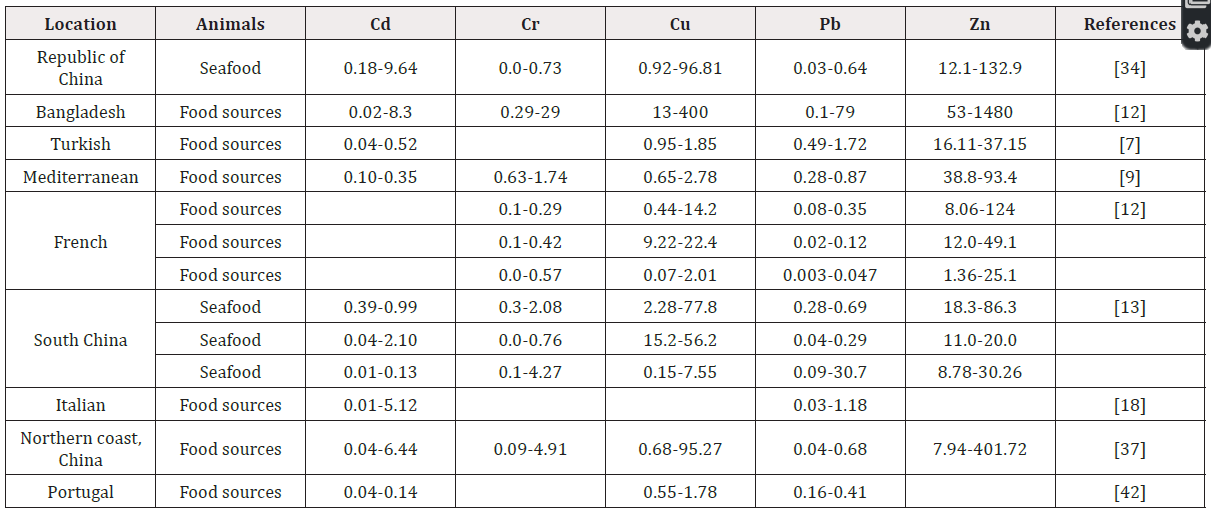
Table 4: Heavy elements concentrations in different food, from further locations were also related with the present results.
IG: intervention group; CG: control group
Individual Elements Accumulation
Elements removal factor from plant root systems is a significant component of elements exposure to persons via the food chain. The elements transfer is critical for investigating the risk to the human health index [40]. The IMBI was estimated for all dietary samples in the all the villages. The IMBI value was higher in Zn and Mn in all the villages.
Metallic Contamination Index
Metallic contamination index average mean were determined for DDS levels of elements found in the following kuppams: Kokkilamedu (0.02), Meyyar (0.02), Sadras (0.1), and Wyalli (0.01). (0.03). Wyalli had the highest MPI, followed by Kokkilamedu and Meyyar. The determination of the MPI is an effective process for monitoring metal contamination in certain areas [41].
Anthropological Health Risk Assessment
Assume the importance of DDS, the present study appearance into the DDI of diet samples. As an outcome, DDI is used as important of reference to recognize the harmful impacts of elements on humans. In the current study, EDI values obtained from Kokkilamedu were higher in children than in adults, implying that adverse effects from metal exposure are less likely.
The estimated CRlim data for Sadras was higher than other villages, and DDS were larger than DDI values (CRlim > DDI), representative that the DDS are slight to consume. During the study period, the TRQ values for adults and children in all villages, especially Wyalli, were higher than one but less than one, which means there was no possible effect on cancer. The HG values calculated in the present study were provocatively high (>1) for both children and grown-ups across the entire village, as exposed in Table 5, representative a probable risk to human being.
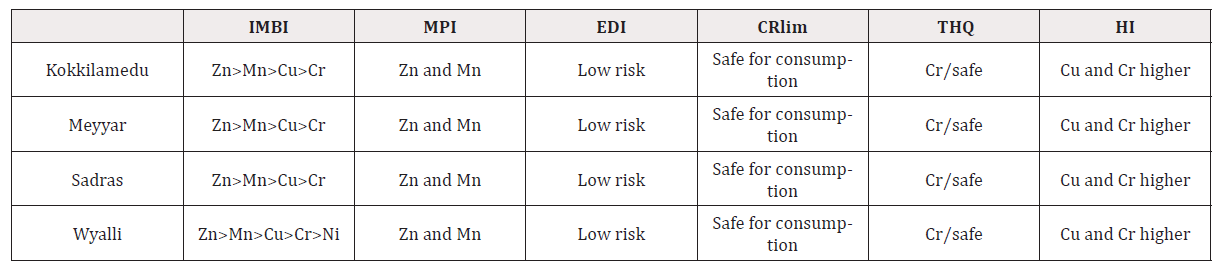
Table 5: Health risk assessment of heavy metals.
IG: intervention group; CG: control group
ILCR and (ΣILCR) for DDS
The computed ILCR and (ΣILCR) for trace elements were used for assess the health risk assessment based on the DDS methods are for different villages (Kokkilamedu, Meyyar, Sadras, and Wyalli). Based on the ILCR estimated the Kokkilamedu village value were higher and moderate risk levels. Furthermore, the (ΣILCR) of all the DDS sources did not go above the endorsed levels of risk around the coastal villages. The ILCR and (ΣILCR) assessments were important and moderate threat levels, respectively.
Hospital Based Tumor Records office
The occurrence of tumor was measured using the Hospital Based Tumor Records office at the Cancer Institute, Adyar. Hospital Based Tumor Records office were collection the tumor patience list around coastal villages based on that 3998 tumor incidence were identified in 2013 to 2022. The number of different types tumor registers according to government hospitals and NGOs [42,43]. Sahoo, et al., 2018 [44] also deliberated the epidemiology of India under most common cancers. Related to the reported tumor occurrences were observed around coastal villages was very less impact based on the trace element (Table 5).
Statistical Studies
Pearson relationship: An interrelationship between food samples distributions could provide information on heavy metal pollution sources. The maximum association coefficient between food samples establishes their collective nature, mutual dependence, and identical throughout transport. Using the linear Pearson coefficient, relationship analysis was used as a statistic to calculate the mutual influence and the degree of connection between sets of variables. Table 6 shows the Pearson relationship analysis of DDS samples. The Pearson relationship analysis is assessed using a twotailed test. Around the coastal village, there is a positive correlation between all food samples.
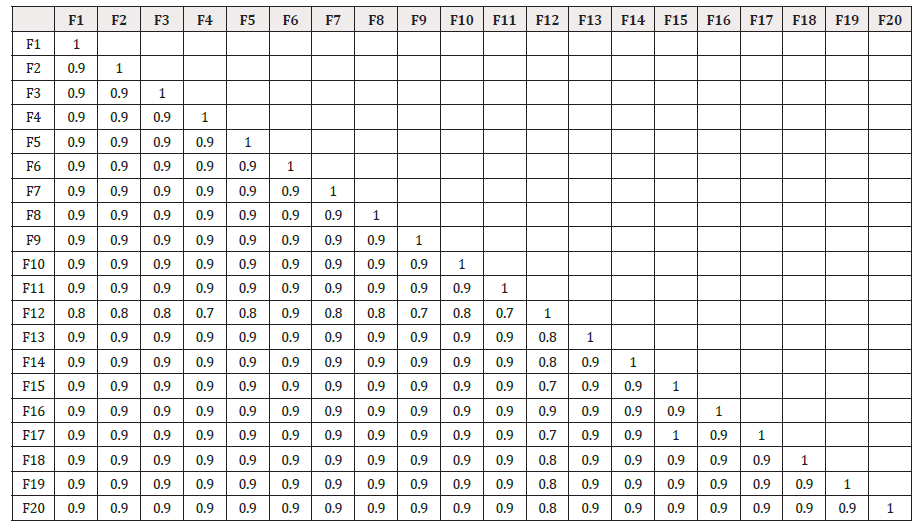
Table 6: Pearson correlation analysis of DDS.
IG: intervention group; CG: control group
Principle section investigation (PCA): The Principle section investigation results for entire difference and component conditions of elements in food samples. According to the elements results, the food samples could be categorized into eight-component representations that accounted for 100% of the statistics difference. These results were consistent with the findings of the Eigenvalue Pearson relationship. With an eigenvalue of 3.42, the principal part (PC1) called 42.86% of the entire difference. This part could be called “Cu.”
The next part (PC2) called the 10.34% of the entire variance, and the third part (PC3) described 6.19% of the difference with an eigenvalue of 0.82 and 0.49. This part could be labeled as Cr, and Co. Because the main and next principal modules accounted for an enormous proportion of entire variance shown in Figure 3. According to the findings, the number of toxic metals was related to dietary samples.
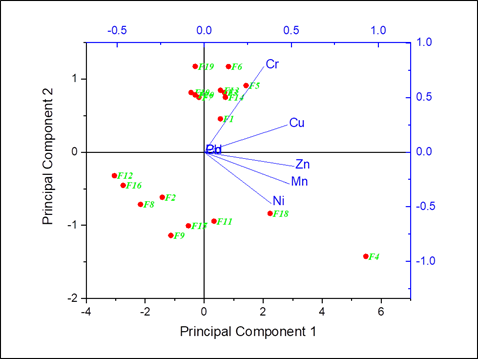
Figure 3: Principal component analyses of DDS with heavy metals, F1 to F5 Kokkilamedu kuppam, F6 to F10 Meyyar kuppam, F11 to F15 Sadras kuppam, and F16 to F20 Wyalli kuppam.
Cluster investigation: The results of cluster investigation for the elements and food samples are exposed in Figure 4. From the outcomes of clustering, it was potential to establish important groups that displayed maximum comparison. From cluster analysis, most representative observation was 3 and least representative observation was 7. The five separate clusters were got based on the relationship coefficients. Cluster 1 looks at a distance level greater than 3.5 m and is related with the major parameters (1.Cu and 8. Mn). This suggestion is probably precious by the culture pattern. Cluster 2 looks at a distance level greater than 2 m and is associated with the parameters of (7.Zn, and 8. Mn) and cluster group 3, 4, and 5 appears to be some miner cluster group. This association is probably due to food samples directly influenced around the coastal villages.
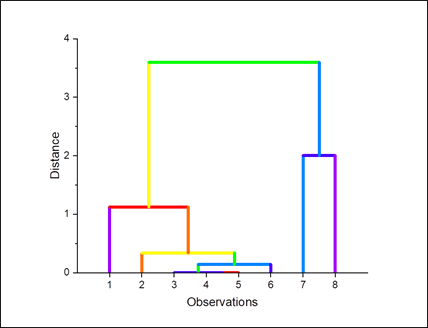
Figure 4: Cluster analyses of DDS with heavy metals 1. Cu, 2.Cr, 3.CO, 4. Cd, 5.Pb, 6.Ni, 7.Zn, and 8. Mn.
Conclusion
The delivery of heavy metals concentration in some food samples resources is deliberate by the diverse age group surrounding near nuclear power plant. To ensure the rules and assessment with FAO, WHO, EC and FSSAI limit in assessing the contaminants levels in the food samples. This would assist the baseline research around the coastal villages. Respectively, the anthropological health risk assessment was assessed by diverse age groups was BDL in the duplicate diet sampling (DDS) methods approach. According to the current research, the elements based cumulative tumour hazard compare with hospital based tumour records was less tumour patience around coastal villages. And Statistical analysis such as Pearson relationship, principle section, and cluster study report were comparing with child and adult distinct age groups are healthy and under the international organization for research on tumour, indicating that there is no important threat to consumption of food samples in this region.
Acknowledgements
The authors are acknowledgment to the SRMIST Chennai and IGCAR Kalpakkam.
Funding
There was no funding for this study.
Ethics Declarations
Ethics Approval and Consent to Participate
The research was ethically approved by the Ethics Committee of the SRM Institute of Science and Technology. Prior to participation, all participants were duly informed of their rights and responsibilities and provided explicit written consent. The study was conducted in agreement with the guidelines governing research involving human participants, as outlined by the Ethics Committee of the SRM Institute of Science and Technology.
Competing Interests
On behalf of all authors, the corresponding author states that there is no conflict of interest.
References
- Chen Y, Michalak M, Agellon LB (2018) Importance of nutrients and nutrient metabolism on human health. Yale J Biol Med 91(2): 95-103.
- Marzec Z, Koch W, Marzec A, Zukiewicz Sobczak W (2014) Dietary exposure to cadmium, lead and nickel among students from south-east Poland. Ann Agric Environ Med 21(4): 825-828.
- Bocio A, Nadal M, Domingo JL (2005) Human exposure to metals through the diet in Tarragona, Spain: Temporal trend. Biol TraceElem Res 104(3): 193-202.
- Sodhi GS (2006) Fundamental concepts of environmental chemistry, 2nd Edn, New Delhi: Narosa Publishing House Pp: 332-351.
- Hamilton EI (1979) The chemical elements and man: measurements, perspectives, applications (No. 1021). Charles C Thomas Publisher Springfield U.S.A 95-467.
- Onianwa PC, IG Adetola, CMA Iwegbue, MF Ojo, OO Tella (2000) Trace Heavy Metals Composition of Some Nigerian Beverages and Food Drinks. Food Chemistry 66: 275-279.
- Onianwa PC, AO Adeyemo, OE Idowu, EE Ogabiela (2001) Copper and Zinc Contents of Nigerian Foods and Estimates of the Adult Dietary Intakes. Food Chemistry 72: 89-95
- McGlade J (2005) Metals - a New Old Environmental Problem. In Handbook on the Toxicology of Metals, edited by G. F. Nordberg, B. A. Fowler, M. Nordberg, and L. T. Friberg, 7-8. Copenhagen: Academy Press Inc.
- Burger J (2008) Assessment and management of risk to wildlife from cadmium. Sci. Total Environ. 389(1): 37-45.
- Brahmia Z, Scheifler R, Crini N, Maas S, Giraudoux P, Benyacoub S (2013) Breeding performance of blue tits (Cyanistes cæruleus ultramarines) in relation to lead pollution and nest failure rates in rural, intermediate, and urban sites in Algeria. Environ. Pollut. 174: 171-178.
- Chien LC, Hung, TC, Choang KY, Yeh CY, Meng PJ, Shieh MJ, Han BC (2002) Daily intake of TBT, Cu, Zn, Cd and As for fishermen in Taiwan. Sci Total Environ 285(1-3): 177-185.
- Raknuzzaman M, Ahmed MK, Islam MS, Habibullah Al Mamun M, Tokumura M, Sekine M, Masunaga S (2016) Trace metal contamination in commercial fish and crustaceans collected from coastal area of Bangladesh and health risk assessment. Environ. Sci Pollut Res 23(17): 17298-17310.
- Siddique MAM, Mustafa Kamal AH, Aktar M (2012) Trace metal concentrations in salt marsh sediments from Bakkhali River estuary, Cox's Bazar, Bangladesh. Zool Ecol 22(3-4): 254-259.
- Biswas S, Prabhu RK, Hussain KJ, Selvanayagam M, Satpathy K (2012) Heavy metals concentration in edible fishes from coastal region of Kalpakkam, southeastern part of India. Environ. Monit Assess 184(8): 5097-5104.
- Rejomon G, Nair M, Joseph T (2010) Trace metal dynamics in fishes from the southwest coast of India. Environ. Monit Assess 167(1-4): 243-255.
- Saha N, Mollah MZI, Alam MF, Rahman MS (2016) Seasonal investigation of heavy metals in marine fishes captured from the bay of Bengal and the implications for human health risk assessment. Food Control 70: 110-118.
- Arulkumar A, Paramasivam S, Rajaram R (2017) Toxic heavy metals in commercially important food fishes collected from Palk Bay, Southeastern India. Mar Pollut Bull. 119(1): 454-459.
- Kumar Pandion, Kantha Deivi Arunachalam, Rajinikanth Rajagopal, Soon Woong Chang, Balasubramani Ravindran (2023) Health Risk assessment of heavy Metals in the seafood at Kalpakkam coast, southeast Bay of Bengal. Marine Pollution Bulletin, MPS-S-22-03476.
- Kumar Pandion, SB Mohamed Khalith, Balasubramani Ravindran, Murugesan Chandrasekaran, Rajakrishnan Rajagopal, Ahmed Alfarhan, Soon Woong Chang, Ramamoorthy Ayyamperumal, Amitava Mukherjee, Kantha Deivi Arunachalam (2022) Potential health risk caused by heavy metal associated with seafood consumption around the coastal area, Environmental Pollution, Volume 294, 2022, 118553, ISSN 0269-7491.
- Kumar P, Sivaperumal P, Manigandan Vetal (2021) Assessment of potential human health risk due to heavy metal contamination in edible finfish and shellfish collected around Ennore coast, India. Environ Sci Pollut Res 28(7): 8151-8167.
- Rippin HL, Hutchinson J, Jewell J, Breda JJ, Cade JE (2017) Adult Nutrient Intakes from Current National Dietary Surveys of European Populations. Nutrients 9(12): 1288.
- Nair KVK, Ganapathy S (1983) Baseline ecology of Edaiyur-Sadras estuarine system at Kalpakkam. I: General hydrographic and chemical feature Mahasagar (16) 143-151.
- ICRP (1996) ICRP Publication 74: Conversion Coefficients for Use in Radiological Protection against External Radiation, Ann. ICRP (26) 2-3.
- Macholz R (1986) Guidelines for the Study of Dietary Intakes of Chemical Contaminants, World Health Organization.
- Muratli JM, McManus J, Mix A, Chase Z (2012) Dissolution of fluoride complexes following microwave-assisted hydrofluoric acid digestion of marine sediments, Talanta. 30 (89): 195-200.
- Oyoo-Okoth, E Admiraal, W Osano, O Ngure, V Kraak, M H S, Omutange E S (2010) Monitoring exposure to heavy metals among children in Lake Victoria, Kenya: Environmental and fish matrix, Ecotoxicol. Environ Saf 73(7): 1797-1803.
- Maes J, Belpaire C, Goemans G (2008) Spatial variations and temporal trends between 1994 and 2005 in polychlorinated biphenyls, organ chlorine pesticides and heavy metals in European eel (Anguilla anguilla) in Flanders, Belgium, Environ Pollut 153(1):223-237.
- Martins CDMG, Barcarolli IF, de Menezes, EJ Giacomin, MM, Wood CM, Bianchini A (2011) Acute toxicity, accumulation and tissue distribution of copper in the blue crab Callinectes sapidus acclimated to different salinities: in vivo and in vitro studies, Aquat Toxicol 101(1): 88-99.
- Usero J, Gonzalez-Regalado, E Gracia I (1997) Trace metals in the bivalve molluscs Ruditapes decussatus and Ruditapes philippinarum from the Atlantic Coast of southern Spain. Environ Int 23(3): 291- 298.
- USEPA (2000) Guidance for assessing chemical contaminant data for use in fish advisories, risk assessment and fish consumption limit, Office of Science and Technology and Office of Water. Washington DC USA.
- USEPA (2011) USEPA Regional Screening Level (RSL) summary table.
- USEPA (2012) EPA Region III Risk- Based Concentration (RBC) Table 2008 Region III, 1650 Arch Street, Philadelphia, Pennsylvania.
- Naji A, Khan F R, Hashemi S H (2016) Potential human health risk assessment of trace metals via the consumption of marine fish in Persian gulf. Mar Pollut Bull 109(1): 667-671.
- Liu X, Song Q, Tang Y, Li W, Xu J, Wu J, Wang F, Brookes PC (2013) Human health risk assessment of eavy metals in soil-vegetable system: A multi-medium analysis. Science of The Total Environment (463-464), 530-540.
- Rajaraman S (2012) An Evaluation of Survival of Cancer Patients Based on Registry Data from Low or Medium Resource Countries. Tampere University Press 51(7): 960.
- Office of the Registrar General & Census Commissioner Government of India (2011) Census of India - Population Enumeration Data. Census of India Organization.
- El-Kady AA, Abdel-Wahhab MA (2018) Occurrence of trace metals in foodstuffs and their health impact. Trends Food Sci Technol 75: 36-45.
- Zhuang P, McBride MB, Xia H, Li N, Li Z (2009) Health risk from heavy metals via consumption of food crops in the vicinity of Dabaoshan mine, South China . Sci Total Environ 407(5): 1551-1561.
- Anandkumar A, Nagarajan R, Prabakaran K, Rajaram R (2017) Trace metal dynamics and risk assessment in the commercially important marine shrimp species collected from the Miri coast, Sarawak, East Malaysia. Reg Stud Mar Sci 16: 79-88.
- Cui YJ, Zhu YG, Zhai RH, Chen DY, Huang YZ, Qiu Y, Liang JZ (2004) Transfer of metals from soil to vegetables in an area near a smelter in Nanning, China. Environment International 30(6): 785-791.
- Singh A, Sharma RK, Agrawal M, Marshall FM (2010) Health risk assessment of heavy metals via dietary intake of foodstuffs from the wastewater irrigated site of a dry tropical area of India. Food Chem. Toxicol 48(2): 611-619.
- Swaminathan R, Shanta V (2020) On behalf of the TNCR Study Group. Cancer incidence and mortality (year2016), incidence trend (2012-2016) and estimates (2017-2020) for Tamil Nadu state. Tamil Nadu Cancer Registry project, Cancer Institute (W.I.A).
- Gajalakshmi, Vendhan, Shanta V, Swaminathan R (2001) CANCER REGISTRATION IN INDIA. Asian Pacific J Cancer Prev 2:13-20.
- Sahoo SS, Verma M, Parija PP (2018) An overview of cancer registration in India: Present status and future challenges




 We use cookies to ensure you get the best experience on our website.