
Research Article 
 Creative Commons, CC-BY
A Comparative Review of COVID-19 Vaccine Technologies, Clinical Efficacy, and Variant Adaptation
*Corresponding author:Murad Ali Khan, Department of Computer Engineering, Jeju National University, Jeju, 63243, Jeju-do, Republic of Korea.
Received:July 14, 2025; Published:July 23, 2025
DOI: 10.34297/AJBSR.2025.27.003621
Abstract
The COVID-19 pandemic prompted an unprecedented global response, leading to the accelerated development, approval, and distribution of multiple vaccines using diverse technological platforms. This mini-review provides a comprehensive overview of the primary vaccine types, including mRNA, viral vector, inactivated virus, and protein subunit formulations, and compares their mechanisms of action, efficacy profiles, and adaptability to emerging variants such as Delta and Omicron. Clinical trials and real-world studies have demonstrated that while mRNA vaccines achieved the highest efficacy rates against symptomatic infection, all vaccine types consistently provided substantial protection against severe disease and mortality. However, the global vaccine rollout was marked by stark disparities in access and acceptance, with low- and middle-income countries facing delayed supply and widespread vaccine hesitancy influenced by misinformation and socio-political factors. Booster strategies, heterologous regimens, and bivalent formulations have been introduced to address waning immunity and evolving variants. This review highlights the scientific, logistical, and ethical dimensions of COVID-19 vaccination and underscores the need for sustained innovation, equitable distribution, and public trust to ensure long-term pandemic resilience.
Keywords:public trust to ensure long-term pandemic resilience.
Introduction
The outbreak of the novel coronavirus disease (COVID-19), caused by severe acute respiratory syndrome coronavirus 2 (SARSCoV- 2), quickly escalated into a global pandemic after its emergence in late 2019. Within months, the unprecedented spread led to millions of infections and deaths, severely disrupting healthcare systems, economies, and social structures worldwide. In response, the scientific community engaged in an urgent effort to develop effective vaccines to mitigate viral transmission and reduce morbidity and mortality. Traditional vaccine development, which typically takes several years, was significantly accelerated through global collaboration, emergency funding, and regulatory flexibility. As a result, several COVID-19 vaccines received emergency use authorization (EUA) within a year of the virus’s identification [1,2]. The rapid development and deployment of these vaccines represent a landmark achievement in biomedical science, driven by innovative platforms and pandemic-specific regulatory pathways [3].
COVID-19 vaccine development encompassed a diverse array of technological platforms, ranging from conventional inactivated and protein subunit vaccines to cutting-edge mRNA and viral vector- based strategies. The most prominent examples include the Pfizer-BioNTech (BNT162b2) and Moderna (mRNA-1273) vaccines, which introduced mRNA technology into global use for the first time [4,5]. Viral vector-based vaccines like Oxford-AstraZeneca’s ChAdOx1 and Johnson & Johnson’s Ad26.COV2.S used engineered adenoviruses to deliver spike protein-encoding genes [6]. Inactivated vaccines, including Sinovac and Sinopharm, relied on more traditional methods of whole-virus inactivation [7]. Each vaccine type varied in terms of production time, storage requirements, dosage schedules, and mechanisms of eliciting immune responses, leading to differential performance in clinical and real-world settings [8]. This diversity has enriched our understanding of vaccinology and immunogenicity, while also posing logistical challenges for global distribution.
Efficacy studies revealed varying levels of protection among vaccines, particularly with the emergence of new SARS-CoV-2 variants such as Delta and Omicron. While mRNA vaccines initially reported efficacy rates above 90% against symptomatic infection, these numbers declined with the appearance of immune-evading variants [9]. Booster doses became necessary to restore and prolong protective immunity [10]. Viral vector vaccines showed lower efficacy in preventing mild infections but maintained considerable effectiveness against severe disease and hospitalization [11]. Meanwhile, real-world observational studies highlighted differences in vaccine performance based on demographic factors, comorbidities, and national vaccination strategies [12]. Thus, understanding vaccine efficacy has required a dynamic and variant-sensitive framework, combining clinical trial data with population-level evidence.
Despite scientific advances, vaccine distribution and acceptance were hampered by significant global disparities. High-income countries secured early and abundant access, leading to rapid rollout and early herd immunity efforts, while low- and middle-income countries (LMICs) faced limited supplies and delayed access [13]. Initiatives like COVAX were launched to promote equitable distribution, yet funding gaps, logistical hurdles, and vaccine nationalism limited their success [14]. Moreover, vaccine hesitancy fueled by misinformation, cultural beliefs, and mistrust in institutions further complicated immunization efforts even in resource-rich settings [15]. These inequities underscore the critical intersection of science, policy, and global health ethics in pandemic response.
As the pandemic evolves, COVID-19 vaccination remains a cornerstone strategy for controlling viral spread and preventing severe outcomes. The current landscape includes primary series, booster campaigns, bivalent formulations targeting multiple variants, and updated guidelines tailored to different population groups. In addition, lessons from COVID-19 vaccine development have spurred research into pan-coronavirus vaccines and platforms for future pandemics [16]. With ongoing viral evolution, waning immunity, and geopolitical barriers to equitable access, continuous innovation, public trust-building, and international collaboration are vital. This review aims to provide a concise overview of COVID-19 vaccine types, their efficacy across variants, and their broader global health impact.
Related Work
Diversity of COVID-19 Vaccine Platforms
The rapid development of COVID-19 vaccines was marked by unprecedented diversity in technological platforms. mRNA-based vaccines, such as Pfizer-BioNTech’s BNT162b2 and Moderna’s mRNA-1273, became the first of their kind to receive global authorization. These vaccines encode the SARS-CoV-2 spike protein in messenger RNA, triggering robust humoral and cellular immune responses upon translation in host cells [17]. Viral vector vaccines, including Oxford-AstraZeneca’s ChAdOx1 and Johnson & Johnson’s Ad26.COV2.S, use modified adenoviruses to deliver genetic instructions for spike protein synthesis [18]. Inactivated virus vaccines (e.g., Sinovac’s CoronaVac and Sinopharm BBIBP-CorV) use chemically killed whole viruses to elicit immunity [19]. Protein subunit vaccines like Novavax (NVX-CoV2373) deliver recombinant spike proteins with adjuvants to stimulate an immune response [20]. Each platform varies in safety profiles, logistics (e.g., cold chain requirements), and public acceptance, affecting regional uptake and outcomes [21] (Table 1).
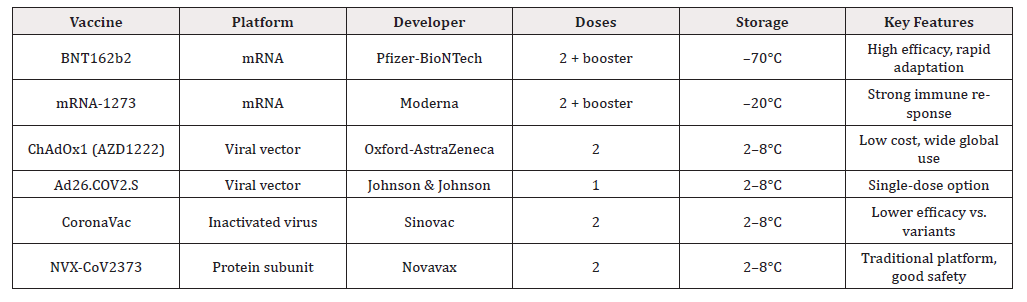
Table 1:Comparison of Major COVID-19 Vaccine Platforms.
Clinical and Real-World Efficacy
Initial clinical trials for mRNA vaccines reported efficacy above 90% in preventing symptomatic COVID-19, significantly higher than many traditional vaccine platforms [22]. Viral vector vaccines reported moderate-to-high efficacy (around 60–80%) in Phase 3 trials [23]. Inactivated vaccines generally showed lower efficacy rates, especially against symptomatic or mild infections [24]. However, across all platforms, protection against severe disease, hospitalization, and death remained substantial. Real-world studies confirmed these trends, although emerging variants like Delta and Omicron led to declines in efficacy against infection and increased breakthrough cases [25]. Booster doses were subsequently introduced to enhance waning immunity and improve neutralization of new variants [26] (Table 2).
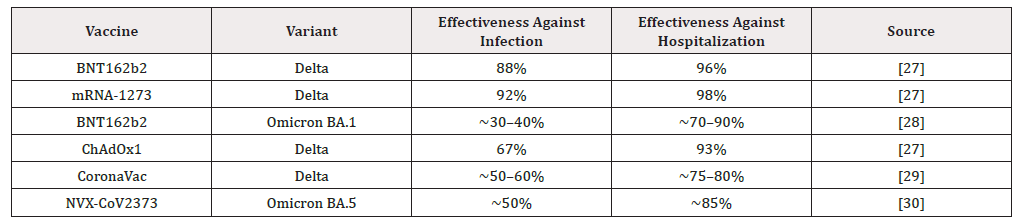
Table 2:
Global Distribution, Uptake, and Challenges
While scientific innovation led to the rapid development of multiple vaccines, global distribution was marked by stark inequalities. High-income nations secured early access through advance purchase agreements, while low- and middle-income countries (LMICs) struggled with shortages and delays [14]. The COVAX initiative, backed by WHO, GAVI, and CEPI, aimed to distribute vaccines equitably but fell short of its goals due to funding gaps, export bans, and political interference [31]. Moreover, vaccine hesitancy emerged as a significant barrier even where supply was adequate. Concerns over safety, misinformation, and cultural beliefs slowed uptake, particularly in regions with low trust in public health institutions [32]. Overcoming these challenges required not only logistical solutions but also community-based engagement strategies and public health education [33] (Figure 1).
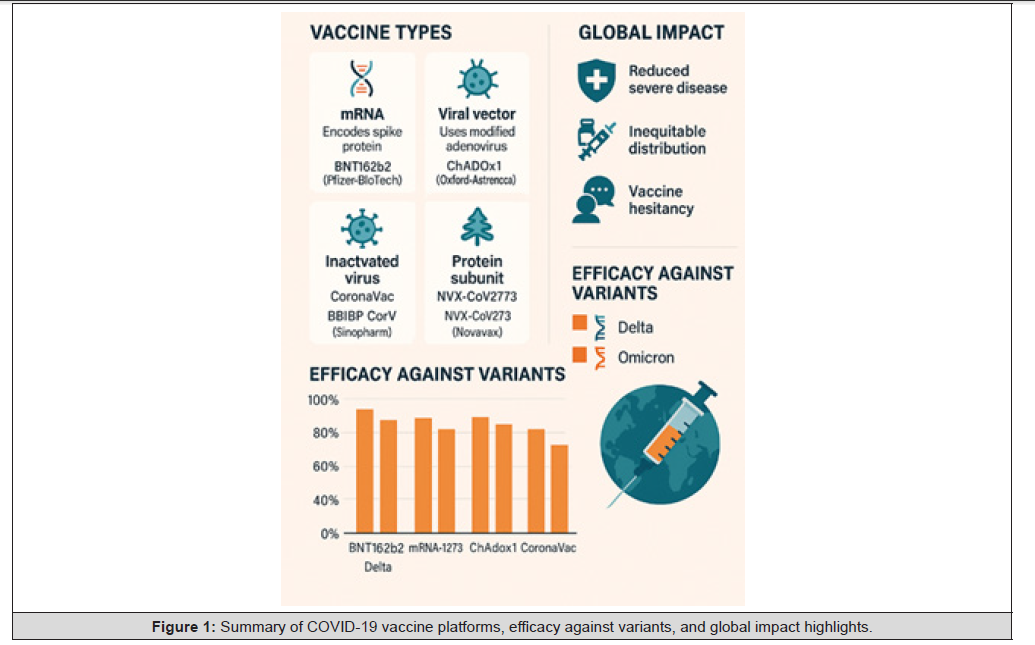
Figure 1:Summary of COVID-19 vaccine platforms, efficacy against variants, and global impact highlights.
Discussion
The rollout of COVID-19 vaccines has been both a triumph of modern science and a stress test for global health systems. While vaccine development advanced rapidly through novel platforms and expedited clinical trials, the complexity of mass immunization posed multidimensional challenges. One of the foremost concerns has been vaccine-induced immunity longevity. Several studies have shown that neutralizing antibodies decline significantly within 4-6 months post-vaccination, particularly after primary series without boosters [34]. Cellular immunity appears more stable, yet its role in protection from infection remains less defined [35]. This necessitated the development of booster strategies, tailored for high-risk populations and in response to emerging variants such as Omicron and its subline ages [36].
The conversation around vaccine safety has also evolved, especially with respect to adverse events such as myocarditis, thrombotic events, and anaphylaxis. Though rare, these events generated concern and required close pharmacovigilance, particularly among younger adults receiving mRNA or viral vector vaccines [37]. In response, countries implemented age-specific recommendations and monitored post-vaccination outcomes via national reporting systems like VAERS in the U.S. and Yellow Card in the UK [38]. On the other hand, the benefits of vaccination in reducing hospitalization and death have consistently outweighed the risks, even in vulnerable populations [39]. Moreover, heterologous (mix-and-match) vaccination schedules have demonstrated both safety and immunogenicity advantages, prompting flexible policies in regions facing supply constraints [40].
The advent of variant-specific or multivalent vaccines represents a new frontier in COVID-19 vaccine design. Bivalent boosters targeting both ancestral and Omicron variants have shown improved antibody titers, although their clinical superiority over monovalent boosters is still debated [41]. The ongoing evolution of SARS-CoV-2 raises the prospect of endemic transition, where periodic vaccination akin to influenza may be required [42]. Importantly, this raises economic and logistical questions about sustainable vaccine procurement and manufacturing, especially for low-income countries. Hence, strategies like mRNA vaccine technology transfer to Africa and India (e.g., WHO mRNA hub in South Africa) reflect a paradigm shift toward vaccine sovereignty and local capacity building [43].
Global Impact
The introduction of COVID-19 vaccines has had profound implications on public health, the global economy, and international cooperation. In high-income countries, widespread vaccination was associated with significant reductions in mortality, intensive care unit occupancy, and economic disruption, allowing a gradual return to pre-pandemic norms. In contrast, the unequal vaccine distribution left many low- and middle-income countries (LMICs) vulnerable to successive waves of infection. As of mid-2022, less than 20% of people in low-income countries had received even one dose, compared to over 70% in wealthier nations, highlighting the stark disparity in vaccine accessibility [44].
These inequities posed not only moral challenges but also epidemiological threats. Persisting viral reservoirs in under-vaccinated populations enabled ongoing transmission and the emergence of new variants, some with increased transmissibility or immune escape. Moreover, the global response exposed the fragility of health governance frameworks. Despite efforts like COVAX, vaccine nationalism and export bans by key producers disrupted equitable distribution efforts. In response, international dialogue increasingly focused on establishing regional vaccine manufacturing hubs and diversifying supply chains to mitigate future bottlenecks.
From a behavioral standpoint, vaccine hesitancy and misinformation significantly undermined the impact of vaccine availability. While some countries achieved high uptake due to strong public trust and effective health communication, others struggled with cultural resistance, politicization, and distrust of pharmaceutical companies. Social media platforms played a dual role-amplifying both reliable information and dangerous misinformation. Addressing these issues required tailored strategies, including involvement of community leaders, transparent communication, and culturally sensitive messaging campaigns.
Economically, vaccination enabled the reopening of industries, schools, and travel sectors, reducing the long-term costs of pandemic mitigation. Yet, LMICs continued to bear the brunt of prolonged disruption, not only from the virus but also from delayed vaccine-induced recovery. This disparity emphasized the need for global health equity to be central to future pandemic preparedness strategies [45].
Ultimately, the COVID-19 vaccination drive has reshaped international public health agendas. Countries and organizations are now exploring long-term integration of COVID-19 vaccines into national immunization programs, establishing sustainable financing mechanisms, and investing in regional production capacity. These actions reflect a broader shift from emergency response to enduring resilience.
Conclusion
The development and deployment of COVID-19 vaccines mark a watershed moment in the history of global health. From rapid mRNA innovation to adaptive regulatory mechanisms, the pandemic has transformed how the world approaches vaccine science and delivery. While the efficacy of these vaccines in preventing severe disease and death is well-established, the pandemic has also illuminated gaps in equitable access, long-term immunity, and public trust. Sustained immunity through boosters, protection against future variants, and managing vaccine fatigue are ongoing challenges.
Moving forward, the global community must adopt a multi- pronged strategy that includes: (i) advancing next-generation vaccines with broader variant coverage, (ii) strengthening vaccine manufacturing in LMICs, (iii) integrating COVID-19 immunization into routine healthcare, and (iv) countering hesitancy through community engagement. Importantly, COVID-19 vaccine efforts must now transition from emergency response to sustainable public health infrastructure.
This pandemic has underscored that science alone cannot end global health crises, governance, equity, and collective action are equally vital. The COVID-19 vaccine story is not merely one of scientific triumph, but a call to rethink the foundations of global solidarity and preparedness.
References
- Krammer Florian (2020) SARS-COV-2 VACCINES IN DEVELOPMENT. Nature 586(7830): 516-527.
- Lurie Nicole, Melanie Saville, Richard Hatchett, Jane Halton (2020) Developing COVID-19 Vaccines at Pandemic Speed. N Engl J Med 382(21): 1969-1973.
- Andreadakis Zacharias, Arun Kumar, Raul Gomez Roman, Stig Tollefsen, Melanie Saville, et al., (2020) The Covid-19 Vaccine Development Landscape. Nat Rev Drug Discov 19(5): 305-306.
- Polack, Fernando P, Stephen J Thomas, Nicholas Kitchin, Judith Absalon, Alejandra Gurtman, et al., (2020) Safety and Efficacy of the Bnt162b2 MRNA COVID-19 Vaccine. N Engl J med 383(27): 2603-2615.
- Baden Lindsey R, Hana M El Sahly, Brandon Essink, Karen Kotloff, Sharon Frey, et al., (2021) Efficacy and Safety of the MRNA-1273 SARS-COV-2 Vaccine. N Engl J med 384(5): 403-416.
- Voysey Merryn, Sue Ann Costa Clemens, Shabir A Madhi, Lily Y Weckx, Pedro M Folegatti, et al., (2021) Safety and Efficacy of the Chadox1 Ncov-19 Vaccine (AZD1222) Against SARS-COV-2: an interim analysis of Four Randomised Controlled Trials in Brazil, south Africa, and the Uk. The lancet 397(10269): 99-111.
- Xia, Shengli, Yuntao Zhang, Yanxia Wang, Hui Wang, Yunkai Yang, et al., (2021) Safety and Immunogenicity of an Inactivated SARS-COV-2 Vaccine, BBIBP-CorV: a randomized, Double-Blind, Placebo-Controlled, PHASE 1/2 TRIAL. THE LANCET INFECTIOUS DISEASES 21 (1): 39-51.
- Pardi Norbert, Michael J Hogan, Frederick W Porter, Drew Weissman et al., (2018) Mrna Vaccines-A New Era in Vaccinology. nature reviews Drug Discovery 17 (4): 261-279.
- Pormohammad Ali, Mohammad Zarei, Saied Ghorbani, Mehdi Mohammadi, Saeideh Aghayari Sheikh Neshin et al., (2021) Effectiveness of covid-19 Vaccines Against Delta (B. 1.617. 2) Variant: a Systematic Review and META-ANALYSIS of Clinical Studies. Vaccines 10(1): 23.
- Bar-On Yinon M, Yair Goldberg, Micha Mandel, Omri Bodenheimer, Laurence Freedman, et al., (2021) Protection of BNT162B2 Vaccine Booster Against COVID-19 in Israel. N Engl J Med 385(15): 1393-1400.
- Sadoff Jerald, Glenda Gray, An Vande Bosch , Vicky Cardenas , Georgi Shukarev, et al., (2021) Safety and Efficacy of Single-Dose AD26. COV2. S Vaccine Against COVID-19. N Engl J Med 384(23): 2187-2201.
- Flannery, Brendan, Jessie R Chung, Swathi N Thaker, Arnold S Monto, Emily T Martin., et al., (2017) Interim Estimates of 2016–17 Seasonal Influenza Vaccine Effectiveness-United States, February 2017. MMWR Morb Mortal Wkly Rep 66(6): 167-171.
- Usher ann Danaiya (2021) A Beautiful Idea: How Covax Has Fallen Short. lancet 397 (10292): 2322-2325.
- Emanuel Ezekiel J, Govind Persad, Adam Kern, Allen Buchanan, Cecile Fabre., et al., (2020) An Ethical Framework For Global Vaccine Allocation. Science 369(6509): 1309-1312.
- Sallam Malik (2021) Covid-19 Vaccine Hesitancy Worldwide: A Concise Systematic Review of Vaccine Acceptance Rates." Vaccines 9(2): 160.
- Koff Wayne C, Seth F, Berkley (2021) A Universal Coronavirus Vaccine. Science 371(6531): 759-759.
- Shinde Ketaki (2022) The Mrna Vaccine Heralds a New Era in Vaccinology. Asian Journal of Pharmacy and Technology 12(3): 257-265.
- Madhi Shabir A, Anthonet L Koen, Alane Izu, Lee Fairlie, Clare L Cutland, et al., (2021) Safety and Immunogenicity of the Chadox1 Ncov-19 (AZD1222) Vaccine Against SARS-COV-2 in People Living with and without HIV IN South Africa: an Interim Analysis of a Randomised, Double-Blind, Placebo-Controlled, PHASE 1B/2A TRIAL. Lancet HIV 8(9): E568-E580.
- Xia, Shengli, Kai Duan, Yuntao Zhang, Xiaoqing Zeng, Dong yang Zhao, et al., (2022) safety and Immunogenicity of an Inactivated COVID-19 Vaccine, WIBP-CORV, in Healthy Children: Interim Analysis of a Randomized, Double-Blind, Controlled, PHASE 1/2 TRIAL. Front Immunol 13: 898151.
- Heath Paul T, Eva P Galiza, David N Baxter, Marta Boffito, Duncan Browne, et al., (2021) Safety and Efficacy of NVX-COV2373 COVID-19 Vaccine. N Engl J Med 385(13): 1172-1183.
- Kaur Rimple jeet, Siddhartha Dutta, Pankaj Bhardwaj, Jaykaran Charan, Sameer Dhingra, et al., (2021) Adverse Events Reported From COVID-19 Vaccine Trials: A Systematic Review. Indian J Cli Biochem 36(4): 427-439.
- Thomas, Stephen J, Edson D Moreira Jr, Nicholas Kitchin, Judith Absalon, Alejandra Gurtma, et al., (2021) Safety and efficacy of the BNT162B2 MRNA COVID-19 Vaccine Through 6 Months. N Engl J Med 385(19): 1761-1773.
- Hardt Karin, An Vandebosch, Jerald Sadoff, Mathieu Le Gars, Carla Truyers, et al., (2022) Efficacy, Safety, and Immunogenicity of a Booster Regimen of AD26. COV2. S Vaccine Against COVID-19 (ENSEMBLE2): Results of a Randomised, Double-Blind, Placebo-Controlled, PHASE 3 TRIAL. Lancet infect dise 22(12): 1703-1715.
- Jara Alejandro, Eduardo A Underage, Cecilia Gonzalez, Fabio Paredes, Tomas Fontecilla, et al., (2021) Effectiveness of an Inactivated SARS-COV-2 Vaccine in Chile. N Engl J Med 385(10): 875-884.
- Lopez Bernal Jamie, Nick Andrews, Charlotte Gower, Eileen Gallagher, Ruth Simmons, et al. (2021) Effectiveness of covid-19 vaccines Against the B. 1.617. 2 (DELTA) Variant. N Engl J Med 385(7): 585-594.
- Bar-on Yinon M, Yair Goldberg, Micha Mandel, Omri Bodenheimer, Laurence Freedman, et al., (2021) Protection Against COVID-19 BY BNT162B2 Booster Across Age Groups. N Engl J Med 385(26): 2421-2430.
- Nasreen Sharifa, Hannah Chung, Siyi He, Kevin A. Brown, et al. (2021) Effectiveness of COVID-19 Vaccines Against Variants of Concern in Ontario, Canada. Medrxiv.
- Andrews Nick, Julia Stowe, Freja Kirsebom, Samuel Toffa, Tim Rickeard, et al., (2022) COVID-19 Vaccine Effectiveness Against the Omicron (B.1.1. 529) Variant. N Engl J Med 386(16): 1532-1546.
- Hitchings Matt Dt, Otavio T Ranzani, Mario Sergio Scaramuzzini Torres, Silvano Barbosa de Oliveira, et al., (2021) Effectiveness of Coronavac in the Setting of High SARS-COV-2 P. 1 Variant Transmission in Brazil: A Test-Negative Case-Control Study. MEDRXIV.
- Dunkle Lisa M, Karen L Kotloff, Cynthia L Gay, German Anez, Jeffrey M Adelglasset al., (2022) Efficacy and Safety of NVX-COV2373 in Adults in the United States and Mexico. N Engl J Med 386(6): 531-543.
- AN ETHICAL FRAMEWORK FOR GLOBAL VACCINE ALLOCATION
- Sallam M (2021) COVID-19 Vaccine Hesitancy Worldwide: A Concise Systematic Review of Vaccine Acceptance Rates. Vaccines 9(2): 160.
- Lazarus Jeffrey V, Katarzyna Wyka, Lauren Rauh, Kenneth Rabin, Scott Ratzan, et al. Hesitant or Not? The Association of Age, Gender, and Education with Potential Acceptance of a COVID-19 Vaccine: A Country-Level Analysis. J Health Commun 25(10): 799-807.
- Levin, Einav G, Yaniv Lustig, Carmit Cohen, Ronen Fluss, Victoria Indenbaum, et al., (2021) Waning Immune Humoral Response to BNT162B2 COVID-19 Vaccine Over 6 Months. N Engl J Med 385(24): E84.
- Sattler Arne, Stefan Angermair, Helena Stockmann, Katrin Moira Heim, Dmytro Khadzhynov, et al., (2020) SARS–COV-2–Specific T Cell Responses and Correlations with COVID-19 Patient Predisposition. J Clin Invest 130(12): 6477-6489.
- Garcia Beltran Wilfredo F, Kerri J St Denis, Angelique Hoelzemer, Evan C Lam, Adam D Nitido, et al., (2022) Mrna-Based COVID-19 Vaccine Boosters Induce Neutralizing Immunity Against SARS-COV-2 Omicron Variant. cell 185(3): 457-466.
- Oster Matthew E, David K Shay, John R Su, Julianne Gee, C Buddy Creech, et al. (2022) Myocarditis Cases Reported After Mrna-Based COVID-19 Vaccination in the us from December 2020 TO AUGUST 2021. JAMA 327(4): 331-340.
- Lane Samantha, AND SAAD SHAKIR. (2022) Assessing Case Fatality on Cases of Thrombosis With Concurrent Thrombocytopenia Following COVID-19 Vaccine Astrazeneca (VAXZEVRIA) in the United Kingdom: A Review of Spontaneously Reported Data. Drug Safety 45(9): 1003-1008.
- Thompson Mark G, Karthik Natarajan, Stephanie A Irving, Elizabeth A Rowley, Eric P Griggs, et al., (2022) Effectiveness of a Third Dose of Mrna Vaccines Against COVID-19–Associated Emergency Department and Urgent Care Encounters and Hospitalizations Among Adults During Periods of Delta and Omicron Variant Predominance- Vision Network, 10 States, August 2021–January 2022. MMWR Morb Mortal Wkly Rep 71(14): 139-145.
- Schmidt Tina, Verena Klemis, David Schub, Janine Mihm, Franziska Hielscher, et al., (2021) Immunogenicity and Reactogenicity of Heterologous Chadox1 NCOV-19/MRNA Vaccination. Nat Med 27(9): 1530-1535.
- Chalkias Spyros, Charles Harper, Keith Vrbicky, Stephen R Walsh, Brandon Essink, et al. (2022) A Bivalent Omicron-Containing Booster Vaccine Against COVID-19. N Engl J Med 387(14): 1279-1291.
- Fauci Anthony S, David M Morens (2012) The Perpetual Challenge of Infectious Diseases. N Engl J Med 366(5): 454-461.
- WHO (2021) SOUTH AFRICA MRNA HUB PROGRESS. HTTPS://WWW.WHO.INT/NEWS/ITEM/23-06-2021-WHO-SOUTH-AFRICA-MRNA-TECHNOLOGY-TRANSFER-HUB
- Allan Maya, Maja Lievre, Henry Laurenson Schafer, Stephane de Barros, Yuka Jinnai, et al., (2022) The World Health Organization COVID-19 Surveillance Database. Int J Equity Health 21(SUPPL 3): 167.
- Lmics Continued to Bear the brunt of Prolonged Disruption, Not Only From the virus but Also from Delayed Vaccine-Induced Recovery. This Disparity Emphasized the need for Global Health Equity to be Central to Future Pandemic Preparedness Strategies.




 We use cookies to ensure you get the best experience on our website.