
Review Article 
 Creative Commons, CC-BY
AI-Driven Drug Development: A Capital-Efficient Model for the Future of Precision Medicine
*Corresponding author: Jonathan RT Lakey, GATC Health Corp, 2030 Main Street, Suite 660, Irvine CA 92614, USA, Department of Cardiovascular and Thoracic Research, West Virginia University, Morgantown, WV 26506, USA.
Received:June 30, 2025; Published:July 08, 2025
DOI: 10.34297/AJBSR.2025.27.003592
Abstract
The pharmaceutical industry faces a growing imperative to rethink drug development models amid rising costs, prolonged timelines, and persistently low success rates. Traditional approaches, heavily reliant on animal testing and siloed trial-and-error methods, are no longer sustainable, either financially or ethically. The average cost of bringing a single drug to market now exceeds $2 billion and can take over a decade, with failure rates near 90%. In this context, capital-efficient innovation is not merely advantageous, it is essential. GATC Health Corp is at the forefront of this paradigm shift, leveraging artificial intelligence (AI) to transform the drug development process from discovery through clinical trial design. By integrating multi-omics data, predictive modeling, and in silico simulations, GATC Health’s AI-powered platform dramatically reduces early-stage costs and timelines. For example, target identification that typically costs up to $100 million and takes years can now be achieved in weeks at a fraction of the cost. Similarly, AI-driven preclinical assessments cut animal use, increase human relevance, and reduce expenses by up to 90%. This streamlined process shortens time to Investigational New Drug (IND) filing from over a decade to under two years. Beyond cost savings, GATC Health’s approach increases predictive accuracy, improves safety profiling, and enhances the probability of clinical success. As regulatory agencies embrace AI and New Approach Methodologies (NAMs), GATC Health Corp is uniquely positioned to lead the industry toward a smarter, faster, and more ethical model of drug development, paving the way for timely, affordable therapies in precision medicine.
Keywords:Artificial Intelligence (AI), Reduction in animal research, New Approach Methodologies (NAMs)
Introduction
The drug development process is complex and involves multiple phases. Early stages include the identification of biological targets, discovering potential drug candidates, conducting preclinical research, each of which is met with high cost. The subsequent progression through clinical trials, requiring securing regulatory approval, and continuing through monitoring the post-market safety and effectiveness drastically increases the time and cost [1]. While the significant hurdles at each phase are largely characterized by extremely high costs, lengthy timelines, and a low rate of success, there are numerous additional challenges along the way as well, including ethical considerations, endpoint selection and optimization of preclinical and clinical trial design to meet safety and efficacy benchmarks. Although the actual cost is highly variable based on the drug and intended treatment areas it is estimated that the early stages, target identification typically costs between $50 million to $100 million using conventional methods [2]. During the preclinical phase, where animal testing is most prevalent, requisite costs including (but not limited to) multiple species models, housing, pharmacokinetic (PK) and pharmacodynamic (PD) costs can range from $100 million to $200 million. Despite advances in biomedical science, many promising therapies falter due to poor target selection, inadequate preclinical models, or suboptimal trial design. To overcome these challenges, integrating artificial intelligence (AI) across the drug development lifecycle offers a transformative opportunity [3,4]. AI enables the analysis of vast, complex datasets to identify novel targets, simulate compound behavior, predict clinical outcomes, and personalize treatment strategies [5]. By embedding AI from early discovery through clinical development and regulatory submission, the industry can reduce time and cost, improve precision, and shift toward more human-relevant, ethical approaches, ushering in a new era of smarter, faster, and more effective therapeutic innovation [5-7].
Capital efficiency, defined as achieving greater output (e.g., validated targets, successful INDs, or approved drugs) per dollar invested, is increasingly critical in the biopharma landscape, where the high cost and risk of drug development threaten both innovation and access6. The average cost, untenable timeline, and low clinical success rate [1,8] collectively highlight a growing concern that: only the largest pharmaceutical companies or heavily capitalized biotech firms can afford to sustain traditional research and development (R&D) pipelines. This dynamic has created significant barriers for emerging innovators, particularly those focused on rare diseases or niche therapeutic areas where returns may be more uncertain. In this climate, capital efficiency has become a strategic imperative rather than financial optimization. Capital-efficient strategies allow for earlier go/no-go decisions, reduced attrition, and smarter allocation of resources across portfolios. This is especially vital in the context of venture-backed biotech startups and public-sector collaborations, where funding is finite, and investor expectations are high. Technological advances, including artificial intelligence (AI) and machine learning (ML), offer a powerful means of achieving this efficiency by accelerating discovery, improving target validation, and optimizing clinical trial design, thereby reducing both costs and time-to-market [4-6]. As such, capital efficiency is not only reshaping how drugs are developed but also determining which companies will lead in the next era of precision medicine.
Identifying and validating the right therapeutic targets remains one of the most critical and complex steps in drug development. Traditional approaches, often limited by fragmented datasets and labor-intensive methodologies, struggle to capture the full biological context of disease [9,10]. The integration of AI into target discovery offers a powerful solution by enabling comprehensive analysis of genomic, transcriptomic, and multi-omic data. AI can uncover hidden patterns and causal relationships within these large, multidimensional datasets, revealing novel, high-confidence targets with greater biological relevance [11]. This data-driven approach not only improves the precision and speed of target identification but also enhances validation by linking molecular signatures directly to disease mechanisms, paving the way for more effective and personalized therapeutic strategies [4,6,9,10].
Despite the drastically increased potential to reduce early-stage discovery costs by narrowing viable candidate lists before expensive testing, significant challenges persist. Most importantly, AI models are only as good as the training data [12]. Incomplete, biased, or non-standardized biomedical datasets limit predictive accuracy [13]. Modeling multi-scale biological systems remains difficult [14]. As such, although enhanced data integration alleviates this to some extent, AI struggles with emergent properties like pathway crosstalk and immune system dynamics. Further, even with rapid in silico success, many AI-derived candidates require substantial empirical validation, delaying progression to the clinic as historically, regulatory agencies have lacked standardized frameworks for evaluating AI-generated candidates, especially those created through unsupervised or black-box algorithms [15]. The recent FDA shifts are poised to address this challenge. Notwithstanding, lack of model transparency, grounded in proprietary and IP concerns reduces trust among researchers and clinicians, especially for high-stakes therapeutic areas. The reshaping of drug discovery offers tools that accelerate and enhance each stage of the development pipeline serve as catalysts in the validation of AI platforms. Key AI-driven platforms that have forged the path are presented in (Table 1). For example, Benevolent AI strategically integrated novel language processing (NLP) and knowledge graphs to mine biomedical literature and omics data for target identification of baricitinib as a repurposing candidate for COVID-19, later validated and authorized for emergency use by the FDA [16]. The pipeline continues towards advancing multiple programs in neurodegeneration and inflammation. Exscientia, using deep learning for drug design and patient stratification, developed the first AI-designed drug (DSP-1181) that entered human clinical trials for obsessive compulsive disorder (OCD) in collaboration with Sumitomo Dainippon Pharma [17]. Exscientia currently has over 25 AI-designed molecules in preclinical/ clinical development in their pipeline. Insilico Medicine leveraged generative adversarial networks (GANs) and reinforcement learning for target discovery and molecule generation to develop an AI-discovered drug candidate for idiopathic pulmonary fibrosis (INS018_055) entered Phase I trials within 18 months [18].
Beyond the challenges presented in (Table 1), optimization of trial design represents a tremendous hurdle. Optimizing clinical trial design is a pivotal challenge in drug development, as traditional methods often rely on assumptions, limited data, and trial-specific protocols that may not fully account for patient variability or real- world complexities. ML offers transformative potential in this area by leveraging large-scale patient data to design more efficient and adaptive clinical trials. By utilizing algorithms to analyze historical trial data, demographic information, genetic profiles, and clinical outcomes, ML can identify optimal patient stratification, predict trial success, and recommend the most effective dosing regimens. Additionally, ML can help in the design of adaptive trial models that dynamically adjust based on interim results, thus reducing the need for large, rigidly structured trials and allowing for faster decision-making. A key advantage is its ability to personalize trial designs, accounting for diverse patient populations and individual responses, which can improve both efficacy and safety data. For example, ML has been used to enhance patient selection for oncology trials, improving recruitment by predicting which patients are most likely to respond to specific therapies [19-21]. Furthermore, ML tools can identify biomarkers for patient monitoring and assess off-target effects, facilitating earlier detection of safety concerns. This data-driven approach can significantly shorten timelines, reduce costs, and increase the probability of clinical trial success making machine learning an essential tool for modern clinical trial optimization. AI highly depends on legacy data which creates gaps for novel compounds, while regulatory frameworks struggle to keep pace with technological advances. Notwithstanding, the emerging AI approaches are not without challenges. This paper examines how AI is not just optimizing drug development but fundamentally redefining its ethical and scientific foundations, creating safer medicines through human-relevant models while sparing millions of animals annually. In this context we will describe here how GATC’s Multiomic Advanced TechnologyTM provides solutions in the context of other technical breakthroughs, regulatory milestones, and persistent barriers to this urgent transition toward compassionate, computationally powered pharmacoscience.
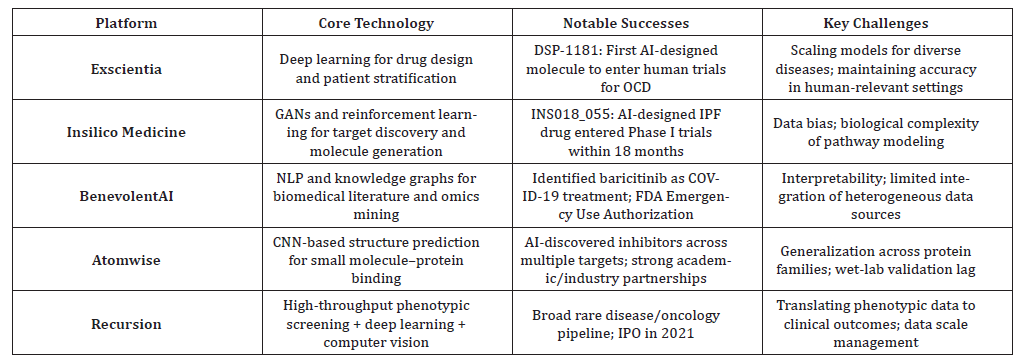
Table 1:Examples of key platforms driving AI drug development (not an exhaustive list).
Solution-based Efforts are Highly Warranted
Capital Efficiency in Pharmaceutical Development through Multiomic Advanced Technology Developed by GATC Health Corp
GATC Health Corp. is a technology company that is transforming drug discovery and development through its AI-driven platform and approach. The company’s validated and proprietary Multiomics Advanced Technology™ (MAT) simulates human biochemistry’s billions of interactions to rapidly create novel therapeutics, identify and confirm targets, accelerate development, and de-risk drug pipelines by predicting efficacy, safety, and off-target effects. Founded in 2020, GATC Health is headquartered in Irvine, CA, and has facilities in Utah, West Virginia, and Washington DC. GATC Health’s Multiomics Advanced Technology (MAT) platform was built on advanced artificial intelligence (AI) technologies. The MAT platform provides the capacity to accurately simulate systems biology to expedite drug development and optimize treatments. The MAT platform models disease states, identifies, and validates targets, creates novel chemical entities (NCEs) in silico, and predicts safety, efficacy and off-target outcomes with >85% precision. MAT can analyze 400 trillion data points (2,500 whole exomes) in less than eight minutes without the use of supercomputing technologies.
GATC Health Corp is revolutionizing early-stage drug discovery through its AI-enabled de novo platform, which dramatically accelerates R&D timelines from years to months. The company begins by identifying diagnostic, prognostic, and monitoring biomarkers from large, biologically rich datasets. Advanced mathematical models then assess causal relationships between these biomarkers and disease pathology, pinpointing validated therapeutic targets. GATC Health’s proprietary AI further simulates and generates libraries of novel, biologically relevant compounds. This in silico approach predicts pharmacodynamics, toxicity, and off-target effects early in the process, thereby reducing the need for animal testing and lowering costs while enhancing the likelihood of clinical success. By mimicking human biology and streamlining early R&D, GATC Health sets a new standard for efficient and ethical therapeutic innovation.
In addition to discovery, GATC Health applies its AI platform to analyze failed or discontinued drug programs, extracting mechanistic insights from historical clinical trial data. This allows the company to identify root causes of failure, such as poor patient stratification or incorrect dosing, without reverting to additional animal studies. GATC Health helps its partners strategically repurpose assets for new indications or patient subgroups, extending IP value while minimizing redundant preclinical work. This approach de-risks drug pipelines, supports smarter investment decisions, and accelerates development. GATC Health’s platform delivers 88% accuracy in predicting successful outcomes and 84% in identifying likely failures, offering a data-driven pathway to maximize the return on prior R&D investments.
GATC Health’s AI-driven prognostic and predictive tools further advance personalized medicine by incorporating genomic and multi-omics data to build digital patient models. These simulations accurately represent human disease progression and provide actionable health insights at both the individual and population levels. Such tools enable precision targeting therapies without the need for exploratory animal models. Personalized risk assessments help clinicians intervene earlier and more effectively, while mechanistically grounded data supports regulatory engagement. This integration of AI across discovery, development, and clinical validation reflects a comprehensive, human-centric alternative to traditional methods, delivering ethical and efficient solutions for modern drug development.
Capital Efficiency Through the Reduction of Animal Models
For much of the 20th century, animal models were the cornerstone of preclinical drug development, providing critical insights into disease mechanisms and drug safety [22,23]. However, animal testing faced growing scrutiny due to ethical concerns, costs, and its limited ability to predict human responses accurately [24,25]. By the late 1970s and early 1980s, the scientific community began exploring alternatives, setting the stage for a paradigm shift in preclinical testing. The late 1970s and the 1980s marked the emergence of molecular in vitro testing-methods that use isolated cells, tissues, or biomolecules outside their natural biological context [26]. These techniques leveraged advances in molecular biology, immunology, cell culture, and biochemistry to study drug effects at the cellular and molecular levels. This period saw the development of assays to assess toxicity, efficacy, and mechanism of action without relying on whole-animal models.
Although preclinical modeling is a critical step in drug development, traditional methods, i.e., animal testing, often face limitations in predicting human responses, leading to high failure rates in clinical trials. Thus, the pharmaceutical industry stands at a transformative crossroads, where advanced AI is reshaping one of its most entrenched practices: animal testing [27]. The historical reliance on animal models to assess safety and efficacy, despite well-documented limitations in predicting human outcomes and growing ethical concerns, have paved the way to the contemporary need for a paradigm shift [28]. AI-driven innovations, encompassing predictive toxicology models as well as synthetic biological simulations are not merely refining this change in perspective and perception of drug development, but actively dismantling it, offering a future where animal use becomes the exception rather than the rule [29].
Integrating AI into preclinical modeling can significantly improve the accuracy and efficiency of simulations such as ADMET (Absorption, Distribution, Metabolism, Excretion, and Toxicity) and PK/PD (Pharmacokinetics/Pharmacodynamics). AI-powered simulations can process vast datasets to predict how a drug behaves in the body, its potential toxicity, and its efficacy, offering more reliable forecasts of clinical outcomes. This not only reduces reliance on animal testing but also accelerates the identification of promising drug candidates, optimizes dosing regimens, and improves the overall success rate in clinical trials, ultimately lowering costs and development timelines while enhancing the probability of success in human patients [6,14].
Comparative Cost Analysis: Traditional vs. AI-Based Development
The contemporary paradigm shift is driven by converging forces: various sources report that 88 – 92% of drugs that pass animal trials, even under the most stringent conditions [30] fail in human clinical trials, exposing both serious scientific limitations and ethical dilemmas. Traditional approaches consume 12 years and $2.4 billion per approved drug [31], with animal studies contributing significantly to these costs and timelines.
The emergence of new screening and testing technologies influenced the number of animals used in drug development (Figure 1). In the late 1970s, new in-vitro-screening technologies were established that dramatically reduced the number of animals used worldwide. New AI-based technologies for drug safety evaluation have the potential to lead yet to another paradigm shift by significantly lowering the need for animal-based efficacy and safety studies.

Figure 1:Reduction of animal use worldwide caused by the introduction of molecular tests in pharmaceutical development32 (figure adapted from [33]).
Previous Significant Reduction in Animal Use: Evidence and Mechanisms
The introduction and adoption of in vitro assays led to a significant reduction in animal use. In vitro assays have provided rapid, high-throughput screening of large compound libraries, enabling researchers to eliminate ineffective or toxic candidates before progressing to animal studies. Molecular assays provided detailed mechanistic insights, allowing for more targeted and hypothesis- driven animal studies, thus reducing the number of animals needed per compound. Over time, regulatory agencies began to recognize and accept in vitro data for certain safety and efficacy endpoints, further incentivizing their use.
Generative AI systems now synthesize virtual toxicology datasets, while companies have begun to employ “digital twins” of biological systems to test thousands of drug candidates in silico – achieving results 1,000x faster than conventional methods.
The FDA’s 2025 roadmap to phase out animal testing for monoclonal antibodies signals regulatory endorsement of these technologies, creating a blueprint for broader adoption across therapeutic areas. A recent Request for ‘Comments from Industry’ from FDA34 regarding approaches to integrate AI technologies in pharmaceutical development processes underscores the Agency’s commitment to reduction in development timelines, expenditures, even costs incurred during the review process, and, importantly, the reduction of animals used.
Emerging AI approaches demonstrate unprecedented precision from predicting protein structures with atomic accuracy35, to forecasts drug-target interactions while reducing animal experiments by 70% per drug candidate36. These tools align with the “3Rs” principles (Replacement, Reduction, Refinement), as seen in Europe’s VICTR3 project, which aims to cut animal use by 25% through AI-analyzed historical data and synthetic virtual animals [37].
The Impact of Molecular in vitro Testing on Animal Use in Preclinical Development
The advent and continuous refinement of molecular and cellular assay configurations has led to an approximately 50% reduction of animals used in research and drug development between 1980 and 2000 (see Figure 1 and [38]). However, current animal use in research and pharmaceutical development still reaches millions of animals per year. In addition, while the application of in vitro technologies has certainly refined understanding of a compound’s mechanism of action, enabled high throughput screening and drug target verification, such technologies had no effect on decreasing the failure rate of drug candidates in clinical development, which remained and is consistently high at 88 – 92% over decades. Therefore, another paradigm shift in technologies applicable to basic and pharmaceutical development research is needed to significantly reduce this failure rate, reduce development costs and further reduce the number of animals in these efforts. Such technologies will have to be robust enough to provide actionable data and to convince regulatory authorities worldwide of abilities to accurately predict behavior of NCEs in humans. Such technologies have appeared based on AI applications and are currently being applied and validated worldwide.
Studies from small and medium-sized pharmaceutical companies document up to a five-fold reduction in the number of experimental animals used per compound synthesized following the introduction of in vitro assays [39-41]. This trend was echoed across the pharmaceutical industry, with in vitro and in silico methods increasingly replacing animal models in early-stage drug discovery and safety testing [16,42,43].
Recent Data on Animal use in Basic Research and Pharmaceutical Development
The most recent publicly available data on animals used in U.S. research come primarily from 2021. The U.S. Department of Agriculture (USDA) reports [44] only cover certain species (dogs, cats, nonhuman primates, guinea pigs, hamsters, rabbits, etc.) and exclude mice, rats, birds, and fish, which make up the vast majority of animals used in research. Estimates from advocacy and research organizations supplement the figures below (Figure 2 and 3).

Figure 2:Potential economic impact, of replacing traditional animal tests with in silico equivalents, due to cost and time savings.

Figure 3:Potential impact on healthy life of replacing traditional animal tests with in silico equivalents, due to cost and time savings.
Economic models of capital efficiency enabled by GATC’s technology
GATC Health Corp is uniquely positioned to lead the phaseout of animal testing by leveraging its cutting-edge AI platform to develop robust, human-centric biological models. These accurately simulate disease progression, predict therapeutic responses, and assess safety and efficacy-functions traditionally performed by animal models. By aligning with the growing global regulatory momentum, including initiatives like the FDA Modernization Act, which supports the use of non-animal testing methods, GATC Health can accelerate the adoption of AI-driven tools as validated alternatives. This shift not only enhances the scientific relevance and ethical integrity of preclinical research but also delivers significant cost savings. Such savings can then be strategically reinvested into innovation, accelerating the transition from discovery to clinical readiness and commercialization. Through this model, GATC Health champions a future of faster, more ethical, and more precise drug development, setting a new standard in biomedical research that both meets regulatory demands and eliminates the reliance on outdated animal-based testing paradigms.
Future Outlook
Advancements in AI in silico testing offer a transformative approach to streamline drug development, reduce costs, and enhance ethical standards by minimizing animal testing. This study evaluates the potential impact of replacing traditional animal testing with AI in silico equivalents, focusing on time savings, cost efficiencies, animal welfare, and years of life lost (YLL) reductions. Using a retrospective analysis, we applied time savings to the ~300 drugs launched between 2000–2013, as studied by Lichtenberg [38], who reported 148.7 million life-years saved in 2013 across 27 countries due to post-1981 drugs.
Assuming traditional animal testing averages 72 days per test (weighted average time across animal test types), we modeled a 10% reduction in duration using AI in silico methods (64.8 days), yielding 7.2 days saved per test. For a drug program with 5 tests, this translates to 36 days saved (0.75% of the 13.1-year discovery- to-launch timeline). A more ambitious 50% reduction scenario reduces testing to 36.0 days, saving 180 days per program (3.76% of the average timeline from discovery to launch). Cost savings mirror this trend: a 10% reduction saves $92,112 per program, while 50% saves $460,558, based on a $184,240 (weighted average) traditional testing cost. Additionally, patents awarded for new biopharmaceutical inventions are granted protection for a finite term, and thus, every day of development delay prolongs the launch of a given medicine. As such, patients with unmet medical needs must wait longer for life-improving or even life-saving therapeutics, and the firms marketing the therapeutics miss out on additional days of patent-protected sales. It has been estimated that, on average, every day of development delay is worth a loss of $500,000 in future sales45. Because of the reduction in development time due to in silico equivalent replacements, patients could receive life-savings treatments sooner, and industry could benefit from materially higher future sales. (See Figure 2) for estimated cost savings and recognition of additional sales to the US biopharmaceutical industry, per year, in replacing traditional animal tests with in silico equivalents.
To estimate Years of Life Lost (YLL) savings, we calculated additional drug launches enabled by faster development. This was calculated assuming that all post-1981 drugs had used in silico equivalents rather than traditional animal tests. At a 10% reduction of the cost and time spent on traditional animal testing, 1.12 million additional life-years could have been saved in 2013. A 50% reduction in time and costs yields a potential saving of 5.6 million additional life-years. Total YLL saved in 2013 could have increased from 148.7 million to 149.82 million (10%) or 154.30 million (50%). Globally, replacing animal testing with in silico equivalents could spare 38.4 million animals annually, derived from Cruelty Free International’s estimate of global animal use for chemical testing (192,000,000 animals used for testing per year, with pharmaceutical industry accounting for about 20%)46,47. See (Figure 3) for estimated savings of both animals that are subject to biopharmaceutical testing and additional Years of Life Lost (YLL) before age 85, that could come with replacing animal tests with in silico equivalents. These findings underscore AI in silico testing’s potential to accelerate drug development, reduce costs, and enhance human and animal welfare, offering a compelling case for broader adoption in pharmaceutical research.
Conclusions
GATC Health Corp is a key innovator in transforming drug development economics and ethics. The integration of AI-driven in silico testing marks a pivotal shift in the drug development paradigm, streamlining timelines, cutting costs, and aligning scientific progress with evolving ethical standards. The modeled impact of replacing traditional animal testing with AI-based equivalents shows significant potential: reducing development timelines by up to 180 days, saving hundreds of thousands of dollars per drug program, and sparing tens of millions of animals annually. Most importantly, this acceleration translates into meaningful public health gains. Faster market entry for life-saving therapeutics could have saved millions of dollars in additional life-years bolstering robust support for the expanded use of AI, such as GATC Health’s MAT platform in drug development.
GATC Health Corp is uniquely positioned to lead this transformation. By combining predictive toxicology, physiologically based pharmacokinetic (PBPK) modeling, and in silico clinical simulations, GATC Health delivers a fully integrated AI platform that optimizes every stage of the development pipeline. Its human-centric approach not only enhances translational relevance but also supports regulatory alignment and de-risks investment in innovative therapies. Looking ahead, GATC Health envisions a future where AI-powered NAMs become the default standard, delivering safer, faster, and more equitable access to therapies while dramatically reducing reliance on animal models. Through strategic collaborations, validation frameworks, and continuous technological innovation, GATC Health is advancing a new era of ethical, efficient, and patient-focused drug discovery.
References
- DiMasi JA, Grabowski HG and Hansen RW (2016) Innovation in the pharmaceutical industry: New estimates of R&D costs. J Health Econ 47:20-33.
- Sertkaya A, Beleche T, Jessup A and Sommers BD Costs of Drug Development and Research and Development Intensity in the US JAMA Netw Open 7, e2415445.
- Smalley E (2017) AI-powered drug discovery captures pharma interest. Nat Biotechnol 35: 604–605.
- Vamathevan J, Clark D, Czodrowski P, Dunham I, Ferran E, et al (2019) Applications of machine learning in drug discovery and development. Nat Rev Drug Discov 18: 463-477.
- Mak KK and Pichika MR (2019) Artificial intelligence in drug development: present status and future prospects. Drug Discov Today 24: (773-780).
- Gangwal A and Lavecchia A (2024) Unleashing the power of generative AI in drug discovery. Drug Discov Today 29: 103992.
- Stokes JM, Yang K, Swanson K, Jin W, Ruiz AC, et al (2020) A Deep Learning Approach to Antibiotic Discovery. Cell 180: 688-702.
- Wouters OJ, McKee M and Luyten J (2020) Estimated Research and Development Investment Needed to Bring a New Medicine to Market. JAMA 323: 844-853.
- Mamoshina P, Vieira A, Putin E and Zhavoronkov A (2016) Applications of Deep Learning in Biomedicine. Mol Pharm 13: 1445-1454.
- Zitnik M (2019) Machine Learning for Integrating Data in Biology and Medicine: Principles, Practice, and Opportunities. Inf Fusion 50: 71-91.
- Strokach A, Becerra D, Corbi Verge C, Perez Riba A and Kim PM (2020) Fast and Flexible Protein Design Using Deep Graph Neural Networks. Cell Syst 11: 402-411.
- Kapoor S, Cantrell EM, Peng K, Pham TH, Bail CA, et al (2024) REFORMS: Consensus-based Recommendations for Machine-learning-based Science. Sci Adv 10: eadk3452.
- Raman K, Kumar R, Musante CJ and Madhavan S (2025) Integrating Model-Informed Drug Development With AI: A Synergistic Approach to Accelerating Pharmaceutical Innovation. Clin Transl Sci 18: e70124.
- Amorim AMB, Piochi LF, Gaspar AF, Preto AJ, Ferreira NR, et al (2024) Advancing Drug Safety in Drug Development: Bridging Computational Predictions for Enhanced Toxicity Prediction. Chem Res Toxicol 37: 827-849.
- Mirakhori F and Niazi SK (2025) Harnessing the AI/ML in Drug and Biological Products Discovery and Development: The Regulatory Perspective. Pharmaceuticals (Basel) 18.
- Husain A, Meenakshi DU, Ahmad A, Shrivastava N and Khan SAA (2023) Review on Alternative Methods to Experimental Animals in Biological Testing: Recent Advancement and Current Strategies. J Pharm Bioallied Sci 15: 165-171.
- Zhavoronkov A, Vanhaelen Q and Oprea TI (2020) Will Artificial Intelligence for Drug Discovery Impact Clinical Pharmacology? Clin Pharmacol Ther 107: 780-785.
- Diwan R, Bhatt HN, Beaven E and Nurunnabi M (2024) Emerging delivery approaches for targeted pulmonary fibrosis treatment. Adv Drug Deliv Rev 204: 115147.
- ChowR, Midroni J, Kaur J, Boldt G, Liu G, et al (2023) Use of artificial intelligence for cancer clinical trial enrollment: a systematic review and meta-analysis. J Natl Cancer Inst 115: 365-374.
- Kang J, Chowdhry AK, Pugh SL and Park JH (2023) Integrating Artificial Intelligence and Machine Learning Into Cancer Clinical Trials. Semin Radiat Oncol 33: 386-394.
- Miller MI, Shih LC and Kolachalama VB (2023) Machine Learning in Clinical Trials: A Primer with Applications to Neurology. Neurotherapeutics 20: 1066-1080.
- 22 Balls M (2022) Alternatives to Laboratory Animals: Trends in Replacement and the Three Rs. Altern Lab Anim 50: 10-26.
- Tannenbaum J and Bennett BT (2015) Russell and Burch's 3Rs then and now: the need for clarity in definition and purpose. J Am Assoc Lab Anim Sci 54: 120-132.
- Hartung T (2024) The (misleading) role of animal models in drug development. Frontiers in Drug Discovery 4: 1355044.
- Kiani AK, Pheby D, Henehan G, Brown R, Sieving P, et al (2022) Ethical considerations regarding animal experimentation. J Prev Med Hyg 63: E255-E266.
- Coecke S, Balls M, Bowe G, Davis J, Gstraunthaler G, et al (2005) Guidance on good cell culture practice. a report of the second ECVAM task force on good cell culture practice. Altern Lab Anim 33: 261-287.
- Seok J, Warren HS, Cuenca AG, Mindrinos, Baker HV, et al (2013) Genomic responses in mouse models poorly mimic human inflammatory diseases. Proc Natl Acad Sci U S A 110: 3507-3512.
- Van Norman GA (2016) Drugs, Devices, and the FDA: Part 1: An Overview of Approval Processes for Drugs. JACC Basic Transl Sci 1: 170-179.
- Shah P, Kendall F, Khozin S, Goosen R, Hu J, et al (2019) Artificial intelligence and machine learning in clinical development: a translational perspective. NPJ Digit Med 2: 69.
- Akhtar A (2015) The flaws and human harms of animal experimentation. Camb Q Healthc Ethics 24: 407-419.
- Sun D, Gao W, Hu H and Zhou S (2022) Why 90% of clinical drug development fails and how to improve it? Acta Pharm Sin B 12: 3049-3062.
- FDA US (2025) Roadmap to Reducing Animal Testing in Preclinical Safety Studies.
- Rowan A (2021) Replacing laboratory animals in safety testing.
- FDA US (2023) Considerations for the Use of Artificial Intelligence To Support Regulatory Decision-Making for Drug and Biological Products.
- Yang Z, Zeng X, Zhao Y and Chen R (2023) AlphaFold2 and its applications in the fields of biology and medicine. Signal Transduct Target Ther 8: 115.
- Rudroff T (2024) Artificial Intelligence as a Replacement for Animal Experiments in Neurology: Potential, Progress, and Challenges. Neurol Int 16: 805-820.
- Steger-Hartmann T, Sanz F, Bringezu F and Soininen I (2025) IHI VICT3R: Developing and Implementing Virtual Control Groups to Reduce Animal Use in Toxicology Research. Toxicol Pathol 53: 230-233.
- Lichtenberg FR (2019) How many life-years have new drugs saved? A three-way fixed-effects analysis of 66 diseases in 27 countries, 2000-2013. Int Health 11: 403-416.
- Prior H, Haworth R, Labram B, Roberts R, Wolfreys A, et al (2020) Justification for species selection for pharmaceutical toxicity studies. Toxicol Res (Camb) 9: 758-770.
- Tornqvist E, Annas A, Granath B, Jalkesten E, Cotgreave I, et al (2014) Strategic focus on 3R principles reveals major reductions in the use of animals in pharmaceutical toxicity testing. PLoS One 9: e101638.
- Verbost, PM van der Valk J and Hendriksen CF (2007) Effects of the introduction of in vitro assays on the use of experimental animals in pharmacological research. Altern Lab Anim 35: 223-228.
- Goh JY, Weaver RJ, Dixon L, Platt NJ and Roberts RA (2015) Development and use of in vitro alternatives to animal testing by the pharmaceutical industry 1980–2013. Toxicology Research 4: 1297-1307.
- Sewell F, Edwards J, Prior H and Robinson S (2016) Opportunities to Apply the 3Rs in Safety Assessment Programs. ILAR J 57: 234-245.
- USDA Animal Care. (2023).
- Smith ZP, DiMasi JA and Getz KA (2024) New Estimates on the Cost of a Delay Day in Drug Development. Ther Innov Regul Sci 58: 855-862.
- Hartung T (2008) Thoughts on limitations of animal models. Parkinsonism Relat Disord S81-83.
- (2023) International CF Facts and figures on animal testing.




 We use cookies to ensure you get the best experience on our website.