
Research Article 
 Creative Commons, CC-BY
Arsenic Exposure in Infant Nutrition: A Risk Assessment of Complementary Feeding Practices
*Corresponding author:Ekpor Anyimah-Ackah, Department of Food and Nutrition Education, Faculty of Health, Allied Sciences and Home Economics Education, University of Education, Winneba, Ghana.
Received:May 29, 2025; Published:June 06, 2025
DOI: 10.34297/AJBSR.2025.27.003547
Abstract
This study investigates arsenic exposure risk among Ghanaian infants through an in-depth analysis of dietary patterns, food types, and feeding behaviors in a cohort of 427 infants. Gender distribution was slightly male-predominant (56.2%), and 74% of participants were in the complementary feeding stage. Three main infant food types were assessed: fermented maize porridge (X1), commercial instant cereals (X2), and roasted cereal-legume blends (X3). Type X2 was significantly associated with elevated Estimated Daily Intake (EDI) of inorganic arsenic (β = 0.013, p < .001), while X3 showed a protective effect (β = –0.014, p < .001). Feeding frequency emerged as a key exposure determinant: infants consuming three servings daily (SPD-3) had the highest EDI (β = 0.042, p < .001). The mean baby food intake (95 ± 46 g/day) exceeded global averages, increasing dose-normalized risks, especially among lower-weight infants (mean: 9.0 ± 1.7 kg). The mean Hazard Quotient (HQ) was 1.7×10³, with all values exceeding safety thresholds. Lifetime cancer risk averaged 0.16, suggesting a 16% excess risk due to early-life dietary exposure. The partial least squares regression model (R²Y = 0.578, Q² = 0.566) confirmed diet as the primary exposure pathway. These findings underscore an urgent need for regulatory surveillance, water quality safeguards, and culturally informed feeding guidelines to mitigate lifelong arsenic-related health risks.
Keywords:Neurotoxic risk, Dietary exposure, Infant feeding, Health equity, Early exposure
Introduction
Arsenic exposure remains a pressing global public health concern, particularly in regions where environmental contamination intersects with food production systems. Inorganic Arsenic (iAs), the more toxic form of arsenic, has been classified as carcinogenic to humans by the International Agency for Research on Cancer [1]. Chronic exposure through ingestion is associated with multiple adverse outcomes, including skin lesions, peripheral vascular disease, and cancers of the skin, bladder, and lung Agency for Toxic Substances and Disease Registry (ATSDR) [2-6]. Infants may be especially susceptible to arsenic toxicity due to their small body size, limited dietary diversity, and developmental immaturity of metabolic detoxification pathways.
In low- and middle-income countries, including Ghana, arsenic enters the food supply through multiple pathways. The overuse of fertilizers and pesticides, combined with illegal artisanal gold mining activities, has led to widespread contamination of agricultural soil and irrigation water [7-9]. The Volta River and its tributaries, in particular, have become major reservoirs for heavy metal pollution due to sediment runoff from mining operations [10-13]. These environmental pressures are compounded by limited regulatory enforcement capacity and a lack of integrated surveillance systems [14], creating conditions in which arsenic can readily contaminate food crops.
Gaps also remain in translating exposure data into actionable public health guidance. For example, few studies provide caregivers with evidence-based intake recommendations to mitigate risk, and gender-specific differences in exposure or susceptibility are rarely explored [15]. Addressing these limitations is essential for reducing preventable toxicant-related disease burden during early life. The purpose of this study was to evaluate the extent and determinants of inorganic arsenic exposure among Ghanaian infants through their complementary feeding practices. Given the critical vulnerability of infants during early development, the research aimed to quantify exposure levels by examining feeding frequency, food type, and infant characteristics within a representative cohort. By integrating dietary intake data with risk assessment models and applying multivariate statistical tools, the study sought to identify key behavioral and nutritional drivers of arsenic exposure, estimate associated health risks-including non-carcinogenic and carcinogenic outcomes-and provide evidence to inform public health policies and regulatory interventions targeting infant food safety in resource-limited settings.
Materials and Methods
Study Design and Setting
This cross-sectional exposure assessment was conducted in the Kadjebi District, Volta Region of Ghana, a region with high total fertility rates [16,17]. The study employed a structured, observational design to evaluate dietary arsenic exposure in infants aged 6 to 12 months consuming ready-to-eat baby foods. Ethical approval was obtained, and written informed consent was collected from all participating mothers.
Food sample classification and collection
Three categories of infant foods were identified based on local feeding practices:
a. X1: Traditional porridge made from fermented maize dough
b. X2: Commercially packaged infant cereal requiring reconstitution
with water
c. X3: Roasted cereal-legume blends produced by small-scale
processors
A total of 30 ready-to-eat baby food samples-10 from each category- were randomly selected from local vendors and household sources. Samples were collected in sterile, food-grade ziplock bags, stored on ice, and transported to the Metallic Contaminants Laboratory of the Ghana Standards Authority (GSA) for analysis.
Dietary Survey and Infant Characteristics
A structured 24-hour dietary recall instrument was administered to 427 mothers to quantify daily consumption patterns of baby food by their infants. Information collected included child’s sex, age (in months), food type, portion size (g), number of servings per day, and body weight (kg). Sampling was purposive, targeting infants who had transitioned to complementary feeding. Anthropometric measurements were obtained using standardized protocols.
Sample Preparation and Laboratory Analysis
Food samples (3.0 g) were weighed using a calibrated analytical balance (KERN PLJ) and ashed at 550°C for 3 hours following Association of Official Analytical Chemists (AOAC) 968.08 guidelines [18]. Ashes were digested in 2% nitric acid (HNO₃), diluted to 100 mL, and analyzed for total arsenic using inductively coupled plasma mass spectrometry (ICP-MS; Perkin Elmer NexION 2000P), equipped with an S20 autosampler and Syngistix software (v2.5). Method performance was verified using blank samples and certified reference material (DORM-5, National Research Council, Canada), with recoveries ranging from 80% to 120%. Total arsenic was converted to inorganic arsenic using a conversion factor of 0.77 [19,20]. The method detection limit was 0.10.
Exposure Assessment and Risk Characterization
Daily arsenic intake (EDI, mg/kg-day) was calculated based on measured concentrations and self-reported consumption, using the World Health Organization (WHO) standard equation:
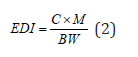
Where C = arsenic concentration in food (mg/kg), M = mass of food consumed per day (g/day), and BW = body weight of the infant (kg). Non-cancer risk was assessed using the Hazard Quotient (HQ), defined as:
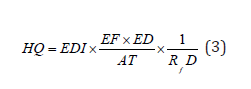
Where EF = exposure frequency of 365 days/year, ED = exposure duration (1 year), AT = averaging time (365 days), and RfD = oral reference dose for iAs (0.00006 mg/kg-day) [21]. An HQ value exceeding 1 was interpreted as indicative of potential health concern.
Carcinogenic Risk (CR) was estimated via:
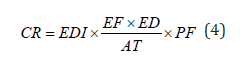
Where PF = oral slope factor for iAs (1.5 per mg/kg-day). Resulting cancer risks were interpreted against the US EPA de minimis benchmark of 1×10⁻⁶. Population-level incidence of skin cancer (I) was modeled as:
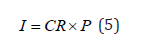
Where P = estimated population of infants aged 6 to 12 months in the study area (n = 1,429; Ghana Statistical Service), based on a sex distribution of 51% male and 49% female [22].
Partial Least Squares Regression Modeling of Infant Arsenic Exposure
A Partial Least Squares Regression (PLSR) model was developed using XLSTAT [23] to estimate the influence of infant feeding variables on the EDI of inorganic arsenic in the study cohort. PLSR was selected due to its suitability for handling multicollinear predictors and high-dimensional biological data.
Model Variables and Data Preparation
The dependent variable (Y) was the estimated daily intake of inorganic arsenic (EDI, mg/kg body weight/day) for each infant. The explanatory variables (X) included:
a. Gender (GEND): binary categorical variable coded as GENDmale
and GEND-female.
b. Baby Food Type (BFT): categorical variable coded as BFT-X1
(fermented maize porridge), BFT-X2 (instant commercial cereal),
and BFT-X3 (roasted cereal-legume blends).
c. Feeding Frequency (SPD): ordinal variable coded as SPD-1,
SPD-2, SPD-3, and SPD-4, representing the number of feedings
per day.
d. Age-Defined Feeding Status (AGECT): binary categorical variable
representing feeding stage; AGECT-1 (0–6 months, exclusively
breastfed) and AGECT-2 (7–12 months, complementary
feeding).
Categorical variables were dummy coded. All continuous variables were standardized (z-scores) prior to analysis. No missing values were present in the dataset (N = 427).
Model Specification
PLSR modeling was conducted using the Nonlinear Iterative Partial Least Squares (NIPALS) algorithm in XLSTAT. The number of latent components was determined via leave-one-out cross-validation to maximize predictive capacity while minimizing overfitting such that
X ∈ ℝⁿˣᵖ: matrix of predictors, Y ∈ ℝⁿˣ¹: response vector (EDI), T: score matrix (latent components), P: loadings matrix for X, Q: loading vector for Y, W: weight matrix for X, and B: regression coefficient vector.
The PLSR model decomposes X and Y as:
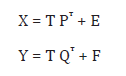
where E and F are the residual matrices. The prediction formula is:
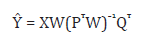
The final predictive equation for EDI was expressed as a linear regression model:
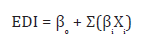
where β₀ is the intercept and βᵢ are the partial regression coefficients for the k predictor variables (Xᵢ). Standardized β coefficients were reported to assess the relative importance of each variable.
Results and Discussion
Gender Distribution in Infant Cohort and Its Implications for Risk Assessment
In the present (Table 1) cohort of 427 infants, gender distribution reveals a slight male predominance, with 240 (56.2%) infants identified as male and 187 (43.8%) as female. While at first glance this distribution appears balanced, the implications for arsenic exposure risk may be non-trivial when contextualized within physiological and developmental frameworks. Sex-based differences in toxicokinetics and toxicodynamics of arsenic have been demonstrated in both animal models and human studies. Notably, female infants may possess lower metabolic detoxification capacities in early life, particularly related to methylation efficiency, which is critical in arsenic biotransformation [24]. Furthermore, emerging studies have emphasized differential neurodevelopmental vulnerabilities between sexes under arsenic exposure, with male infants potentially exhibiting heightened susceptibility in cognitive domains [25]. The distribution aligns with national demographic trends in Ghana, where male birth rates slightly exceed female [20] (Table 1).
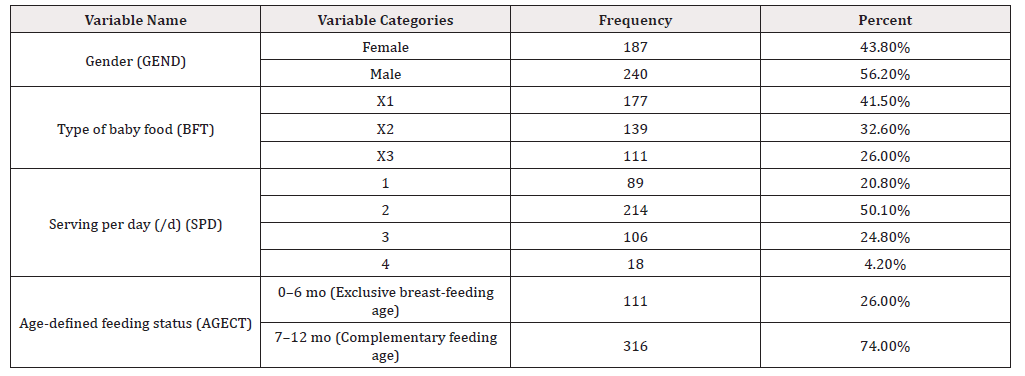
Table 1:Distribution of infant characteristics and feeding practices in the study cohort (N = 427)*.
*Frequencies and percentages are presented for sex, daily feeding frequency, feeding status by age, and type of complementary food. Infant foods were classified into three categories based on composition and production: X1-traditional fermented maize porridge; X2-commercial cereal preparations requiring reconstitution; and X3-locally produced roasted cereal-legume blends.
Type of Baby Food and Arsenic Exposure Pathways
Within the study cohort (N = 427), three main categories of infant food were consumed: traditional fermented maize porridge (X1), commercial cereal preparations requiring reconstitution (X2), and locally produced roasted cereal-legume blends (X3). The distribution was as follows: X1 (41.5%), X2 (32.6%), and X3 (26.0%). The classification of infant food by origin and processing method is critical in exposure risk assessment due to its influence on total arsenic content and bioavailability. Empirical evidence indicates that traditionally prepared foods (such as X1) often exhibit higher contamination due to unregulated sourcing of raw materials and the use of water potentially tainted with inorganic arsenic, especially in regions reliant on groundwater [27,28].
The predominance of X1 (n = 177) suggests that a significant proportion of infants are exposed to potential arsenic via locally prepared staples. Fermentation may enhance microbial safety but does not substantially reduce inorganic arsenic levels without optimization [29]. In maize, arsenic accumulation is influenced by environmental and agronomic conditions. When irrigation water contains arsenic concentrations exceeding safe threshold, maize kernels can bioaccumulate iAs, which is further retained through traditional processing [30,31].
Approximately one-third of the cohort consumed X2 (n = 139). While regulated under national food safety protocols, commercial cereals have nonetheless been shown to contain measurable levels of iAs due to rice and rice flour ingredients [32]. In this context, reconstitution with potentially contaminated household water can further exacerbate exposure. However, industrial processing may reduce some arsenic species and facilitate partial detoxification via phytic acid interactions or heat treatment [32].
Least consumed among the cohort (n = 111), X3 products may represent a dietary diversification strategy, which, although nutritionally favorable, raises concerns when legumes are cultivated in arsenic-rich soils. Roasting has been shown to reduce water content but not necessarily arsenic concentrations, especially in legumes such as cowpeas and groundnuts [33,34].
Similar dietary patterns have been documented in other West African settings, where cereal-based complementary foods dominate infant feeding [35]. The European Food Safety Authority [21] has reported iAs concentrations in infant cereals ranging from 0.077–0.079 mg/kg of the mean - values that exceed the mean concentration in the current study cohort (9.5×10⁻³±6.9×10⁻³mg/kg), as noted in Table 2. This variation reflects both compositional and processing differences across food types (X1–X3), as well as possible contamination through environmental sources (e.g., irrigation water, soil, food additives).
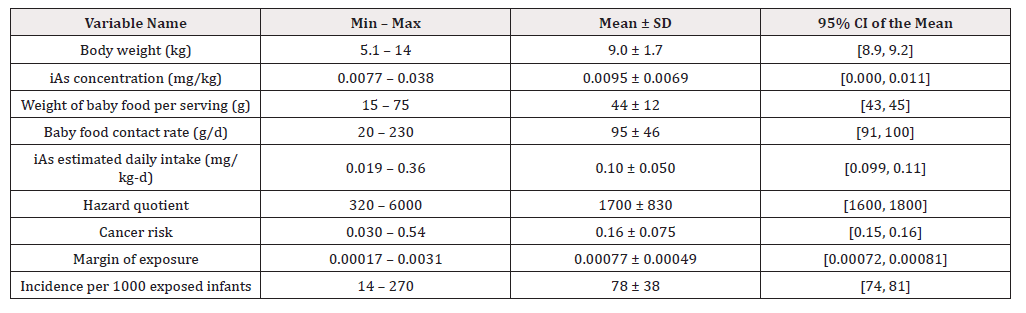
Table 2:Descriptive statistics for anthropometric, dietary exposure, and risk assessment variables in the infant cohort (N = 427)*.
*Summary statistics include Minimum (min) and Maximum (max) observed values, mean ± Standard Deviation (SD), and 95% Confidence Intervals (CI) for the mean. Measures reflect central tendency and dispersion across dietary intake and toxicological risk parameters.
Daily Feeding Frequency and Exposure Scaling
The number of servings consumed daily by infants - a direct multiplier in dose estimation models - varied substantially in the cohort: 1 serving/day (20.8%), 2 servings/day (50.1%), 3 servings/ day (24.8%), and 4 servings/day (4.2%). This distribution highlights a central tendency toward 2–3 servings per day, forming the basis for evaluating cumulative intake of inorganic arsenic. Infants receiving ≥3 servings/day represent nearly 29% of the cohort. For these individuals, EDI can easily surpass benchmark dose levels established by regulatory agencies. The intake of cereal-based infant food averaged 45 g/d in an European ad hoc scenario [21]. The present cohort’s mean of 95 g/d exceeds this estimate. In regions of Southeast Asia and Latin America, where arsenic-rich groundwater is common, daily feeding frequency has similarly been shown to drive cumulative exposure [36]. This broad variability (study’s cohort range 20 – 230 g/d) reflects not only developmental transitions but also cultural feeding norms and maternal choices, all of which intersect to define the dose of iAs delivered per body mass unit. During infancy, food consumption per body mass is higher than at any other life stage on a per kg basis [21]. Thus, even modest increases in intake yield large toxicokinetic repercussions. The enhanced gastrointestinal absorption efficiency in infants further compounds this, making intake a critical modulator of both hazard and long-term risk.
Age-Specific Feeding Status and Developmental Windows of Arsenic Exposure
The cohort displayed a clear majority in the complementary feeding stage (7–12 months), accounting for 74.0% (n = 316) of infants, compared to 26.0% (n = 111) who were supposed to be exclusively breastfed (0–6 months) but were taking complementary foods. This bifurcation is not only developmental but also risk-differentiated, as the initiation of complementary feeding marks the beginning of dietary arsenic exposure from external food sources.
Breast milk is generally considered arsenic-safe due to the mammary gland’s low efficiency in transferring inorganic arsenic from maternal circulation although emerging evidence suggest the contrary [37,38]. Hence, infants in this group serve as a biologically buffered population - their exposure to iAs is relatively minimal and primarily maternal in origin.
By contrast, the complementary feeding stage represents a nutritional diversification process that introduces a new, and often dominant, exposure route for iAs. With 74% of the cohort actively receiving complementary foods, and average food contact rates nearing 95 ± 46 g/day, the risk landscape transforms dramatically. This age window also coincides with key phases of neurodevelopment - including synaptogenesis and myelination - rendering infants particularly vulnerable to neurotoxicants like iAs [25].
The shift from Exclusive Breast Feeding (EBF) to complementary feeding has been recognized globally as a critical window for toxic exposure. In a study, infants receiving rice-based foods at 8–12 months had urinary arsenic concentrations significantly higher than those exclusively breastfed [39,40]. Similarly, another study reported that arsenic exposure was substantially elevated through rice-based infant foods post-weaning [41]. Arsenic concentration in similar food types from other developing regions shows a striking concordance. In Ghana, [42] reported total concentrations in traditional cereal blends ranging from 0.006–0.057 mg/kg. In South Asia, particularly Bangladesh and India, rice-based infant foods frequently exceeded safety threshold [36] highlighting a broader global trend of elevated iAs content in cereal-based baby products.
Body Weight as a Normalizing Parameter in Dose Metrics
In this cohort (Table 2), body weights ranged from 5.1 kg to 14 kg, with a mean of 9.0±1.7 kg (95% CI: [8.9, 9.2]). This variable, though seemingly passive, exerts significant leverage in risk modeling. All key toxicological indices - EDI, HQ, and cancer risk - are normalized per kilogram of body weight. Thus, an infant’s BW inversely governs the effective dose of iAs received from a given intake. Given the steep dose-response relationship of iAs and the narrow safety thresholds, any deviation in body weight - whether from undernutrition or natural age variation - materially alters toxic risk (Table 2).
Hazard Quotient Quantifying Non-Carcinogenic Threats
The HQ provides a comparative metric between the EDI of a toxicant and a toxicological benchmark - typically the oral Reference Point (RfP). For iAs, the U.S. Environmental Protection Agency (EPA) has set the RfD at 3.0×10⁻⁴ mg/kg-d. However, the updated European Food Safety Authority (EFSA) reference point (0.00006 mg/kg-d) was used [21]. In this cohort, HQ values ranged from 3.2×10² to 6.0×10³, with a mean of 1.7×10³±8.3×10² (95% CI: [1.6×10³, 1.8×10³]). These values are not only alarmingly elevated - all infants exhibit HQs far greater than 1, signifying an unequivocal health risk: ischemic heart disease, chronic kidney disease, respiratory disease, spontaneous infant mortality and neurodevelopmental effects [21].
Parker, et al. and Shibata, et al. [41,43] both reported HQs in infants typically exceeding the safe threshold (HQ>1) in Western populations, primarily driven by rice-based cereals. Similarly, [44] documented HQ values exceeding 1 among Ghanaian infants fed locally produced gruels - numbers that now appear conservative compared to the current Ghanaian cohort. High HQs in early life are concerning due to the critical developmental processes underway. Arsenic disrupts multiple pathways. Infants, with immature detoxification systems and high gastrointestinal absorption, are uniquely vulnerable [21].
Long-Term Carcinogenic Consequences of Infant Arsenic Exposure
In the present infant cohort (N = 427), cancer risk estimates ranged from 3.0×10⁻² to 5.4×10⁻¹, with a mean value of 1.6×10⁻¹ ±7.5×10⁻² (95% CI: [1.5×10⁻¹, 1.6×10⁻¹. Translated, the mean cancer risk of 0.16 implies a 16% increased lifetime probability of developing arsenic-related cancers attributable to infant food exposure alone-an extraordinarily high figure in risk assessment contexts. The observed cancer risk in this cohort exceeds the benchmark by several orders of magnitude.
Chronic arsenic exposure is linked mechanistically to multiple malignancies-most notably skin, lung, bladder, and liver cancers-via genotoxicity, epigenetic modifications, and oxidative stress pathways [21]. The latency period for arsenic-induced carcinogenesis is often decades, yet early-life exposures are increasingly recognized as pivotal in initiating oncogenic processes [45]. The magnitude of estimated cancer risk here, originating from infant diet, signals a high public health burden with lifelong implications.
Studies such as [41] analyzing arsenic exposure in infants from rice-based complementary foods in the U.S. reported cancer risks in the order of 10−6 to 10−5, underscoring stark disparities and the disproportionate burden borne by infants in this Ghanaian cohort.
Expected Cases of Arsenic-Related Disease in Exposed Infants
Incidence, expressed here as the number of arsenic-induced cases per 1000 exposed infants, provides a tangible measure of the health burden attributable to exposure. It translates toxicological risk into expected real-world disease frequency, facilitating public health planning and resource allocation. Within this study cohort, incidence values ranged from 1.4×10¹ (14 cases/1000 infants) to 2.7 ×10² (270 cases/1000 infants), with a mean of 7.8×10¹± 3.8×10¹ (95% CI: [74, 81]). This means that on average, 78 out of every 1000 infants exposed to arsenic-contaminated baby foods are projected to develop arsenic-related adverse health outcomes during their lifetime. In epidemiological terms, such an incidence is indicative of a substantial disease burden that could overwhelm health systems, especially in resource-limited settings. The projected cases likely encompass cancers (skin, lung, bladder), developmental deficits, and other chronic conditions linked to arsenic toxicity [21]. For context, a study by [46] in arsenic-endemic regions of US reported incidence of foodborne-arsenic related cancers among exposed populations at 1,519–10,123, 1,638–10,921, and 1,793–11,957 additional bladder, lung, and skin cancer cases, respectively annually.
PLSR Model Analysis of Infant Arsenic Exposure Determinants
The PLSR model developed to estimate inorganic arsenic EDI in the cohort’s infants reveals a moderately strong explanatory structure, with a cumulative Q² of 0.566 and R²Y of 0.578. These values indicate (Figure 1) that the model explains approximately 58% of the variance in EDI and retains robust predictive power. The relatively low R²X (0.138) suggests that only a limited proportion of total predictor variance drives the latent structure, which is expected in multivariate biological data characterized by collinearity and contextual noise [47] (Figure 1).
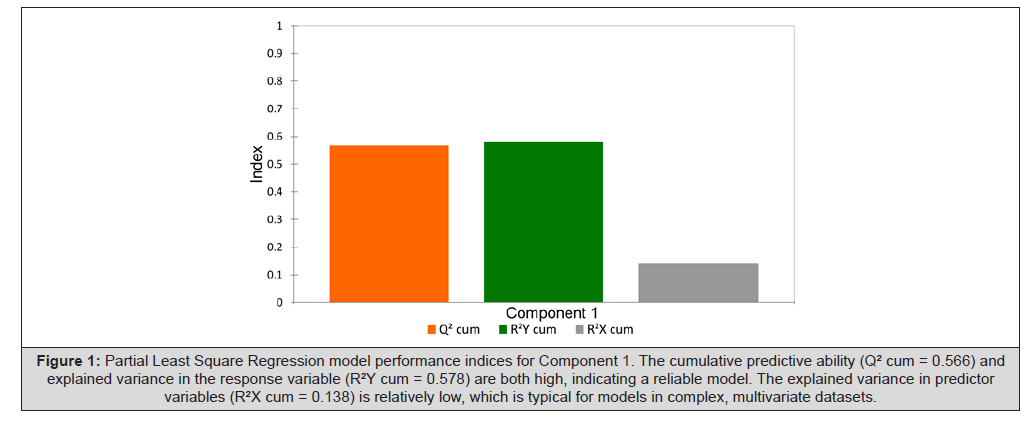
Figure 1:Partial Least Square Regression model performance indices for Component 1. The cumulative predictive ability (Q² cum = 0.566) and explained variance in the response variable (R²Y cum = 0.578) are both high, indicating a reliable model. The explained variance in predictor variables (R²X cum = 0.138) is relatively low, which is typical for models in complex, multivariate datasets.
The first latent component (Comp1) captures the main gradient of dietary arsenic exposure. Correlation analysis between predictor variables and latent components (t1 and u~1) demonstrates that dietary patterns and food types are the principal contributors to variation in EDI. Specifically, BFT-X2 (r = 0.411 with t1) and SPD-3 (r = 0.700) showed strong positive correlations, while BFT-X3 (r = –0.317) and SPD-1 (r = –0.675) were negatively associated. These findings are reflected in the w* and p vectors, where BFT-X2 and SPD-3 load positively, and BFT-X3 and SPD-1 load negatively, indicating their contrasting roles in exposure risk.
In terms of baby food types, the model indicates (Figure 2) that X2 - commercial instant cereals prepared by mixing with water - significantly increases EDI (β = 0.013, standardized β = 0.125, p < .001). This aligns with growing concerns about rice-based infant cereals as major contributors to early-life arsenic exposure, due to rice’s propensity to accumulate inorganic arsenic from groundwater- irrigated soils [21]. In contrast, X3, composed of roasted cereals and legumes produced by small-scale processors, significantly reduces EDI (β = –0.014, standardized β = –0.126, p < .001), likely due to lower arsenic levels in legumes and the absence of polished rice. X1, a porridge made by boiling fermented corn dough and water, showed minimal effect (β = –0.001, p = .56), suggesting that its arsenic contribution may be context-dependent, influenced by cooking water and raw material sourcing (Figure 2).
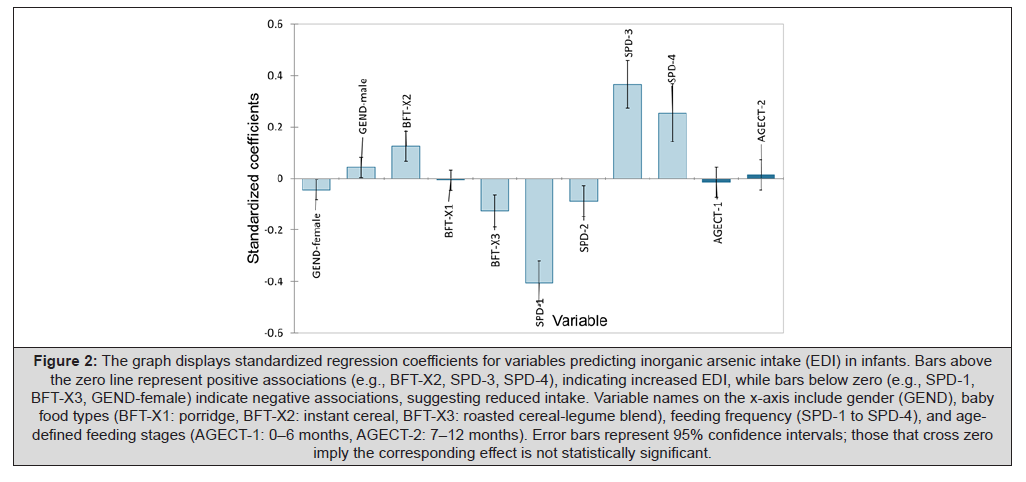
Figure 2:The graph displays standardized regression coefficients for variables predicting inorganic arsenic intake (EDI) in infants. Bars above the zero line represent positive associations (e.g., BFT-X2, SPD-3, SPD-4), indicating increased EDI, while bars below zero (e.g., SPD-1, BFT-X3, GEND-female) indicate negative associations, suggesting reduced intake. Variable names on the x-axis include gender (GEND), baby food types (BFT-X1: porridge, BFT-X2: instant cereal, BFT-X3: roasted cereal-legume blend), feeding frequency (SPD-1 to SPD-4), and agedefined feeding stages (AGECT-1: 0–6 months, AGECT-2: 7–12 months). Error bars represent 95% confidence intervals; those that cross zero imply the corresponding effect is not statistically significant.
Feeding frequency emerged as a dominant behavioral factor influencing EDI. Infants fed three (SPD-3) or four times daily (SPD-4) had markedly higher EDI values, with SPD-3 showing a standardized β of 0.365 and SPD-4 of 0.254. In contrast, SPD-1 (β = –0.050, standardized β = –0.407) had the strongest inverse relationship with EDI. These effects were statistically robust, with narrow 95% confidence intervals and high Variable Importance in Projection (VID) scores - 0.700 for SPD-3 and –0.675 for SPD-1 - reinforcing the central role of feeding frequency in arsenic exposure.
Demographic characteristics, including gender and age-defined feeding status, played comparatively minor roles. Gender showed symmetrical coefficients (β = ±0.004; standardized β = ±0.043), with male infants slightly more likely to exhibit elevated EDI. Similarly, age category (AGECT) had weak associations: infants aged 7–12 months (AGECT-2) had a small positive coefficient (β = 0.002), while those aged 0–6 months (AGECT-1) had a small negative coefficient (β = –0.002). These results suggest that although age and gender may modulate physiological susceptibility to arsenic, actual exposure is primarily a function of dietary behavior [24].
The model equation:
EDI = 0.104 – 0.004 × GEND-female + 0.004 × GEND-male + 0.013 × BFT-X2 – 0.001 × BFT-X1 – 0.014 × BFT-X3 – 0.050 × SPD-1 – 0.009 × SPD-2 + 0.042 × SPD-3 + 0.063 × SPD-4 – 0.002 × AGECT-1 + 0.002 × AGECT-2
offers a practical tool for predicting arsenic intake based on an infant’s feeding characteristics. The model’s goodness-of-fit statistics (RMSE = 0.033; MSE = 0.001) and standardized coefficients confirm the reliability of its estimates.
Conclusion
The current findings elucidate a profound public health challenge: infants in Ghana are facing unacceptably high arsenic exposure levels from complementary foods, with a mean HQ of 1.7×10³ and mean cancer risk of 0.16, signaling severe non-carcinogenic and carcinogenic threats far beyond international safety thresholds. Dietary behavior-particularly the type of baby food (notably BFT-X2, β = 0.013, p< .001) and frequency of feeding (e.g., SPD-3, β = 0.042, p<.001)-emerged as the dominant drivers of exposure, far outweighing demographic factors like sex or age. With 74% of infants in the high-risk complementary feeding window and a mean intake of 95±46 g/day, the exposure landscape demands urgent regulatory and policy response. We strongly recommend that Ghana Health Service (GHS) and the Food and Drugs Authority (FDA-Ghana) implement immediate surveillance of iAs in locally and commercially produced infant foods, especially fermented maize porridges and instant cereals. Water quality used for food reconstitution must be included in national arsenic mitigation strategies. The Codex Alimentarius Commission and EFSA should consider revising global safety thresholds for infant-specific consumption patterns, incorporating culturally diverse feeding practices into exposure models. Additionally, United Nations Children’s Fund (UNICEF) and WHO must intensify advocacy for safe complementary feeding practices in resource-limited settings. Without targeted interventions, the projected incidence-78 arsenic-related cases per 1000 exposed infants- portends a lifelong burden with irreversible developmental and oncogenic consequences.
Conflict of Interest
The authors have no relevant financial or non-financial interests to disclose.
Informed Consent
Informed consent was obtained from all individual participants included in the study.
Funding
No funding was received for this study.
Data Availability Statement
Data supporting these findings are available within the article or upon request.
Author Contribution
Peace Agbevivi: Resources, Writing - Review & Editing. Guy Eshun: Supervision, Writing - Review & Editing. Ekpor Anyimah-Ackah: Conceptualization, Methodology, Supervision, Formal analysis, Writing - Original draft preparation.
References
- Agency for Toxic Substances and Disease Registry (ATSDR) (2007) Agency for Toxic Substances and Disease Registry. Toxicological profile for arsenic (update).
- Abtahi M, Dobaradaran S, Koolivand A, Jorfi S, Saeedi R (2023) Assessment of cause-specific mortality and disability-adjusted life years (DALYs) induced by exposure to inorganic arsenic through drinking water and foodstuffs in Iran. Science of The Total Environment 856: 159118.
- Acquah T, Appiah Brempong M, Anornu G K (2025) Groundwater quality and associated health risks in the Eastern Region of Ghana. Heliyon 11(2): e41910.
- Albals D, Al-Momani Idrees F, Issa R, Yehya A (2021) Multi-element determination of essential and toxic metals in green and roasted coffee beans: A comparative study among different origins using ICP-MS. Science Progress 104(2): 00368504211026162.
- Amarh FA, Agorku ES, Voegborlo RB, Ashong GW, Atongo GA (2023) Health risk assessment of some selected heavy metals in infant food sold in Wa, Ghana. Heliyon 9(5): e16225.
- Anoyege R, Alatinga KA (2025) Artisanal and small-scale mining effects on freshwater resources: a case study of the Oda River in the Ashanti Region of Ghana. Discover Environment 3(1): 19.
- Anyimah Ackah E (2024) Local staples, and global solutions: optimizing the effect of traditional fermentation on heavy metals and mineral nutrients. Nutrition & Food Science 54(1): 238-250.
- AOAC (1990) AOAC: Official Methods of Analysis (K. Helrich (ed.); 15th ed.). Association of Official Analytical CHemists, Inc.
- Arhin E, Abdallah B, Baah C (2024) Increasing Cases of Non-Communicable Diseases in Mining Areas of Ghana: Is it a Lifestyle or Hidden Players at Work? Medical Research Archives 13(1).
- Aryal M (2025) Groundwater Arsenic Contamination in Nepal. World Water Policy, n/a(n/a).
- Asumda DA, Situma FS, Muigua KM (2024) Ghana’s regulatory framework and sustainability in the mining sector. UCC Law Journal 4(1): 158-189.
- Barenblitt A, Payton A, Lagomasino D, Fatoyinbo L, Asare K, et al. (2021) The large footprint of small-scale artisanal gold mining in Ghana. Science of The Total Environment 781: 146644.
- Bhattacharya S, Kaushik G, Sushanta D, Uday Chand G, Dhrubajyoti C, et al. (2012) Arsenic bioaccumulation in rice and edible plants and subsequent transmission through food chain in Bengal basin: a review of the perspectives for environmental health. Toxicological & Environmental Chemistry 94(3): 429-441.
- Budi H S, Catalan Opulencia MJ, Afra A, Abdelbasset WK, Abdullaev D, et al. (2024) Source, toxicity and carcinogenic health risk assessment of heavy metals. Rev Environ Health 39(1): 77-90.
- Eriksson L, Byrne T, Johansson E, Trygg J, Vikström C (2013) Multi-and megavariate data analysis basic: principles and applications (Vol. 1) Umetrics Academy.
- Fugu M (2024) The cost of gold: Illegal mining activities destroy water bodies, terrestrial ecosystems. Graphic Online. https://www.graphic.com.gh/features/features/the-cost-of-gold-illegal-mining-activities-destroy-water-bodies-terrestrial-ecosystems.html.
- Ganie SY, Javaid D, Hajam YA, Reshi MS (2024) Arsenic toxicity: sources, pathophysiology and mechanism. Toxicology Research 13(1): tfad111.
- González N, Calderón J, Rúbies A, Bosch J, Timoner I, et al. (2020) Dietary exposure to total and inorganic arsenic via rice and rice-based products consumption. Food and Chemical Toxicology 141: 111420.
- Ghana Statistical Service (GSS) (2014) Population and housing census 2010 district analytical report, Kumasi Metropolitan.
- Ghana Statistical Service (GSS) (2021) Ghana 2021 population and housing census general report volume 3B: Age and sex profile. https://statsghana.gov.gh/gssmain/fileUpload/pressrelease/2021 PHC General Report Vol 3B_Age and Sex Profile_181121.pdf.
- Ghana Statistical Service (GSS) (2022) Ghana 2021 Population and Housing Census Volume 3H Fertility and Mortality. https://census2021.statsghana.gov.gh/gssmain/fileUpload/reportthemesub/Volume 3H_Fertility and Mortality_240222a.pdf.
- Guillod Magnin R, Brüschweiler BJ, Aubert R, Haldimann M (2018) Arsenic species in rice and rice-based products consumed by toddlers in Switzerland. Food Additives & Contaminants: Part A 35(6): 1164-1178.
- Houngbédji M, Jespersen JS, Wilfrid Padonou S, Jespersen L (2024) Cereal-based fermented foods as microbiota-directed products for improved child nutrition and health in sub-Saharan Africa. Critical Reviews in Food Science and Nutrition 1-22.
- International Agency for Research on Cancer (IARC) (2012) Arsenic and arsenic compounds. IARC Monographs on the Evaluation of Carcinogenic Risks to Humans (100C). https://monographs.iarc.fr/wp-content/uploads/2018/06/mono100C-6.pdf.
- Karagas MR, Punshon T, Sayarath V, Jackson BP, Folt CL, et al. (2016) Association of Rice and Rice-Product Consumption with Arsenic Exposure Early in Life. JAMA Pediatrics 170(6): 609-616.
- Kaur R, Garkal A, Sarode L, Bangar P, Mehta T, et al. (2024) Understanding arsenic toxicity: Implications for environmental exposure and human health. Journal of Hazardous Materials Letters 5: 100090.
- Kumar A, Agarwal R, Kumar K, Chayal N K, Ali M, et al. (2024) High arsenic contamination in the breast milk of mothers inhabiting the Gangetic plains of Bihar: a major health risk to infants. Environmental Health 23(1): 77.
- Liu J, Xu X, Meng J, Li Z, Wu Y, et al. (2025) Three-year remediation evaluation for arsenic and cadmium co-contaminated acidic and alkaline paddy fields: Insights on availability, bioaccumulation, health risk, and cost. Journal of Environmental Chemical Engineering 13(2): 116054.
- Lu H, Delnicki M, Griffin G, Wise JL (2025) Current Understanding of Sex Differences in Metal-Induced Diseases. Current Environmental Health Reports 12(1): 18.
- Luu P D, Mo Hong Thi B, Tien Duy D, Thuy Cam Q, Thuy Xuan V, et al. (2025) Lead, cadmium and arsenic species in spices from markets in Hanoi, Vietnam. Food Additives & Contaminants: Part B: 1-13.
- Maertens A, Golden E, Luechtefeld TH, Hoffmann S, Tsaioun K, et al. (2022) Probabilistic risk assessment - the keystone for the future of toxicology. ALTEX 39(1): 3-29.
- Meng W, Borman P (2025) Multivariate Analytical Procedures. In Method Validation in Pharmaceutical Analysis (pp. 265-299).
- Ortiz Garcia NY, Cipriano Ramírez AI, Juarez K, Brand Galindo J, Briceño G, et al. (2023) Maternal Exposure to Arsenic and Its Impact on Maternal and Fetal Health: A Review. Cureus 15(11): e49177.
- Parker GH, Gillie C E, Miller JV, Badger DE, Kreider M L (2022) Human health risk assessment of arsenic, cadmium, lead, and mercury ingestion from baby foods. Toxicology Reports 9: 238-249.
- Perelló G, Martí Cid R, Llobet JM, Domingo JL (2008) Effects of Various Cooking Processes on the Concentrations of Arsenic, Cadmium, Mercury, and Lead in Foods. Journal of Agricultural and Food Chemistry 56(23): 11262-11269.
- Quadri SSA, Ali R, Mesidor A, Shah IA, Raqeeb N, et al. (2024) Arsenic in the Food Chain in Pakistan: Assessing Risks to Human Health and Ensuring Food Security Through Comprehensive Contamination Mitigation Strategies. Cureus 16(2): e54069.
- Rahman R, Wu F (2025) Cancer Burden from Dietary Exposure to Inorganic Arsenic in the United States: Risk Assessment and Policy Implications. Journal of Food Protection 88(7): 100520.
- Rajkowska Myśliwiec M, Ciemniak A, Karp G (2024) Arsenic in Rice and Rice-Based Products with Regard to Consumer Health. In Foods 13(19): 3153.
- Schrenk D, Bignami M, Bodin L, Chipman JK, del Mazo J, et al. (2024) Update of the risk assessment of inorganic arsenic in food. EFSA Journal 22(1): e8488.
- Serrar O, Sarrar A, Rafieda A, Daghman M, Abdullah EMA, et al. (2025) Determination of lead, cadmium, and arsenic concentrations in breast milk of women living in Misrata, Libya. Scientific African e02737.
- Shibata T, Meng C, Umoren J, West H (2016) Risk Assessment of Arsenic in Rice Cereal and Other Dietary Sources for Infants and Toddlers in the U.S. In International Journal of Environmental Research and Public Health 13(4): 361.
- Shu L, Yang G, Liu S, Huang N, Wang R, et al. (2025) A comprehensive review on arsenic exposure and risk assessment in infants and young children diets: Health implications and mitigation interventions in a global perspective. Comprehensive Reviews in Food Science and Food Safety 24(1): e70063.
- Takyi YD, Jonathan A, Samuel Selorm A, Osei A, Tandoh M A (2024) Health risk assessment and comparative study on heavy metal levels in indigenous cereal-legume blends (CLBs) on Ghanaian markets. Cogent Food & Agriculture 10(1): 2404690.
- Tian Y, Hou Q, Zhang M, Gao E, Wu Y (2025) Exposure to arsenic and cognitive impairment in children: A systematic review. PLOS ONE 20(2): e0319104.
- US EPA IRIS (1991) IRIS Assessments. Arsenic, Inorganic CASRN 7440-38-2. https://cfpub.epa.gov/ncea/iris2/atoz.cfm.
- Wold S, Sjöström M, Eriksson L (2001) PLS-regression: a basic tool of chemometrics. Chemometrics and Intelligent Laboratory Systems 58(2): 109-130.
- Yiridomoh GY (2021) “Illegal” Gold Mining Operations in Ghana: Implication for Climate-Smart Agriculture in Northwestern Ghana. Frontiers in Sustainable Food Systems, 5. https://www.frontiersin.org/journals/sustainable-food-systems/articles/10.3389/fsufs.2021.745317.




 We use cookies to ensure you get the best experience on our website.