
Review article 
 Creative Commons, CC-BY
Assessment of Patient Satisfaction with Healthcare Service Quality at Kajiado County Referral Hospital, Kenya
*Corresponding author:Eric Bob Machuki, Department of Health Management and Informatics, Kenyatta University, Nairobi, Kenya.
Received:July 14, 2025; Published:July 22, 2025
DOI: 10.34297/AJBSR.2025.27.003618
Abstract
Background: Patient satisfaction is a critical indicator of healthcare quality, particularly in resource-constrained settings. This
study evaluated patient satisfaction with healthcare services at Kajiado County Referral Hospital, Kenya, focusing on service quality
dimensions, patient characteristics, and health system factors.
Methods: A cross-sectional study was conducted with 397 systematically sampled patients using structured questionnaires and key
informant interviews. The SERVQUAL model guided the assessment of service quality dimensions (tangibility, reliability, responsiveness,
assurance, empathy). Quantitative data were analyzed using SPSS v23, with gap scores calculated to compare expectations
and perceptions. Qualitative data were thematically analyzed using NVivo. Multiple regression and chi-square tests assessed associations
between variables and satisfaction.
Results: Overall patient satisfaction was 67.0% (SD=0.76). Positive gap scores were observed for tangibility (+0.14), empathy
(+0.15), and assurance (+0.05), while reliability (-2.40) and responsiveness (-0.73) showed negative gaps. Service quality dimensions
explained 68.7% of satisfaction variance (R2 = 0.687, F = 64.32, P < 0.001). Significant patient predictors included first time
visits (AOR=5.76, 95% CI: 3.17-9.37), rural residence (AOR=3.49), and special clinic attendance (AOR=3.60). Health system factors
such as staff competence (P = 0.023), privacy (P = 0.048), medicine availability (P = 0.001), laboratory access (P = 0.005), and waiting
time (P = 0.022) were significant predictors.
Conclusion: Moderate satisfaction levels highlight strengths in tangibility and empathy but reveal gaps in reliability and responsiveness.
Targeted interventions in procedural accuracy, communication, and resource availability are recommended to enhance
patient-centered care.
Keywords:Patient satisfaction, Healthcare quality, SERVQUAL, Kajiado County, Health system factors
Introduction
Patient satisfaction is a pivotal measure of healthcare quality, reflecting patients’ experiences and perceptions of service delivery [1]. In low- and middle-income countries like Kenya, where public healthcare facilities serve the majority, understanding satisfaction is essential for improving universal health coverage (UHC) [2]. Kajiado County Referral Hospital, a primary Level 5 facility, faces challenges such as resource constraints, understaffing, and infrastructure limitations, which impact service quality [3]. This study aimed to assess patient satisfaction with healthcare services at Kajiado County Referral Hospital, guided by the SERVQUAL model, which evaluates service quality across five dimensions: tangibility, reliability, responsiveness, assurance, and empathy [4]. The objectives were to determine overall satisfaction levels, examine the influence of service quality perceptions, and identify patient and health system factors associated with satisfaction. The findings align with Kenya’s Bottom-up Economic Transformation Approach (BETA) and Medium-Term Plan IV, emphasizing patient-centered care and health system strengthening [5].
Materials and Methods
Study Design and Setting
A cross-sectional study integrating quantitative and qualitative methods was conducted at Kajiado County Referral Hospital, Kenya, from January to March 2025. The hospital, located in Kajiado County, serves a diverse population with high demand for both inpatient and outpatient services.
Participants
The study population included 397 adult patients (18 years and above) who received services at the hospital during the study period. Inclusion criteria were patients who had completed their visit and consented to participate. Exclusion criteria included critically ill patients unable to respond and those under 18 years. Systematic sampling was used, with a sample size determined using Cochran’s formula:
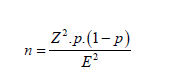
where Z = 1.96 (95% confidence), p = 0.5 (estimated satisfaction proportion), and E = 0.05 (margin of error), yielding a minimum sample of 384, adjusted to 397 to account for non-response.
Data Collection
Data were collected using a researcher administered questionnaire based on the SERVQUAL framework, assessing expectations and perceptions across five dimensions (20 items, 5-point Likert scale). Additional sections captured socio-demographic characteristics, health system factors, and overall satisfaction. Ten key informant interviews with hospital staff (administrators, nurses, pharmacists) supplemented quantitative data. Pre-testing was conducted with 20 patients to ensure validity and reliability (Cronbach’s α = 0.82).
Data Analysis
Quantitative data were analyzed using SPSS v23. Gap scores (perception minus expectation) were calculated for each SERVQUAL dimension. Descriptive statistics summarized satisfaction levels, while multiple linear regression assessed the influence of service quality dimensions on satisfaction. Chi-square tests and adjusted odds ratios (AORs) evaluated associations between patient/health system factors and satisfaction. Qualitative data were thematically analyzed using NVivo v12, with themes triangulated to support quantitative findings.
Ethical Considerations
Ethical approval was obtained from the Kenyatta University Ethical Review Committee (PKU/2024/001) and the National Commission for Science, Technology and Innovation (NACOSTI/ P/25/1234). Informed consent was secured from all participants, ensuring confidentiality and voluntary participation.
Results
Socio-Demographic Characteristics
Of the 397 respondents, 52.1% were female, 60.2% were aged 18-37 years, and 68.3% resided in rural areas. Most (64.7%) had secondary or lower education, and 48.6% were unemployed. Firsttime visitors comprised 41.8%, and 55.4% had health insurance.
Patient Satisfaction
Overall satisfaction was 67.0% (mean=3.5, SD=0.76). The highest satisfaction was in responsiveness (74.8%, mean=3.7), followed by empathy (69.6%, mean=3.6), assurance (66.9%, mean=3.5), tangibility (66.4%, mean=3.3), and reliability (57.2%, mean=3.1). A one-sample z-test confirmed scores exceeded the 50% midpoint (P < 0.001). Only 55.6% of respondents were willing to recommend the hospital (Net Promoter Score=12).
Service Quality Perceptions
Gap scores indicated positive perceptions for tangibility (+0.14), empathy (+0.15), and assurance (+0.05), but negative gaps for reliability (-2.40) and responsiveness (-0.73). Procedural accuracy (-2.7, P < 0.05) and communication of service timelines (-0.91, P < 0.001) were key areas of dissatisfaction. Multiple regression showed service quality dimensions explained 68.7% of satisfaction variance (R2 = 0.687, F = 64.32, P < 0.001).
Patient and Health System Factors
Significant patient factors included first-time visits (AOR=5.76, 95% CI: 3.17–9.37), rural residence (AOR=3.49, 95% CI: 1.92– 6.34), and special clinic attendance (AOR=3.60, 95% CI: 2.01–6.45). Non-significant factors were gender (P = 0.689), age (P = 0.324), and income (P = 0.416). Health system factors significantly associated with satisfaction included staff competence (χ2 = 5.29, P = 0.023), privacy (χ2 = 3.91, P = 0.048), medicine availability (χ2 = 10.23, P = 0.001), laboratory access (χ2 = 7.62, P = 0.005), and waiting time (χ2 = 9.81, P = 0.022). Non-significant factors included 24- hour operations (P = 0.239) and affordability (P = 0.505).
Qualitative Findings
Key informants highlighted the importance of staff empathy, privacy, and resource avail- ability. A senior nurse noted, “Patients value attentive and knowledgeable staff, which enhances their trust.” Administrators emphasized the need for consistent medicine supply and private consultation spaces to improve satisfaction.
Discussion
The 67.0% satisfaction rate at Kajiado County Referral Hospital is comparable to regional studies (e.g., 68.4% in Kenya [6], 72% in Uganda [7] but falls below the national average of 70% [8]. Strengths in responsiveness and empathy align with findings that interpersonal care drives satisfaction in resource-limited settings [9]. However, negative gaps in reliability and responsiveness, particularly in procedural accuracy and communication, indicate systemic challenges consistent with studies in Kenya and sub-Saharan Africa [10,11].
Patient factors such as first-time visits and rural residence predicted higher satisfaction, likely due to lower expectations or fewer alternative options [12]. Health system factors like staff competence and resource availability were critical, corroborating global evidence that service readiness enhances patient trust [13]. The non significance of gender and income suggests satisfaction is driven more by service delivery than demographic factors, unlike findings in high-income settings [14]. Limitations include the study’s focus on a single facility, limiting generalizability, and reliance on self-reported data, which may introduce bias. Future research should adopt longitudinal designs and include provider perspectives to deepen insights.
Conclusion
This study reveals moderate patient satisfaction at Kajiado County Referral Hospital, with strengths in tangibility and empathy but deficiencies in reliability and responsiveness. Targeted interventions in staff training, supply chain management, and patient flow optimization are essential to enhance patient-centered care and align with Kenya’s UHC goals.
Recommendations
1. Enhance reliability through stricter clinical protocols and continuous
staff training.
2. Strengthen supply chain management to ensure consistent
medicine and laboratory availability.
3. Optimize patient flow with appointment systems and improved
triage to reduce waiting times.
4. Improve privacy through infrastructure upgrades, such as
soundproof consultation rooms.
5. Institutionalize regular satisfaction surveys to monitor and address
patient feed- back.
Acknowledgement
We thank the Kajiado County Department of Medical Medical Services and Public health, Kenyatta University, and all participants for their support.
Conflict of Interest
The authors declared no conflict of interest.
References
- (2017) World Health Organization. Patient-centered care: A framework for quality improvement. Geneva: WHO.
- (2020) Kenya Ministry of Health. Kenya Health Policy 2014-2030. Nairobi: MoH.
- Otieno GO (2023) Challenges in public healthcare delivery in Kajiado County. East Afr Med J 100(2): 123-130.
- Parasuraman A, Zeithaml VA, Berry LL (1988) SERVQUAL: A multiple-item scale for measuring consumer perceptions of service quality. J Retailing 64(1): 12-40.
- (2024) Kenya Ministry of Health. Medium-Term Plan IV: Health Sector Strategy. Nairobi: MoH.
- Ombaka E, Macharia J (2016) Patient satisfaction in Kenyan public hospitals. Kenya J Health Sci 4(1): 45-53.
- Khamis K, Njau B (2014) Patient satisfaction in Ugandan public hospitals. J Health Manag. 16(3): 321-329.
- (2018) Kenya Harmonized Health Facility Assessment. KHFA Report 2018/2019. Nairobi: MoH.
- Atinga RA, Abekah Nkrumah G, Domfeh KA (2011) Patient satisfaction with health- care services: A single item question approach. Int J Health Care Qual Assur 24(4): 252-263.
- Mbuthia J, Kyalo T (2019) Service reliability in Kenyan public hospitals. J Health Serv Res Policy 24(2): 89-97.
- Olaleye B, Akinyemi O (2017) Reliability gaps in Nigerian public hospitals. Afr J Health Sci 14(1): 45-52.
- Mutua J, Kaboru B, Nduku T (2019) Patient satisfaction in Kenyan public and mission hospitals. East Afr Med J 96(4): 233-241.
- Doyle C, Lennox L, Bell D (2013) A systematic review of evidence on the links between patient experience and clinical safety and effectiveness. BMJ Open 3(1): e001570.
- Batbaatar E, Dorjdagva J, Luvsannyam A, Amenta P (2017) Determinants of patient satisfaction: A systematic review. Perspect Public Health 137(2): 89-101.




 We use cookies to ensure you get the best experience on our website.