
Research Article 
 Creative Commons, CC-BY
Comparing the Trends & Causes of Mortality during June 2024 and October 2024 at Benazir Bhutto Hospital Rawalpindi: A Hospital Record Based Study
*Corresponding author:Rizwana Shahid, Assistant Professor Community Medicine, Rawalpindi Medical University, Rawalpindi, Pakistan
Received:July 09, 2025; Published:July 16, 2025
DOI: 10.34297/AJBSR.2025.27.003611
Abstract
Background: Mortality data in hospitals is of paramount significance to monitor healthcare delivery. It serves as a key indicator of
healthcare quality, safety, and outcomes. Its vigilant interpretation and study of contextual factors is crucial for deliberate planning.
The present study is hence proposed to compare the trends and causes of mortality during June and October 2024 of a tertiary care
hospital of Rawalpindi city.
Methods: A cross-sectional survey was done to compare the trends causes of mortality reported during June and October 2024 at
Benazir Bhutto Hospital Rawalpindi. The data was collected with informed consent of hospital administrators. Data was analyzed
by using MS Excel 2016. Descriptive statistics were applied.
Results: Approximately 535 mortalities were reported during June 2024 while 380 deaths were confirmed during October 2024.
About 11% and 7% mortality appeared during June and October 2024 at Benazir Bhutto Hospital Rawalpindi. More deaths were
among males. The highest mortality was among children up to 5 years old children that constituted about 50% of the total deaths.
This was followed by mortality of aged population. Most of the adults succumbed to cardiopulmonary disorders while causes of
deaths among majority of infants and neonates were sepsis and obstructive jaundice. Dengue Hemorrhagic Fever (DHF) and Dengue
Shock Syndrome (DSS) were determined as the key mortality reasons during October.
Conclusion: Somewhat seasonal variation in mortality was recognized in Rawalpindi city. Mortality was higher among males.
Deaths were comparatively more among children up to 5 years of age and above 70 years old people.
Keywords:Mortality, Cardiopulmonary disorders, Sepsis, Dengue Hemorrhagic Fever (DHF)
Introduction
Healthcare indicators are essential to review the effectiveness of healthcare system of any region [1]. Measuring the mortality from the principal causes is of paramount significance to address them on priority basis in order to mitigate the resultant losses and to improve the healthcare of the community [2]. It is crucial to monitor mortality of any population to improve its primary healthcare [3]. Measuring the healthcare indicators is essential to improve the health of the people. It is imperative for healthcare professional to get equipped with basic knowledge and skills to quantity and to interpret the factors attributed to mortality and morbidity of any country [4]. Mortality is one of the measures considered crucial for epidemiological surveillance. Mortality data not only enables us to scrutinize the risk factors of any disease but also enable us to foster inter and intra-regional comparison of diverse health states [5].
Statistics revealed that 78.5% of the mortality was reported among children below 5 years of age and about 14.2% of them succumbed to lower respiratory tract infections while 11.5% of deaths were attributed to birth asphyxia and trauma [6]. One of the targets of third Sustainable Development Goal (SDG) is to bring all deaths among children below 5 years of age to foster the culmination of outbreaks specifically those of malaria and other communicable diseases that not only escalates the under 5 mortality of developing countries but also results in undue utilization of healthcare resources [7]. Global Alliance for Vaccination & Immunization (GAVI) has declared immunization as an imperative approach to achieve 14 out of 17 Sustainable Development Goals as this strategy will prove beneficial in enhancing well-being of the individuals, promoting healthier families and empowering women and girls at large [8].
Numerous studies have been carried out for measuring the mortality rate among aged population worldwide [9]. Most of the deaths among aged people have been reported in developed countries of the world. About 69.2% of the global mortalities are attributed to aging and majority of them succumbed to ischemic heart disease, stroke, Chronic Obstructive Pulmonary Disease (COPD) and Alzheimer’s disease [10]. Apart from analyzing the risk factors, measurement of mortality rates also lays down foundation for tracking down the quality of available healthcare services [11].
Trend of mortality in terms of demographics of the expired cases and their plausible causes is substantially significant in reflecting the prevailing health problems of our community. The current study is hence envisioned to measure age and gender-based mortality along with the probable causes observed during June and October 2024 among the general public who tend to avail the public sector tertiary care facilities instead of going to private clinics due to their constrained resources. This research would certainly prove valuable by serving as an eye opener for our policy makers and strategic planners by motivating them to take essential steps for mitigating the frequency of such cases. Moreover, competent authority would also be able to promote indispensable measures for improvement of current scenario.
Subjects & Methods
A cross-sectional descriptive study was carried out to compare the causes of mortality and their trends during June and October 2024 at Benazir Bhutto Hospital Rawalpindi. The data was gathered with informed consent of hospital administrators. Data was entered and analyzed by means of MS Excel 2016. Descriptive statistics were applied.
Results
Total 4882 and 5400 cases were admitted at Benazir Bhutto Hospital (BBH) during June and October 2024. More patients for dialysis were admitted during June 2024 while dengue cases along with medical, surgical and obstetrics & Gynecology emergency cases were admitted during October 2024 as shown below in Figure 1.
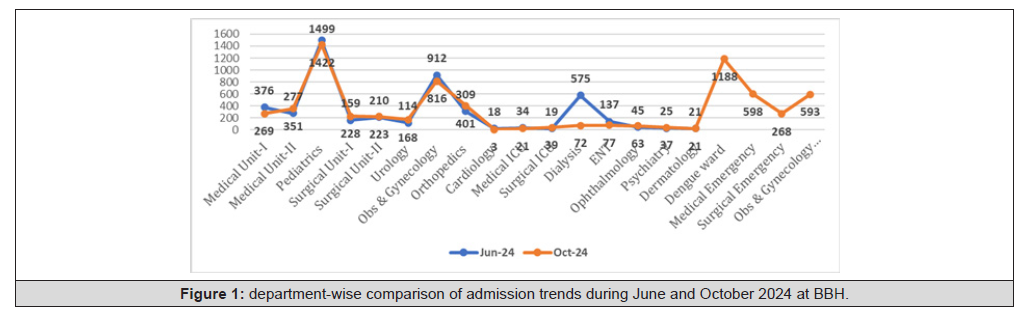
Figure 1:department-wise comparison of admission trends during June and October 2024 at BBH.
The frequency of deaths among males were comparatively more than those of females as presented below in Figure 3.
Mortality during June and October 2024 at BBH was calculated to be 11% and 7% respectively. The number of deaths reported during June 2024 among medical and pediatric cases were relatively more than those of October 2024 as illustrated below in Figure 2.
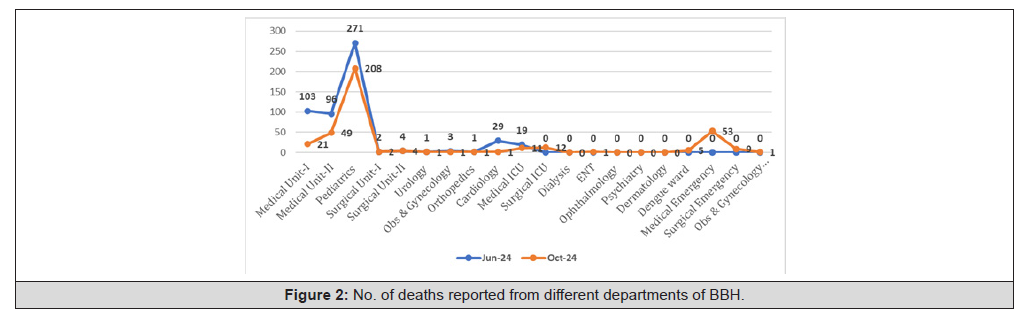
Figure 2:No. of deaths reported from different departments of BBH.
Deaths were comparatively more among male patients as shown below in Figure 3.
Age-wise mortality data was illustrative of highest deaths among children up to 5 years old and aged people who were 61-70 years of age as depicted below in Figure 4.
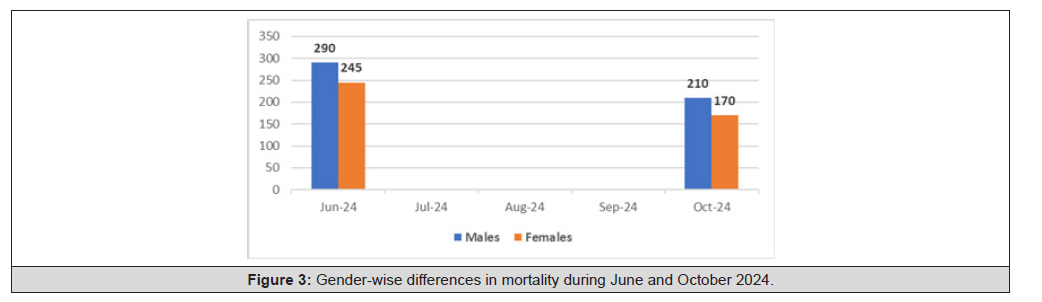
Figure 3:Gender-wise differences in mortality during June and October 2024.
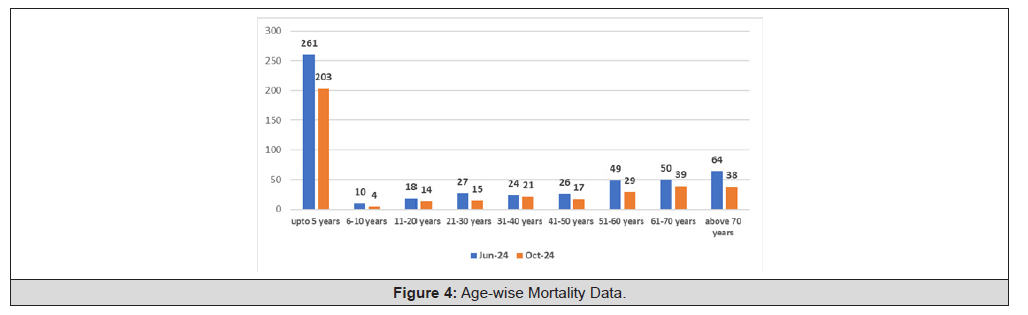
Figure 4:Age-wise Mortality Data.
Monthly mortality audit committee discusses the probable causes of mortality by arranging a meeting as per recommendations of Secretary Specialized Health Care & Medical Education (SHC & ME) Department. The meetings during both months were attended by secretary mortality committee in addition to 42 members of the committee. The crucial cases and probable causes of mortality are illustrated below in Table 1.
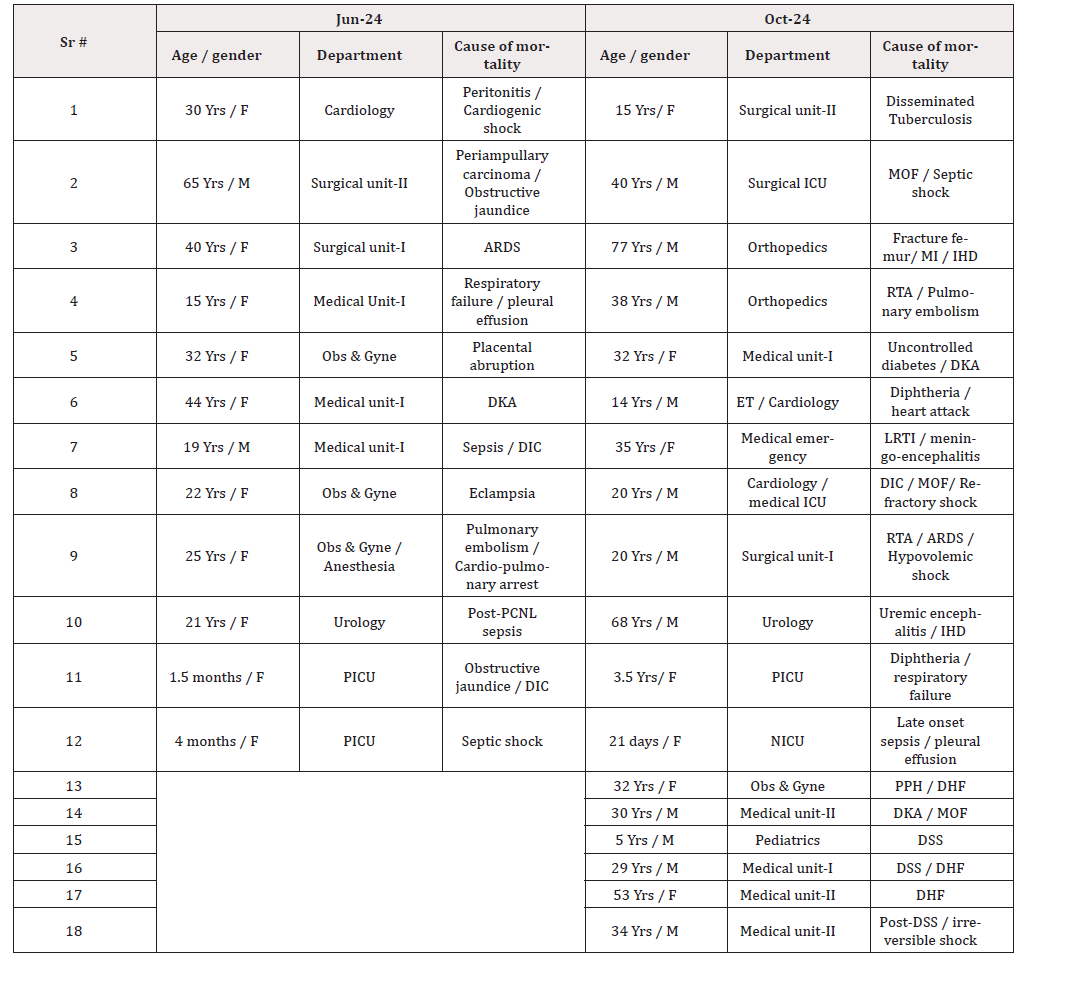
Table 1:
Discussion
The mortality in present study was reported to be 11% during June 2024 at Benazir Bhutto Hospital Rawalpindi, while the 7% deaths were ascertained during October 2024. More mortalities during June seems to be linked with unhygienic conditions due to water shortage and limited electric supply at domestic level. In addition to the escalated risk of heat stroke during summer, marginalized people of Pakistan also suffer from various waterborne diseases primarily due to scarcity of clean water [12]. A study by Stone B et al revealed that there is substantial likelihood of mortality rate doubling during summer mainly due to electric blackouts [13]. Approximately 25% of Pakistani people are bound to live without adequate cooling system during summer [14]. This aspect seems to aggravate the scenario by worsening the well-being of those who are diagnosed with comorbidities. Likewise, a study by Saleem MS et al on public sector tertiary care emergency departments of Karachi emphasized the need to focus on heat mitigation strategies to minimize mortalities and resultant burden on healthcare facilites [15]. This aspect should primarily be brought to limelight so that essential measures could be taken by concerned government officials for reversal of existing scenario.
Relatively more deaths were reported among males during both seasons as presented in Figure 3. Similarly, a research among 12 longitudinal cohorts from 28 countries unveiled the fact that although females suffer comparatively more with disabilities and comorbidities, yet they have somewhat longer life expectancy [16]. This gender-based mortality difference also prevail among children below 5 years of age as boys have higher probability of premature birth and succumbing to congenital and respiratory problems [17]. On the other hand, proportion of females succumbing to ST-segment elevation myocardial infarction in hospital was comparatively higher [18]. Another prospective cohort study by Yang J et al explored that males succumbed to early onset cardiovascular disease more than those of females [19]. According to another hospital record- based study, females are more prone to death following stroke than those of males [20]. A healthcare survey among Indian population by Saikia N et al revealed comparatively more healthcare spending on males [21]. This gender discrimination in healthcare utilization also needs further exploration by carrying out qualitative studies like ethnography or phenomenology through in-depth interviews or focus group discussions that will enable the readers to perceive cultural and country-wise healthcare spending also as the key attributes with substantial influence on mortality.
About 261 and 203 deaths during June and October 2024 at BBH were among up to 5 years old children. This under 5 mortality encompasses all neonates, infants and children who succumb to various diseases or ailments. Although neonatal mortality rate across the globe has been declined from 19 to 17 / 1000 live births from 1990 to 2023 [22], still considerable neonatal mortality has been reported in South Asian countries like Pakistan, India and Bangladesh that is illustrative of ample time required to meet the relevant targets of Sustainable Development Goals by 2030 [23]. The causes of under-5 mortality determined among the cases at BBH in the present study were septic shock, DIC, respiratory failure, diphtheria and obstructive jaundice as shown in Table 1.
The UNICEF data of Asian and Sub-Saharan regions is illustrative of slow decline in under-5 mortality during 2015-2023 compared to the progress that have been acknowledged while working for accomplishing Millennium Development Goals (MDGs) from 2000-2015. Although under-5 mortality shows drastic reduction by 61% from 1990 to 2023; around 4.8 million children globally succumbed to various infectious diseases like pneumonia, diarrhea, malaria and birth related complications [24]. These increased deaths during 2023 were primarily attributed to unequal access to health care and poor quality of healthcare services. UNICEF officials in their comprehensive report emphasized the need for strong political will and commitment and increased GDP spending on health to improve the healthcare indicators related to under-5 years old population [25]. Focusing and impending stringent efforts in Low Middle Income Countries (LMICs) for reducing under-5 mortality rate to 25 / 1000 live births by 2030 is the need of hour [26]. Our policy makers and strategic planners should prioritize the attainment of neonatal, infant and child health related SDGs not only to improve our national healthcare indicators but also to rise with developed nations of the globe.
Conclusion & Recommendations
Little bit Seasonal variation in mortality of general public belonging to Rawalpindi city. Under-5 years old children were at high risk of mortality followed by above 70 years old population. Comparatively higher mortality was among male patients.
Acknowledgement
None.
Conflict of Interest
The authors declared no conflict of interest.
Source of Funding
The author(s) received no financial support for the research, authorship and or publication of this article.
References
- Partyka O, Pajewska M, Czerw A, Sygit K, Kmieć K, et al. (2022) Influence of Selected Indicators of Healthcare System Functioning Evaluation on the Health Result. Int J Environ Res Public Health 19(21): 14618.
- Zatoński WA, Janik Koncewicz K, Zatoński M, Wojtyła A (2021) Health decline in Poland after 2002: Response to a recent analysis of the changes in disease burden in Poland. J. Health Inequal 7: 2-6.
- Baker R, Sullivan E, Camosso Stefinovic J, Rashid A, Farooqi A, et al. (2007) Making use of mortality data to improve quality and safety in general practice: a review of current approaches. Qual Saf Health Care. Apr 16(2): 84-89.
- Tulchinsky TH, Varavikova EA (2014) Measuring, Monitoring and Evaluating the health of a population. The New Public Health 3rd Edition.
- Hernandez JBR, Kim PY (2022) Epidemiology morbidity and mortality. StatPearls [Internet].
- Villavicencio F, Perin J, Eilerts Spinelli H, Yeung D, Prieto Merino D, et al. (2024) Global, regional and national causes of death in children and adolescents younger than 20 years: an open data portal with estimates for 2000-21. The Lancet Global Health 12(1): E16-E17.
- World Health Organization. Targets of Sustainable Development Goal 3.
- GAVI The Vaccine Alliance. Sustainable Development Goals.
- Li RT, Cheng XJ, Schwebel DC, Yang Y, Ning PS, et al. (2021) Disability-adjusted life years associated with population ageing in China, 1990-2017. BMC Geriatr 21(1): 369.
- Li R, Cheng X, Yang Y, Schwebel DC, Ning P, et al. (2023) Global Deaths Associated with Population Aging - 1990-2019. China CDC Wkly 5(51): 1150-1154.
- Blair RA, Morse BS, Tsai LL (2017) Public health and public trust: Survey evidence from the Ebola Virus Disease epidemic in Liberia. Soc Sci Med 172: 89-97.
- Raheem A, Abbasi SA, Memon A, Samo SR, Taufiq Yap YH, et al. (2016) Renewable energy deployment to combat energy crisis in Pakistan. Energy Sustain Soc 6(1): 1-13.
- Stone B, Gronlund CR, Mallen E, Hondula D, O Neill MS, et al. (2023) How blackouts during heat waves amplify mortality and morbidity risk. Environ Sci Technol 57(22): 8255.
- Rasool W, Ajmal H, Amin MHJ, Nashwan AJ (2024) Health-related hazards of heatwaves in Pakistan. Journal of Medicine Surgery and Public Health 3: 100125.
- Saleem MS, Fatima SZ, Kamran H, Nouman A, Bibi K (2024) Impact of Rising Summer Temperatures on Government Sector Tertiary Care Emergency Centers: Addressing Heatstroke and Associated Death Rates in Karachi, Pakistan. Environ Health Insights 18: 11786302241303584.
- Wu YT, Niubo AS, Daskalopoulou C, Moreno Agostino D, Stefler D, et al. (2021) Sex differences in mortality: results from a population-based study of 12 longitudinal cohorts. CMAJ 193(11): E361-E370.
- Costa JC, Mohnsam da Silva IC, Victora CG (2017) Gender bias in under-five mortality in low / middle-income countries. BMJ Global Health 2: e000350.
- Siabani S, Davidson PM, Babakhani M, Salehi N, Rahmani Y, et al. (2020) Gender-based difference in early mortality among patients with ST-segment elevation myocardial infarction: insights from Kermanshah STEMI Registry. J Cardiovasc Thorac Res 12(1): 63-68.
- Yang J, Wu S, Liu Y, Jiang J, Chen S, et al. (2024) Gender disparities in all-cause mortality among individuals with early-onset cardiovascular diseases. BMC Public Health 24: 1450.
- Phan HT, Gall SL, Blizzard CL, Lannin NA, Thrift AG, et al. (2019) Sex Differences in Care and Long-Term Mortality After Stroke: Australian Stroke Clinical Registry. J Womens Health (Larchmt) 28(5): 712-720.
- Saikia N, Moradhvaj, Bora JK (2016) Gender Difference in Health-Care Expenditure: Evidence from India Human Development Survey. PLoS ONE 11(7): e0158332.
- (2024) World Health Organization Data. Child Mortality.
- Tikmani SS, Saleem S, Sadia A, Bann CM, Bozdar MH, et al. (2024) Predictors of Preterm Neonatal Mortality in India and Pakistan: A Secondary Analysis of Data from PURPOSe Study. Global Pediatric Health 11: 1-13.
- (2025) UNICEF Data. Under 5 mortality.
- (2025) UNICEF. Levels and trends in child mortality.
- United Nations. Department of Economic and Social Affairs Sustainable Development. The 17 Goals.




 We use cookies to ensure you get the best experience on our website.