
Research Article 
 Creative Commons, CC-BY
Covid 19 Shock and Poverty Status of Households in the Third World Economy
*Corresponding author:Ashagidigbi Waheed Mobolaji, Agricultural and Resource Economics Department, Federal University of Technology, P.M.B. 704, Akure 340110, Nigeria.
Received:July 09, 2025; Published:July 17, 2025
DOI: 10.34297/AJBSR.2025.27.003613
Abstract
Households experienced the adverse impact of Covid 19 epidemic all over the world, but its effect was specifically more intense among Sub-Saharan African populace. The impact covers health, social and economic loss at national and household levels due to various shocks experienced. Thus, the study was designed to examine the influence of the shocks experienced during the period on the poverty rank of residents in Nigeria. Secondary dataset was obtained from Nigeria COVID-19 National Longitudinal Phone Survey (COVID-19 NLPS) comprising of 1,950 households. The analytical techniques employed are descriptive statistics, Multi-dimensional Poverty Index (MPI) and Tobit regression model. Food, non-food and fuel price shocks were mostly experienced during the pandemic. The highest contributors to overall poverty status of households are health, food and sanitation. The Covid 19 shocks directly and significantly affect poverty profile of citizens. Therefore, social safety net measures that could ameliorate the Covid 19 shocks should be implemented to reduce households’ poverty status in order to ensure the attainment of SDG1.
Keywords:Economic shock, Health loss, Covid 19 Pandemic, Welfare deprivation, lockdown, Poverty Indicators
Introduction
Nigeria is the most populous country with leading finances in Africa. Due to the COVID-19 plague, the poverty level of the populace has increased and worsened. In 2018, about half of the population (87million people) lived below $2 daily [1] while, 25 percent (53million) are susceptible [2]. Susceptibility of inhabitants is ascertained by the chance of a family being constantly suffering deprivation or vulnerable to poverty [3]. Prior to the pandemic, the per capita GDP improved noticeably, doubling from ₦560,000 to ₦1,120,000 between 2000 and 2012 (IMF, 2020), but this growth felt flat when the nation experienced the COVID-19 pandemic. In February 2020, the nation witnessed the first occurrence of the disease, which invariably spread to other parts of the country. The occurrence of the deadly disease led to the formulation of measures along the line of public health awareness and campaigns, fiscal and monetary processes, as well as social safety nets interventions for the highly deprived and susceptible individuals [4].
Egger, et al. [5] acknowledged the significant decline of livings in majority of third world nations, as well as Nigeria that experienced significant drop in revenue due to occupation or financial losses. McKibbin and Roshen [6] opined that contagious infections of an epidemic magnitude can adversely influence families, administrations, and trades, culminating into humongous trade expenditures, public health care and fluctuations in job stock due to diseases and deaths. The outbreak of the epidemic disease has seen consumption to be on the rapid decline due to the reduced income levels of people in different occupations, which can be attributed to loss of jobs, restrictions of movement that disrupted production activities, government policies amongst other factors. This posed a severe challenge on the agricultural activities of the farmers, causing lower production, lower income as well as food poverty. The impact of the pandemic is much pronounced among poor households with little to no financial assistance. Therefore, there is a need to understand and address the effect of the shocks during the pandemic on poverty status of households in Nigeria to formulate policies that will increase their income as well as their welfare status, thereby addressing the Sustainable Development Goal (SDG)1.
Theoretical Framework
A cross-sectional descriptive study was carried out to compare the causes of mortality and their trends during June and October 2024 at Benazir Bhutto Hospital Rawalpindi. The data was gathered with informed consent of hospital administrators. Data was entered and analyzed by means of MS Excel 2016. Descriptive statistics were applied.
The next phase of the cycle relates to health constraints because of the incapability of the poor to pay for precautionary medicine, balanced diet, and conducive environment; the proofs why the deprived always lagged behind. Furthermore, the children of the poor are unable to afford quality education, are susceptible to sickness, substandard health care and are unable to favorably compete for lucrative employment opportunities due to the low level of income of their poor parents. The third step is linked to absence of employments and earnings resulting in deteriorating self-worth, low inspiration, and despair. The mental and emotional complications of the persons are heightened by their association with other like-minded individuals, resulting in a tradition of depression. In the rural settings, this culture of hopelessness confronts leaders as well, inhibiting development and enhancing despondency among community members [8].
Methodology
The study area is Nigeria. Secondary dataset was adopted in the study. The dataset was obtained from the General Household Survey (GHS), which was executed in partnership with the World Bank Living Standard Measurement Study (LSMS) group. GHS is a nationwide information of 5,000 residents, encompassing the six geopolitical regions at village and city levels. However, a partial refresh of the GHS sample was implemented in Wave 4. The households’ selection consists of new 3,600 and approximately 1,500 from the previous 5,000 GHS-panel sample from 2010. This constitutes the fourth part of the GHS panel that was executed in 2018//2019. The baseline of the data gathering was conducted between April 20 and May 11, 2020, which aligned with the lockdown period enforced on March 30, 2020.
Descriptive statistics was adopted to describe the socioeconomic features of the residents in the country and the different types of shocks experienced by households during the Covid-19 pandemic. The shocks identified are ill-health/death, loss of job, shutting of non-farm business, farm disruption and robbery. Others include food price increase, farm price reduction, fuel price increase and non-food price increase. Multidimensional Poverty Index (MPI) measure was employed to determine the poverty status of households. The Multidimensional Poverty Index (MPI) is an estimate of chronic inclusive poverty formulated by the Oxford Welfare and Human Development Initiatives (OWHI) in partnership with the United Nations Development Programme’s Human Development Report [9-12]. This method identifies the set of indicators in which, households are deprived and summarize their poverty categories using a weighted deficiency mark. Multi-dimensionally poor households are those that are on or above the constructed poverty threshold. The amount of deprived population and their deprivation mark become integral aspect of the ultimate poverty estimate. The estimated Multidimensional Poverty Index (MPI) comprises of six dimensions, which were identified following [13-15].
a) Education
b) Sanitation
c) Food
d) Health
e) Electricity
f) Information and Communication Technology (ICT)
Furthermore, deflating the aggregation of the indicators/dimensions which a family suffers by the aggregate number of identified indicators would result in the mean poverty index for the household. The poverty cut-off mark was 0.33 following [9,16]. Any household whose poverty index is on or above 0.33 cut off point is assumed to be multi-dimensionally deprived, while any that is below the cut off mark is multi-dimensionally non-poor [17]. Tobit regression model was employed to determine the influence of the shock experienced during the Covid 19 period on the poverty status of residents in Nigeria [18,19]. The choice of Tobit regression model (hybrid model; combining discrete and continuous characteristics) depicts the intensity of lack among residents. However, non-poor households are represented as discrete (censored), taking up zero value. The Tobit model is indicated thus,
Yi = β0 +β1 X1 +β2 X2 +……….βn Xn + ei
Y * = Yi if 0.33 ≤ Yi ≤1 (deprived households)
Y i* = 0 if Yi <0.33 non − poor
Y = dependent variable (Poverty status of households)
β 0 = Intercept
n = β parameters to be estimated
Xi =Vector of independent variables
ei = Error term
Independent variables:
X1=Age of household heads (years)
X2=Gender-male 1, female 0
X3=Household size (number)
X4=Educational level (years)
X5=Shock Index
X6=Income from Agricultural source (1=Yes, 0=No)
X7=Income from Non-agricultural source (1=Yes, 0=No)
Sector
X8=Rural=1, Urban=0)
Zones
X9=Northern zone=1, southern zone=0)
Definition of Variables
a) Poverty status of Household head (Discrete and continuous
variable). This measures the intensity of poverty of a household
head. The value is zero (0) if the household head is nonpoor
and greater than or equal to 0.33 if the household head
is poor.
b) Age of household head (continuous variable): It measures the
age at last birth of a household head denoted in years.
c) Gender of Household head (Dummy variable): This depicts the
sex of the head of the household represented as dummy variable
(1=male, 0=female).
d) Household size (continuous variable): This represents the
number of people living together, answerable to the same head
and who share common source(s) of food and/or income.
e) Education level (continuous variable). This variable depicts
the years of formal education the head of the household possesses.
It is represented in years.
f) Shock Index. This is the index generated from the shocks (illhealth/
death, job loss, shutting of non-farm business, farm disruption
and theft, food bill increase, farm price reduction, fuel
price increase and non-food price increase) experienced by
households during the Covid 19 pandemic. It is represented as
the ratio of the number of shocks that affected the household
and the aggregate of shocks identified.
g) Agricultural income source (Dummy variable): This establishes
whether households obtained their income from agricultural
source (1=yes, 0=No).
h) Non-agricultural income source. This establishes whether
households obtained their income from non-agricultural
source (1=yes, 0=No)
i) Zones. (Dummy variable) These constitute the northern zone
and southern zone in Nigeria. 1=northern zone, 0=southern
zone.
j) Sector (dummy variable). This represents the rural and urban
sectors in Nigeria, captured as a dummy variable. (1 if the sector
is rural, 0 if urban).
Results and Discussion
Table 1 highlights the socioeconomic features of residents in Nigeria. Out of the 1,950 residents interviewed, 1,453 possessed the necessary information required for the study. The socioeconomic characteristic of the households could aid or inhibit their poverty levels during the pandemic. The mean age (51.18 years) of the households is an indication that the majority are at the borderline of being productive. As expected, eight out of 10 households were headed by male respondents Ashagidigbi, et al, [20], Olagunju et al, [21], an indication that male respondents play a pivotal role in the upkeep and decision-making process within the households. Households with more than six members constitute the largest percentage among the categories identified. The average family members of seven is an indication that majority of households in Nigeria has a fairly large household size [22-24]. Oftentimes, the household members are used as family labour in executing domestic and farm operations. Almost three-quarter of the respondents possessed primary level of education, while only two percent were illiterates. This is similar to the conclusion of Ashagidigbi et al, [25] who reported that majority of the respondents possessed primary education. The low level of education of the majority of the respondents may affect their ability to imbibe information useful in coping with economic shocks during the pandemic. About 74% and 77% of the respondents obtained their income from agricultural and non-agricultural sources respectively. Ability to diversify one’s livelihood is an effective strategy in coping with economic shocks during the pandemic.
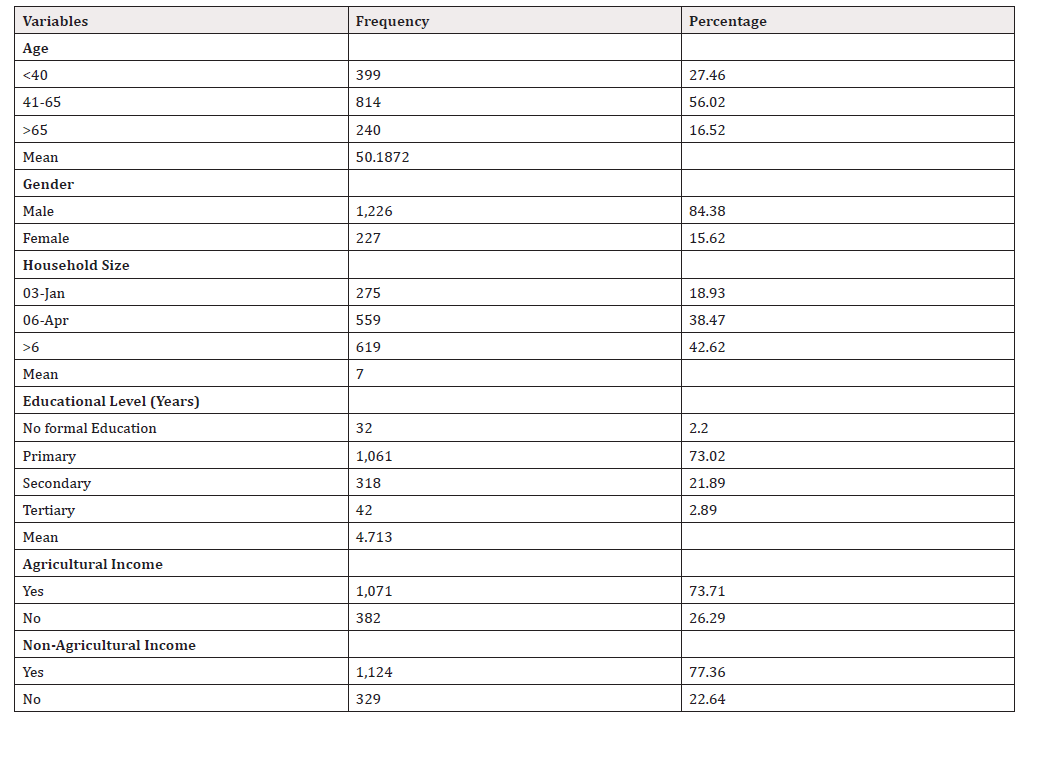
Table 1:Socioeconomic Characteristic of Households in Nigeria.
As highlighted in Table 2, nine shocks that affected the households were identified during the Covid 19 pandemic. The three most important shocks that greatly affected the majority of households during the pandemic are non-food price increase (85.07%), fuel price increase (80.94%) and food price increase (62.28%) respectively. The finding aligns with the submission of [26,27]. On the other hand, the shocks that affected the respondents the least are, job loss (8.47%), theft (10.87%) and farm output price reduction (16.72%) respectively. The significant adverse effect of food, non-food and fuel price shocks experienced during the pandemic by the respondents are expected, as these are the basic daily items required by majority of households in Nigeria. The inaccessibility of the items worsened due to the restraint of mobility imposed on households during the period.
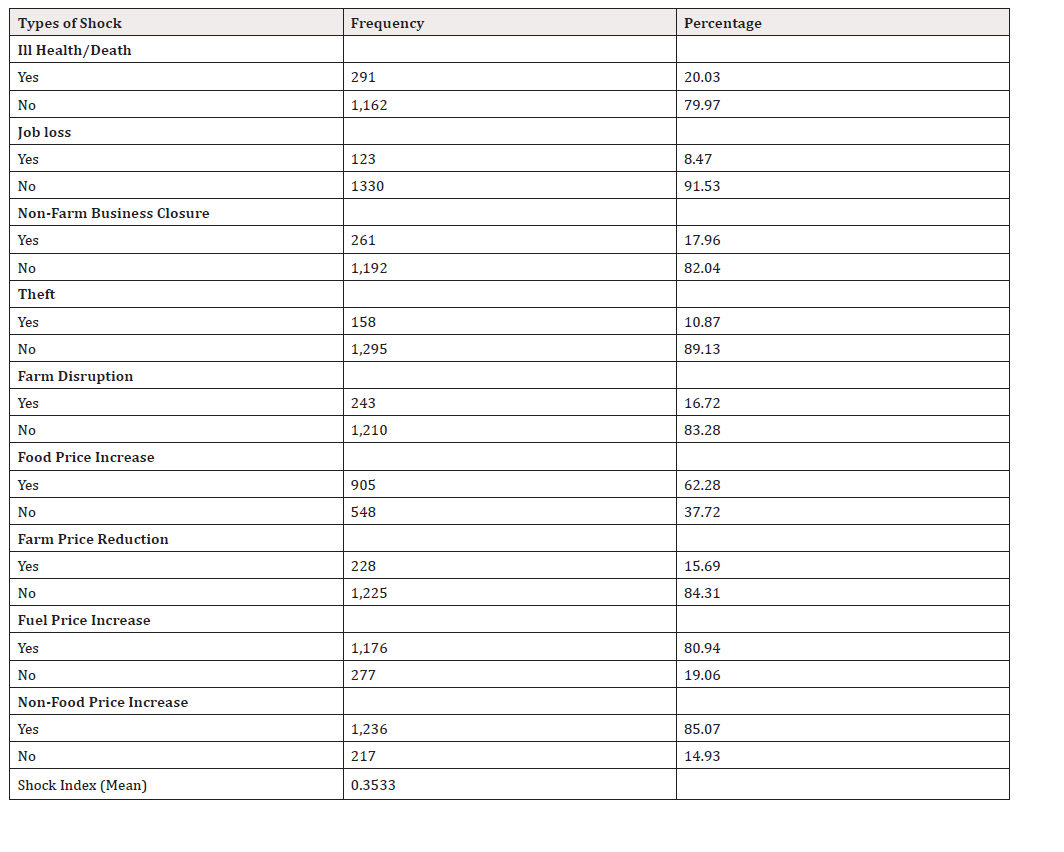
Table 2:Distribution of Households Based on Shocks Experienced during COVID-19 Pandemic.
In Table 3, access of households to indicators of poverty were listed. In relation to food, adequate nutrition connotes the adequate supply of calorie and minerals to the body cells relative to its needs [28]. However, inadequate food/nutrition contributes significantly to diseases and deaths among households, especially the wards in emerging nations [29,30]. Seven out of 10 respondents skipped meal, 6 out of 10 ran out of food, while about a quarter went without food in a day. This supports the conclusion of Bedru, et al. [31] who stated that about 66% of the households reduced food consumption. Similarly, Oludiran, et al., Mulubrhan, et al., Cleopatra and Abayomi [32-34,] submitted that food poverty aggravated during the period due upward trend in costs of food and non-food items; reduced income and worsening economic status of the populace. Additionally, about three-quarter of the respondents had no access to medical facilities, while almost one-third could not purchase soap during the pandemic. As reported by Aloysius, et al. [26], majority of the households found it increasingly challenging in accessing health and medical care during the pandemic. Francis, et al. [27] affirmed that expenditure on education, water, fuel, clothing, wears and toiletries reduced significantly during the pandemic. About three-quarter had access to electricity, while 9 out of 10 households were able to purchase airtime. Only two out of 100 respondents do not have access to formal education. Households were mostly deprived of food and health indicators during the pandemic.
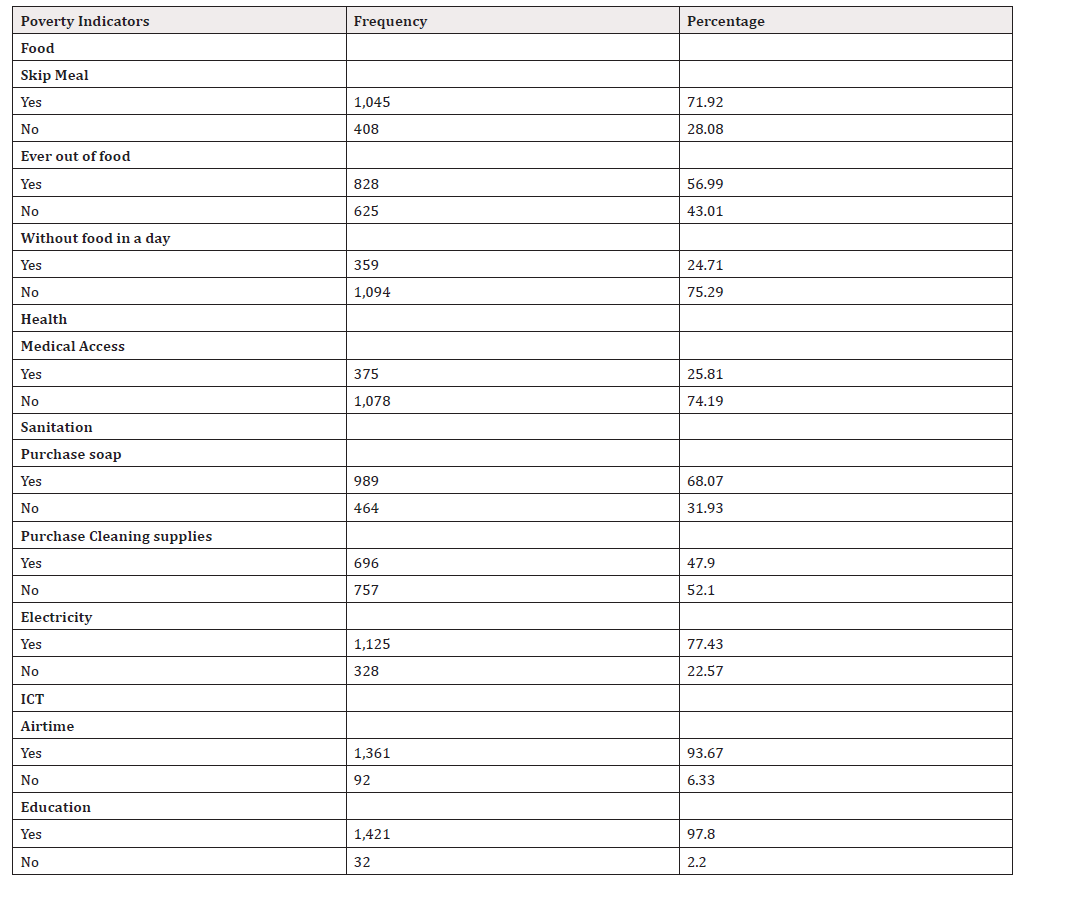
Table 3:Multi-Dimensional Poverty Measure of Households in Nigeria.
Table 4 reflects the role of the identified dimensions to the overall poverty status of households in Nigeria during the pandemic. The two indicators that contributed the most to poverty are health (74.19%) and food (51.20%). This implies that households were deprived mostly of food and health indicators during the pandemic, affirming the result of [32,26]. Food deprivation and lack of access to medical facilities were paramount due to the incapacitation of the families to effectively engage in economic undertakings due to the human and vehicular restrictions imposed on households during the pandemic.
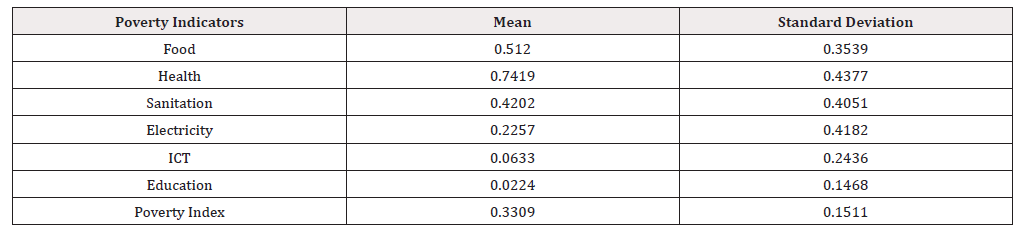
Table 4:Contribution of Each Indicator to the Poverty Status of Households in Nigeria.
Table 5 shows the influence of Covid 19 shock on the poverty status of residents in Nigeria using Tobit regression model. The Prob>chi2 figure of 0.0000 implies that the model best suits the data used. Shock index experienced during the pandemic is significant at P<0.05 and directly associated with welfare deprivation of inhabitants. In other words, increasing the level of shock experienced during the pandemic by a unit would increase the poverty status of households by 4.58%. This indicates that shocks experienced during the pandemic tend to increase the poverty profile of residents in the country. Expectedly, households that experienced economic and health shocks the most are more prone to being deprived. Abay, et al., Adjognon, et al., Ceballos, et al., Hirvonen, et al., Kansiime, et al., Mahmud and Riley, [35-40] reported a negative impact of the shocks experienced during the pandemic on the welfare outcomes of the families. Aloysius, et al. [26] submitted that residents witnessed mostly shocks such as increased costs of consumables and non-consumables during the pandemic. Peterson [41], opined that economic shocks in Nigeria was aggravated by a blend of dwindling cost of crude oil and aftermath effect of the COVID-19 surge, which halted economic activities due to the social distancing enforcement.
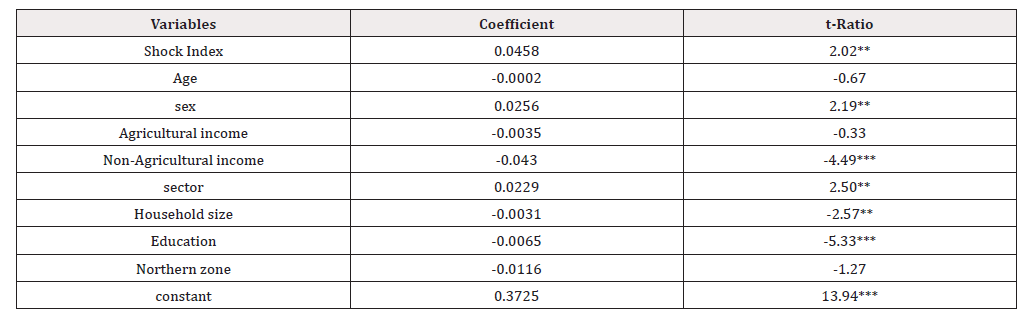
Table 5:Effect of COVID Shocks on Poverty Status of Households in Nigeria.
Note*: *, **, *** represent significant levels at 10%, 5% and 1% respectively
Log likelihood=655.13639 Prob >chi2 = 0.0000.
Similarly, sex of the household heads is significant at p<0.05 and has a positive influence on the households’ poverty status. That is, residing in a male-controlled household will increase the likelihood of such household to be poor by 2.56%, an indication that male-headed households tend to be poorer relatively to the households controlled by females in Nigeria. This supports the submission of Yusuf, et al, [42] that male-headed households experienced deprivation more than their female counterpart did. More often than not, gender divergences in opportunities to agrarian inputs and services unfavorably influence yield; food and nutrition security and poverty status among residents [43,44].
Furthermore, Non-Agricultural Income has an adverse and substantial influence on deprivation of residents, implying that the poverty status of households that obtained their livelihood from non-agricultural source will reduce by 4.30%, relative to those that obtained theirs from agricultural source. This affirms that households with income source from non-agricultural engagements are less expected to be deprived compared to those whose source of livelihood is agriculture. The submission aligns with those of Kwaw, et al. [45] who reported that a great decline in agricultural food systems and income experienced by households significantly influenced their poverty levels during the pandemic. Rural sector is significant at p<0.05 and positively influenced households’ poverty status, depicting that the likelihood of households residing in rural areas to be poor increases by 2.29% compare to those living in urban areas. This means poverty status of households in the villages overshadow that of the cities in Nigeria. The finding is in conformity with Ashagidigbi, et al, [24] who submitted that rural residents are usually deprived of basic welfare dimensions relative to their urban counterpart. On the contrary, household size is significant at p<0.05 and negatively influence households ‘welfare deprivation during the pandemic. In other words, an additional member to a household will reduce its poverty status by 0.3%, aligning with Ashagidigbi, et al, [24] who submitted that larger household size tends to enhance welfare status of households in Nigeria. This means respondents with larger household size tend to be less poor compare to those with smaller household size in Nigeria. This is often true as majority of households use their wards as family labour on the farm thereby cutting down on the operating cost, which would in turn enhance their income and ultimately reduce their poverty status. Conclusively, education is significant at 1% and inversely related to extent of poverty of residents. One percent increase in years of formal education will reduce the household’s poverty status by 0.65% Ashagidigbi, et al, [46]. This means that formal schooling, as an avenue for human capital growth possesses the tendency of reducing welfare deprivation among households in Nigeria. This affirms the submission of Gans [47], that human capital deprivation is one of the key variables driving the intensity of poverty among residents (Table 5) [48].
Conclusion & Recommendations
It is evident that households experienced non-food, fuel and food price shocks the most during the Covid 19 period. The inability of residents who are mostly agrarian to visit their farms worsen household access to food. Furthermore, the restrictive movement of all the households during the lockdown prevented them from engaging in their daily activities, which in turns adversely influenced the prices of non-consumables. The movement of these goods were greatly hampered because of the restrictions placed on vehicular movements during the pandemic. Similarly, the highest contributors to households’ poverty are health and food. Access to quick and cheap medication during the pandemic was almost practically impossible, likewise majority could not engage in their income generating activities including farming, which makes access to food practically challenging. The shocks experienced by the households positively influenced their poverty status during the pandemic. Therefore, Social safety net measures in form of food assistance, cash transfer and health care that would ameliorate the effect of the shocks should be implemented in Nigeria to reduce deprivation among the residents. Likewise, sector specific poverty alleviation interventions should be implemented for households residing in the rural areas if SDG 1benchmark is to be achieved, as their level of poverty is significantly higher than those in the urban sector are.
Acknowledgement
None.
Conflict of Interest
The authors declared no conflict of interest.
References
- (2020) Poverty and shared prosperity 2020: Reversals of fortune. World Bank.
- (2021) Poverty in Nigeria. Word Bank Report.
- Ojionuka A (2022) The role of libraries in the preparation of youths for active participation in poverty alleviation. Journal of Educational Research, University of Nigeria 14(2).
- Onyekwena C, Amara M (2020) Understanding the impact of COVID-19 outbreak on the Nigeria economy. Washington DC: Brooking’s institutions 1-20.
- Egger A, Marco K, Daniela L, Christiane K, Federica A, et al. (2020) Ultra-high-throughput clinical proteomics reveals classifiers of COVID-19 infection. Cell systems 11(1): 11-24.
- McKibbin WJ, Roshen F (2020) Global macroeconomic scenarios of the COVID-19 pandemic. CAMA Working Paper 6642.
- Abdulai AM, E Shamshiry (2014) Theory and Practice on the Nexus between Poverty, Natural Resources and Governance. Springer Link.
- Bradshaw TK (2006) Theories of Poverty and Anti-Poverty Programs in Community Development. Rural Poverty Research Centre (RPRC) Working Series No: 06-05,
- (2010) UNDP. Millennium Development Goals Status Report Zimbabwe. United Nations Development Program.
- Alkire S, Maria ES, Suman S, Gaston Y (2010) Is the Multidimensional Poverty Index robust to different weights? Oxford Poverty & Human Development Initiative (OPHI) 1-22.
- Alkire S, Santos ME (2010) Multidimensional poverty index 2010: research briefing. Oxford Poverty & Human Development Initiative (OPHI) 1-14.
- Alkire S, Adriana C, Suman S (2014) Multidimensional Poverty Index 2014: Brief methodological note and results. OPHI MPI Methodological Notes 1-18.
- Pampalon R, Denis H, Philippe G (2009) A comparison of individual and area-based socio-economic data for monitoring social inequalities in health. Health Reports 20(4): 85-94.
- Oyekale AS, Okunmadewa FY (2008) Fuzzy set approach to multidimensional poverty analysis in Abia state, Nigeria. Research Journal of Applied Sciences 3(7): 490-495.
- Alkire S, Foster J (2010) Designing the Inequality-Adjusted Human Development Index (HDI). HDR, Background Paper No 10.
- Bersisa, Mekonnen (2016) Multidimensional Measure of Household Energy Poverty and its Determinants in Ethiopia. East Africa Research Papers in Economics and Finance EARP-EF No. 2016: 15.
- Ashagidigbi WM, Dahunisi A (2018) Poverty Status of Households and Child Malnutrition in Rural Population of Nigeria. Journal of Environmental and Agricultural Sciences 16: 42-49.
- Tobin J (1958) Estimation of relationships for limited dependent variable. Econometrica 26(1): 24-36.
- Ashagidigbi WM, Afolabi OA, Adeoye IB (2017) Food Insecurity Status among Female Headed Households in Nigeria. Scientific, Papers Series Management, Economic Engineering in Agriculture and Rural Development 17(3): 69-74.
- Ashagidigbi WM, Adebayo A, Salau SA (2019) Analysis of the Demand for Fruits and Vegetables among Households in Nigeria. Science Letters 7(2): 45-51.
- Olagunju KO, Ogunniyi AI, Awotide BA, Adenuga AH, Ashagidigbi WM (2020) Evaluating the distributional impacts of drought-tolerant maize varieties on productivity and welfare outcomes: An instrumental variable quantile treatment effects approach. Clim Dev 12: 865-875.
- Oyetunde Usman Zainab, Oyinlola Rafiat Ogunpaimo, Kehinde Oluseyi Olagunju, Omotuyole Isiaka Ambali, Waheed Mobolaji Ashagidigbi (2021) Welfare Impact of Organic Fertilizer Adoption: Empirical Evidence from Nigeria. Frontiers in Sustainable Food Systems 5: 691667.
- Ashagidigbi WM, Odeyemi O, Ashagidigbi WO, Bolarinwa AO (2022) Does Access to Remittance Improve Welfare Status of Households in Nigeria. Biomed J Sci & Tech Res 42(5): 34043-34048.
- Ashagidigbi Waheed Mobolaji, Tinuola Mariam Ishola, Abiodun Olusola Omotayo (2022) Gender and occupation of household head as major determinants of malnutrition among children in Nigeria. Scientific African 16: e01159.
- Ashagidigbi WM, Babatunde BA, Ogunniyi AI, Olagunju KO, Omotayo AO (2020) Estimation and Determinants of Multidimensional Energy Poverty among Households in Nigeria. Sustainability 12(18): 7332.
- Aloysius O, Millicent ON, Mmesoma CA, Ifunanya CO, Maureen CA, et al. (2020) Effect of COVID-19 lockdown on poor urban households in Nigeria. where do we go from here? Ianna Journal of Interdisciplinary Studies 2(1): 75-85.
- Francis F, Tadesse G, Olujide A, Clara TF, Omotola O, et al. (2021) Economic Impact of COVID-19 lockdown on households. Pan African Medical Journal 40(1).
- Obi C, F Bartolini, MD Haese (2020) International migration, remittance and food security during food crises: the case study of Nigeria, Food Secur 12(1): 207–220.
- Raymond J, N Kassim, JW Rose, M Agaba (2018) Context-specific food-based approach for ensuring nutrition security in developing countries: a review. Int J Food Sci Nutr 69(4): 410-416.
- (2018) The State of Food Security and Nutrition in the World 2018: Building Climate Resilience for Food Security and Nutrition, Food and Agriculture Organization. WHO.
- Bedru BB, Motunrayo AO, Adebayo IO, Adetunji F, Hyacinth E, et al. (2020) The effects of COVID-19 policies on livelihoods and food security of smallholder farm households in Nigeria: Descriptive results from a phone survey. Intl Food Policy Res Inst 6(23).
- Oludiran A, Risikat OS, Dauda O, Iwegub OOP (2020) Impact of COVID-19 pandemic on financial health and food security: a survey-based analysis 320-325.
- Mulubrhan AK, Abay LT, Jordan C (2020) Impacts of COVID-19 on food security: panel data evidence from Nigeria. Intl Food Policy Res Inst 3(4).
- Cleopatra OI, Abayomi AA (2021) Household food security and the COVID‐19 pandemic in Nigeria. African Development Review 33: S75-S87.
- Abay KA, Mulubrhan A, Luca T, Jordan C (2020) Impacts of COVID-19 on food security: panel data evidence from Nigeria. Intl Food Policy Research Institute 1-12.
- Adjognon GS, Jeffrey RB, Aly S (2020) The Coronavirus Pandemic and Food Security. World Bank, Washington, DC Policy Research Working Paper 9474.
- Ceballos F, Samyuktha K, Berber K (2020) Impacts of a national lockdown on smallholder farmers’ income and food security: Empirical evidence from two states in India. World Development 136: 105069.
- Hirvonen K, Alan DB, Gashaw T (2021) Food consumption and food security during the COVID‐19 pandemic in Addis Ababa. American journal of agricultural economics 103(3): 772-789.
- Kansiime G, Johannes FM, Roberto P, Wolfgang, CW, Juan JC (2020) Forgotten technology in the COVID-19 pandemic: filtration properties of cloth and cloth masks-a narrative review. Mayo Clinic Proceedings 95(10): 2204-2224.
- Mahmud M, Riley E (2020) Household response to an extreme shock: Evidence on the immediate impact of the Covid-19 lockdown on economic outcomes and well-being in rural Uganda. World Development 140: 105318.
- Peterson KO (2021) Covid-19 pandemic and economic crisis: The Nigerian experience and structural causes. Journal of Economic and Administrative Sciences 37(4): 401-418.
- Yusuf S, Ashagidigbi WM, Bwala DP (2015) Poverty and Risk Attitude of Farmers in North-central, Nigeria. Journal of Environmental and Agricultural Sciences 3: 1-7.
- Ali D, Bowen D, Deininger K, Duponchel M (2016) Investigating the gender gap in agricultural productivity: Evidence from Uganda. World Dev 87: 152-170.
- Joe Nkamuke U, Olagunju KO, Njuguna Mungai E, Mausch K (2019) Is there any gender gap in the production of legumes in Malawi? Evidence from the Oaxaca–Blinder decomposition model. Rev Agric Food Environ Stud 100: 69-92.
- Kwaw SA, Hyacinth E, Victor O, Karl P, James T (2020) Impacts of COVID-19 on food systems and poverty in Nigeria. Advances in Food Security and Sustainability 5(4): 145-173.
- Ashagidigbi WM, Adewumi OB, Olagunju KO, Ogunniyi A (2018) Maternal Education Household’s Wealth and Child Mortality in Rural Nigeria. J Nutri Bio 4(1): 207-216.
- Gans Herbert J (1995) The War against the Poor. The underclass and Anti-Poverty Policy. New York Basic Books 195pp.
- Warwick McKibbin, David Vines (2020) Global macroeconomic cooperation in response to the COVID-19 pandemic: a roadmap for the G20 and the IMF. Oxford Review of Economic Policy 36(Supplement): 297-337.




 We use cookies to ensure you get the best experience on our website.