
Original Article 
 Creative Commons, CC-BY
Determining the Role of C- Reactive Protein, Ferritin, and Lactate Dehydrogenase Level and TLC in Deciding Clinical Outcome Among Covid-19 Patients
*Corresponding author: Madiha Sattar Ansaria, DR RUTH K.M. PFAU Civil Hospital Karachi, Sindh, Pakistan.
Received: May 07, 20255; Published: May 21, 2025
DOI: 10.34297/AJBSR.2025.27.003524
Abstract
Background: Hyper inflammation has been feature in critically ill patients with COVID-19, and the related biomarkers may be valuable for risk stratification. The objective of this study was to analyze laboratory biomarkers C-reactive proteins, Ferritin level and Lactate dehydrogenase level to assess the severity of infections. This study would be helpful to predict the early diagnosis and to initiate the prompt treatment to reduce burden of severity.
Method: A retrospective cross-sectional study was conducted at Dr. Ruth KM Pfau Civil Hospital, Karachi from 1st February 2022 till 1st February 2023. All the COVID-19 cases who were admitted as in-patients and who tested positive for COVID-19 at the hospital laboratory when assessed using real-time Polymerase Chain Reaction (PCR) were included in the study.
Results: The median age of study participants was 49 years with an IQR of 26 years. In total, 189 inpatients were included in the study among which 82.5% (n=156) were male (82.5%) and 17.5% (n=33) were females. The comparison of laboratory parameters among patients with low and normal oxygen saturation at the time of admission revealed that median serum levels of CRP were significantly higher (p-value <0.05) among patients with low oxygen level i.e. <90% as compared to patients with normal oxygen level i.e. >90%. No significant differences were observed in the serum levels of LDH, TLC, ferritin levels as well as clinical outcome of the COVID-19 patients on the basis of differences in oxygen saturation at the time of hospital admission. The study found highest levels of biomarkers i.e. CRP, LDH and TLC among the one who expired as compared to the patients with better clinical outcomes, but these differences were statistically not significant except for LDH.
Conclusion: CRP, LDH, Ferritin and TLC all seem to have a role in prognosis of COVID-19 illness but studies with sufficient sample size are required to determine the exact potential of each biomarker. Further research may help in identifying exact magnitude of potential for severity as contributed by each of the crucial biomarkers.
Keywords: Covid-19, Biomarkers, CRP, LDH, Ferritin, Prognosis
Introduction
The COVID-19 is an emergent infectious disease that has been acknowledged as a global public health emergency by the World Health Organization (WHO). Since its inception in Wuhan, China, over 3,500,000 cases and 243,403 deaths have been recorded worldwide [1]. COVID-19 patients has dramatically increased International and Management in Intensive Care Units (ICU) has become a foremost challenge, early recognition of severe forms is absolutely essential for appropriate triaging of patients. SARS-CoV-2 infection, particularly in elder patients and patients with pre-existing disease, can easily lead to severe outcomes with critical respiratory symptoms and substantial pulmonary deviations visible by imaging techniques. These deviations comprise of ground glass opacities, patchy consolidation, alveolar exudates and interlobular involvement, ultimately prognosticating deterioration [2].
Corona virus a global concern and has emerged as impending threat worldwide also (known as severe acute respiratory syndrome corona virus-2), result in severe morbidity and mortality [3]. SARS-COV-2 a single stranded RNA viruses (+ssRNA) which causes COVID -19 pneumonia an infectious disease which is transmitted through close contact and respiratory droplets [4,5]. COVID infection can lead to mild to severe pneumonia therefore a rapid and early detection to evaluate the severity of illness through the inflammatory biomarkers of Novel Corona virus infection [6]. Most of the patients with COVID-19 have a mild influenza-like symptoms or may be asymptomatic, few of them develop severe pneumonia, acute respiratory distress syndrome (ARDS), multi-organ failure, and can even die [7].The risk stratification comorbidities and laboratory markers have been proposed to identify the risk factor for ARDS is real challenge for the clinicians. The risk factors for ARDS in CoVID-19 patients are old age, comorbidities (hypertension, diabetes), lymphocytopenia, elevated inflammatory indices (C-reactive protein, serum ferritin, erythrocyte sedimentation), and organ dysfunction (aspartate aminotransferase, creatinine, lactate dehydrogenase). [8, 9]. The pathogenesis of CoVID-19 has not been completely understood. Undoubtedly, inflammatory cytokine storm and viral evasion of cellular immune responses play a dominant part in illness development and severity [10].
Hyper inflammation has been feature in critically ill patients with coronavirus disease (COVID-19), and the related biomarkers may be valuable for risk stratification. The objective of this study was to analyze laboratory biomarkers C-reactive proteins, Ferritin level and Lactate Dehydrogenase Level (LDL) to assess the severity of infections. This study would be helpful to predict the early di agnosis and to initiate the prompt treatment to reduce burden of severity
Methods
A retrospective cross-sectional study was conducted at Dr Ruth KM Pfau Civil Hospital, Karachi from 1st February 2022 till 1st February 2023. All the COVID-19 cases who were admitted as in-patients and who tested positive for COVID-19 at the hospital labo ratory when assessed using real-time Polymerase Chain Reaction (PCR) were included in the study. All the data was collected using laboratory data with the help of computerized unique medical record identification number; generated at the time of hospital admission. Information was collected using a structured proforma regarding basic demographic and disease related characteristics such as age, sex, and clinical symptoms. Data was also collected for the biomarkers such as; C - Reactive Protein (CRP), Lactate Dehydrogenase (LDH) and serum Ferritin level for all the in-patients who were positive for COVID- 19. All the gathered data was entered and analyzed using Statistical Package for Social Science for windows version SPSS 23. Continuous variable age, biochemical parameters such as CRP, LDH, serum ferritin level and duration of hospital stay were presented as mean and standard deviation whereas frequencies were calculated used for the qualitative variable like sex, clinical presentation, clinical outcome were presented in frequency and percentages. Independent sample t-test was applied to compare the various biochemical parameters on the basis of demographic and disease related characteristics.
Results
The median age of study participants was 49 years with an IQR of 26 years. Majority of the patients included in the study belonged to middle age group with age between 40-60 years i.e. 44.4%(n=84). 21.2% (n=40) patients of age greater than 60 years while only 34.4% (n=65) of the patients were below 40 years of age. In total, 189 inpatients were included in the study among which 82.5% (n=156) were male (82.5%) and 17.5% (n=33) were females. 93.1 % (n=176) of the COVID-19 positive patients developed clinical symptoms whereas 6.9% (n=13) of the patients remained asymptomatic. Among all the test-positive patients fever was reported among only 49.7% (94) and 6.9% (n=13) developed flu symptoms, 6.3% (n=12) developed sore throat, 51.3 % (n=98) developed dry cough, 47.1% (n=89) developed shortness of breath and loss of taste and smell were seen in 99.5% (n=188) of the in-patients (Table1).
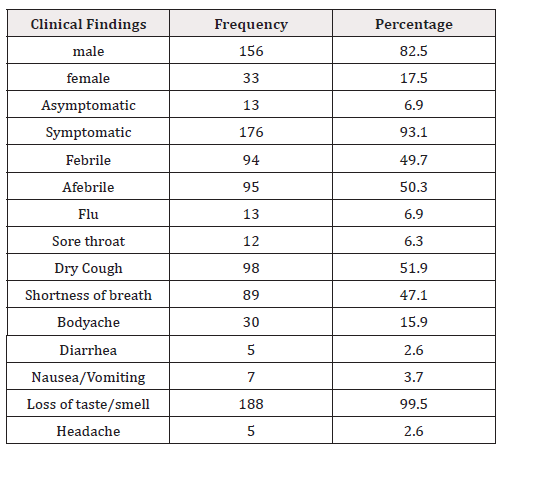
Table 1
The Laboratory biomarkers were evaluated in 189 Covid positive infection in which CRP was raised in 97.3% (n=184) patients, Ferritin levels were raised in 61.9 % (n=117) patients, Lactate dehydrogenase levels were raised in 44.4% (n=84) and TLC was raised in 54.5% (n=103) of all the COVID-19 in-patients included in the study (Table 1). The comparison of laboratory parameters among patients with low and normal oxygen saturation at the time of admission revealed that median serum levels of CRP and di-dimer were significantly higher (p-value <0.05) among patients with low oxygen level i.e. <90% as compared to patients with normal oxygen level i.e. >90%. However. No significant differences were observed in the serum levels of LDH, TLC, ferritin levels as well as clinical outcome of the COVID-19 patients on the basis of differences in oxygen saturation at the time of hospital admission (Table 2).
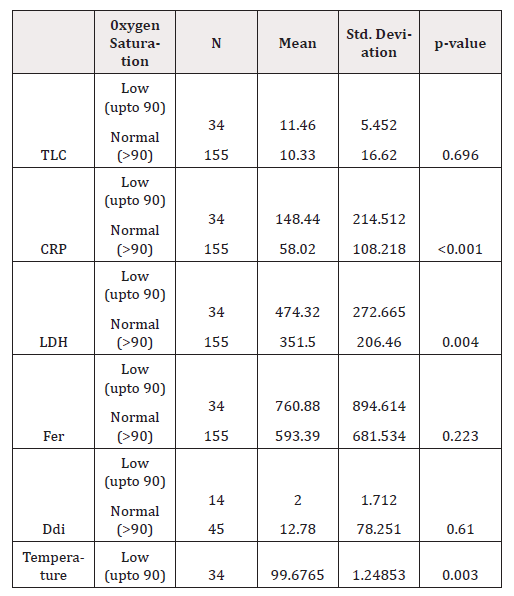
Table 2: Correlation between oxygen saturation levels and means of laboratory parameters.
The study also compared median serum levels of inflammatory biomarkers i.e. CRP, LDH, TLC and ferritin across the categories of clinical outcome i.e. discharged after recovery, isolated at home, transferred and expired in the hospital. The study found highest levels of biomarkers i.e. CRP, LDH and TLC among the one who expired as compared to the patients with better clinical outcomes but these differences were statistically not significant except for LDH (Table 3).
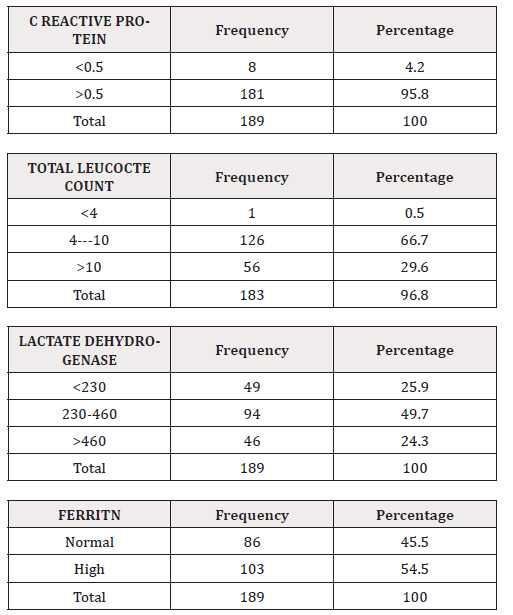
Table 3
Discussion
COVID-19 pandemic has affected the populations globally with a deep impact, leading to substantial advances in research in quest to learn more about the disease and for effective patient management. For predicting and assessing severity of disease among COVID-19 patients several biochemical parameters such as Lactate Dehydrogenase (LHD), ferritin, and CRP (C-reactive protein) have emerged as potential markers [11]. CRP is a well-established, acute phase reactant of systemic inflammation. It is mainly formed by the responsive liver to pro-inflammatory cytokines i.e., interleukin-6. Raised CRP levels have been detected in patients of COVID-19, mostly in those with unadorned disease. Determining the serum levels of CRP delivers understandings into inflammation extent and can assist clinicians evaluate disease evolution and treatment response. Consecutive CRP level measurements can also assist therapeutic involvements and estimate intervention’s effectiveness i.e., inflammatory drugs [12].
According to several research studies the increased level of CRP is linked with enhanced severity of disease, larger ICU admission rates and poor clinical outcomes among patients having COVID-19. [13,14]. Moreover, an important correlation has been initiated among markers of lung injury and CRP levels, i.e., ground-glass opaqueness detected on chest imagination. Consequently, CRP helps as a respected tool for stratification of risk and nursing the provocative COVID-19 patients’ response [13,14]. This fact is also supported by the current study where CRP was found significantly higher among the COVID-19 patients who had low oxygen saturation at the time of hospital admission when compared with those who had normal oxygen saturation. These findings are well supported by previous studies conducted in various countries. [14-18].
Moreover, in COVID-19 pandemic, enhanced levels of ferritin have been linked with hyper inflammatory situation also known as cytokine storm. The cytokine storm is categorized by an extreme pro-inflammatory cytokines release and can subsidize to the dysfunction of an organ and unadorned clinical indicators [19]. High levels of ferritin have been applied in critically ill COVID-19 patients and are revealing of a more-simple disease development. Larger levels of ferritin have been associated with an enhanced risk of emerging acute respiratory distress syndrome and an advanced rate of mortality. Monitoring levels of ferritin can promote in classifying patients at larger developing risk- problem and direct strategies for treatment, involving the immunomodulatory representative usage i.e., interleukin-6 receptor antagonists or corticosteroids. The current study found high levels of three biomarkers among the category of expired patients when compared with those who survived. However, these findings were not significant except for LDH. On the other hand the study found significant differences in the Lactate Dehydrogenase (LDH) levels across the COVID-19 patients with different clinical outcomes. This can be well explained by the limited number of sample size in the current study. In patients having COVID-19 the level of LDH shows a link with prognosis and severity of disease [20]. Developed levels of LDH are related with increased mortality, organ dysfunction, and lung injury. [16-18, 21].
The study however, had some inherent limitations which might have directly affected the conclusions. First of all this study is a single center small scale effort hence the finding of this study cannot be generalized. Moreover, due to limited number of sample size have affected the findings for inferential statistics; hence might have result in compromised results or study findings. In addition the median age of the study population was 45 years only which is a very strong effect modifier in the case of COVID-19 illness, hence much of the effect of de-ranged biomarkers might be neutralized due to younger age group and low frequency of co-morbids [22,23]. However, this study has few strengths, first of all this represents a population cross-section from one of the busiest public sector hospital in Karachi. Secondly, this study attempts to determine the role of crucial biomarkers on the clinical outcomes which can e of great help in shaping further research in the similar direction. In future it is required to conduct, multi-center studies with larger sample size to determine the role of CRP, LDH, Ferritin and TLC in prognosis of COVID-19 in the local population. Such epidemiological advances are substantial for improvement in disease management and controlling the morbidity as well as mortality.
Conclusion
CRP, LDH, Ferritin and TLC all seem to have a role in prognosis of COVID-19 illness but studies with sufficient sample size are required to determine the exact potential of each biomarker. Further research may help in identifying exact magnitude of potential for severity as contributed by each of the crucial biomarkers.
Acknowledgement
None.
Conflict of Interest
None.
References
- (2019) World Health Organization. Coronavirus disease (COVID-19) Situation Report 106.
- Huang C, Wang Y, Li X, Lili Ren, Jianping Zhao, et al. (2020) Clinical features of patients infected with 2019 novel coronavirus in Wuhan, China. Lancet 395(10223): 497-506.
- Chen X, Tang Y, Mo Y, Shengkai Li, Daiying Lin, et al. (2020) A diagnostic model for coronavirus disease 2019 (COVID-19) based on radiological semantic and clinical features: a multi-center study. Eur Radiol 30(9): 4893-4902.
- Perlman S, Netland J (2009) Coronaviruses post-SARS: update on replication and pathogenesis. Nat Rev Microbiol 7(6): 439-450.
- (2020) Clinical management of COVID-19. interim guidance 27 May 2020. World Health Organization.
- Bo Zhou, Jianqing She, Yadan Wang, Xiancang Ma (2020) Utility of Ferritin, Procalcitonin, and C - reactive protein in Severe Patients with 2019 Novel Coronavirus Disease. Research Square.
- Hassan SA, Sheikh FN, Jamal S, Ezeh JK, Akhtar A, et al. (2020) Coronavirus (COVID-19): A Review of Clinical Features, Diagnosis, and Treatment. Cureus 12(3): e7355.
- Huang C, Wang Y, Li X, Ren L, Zhao J, et al. (2020) Clinical features of patients infected with 2019 novel coronavirus in Wuhan, China. The lancet 395(10223): 497-506.
- J Harenberg, E Favaloro, (2020) COVID-19: progression of disease and intravascular coagulation- present status and future perspectives. Clin Chem Lab Med 58(7): 1029-1036.
- Channappanavar R, Perlman S (2017) Pathogenic human coronavirus infections: causes and consequences of cytokine storm and immunopathology. Semin Immunopathol 39(5): 529-539.
- Yamamoto A, Wada H, Ichikawa Y, Mizuno H, Tomida M, et al. (2021) Evaluation of biomarkers of severity in patients with COVID-19 infection. J Clin Med 10(17): 3775.
- Khourssaji M, Chapelle V, Evenepoel A, Belkhir L, Yombi JC, et al. A biological profile for diagnosis and outcome of COVID-19 patients. Clin Chem Lab Med 58(12): 2141-2150.
- Payán Pernía S, Gómez Pérez L, Remacha Sevilla ÁF, Sierra Gil J, Novelli Canales S (2021) Absolute lymphocytes, ferritin, C-reactive protein, and lactate dehydrogenase predict early invasive ventilation in patients with COVID 19. Lab Med 52(2): 141-145.
- Nizami Deba J, Raman Vidya, Paulose L, Hazari, Komal S, et al. (2021) Role of laboratory biomarkers in assessing the severity of COVID-19 disease. A cross-sectional study. J Family Med Prim Care 10(6): 2209-2215.
- Asghar MS, Haider Kazmi SJ, Khan NA, Akram M, Hassan M, et al. (2020) Poor Prognostic Biochemical Markers Predicting Fatalities Caused by COVID-19: A Retrospective Observational Study from a Developing Country. Cureus 12(8): e9575.
- Shams A, Sinha M, Das A, Gulati N, Sahu R, et al. (2020) Laboratory findings in COVID-19 patients and biomarkers for early assessment of severity and mortality. Acta Med Int 7(2): 63-68.
- Padhi A, Shaw D, Khatoon S, Ranjan S, Bhargava A, et al. (2022) A hospital-based study to assess various biomarkers for prognostic prediction of clinical outcome in COVID-19 disease. medRxiv 27: 2022-05.
- Singh AK, Pandey J, Adhikari IP, Gaur V, Kumar A, et al. (2020) Assessment of severity and outcome of COVID-19 Cases by haematological and biochemical markers at tertiary care centre in India. Journal of Advances in Medicine and Medical Research 32(23): 196-207.
- Aiswarya D, Arumugam V, Dineshkumar T, Gopalakrishnan N, Lamech TM, et al. Use of remdesivir in patients with COVID-19 on hemodialysis: a study of safety and tolerance. Kidney Int Rep 6(3): 586-593.
- Kaftan AN, Hussain MK, Algenabi AA, Naser FH, Enaya MA (2021) Predictive Value of C-reactive Protein, Lactate Dehydrogenase, Ferritin and D-dimer Levels in Diagnosing COVID-19 Patients: a Retrospective Study. Acta Inform Med 29(1): 45-50.
- Emsen A, Sumer S, Tulek B, Cizmecioglu H, Vatansev H, et al. Correlation of myeloid‐derived suppressor cells with C‐reactive protein, ferritin and lactate dehydrogenase levels in patients with severe COVID‐ Scand J Immunol 95(1): 51-60.
- Mi J, Zhong W, Huang C, Zhang W, Tan L, et al. (2020) Gender, age and comorbidities as the main prognostic factors in patients with COVID-19 pneumonia. Am J Transl Res 12(10): 6537-6548.
- Fang X, Li S, Yu H, Wang P, Zhang Y (2020) Epidemiological, comorbidity factors with severity and prognosis of COVID-19: a systematic review and meta-analysis. Aging (Albany NY) 12(13): 12493-12503.




 We use cookies to ensure you get the best experience on our website.