
Research Article 
 Creative Commons, CC-BY
Evaluation of Core Design and Different Crown Materials on Biomechanical Behavior of Badly Destructed Premolar: Finite Element Analysis
*Corresponding author:Shereen S Azer, Associate Professor Chair, Division of Restorative and Prosthetic Dentistry the Ohio State University College of Dentistry, Columbus, Ohio, USA.
Received:May 29, 2025; Published:June 04, 2025
DOI: 10.34297/AJBSR.2025.27.003545
Abstract
Statement of Problem: One of the most common treatment modalities for badly broken-down teeth is to utilize post and core restorations
(whether cast or prefabricated) under full coverage restorations. Although this topic has been widely researched, yet the
design of the core and the extension of the prefabricated post itself within the core material remain worthy of evaluation. Additionally,
the material selection used for the full coverage restoration remains a point of debate.
Purpose: The aim of this study was to evaluate the post and core design utilizing different post lengths within the core material that
might affect the stress distribution in badly broken down single rooted teeth restored with different crowns under various loading
conditions.
Material and Methods: Three finite element 3D models were prepared for single-rooted mandibular first premolar teeth that
received root canal treatment. The models were restored with 0, 1, and 2 mm of core material above a fiber post. The sound tooth
geometry was verified by CT, then prepared on engineering CAD-CAM software. Three crown materials: Lithium Disilicate (LD), Porcelain
Fused to Metal (PFM), and Zirconia (Zr) were tested to recommend the most favorable crown/post-core combination. Bone
geometry was simplified as two coaxial cylinders. Each model was subjected to two loading protocols, each of 100N: 90º vertical
(compressive) loading at the buccal cusp tip and distal marginal ridge, and 45º oblique loading at the buccal cusp tip.
Results: Results of the linear static analyses showed that; under vertical loading the post and underneath structures were not
significantly affected by the crown material. On the other hand, under oblique loading, the crown, cement, core and post showed
significant changes.
Conclusions: Within limitation of this study, it may be concluded that, the longer the post length, the better support it offers to the
core and crown restoration. In addition, the harder the crown material is, the better is the applied load distribution on the underneath
buildup structures.
Clinical Implications: Badly broken-down teeth present a significant challenge for restoration. The appropriate post and core design,
as well as the choice of the crown material may affect load distribution and treatment longevity.
Ackowledgments: Acknowledgments are due to Prof. Dr. Mohammed El-Anwar, Mechanical Engineering Department, National Research
Centre, Egypt, for his unlimited support on the FEA.
Introduction
Endodontically treated teeth have been regarded as being weaker with higher rate of fracture than vital teeth [1]. Fennis, et al. reviewed 46,000 insurance claims and reported a higher incidence of tooth fracture for endodontically treated teeth [2]. The brittleness and weakness of such teeth may be attributed to the amount of water loss and collagen cross-linking [3]. Additionally, the compromised amount of remaining tooth structure requires using a post to gain more intra radicular retention for the final restoration. The design of the post and core for the restoration of badly destructed teeth presents a crucial factor for the prognosis of the treatment plan. The survival rate of teeth restored with post-core and crown depends on the characteristics of the post (length, diameter, shape and material), crown height and ferrule extension [ 4]. Increase in post length inside the canal leads to an increase in the mechanical retention of a post. However, the deeper the posts inside the root, the higher the stress concentration around the post end which may cause root fracture [5]. The use of Carbon fiber posts gained popularity in the 1990s. Their main advantage was that they were more flexible than metal posts and had similar modulus of elasticity (stiffness) to dentin, improving force distribution within the root and resulting in fewer root fractures [6]. The original carbon fiber posts were dark, which was a potential problem when considering esthetics restorations [7]. The recent products are white in color. They are relatively easy to remove by drilling through the center of the post. Several other types of fiber posts are also available, including quartz fiber, glass fiber, and silicon fiber posts. They are claimed to offer the same advantages as the carbon fiber posts, but with better esthetics. Because they are newer, there is currently less research available on them than carbon fiber posts. Most fiber posts are relatively radiolucent and have different radiographic appearance than traditional posts [8,9]. The use of porcelain fused to metal crowns were long considered the golden standard for restoration of badly destructed teeth [10]. This may be attributed to the clinical longevity and accepted aesthetics of these restorations [11]. The introduction of improved all-ceramic systems made it possible to achieve maximum esthetics along with the necessary mechanical properties to withstand functional stresses and retention [12]. The potential of these materials to be bonded to dentine as well as enamel has also contributed to the use of ceramic crowns in recent years [13].
Many retrospective and prospective studies reported high overall survival probability rates for lithium disilicate crowns and zirconia- based crowns, which were comparable to those reported for metal-ceramic crowns [14,15]. Although the zirconia-based crowns have better mechanical properties than lithium disilicate crowns, the latter show higher optical properties than zirconia crowns. Many trials have been conducted to improve the optical properties of zirconia crowns [16]. An association between crown type and the survival of endodontically treated tooth was observed when the loss of tooth structure was questionable [17-19]. Other in vitro studies used the Finite Element Analysis (FEA) which is a numerical method of analyzing stresses and deformations in structures which originated from the need for solving complex structural problems [20]. To achieve this goal, the structures are broken down into many small simple segments or elements, each with specific physical properties. Then, an operator uses a computer program in order to obtain a model of stresses produced by various loads [21]. Additional points of consideration are the length of the post inside the core and the different materials that are used to fabricate the full coverage restoration. This may affect the distribution of the masticatory forces. The current study was aimed to investigate the role of post length inside the core material and crown material on the stress field around root treated mandibular first premolar and its surrounding bone. The null hypotheses were: 1. No difference existed between different tested crown materials, 2. Different post lengths inside the core will not be affected by adverse stress distribution.
Materials and Methods
The mandibular first premolar was separated from complete mandible computed tomography (i.e., CT scan images) for creating the geometric model of the tooth. The STL file (Standard Triangle Language) of the tooth was manipulated on intermediate software (3-Matic versions 15.01, Materialize, NV, USA) to trim the acquired tooth body points and correct STL file errors to construct the solid tooth model (Figure 1a). Solid modelling of the bone (cortical and cancellous), mucosa, Gutta Percha (GP), post and core were created on “Autodesk Inventor” Version 8 (Autodesk Inc., San Rafael, CA, USA) as presented in Figure 1b. These components were exported as STEP files in order to be assembled in the finite element package (Figure 1).
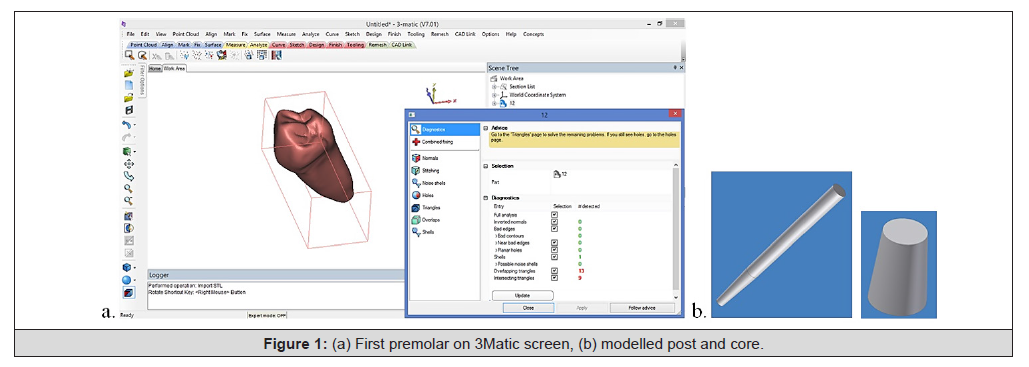
Figure 1:(a) First premolar on 3Matic screen, (b) modelled post and core.
The mucosa was modelled as 2mm thickness cylinder, while bone geometry was simplified and simulated as two co-axial cylinders. The inner one represents the cancellous bone (14 mm diameter x 22 mm high) filling the internal space of the outer cylinder (1 mm thick shell) that represents cortical bone (18 mm diameter x 26 mm high) as presented in Figure 2, that gives more details about the geometric modelled components and its assembly after set of Boolean operations between the modelled components, where, the complete model(s) were assembled under ANSYS environment (ANSYS Inc., Canonsburg, PA, USA). The three models were created as; Model #1 has 0mm of core material above the post, Model #2 has 1mm of core material above the post, and Model #3 has 2mm of core material above the post (Figure 2).
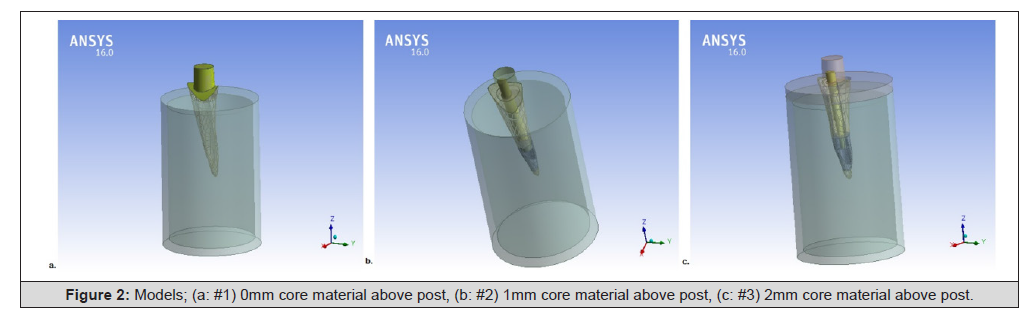
Figure 2:Models; (a: #1) 0mm core material above post, (b: #2) 1mm core material above post, (c: #3) 2mm core material above post.
All materials were assumed to be isotropic, homogenous and linearly elastic and its properties are listed in Table 1. Meshing of these components was done by 3D brick solid element “Solid-185” [22] which has three degrees of freedom (translations in main axes directions) the resulted numbers of nodes and elements are listed in Table 2, and samples for these meshed components are presented as screen shots from ANSYS screen in (Figure 3, Table 1).
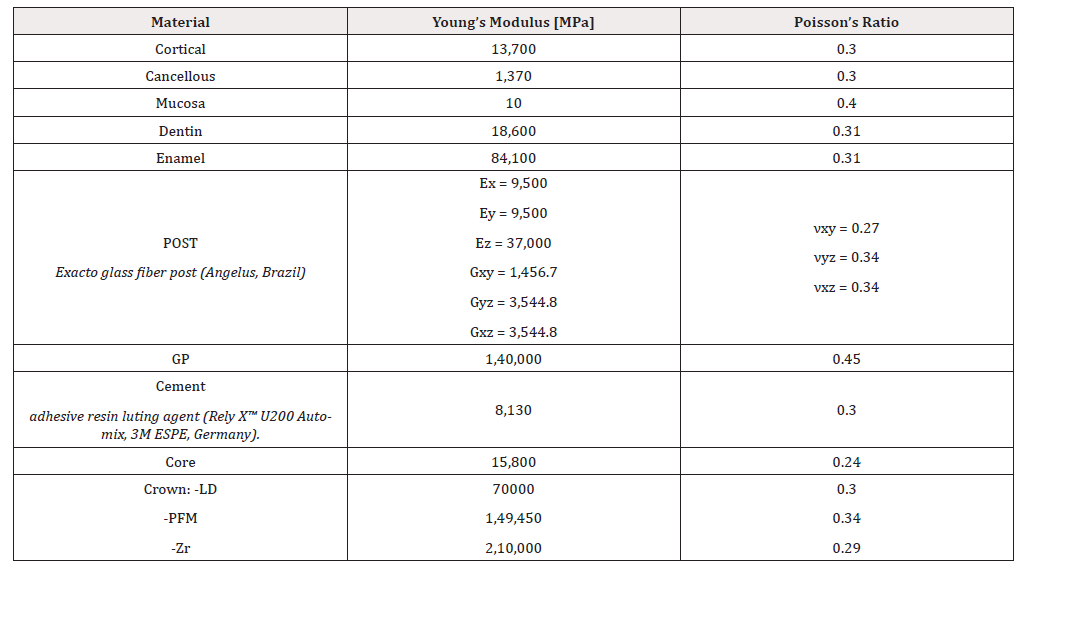
Table 1:Material properties.
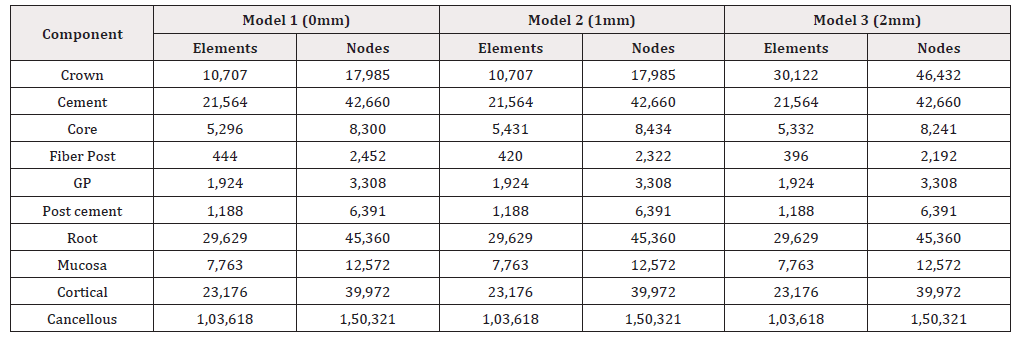
Table 2:Number of nodes and elements in all meshed components.
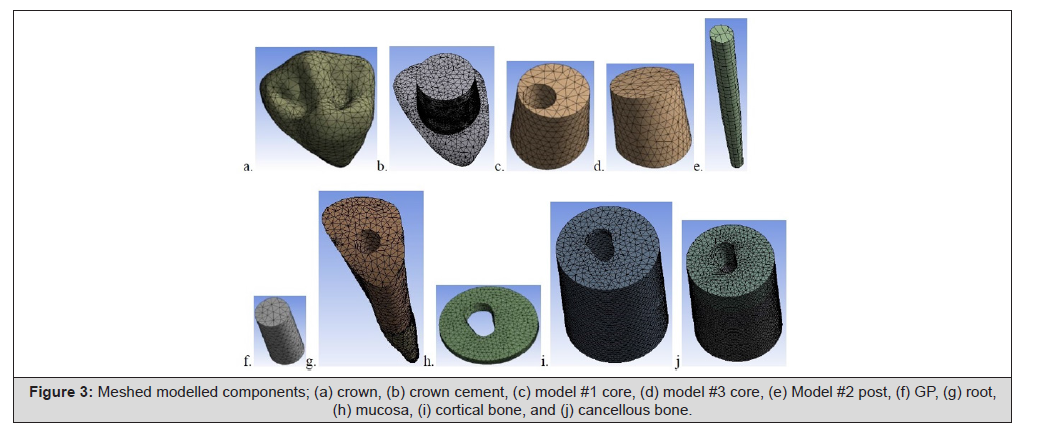
Figure 3:Meshed modelled components; (a) crown, (b) crown cement, (c) model #1 core, (d) model #3 core, (e) Model #2 post, (f) GP, (g) root, (h) mucosa, (i) cortical bone, and (j) cancellous bone.
The lowest area of the cortical bone cylinder was set to be fixed in place as the boundary condition. Then each model crown was subjected to two loading cases as; 100N compressive placed at buccal cusp tip, and distal marginal ridge, and 100N oblique at 45º with long axis of the tooth placed at buccal cusp tip [23] to have eighteen case studies to be discussed within this study. Solid modeling and finite element Linear static analysis was performed on a Workstation HP Z820 (Dual Intel Xeon E5-2670 v2 processors, 2.5 GHz, 64.0 GB RAM), using commercial multipurpose finite element software package ANSYS Workbench Version 16, (ANSYS Inc., Canonsburg, PA, USA), then results of these models were verified against similar studies [24,25], and showed good agreement.
Results
Eighteen case studies were performed and discussed within this research, as three models each with three different crown material that subjected to two loading cases. Sample of stress or deformation distributions are presented in Figure 4, while the comparisons between the extreme values of total deformation and Von Mises are presented in Figures 5 and 6 (Figure 4).
In Figure 5, under vertical loading, the comparison between the total deformation did not show significant differences (about 1μm). But there is a general trend based on crown material that, Lithium Disilicate (LD) crown and its underneath structures receiver the highest values of deformation, followed by Porcelain Fused to Metal (PFM), then Zirconia (Zr) crown and underneath structures showed the lowest values of total deformation. On the other hand, Von Mises stresses showed significant differences, where, on the crown body; Model #3 (2mm core material above post) received about 20% more stresses in comparison to Model #1 (0mm core material above post) and Model #2 was in between. In addition, PFM showed the lowest values while LD and Zr were nearly equivalent. Minor differences were recorded on cement and core, while all underneath structures were insensitive to change crown material or core material above the post (Figure 5).
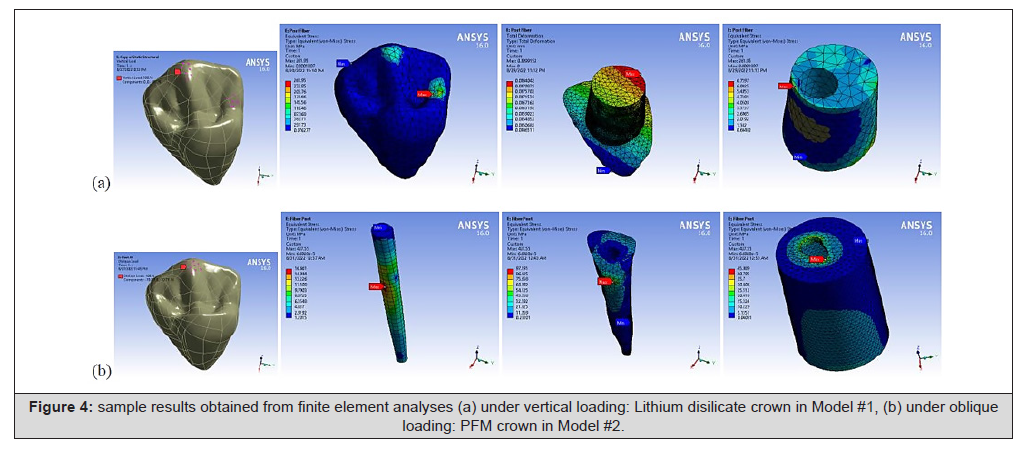
Figure 4:sample results obtained from finite element analyses (a) under vertical loading: Lithium disilicate crown in Model #1, (b) under oblique loading: PFM crown in Model #2.
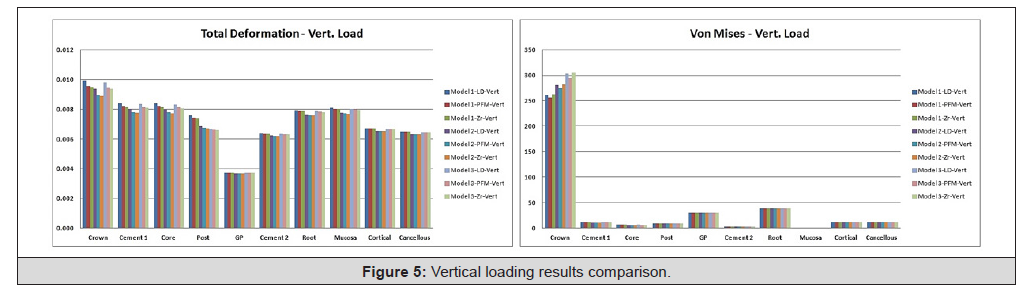
Figure 5:Vertical loading results comparison.
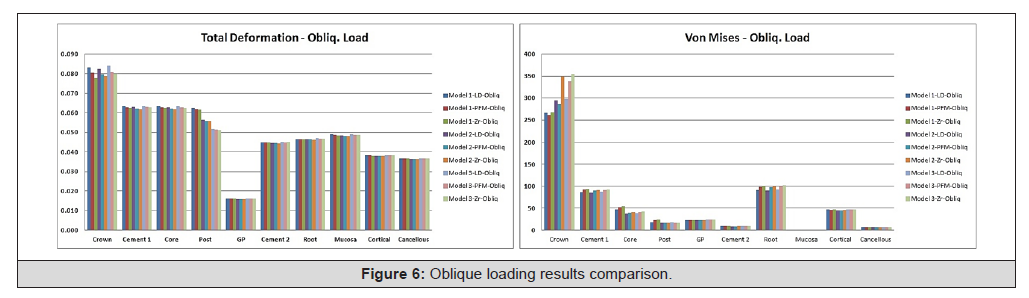
Figure 6:Oblique loading results comparison.
As presented in Figure 6, total deformation under oblique loading increased about seven to eight times in comparison to vertical loading cases, and Von Mises stresses were approximately doubled, except crown body showed about 10% more stresses (Figure 6).
Total deformation, under oblique loading (Figure 6), trend that Zr crown showed the lowest values on crown body and all underneath structure, followed by PFM then LD is still valid as in case of vertical loading. The three models showed comparable values on all components, except crown and post bodies. The same crown body material above longer post will deform more the two others by about 6%. Similarly, longer post deforms more the shorter one, with extreme value of about 10 microns (about 20%) more total deformation. Longer post (Model #1) supports the crown better, that it showed less Von Mises stress on crown body than the shorter ones (Model #2, and Model #3). That, the shortest post (Model #3) showed the highest stresses on crown body. On the other hand, longer post exerts more stresses on cement, core, and post in comparison to shorter ones. Zirconia crown body received the highest level of stresses, followed by PFM, while the lowest values appeared on LD crown body. Finally, it was noticed that all stresses and deformations extreme values were within the physiological limits of all structures materials under both loading conditions.
Discussion
The coronal post length and whether it makes direct contact with final restoration or not has not been investigated. In the current study, the focus was on the effect of coronal post length and crown materials and examine the stress on that structure. Based on the current results, the null hypotheses were rejected, as different crown materials performed differently, particularly with different force application direction. In addition, the extension of the post inside the core affected the force distribution. FEA is an engineering tool used for understanding and determining the stress and strain behavior of the materials used in restoration [26]. The use of the geometry of the dental structure and the mechanical properties of each element offers the chance to make numerical analysis through the software. As variables under the study can be easily altered, and the experiment simulation can be developed for complex problems without the need for human material and offers maximum standardization for more accurate results [27,28].
Posts with a similar modulus of elasticity to dentine (e.g., fiber posts) can distribute stresses more evenly along the post-dentine interface and cause less root fractures [29-32]. Materials with a low modulus of elasticity bend more under load and tend to fail before causing root fracture [33,34]. This constitutes a protective mechanism for the tooth structure. Many studies showed high clinical survival and success rates for teeth restored with fiber posts [35-37]. Cagidiaco, et al. [38] concluded that fiber posts outperform metal posts in treatment of root canal treated teeth. Loading in this study was done in vertical and oblique manner to simulate the direction of the masticatory forces [39]. Under both loading conditions, deformations on any part exhibited very small differences (negligible) with changing of the crown and core material height above the post. Where, the general trend was; Zr crown showed the lowest values of deformation on crown body and all underneath structure, followed by PFM then LD that showed the highest values. When the crown material was more rigid, the distribution of the applied load on the underneath structures was better, especially under vertical loading.
These results were in agreement with a systematic review done by Sailer, et al., [40]. They reported that all-ceramic single crowns made from leucite or lithium disilicate, densely sintered alumina, glass-infiltrated alumina, and densely sintered zirconia exhibit similar 5-year survival rates as metal-ceramic single crowns. However, crowns fabricated from feldspathic or silica glass-ceramics were reported to have significantly lower 5-year survival rates compared with metal-ceramic crowns. Furthermore, the survival rate of zirconia-based crowns and Porcelain- Fused–to-Metal (PFM) was similar on posterior teeth [41,42]. The results of this study were inconsistent with another stress analysis study that done by Izabrela Moris and her colleagues which concluded that metallic coping showed a better performance despite its unfavorable esthetics, suggesting as an appropriate material for prosthetic restoration of endodontically treated teeth regardless the condition of remaining root and dentin [10].
Regarding the post length, it was found that longer post support the crown better, exhibiting less Von Mises stress on the crown body compared to the shorter ones. On the other hand, the longer post received higher bending stress under oblique loading, which is transferred to the surrounding structures (cement layer and core). In other words, whatever the crown material, longer the post showed the less stresses on crown body in comparison to the other two cases. The increase of the core material above the post with a reduced the length of the post, may cause an increase in stresses on cement layer and the core buildup. It is noteworthy to mention that the limitation of the present study included a limited computer simulation that cannot reproduce the dehydration and loss of collagen in ligament experienced after endodontic treatment, which may affect the resistance to tooth fracture [43]. Additionally, the materials were assumed as isotropic, homogeneous and linearly elastic, except for the glass fiber post. Another limitation was static loading that does not simulate the real forces occurring in oral cavity. Hence, further studies simulating resistance to fracture and thermal and mechanical cycling loading are required to predict the biomechanical performance of endodontically treated teeth, restored with fiber post with different lengths and different coping materials.
Conclusions
Based on the results of this study the following conclusions may be deducted:
1. More rigid or harder crown materials are preferred, that can
favorably distribute the applied load to the underneath core
buildup structures.
2. The tooth root, gutta percha, mucosa, cancellous and cortical
bone were not affected by post length and crown material under
vertical and oblique loading.
3. As the core material above the post decreased (longer post),
the less exerted stresses on crown body, cement, core and post.
4. Harder crown material in combination with longer post (less
core material above post) might represent the best option as
the exerted stresses were within the physiological limit
Ethical Approval
This research did not require ethical approval and followed the Helsinki declaration.
The authors declare that they have no conflict of interest.
References
- Al-Omiri MK, Mahmoud AA, Rayyan MR, Abu-Hammad O (2010) Fracture resistance of teeth restored with post-retained restorations: an overview. J Endod 36(9): 1439-1449.
- Hofsteenge JW, Fennis WMM, Kuijs RH, Özcan M, Cune MS, et al. (2023) Clinical survival and performance of premolars restored with direct or indirect cusp-replacing resin composite restorations with a mean follow-up of 14 years. Dent Mater 39(4): 383-390.
- Mazumdar P, Choudhury SR (2020) Moisture Analysis of Endodontically Treated and Sound Teeth Using Moisture Analyser and Indirect Gravimetric Analysis. J Evol Med Dent Sci 9(1): 3721-3725.
- Adanir N, Belli S (2008) Evaluation of different post lengths’ effect on fracture resistance of a glass fiber post system. Eur J Dent 2(1): 23-28.
- Shafiei F, Tavangar MS, Ghahramani Y, Fattah Z (2014) Fracture resistance of endodontically treated maxillary premolars restored by silorane-based composite with or without fiber or nano-ionomer. J Adv Prosthodont 6(3): 200-206.
- Raju SR, Kilaru KR, Haridas KK, Naik B, Shetty K, et al. (2014) Evaluation of the flexural strength of carbon, quartz, and glass fiber-based posts. Saudi Endod J 4(1): 109-114.
- Mohan SM, Gowda EM, Shashidhar MP (2015) Clinical evaluation of the fiber post and direct composite resin restoration for fixed single crowns on endodontically treated teeth. Med J Armed Forces India 71(3): 259-264.
- Kainose K, Nakajima M, Foxton R, Wakabayashi N, Tagami J (2015) Stress distribution in root filled teeth restored with various post and core techniques: effect of post length and crown height. Int Endod J 48(11): 1023-1032.
- Bhuva B, Giovarruscio M, Rahim N, Bitter K, Mannocci F (2021) The restoration of root filled teeth: a review of the clinical literature. Int Endod J 54(4): 509-535.
- Moris I, Moscardini CA, Moura LKB, Silva-Sousa YTC, Gomes EA (2017) Evaluation of stress distribution in endodontically weakened teeth restored with different crown materials: 3D-FEA analysis. Braz Dent J 28(6): 715-719.
- Schwass DR, Lyons KM, Purton DG (2013) How long will it last? The expected longevity of prosthodontic and restorative treatment. NZ Dent J 109(3): 98-105.
- Dikicier S, Korkmaz C, Atay A (2022) Surface roughness and characteristics of CAD/CAM zirconia and glass ceramics after combined treatment procedures. BMC Oral Health 22(1): 524.
- Alshabib A, Abid Althaqafi K, AlMoharib HS, Mirah M, AlFawaz YF, et al. (2023) Dental Fiber-Post Systems: An In-Depth Review of Their Evolution, Current Practice and Future Directions. Bioengineering (Basel)10(5): 551.
- Valenti M, Valenti A (2015) Retrospective survival analysis of 110 lithium disilicate crowns with feather-edge marginal preparation. Int J Esthet Dent 10(2): 246-257.
- Tartaglia GM, Sidoti E, Sforza C (2015) Seven-year prospective clinical study on zirconia-based single crowns and fixed dental prostheses. Clin Oral Investing 19(15): 1137-1145.
- Nakamura K, Harada A, Inagaki R, Kanno T, Niwano Y, et al. (2015) Fracture resistance of monolithic zirconia molar crowns with reduced thickness. Acta Odontol Scand 73(8): 602-608.
- Kimble P, Stuhr S, McDonald N, Venugopalan A, Campos MS, et al. (2023) Decision Making in the Restoration of Endodontically Treated Teeth: Effect of Biomimetic Dentistry Training. Dent J (Basel) 11(7): 159.
- Arya A, Grewal MS, Arya V, Choudhary E, Duhan J (2023) Stress distribution of endodontically treated mandibular molars with varying amounts of tooth structure restored with direct composite resin with or without cuspal coverage: A 3D finite element analysis. J Conserv Dent 26(1): 20-25.
- Nodehi D, Moraditalab A, Shafiee S, Sekandari S, Ahrari F (2022) Fracture Resistance of Endodontically Treated Premolars Reconstructed by Traditional Casting and CAD-CAM Milling Post and Cores. Int J Dent :6736303.
- Shaikh SY, Mulani S, Shaikh SS (2018) Stress Distribution on Root Dentin Analogous to Natural Teeth with Various Retentive Channels Design on the Face of the Root with Minimal or No Coronal Tooth Structure: A Finite Element Analysis. Contemp Clin Dent 9(4): 630-636.
- Wysocki MA, Doyle S (2022) Enhancing biomedical data validity with standardized segmentation finite element analysis. Sci Rep 12(1): 9860.
- Al Qahtani WMS, El-Anwar MI (2018) Advanced computational methods in bio-mechanics. Open Access Maced J Med Sci 6(4): 742-746.
- (2022) Wheeler’s Dental Anatomy, Physiology and Occlusi - 9780323638784 | Elsevier Health.
- Sabit AM, Mohsen C, El-Anwar MI, Metawally MM (2017) An in-vitro study of crowned endodontically treated immature permanent central incisor reinforced with different types of aesthetic posts using FEA. IOSR JDMS 16(1): 82-87.
- Du JK, Lin WK, Wang CH, Lee HE, Li HY, et al. (2011) FEM analysis of the mandibular first premolar with different post diameters. Odontology. 99(2):148-154.
- Hughes TJR, Cottrell JA, Bazilevs Y (2005) Isogeometric analysis: CAD, finite elements, NURBS, exact geometry and mesh refinement. Comput Methods Appl Mech Eng 194(1): 4139-4195.
- Toksavul S, Zor M, Toman M, Güngör MA, Nergiz I, et al. (2006) Analysis of dentinal stress distribution of maxillary central incisors subjected to various post-and-core applications. Oper Dent 31(1): 89-96.
- Shaikh SY, Shaikh SS (2018) Direct linear measurement of root dentin thickness and dentin volume changes with post space preparation: A cone-beam computed tomography study. Contemp Clin Dent 9(1): 77-82.
- Assif D, Oren E, Marshak BL, Aviv I (1989) Photoelastic analysis of stress transfer by endodontically treated teeth to the supporting structure using different restorative techniques. J Prosthet Dent 61(5): 535-543.
- de Castro Albuquerque R, De Abreu Polleto LT, Fontana R, Cimini Jr CA (2003) Stress analysis of an upper central incisor restored with different posts. J Oral Rehabil 30(9): 936-943.
- Kharouf N, Pedullà E, Plotino G, Hamdi Jmal, Mohammed-El-Habib Alloui, et al. (2023) Stronger than Ever: Multifilament Fiberglass Posts Boost Maxillary Premolar Fracture Resistance. J Clin Med 12(8): 2975.
- Gaintantzopoulou MD, Farmakis ET, Eliades GC (2018) Effect of Load Cycling on the Fracture Strength/Mode of Teeth Restored with FRC Posts or a FRC Liner and a Resin Composite. Biomed Res Int: 9054301.
- Popescu AD, Popa DL, Nicola AG, Dascălu IT, Petcu C, et al. (2022) Post Placement and Restoration of Endodontically Treated Canines: A Finite Element Analysis Study. Int J Environ Res Public Health 19(15): 8928.
- de Oliveira Paixão FC, Rodrigues VP, George R, Souza S de FC, Paiva AEM, et al. (2022) Compressive strength of premolars restored with ceramic crowns and supported with a glass fiber post using different luting agents. Saudi Dent J 34(7): 617-622.
- Ferrari M, Ferrari Cagidiaco E, Pontoriero DIK, Ercoli C, Chochlidakis K (2022) Survival Rates of Endodontically Treated Posterior Teeth Restored with All-Ceramic Partial-Coverage Crowns: When Systematic Review Fails. Int J Environ Res Public Health 19(4): 1971.
- Ferrari M, Cagidiaco MC, Goracci C, Vichi A, Mason PN, et al. (2007) Long-term retrospective study of the clinical performance of fiber posts. Am J Dent 20(5): 287-291.
- Chisnoiu A, Picos A, Lascu L, Negucioiu M, Chisnoiu R, et al. (2019) Dentists' perspectives on the reconstruction possibilities of a non-vital tooth. Med Pharm Rep 92(4): 387-392.
- Cagidiaco MC, Goracci C, Garcia-Godoy F, Ferrari M (2008) Clinical studies of fiber posts: a literature review. Int J Prosthodont 21(4): 328-336.
- Aldesoki M, Bourauel C, Morsi T, El-Anwar MI, Aboelfadl AK, et al. (2022) Biomechanical behavior of endodontically treated premolars restored with different endocrown designs: Finite element study. J Mech Behav Biomed Mater 133:105309.
- Sailer I, Makarov NA, Thoma DS, Zwahlen M, Pjetursson BE, et al. (2015) All-ceramic or metal-ceramic tooth-supported fixed dental prostheses (FDPs)? A systematic review of the survival and complication rates. Part I: Single crowns (SCs). Dental Materials. 31(6): 603-623.
- Ozer F, Mante FK, Chiche G, Saleh N, Takeichi T, et al. (2014) A retrospective survey on long-term survival of posterior zirconia and porcelain-fused-to-metal crowns in private practice. Quintessence Int 45(1): 31-38.
- Rinke S, Kramer K, Bürgers R, Roediger M (2016) A practice‐based clinical evaluation of the survival and success of metal‐ceramic and zirconia molar crowns: 5‐year results. J Oral Rehabil 43(2): 136-144.
- Yıkılgan İ, Bala O (2013) How can stress be controlled in endodontically treated teeth? A 3D finite element analysis. The Scientific World Journal: 426134.




 We use cookies to ensure you get the best experience on our website.