
Research Article 
 Creative Commons, CC-BY
Glutamate and Gaba in Serum of Children with Psycho-Verbal Disorders of Different Genesis
*Corresponding author: Dakukina TV, Institute of Bioorganic Chemistry, National Academy of Sciences of Belarus, Minsk, Belarus
Received:May 31, 2025; Published:June 06, 2025
DOI: 10.34297/AJBSR.2025.27.003546
Abstract
Neurotransmitter systems in the brain, such as the glutamatergic and GABAergic systems, have attracted much attention in terms of
their involvement in the pathogenesis of various psycho-verbal disorders in children.
The aim of this work is to study the levels of glutamate and gamma-aminobutyric acid (GABA) in the blood serum of children with
autism and other neurodevelopmental disorders.
A group of children aged 3–12 years with autism and other neurodevelopmental disorders associated with organic brain damage, as
well as a control group of practically healthy children, were examined. An increased content of glutamate and a decreased content
of GABA in the blood, increased glutamate/GABA ratio were found in patients with psycho-verbal disorders of various genesis, compared
to a group of healthy children. These shifts were evident in both children with autism and those with psycho-verbal disorders
associated with organic brain damage. Therefore, it was concluded that the predominance of excitatory neurotransmission over
inhibitory neurotransmission is not only characteristic of autism, but also of other psycho-verbal disorders in children.
Keywords:Autism, Disorders of Psycho-Verbal Development, Glutamate, Gamma-Aminobutyric Acid, Organic Brain Damage
Introduction
Children with autism spectrum disorders (ASD) are characterized by a lack of social interaction, limited interests, and stereotypical behavior. ASD occurs in 1-2% of children, and 5 times more often in boys than in girls. Effective medicines for the treatment of these disorders do not exist today, and the available correction methods are mainly aimed at reducing the severity of symptomatic manifestations. There is information about the genetic and environmental risk factors for ASD, however, the neural mechanisms involved in the pathogenesis of these disorders remain unclear [1].
An imbalance between excitatory (glutamate-mediated) and inhibitory (GABA-mediated) neurotransmission in the brain is considered as one of the possible pathophysiological mechanisms. Glutamate and GABA play an important role in the early development of the nervous system, participating in the processes of neurogenesis, proliferation, migration, cell differentiation, synapse formation, regulation of cytoarchitecture, etc [2]. An imbalance of these mediators can lead to impaired maturation and functioning of the central nervous system (CNS). Studies performed by proton magnetic resonance spectroscopy revealed an increase in glutamate levels in a number of brain regions of children with autism: the anterior cingulate gyrus, the left striatum, the left hemisphere of the cerebellum, and the left frontal lobe [3]. Changes in the content of glutamate and glutamine were found in the cortex and basal ganglia of children, as well as in the basal ganglia of adults with autism. In addition, an increase in the expression of the genes of the glutamate transporters EAAT1 and EAAT2 and the AMPA 1 receptor in the cerebellum of individuals with autism was found, which indicates an increase in extracellular glutamate concentration and increased postsynaptic activity of glutamatergic synapses [4]. According to Blatt G.F., et al. (2011) data the expression of glutamate and GABA receptors is impaired in the autopsy material of the brain of patients with ASD [5]. Disruption of the mechanisms responsible for glutamate homeostasis leads to the accumulation of excessive amounts of glutamate, resulting in increased calcium levels, mitochondrial abnormalities, oxidative stress, and eventually atrophy and death of nerve cells. This condition is known as glutamate-induced excitotoxicity. It is assumed that the hyperglutamatergic state plays a role in the pathogenesis of a number of CNS diseases, including disorders of neurodevelopment and is associated with inflammatory processes in the brain [6].
To date, there is also accumulated evidence of inhibition of GABAergic neurotransmission in autism. Thus, an analysis of brain regions of patients with autism showed a decrease in the number of GABAergic neurons in the cerebellum, a decrease in the activity of key enzymes involved in the transformation of glutamate into GABA (GAD65 and GAD67), a decrease in the density of gamma-aminobutyric acid type A (GABA-A) receptors in certain areas of the hippocampus, pathological changes in the deep nuclei of the cerebellum rich in gabaergic neurons. In addition, chromosomal abnormalities associated with autism have been identified, such as changes in chromosome 15q11-q13, which contains three candidate genes for the GABA-A receptor subunit and the a5GAMK-A receptor subunit gene [7].
A number of studies indicate a violation of the permeability of the blood-brain barrier (BBB) in ASD associated with neuroinflammation and changes in the expression of genes that ensure its integrity [8]. As a result, CNS mediators can enter the peripheral blood and serve as potential biomarkers for the early diagnosis of these disorders. At the same time, an imbalance in the glutamate/GABA system in a number of brain regions is also observed in other disorders of mental and speech development, including those caused by organic brain damage [9], however, these data are few.
The Aim of the Work
Is to study the content of glutamate and GABA in the blood serum of children with autism and other neurodevelopmental disorders.
Materials and Methods of Research
A clinical and psychological diagnosis of the features of neurodevelopment in children who were treated at the Russian National Research Center for Mental Health of the Ministry of Health of the Republic of Belarus (Minsk, Belarus) was carried out. The survey was conducted using the CARS (Childhood Autism Rating Scale), the MADISON methodology and neuropsychological tests (standardized and validated at the A. R. Luria Research Center for Pediatric Neuropsychology), as well as using magnetic resonance imaging data.
The following groups were formed, including children aged 3-12 years: autism (47 people; 8 girls, 39 boys); a comparison group – children with speech disorders due to organic brain damage (49 people; 10 girls, 39 boys) and a control group – practically healthy children (40 people; 14 girls, 26 boys). The comparison group consisted of children with the following diagnoses according to ICD 10: disorders of psychological development (F80-F89) – 25 people, disorders of activity and attention (F90-F99) – 4 people, other mental disorders caused by damage and dysfunction of the brain or somatic disease (F06) – 20 people.
The glutamate content in the blood serum of children was determined by enzymatic spectrophotometric method using Sigma- Aldrich MAK004 kits (US). GABA was determined by enzyme immunoassay using commercial Finetest kits (China).
Statistical processing of the obtained data was carried out in the Statistica 10.0 program using nonparametric methods, since the distribution was not normal. The results are presented mainly in the form of medians (Me) and percentiles (25; 75). The Mann-Whitney criterion was applied when comparing statistical characteristics. The ROC analysis was performed using the MedCalc software application.
Results
The main clinical symptoms of patients in both groups were disorders of verbal and non-verbal communication, behavior and motor skills. In children with autism, they occurred with a higher frequency than in the group of children with speech disorders as a result of organic brain damage (Table 1) and were more pronounced, which was reflected by statistically significantly higher average scores on the CARS scale (35 (31; 38) and 26 (20; 31), respectively). The data in (Table 1) indicate that both groups of patients are characterized by similar speech disorders and concomitant diagnoses (epilepsy, attention deficit hyperactivity disorder (ADHD)).
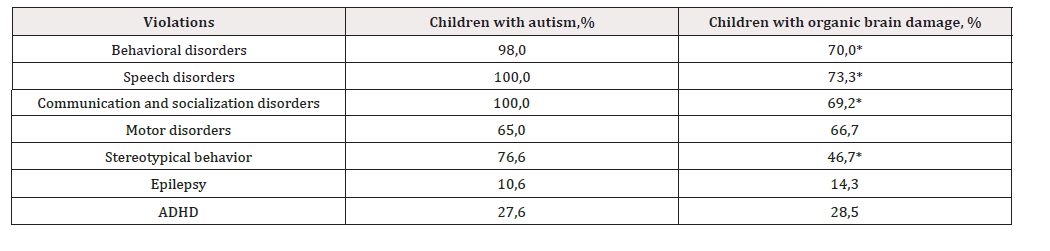
Table 1: Speech disorders and concomitant diagnoses typical for children with autism and organic brain damage.
Note: * − significant differences between the groups, P < 0.05.

Table 2: The content of glutamate and GABA in the blood serum of children of the studied groups.
Note:* − significant differences from the control, P < 0.05.
When determining glutamate and GABA in the blood serum of children, the results presented in (Table 2) were obtained.
As can be seen from the table, children with speech disorders from both groups showed a statistically significant increase in glutamate levels and a decrease in GABA levels in the blood serum compared with the control group. The ratio of glutamate and GABA in the blood of patients was also significantly higher than in healthy children.
To determine the diagnostic significance of the studied indicators for the early detection of autism in children, a ROC analysis was performed to determine the area under the ROC curve (AUC), as well as to assess sensitivity and specificity. The results are shown in (Figures 1 and 2). The ROC analysis was aimed at finding a threshold value for the indicators that would allow the studied child to be classified as a group of patients with ASD or a group of healthy children.
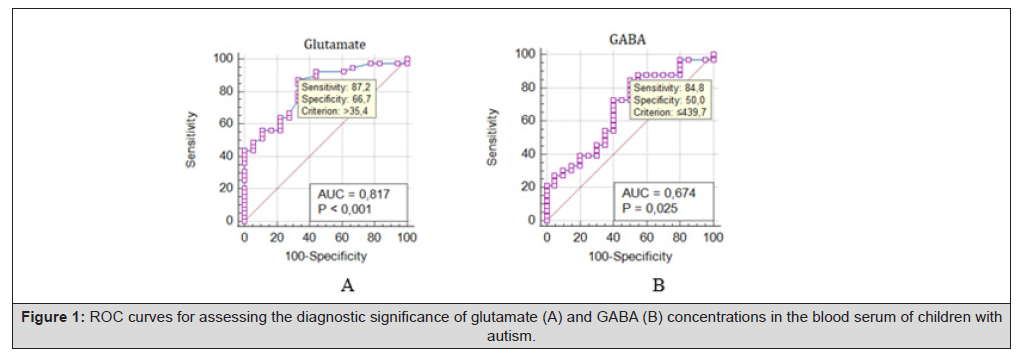
Figure 1:ROC curves for assessing the diagnostic significance of glutamate (A) and GABA (B) concentrations in the blood serum of children with autism.
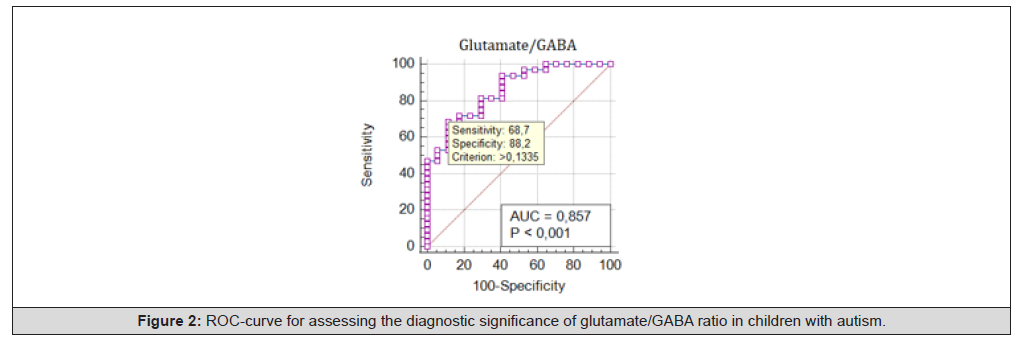
Figure 2:ROC-curve for assessing the diagnostic significance of glutamate/GABA ratio in children with autism.
As can be seen from the graphs, the studied indicators do not have sufficient specificity and sensitivity to use them for the diagnosis of autism in children. Increased levels of glutamate and decreased GABA in the blood are also characteristic of other neurodevelopmental disorders.
Discussion. Studies have shown that children with speech disorders, both as a result of organic brain damage and with autism, have similar symptoms, differing in severity and frequency of manifestations. The main diagnosis in both groups is often accompanied by other pathologies, such as epilepsy and ADHD.
The results obtained regarding the increased glutamate content in the blood serum of children with ASD compared with the control group coincide with the data of other authors [10, 11]. According to Ghanizadeh, et al. An increase in the level of glutamate in the blood is typical not only for people with autism, but also for their parents, siblings [11]. There are contradictory data in the literature regarding the GABA content and the glutamate/GABA ratio in the blood. Thus, El-Ansary, et al. in a study on children aged 3-15 years, showed an increase in glutamate and GABA in the blood in autism: it was found to be 57 and 36%, respectively, as well as a 13% increase in the ratio of glutamate/GABA [12]. Similar results were obtained by Al-Atrash, et al. [13]. At the same time, Yu, et al [14]. obtained the opposite results, revealing a decrease in GABA concentration in the blood of children with autism and establishing a direct relationship between the GABA content and the severity of symptoms. A decrease in GABA levels in the blood in autism was also revealed by Gül, et al [15].
Our data on the content of glutamate and GABA in blood serum correspond to the information available in the literature on increased excitatory neurotransmission and suppression of inhibitory processes in the brain in ASD [3,7]. However, the analysis of ROC curves showed insufficiently high specificity of the studied indicators for the diagnosis of autism. Similar changes in glutamate and GABA in the blood turned out to be characteristic, including for a group of children with speech disorders associated with organic brain damage. Consequently, the formation of neurodevelopmental disorders is based on common mechanisms, which is confirmed by the similarity of their clinical manifestations.
Current literature data suggests that children with ASD often have concomitant diagnoses, including ADHD and epilepsy. Thus, according to various literature data, ADHD in autism occurs in 30- 80% of cases, while about 20% of children with ADHD have social interaction disorders that meet the criteria of ASD [16]. A joint analysis of several genetic variants in candidate gene sets revealed genetic associations confirming the involvement of excitatory and inhibitory neurotransmitter systems in the development of ADHD and the severity of ASD symptoms [16]. Increased excitability of neurons is also an important aspect in the pathogenesis of epilepsy. The incidence of epilepsy in autism ranges from 5 to 46% and increases with age [17]. Our research has shown that ADHD and epilepsy occur with equal frequency in both autism and speech disorders caused by organic brain damage. Probably, the wide range of functions performed by glutamate and GABA in the central nervous system determines the variety of clinical manifestations and the presence of comorbid conditions associated with their imbalance in the brain.
Conclusion. Thus, our data confirm the important role of an imbalance of excitatory and inhibitory neurotransmission mediated by glutamate and GABA in the pathogenesis of neurodevelopmental disorders, including ASD and speech disorders in organic brain damage in children.
References
- Horder J, Petrinovic MM, Mendez MA, Bruns A and Takumi T, et al (2018) Glutamate and GABA in autism spectrum disorder—a translational magnetic resonance spectroscopy study in man and rodent models. Transl Psychiatry 8(1):1-11.
- Vicini S (2008) The role of GABA and glutamate on adult neurogenesis. J Physiol 586(16): 3737-3738.
- Hassan TH, Abdelrahman HM, Fattah NRA, Masry NME, Hashim HM et al (2013) Blood and brain glutamate levels in children with autistic disorder. Research in Autism Spectrum Disorders 7(4): 541-548.
- Rojas DC (2014) The role of glutamate and its receptors in autism and the use of glutamate receptor antagonists in treatment. J Neural Transm 121(8): 891-905.
- Blatt GJ and Fatemi SH (2011) Alterations in GABAergic biomarkers in the autism brain: research findings and clinical implications. The Anatomical Record 294(10): 1646-1652.
- Nicosia N, Giovenzana M, Misztak P, Mingardi J and Musazzi L (2024) Glutamate-mediated excitotoxicity in the pathogenesis and treatment of neurodevelopmental and adult mental disorders. Int J Mol Sci 25(12): 6521 1-22.
- Zhao H. Mao X, Zhu C, Zou X, Peng F et al (2022) GABAergic system dysfunction in autism spectrum disorders. Front Cell Dev Biol 9(781327): 1-16.
- Gozal E, Jagadapillai R, Cai J and Barnes GN (2021) Potential crosstalk between sonic hedgehog-wingless-related integration site signaling and neurovascular molecules: implications for blood brain barrier integrity in autism spectrum disorder. J Neurochem 159(1): 15-28.
- Mamiya PC, Arnett AB and Stein MA (2021) Precision medicine care in ADHD: the case for neural excitation and inhibition. Brain Sciences 11(1): 91-103.
- Khalifa D, Shahin O, Salem D and Raafat O (2019) Serum glutamate was elevated in children aged 3-10 years with autism spectrum disorders when they were compared with controls. ActaPaediatr 108(2): 295-299.
- Ghanizadeh A (2013) Increased glutamate and homocysteine and decreased glutamine levels in autism: a review and strategies for future studies of amino acids in autism. Dis Markers 35(5): 281-286.
- El-Ansary A and Al-Ayadhi L (2014) GABAergic/glutamatergic imbalance relative to excessive neuroinflammation in autism spectrum disorders. J Neuroinflammation 11: 1-9.
- Al-Otaish H, Al-Ayadhi L, Bjørklund G, Chirumbolo S, Urbina MA (2018) Relationship between absolute and relative ratios of glutamate, glutamine and GABA and severity of autism spectrum disorder. Metab Brain Dis 33(3): 843-854.
- Yu Z, Hongyan LU, Wei T, and Qiuxia W (2022) Peripheral blood biological markers for early screening in children with autism spectrum disorder. Chinese Journal of School Health 43(6): 916-919.
- Gül MA, Umudum FZ, Kurt N, Özgeriş FB and Türkeri ON, et al (2023) Serum amino acid levels in children with autism spectrum disorder by liquid chromatography-mass spectrometry/mass spectrometry. Arch Basic Clin Res 5(1) 208-217.
- Naaijen J, Bralten J, Poelmans G, Glennon JC, Franke B, (2017) GABAergic gene sets in attention-deficit/hyperactivity disorder: association to overlapping traits in ADHD and autism. Transl Psychiatry 7(1): 1-7.
- Voronkova KV, Kholin AA and Pylaeva OA (2012) Epilepsy and autism. Autism and Developmental Disorders 10(2): 1-17.




 We use cookies to ensure you get the best experience on our website.