
Research Article 
 Creative Commons, CC-BY
Individual Determinants of Data Analytics Adoption in Maternal Health Programs: A Study among Health Managers in Kericho and Vihiga Counties, Kenya
*Corresponding author: Pepela Wanjala, Department of Health Management and informatics, Kenyatta University, Nairobi City, Kenya.
Received: June 24, 2025; Published: July 22, 2025
DOI: 10.34297/AJBSR.2025.27.003597
Abstract
Introduction: Data analytics has the potential to transform maternal health programming by enabling more informed decision-making, improving patient outcomes, and optimizing health system operations. Despite these benefits, the adoption of data analytics tools remains limited in many settings, including Kenya, which hampers efforts to reduce maternal mortality and enhance service delivery. Theoretical frameworks such as the Diffusion of Innovation (DOI) and the Technology Acceptance Model (TAM) shed light on the factors influencing technology adoption, including perceived usefulness, ease of use, relative advantage, and complexity. However, little is known about how individual determinants affect healthcare providers’ willingness to adopt data analytics within maternal health programs. Therefore, this study aims to examine the personal characteristics that influence the adoption of data analytics for maternal programming in Kenya.
Methods: This quantitative study used the Diffusion of Innovation and Technology Acceptance Models to explore factors influencing data analytics adoption in maternal health in Kenya. The research involved healthcare providers and managers from Kericho and Vihiga Counties, selected based on health coverage and maternal mortality rates. Data was collected through pre-tested questionnaires, with reliability ensured through pilot testing and statistical validation. Data analysis involved descriptive statistics and advanced tools like R and Power BI, with ethical approval obtained from relevant authorities and informed consent from participants.
Findings: The findings show that individual demographic factors significantly influence the adoption of data analytics in maternal health programs. Education level, years of experience, age, gender, and professional cadre all showed notable differences in adoption rates, with higher education, greater experience, and senior roles being associated with increased engagement. Specifically, education and years of service had the strongest impact, while gender and age showed less consistent effects. Statistical analyses confirmed that more educated, experienced, and senior cadre health managers are more likely to adopt data analytics, highlighting the importance of targeted capacity-building and training across demographic groups to enhance data utilization in maternal health initiatives.
Conclusion: The study findings highlight the need for targeted training to improve data analytics adoption. Additionally, tailored interventions addressing education, gender and years of experience are essential for strengthening data-driven decision-making and improving maternal health outcomes.
Keywords: Data analytics, Maternal health, Adoption, Diffusion of Innovation, Technology Acceptance Model, Education, Gender, Experience
Introduction
Data analytics in healthcare is the systematic analysis of health data to improve patient care, optimize operational processes and inform strategic decisions [1]. It goes beyond simply collecting information and involves the interpretation of complex datasets to reveal insights that can lead to more efficient, effective and personalized care. Data analytics in maternal health programming is employed at various levels including foundational, descriptive, diagnostic, predictive, prescriptive, and cognitive, each representing a progressive level of data utilizations [2]. It has become increasingly important with new tools and technology emerging to capture and make use of data and procedures that health systems process daily [3]. Despite the opportunities presented by data analytics, the weak adoption of data analytics in maternal health programs is hindering the effective delivery of care and potentially increasing maternal mortality [4].
Several theoretical frameworks have been used to try and understand the user’s acceptance of technology and the factors that influence adoption. The Diffusion of Innovation (DOI) theory has been used to examine the factors influencing the adoption of innovations [5]. According to Rogers (2003), five key characteristics of innovation include relative advantages, trialability, complexity, observability, and compatibility [6]. These factors all play a crucial role in determining the adoption or rejection of new technology. Relative advantage refers to the benefits an innovation offers over existing practices, while trialability pertains to the ability to experiment with the innovation on a limited basis. Complexity involves the difficulty associated with understanding and using innovation, observability highlights how visible the results are to others, and compatibility relates to how well the innovation aligns with current values, practices, and processes [7].
In addition to DOI, the Technology Acceptance Model (TAM) has been extensively used to explain technology adoption across various fields [8-10]. Derived from the Theory of Reasoned Action (TRA) [11], TAM suggests that two main factors influence users’ decisions to accept and use new systems: perceived usefulness, which is the belief that using a particular system will enhance job performance, and perceived ease of use, which reflects the belief that the system can be used effortlessly [12]. Over time, TAM has been refined to include additional variables that help better predict and explain technology adoption behaviors beyond just perceived usefulness and perceived ease of use.
Additionally, personal attributes such as technological self-ef ficacy, attitudes towards innovation, and perceived benefits can significantly shape an individual’s willingness to embrace data analytics. Previous studies in technology adoption indicate that perceived self-efficacy has significant influence on individual intention [13-15]. Conversely, resistance to change, lack of familiarity with data analytics, and fears of complexity or job insecurity may hinder adoption at the individual level. Moreover, perceptions of usefulness and ease of use, core concepts from the Technology Acceptance Model (TAM), are shaped by personal experiences, knowledge, and attitudes toward technology. Personal attributes such as a healthcare providers digital self-efficacy, attitudes toward innovation, and perceived usefulness of data analytics shape their willingness to embrace these tools. Similarly, healthcare providers with positive perceptions of data analytics’ usefulness and ease of use concepts central to the Technology Acceptance Model, are more likely to experiment with and integrate these tools into maternal health programming.
There is hardly any literature focusing on the individual factors affecting the adoption of data analytics for maternal health programming in Kenya. Technology acceptance factors among healthcare providers need to be explored to better inform adoption of data analytics on maternal programming. As such, the objective of this study is to examine the individual characteristics that influence the adoption of data analytics for maternal programming in Kenya.
Methods
Study Design
This study utilized an interventional design that was quantitative in nature. We adopted the Diffusion of Innovation (DOI) theory and the Technology Acceptance Model (TAM) to explore individual characteristics affecting the adoption of data analytics for maternal health programming. The DOI theory provided a lens to examine how the characteristics of the data analytics innovation such as perceived relative advantage, complexity, and compatibility affected its dissemination and uptake among health managers and practitioners. Meanwhile, the TAM was employed to explore individual-level determinants, particularly focusing on personal perceptions of usefulness and ease of use, which influence users’ willingness to adopt new technologies.
Study Population
The study population comprised members of the County and Sub-County Health Management Teams, senior managers, key partners and healthcare providers in Kericho and Vihiga Counties, Kenya.
Sampling
Sampling for the counties was purposive and was based on the criteria of universal health index coverage and high maternal mortality rates, specifically focusing on areas not included among the fifteen-priority high-impact maternal interventions. The national average for Universal Health Coverage (UHC) is 78.95%. Kericho, with a UHC index of 71.93%, and Vihiga, with a UHC index of 75.44%, were selected as they fell within the specified range and were in the third quintile. A total of 167 healthcare providers from both counties were interviewed.
Data Collection Tools
Pre-coded closed-ended questionnaires were utilized to gather quantitative data from participants.
Pre-Testing of Data Collection Tools
The Kajiado Sub-County Health Management Team participated in pre-testing the tools. This process aimed to familiarize the research team with the data collection instruments and to estimate the time required to complete each questionnaire, ensuring clarity and objectivity in the questions. Following pre-testing, unclear questions were revised. The primary researcher closely supervised the assistants during this exercise.
Reliability
To ensure high reliability, Cronbach’s alpha coefficient was calculated using SPSS Version 28 to assess the consistency of multiple questions within the instrument. Interview and focus group discussion guides were evaluated for accuracy and completeness using a test-retest method, with necessary adjustments made to improve flow and coherence. Enumerators were debriefed during the pilot testing to ensure understanding and adequacy of the study tools. Revisions were made to reflect corrections identified during this process.
Data Analysis
Data cleaning involved identifying and correcting inconsistencies and errors to enhance data quality. Analysis included running frequencies, creating scatter plots, and generating pivot tables while removing duplicates. Data entry was conducted using a designed view in ODK and Microsoft Excel 2010/2016, with validations performed using pivot tables to check for coding errors. Each questionnaire and its responses were coded for easier analysis. Additional statistical analyses were performed using R, advanced Excel, Power BI, and Tableau.
Ethical Considerations
Approval for the study was obtained from Kenyatta University’s Board of Postgraduate Studies, the Ethical Review Committee, and a research permit from NACOSTI. A permission letter was secured from the Ministry of Health, Office of the Director General, to grant access to the counties. Participants provided signed informed consent, and measures were taken to ensure confidentiality by keeping their identities anonymous.
Results
This section provides results by social demographics characteristics of the respondents’ according to age group, sex, education level, by cadre and years of experience into the service. The results indicate significant variability across these characteristics. Education level showed a highly significant effect (Levene’s test p-value= 0.001), suggesting differences in data analytics adoption based on educational attainment. Similarly, years of experience or age also appeared to influence adoption, although the result was marginally non-significant (p=0.058). Gender, however, did not show a significant difference in adoption levels. The overall hypothesis (H1), which posited that individual characteristics influence data analytics adoption, was strongly supported by the data (p=0.000). These findings suggest that education and experience are critical social demographic factors affecting the likelihood of adopting data analytics in maternal health programs, while gender appears to have less influence. See table 1 below.
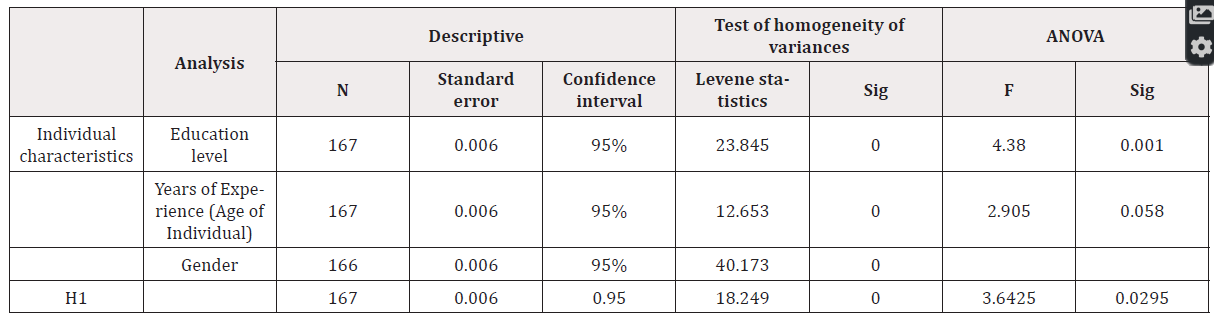
Table 1: Individual Characteristics.
Table 2 presents the frequencies and T-test analysis of the individual characteristics influencing adoption of data analytics among the health managers. The findings indicate that individual characteristics significantly influence the adoption of data analytics in maternal health programming among health managers. The data show notable differences based on gender, age, education level, cadre, and years of service. Females (55.1%) were slightly more than the males (44.9%), and both genders demonstrated significant disparities in their adoption levels, with males having a mean difference of 1.55 (p=0.000). Age was also a critical factor, with older managers (above 40 years) showing higher adoption rates compared to younger groups, reflected in a mean difference of 3.37 (p=0.000). Education level strongly impacted adoption, with those holding higher qualifications (diplomas, degrees, and postgraduate studies) more likely to adopt data analytics than those with lower education levels; this was supported by a significant mean difference of 2.83 (p=0.000). The cadre of health managers also played a role, with specialized roles such as clinical officers, nurses, and health records officers showing higher adoption levels, indicated by a mean difference of 5.89 (p=0.000).
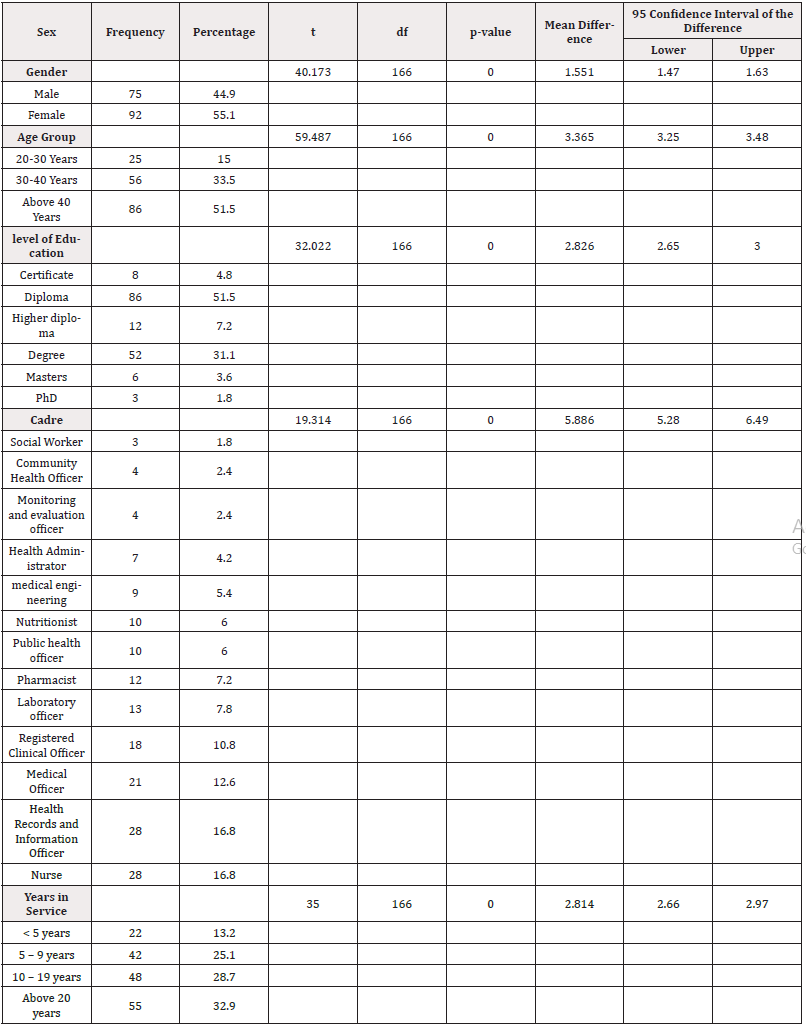
Table 2: Individual characteristics influencing adoption of data analytics in maternal health programming.
Additionally, years of service significantly influenced adoption, with those having over 10 years of experience demonstrating greater engagement with data analytics, as evidenced by a mean difference of 2.81 (p=0.000). The study findings suggest that more experienced, more educated, and senior cadre health managers are more likely to adopt data analytics in their practice, highlighting the importance of targeted capacity-building efforts to enhance adoption across different demographic groups. See Table 2 above.
Figure 1 illustrates the distribution of years of work experience among health managers in the study. The data shows that a significant proportion, approximately one-third (33 percent), of the health managers have accumulated over 20 years of professional experience, indicating a high level of expertise and familiarity with the health system. Additionally, 29 percent of the managers have between 10 to 19 years of experience, further reflecting a substantial pool of experienced personnel. When combined, those with more than 10 years of experience, accounting for 61 percent of the sample demonstrate a high level of preparedness and capacity for leadership and succession planning within their respective institutions. Conversely, a smaller segment, about 13 percent, of the health managers have less than five years of experience, suggesting that this group may still be in the early stages of their careers and may require targeted capacity-building to enhance their skills and confidence in adopting new innovations such as data analytics.
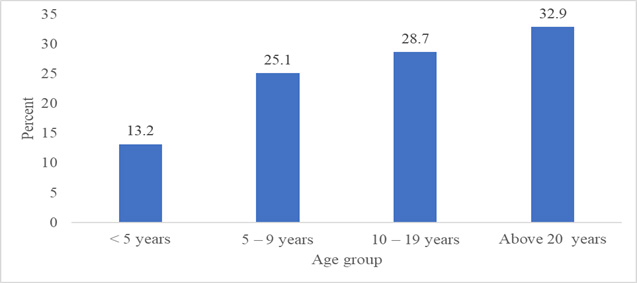
Figure 1: Years in Service of health managers.
Figure 2 illustrates the education levels among health managers across the different cadres. The data shows that the most common cadres were nurses and health records and information officers, collectively accounting for 17 individuals. These were closely followed by medical officers (13), clinical officers (11), laboratory officers (8), and pharmacists (7). The least represented cadres included medical social workers, community health officers, and monitoring and evaluation officers, each with only 2 individuals. Overall, more than half (52 percent) of the health managers held diplomas, indicating a significant proportion of mid-level qualification holders. Additionally, approximately 31.1 percent of the managers possessed university degrees, reflecting higher education attainment, while only 1.8 percent had earned PhDs.
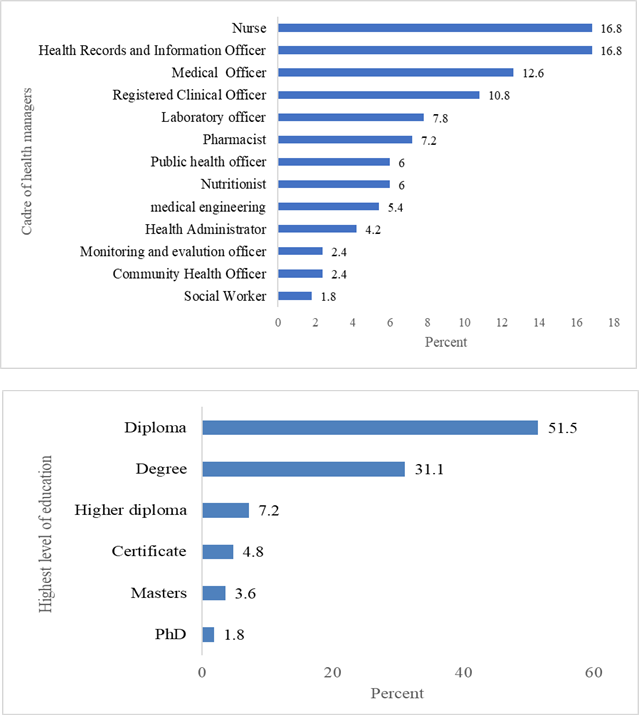
Figure 2: Health Managers’ respondents by cadre and by Level of Education.
The analysis in Table 3 below reveals that staff training across different levels of education has a significant positive impact on data analytics adoption in maternal health programs. The means, which are consistently close to 1 across all educational categories, ranging from certificate to PhD, indicate a generally high level of training effectiveness. The ANOVA results show a significant difference between groups (F=4.38, p=0.001), suggesting that the level of staff training influences data quality outcomes. Notably, the homogeneity of variances (Levene’s test p=0.000), indicates variability in data across groups. These findings imply that investing in targeted staff training at all levels of education is crucial for improving data quality in maternal health initiatives.
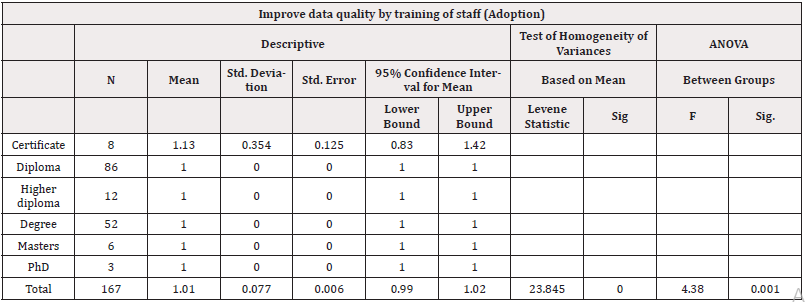
Table 3: Training of staff by levels of education improved data quality in maternal health.
The analysis on table 4 below indicates that the mean values are very close to 1 for all age categories, with the youngest group (20-30 years) having a slightly higher mean of 1.04. The ANOVA results show an F-value of 2.905 with a p-value of 0.058, which is marginally above the conventional significance threshold of 0.05. This suggests that while there may be some variation in perceptions among age groups, these differences are not statistically significant. The homogeneity of variances (Levene’s test p=0.000) indicated variability across groups.
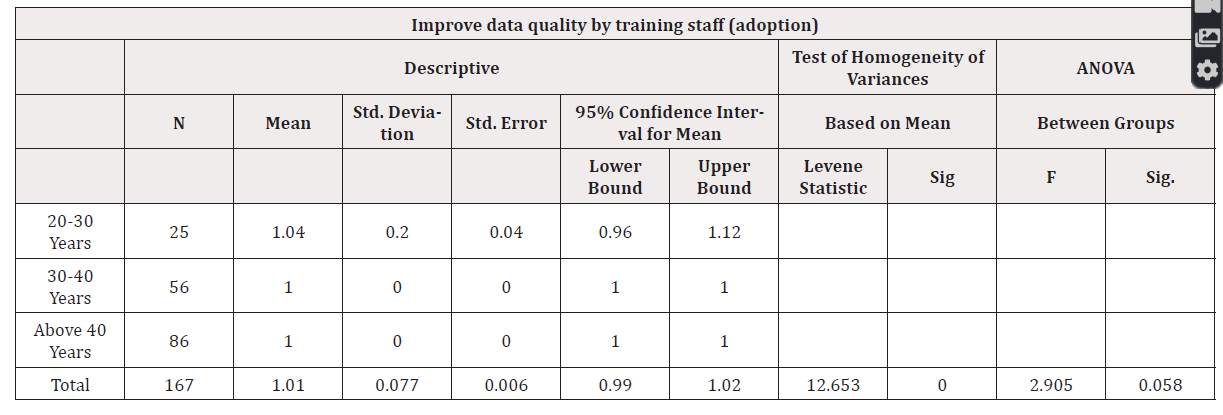
Table 4: Age of trained health managers improved data quality in maternal health programming.
Discussion
The findings of this study have significant implications for policy and practice aimed at strengthening data analytics adoption in maternal health programming. The findings suggest that individual characteristics, such as education level, years of experience, and professional cadre play a vital role in influencing the uptake of data analytics as they shape healthcare providers’ willingness and ability to utilize data for decision-making and innovation for better maternal health outcomes.
The reported influence of education levels on data analytics adoption aligns with findings from Rob, et al., (2024), emphasizing that education initiatives are crucial for enhancing data quality and utilization as it positively affects perceptions of the usefulness and ease of use of Big Data Analytics (BDA) tools [16]. Importantly, perceived usefulness plays a key role in shaping the intention to adopt BDA, which in turn leads to adoption. Creating such an environment is essential for translating positive intentions into sustained, practical application, ultimately improving data-driven decision-making processes. This study finding is comparable to Lleras-Muney, et al., (2002) who reported that highly educated workers tend to adopt new technologies faster than those with less education in developed countries [17].
Additionally, the observed variability in educational levels suggests that investing in data analytics training from diploma to postgraduate levels is vital for enhancing data accuracy, completeness, and timeliness. This finding is also consistent with that of Mwangi, et al., (2023) who emphasized that human capital development is crucial in the successful implementation of public health interventions. A workforce with extensive institutional knowledge, particularly those with higher educational qualifications and longer service years, possesses the skills and confidence necessary to champion data use within their organizations [18]. However, previous studies, such as those by Laumer, et al., (2016), underscore that the mere presence of experienced staff is insufficient; continuous capacity-building interventions, including targeted training, mentorship, and supportive supervision, are necessary to sustain data quality improvements [19]. Hamed, et al., (2024) as indicated that factors IT expertise, and organizational resources insignificantly influenced adoption in Saudi Arabia [20]. On the other hand, Kim, et al., (2021) suggests that healthcare organizations aiming at successfully implementing a new data analytics infrastructure should provide well-designed training that enables trainees to develop specific learning and performance goals as well as improve relevant skills and ability to use new tools in the United States [21].
The findings also indicate that age influences data analytics adoption, with those having over 10 years of experience demonstrating greater engagement with data analytics. This finding is in contrast with that of Choi, et al., [22] who reported that older adults consistently adopt technology at lower rates compared with younger age groups which compromise their ability to derive benefits offered by technology [22]. Hamed et al. [20] as indicated that factors IT expertise, and organizational resources insignificantly influenced adoption in Saudi Arabia [20] on the other hand, Kim et al. [21] suggests that healthcare organizations aiming at successfully implementing a new data analytics infrastructure should provide well-designed training that enables trainees to develop specific learning and performance goals as well as improve relevant skills and ability to use new tools in the United States [21].
This contrast implies that in specialized or work-related environments, accumulated expertise and familiarity with data-driven tools may offset age-related reluctance, emphasizing that factors like professional experience and contextual exposure can significantly shape technology adoption patterns. Consequently, these insights advocate for a more differentiated approach when analyzing technology adoption, recognizing that age alone is insufficient to predict engagement; instead, experience and other specific factors play critical roles.
There was no significant difference in adoption levels across the genders within this study. This finding contrasts with the results of Cai, et al., [23], who suggested that women’s participation in technology tends to be limited due to societal perceptions that technology is a male-dominated field [23]. Similarly, Kamalu et al. [24] suggests that there exists gender-gap in computer and internet use in favor of males over females because of differences in factors such as socialization, modeling, anxiety or levels of comfort in technology- use and gender-related stereotypes in the United States [24]. This finding suggests that, in this context, gender-related barriers are less pronounced or have been mitigated, possibly due to targeted efforts to promote gender equity in health systems or changing social norms.
In conclusion, this study highlights the importance of gender, education, experience, and professional roles in promoting data analytics adoption in maternal health. It suggests that targeted training and capacity-building are also essential to improve data quality and utilization. Findings also indicate that extensive experience can offset age-related barriers, while gender does not significantly influence adoption in this context. Tailored interventions that consider these factors are crucial for enhancing data-driven decision- making and improving maternal health outcomes.
Study limitations
The participants in this study did not actively engage with data analytics technologies in real-world settings, so their responses primarily reflect their perceived willingness to adopt, rather than their actual usage patterns. While collecting prospective data on how data analytics technologies are used in practice would offer a more comprehensive understanding, this approach was beyond the scope of the current research.
Acknowledgements
We owe the greatest gratitude to the following individuals Dr Rucha, Dr Amoth, Prof. Odhiambo-otieno, Dr Njuguna, Lyaka, Japheth, Ambuso, Keter, Mboro, Mumo and all Kenyatta University cohort students for insightful contributions towards this research.
Conflicts of Interest
None.
References
- (2025) Data Analytics in Healthcare: Transforming Patient Care Delivery | Park University. Accessed: Apr: 22.
- (2025) The Data Science Maturity Model - Data Science PM. Accessed: Apr: 22.
- M I Razzak, M Imran, and G Xu (2020) Big data analytics for preventive medicine. Neural Comput Appl 32(9): 4417-4451.
- Sarina Till, Mirriam Mkhize, Jaydon Farao, Londiwe Deborah Shandu, Livhuwani Muthelo, et al. (2023) Digital Health Technologies for Maternal and Child Health in Africa and Other Low- and Middle-Income Countries: Cross-disciplinary Scoping Review with Stakeholder Consultation. J Med Internet Res 25: 42161.
- S Alqahtani and SF Wamba (2012) Determinants of RFID technology adoption intention in the Saudi retail industry: An empirical study. Proceedings of the Annual Hawaii International Conference on System Sciences 4720-4729.
- (2003) Diffusion of Innovations, 5th edition, Everett M. Rogers. Free Press, New York, NY, 551 pages.
- (2025) Understanding Diffusion of Innovations 2, Accessed: Apr. 22.
- (2025) An Empirical Enquiry into the adoption of Open-Source Software by individual users in France. Accessed: Apr. 22.
- R Boumediene and P Kawalek (2008) Association for Information Systems AIS Electronic Library (AISeL) Predicting SMEs. Willingness to Adopt ERP, CRM, SCM & E-Procurement Systems.
- H Hao, R Padman, B Sun, and R Telang (2018) Quantifying the Impact of Social Influence on the Information Technology Implementation Process by Physicians: A Hierarchical Bayesian Learning Approach. Information Systems Research 29(1): 25-41.
- (2025) Theory of Reasoned Action - an overview | ScienceDirect Topics.
- (2025) Technology Acceptance Model - an overview | ScienceDirect Topics.
- Bandura and EA Locke (2003) Negative self-efficacy and goal effects revisited, J Appl Psychol 88(1): 87-99.
- Bandura A (1994) Self-efficacy. In V. S. Ramachaudran (Ed.), Encyclopedia of human behavior 4: 71-81.
- (2025) Bandura’s Social Learning Theory & Social Cognitive Learning Theory.
- MA Al Rob, MNM Nor, and Z Salleh (2024) The Role of Training in Big Data Analytics Adoption: An Empirical Study of Auditors Using the Technology Acceptance Model. Electronic Journal of Business Research Methods 22: 2, pp. 30-45.
- (2025) The Effect of Education on Medical Technology Adoption: Are the More Educated More Likely to Use New Drugs.
- JW Mwangi and N Munyua (2023) The Effect of Training and Development on Productivity of Employees in Listed Investment Firms in Kenya. International Journal of Business Management, Entrepreneurship and Innovation 5(2): 1-12.
- (2025) INFORMATION QUALITY DIMENSIONS: TWO EXPLORATORY CASE STUDIES WITH ENTE by Sven Laumer.
- AA Hamed, SM Dandan, AA Farah, and SA Barakat (2024) The effect of organisational factors on adopting big data analytics in supply chain operation among companies in Saudi Arabia: The moderating role of resistance to change. Journal of Transport and Supply Chain Management 18.
- BJ Kim and M Tomprou (2021) The Effect of Healthcare Data Analytics Training on Knowledge Management: A Quasi-Experimental Field Study. J Open Innov Technol Mark Complex 7(1): 60.
- NG Choi and D M Dinitto (2013) The digital divide among low-income homebound older adults: Internet use patterns, ehealth literacy, and attitudes toward computer/internet use. J Med Internet Res 15: 5: 2645.
- Z Cai, X Fan, and J Du (2017) Gender and attitudes toward technology use: A meta-analysis. Comput Educ 105: 1-13.
- NC Kamalu and HO Kamalu (2025) The Role of Gender in Technology Adoption and Diffusion in the United States. European Journal of Science, Innovation and Technology 5(2): 53-68.




 We use cookies to ensure you get the best experience on our website.