
Review Article 
 Creative Commons, CC-BY
Investigating Rice Farmers’ Knowledge and Awareness of Food Safety Risks Relating to Pesticide Misuse and The Factors That Impact Non-Compliance with Pesticide Labels in Region 5 & 6, Guyana
*Corresponding author:Gomathinayagam Subramanian, Division of Agriculture, University of Guyana Berbice Campus, Tain, Guyana.
Received:June 04, 2025; Published:June 11, 2025
DOI: 10.34297/AJBSR.2025.27.003554
Abstract
This studies examines the level of knowledge and awareness among rice farmers in Regions 5 and 6 of Guyana regarding the potential food safety risks related to pesticide misuse, as well as the factors that contribute to their failure to follow the instructions on pesticide labels. The study utilized a mixed-methods approach, incorporating quantitative data gathered through structured questionnaires and qualitative insights obtained from interviews. A total of 336 rice farmers were studied to evaluate their understanding of pesticide-related food safety risks, their adherence to regulations, and the influence of educational background and external advisories on their compliance with pesticide label. The findings from this research study indicate that 82.6% of rice farmers in Region 5 are aware of the potential food safety risks associated with pesticide misuse which is considered a high level of awareness. However, Region 6 showed a moderate level of awareness where only 31.6% were aware. Furthermore, when assessing rice farmers’ knowledge, both Regions 5 and 6 portrayed a moderate level of knowledge of these risks with mean scores of 2.83 and 2.23 respectively. Nevertheless, substantial gaps in adherence to pesticide labels were observed due to factors such as technical terms used on labels and insufficient training. The results also revealed that farmers who are aware of government regulations showed greater compliance with pesticide label instructions than those who were not aware. Moreover, farmers with higher levels of education possess greater knowledge of pesticide misuse. Overall, although most farmers possess awareness and knowledge about the potential hazards, a holistic strategy that includes targeted education campaigns, improved extension services and dissemination of information is essential for enhancing adherence and guaranteeing food safety.
Keywords:Food Safety, Risk, Pesticide Misuse, Rice Farming, Guyana, Compliance
Introduction
Guyana has a tropical climate characterized by temperatures that usually fluctuate between 25°C and 29°C. The climate in Guyana follows a clear pattern, with a rainy season occurring from May to June and November to January and a dry season lasting from July to October (Guyana Office for Investment 2023) [7]. The political system is a republic, with the president serving as the chief of state and the prime minister as the head of government. Guyana’s economy is predominantly traditional, with most of the population involved in subsistence agriculture. The allocation of resources is determined using rudimentary methods. Guyana is a constituent of the Caribbean Community.
In 2022, Guyana’s economy witnessed substantial expansion, with the nominal Gross Domestic Product (GDP) surging to USD 15.36 billion, reflecting a remarkable 57.80% increase compared to the previous year. Furthermore, the real Gross Domestic Product (GDP), which accounts for inflation, reached USD 4.61 billion. The economic growth was predominantly propelled by the oil and gas industry, agriculture, mining (mainly gold and bauxite), the services sector, and the contributions from forestry and fisheries [16].
Guyana is the third largest agricultural economy in the Caribbean. In 2019, agriculture accounted for 15.4% of total employment and contributed 16.8% to Gross Domestic Product (GDP) in 2020, according to the World Bank [2]. It plays a significant role in Guyana’s economy, whose industry is based on the traditional mono- cropping of essential export commodities such as rice and sugarcane (sugar). Agriculture is a primary revenue generator for most people living in rural areas and plays a crucial role in promoting an inclusive and diverse economy in the long term. The sector has experienced a significant shift, with non-conventional commodities gaining prominence, particularly in fruits, vegetables, and livestock. A significant portion of this progress has been achieved by exporting goods to the Caribbean, as well as to countries like the United Kingdom and Canada. Guyana has consistently excelled in meeting domestic production needs [1].
In Guyana, the rice sector is the second most significant agricultural industry. It ranks second in terms of foreign exchange profits, only behind sugar. Rice has long been a fundamental food item in Guyana’s agricultural community, serving as a staple throughout its history. The grain is not only consumed locally but also exported globally. The agricultural sector in Guyana is the most significant consumer of agricultural lands, with over 80,000 hectares currently being used for double cropping. Furthermore, it employs a significant portion of the working population than any other industry in the country, especially in rural communities [10].
Guyana has multiple prominent institutions that are committed to directly assisting rice farmers. These are the Guyana Rice Development Board (GRDB), the Guyana Rice Producers Association (RPA), the Guyana Rice Millers and Exporters Association (GRMEA), the Burma Rice Milling Complex, and the Caribbean Rice Association. They contribute to the development of the rice indus try by facilitating and providing training, subsidies, and extension services for rice farmers. Consequently, this strengthens Guyana’s rice industry, playing a crucial role in enhancing food security in the region. The partnership between these institutions and rice farmers is crucial for the ongoing enhancement and durability of rice production in Guyana [10].
Pesticides are synthetic chemical compounds designed to control and safeguard crops against pests. These include herbicides, insecticides, fungicides, rodents, molluscicides, and nematicides [11]. Pesticides are available in many formulations, determined by their intended target and function. Not all pesticides and formulations possess the same properties. Some substances can threaten a diverse range of unintended species, and specific administration methods are likely to drift away from the intended target [3]. Pesticides are widely acknowledged to significantly impact agricultural progress by minimizing crop losses and enhancing the quantity and quality of food that can be produced at a reasonable cost [15]. With the growth and industrialization of agriculture, farmers have increasingly depended on pesticides for large-scale mono-cropping techniques, which involves cultivating a single crop in vast amounts, season after season, on the same piece of land. Although there is a consensus regarding the detrimental effects of pesticides on human and environmental well-being, our industrial farming system relies on their continuous utilization [3]. In farming, pesticides are crucial for farmers to guarantee profitability and sustain their livelihoods. Nevertheless, the improper application of these substances can result in adverse consequences. These include ecological damage, encompassing the pollution of water sources, deterioration of soil quality, and harm to advantageous insect communities, such as bees, ladybird beetles and dragon flies [15]. The repercussions extend to human health, posing risks not only to those in direct contact with these chemicals in agricultural settings but also to excessive pesticide residue on crops, posing significant food safety risks and potential health hazards to consumers [5].
Rice cultivation is a major farming activity in Guyana, especially in five (5) of its ten (10) Administrative Regions. These are Region 2, Region 3, Region 4, Region 5 and Region 6 [8]. Out of these, Regions 5 and 6 are the most significant in the arena of rice production because of their distinct geographical terrain. Region 5 stretches from the east of the Mahaica River to the west bank of the Berbice River, encompassing a significant portion of the low coastal plain, as well as Intermediate Savannahs and Hilly Sand and Clay Regions In contrast, Region 6 stands out as the sole region in Guyana that incorporates all four (4) topographic landscape (Low Coastal Plain, Intermediate Savannahs, Hilly Sand and Clay Regions and Forested Highlands). Additionally, Region 6 is home to three towns: New Amsterdam, Rose Hall, and Corriverton. In terms of population, Region 5 has an approximate population of 49,498 making it less densely populated compared to Region 6, which has an approximate population of 142,839. These demographic differences contribute to the unique characteristics and dynamics of each region’s rice farming sector [9].
According to the Ministry of Agriculture (2023) [6], the Guyana Rice Development Board (GRDB) stated that the damage caused by insect pests, particularly the Oebalus poecilus commonly known as ‘Paddy bug’ or ‘Stink bug,’ is one of the major challenges facing the rice industry in Guyana.
In Guyana, the rice industry is the second largest consumer of pesticides. Pesticides are predominantly used to safeguard crops from pests and disease damage which can result in severe financial [4]. To control these, farmers apply pesticides as they deemed necessary with total disregard for the guidelines stated on the labels. The misuse of pesticide result in the crop being contaminated with high levels of pesticide residue. Moreover, crops with pesticide residue breaching the Maximum Residual Limit (MRL) will lead to a negative impact on human health and market rejection. Since Regions 5 and 6 are the major rice-producing regions, improper pesticide use can hamper sustainable agriculture and environmental safety.
Methodology
In this research study, a combination of Quantitative and Qualitative Methods was used. A structured questionnaire coupled with semi-structured interviews was used to collect data from farmers in the study area (Regions 5 and 6). Sampling was done using both stratified and cluster sampling to get a representative sample for rice farmers. The sample size was calculated using the finite population formula for rice farmers. The data collected was then entered into Excel. After this, SPSS statistical software was used to conduct the statistical analysis to observe the relationships between the study variables and to test the respective hypotheses.
In addition, that the focuses on conducting investigations in two (2) key regions of Guyana, namely Region 5 (Mahaica-Berbice) and Region 6 (East Berbice-Corentyne). In Region 5, there are three (3) specific cultivation areas - Mahaicony, Abary, and West Coast Berbice - with a total of 1,423 farmers. Similarly, Region 6 comprises two cultivation areas - Front lands and Black Bush Polder - with a total of 1,157 farmers (Rice Development Board 2023).
The combination of quantitative and qualitative methods was employed to accumulate data on the research topic. A structured questionnaire coupled with semi-structured interviews containing open-ended and close-ended questions was used to obtain information from the respondents. The quantitative section constituted a structured questionnaire with closed-ended questions. On the other hand, the qualitative part consisted of open-ended and observation questions. The qualitative method used in a research study is beneficial when coupled with quantitative methods.
The both stratified and cluster sampling was used to form a representative sample for rice farmers in Regions 5 and 6. According to Sedgwick (2013), one of the advantages of combining the two sampling methods is that the researcher can achieve variety while concentrating resources in a few zones. By stratifying the populations into the cultivation zones and then sampling the clusters in those cultivation zones, the sample will be easily collected, analyzed, and cost-effective. Furthermore, stratified cluster sampling will generate accurate results because it would minimize the risk of sampling bias as all the regions will have equal representation in the sample.
Calculating the required sample size for rice farmers in Regions 5 and 6 using the following formula that has the Finite Population Correction (FPC) applied. The formula for the sample size n:

where,

Zα/2 - is the critical value of the normal distribution at α/2 (using
a confidence level of 95%, α is 0.05 and the critical value is 1.96)
p - is the sample proportion (using 50% to give the maximum
required sample size) which is 0.5
MOE – desired margin of error (using 5%) 0.05
N – population size (2,580 is the total number of rice farmers
for regions 5 and 6)
Calculating X:

Calculating n:

Therefore, the total number of farmers (sample size) that must be interviewed from both regions 5 and 6 is 335. Note: this value may change to 336 if the figures per strata are rounded off.
Results
This section will present all the findings obtained through the comprehensive analysis of the information gathered across random interviews with the rice farmers situated in Regions 5 and 6 in Guyana. SPSS was used to generate all tables, figures and statistical analyses both descriptive and inferential. The graphic representations will detail the exact statistics gathered. The analysis conducted will enable the validity of many robust statistical assessments to thoroughly answer the research questions and test the hypotheses (Table 1).
From Table 1, it can be seen that the majority (92%) of the respondents are male while only 8% are female. The data also showed that 30.7% of the farmers are between the ages of 36-45, then 28.6% are over the age of 55, followed by 24.4% between 46- 55, then 13.1% are between 26-35 and lastly 3.3% under the age of 25. Meanwhile, for educational level, 56% of the participants have a primary education followed by 37.5% with secondary education and 6.5% with no education. When looking at their years of experience in cultivating rice, 35.7% had 11-20 years’ experience, followed by 22.9% having less than 10, then 21.1% having more than 30 and lastly 20.2% having 21- 30 years of experience. Looking at the size of their farms, 44% had medium-sized farms, followed by 40.5% having large farms and lastly 15.5% having small farms.
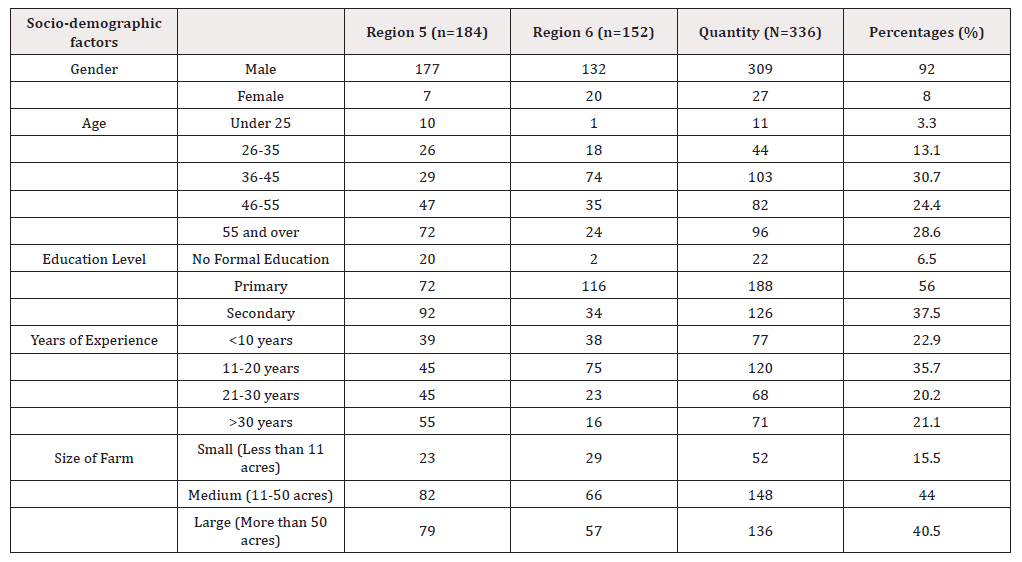
Table 1:Respondent Sociodemographic Background.
To assess the level of knowledge and awareness among rice farmers in Regions 5 and 6 of Guyana regarding the potential food safety risks associated with pesticide misuse. For this objective, the level of knowledge and the level of awareness are assessed separately. For the level of awareness of potential food safety risks, the farmers’ response to the question “Are you aware of any potential food safety risk associated with pesticide misuse” was used in their assessment. For level of knowledge, five (5) questions were used. This includes: do you know about pesticide misuse, does washing before cooking removes pesticide residue, can high levels of pesticide residues remain inside rice grains if not applied according to label, are aware of Government regulations, laws, policies, or advisories related to pesticide use and do you face any challenges understanding pesticide label (Table 2).

Table 2:Awareness Level of Potential Food Safety Risks Related to Pesticide Misuse among Rice Farmers in Regions 5 and 6, Guyana.
In total, 336 rice farmers in Regions 5 and 6 in Guyana were interviewed. According to Table 2, 59.5% of respondents are aware of the potential food safety risk related to the incorrect use of pesticides and the remaining 40.5% remain unaware. From Region 5 a total of 184 farmers were interviewed and 152 from Region 6. Within Region 5, 82.6% of the farmers said they are aware, thereby portraying a high level of awareness. In contrast, the level of awareness in Region 6 was moderate, as only 31.6% (48 farmers) acknowledged these hazards. Based on the data the level of awareness of rice farmers for both Region 5 and 6 was at a moderate level (Figure 1).
Figure 1 revealed that in Region 5, 60% of respondents are aware of cancer-related hazards, 29% of reproductive health concerns, and 11% of general health risks associated with pesticide overuse. In Region 6, 60% are aware of general health concerns, 27% of cancer-related risks, and 13% of reproductive health risks associated with pesticide overuse. The combined results for aware ness of health risks from pesticide misuse in Regions 5 and 6 are as follows: 52.0% of respondents are knowledgeable about cancer-related issues, 25.0% about reproductive health problems, and 23.0% about general health issues, out of a total of 200 responses (Table 3).
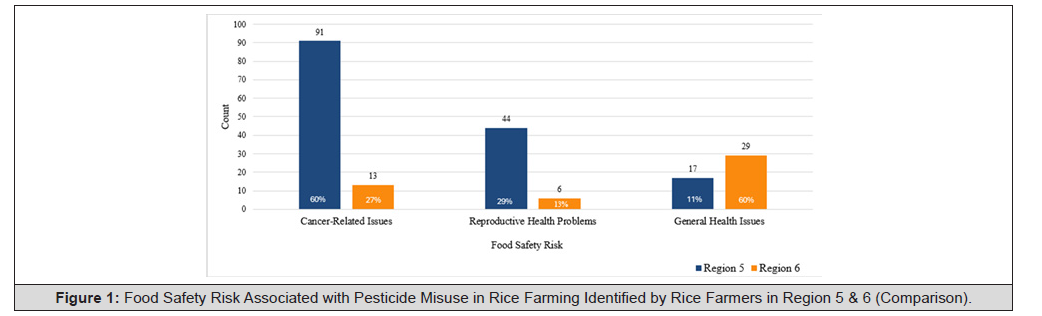
Figure 1:Food Safety Risk Associated with Pesticide Misuse in Rice Farming Identified by Rice Farmers in Region 5 & 6 (Comparison).
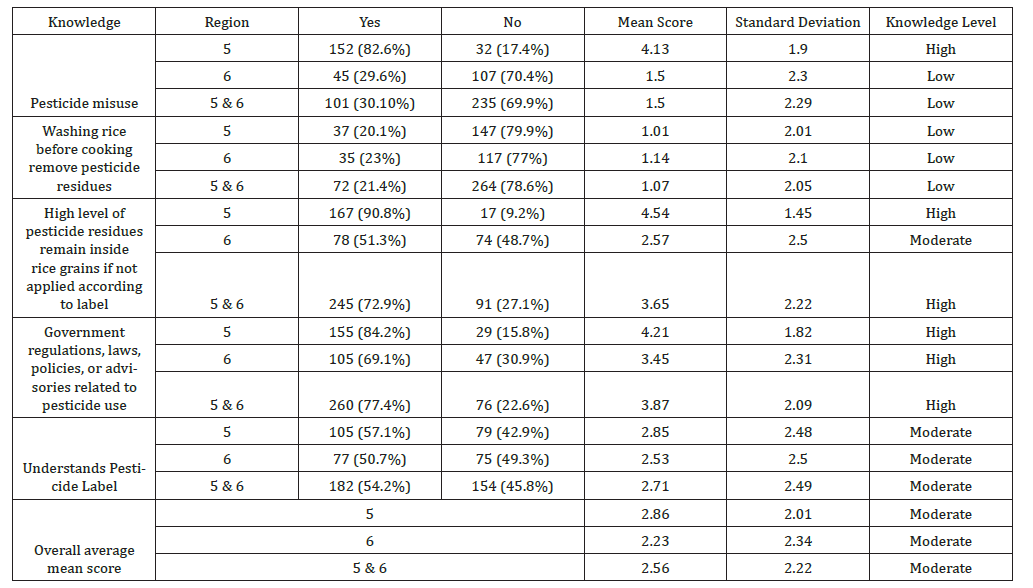
Table 3:Knowledge Level of Potential Food Safety Risks Related to Pesticide Misuse among Rice Farmers in Regions 5 and 6, Guyana.
Table 3 presents an overview of the knowledge of rice farmers in Region 5 and 6 as it related to food safety risks and pesticide misuse. For knowledge on pesticide misuse, a significant 82.6% of farmers in Region 5 said they know about pesticide misuse. When compared to Region 6, only 29.6% said they know about pesticide misuse. Within Region 5, 20.1% of farmers said that washing rice eliminates pesticides, while 80% disagreed. For Region 6, 23% of farmers said that washing rice eliminates pesticides, while 77% did not share this belief. When farmers were asked if high levels of pesticide residues can remain inside the grain if not applied according to the label, 90.8% said yes and 9.2% said no within Region 5. For Region 6, 51% of the farmers said yes and 49% responded by saying no. In regard to having knowledge of government regulations, laws, policies, or advisories related to pesticide use, 84.2% of farmers in Region 5 and 23% in Region 6 are knowledgeable. Furthermore, Table 3 shows that 93.5% of farmers in Region 5 have knowledge of pesticide labels compared to 50.7% in Region 6 (Figure 2).
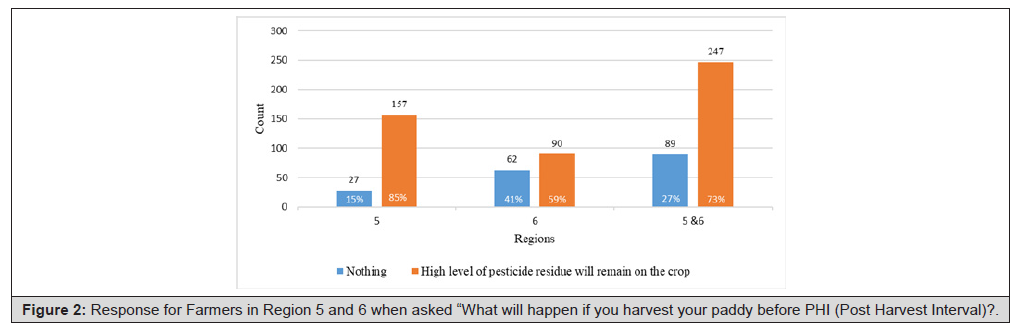
Figure 2:Response for Farmers in Region 5 and 6 when asked “What will happen if you harvest your paddy before PHI (Post Harvest Interval)?.
Figure 2 shows that 85% of rice farmers in Region 5 recognized that harvesting paddy before the Post-Harvest Interval (PHI) after spraying would result in high levels of pesticide residue remaining on the paddy, while 15% said nothing would occur. For Region 6, 59% of the farmers acknowledged that there would be elevated levels of pesticide residue, whereas 41% believed that no consequences would arise.
To identify the common pesticide misuse practices and non-compliance behaviors among rice farmers in the study area. To identify these practices rice farmers in both Region 5 and 6 were given a list of pesticide misuse practices and were asked to select which practices they would normally engage in.
Discussion
The findings will be explained and supporting evidence from other research studies will be compared and contrasted. The level of awareness and knowledge of potential food safety risks associated with pesticide misuse will be the main focus. This chapter will also delve into the demographic characteristics, common pesticide misuse practices and non-compliance behaviors among rice farmers in the study area, examining if education influences farmers’ compliance with pesticide labels and identifying the factors that contribute to non-compliance with pesticide labels among rice farmers in Regions 5 and 6. Furthermore, it will explain the potential impact of external advisories, such as from extension officers or fellow farmers, on farmers’ adherence to pesticide label recommendations.
The data presented in Table 2 revealed that the majority (92%) of the participants were male. This indicated that rice farmers across both regions are mostly males. In terms of age, 52% were above the age of 46 and 48% were below 46. This demonstrates that the population of rice farmers in Regions 5 and 6 is almost balanced with both the old and young generation engaged in rice farming. As it relates to education, 56% of farmers obtained a primary level of education and 37% obtained a secondary level. These demographic data are similar to a research study done by Jallow, et al. (2017) [5], where the farmers in the survey were mainly male and the educational data were similar with 69.2% of the farmers achieving primary or secondary.
The rice farmers across both Regions 5 and 6 have the basic educational background which gives them some ability to grasp information and knowledge easier than those without a formal education. With 37% of farmers having secondary education, this showed that this group of farmers are capable of easily accessing information and comprehending what is being taught to them at outreach programs and farm school activities. This is supported by a research study done by Sumudumali, et al. (2021) [14] where the authors stated that those who have a low level of education are less knowledgeable about pesticide misuse. Furthermore, as it relates to years of experience in rice farming, 76.7% of the farmers across both regions had more than 11 years of experience within the rice industry. When it comes to farming experience, 68% of the farmers in Kuwaiti had between 5-10 years’ experience which is associated with significant experience in farming (Jallow et al. 2017) [5]. When coupled with age, you can clearly see the relationships that exist between age and years of experience, with older farmers having more experience than farmers below the age of 46. With a majority of farmers having this amount of experience in rice farming, this is an indication that these farmers at some point in time received training on pesticide use from Guyana Rice Development Board (GRDB). On the other hand, when looking at farm size, 40 % of farmers had large farms (more than 50 acres) and 44% had medium size farms (11-50 acres). Having farm land in excess of 50 acres is a lot of responsibility and require a lot of planning and monitoring. The data revealed that 55.8% of farmers who cultivates more than 50 acres of land have in excess of 21 years of experience in rice farming. This confirms to the findings presented in a study where the authors stated that farmers gain knowledge through direct experience and observation which accumulates over time [12,13].
Conclusion
This study involving rice farmers in Regions 5 and 6 in Guyana has shown that there are differences in the level of knowledge, awareness, and adherence to label instructions regarding the use of pesticides and their impact on food safety throughout various demographics and regions. The revealed that farmers in Region 5 have a high level of awareness (mean score of 4.13) and farmers in Region 6 have a moderate level of awareness (mean score of 1.60) toward food safety risks associated with pesticide misuse. The majority (60%) of rice farmers in Region 5 identified cancer as the major food safety risk related to pesticide misuse while a majority in Region 6 (60%) stated general health issues. When assessing the level of knowledge, both Regions 5 and 6 displayed a moderate level toward the associated food safety risks, with an overall average mean score of 2.86 and 2.23 respectively. This significant variation in awareness may be a result of farmers’ level of education since Region 5 has 50% of its farmers attaining a secondary level of education compared to the 22% in Region 6 which can be the contributing cause to accessing and comprehending information regarding safe pesticide use. In terms of factors that lead to non-compliance with pesticide labels, six (6) factors were identified with technical terminology and insufficient training of pesticide labels being the most influential factors.
References
- CARDI (2022) Review of Guyana. Caribbean Agricultural Research and Development Institute.
- FAO (2022) Review of Diversification Perspectives of Guyana’s Agrifood Sector.
- Food Print (2018) Pesticides in Our Food System. FoodPrint.
- Guyana Rice Development Board (2016) Review of Extension.
- Jallow, Mustapha, Dawood Awadh, Mohammed Albaho, Vimala Devi, Binson Thomas (2017) Pesticide Knowledge and Safety Practices among Farm Workers in Kuwait: Results of a Survey. Int J Environ Res Public Health 14(4): 340.
- Ministry of Agriculture (2023) Rice Farmers Urged to Comply with Maximum Residue Limits for Pesticides Set by EU - GRDB. Ministry of Agriculture.
- Guyana Office for Investment (2023) Review of Agriculture Investment Portfolio. Go invest.
- Guyana Rice Development Board (2016) Review of Extension.
- Ministry of Local Development and Regional Development (2023) Review of Regional Development.
- National Development Strategy Committee (2010) NATIONAL DEVELOPMENT STRATEGY (2001-2010) a POLICY FRAMEWORK.
- Roser Max (2013) Pesticides. Our World in Data.
- Shammi Mashura, Ayesha Sultana, Nazmul Hasan, Md. Mostafizur Rahman, Saiful Islam, et al. (2020) Pesticide Exposures towards Health and Environmental Hazard in Bangladesh: A Case Study on Farmers’ Perception. Journal of the Saudi Society of Agricultural Sciences 19 (2): 161-173.
- Struelens, Quentin François, Marco Rivera, Mariana Alem Zabalaga, Raúl Ccanto, (2022) Pesticide Misuse among Small Andean Farmers Stems from Pervasive Misinformation by Retailers. Edited by Ashwani Kumar. PLOS Sustainability and Transformation 1 (6): e0000017.
- Sumudumali RGI, J MCK Jayawardana, IDUH Piyathilake, JLPC Randika, EPN Udayakumara, et al. (2021) What Drives the Pesticide User Practices among Farmers in Tropical Regions? A Case Study in Sri Lanka. Environ Monit Assess 193(12): 860.
- Tudi Muyesaier, Huada Daniel Ruan, Li Wang, Jia Lyu, Ross Sadler, et al. (2021) Agriculture Development, Pesticide Application and Its Impact on the Environment. Int J Environ Res Public Health 18(3): 1112.
- Worldometer (2022) Review of Guyana GDP.




 We use cookies to ensure you get the best experience on our website.