
Review Article 
 Creative Commons, CC-BY
Paradoxical Insomnia: Sleep Practice Indications
*Corresponding author: Kathy Sexton-Radek, Elmhurst University, Box 122, 190 Prospect Avenue, Elmhurst, Illinois, USA, 60126, United States
Received:June 23, 2025; Published:June 27, 2025
DOI: 10.34297/AJBSR.2025.27.003578
Abstract
Paradoxical insomnia, or sleep state misperception is a type of insomnia that is also referred to as chronic insomnia. Patients’ self-report (subjective) of their sleep quality differs from objective measures (all night polysomnogram, actiwatch). The number of minutes to fall asleep and total sleep time discrepancies are most common, a third sleep variable of the number of wakeups after sleep onset with time to fall back to sleep is included in the misperceptions as well. A case study is presented within the context of the diagnosis of Paradoxical insomnia diagnosis. The CBTI assessment, treatment and clinical impressions are presented.
Keywords:Sleep state misperception, Subjective Sleep Quality, Insomnia, Sleep Health
Paradoxical Insomnia: Sleep Practice Indications
Paradoxical insomnia is described as a mismatch between a patient’s perception of their sleep and their actual sleep. Sleep state misperception is another title given to this condition and disorder. In sleep practice, the presenting complaint of insomnia is not evaluated in all night polysomnographic studies given that the complaint is no sleep and the expense. It has been estimated the some 6% of the adult population meets criteria for insomnia [7,9]. Carskadon, Dement, Mitler, Guilleninault, Zarcone & Spiegal (1976) [2] reported substantial differences between patient reports and quantitatively measured sleep with an all night polysomnography. Bonnet and Arand (1997) [1] reported physiological activation in patients with paradoxical insomnia. Thus, heightening levels of heart rate, blood pressure and rapid breathing characteristics of physiological (autonomic system reactivity) have been found in this clinical population. Early scientific studies of insomnia patients, in general, identified elevated emotionality [5,14]. Studies to follow, such as Perlis, Giles, Buysse, Tu & Kupfer (1997) [8] identified heightened emotionality in Insomnia patients with prodromal symptoms of depression. Patients with this condition/disorder report extreme magnitudes between subjective and objective sleep measures of minutes to fall asleep, wakeups after sleep onset lengths and total sleep time. Fernandez-Mendoza, et al. (2011) [3] studied the subjective sleep logs and objective all night polysomnogram studies of insomnia and controls and found distinctions in terms of the underestimation of sleep duration. Further, the researchers reported anxious-ruminative traits with poor coping purposes amongst the participants diagnosed with insomnia (Fenandez-Mendoza, 2011). The common finding distinguishing sleep state misperception/Paradoxical Insomnia is the overestimation of the time to sleep and their total sleep time. Further, insomnia, including cases of paradoxical insomnia co-occur with psychiatric disorders of depression and insomnia [4,10]. Some researchers suggest that Paradoxical Insomnia represents one extreme of a continuum of individuals with insomnia (Bonnet & Arand, 1997). The following case study presents diagnostic elements, assessment and treatment of Paradoxical insomnia.
Background
The patient is a 43 year old female that presents with a complaint of “not sleeping at all.” This patient states that she works full time in a clerical position, has two young adult children living at home with her and recently (14 months ago) experienced the death of her husband in a robbery attempt on their home. She stated that before this occurred, she had always been a poor sleeper with going to bed tired but unable to sleep for two to sometimes four hours. She stated that she has a firm early wakeup time to make her breakfast and lunch, for her hygiene, then to drive the young adult daughter to her job then to return home to finish dressing and getting ready for work-this entail approximately three hours each morning. She stated that her work, driving and general functioning has not been altered by sleepiness in the day. She stated that upon picking up her daughter from her job, returning to their family home then cooking an evening meal she begins to feel tired. The physical fatigue changes to sleepiness as she watches television shows for the evening hours until she goes to bed at approximately 11pm. It is now; she reported that she feels alert and unable to fall asleep 75 to 80% of the time. She denied taking naps in the evening and stated that she naps on occasion one of the weekend afternoons. She stated that the wakefulness pattern has worsened since the trauma of the conditions and death of her husband.
The patient is mildly obese; she walks between buildings at work a couple of times per week for exercise. She has allergies to pets and dust. She denied diabetes, hypertension, pain conditions, asthma. She denied restless legs, snoring, reports to her about loud snoring, restless legs, chronic pain, morning headaches, nocturnal paresthesia, somnambulism, bruxism, and acting out of dreams. She was oriented three times. She denied symptoms of hallucinations, delusions, significant depression or anxiety. She has weekly supportive psychotherapy sessions to address her Post Traumatic Stress disorder. She has tried a few over the counter medications and found them to be useless. She reports taking a women’s multivitamin and a prescription of Lorazepam 5mg TID or PRN. Memory, concentration, attention and funds of knowledge were normal. The patient is an appropriately talkative person that is pleasant.
Assessment: The patient was interviewed and then completed the Pittsburgh Sleep Quality Index (PSQI), Sleep Hygiene Index (SHI), and two weeks of sleep logging [11-13]. The patient did not experience depending on an alarm clock to wake up in the morning, she did not feel sleepy during the mid-afternoon, nor did she report functioning inadequately nor had inability to attend or concentrate. She did not exhibit excessive worry, anxiety, mood swings or depression. She set up alarm systems on her home and car linked by a phone call-in to local police as well as additional locks on windows and doors. She did not spend excess time checking the locks. At about six to eight months from her husband’s death, she felt comfortable to release her older young adult child, a 26 year old male to travel to and from his work unaccompanied by her, she continued to take the 22 year old female daughter to and from her clerical position. The patient’s PSQI score of 7 was indicative of poor sleep. Her SHI score was in the poor sleep hygiene level with the following problematic areas: I do something that may wake me up before bedtime (television viewing), I go to bed stressed (driving in traffic morning and evening, financial concerns, dependent children requesting time for her to do tasks), I feel upset(grief). The patient’s sleep log is represented in Figure 1.
Treatment and Results
The patient was referred to Cognitive Behavior Therapy for Insomnia (CBTi)treatment [6,12,13]. The first session presented basics of sleep, sessions two and three were focused on teaching behavioral skills of stimulus control and keeping a sleep restricted sleep schedule. Also, in session three and extended to session 4 was the training in mindfulness relaxation. In addition, educational materials on sleep hygiene, arranging a sleep environment conducive to sleep, and related therapeutic strategies to manage stress were imparted as well as discussed a portion of each session. The patient continued to record her sleep throughout the CBTI. Suggested behavioral changes of limiting the weekend nap to thirty minutes or less, starting to exercise as it fit in her schedule at least two to three times a week, and discussions of adapting her morning schedule to sleep to a more amiable wakeup time and have her young adult child carpool or use public transportation to and from her job( After a month in treatment, the patient related that her daughter had begun driving lessons, planned to get her drivers license and was saving to buy a used car from a family member). Regarding the stimulus control treatment, the patient needed considerable encouragement to generate ideas of neutral activities she could try when not able to fall asleep as well as with compliance with the stimulus control. The patient, educative approach is essential to extinguishing the learned associations between subjective sleep perception and sleep behaviors that patients with Paradoxical Insomnia experience. A complication arose about the third week into the CBTi where the patient received a gift of a wearable from a family member for their birthday. It was the case that the values from the wearable were often less than the underestimations of total sleep time and greater than the actual time to fall asleep and fall back to sleep after a wakeup. In time, the patient varied in her reliance on the wearable reporting and kept to the sleep logging only. She found the other features such as the relaxation music to be helpful which was integrated into the CBTI treatment plan. This reflects the need to address the patient’s perception as a means of assisting their reshaping of these conclusions closer to actual sleep behavior. In effect, CBTI provides an educative focus to therapeutic changes to sleep behavior. The provision of sleep hygiene materials and discussion after adjusting the sleep interval with a sleep schedule assists the patient in correcting their assumptions and altering their expectations about their sleep. The assignment of a sleep schedule is based on the results of the sleep schedule to determine an optimal wake up time, an adequate interval for sleep (7 hours minimally). This sleep time interval becomes the time restricted only for sleep and thus compresses the sleep opportunity to this time. The stimulus control strategy to extinguish the wakefulness by having the patient engage in a counter measure of neutrality or relaxation. If a patient wakes, and is awake for more than thirty minutes, they are to get out of bed and engage in the neutral activity until they feel the signs of sleepiness then return to bed. This technique will gradually reduce the wakefulness opportunity. During the weekly CBTI session, the practice of the stimulus control, the adherence to good sleep hygiene practices and the sleep schedule were addressed within the context of the patient sleep quality that week, PSQI and SHI and general comments. Table 1 reflects the differences in the overall score of sleep quality, the sleep efficiency at pre and post treatment and three month follow-up. An optimal sleep efficiency (> or = 85%) was obtained at post treatment.
Clinical Impressions
Based on the interview, assessment, self-reported sleep complaints and sleep log baseline (Figure 1), the patient was restricted to a sleep schedule of 10:30pm to 5:30am. This seven hour interval was used to consolidate her sleep while accommodating her early morning wake time. She was working with her therapist on PTSD issues, particular to her vigilance in watching her children to the point of driving them to and from work, sequestering them within the locked home at night to a meal she prepared between laundry, cleaning and readying herself for the next day of work. In addition, her other therapy sessions address the grief and dysphoria she was experiencing. The CBTI treatment, while successful in implementing the sleep schedule, was less successful with stimulus control strategies. The type of neutral activity and compliance were very sparse; thus, this topic was commonly processed in each CBTI session. The patient easily modified her sleep environment, employed the training in mindfulness meditation she learned from CBTi sessions and selected alternatives for pre-bedtime television viewing to listening to music or reading in low light directed toward the page of her spiritual readings. Three months after terminating CBTI treatment, the patient’s sleep logs indicated that treatment gains were well maintained (Table 1).
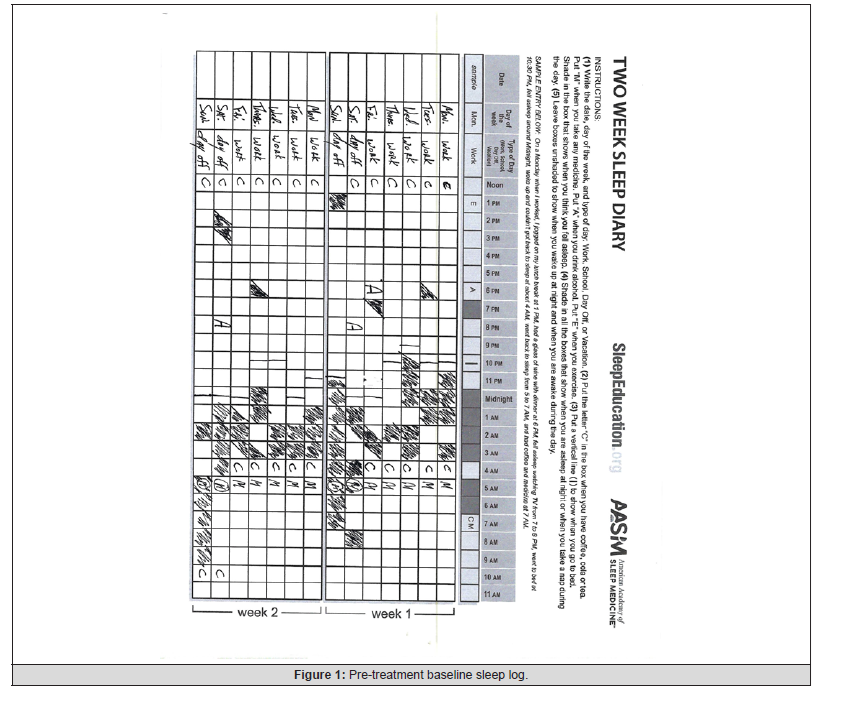
Figure 1:Pre-treatment baseline sleep log.

Table 1:Average sleep variables by treatment results.
The pretreatment assessment and session one of the CBTi included a presentation and discussion of basic sleep. This step is essential for facilitating the expectations about sleep that patients may have. The CBTI was concurrent with therapeutic treatment for the patient’s PTSD and Bereavement symptoms; this step substantially assisted the patient is attending to her sleep behavior which is likely to have addressed her psychiatric symptoms. The combination of CBTi and therapeutic supportive therapy provides a viable focus on the behavioral areas of change that assist patients in complicated emotional circumstances. The CBTI treatment for paradoxical insomnia targets the quantitative and qualitative sleep parameters which in turn reduce the negative impact on their daytime functioning.
References
- Bonnet MH, Arand DL (1994) Impact of the level of physiological arousal on estimates of sleep latency. In Ogilvie RD Harsh, JR (Eds). Sleep Onset: Normal and abnormal processes Washiongton DC: American Psychological Associations pp. 127-139.
- Carskadon M, Dement W, Mitler M, Guilleninault C, Zarcone V, et.al. (1976) Self- reports versus laboratory findings in 122 drug-free subjects with complaints of chronic insomnia. American Journal of Psychiatry, 133(12): 1382-1388.
- Fernandez Mendoza J, Calhoun SL, Bixler EO, Karataraki M, Liao D, et.al. (2011) Sleep misperception and chronic insomnia in the general population: The role of objective sleep duration and psychological profiles. Psychosomatic Medicine 73(1): 88-97.
- Foster RG, Pieirson SN, Wulff K, Winnebeck E, Vetta C, et.al. (2013) Sleep and circadian rhythm disruption in social jetlag and mental illness. Progress in olecular Biology and Translation Science 119: 1877-1973.
- Kales A, Caldwell A, Pteston T, Healy S, Kales J (1976) Personality patterns in insomnia. Archives of General Psychiatry, 33(9): 1128-1134.
- Morin CM, Cubert JP, Schwartz SM, et.al. (1994) Nonpharmacological interventions for insomnia: A meta-analysis of treatment efficacy. American Journal of Psychiatry, 151(8): 1172-1180.
- Ohayon MM (2002) Epidemiology of insomnia: What we know and what we still need to learn. Sleep Medicine Reviews 6(2): 97-111.
- Perlis M, Giles D, Buysse D, Tu X, Kupfer D (1997) Self-reported sleep disturbances as a prodromal symptom in recurrent depression. Journal of Affective Disorder 42(2-3): 209-212.
- Salin Pascual RJ, Roehrs TA, Merlotti LA, Zorick F, Roth T (1992) Long term study of the sleep of insomnia pattern with sleep state misperception and other insomnia patients. American Journal of Psychiatry, 149(7): 904-908.
- Scott AJ, Webb TL, Martyn St James M, Rowse G, Weich S (2021) Improving sleep quality leads to better mental health: A meta-analysis of randomized controlled trials. Sleep Medicine Review, 60: 101556.
- Sexton Radek K, Curtin M, Rosado S, Madluddin T, Miller E, et al. (2021) Sleepy state misperception in young adults. Poster Presentation at World Sleep Society Conference, Rio De Janeiro, Brazil.
- Sexton Radek K, Graci G (2022) sleep disorders: Elements, History, Treatment and Research. New York: Praeger Press.
- Sexton Radek K, Graci G (2008) Combating Sleep Disorders. New York: Praeger Press.
- Sexton Radek K, Pichler Maury R, Urban A (2007) Utility of Personality Measurement of Clinic Patients with Insomnia. Perceptual and Motor Skills 104(2): 677-686.




 We use cookies to ensure you get the best experience on our website.