
Research Article 
 Creative Commons, CC-BY
Prevalence, Causes and Psychological Effects of Miscarriage among Women in Abia State University Teaching Hospital, Aba, Nigeria
*Corresponding author:Emmanuel M Akwuruoha, Department of Obstetrics and Gynaecology, Abia State University Teaching Hospital, Aba, Nigeria.
Received:June 25, 2025; Published:July 16, 2025
DOI: 10.34297/AJBSR.2025.27.003603
Abstract
Background: Miscarriage remains a significant contributor to maternal morbidity and psychological distress, especially in low-resource
settings. Limited data exist on its prevalence, causes, and mental health impacts among women in Southeastern Nigeria,
necessitating evidence to inform targeted interventions. This study is aimed at assessing the prevalence of miscarriage, identify
reported causes, and assess associated psychological effects among women attending Abia State University Teaching Hospital (ABSUTH),
Aba, Nigeria.
Materials and Methods: This descriptive cross-sectional study was conducted at ABSUTH from March to May 2024 among 220
women aged 15-49 years attending obstetric and gynaecological clinics. Systematic random sampling was used to select participants.
Data were collected using pretested, interviewer-administered questionnaires and validated scales, including the Hospital
Anxiety and Depression Scale (HADS). Descriptive statistics, chi-square tests, Pearson’s correlation, and logistic regression analyses
were performed using SPSS version 26, with p < 0.05 considered significant.
Results: The prevalence of miscarriage was 16.36%. Most miscarriages (82.44%) occurred before 12 weeks gestation. The main
reported causes were infections (22.22%), hypertension (16.67%), anatomical abnormalities (13.89%), lifestyle factors (11.11%),
and unknown causes (36.11%). Psychological distress was common: 55.56% of women with miscarriage had anxiety, 38.89% had
depression, and 27.78% had both. Parity (p=0.028) was significantly associated with miscarriage. Independent predictors of psychological
distress included having ≥2 miscarriages (AOR=3.42; 95% CI: 1.21-9.68; p=0.020) and rural residence (AOR=2.98; 95%
CI: 1.11-7.98; p=0.030).
Conclusion: Miscarriage is common among women attending ABSUTH and is associated with substantial psychological morbidity.
The findings of this study underscore the need for targeted interventions, including early identification of at-risk women and integrated
mental health support in reproductive health services.
Keywords:Miscarriage, Prevalence, Psychological effects, Anxiety, Depression, Reproductive health
Introduction
Miscarriage, medically termed spontaneous abortion, is the involuntary loss of a pregnancy before fetal viability. Globally, approximately 10-20% of known pregnancies-and nearly 30-50% of all conceptions-end in miscarriage [1]. In Sub-Saharan Africa, including Nigeria, the burden of pregnancy loss is considerable, yet its true prevalence is frequently underestimated by both medical practitioners and policymakers. Within the context of tertiary hospitals, such as Abia State University Teaching Hospital (ABSUTH) in Aba, women experiencing miscarriage often face not only physical consequences but also profound psychological trauma. Studies from Nigeria demonstrate that miscarriage is common and associated with elevated psychological distress. A cross-sectional survey at Lagos University Teaching Hospital found that nearly 49% of women attending antenatal clinics had experienced a miscarriage, with depressive symptoms, anxiety, and hostility significantly more common in those affected [2]. Moreover, Katsina State research revealed that among women who had a spontaneous abortion 1-2 months prior, 6.3% screened positive for depression and 3.6% for Post-Traumatic Stress Disorder (PTSD), with recurrent miscarriage identified as a predictor of mental health morbidity [3]. Across Nigeria, a study using the Zung Self-Rating Depression Scale reported that 16.9% of women exhibited moderate-to-severe depressive symptoms following pregnancy loss. Notably, factors such as childlessness, loss of male fetus, previous loss, and losses beyond 20 weeks gestation were significant risk contributors [4].
Furthermore, evidence from global meta-analyses underscores the disproportionate psychosocial impact of miscarriage on Black women, who are approximately twice as likely to develop major depression compared to their non-Black counterparts after early pregnancy loss [5]. Other variables linked to adverse psychological outcomes include low socioeconomic status, limited education, lack of social support, and dissatisfaction with healthcare services [5]. In the Nigerian cultural milieu, deeply rooted beliefs-such as attributing miscarriage to spiritual forces, witchcraft, or taboos-further compound emotional distress and perpetuate stigma [1]. Despite these indicators, there is minimal research exploring miscarriage in South eastern Nigeria, particularly in tertiary institutions like ABSUTH. Little is known about its prevalence within that setting, and even less about the psychosocial mechanisms’ women employ to cope with the physical loss and emotional fallout. Establishing local prevalence data, identifying biophysical and sociocultural causes, and assessing psychological consequences are critical for informing culturally sensitive support systems and interventions. Accordingly, this study seeks to address these gaps by assessing the prevalence and determinants of miscarriage at ABSUTH focusing on demographic, reproductive, and cultural factors, as well as evaluating psychological outcomes. This inclusive approach aims to inform policies for post miscarriage care, thereby enhancing mental health and reproductive services for women in Aba and similar environments.
Materials and Methods
Study Design
This study adopted a descriptive cross-sectional design to determine the prevalence, explore the causes, and assess the psychological effects of miscarriage among women attending Abia State University Teaching Hospital (ABSUTH), Aba, Nigeria. The design was chosen because it allows the collection of data at a single point in time from a defined population, enabling estimation of prevalence and exploration of associations between variables [6].
Study Area
The research was conducted at Abia State University Teaching Hospital (ABSUTH), located in Aba, Abia State, South-East Nigeria. ABSUTH serves as a major referral centre in the region, providing primary, secondary, and tertiary health care services, including specialized obstetric and gynaecological services. The hospital caters to a diverse population from urban, semi-urban, and rural communities.
Study Population
The study population comprised women of reproductive age (15-49 years) who attended the gynaecology and obstetrics clinics, antenatal care unit, and postnatal care unit of ABSUTH during the study period.
Inclusion Criteria
a) Women aged 15-49 years who consented to participate in the
study
b) Women with a documented history of at least one pregnancy
c) Women who had experienced a miscarriage in the past or
during the index pregnancy
Exclusion Criteria
a) Women who were critically ill at the time of data collection
b) Women who declined consent
c) Women below 15 years or above 49 years
Sample Size Determination
The sample size was calculated based on Cochran’s formula for population proportion estimation, following the methodology described by Ezebuiro, et al., [7]:

The formula components are defined as follows:
a) n represents the minimum required sample size.
b) Z is set at 1.96, corresponding to a 95% confidence level
c) P denotes prevalence of miscarriage in Nigeria.
d) e signifies the allowable margin of error, fixed at 5% (0.05).
e) q=1 - p
A recent study conducted by Eleje, et al., [8] reports the prevalence of miscarriage in Nigeria as 15.34%
P=15.34%=0.1534
q=1-0.1534
= 0.8466.

Although the initially calculated minimum sample size was 200, it was increased to 220 to accommodate an anticipated 10% rate of non-response.
Sampling Technique
A systematic random sampling technique was employed. Based on the clinic’s average weekly attendance of approximately 100 women and the data collection period of 10 weeks, the sampling interval was determined as:

Every fifth eligible woman was selected after the first respondent was chosen randomly on each clinic day.
Data Collection Instrument
Data were collected using a structured, interviewer-administered questionnaire, which was pretested and validated. The questionnaire comprised four sections:
a) Section A: Socio-demographic data (age, marital status, education,
occupation, parity, residence)
b) Section B: Obstetric and reproductive history (number of
pregnancies, miscarriage history, gestational age at miscarriage)
c) Section C: Causes and risk factors of miscarriage (as reported
or documented, including medical, environmental, and lifestyle
factors)
d) Section D: Psychological effects of miscarriage (assessed using
the Hospital Anxiety and Depression Scale (HADS) and additional
validated items on grief and emotional distress)
Pretesting and Validation
The questionnaire was pre-tested among 20 women of reproductive age attending a different hospital (Rhema University Teaching Hospital, Aba) to assess clarity, relevance, and reliability. Necessary modifications were made based on feedback to improve the tool’s comprehensibility. Cronbach’s alpha was calculated for internal consistency, yielding a coefficient of 0.82, indicating good reliability.
Data Collection Procedure
Trained research assistants, fluent in English and local languages (Igbo and Pidgin English), administered the questionnaires. Data collection took place over a period of 10 weeks (March to May 2024). Medical records were reviewed, where available, to confirm self-reported miscarriage events and their causes.
Ethical Considerations
Written informed consent was obtained from all participants. For participants below 18 years, assent was obtained in addition to parental/guardian consent. Confidentiality and anonymity were strictly maintained throughout the study. Participants found to have significant psychological distress were referred to the hospital’s mental health unit for further evaluation and support.
Data Management and Statistical Analysis
Data were entered into IBM SPSS Statistics version 26 for analysis. Descriptive statistics such as frequencies, percentages, means, and standard deviations were computed to summarize data.
a. The prevalence of miscarriage was calculated as the proportion
of respondents who reported at least one miscarriage.
b. The causes of miscarriage were summarized and categorized
(e.g., medical, infectious, anatomical, lifestyle, unknown).
c. The psychological effects were analysed using HADS cut-off
scores to classify anxiety and depression severity.
Associations between socio-demographic variables, causes of miscarriage, and psychological effects were tested using chi-square tests for categorical variables and logistic regression analysis to identify independent predictors of psychological distress. A p-value <0.05 was considered statistically significant.
Results
A total of 220 respondents participated in the study. The majority were aged 25-34 years (43.64%), married (80.91%), and had tertiary education (54.55%). Over half resided in urban areas (51.82%) (Table 1). In terms of obstetric history, 45.45% of the respondents had parity ≥3. The prevalence of miscarriage in this study was 16.36% (Figure 1). Most miscarriages (82.44%) occurred before 12 weeks of gestation, with the remainder (17.56%) between 12-20 weeks (Figure 2).
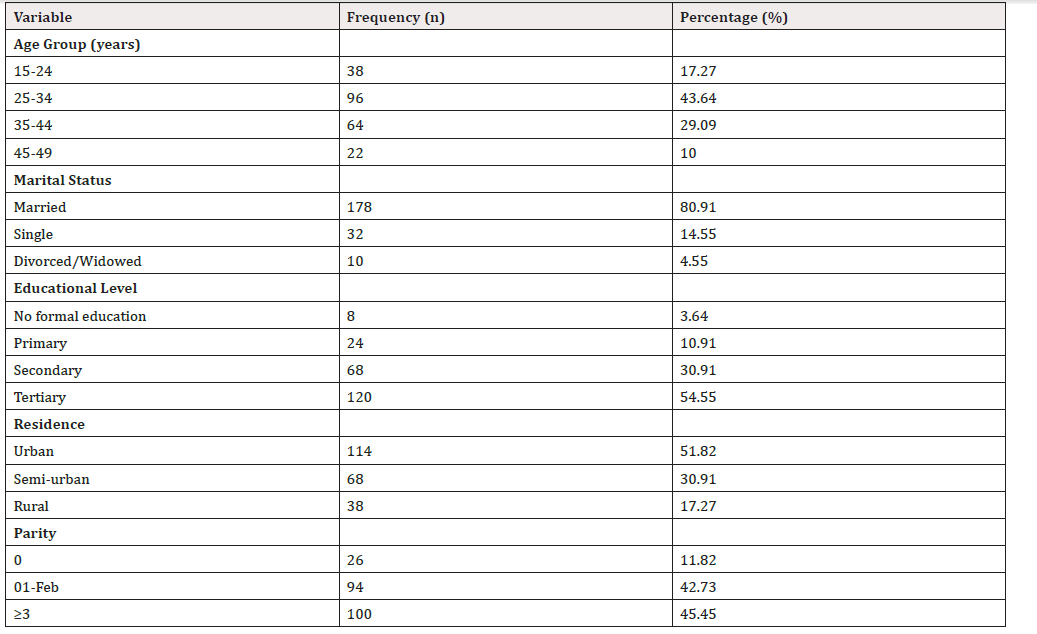
Table 1:Socio-demographic Characteristics of Respondents (n = 220).

Figure 1:Prevalence of Miscarriage.

Figure 2:Gestational age at Miscarriage.
Among the 36 women who reported miscarriage, infections (22.22%) and hypertension (16.67%) were common causes, but the majority (36.11%) had unknown causes (Table 2). Psychological assessment revealed that 55.56% experienced anxiety, 38.89% had depression, and 27.78% had both, while 33.33% reported no significant distress (Table 3).

Table 2:Reported Causes of Miscarriage (n = 36).

Table 3:Psychological Effects of Miscarriage (HADS Scores among those with miscarriage, n = 36).
A significant association was found between parity and miscarriage (x2 = 7.12, p = 0.028)whereas age, marital status, educational level, and residence showed no statistically significant associations (Table 4). There was a moderate positive correlation between the number of miscarriages and HADS anxiety scores (r = 0.42, p = 0.011) (Table 5). Logistic regression analysis indicated that having ≥2 miscarriages (AOR=3.42; 95% CI: 1.21-9.68; p=0.020) and rural residence (AOR=2.98; 95% CI: 1.11-7.98; p=0.030) were significant predictors of psychological distress (Table 6).

Table 4:Association Between Miscarriage and Selected Variables.

Table 5:Correlation Between Number of Miscarriages and HADS Anxiety Scores.

Table 6:Logistic Regression for Predictors of Psychological Distress (Anxiety/Depression).
Discussion
The present study investigated the prevalence, causes, and psychological effects of miscarriage among women attending the Abia State University Teaching Hospital, Aba, Nigeria. Our findings revealed that the prevalence of miscarriage among the respondents was 16.36%, which aligns with reports from similar settings in sub-Saharan Africa. For instance, a study conducted University of Calabar Teaching Hospital reported a miscarriage prevalence of 13.7% [9]. This similarity underscores the consistent burden of pregnancy loss in the region. However, the prevalence in our study appears lower than the 19.6% reported by Abiola, et al., [2] in Lagos University Teaching Hospital, possibly due to differences in sample characteristics or health-seeking behaviours.
In relation to gestational age at miscarriage, the majority (82.44%) of miscarriages occurred before 12 weeks of gestation. This finding corroborates prior reports which indicate that most pregnancy losses occur in the first trimester due to chromosomal abnormalities, infections, and other early gestational complications [10]. It is well established that early pregnancy is particularly vulnerable to various insults, and the predominance of first-trimester losses in our study is consistent with this biological susceptibility.
When examining the causes of miscarriage, our study highlighted that 36.11% of miscarriages had no identifiable cause, reflecting the global challenge of unexplained pregnancy loss [11]. The proportion of miscarriages attributed to infections (22.22%), hypertension (16.67%), anatomical abnormalities (13.89%), and lifestyle factors (11.11%) aligns with reports by Sonu, et al., [12], who identified similar risk factors among women in India. The contribution of modifiable factors such as lifestyle choices reinforces the importance of public health education on antenatal risk reduction strategies.
In terms of psychological effects, more than half of the women who experienced miscarriage exhibited clinically significant anxiety (55.56%), while 38.89% showed depressive symptoms, and 27.78% experienced both. These findings mirror those reported by Abebe, et al., [13] in Ethiopia, where 58% of women with miscarriage history were classified as anxious and 35% as depressed. Our results support the growing consensus that miscarriage is a significant psychological stressor with long-term emotional impact [14]. Statistical analysis showed that parity was significantly associated with miscarriage (p=0.028). Women with higher parity were more likely to have experienced miscarriage, a finding consistent with a meta-analysis by Quenby, et al., [15], which reported that risk increases with advancing parity due to cumulative exposure to pregnancy-related complications. Interestingly, residence approached significance (p=0.054), suggesting that contextual factors in semi-urban and rural settings may influence miscarriage risk, possibly due to differences in healthcare access or environmental exposures, as observed in similar studies [16].
We also found a statistically significant correlation between the number of miscarriages and anxiety scores (r=0.42, p=0.011). This association reinforces the dose-response relationship between recurrent pregnancy loss and psychological distress, as previously reported by Wang, et al., [17] in China. Furthermore, our logistic regression analysis identified recurrent miscarriage (≥2 miscarriages; AOR=3.42, p=0.020) and rural residence (AOR=2.98, p=0.030) as significant predictors of psychological distress. These findings parallel those of Blackmore, et al., [18], who observed that repeated losses and socio-environmental stressors substantially increase the risk of mental health disorders after miscarriage. While low education was not statistically significant in our model (p=0.092), the trend suggests that educational attainment may still influence] coping capacity and mental health outcomes following miscarriage. This is supported by broader literature indicating that higher education levels often confer protective effects against psychological morbidity in the context of adverse reproductive outcomes [19].
Conclusion
The findings of this present study contribute to the growing body of evidence highlighting miscarriage as not only a clinical concern but also a significant public mental health issue. The relatively high prevalence of miscarriage and its psychological sequelae, particularly among women with recurrent losses and those in rural areas, emphasize the need for integrated obstetric and mental health services in our setting. Interventions targeting modifiable causes and strengthening psychosocial support systems are imperative for reducing both the physical and emotional toll of miscarriage on women in Abia State and similar contexts.
Acknowledgement
None.
Conflict of Interest
The authors declare no conflicts of interest.
References
- Omole O R, Ezirim EO, Abali IO, Ejikem PI, Okeh DU, et al. (2023) Assessment of the causes and effects of induced abortion among women of reproductive age. EC Nursing and Healthcare 5(4): 103-115.
- Abiola AO, Ajayi A, Umeh CS, Adegbesan Omilabu MO, Olufunlayo TF, et al. (2013) Knowledge, prevalence and psychological effect of miscarriage among women of reproductive age group attending obstetrics and gynaecology clinics of Lagos University Teaching Hospital, Nigeria. The Nigerian postgraduate medical journal 20(4): 319-324.
- Umar H, Ajuwon AJ (2024) Depression and post-traumatic stress disorder among women experiencing spontaneous abortion in Katsina, North Western Nigeria. African Journal of Reproductive Health 28(3): 37-44.
- Obi SN, Onah HE, Okafor II (2009) Depression among Nigerian women following pregnancy loss. International journal of gynaecology and obstetrics: the official organ of the International Federation of Gynaecology and Obstetrics 105(1): 60-62.
- Cuenca D (2023) Pregnancy loss: Consequences for mental health. Frontiers in Global Women's Health 3: 1032212.
- Ezebuiro EI, Adesina OO, Alumona FC, Abali IO, Ezirim EO, et al. (2024) Awareness and acceptance of obstetric epidural analgesia among expectant mothers in Southeast Nigeria. International Journal of Reproductive Research 3(2).
- Ezebuiro EI, Abali IO, Akenroye SG, Onyemereze CO, Airaodion AI (2025) The Role of Male Involvement in Family Planning and Contraceptive Use in Nigeria. Journal of Counselling and Family Therapy 7(1): 30-37.
- Eleje GU, Ugwu EO, Igbodike EP, Malachy DE, Nwankwo EU, et al. (2023) Prevalence and associated factors of recurrent pregnancy loss in Nigeria according to different national and international criteria (ASRM/ESHRE vs. WHO/RCOG). Frontiers in Reproductive Health 5: 1049711.
- Akpan UB, Akpanika CJ, Asibong U, Arogundade K, Nwagbata AE, et al. (2022) The Influence of Threatened Miscarriage on Pregnancy Outcomes: A Retrospective Cohort Study in a Nigerian Tertiary Hospital. Cureus 14(11): 31734.
- Ashini A, Alsoufi A, Elhad M (2021) Parental perception of neonatal ICU visitation during the COVID-19 pandemic. International Journal of Gynecology & Obstetrics 153(3): 554-555.
- Linehan LA, Morris AG, Meaney S, O Donoghue K (2019) Subsequent pregnancy outcomes following second trimester miscarriage- A prospective cohort study. European journal of obstetrics, gynecology, and reproductive biology 237: 198-203.
- Sonu HS, Das SK, Tony R, Binu VS (2024) Risk and protective factors of miscarriage: Evidence from a nationally representative sample of women in India. Journal of Family Medicine and Primary Care 13(9): 3879.
- Abebe S, Gebru G, Amenu D, Mekonnen Z, Dube L (2021) Risk factors associated with congenital anomalies among newborns in southwestern Ethiopia: A case-control study. PLOS ONE 16(1): 0245915.
- Farren J, Jalmbrant M, Ameye L, Joash K, Mitchell Jones N, et al. (2016) Post-traumatic stress, anxiety and depression following miscarriage or ectopic pregnancy: A prospective cohort study. BMJ Open 6(11): 011864.
- Quenby S, Gallos ID, Dhillon Smith RK, Podesek M, Stephenson MD, et al. (2021) Miscarriage matters: the epidemiological, physical, psychological, and economic costs of early pregnancy loss. Lancet (London, England) 397(10285): 1658-1667.
- Hamadneh S, Taybeh E (2024) Understanding Miscarriage Prevalence and Risk Factors: Insights from Women in Jordan. Medicina 60(7): 1044.
- Wang T, Hou Y, Liu Y, Qiao C (2023) Psychological changes among women with recurrent pregnancy loss during the COVID-19 period in northeastern China: A cross-sectional study. Frontiers in Psychology 14: 1265926.
- Blackmore ER, Côté Arsenault D, Tang W, Glover V, Evans J, et al. (2011) Previous prenatal loss as a predictor of perinatal depression and anxiety. The British journal of psychiatry: the journal of mental science 198(5): 373-378.
- Zamani M, Hasan Zadeh A, Rajabi N, Alimi R, Azmoude E (2023) Psychological Consequences of Miscarriage, Ectopic Pregnancy, and Ongoing Normal Pregnancy: The Results of a Pilot Study. Journal of Midwifery and Reproductive Health 11(2): 3751-3758.




 We use cookies to ensure you get the best experience on our website.