
Research Article 
 Creative Commons, CC-BY
Production of Biodiesel from Activated Sludge Lipid Extract Using Eggshells as Catalyst
*Corresponding author: Edeh Ifeanyichukwu, Department of Chemical Engineering, Faculty of Engineering, University of Port Harcourt. Choba East-West Road Port Harcourt, Rivers State, Nigeria.
Received:May 20, 2025; Published:May 27, 2025
DOI: 10.34297/AJBSR.2025.27.003538
Abstract
Background: The current work is focused on investigating the potential of using lipid extract from activated sludge biomass and CaO
derived chicken eggshell catalyst for the production of biodiesel by transesterification. The effect of operating parameters catalyst
loading (2,5 and 7wt.%), reaction time (140, 210min) and temperature (55 and 60°C) on the yield of biodiesel were investigated.
The catalyst was characterized by X-Ray Diffraction (XRD), biodiesel composition was analysed by Gas Chromatography equipped
with Mass Spectroscopy (GC-MS), and the physicochemical properties of the biodiesel were assessed using the ASTM methods.
Results: The results obtained showed that catalyst loading had a greater effect on biodiesel yield compared to reaction time and
temperature. The highest biodiesel yield (93.19wt.%) was obtained using 7wt.% catalyst loading, at a constant temperature of
60°C, reaction time of 140 min and methanol: oil ratio of 6:1. The yield compared appreciably with the 96.44wt.% obtained using
a commercial CaO under the same conditions. The physicochemical properties such as the kinematic viscosity and cetane number
are within the ASTM standards.
Conclusion: The results show that producing biodiesel from waste materials may help to reduce the cost of production, and in ensuring
a sustainable wastewater treatment and management of eggshells.
Keywords:Lipids, Biodiesel, Transesterification, Wastewater, Activated sludge, Eggshell
Introduction
Recent studies have highlighted the benefits of biodiesel, including reducing greenhouse gas emissions and improving air quality. According to Zivkovic and Veljkovic [1] biodiesel can reduce carbon dioxide emissions by up to 78% compared to petroleum diesel. Furthermore, biodiesel has a higher cetane rating, which means it ignites more easily and burns more completely resulting in less emissions [2]. The production of biodiesel has also been shown to have a positive impact on rural economies. Biodiesel can be made from a variety of feedstocks, including soybeans, canola, and sunflowers, which can be grown by farmers [3,4]. This provides an additional source of income for farmers and reduces reliance on imported oil. In addition to reducing emissions and providing economic benefits, biodiesel has also been shown to have positive effects on engine performance. According to Ogunkunle [5], biodiesel can improve engine power and torque, while reducing engine noise and vibration. Despite its benefits, there are also some challenges associated with biodiesel. It has low energy density, relatively high production cost and poor cold flow [6]. Biodiesel also has the potential to cause engine damage if it is not produced and stored properly. According to Mehta, et al. [7], biodiesel can degrade over time and form deposits that can clog fuel filters and fuel injectors. Proper storage and handling can help prevent these issues irrespective of these challenges, the availability and cost of feedstocks tend to hinder the production of biodiesel. Thus, there is competition for feedstocks between the biodiesel industry and the food industry. According to Guo, et al. [8] the cost of feedstocks can vary depending on the region and the time of the year. Biodiesel is mostly produced in commercial quantity globally using edible feedstocks such as soybean oil, rapeseed oil, canola oil, palm oil and coconut oil. The cost of these feedstocks culminates to over 70% of the total production cost, thereby making biodiesel uncompetitive with the conventional petroleum diesel [9,10]. The acid/base homogeneous catalysts are utilized due to their high catalytic activities in the transesterification of oil/fat to biodiesel [11]. Although, the use of these catalysts is constrained by the difficulty in separation of biodiesel which is usually carried out by washing with water. This process, however, leads to loss of Fatty Acid Alkyl Ester (FAAE), high consumption of energy, and generation of large amount of wastewater [11,12]. The use of these catalysts can also corrode the reactor, thereby increasing the overall production cost of biodiesel in attempt to recover the reactor. These problems can be eliminated by using heterogeneous catalysts which in addition can be reused severally without losing their catalytic activity, thereby having a positive economic impact in the biodiesel production [13-15]. This catalyst helps to eliminate the neutralization and washing stage required using the homogeneous catalysts. The use of heterogeneous catalyst is capable of producing a biodiesel with yield of nearly 100%, and purity of over 99%, with glycerol by-product purity of over 98% in relation to approximately 80% which could be obtained using homogeneous catalysts [16,17].
Heterogeneous catalyst can be synthesized from biological materials such as eggshells; animal bone and mollusc shell are currently being considered for the synthesis of bio-based catalysts due to their high composition of calcium and carbon compounds [18- 23]. Bio-based catalysts are gaining traction in biodiesel production probably because, they are environmentally friendly, inexpensive, biodegradable, capable of eliminating wastewater generation, and not harmful and corrosive [18].
For instance, chicken eggshells contain predominantly calcium carbonate (94%) and other compounds such as magnesium carbonate (1%), calcium phosphate (1%) and organic matter (4%) [22]. The high composition of calcium carbonate in eggshell and its porous structure makes it suitable for synthesizing an active heterogeneous catalyst [23,24]. Usually, the calcium carbonate is decomposed at high temperature to obtain calcium oxide which can be used as a heterogeneous catalyst for biodiesel production. This treatment increases the catalytic activity of the calcium oxide due to the modification in its surface structure [18]. Several researchers globally are investigating alternative feedstock and catalysts in order to reduce the overall cost of producing biodiesel. Farooq, et al. [25] investigated the production of biodiesel from date seed oil using eggshell derived catalyst. Having explored the impact of the calcine temperatures (800, 900 and 1000°C) of the eggshells on the conversion efficiency. The result obtained using 5wt.% of eggshell catalyst calcined at 900°C, methanol: oil of 12:1 and residence time of 1.5h gave a conversion efficiency of 93.5%. Nadeem, et al. [26] optimized the production of biodiesel from waste cooking oil using eggshell derived MM-CaO. The biodiesel yield obtained was 75.2% under optimum operating conditions of catalyst (1.5g) calcined at 800°C for 2h, reaction time (180min) and temperature (50°C). Ali, et al. [27] investigated the effect of eggshell catalyst loading (1, 2, 3, 4 and 5wt.%) on the biodiesel yield. The eggshells were calcined at 900°C for 3h, and the transesterification reaction was conducted at 100°C for 1hr while stirring at 600 rpm and the methanol: oil of 6:1 was used. The result obtained showed that there was an inverse proportionality relationship between biodiesel yield and catalyst loading with 1wt.% catalyst loading giving the highest biodiesel yield of 64.0%. This is contrary to the result obtained by Odetoye, et al. [28] in which it was reported that biodiesel yield increases with increase in catalyst loading with the least catalyst loading 0.59 wt.% resulting to a biodiesel yield of 51.6% and the highest catalyst loading 2wt.% giving 76.5 %. The increase in yield of the biodiesel was attributed to the potential increase in contact between the catalyst and chicken oil. Bharadwaj, et al. [29] studied the production of biodiesel from Rubber Seed Oil (RSO) using calcium oxide synthesized from eggshell as catalyst. The effect of methanol: oil molar ratio (6-18 mol/mol), catalyst loading (2-6wt.%) and time (1-5h) on the conversion of RSO was assessed. The result showed that the highest conversion of RSO was 99.7% obtained at the optimum operating conditions of methanol: oil (12:1) molar ratio, catalyst loading (4wt.%) and time of 3h. The current work is focused on developing a sustainable biodiesel production through the use of residue from wastewater treatment plant known as activated sludge biomass and bio-based catalyst synthesized from chicken eggshells.
Materials and Method
The flow diagram showing the processes involved in producing biodiesel from the activated sludge lipid extract using chicken eggshells as catalyst is presented in (Figure 1).
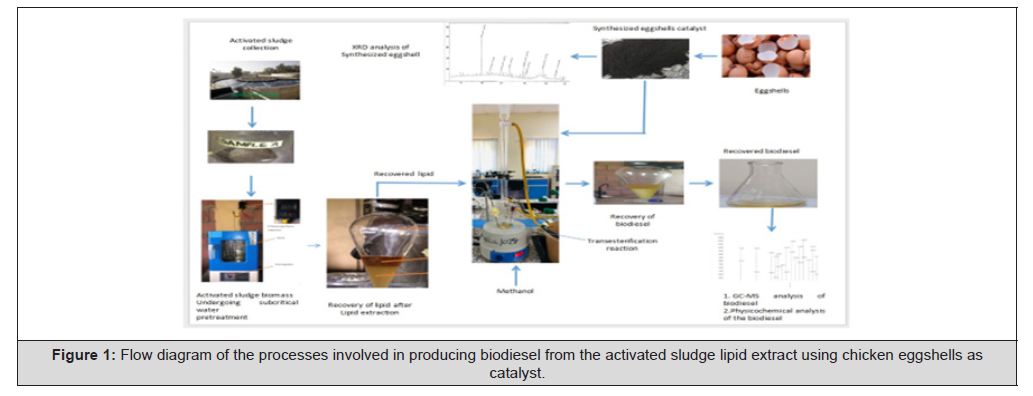
Figure 1:Flow diagram of the processes involved in producing biodiesel from the activated sludge lipid extract using chicken eggshells as catalyst.
Materials
The activated sludge lipid extract was obtained from the subcritical water mediated lipid extraction from activated sludge biomass which was reported in a previous study Edeh, et al. [30]. The lipid composition of the extract is presented in (Table 1). Eggshells were collected from the farm of the Faculty of Agriculture, University of Port Harcourt, Nigeria, and used to synthesize the catalyst; muffle furnace was used in calcining the eggshells to convert calcium carbonate component of the eggshells to calcium oxide; and Desktop Temperature Oven (DNP-9022A, Royal Care, UK) was used in drying the eggshells before calcination. All the chemicals used were of analytical grade and purchased from Destiny Chemicals Ltd, Port Harcourt, Nigeria.
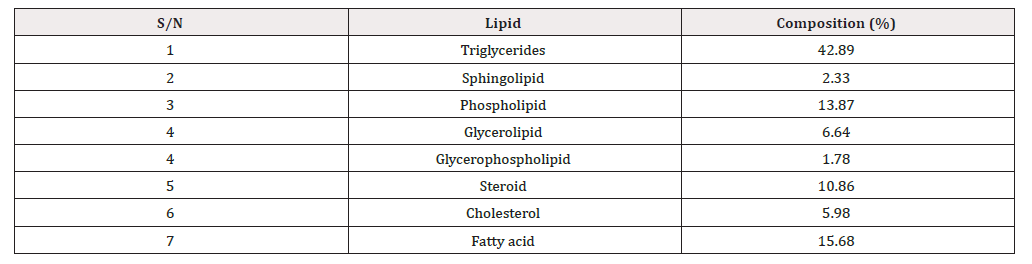
Table 1: The composition of the activated sludge lipid extract.
Methods
Synthesis of Chicken Eggshells Catalyst
The chicken eggshells were washed with distilled water and dried at a temperature of 60°C for 24h. After which they were crushed with mortar and pestle to powdered form and sieved using a mechanical sieve of 212μm pore size. The resulting particles were calcined at 800oC in a muffle furnace for 3h and cooled to the ambient temperature.
Catalyst Characterization
The composition of the calcined eggshell was analysed using X-Ray Diffraction (XRD). A 5g of the calcined eggshell was put in a conical flask and then mixed with a mixture of H2SO4 and NaNO3 under continuous stirring in a water bath for 2h. The mixture was prepared by mixing 115mL of H2 SO4 and 2.5g of NaNO3 in a beaker. A 15g of KMnO4 was added gently and stirred for 2hours. The end product was quickly removed from the water bath and tightly covered with an aluminium foil, stirred continuously for 30min forming brown coloration. Dilute water of 230mL was added to the mixture and was further stirred for 60min. Another 700mL of dilute water was added to the mixture. A yellow coloration was observed when 10mL of 30% hydrogen peroxide (H2O2) was added. The yellowish mixture was centrifuged at a speed of 800rpm and washed using 5% hydrochloric acid (HCl) and dilute water for quite a few times. The mixture was dried at a temperature of 60°C for 24h. A brown powdery coloration was observed after drying. The brown mixture sample was collected using the sample holder and the collimator directed the X-ray beam to the sample. The electronic detector (Charged-couple device) recorded the intensity and positions of the diffracted x-ray.
Biodiesel Production
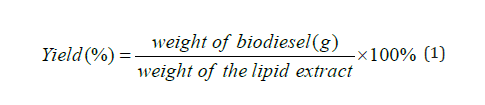
The calcined shells were mixed with methanol at varied catalyst loading of 2wt.%, 5wt.% and 7wt.% as prescribed by and Priti, et al. [31] and Odetoye, et al. [28], respectively with the weight of the methanol being at least 6 times that of the lipid to drive the reaction to completion [32]. The lipid was then added to the mixture and stirred at varied temperature of 50°C, 55°C and 60°C (temperature a bit lower than the boiling point of methanol which is 64.77°C). The transesterification reaction was carried out for varied reaction time of 70min, 140min and 210min to obtained the optimum yield of biodiesel. The biodiesel produced was allowed to cool down after the transesterification process and then separated from glycerol using a separating funnel. The top layer containing the organic materials was then washed with warm water to remove the remaining glycerol and traces of the catalyst. It was then dried to constant weight using a laboratory drying oven. The process was repeated using commercial calcium oxide catalyst for the biodiesel production in order to evaluate the efficacy of the eggshell synthesized. The yield (%) of the biodiesel was calculated using Equation 1(Odetoye, et al. [28]).
Analysis of Biodiesel
The biodiesel produced was analyzed using Agilent 6890gas chromatograph with a 5973-mass spectroscopy detector to determine its composition. The analyzer was equipped with 60mx- 0.25mm capillary column with internal diameter of 0.25μm/MSWAX (Agilent). The injector temperature was 250 °C and the initial oven temperature was 200°C which was held for 1min and then heated to 230°C at the rate of 1.5°C per min before holding it for 10min at 280°C. The characterization and identification of FAMEs from the sample was completed in the SCAN mode with the m/z range varied from 35 to 450. Nitrogen was used as the carrier gas at 1mL/min flow rate. The physicochemical properties such as flash point, kinematic viscosity at 40°C, cetane number, calorific value, hydrogen and density were determined using ASTMs D93, D445, D613, D6751, D6751 and D6751, respectively as shown in (Table 2).
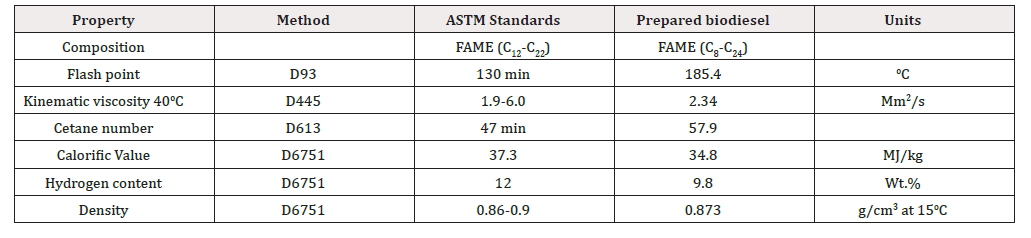
Table 2: ASTM standard of biodiesel.
Results and Discussion
Analysis of the Catalyst
This was conducted using XRD to determine the composition of the calcined eggshell. The result obtained is shown in Figure 2 and it shows that the calcium oxide with an amount of 84% is the predominant compound. This confirms the decomposition of calcium carbonate to calcium oxide and carbon dioxide at the calcined temperature of 800°C [18-19]. With the high amount of the calcium oxide obtained, the synthesized eggshell catalyst can function as a heterogeneous catalyst in catalysing the transesterification reaction leading to the production of biodiesel [20].

Figure 2:XRD analysis of the calcined eggshell.
Biodiesel Production
This was carried out by transesterification reaction using both chicken eggshell synthesized catalyst and commercial CaO catalyst at varied conditions of catalyst loading, reaction time and temperature. The chicken eggshell catalyst was synthesized by calcination at 800°C and this helped to increase its surface area and pore size, and supported the thermal degradation of CaCO3 to CaO and CO2 [33].
Effect of Catalyst Loading on the Biodiesel Yield Using Chicken Eggshell Catalyst
The impact of the catalyst loading (2, 5 and 7wt.%) on biodiesel yield was assessed at constant resident time of 140min, methanol: oil ratio of 6:1, and temperature of 60°C using both eggshell synthesized and commercial CaO catalysts, respectively. As presented in Figure 3, the result show that there was no appreciable difference in the biodiesel yield obtained using the eggshell synthesized catalyst and the commercial catalyst. Although, 7wt.% catalyst loading gave the highest biodiesel yield using any of the catalysts with commercial CaO catalyst showing a greater yield of 96.44%. This may be due to increase in contact between the catalyst and lipid extract, and increased number of the active sites available for the transesterification reaction [25,28]. The result is in agreement with that obtained by Das, et al. [34] although they reported a higher biodiesel yield between 72 - 98 % (Figures 2,3).
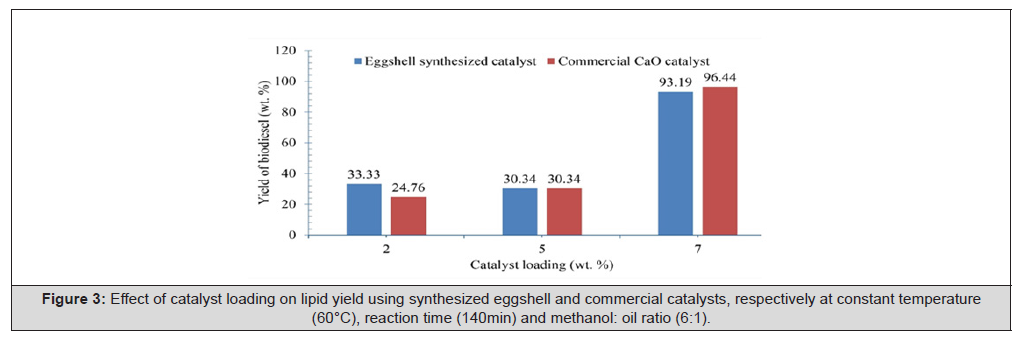
Figure 3:Effect of catalyst loading on lipid yield using synthesized eggshell and commercial catalysts, respectively at constant temperature (60°C), reaction time (140min) and methanol: oil ratio (6:1).
Effect of Reaction Time on the Biodiesel Yield using Eggshell Catalyst
The reaction time (140, 210min) on biodiesel yield was assessed at constant catalyst loading (2wt.%) and temperature (60°C) as shown in Figure 4 using both the eggshell synthesized and commercial CaO catalysts, respectively. The result showed that an increase in reaction time leads to a corresponding increase in biodiesel yield although, it depends also on the catalyst loading used with the highest biodiesel yield of 52.45% obtained using the commercial CaO catalyst after 210min. This result agrees with that presented by Odetoye, et al. [28] in which it was reported that the highest biodiesel yield of 90.2% was obtained at the longest reaction time of 3.42h and the lowest at the least reaction time of 1h. Also, Farooq and Ramli [25] obtained a similar relationship between biodiesel yield and reaction time (Figure 4).
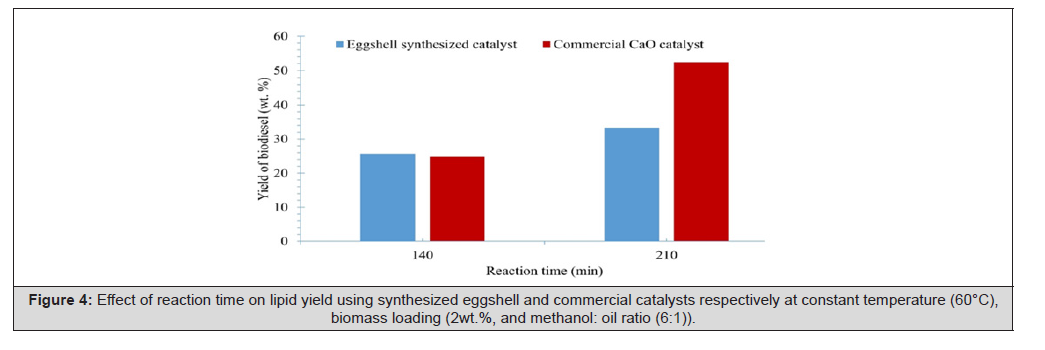
Figure 4:Effect of reaction time on lipid yield using synthesized eggshell and commercial catalysts respectively at constant temperature (60°C), biomass loading (2wt.%, and methanol: oil ratio (6:1)).
Effect of Temperature on the Biodiesel Yield using Eggshell Catalyst
The effect of temperature (55 and 60°C) on biodiesel yield was assessed at constant catalyst loading (2wt.%) and time (140min) as shown in Figure 5. The result showed that increase in temperature increases the biodiesel yield with the highest yield of 52.45 % obtained at 60°C using commercial catalyst. This trend is expected as increase in temperature leads to a corresponding increase in the kinetic energy of the reacting species, thereby increasing the rate of collision among these species resulting to the increased miscibility and mass transfer [35,36]. The result was corroborated by Farooq and Ramli [25], although, they obtained a highest biodiesel yield of 89.33% at an optimum temperature of 65°C using 5.0g of catalyst derived from chicken bones, methanol: oil (15:1) and reaction time of 4h. The disparity in the biodiesel yield is attributed to the difference in the operating conditions, source of catalyst and the composition of the feedstock (Figure 5).
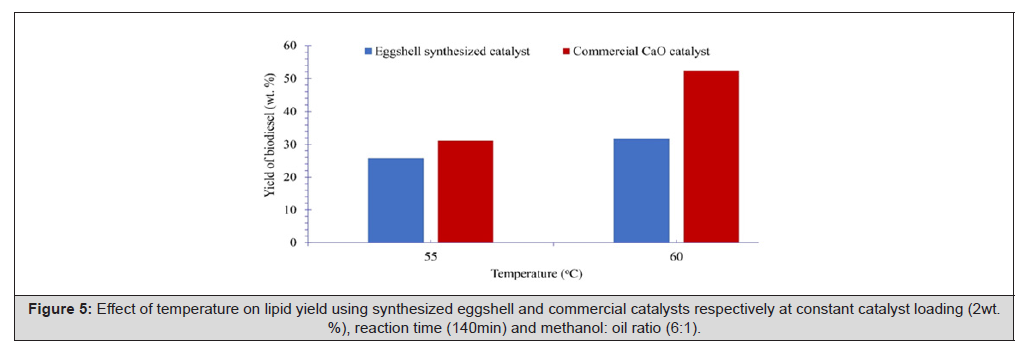
Figure 5:Effect of temperature on lipid yield using synthesized eggshell and commercial catalysts respectively at constant catalyst loading (2wt. %), reaction time (140min) and methanol: oil ratio (6:1).
Biodiesel Analysis
The result of the FAME compositional analysis revealed that the biodiesel produced contained C8-C24 which when compared to the range of C12-C22 prescribed by the ASTM standard showed a reasonable compliance. The physicochemical properties of the biodiesel such as flash point, kinematic viscosity, cetane number, calorific value, hydrogen content, and density were assessed using various methods presented in Table 2. The flash point of 185.4°C is higher than the minimum of 130°C ASTM specification and this shows that the biodiesel is flammable. The cetane number of 57.9 is greater than the 47 minimum prescribed in the ASTM standards. This is an indication that the biodiesel has a less ignition time and can initiate combustion quickly [37,38,39]. The higher cetane number obtained also shows that the biodiesel will burn efficiently within the engine.39 The kinematic viscosity 2.34Mm2/s at 40°C of the biodiesel is within the 1.9-6.0 Mm2/s ASTM standard and it is an indication that the biodiesel produced may not clog the filter pump when used in combustion engines. The biodiesel density of 0.873g/ cm3 obtained at 15°C is within the range of 0.86-0.9g/cm3 of ASTM specification. This shows that the biodiesel has a high potential energy on volume basis [40]. The calorific value of the biodiesel was 34.8MJ/kg and when compared to the ASTM standard of 37.3 MJ/kg shows a lesser value. This is an indication that the biodiesel has a lower energy content than the ASTM standard of biodiesel, although, this might not be appreciable. The lower heating value may also be attributed to high degree of unsaturation of the fatty acid composition [41]. The hydrogen content of the biodiesel produced was 9.8wt.% which is 2.2wt.% below the ASTM standard of biodiesel. The presence of hydrogen in the biodiesel helps to reduce the combustion time and increases the efficiency of the engine [3].
Conclusions
The current work has demonstrated that biodiesel can be produced from the activated sludge biomass lipid extract using chicken eggshell derived catalyst. The highest biodiesel yield of 93.19 wt. % was obtained using 7 wt.% catalyst loading, at a constant temperature of 60oC, reaction time of 140 min and methanol: oil ratio of 6:1. This shows that the chicken eggshell derived catalyst has the capacity to catalyse the transesterification reaction. With this result, producing biodiesel from waste materials could reduce substantially the cost of biodiesel production. The biodiesel produced is of appreciable high quality as most of the physicochemical properties were within the range of the ASTM standard specification. A more extensive investigation of the impact of the factors such as temperature, reaction time, methanol: oil ratio, catalyst loading on biodiesel yield is recommended.
Acknowledgements
The authors wish to use this opportunity to thank the Tertiary Education Trust Fund (TETFund), Nigeria for funding the research work through the Institution Based Research grant (IBR), 2020.
Conflict of Interest
The authors declare that they have no known competing financial interests or personal relationships that could have appeared to influence the work reported in this paper.
References
- Zivkovic S, Veljkovic M (2018) Environmental impacts of the production and use of biodiesel. Environ Sci Pollut Res Int 25(1): 191-199.
- Sethi C, Patnaik P, Thatoi D, Acharya S (2020) Performance, combustion and emission analysis on diesel engine utilizing diethyl ether as a fuel additive. Test Engineering and Management 82: 2391-2408.
- Habibullah M, Masjuki HH, Kalam MA, Fattah IR, et al. (2014) Biodiesel production and performance evaluation of coconut, palm and their combined blend with diesel in a single- cylinder engine. Energy Conversion and Management 87: 250-257.
- Edeh I (2020) Biodiesel Production as a Renewable Resource for the Potential Displacement of the Petroleum Diesel. Biorefinery Concepts, Energy and Products.
- Ogunkunle O (2021) Sustainable optimized production of bioenergy from renewable biomass. University of Johannesburg.
- Wang WC, Nirajan T, Campos A, et al. (2012) Hydrocarbon fuels from vegetable oils via hydrolysis and thermo-catalytic decarboxylation. Fuel 95(1): 622-629.
- Mehta B, Subhedar D, Patel G, Swarnker A (2020) Experimental investigation of performance and emission characteristics of biodiesel engine with use of rape seed oil as biodiesel. Materials Science and Engineering 872(1): 012093.
- Guo H, Cheng J, Mao Y, Qian L, et al. (2022) Fabricating different coordination states of cobalt as magnetic acid-base bifunctional catalyst for biodiesel production from microalgae lipid. Fuel 322(2): 124172.
- Silalertruksa T, Bonnet S, Gheewala SH (2012) Life cycle costing and externalities of palm oil biodiesel in Thailand. Journal of Cleaner Production 28: 225-232.
- (2023) OECD. Accessed on the 23rd February Biofuels. OECD-FAO Agricultural Outlook 2021-2030. OECD-FAO Agricultural Outlook.
- Sharma YC, Singh B, Upadhyay SN (2008) Advancements in development and characterization of biodiesel: a review. Fuel 87: 2355-2373.
- Lam MK, Lee KT, Mohamed AR (2010) Homogeneous, heterogeneous and enzymatic catalysis for transesterification of high free fatty acid oil (waste cooking oil) to biodiesel: a review. Biotechnol Adv 28(4): 500-518.
- Endalew AK, Kiros Y, Zanzi R (2011) Inorganic heterogeneous catalysts for biodiesel production from vegetable oils. Biomass Bioenergy 35(9): 3787-3809.
- Tang S, Zhao H, Song Z, Olubajo O (2013) Glymes as benign co-solvents for CaOcatalyzed transesterification of soybean oil to biodiesel. Bioresour Technol 139: 107-112.
- Suryaputra W, Winata I, Indraswati N, Suryadi Ismadji S (2013) Waste capiz (Amusium cristatum) shell as a new heterogeneous catalyst for biodiesel production. Renewable Energy 50: 795-799.
- Thiam LC, Subhash B (2008) Catalytic processes towards the production of biofuels in a palm oil and oil palm biomass-based bio-refinery. Bioresour Technol 99(17): 7911-7922.
- Sanjay B (2013) Heterogeneous catalyst derived natural resources for biodiesel production: a review. Research Journal of Chemical Sciences 3(6): 95-101.
- Abdullah SHYS, Hanapi NHM, Umar R, Juahir H, et al. (2016) A review of biomass-derived heterogeneous catalyst for a sustainable biodiesel production. Renewable Sustainable Energy Reviews 70: 1040-1051.
- Lanzon A, Madrid Mendoza J, Navarro Moreno, Garcia Vera VE. Use of eggshell waste: A green and effective method for the synthesis of pure calcium hydroxide suspensions. Construction and Building Materials 377: 131106.
- Awogbemi O, Inambao F, Onuh EI (2020) Modification and characterization of chicken eggshel for possible catalytic applications. Heliyon 6(10): e05283.
- Kouzu M, Kasumo T, Tajika M, Sugimoto Y, et al. (2008) Calcium oxide as a solid base catalyst for transesterification of soybean oil and its application to biodiesel production. Fuel 87(12): 2798-2806.
- Colombo K, Ender L, Barros AAC (2017) The study of biodiesel production using CaO as a heterogeneous catalytic reaction. Egypt Journal of Petroleum 26(2): 341-349.
- Stadelman WJ (2000) Eggs and egg products. 2nd edition ed FJ Francis John Wiley and Sons.
- Wei Z, Xu C, Li B (2009) Application of waste eggshell as low-cost solid catalyst for biodiesel production. Bioresource Technology 100(11) 2883-2885.
- Farooq M, Ramli A, Naeem A, Mahmood T, et al. (2018) Biodiesel production from date seed oil (Phoenix dactylifera L.) via eggshell derived heterogeneous catalyst. Chemical Engineering Research and Design 132: 644-651.
- Nadeem F, Bhatti IA, Ashar A, Yousaf M, et al. (2021) Eco-benign biodiesel production from waste cooking oil using eggshell derived MM-CaO catalyst and condition optimization using RSM approach. Arabian Journal of Chemistry 14(8): 103263.
- Ali NA, Khairuddin N, Siddique BM, (2021) Eggshell waste as a catalyst for biodiesel production: A preliminary study. IOP Conference Series: Materials Science and Engineering. 1195: 1-9.
- Odetoye TE, Agu JO, Ajala EO (2021) Biodiesel production from poultry wastes: Waste chicken fat and eggshell. Journal of Environmental Chemical Engineering 9(4): 105654.
- Bharadwaj AVSLS, Singh M, Niju S, Meera KM, Begum MS, et al. (2019) Biodiesel production from rubber seed oil using calcium oxide derived from eggshell as catalyst-optimization and modeling studies. Green Processing Synthesis 8(1): 430-442.
- Edeh I, Ozori KE, Ngochingo E (2024) Evaluation of the Potential of the Activated sludge biomass as a Feedstock for Biodiesel Production. Biofuels, Bioproducts and Biorefining 18(5).
- Priti R, Prandit MH (2017) Fulekar Eggshell Waste as Heterogeneous Nanocatalyst for Biodiesel Production: Optimized by Response Surface Methodology. J Environ Manage 198(1): 319-329.
- Pandey A, Kant G, Chaudhary A, Amesho KT, et al. (2024) Axenic green microalgae microalgae for the treatment of textile effluent and the production of biofuel: a promising sustainable approach. World J Microbiol Biotechno 40(3): 81.
- Awogbemi O, Inambao F, Onuh EI (2020) Modification and characterization of chicken eggshell for possible catalytic applications. Heliyon 6(10): e05283.
- Das V, Tripathi AM, Borah MJ, Dunford NT, et al. (2020) Colbalt-doped Cao catalyst synthesized and applied for algal biodiesel production. Renewable Energy 161: p. 1110-1119.
- Thinnakorn K, Tscheikuna J (2014) Biodiesel production via transesterification of palm olein using sodium phosphate as a heterogeneous catalyst. Applied Catalysis A: General 476: 26-33.
- LONG Tao, DENG Yuefeng, GAN Shucai, CHEN Ji (2010) Application of choline chloride xZnCl2 ionic liquids for preparation of biodiesel. Chinese Journal of Chemical Engineering 18(2): 322-327.
- Yasar F (2020) Comparison of fuel properties of biodiesel fuels produced from different oils to determine the most suitable feedstock type. Fuel 264: 116817.
- Alsultan AG, Asikin Mijan N, Ibrahim Z, Yunus R, Razali SZ, et al. (2021) A short review on catalyst, feedstock, modernised process, current state and challenges on biodiesel production. Catalysts 11(11): 1261.
- Noushabadi AS, Dashti A, Raji M, Zarei A, Mohammadi AH, et al. (2020) Estimation of Cetane Numbers of Biodiesel and Diesel Oils using Regression and PSP-ANFIS Models. Renewable Energy 158: 465-473.
- Van Gerpen J, Shanks B, Pruszko R, Clements D, Knothe G, et al. (2004) Biodiesel analytical methods: August 2002- January 2004. National Renewable Energy Laboratory NREL/SR-510-36240.
- Dimitriou P, Kumar M, Tsujimura T, Suzuki Y (2018) Combustion and emission characteristics of a hydrogen-diesel dual-fuel engine. International Journal of Hydrogen Energy 43(29): 13605-13611.




 We use cookies to ensure you get the best experience on our website.