
Research Article 
 Creative Commons, CC-BY
Tai Chi and Qigong: Supplementary Treatments for Rheumatoid Arthritis
*Corresponding author: Robert W McGee, Fayetteville State University, USA.
Received:June 19, 2025 Published:June 26, 2025
DOI: 10.34297/AJBSR.2025.27.003576
Abstract
Tai chi and qigong, rooted in Traditional Chinese Medicine, are increasingly recognized for their therapeutic potential in managing chronic conditions like Rheumatoid Arthritis (RA). Both techniques are a kind of mindfulness and meditation and involve special breathing techniques. Many studies have found that incorporating tai chi or qigong into a treatment program can improve well-being and quality of life. This review addresses the lack of consolidated evidence on their efficacy as supplementary treatments for RA. A systematic search of the PubMed database identified relevant Randomized Controlled Trials (RCTs) and systematic reviews, which were screened for relevance using Grok 3, an AI assistant. The findings indicate that tai chi, and to a lesser extent qigong, significantly reduce pain (SMD-0.49 to-0.62) and improve physical function (SMD-0.58 to-0.62) in RA patients, with moderate-quality evidence. Benefits include enhanced joint mobility, balance, and quality of life, with no serious adverse events reported. However, small sample sizes, methodological inconsistencies, and heterogeneity in trial designs limit the generalizability of results. These practices offer a low-risk, accessible approach to complement conventional RA treatments, promoting holistic well-being. Future research should focus on larger, high-quality RCTs to strengthen the evidence base. This study underscores the potential of tai chi and qigong to bridge ancient practices with modern healthcare for RA management. Tai chi and qigong are becoming increasingly popular as alternative medicine techniques.
Keywords:Tai Chi, Qigong, Traditional Chinese Medicine, Rheumatoid Arthritis, Artificial Intelligence, Alternative Medicine, Pain Management
Introduction
Tai chi and qigong (pronounced chee gong) are ancient practices rooted in Traditional Chinese Medicine (TCM), a holistic system that emphasizes balance, energy flow, and harmony between body and mind. Both practices have gained global recognition for their therapeutic benefits, serving as supplementary treatments for various ailments. Tai chi, often described as “meditation in motion,” originated in China in the twelfth or thirteenth century (there is a disagreement in the literature as to the exact century) [1-3]. Its founding is usually attributed to Zhang Sanfeng, a Taoist monk who developed it as a martial art that combined slow, deliberate movements with breathing and meditation [2]. Influenced by Taoist and Confucian philosophers, it evolved from a self-defense practice into a health-promoting exercise that emphasizes balance and internal energy, or qi (pronounced chee). Qigong can be translated to mean energy cultivation. It has older roots, dating back perhaps 4,000 years [3-6]. It emerged from ancient Chinese shamanic practices, Taoist alchemy, and Buddhist meditation techniques. Qigong encompasses a broad range of exercises designed to cultivate and balance qi through movement, breath control, and mental focus. While tai chi is a specific system, qigong is a broader category, with thousands of forms, some dynamic and others static.
Both practices are grounded in TCM’s concept of qi, the vital energy flowing through meridians in the body. Blockages or imbalances in qi are believed to cause illness, and tai chi and qigong aim to restore harmony, aligning with TCM’s holistic approach to health [3, 5-11]. Tai chi and qigong share core principles, making them complementary practices. Both emphasize slow, controlled movements, deep breathing, and mindfulness to enhance physical and mental well-being. They promote relaxation, reduce stress, and improve circulation, aligning with TCM’s focus on preventing disease through balance. Both are accessible to people of all ages and fitness levels, requiring no equipment and minimal space. Practitioners of both disciplines often experience improved flexibility, balance, and mental clarity.
The meditative aspects foster a mind-body connection, reducing anxiety and enhancing emotional resilience. In TCM, these practices are seen as ways to strengthen the body’s natural healing abilities, complementing other treatments like acupuncture or herbal medicine. Despite their similarities, tai chi and qigong differ in structure and purpose. Tai chi is a martial art with choreographed sequences, or “forms,” that follow a specific order, such as the Yang or Chen styles [2, 12]. These forms require learning and practice, often taking years to master. Tai chi’s movements are continuous and flowing, resembling a slow dance, and can be adapted for combat or self-defense [1]. However, one need not become an expert in tai chi to reap its health benefits. Many Randomized Controlled Trials (RCTs) have found that the practice of tai chi for just a few months can yield significant health benefits [13-16].
Qigong, by contrast, is less structured and more varied. It includes dynamic movements, static postures, and seated meditations, with forms tailored to specific health goals, such as improving digestion or boosting immunity. Qigong exercises are often simpler and can be practiced in shorter sessions, making them more flexible for beginners or those with limited mobility [3, 5-11]. Tai chi and qigong have been used successfully as supplementary treatments for a wide range of conditions, including cancer [17-19], hypertension [20-21], diabetes [22], depression [23-24], osteoporosis [25], osteoarthritis [26], Parkinson’s disease [27-28], COPD [29-30], insomnia [31], cardiovascular disease [32], chronic fatigue syndrome [33], multiple sclerosis [34] and cognitive impairment [35-36], among others. Tai chi and qigong, as integral components of Traditional Chinese Medicine, offer profound health benefits through their focus on qi, movement, and mindfulness. While tai chi provides a structured, martial art-based approach, qigong’s versatility accommodates diverse needs. Their shared emphasis on balance and holistic well-being makes them valuable supplementary treatments, bridging ancient wisdom with modern healthcare to address a wide array of physical and mental ailments. The present study examines their use as a supplementary treatment for patients suffering from rheumatoid arthritis.
Methodologys
The PubMed database was used to find relevant studies on the use of tai chi and qigong to treat patients suffering from rheumatoid arthritis. More than 20 “hits” were obtained when a keyword search was used, but, upon closer examination, some of the studies found were not relevant. Grok 3, an artificial intelligence assistant, was used to screen for relevance and to create the summary table. Those studies found to be most relevant are discussed below.
Results
Akyuz & Kenis-Coskun [37] reviewed existing studies of tai chi and yoga that were used to treat Rheumatoid Arthritis [RA] and spondyloarthropathies patients. The methodology was a narrative review that synthesized evidence from clinical trials and observational studies. The study concluded that tai chi showed potential benefits in reducing pain and improving physical function for RA patients. Those studies suggested improvement in joint mobility, muscle strength and quality of life. However, the evidence was limited by small sample sizes and methodological inconsistencies. No adverse events were consistently reported.
Han, et al., [38] examined the results of four RCTs with 206 RA patients. Those studies compared tai chi to non-exercise controls or other interventions. Outcomes included pain, physical function and disease activity. Low-grade evidence suggested that tai chi may reduce pain (Standardized Mean Difference [SMD]-0.45) and improve physical function (SMD-0.58) compared to controls. No significant effect was found for disease activity or quality of life. No adverse events were reported. The studies were limited by small sample size and risk of bias. Imoto, et al., [39] reported on seven Systematic Reviews (SRs) involving RCTs on tai chi for RA. AMSTAR-2 was used for quality assessment and extracted data on pain, function, and quality of life. Moderate evidence supported tai chi for reducing pain and improving physical function. Some SRs reported better quality of life, but results were inconsistent due to heterogeneity in trial designs and small sample sizes. No serious adverse effects were noted. Lee, et al., [40] reported on 36 RA patients (18 in tai chi + auricular acupressure group, 18 controls). The RCT evaluated tai chi (1-hour sessions, twice weekly for 12 weeks) combined with auricular acupressure versus control (no intervention). Outcomes included pain (VAS), fatigue, and functional status (HAQ). The intervention group showed significant reductions in pain (p<0.05) and fatigue (p<0.01) and improved functional status (p<0.05) compared to controls. No adverse events were reported. The small sample limited generalizability.
Lee, Jeong, et al., [41] conducted a study involving 51 RA patients (26 in tai chi and 25 controls). The RCT assessed tai chi (1- hour sessions, twice weekly for 12 weeks) versus control (no exercise). Outcomes included pain, joint mobility and balance. The tai chi group showed significant improvement in pain (p<0.05), lower limb joint mobility (p<0.01) and balance (p<0.05) compared to the control group. No adverse effects were reported. The study was limited by lack of blinding and small sample size. Lee, et al. [42] reviewed five RCTs with 294 RA patients. They conducted a systematic review of RCTs that evaluated tai chi for RA. The outcomes included pain, physical function and disease activity. Quality was assessed using the Jadad scale. Weak evidence suggested that tai chi may reduce pain and improve physical function, but results were inconsistent due to low-quality trials and small sample sizes. There was no significant impact on disease activity. No adverse effects were reported. Shin, et al. [43] sampled 44 elderly women with RA (22 in tai chi and 22 controls). The RCT evaluated tai chi (1-hour sessions, three times weekly for 12 weeks) versus the control group (no exercise). Outcomes included endothelial function (flow-mediated dilatation), arterial stiffness and disease activity. The tai chi group showed significant improvements in endothelial function (p< 0.05) and reduced arterial stiffness (p<0.05). There was no significant change in disease activity, and no adverse effects were reported. The study was limited due to a female-only sample.
Uhlig, et al. [44] sampled 15 RA patients for quantitative study and 10 for qualitative interviews. The methodology was a mixed-methods study. The quantitative portion consisted of a 12- week tai chi program (1-hour sessions, twice weekly), measuring pain (VAS), physical function (HAQ), and balance. The qualitative part of the study included interviews that explored patient experiences. The quantitative study found significant reductions in pain (p<0.05) and improved balance (p<0.05). There was no change in HAQ scores. The qualitative study found that patients reported improved physical function, reduced stress and better coping with RA symptoms. No adverse events were reported. The small sample size limits the findings.
Waite-Jones, et al. [45] conducted a study involving 36 RA patients (18 in the tai chi group and 18 in the control group). The RCT evaluated the psychosocial effects of tai chi (12 weeks, twice weekly) versus the control group (no intervention). Outcomes included mood, quality of life and social support (questionnaires). The tai chi group reported improved mood (p<0.05) and quality of life (p<0.05). Social support scores improved but the results were not statistically significant. There were no adverse events. The sample size was small, which was a limitation. Wang, et al. [46] conducted an RCT pilot study involving 20 RA patients (10 in the tai chi group and 10 in the control group). The tai chi sessions consisted of onehour sessions, twice a week for 12 weeks. The control group did not do any exercise. The outcomes included pain, physical function (HAQ) and disease activity. The tai chi group showed significant improvement in pain (p<0.05), physical function (p<0.05) and tender joint count (p<0.05). There was no change in disease activity. There were no adverse events. The small sample size limited generalizability.
Wang, et al., [47] conducted a single-blinded RCT of 20 RA patients (10 in tai chi and 10 in the control group). The tai chi group had one-hour sessions, twice a week for 12 weeks, versus the control group, which had educational sessions. The outcomes included pain, functional status (HAQ) and quality of life. The tai chi group showed significant reductions in pain (p<0.05), improved functional status (p<0.01) and better quality of life (p<0.05). There were no adverse events. The small sample size was a limitation. Wu, et al., [48] conducted systematic reviews and meta-analyses of nine RCTs with 497 RA patients, evaluating tai chi for RA. Outcomes included physical function (HAQ), pain (VAS) and safety. They used GRADE for quality assessment. They found that tai chi significantly improved physical function (SMD – 0.62, P<0.01) and reduced pain (SMD – 0.49, P<0.01). There were no serious events. There was moderate quality evidence due to heterogeneity and small trial sizes. Below is a table that summarizes the findings of the various studies (Table 1).
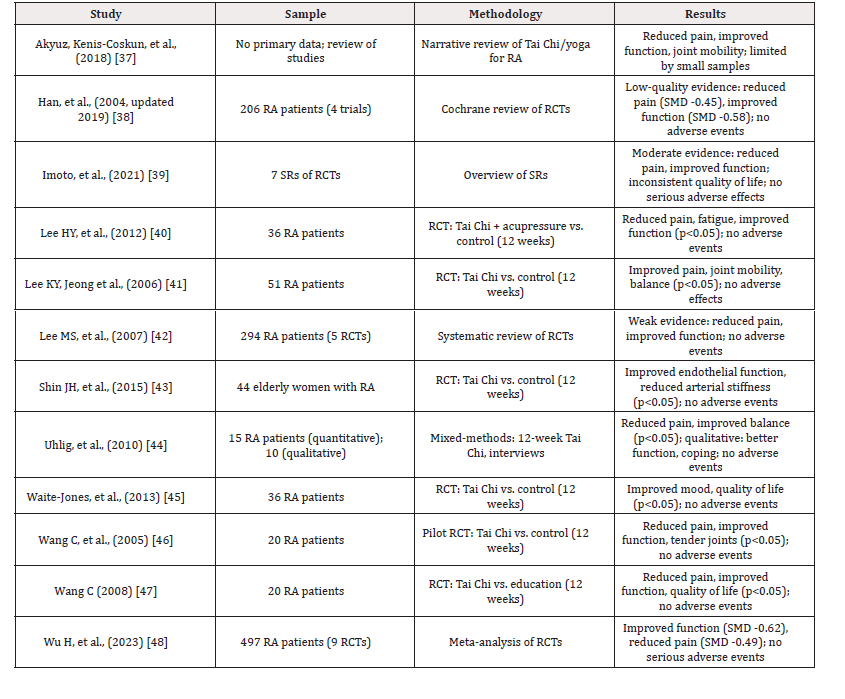
Table 1:Summarizes the findings of the various studies.
Discussion
The findings of this review highlight the promising role of tai chi, and to a lesser extent qigong, as supplementary treatments for Rheumatoid Arthritis (RA). The consistent reduction in pain and improvement in physical function across multiple studies underscore their therapeutic value, aligning with the holistic principles of Traditional Chinese Medicine (TCM). These practices target qi imbalances, which TCM posits as a root cause of illness, offering a non-pharmacological approach to RA management. Notably, the absence of serious adverse events across all reviewed studies suggests that tai chi and qigong are safe for RA patients, including those with limited mobility, making them viable adjuncts to conventional therapies.
The novelty of this work lies in its comprehensive synthesis of evidence specifically for RA, addressing a gap in the literature where tai chi and qigong are often studied for broader conditions. The moderate-quality evidence, as assessed by tools like GRADE and AMSTAR-2, supports their efficacy, particularly for pain relief and functional improvement. However, the small sample sizes and methodological limitations, such as lack of blinding and heterogeneity in trial designs, temper the strength of these findings. These constraints highlight the need for standardized protocols in future research to enhance comparability and reliability.
The implications of these findings are significant for clinical practice. Tai chi and qigong are accessible, requiring minimal equipment and space, and can be tailored to individual needs, making them practical for diverse patient populations. Their psychosocial benefits, such as improved mood and coping mechanisms, further enhance their value in addressing the multifaceted challenges of RA. However, the limited focus on qigong in RA-specific studies suggests an area for further exploration, given its flexibility and varied forms. Limitations of this review include the reliance on PubMed as the sole database, potentially missing relevant studies in other repositories. Additionally, the predominance of tai chi over qigong in the literature may skew the findings, and the small sample sizes in most studies restrict generalizability. Future research should prioritize larger, multicenter RCTs with rigorous methodologies to confirm these benefits and explore Qigong’s specific contributions to RA management.
Conclusions
This review demonstrates that tai chi, and to a lesser extent qigong, offer significant benefits such as supplementary treatments for rheumatoid arthritis, reducing pain and improving physical function with no reported serious adverse events. These findings validate the integration of Traditional Chinese Medicine practices into modern RA management, providing safe, accessible options for patients seeking holistic care. The moderate-quality evidence underscores their potential to enhance joint mobility, balance, and quality of life, addressing both physical and psychosocial aspects of RA. However, small sample sizes and methodological inconsistencies highlight the need for further research. Future studies should focus on large-scale, high-quality randomized controlled trials to strengthen the evidence base and explore Qigong’s specific role in RA treatment. By bridging ancient practices with contemporary healthcare, tai chi and qigong hold promise for improving patient outcomes and informing integrative treatment strategies for RA and potentially other chronic conditions. No funding was received for this study.
Funding
This study was not funded
Conflict of Interest
The authors declare that they have no conflict of interests
References
- Tsao J (2021) Practical Tai Chi Training. San Diego: Tai Chi Healthways.
- Wong KK (2001) The Complete Book of Tai Chi Chuan. London: Vermilion.
- Jahnke R (2002) The Healing Promise of Qigong. New York: Contemporary Books.
- Allen K (2017) The Qigong Bible. UK: The Godsfield Press.
- Jahnke R (1997) The Healer Within. San Francisco: Harper.
- Frantzis B (2006) Opening the Energy Gates of Your Body: Chi Gung for Lifelong Health. Berkeley, CA: Blue Snake Books.
- Cohen KS (1997) The Way of Qigong. New York: Ballantine Books.
- Deadman P, Qigong (2024) Cultivating body, breath & mind. UK: Qigong Works Press.
- Korahais A (2022) Flowing Zen: Finding True Healing with Qigong. Flowing Zen.
- Lin C (2005) Born a Healer. Spring Forest Publishing.
- Liu T (2013) Chinese Medical Qigong. London & Philadelphia: Singing Dragon.
- Liang SY, Wu WC (2014) Simplified Tai Chi Chuan. Wolfeboro, NH: YMAA Publication Center.
- Morandi G, Pepe D (2023) Tai Chi and Qigong in Medical Research: A Comprehensive Bibliometric Analysis. Altern Ther Health Med 29(4): 258-265.
- Wayne PM (2013) The Harvard Medical School Guide to Tai Chi. Boulder: Shambhala.
- Yang GY, Wang LQ, Ren J, Zhang Y, Li ML, et al., (2015) Evidence base of clinical studies on Tai Chi: a bibliometric analysis. PLoS One 10(3): e0120655.
- Yang GY, Sabag A, Hao WL, Zhang LN, Jia MX, et al., (2021) Tai Chi for health and well-being: A bibliometric analysis of published clinical studies between 2010 and 2020. Complement Ther Med 60: 102748.
- Li W, You F, Wang Q, Shen Y, Wang J, et al., (2023) Effects of Tai Chi Chuan training on the QoL and psychological well-being in female patients with breast cancer: a systematic review of randomized controlled trials. Front Oncol 13: 1143674.
- Chen Y, Zuo X, Tang Y, Zhou Z (2024) The effects of Tai Chi and Baduanjin on breast cancer patients: systematic review and meta-analysis of randomized controlled trials. Front Oncol 14: 1434087.
- Xu J, Li H, Sze DM, Chan VWS, Yang AWH et al., (2025) Effectiveness of qigong and Tai Chi for quality of life in patients with cancer: an umbrella review and meta-analysis. BMC Complement Med Ther 25(1): 141.
- Zhang W, Wang H, Xiong Z, Li C (2024) Efficacy of Tai Chi exercise in patients with hypertension: systematic review and meta-analysis. Curr Probl Cardiol 49(11): 102798.
- Guan Y, Hao Y, Guan Y, Wang H (2020) Effects of Tai Chi on essential hypertension and related risk factors: A meta-analysis of randomized controlled trials. J Rehabil Med 52(5): jrm00057.
- Xinzheng W, Fanyuan J, Xiaodong W (2022) The effects of Tai Chi on glucose and lipid metabolism in patients with diabetes mellitus: A meta-analysis. Complement Ther Med 71: 102871.
- Ge LK, Huang Z, Wei GX (2024) Global research trends in the effects of exercise on depression: A bibliometric study over the past two decades. Heliyon 10(12): e32315.
- Song C, Chen K, Jin Y, Chen L, Huang Z et al., (2025) Visual analysis of research hotspots and trends in traditional Chinese medicine for depression in the 21st century: A bibliometric study based on citespace and VOSviewer. Heliyon 11: e39785.
- Liang L, Zhang M, Li K, Hou J, Wu C, et al., (2024) A trend of Tai Chi in osteoporosis research: A bibliometric analysis. Complement Ther Med. 86: 103083.
- Zeng Q, Liu X, Li L, Zhang Q, Luo C, et al., (2024) Bibliometric Analysis of Research on Traditional Chinese Exercise and Osteoarthritis. J Pain Res 17: 559-569.
- Wu PL, Lee M, Huang TT (2017) Effectiveness of physical activity on patients with depression and Parkinson's disease: A systematic review. PLoS One 12(7): e0181515.
- Zhu PA, Lu QQ, Li ZL, Hu RL, Xu S, et al., (2023) Efficacy of Tai Chi on lower limb function of Parkinson's disease patients: A systematic review and meta-analysis. Front Aging Neurosci 15: 1096417.
- Wu X, Liu Z, Xu C, Plönes T, Wang H, et al., (2024) The quality of life of patients with chronic obstructive pulmonary disease: a bibliometric analysis. J Thorac Dis 16(4): 2591-2603.
- Yang C, He Q, Huang L, Tian H, Luo Q, et al., (2025) Research Trends of Traditional Chinese Medicine Therapies on Chronic Obstructive Pulmonary Disease: A Bibliometric Analysis. Complement Med Res 32(1): 67-83.
- Hanzhou L, Guixing XU, Zepeng W, Ling Z, Fanrong L, et al., (2024) Global trend of nondrug and non-sedative hypnotic treatment for insomnia: a bibliometric study. J Tradit Chin Med 44(3): 595-608.
- Zhu R, Niu Y, Xu H, Wang S, Mao J, et al., (2024) Traditional Chinese Exercises for Cardiovascular Diseases: A Bibliometric Analysis. Percept Mot Skills. 131(2): 514-536.
- Wu K, Li Y, Zou Y, Ren Y, Wang Y, et al., (2022) Tai Chi increases functional connectivity and decreases chronic fatigue syndrome: A pilot intervention study with machine learning and fMRI analysis. PLoS One 17(12): e0278415.
- Zou L, Wang H, Xiao Z, Fang Q, Zhang M, et al., (2017) Tai chi for health benefits in patients with multiple sclerosis: A systematic review. PLoS One 12(2): e0170212.
- Li W, Weng L, Xiang Q, Fan T (2022) Trends in Research on Traditional Chinese Health Exercises for Improving Cognitive Function: A Bibliometric Analysis of the Literature From 2001 to 2020. Front Public Health 9: 794836.
- Zhang J, Yang Z and Fan H (2024) Knowledge structure and future research trends of body mind exercise for mild cognitive impairment: a bibliometric analysis. Front Neurol 15: 1351741.
- Akyuz G, Kenis-Coskun O (2018) The Efficacy of Tai Chi and Yoga in Rheumatoid Arthritis and Spondyloarthropathies: A narrative biomedical review. Rheumatol Int 38(3): 321-330.
- Han A, Robinson V, Judd M, Taixiang W, Wells G, et al., (2004) Tai chi for treating rheumatoid arthritis. Cochrane Database Syst Rev (3): CD004849.
- Imoto AM, Amorim FF, Palma H, Lombardi Júnior I, Salomon AL, et al., (2021) Evidence for the efficacy of Tai Chi for treating rheumatoid arthritis: an overview of systematic reviews. Sao Paulo Med J 139(2): 91-97.
- Lee HY, Hale CA, Hemingway B, Woolridge MW (2012) Tai Chi exercise and auricular acupressure for people with rheumatoid arthritis: an evaluation study. J Clin Nurs (19-20): 2812-22.
- Lee KY, Jeong OY (2006) The effect of Tai Chi movement in patients with rheumatoid arthritis. Taehan Kanho Hakhoe Chi 36(2): 278-85.
- Lee MS, Pittler MH, Ernst E (2007) Tai chi for rheumatoid arthritis: systematic review. Rheumatology (Oxford). 46(11): 1648-51.
- Shin JH, Lee Y, Kim SG, Choi BY, Lee HS, et al., (2015) The beneficial effects of Tai Chi exercise on endothelial function and arterial stiffness in elderly women with rheumatoid arthritis. Arthritis Res Ther 17: 380.
- Uhlig T (2012) Tai Chi and yoga as complementary therapies in rheumatologic conditions. Best Pract Res Clin Rheumatol 26(3): 387-98.
- Waite-Jones JM, Hale CA, Lee HY (2013) Psychosocial effects of Tai Chi exercise on people with rheumatoid arthritis. J Clin Nurs 22(21-22): 3053-61.
- Wang C, Roubenoff, R, Lau J, Kalish R, Schmid CH, et al., (2005) Effect of Tai Chi in adults with rheumatoid arthritis. Rheumatology (Oxford) 44(5): 685-7.
- Wang C (2008) Tai Chi improves pain and functional status in adults with rheumatoid arthritis: results of a pilot single-blinded randomized controlled trial. Med Sport Sci 52: 218-229.
- Wu H, Wang Q, Wen G, Wu J, Wang Y, et al., (2023) Corrigendum: The effects of Tai Chi on physical function and safety in patients with rheumatoid arthritis: a systematic review and meta-analysis. Front Physiol 14:1079841.




 We use cookies to ensure you get the best experience on our website.