
Review Article 
 Creative Commons, CC-BY
Unresolved Issues in Environmental Toxicology Culminating in ICU Dependent Organ Failure
*Corresponding author:Sylvia Frisancho Kiss, Department of Anaesthesiology, Perioperative and Intensive Medicine, Hospital Bory, Penta Hospitals, Bratislava, Slovakia.
Received:June 02, 2025; Published:June 09, 2025
DOI: 10.34297/AJBSR.2025.27.003548
Abstract
The ICU (Intensive Care Unit) may serve as the concluding terminal of often terminally decompensated chronic diseases. The rising incidence of atrial fibrillation, prothrombotic states and subsequent ischemic strokes, aneurysms from weakened arterial walls and ruptures of small penetrating arteries with consecutive intracerebral bleeds, irreversible progressive neurodegenerative disorders can be in part attributed to the staggering effect of environmental toxins, despite the recognized complexities in etiopathogenesis. Our society takes a compassionate approach to establishing multilevel acute and long-term organ support, with somewhat less ascertainable sustained physiotherapeutic and psychosocial support. This multilevel approach places significant burden on developed societies, while forestallment lags behind. True prevention would require a radical change in socio environmental apprehension, economical and lifestyle priorities. We reflect here on personal professional experience in a cultural environment that is functioning on the faithful translation of social solidarity to equal opportunity healthcare irrespective of economic status or abuse history of the individual.
Abbreviations:ACM: Cerebral Medial Artery; ALS: Amyotrophic Lateral Sclerosis; AF: Atrial Fibrillation; BFR: Brominated Flame Retardants; CPR: Cardiopulmonary Resuscitation; CT: Computed Tomography; CVD: Cardiovascular Disease; DNA: Deoxyribonucleic Acid; DM: Diabetes Mellitus; EEG: Electroencephalogram; ET: Environmental Toxins; FTD: Frontotemporal Dementia; ICD: Internal Cardioverter Defibrillator; MRI: magnetic Resonance Imaging; ICP: Intracranial Pressure; ICU: Intensive Care Units; HHS: Hunt Hess Score; HT: Hypertension; MRI: Magnetic Resonance Imaging; NFkB: Nuclear Factor kappa B; OPC: Organochlorine pollutants; PAH: Polycystic Aromatic Hydrocarbons; PBC: Primary Biliary Cholangitis, Cirrhosis PCB: Polychlorinated Biphenyls; PEA: Pulseless Electrical Activity; PEG: Percutaneous Endoscopic Gastrostomy; PM: Particulate Matter; POPs: Persistent Organic Pollutants; OHCA: Out of Hospital Cardiac Arrest; ROS: Reactive Oxygen Species; SAH: Subarachnoid Hemorrhage; STR: Short Tandem Repeats; TAMAX: Time Averaged Maximum Velocity; TLR4: Toll Like Receptor Four; TCD: Transcranial Doppler; VF/VT: Ventricular Fibrillation/ Ventricular Tachycardia; WHO: World Health Organization
Introduction
Environmental toxicology effects are intertwined with social stress and lifestyle. Alcohol and drug consumption are more prevalent in rich societies, even though the proportion of heavy drinkers is higher among low income populations, and tobacco smoking appears to be reflective of social stress [1]. Large corporations are pointed at for lack of environmental consciousness often rightfully, however self reflection on an individual level with extreme attitudes towards self inflicted injury, in the context of social and economic stress, is a composite of environmental toxicology, too. Worldwide alcohol consumption contributed to 2.6 million deaths mainly due to dilated cardiomyopathy and liver cirrhosis in 2024. Air pollution estimated annual death rates occupy the eminent 2nd position according to WHO statistics after hypertension and smoking representing the third most frequent cause of mortality, surpassing high blood sugar and obesity [2].
The effects of environmental toxins are recognized by genetic contributions to diseases, by introducing permanent changes via DNA damage, and by genetic instability. Environmental toxins shape the genetic material on an epigenetic level too, that is through DNA (Deoxynucleic Acid) transcription modulation, such as influencing methylation processes, turning on or off gene transcription [3,4]. Epigenetic modulations further provide genetic instability, and increased potential for mutations [5]. Toxins provide an ongoing trigger for excessive reactive oxygen species production, they have sustained proinflammatory potential, disruptive effects on enzyme functions, protein processing, induction of protein misfolding and aggregation, with widespread destructive potential [6]. Environmental factors, including advanced age, smoking, dyslipidémia, bisphenols, chromium in its hexavalent form, and other metals, contribute to genetic damage by inducing DNA Instability mostly via reactive oxygen species, increased production and impaired repair mechanisms mediated by several environmental pollutants. Humans carry five DNA repair pathways. Among conditions affected by potentially environmentally induced DNA damage are the repeat expansion diseases, which occur due to the inappropriate length of Short Tandem Repeat (STR) DNA sequences that are typical for a given gene. They normally contribute to the human genome by 50% and are very prone to mutations. Once the length of STR reaches a threshold, the disease manifests clinically, the longer the tandem, the earlier the clinical manifestation, with usually irreversible, progressive outcomes, like Huntington’s chorea, autism, frontotemporal dementia, cancer, schizophrenia, etc. [7].
TLR4 mediated environmental injury is attributed to airway injury induced by particulate matter, contaminated by bacterial lipopolysaccharide [8]. Bisphenols (A, P, S, etc) present in the soil in significant amount, used during the manufacturing of plastics, polycarbonates were associated with alterations in gut microflora, increased gut permeability, enhanced susceptibility to endotoxin effects mediated by TLR4, they carry pro diabetogenic and obesogenic effects [9-11]. Departmental statistics and clinical scenarios are presented here resonating human suffering and the immense efforts invested to their relief, not mentioning the large amount of medical waste produced by our interventions. The discussed ICU that is a representative intensive care environment overall, with a highly professional and enthusiastic team, equipped with state of the art technology treated 485 patients during the calendar year of 2024, entailing 2663 ICU (Intensive Care Unit) bed days, with approximate costs of 6,5 million euros per year. The overall rate of mortality was 19.9% with an age average of 66.25 years +/- 11.35 (Figure 2). ICU mortality was characterized by two spikes (Figure 1), early mortality attributed to cardiac arrests with only transient revival, and delayed mortalities in lost fight to severe multi organ failures usually on pre-existing chronic backgrounds. CPR (Cardiopulmonary Resuscitation) (Figure 3) carries very high mortality, morbidity and disability depicted in international statistics and confirmed by our experience [12]. Oftentimes it is the consequence of organ dysfunction and energy impairment of extreme measures. Upon dissecting the CPR related mortalities, in our environment, extremely decompensated chronic multimorbidity with no realistic reversibility had been the legitimacy with cardiac, septic and pulmonary causes at the average age of 70.15+/- 9.86 years. Several clinical examples of the most desperate, unresolved disease conditions, which we encounter frequently in advanced stages with severe or terminal organ dysfunction, with very limited possibility of reversibility, that may have an environmental contribution, are highlighted, to argue the need to take potential environmental influences seriously.
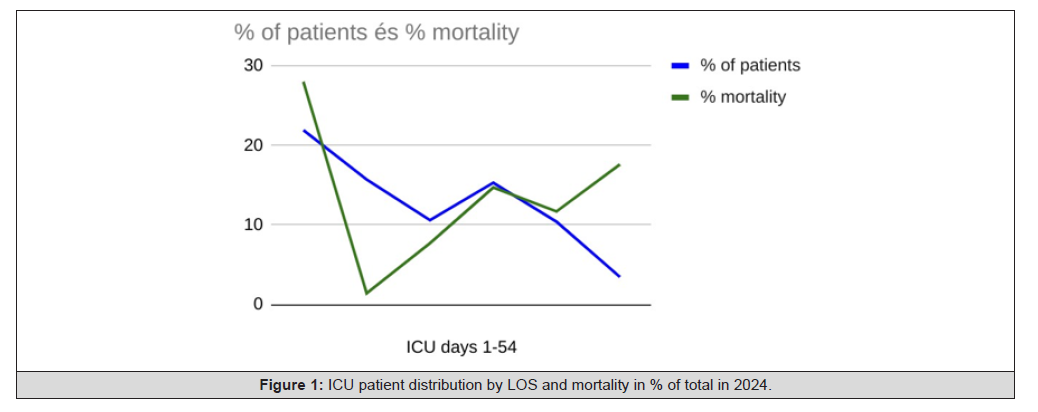
Figure 1:ICU patient distribution by LOS and mortality in % of total in 2024.
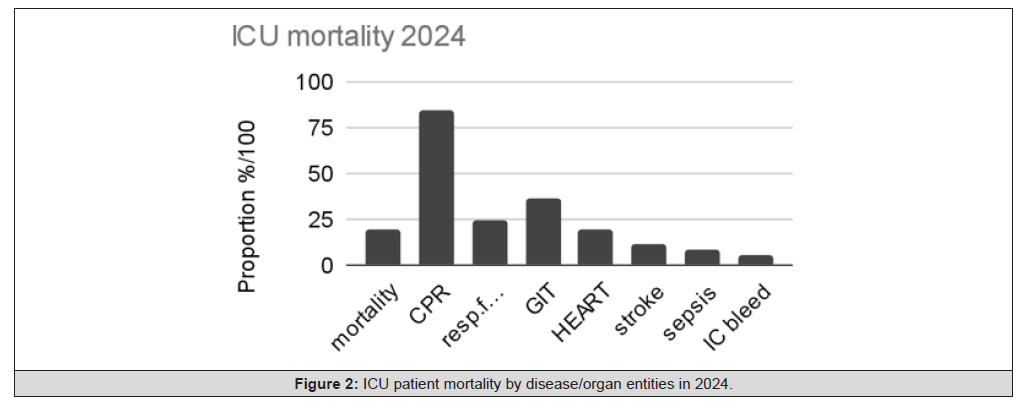
Figure 2:ICU patient mortality by disease/organ entities in 2024.
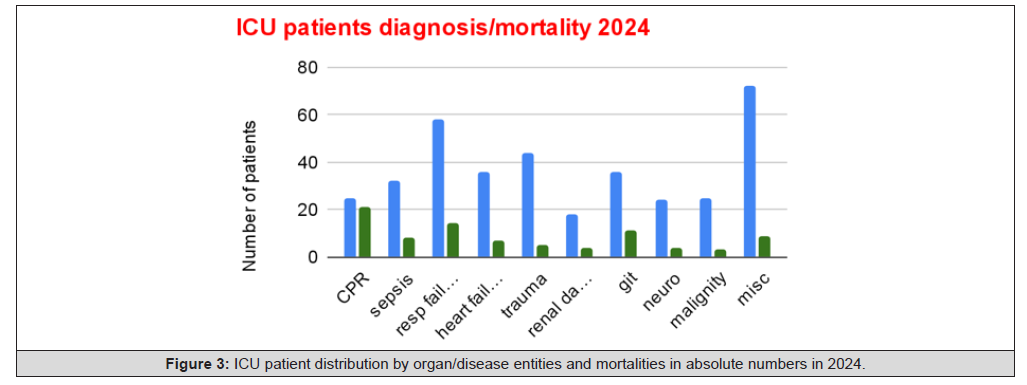
Figure 3:ICU patient distribution by organ/disease entities and mortalities in absolute numbers in 2024.
Amyotrophic Lateral Sclerosis (ALS)
Amyotrophic Lateral Sclerosis (ALS) is a progressive degenerative disorder affecting both the upper and lower motor neurons. The condition is fatal within 3- 5 years, and currently existing two medications may prolong survival by mere 2-3 months. Total PubMed publications on the subject are 38020 with 833 reported clinical trials, often discussing elaborate diagnostic and staging methodologies [13]. The etiology of the condition is complex with polyclonal genetic factors and environmental triggers, certain insecticides and air pollution [14,15] perhaps cumulative buildup of multiple insults. Reported and measured levels of toxins, due to cumulative occupational or residential exposure [16], were associated with ALS, such as OPC (Organochlorine Pesticides), PCBs (Polychlorinated Biphenyls), and BFRs (Brominated Flame retardants) [17]. The estimated lifetime risk is 1:350, incidence: 1- 68:100000, affecting mostly ages 50-70. The motor deficit with muscle atrophy and weakness from a focal deficit spread to all directions, culminating in inability to swallow and breath. Curiously the first signs may be mental inhibition, behavioural and cognitive changes. 15% of ALS present as FTD (Frontotemporal Dementia), when primarily degeneration of frontal and temporal lobes prevails. There are at least 40 ALS related genes known, with variable penetration. The disease pathology is dominated by mitochondrial dysfunction, defect in cytoskeletal trafficking, disturbed autophagy, protein misfolding, aggregation and protein clearance, excessive cortical excitability due to overt glutamate receptor activity, leading to apoptosis of the motor neurons, and impaired RNA (Ribonucleic Acid) metabolism. Every year we are exposed to these patients, who are fully aware of their physical deterioration, and we provide ventilatory service in the form of home ventilators, feeding devices, and we train family members on how to provide 24 hours of professional care in the home environment. We alleviate the psychological trauma of the patient and family members; we offer reassurances that we are always there for them at each time. As per pathogenesis of a strong genetic background, environmental toxins contribute decisively by disrupting mitochondrial and protein clearance processes and by introducing epigenetic genetic modifications. Influencing or even determining the phenotype is impossible currently, that is why prevention by eliminating environmental stressors is crucial.
Our clinical example is a 57 years old female patient, with a medical history of primary biliary cirrhosis (PBC) of very mild course, hypertension, chronic vertebrogenic pain, presenting with progressive lower limb muscle atrophy and fasciculations. She has undergone elaborate diagnostic procedures, CT (Computed Tomography) and MRI (Magnetic Resonance Imaging) scans of brain and spine, disc bulging and neuroforaminal stenosis due to spondyloarthrosis at the levels of L3/4/5, onconeural antibodies were negative. A therapeutic trial of intravenous immunoglobulins had been administered, later riluzole introduced. Four months upon diagnosis, upper extremity weakness and muscle atrophy was already present with impaired elevation of arms, and brady telekinesis, with progressive astasia and abasia. Muscle atrophy progressed to the degree of respiratory failure another four months later, when she was hospitalized at ICU. Impending respiratory failure required endotracheal intubation, mechanical ventilation, and a tracheostomy was introduced. During her stay at ICU, she expressed her desire further not to escalate treatment, however a home ventilator was provided and the patient was cared for by her sister at home. Another four months went by when the patient required percutaneous gastrostomy to provide feeding due to severe dysphagia. Regular tracheostomy changes and control of ventilatory settings is provided by the ICU team in an ambulatory manner. All through the patient was aware and fully conscious, oriented, able to comprehend her condition. Currently the patient is two and half years since the first symptoms suggestive of ALS. The quality of her life is irreversibly damaged due to immobility and full dependence on mechanical ventilation, artificial feeding and supportive care of her family members. While this is not a psychological communique, based on our experience in following these patients due to ventilator and artificial feeding dependence, immobility, and incontinence, it is saddening to point out how extremely limited their social interactions become, what a desperate social isolation awaits them, how limited is the compassion of the surrounding public towards them. PBC is a complex disease, with inherited and modifiable environmental components leading to autoimmune bile duct destruction. Among environmental triggers of PBC cigarette smoking, hair dyes are listed, landfill estrogen substrates [18,19], as well as Escherichia coli molecular mimicry with epitope spreading. The AMA (Antimitochondrial) autoantibody that targets the enzyme PDC-E2(Pyruvate- Dehydrogenase Complex-E2), 2oxo-glutaric dehydrogenase complex, and others appears six years prior disease manifestation. The antibody targeted enzymes catalyse oxidative decarboxylation of alpha ketoacids, such as pyruvate required for energy production processes, particularly acetyl-Coa production for the Krebs cycle., with the potential of manifesting with energy impairments [20,21]. Could PBC have contributed to the development of ALS? There are a few case reports in literature, and hypothetically common environmental triggers and/or defective mitochondrial metabolic processes may have contributed to co-occurrence, with several years elapsed between PBC and ALS emergence [22].
Subarachnoid Haemorrhage (SAH)
Subarachnoid Haemorrhage (SAH) is an unfortunate complication of intracerebral arterial aneurysm rupture, in the intracranial circle of Willis, which may lead to severely debilitating outcomes with estimated global incidence of 9:100,000. Frequently manifesting in young age with fatal outcomes due to sudden rupture during abrupt hypertensive reaction and severe intracranial bleeding [23,24]. The patient was a 38 years old lady, living with husband and daughter presenting with sudden onset typical thunderclap headache, profuse vomiting and loss of conscience. Based on HHS score her chances could be as weak as 10% of survival. She was diagnosed with intracerebral haemorrhage and SAH emerging from a ruptured aneurysm at the bifurcation of the left ACM (Median Cerebral Artery). She underwent emergency surgical clipping and evacuation of hematoma, with contralateral intraparenchymal ICP (Intracranial Pressure) monitor insertion. EEG (Electroencephalography) exam revealed prognostically unfavourable slow delta wave pattern. Progressively, despite antioedema therapy, on the affected site brain swelling broke through, with a profound deterioration in cerebral blood flow as depicted by Transcranial Doppler Ultrasound (TCD) over ACM (Figure 4) and orbital arteries, while ICP fluctuations showed much less dramatic dynamics. The TCD was confirmed by CT and the patient underwent left temporoparietal craniotomy. Later she was unsedated, tracheostomy and PEG inserted, weaned from mechanical ventilation and approximately from day 35 she learned walking with aid, neurologically presenting with left sided weakness. Psychological exam on day 40 described her as demonstrating good eye contact, answering questions mostly nonverbally, partially verbally. She was aware of her deficit, and showed signs of frustration and motivation. Expressive apraxia with impaired visual-motor coordination was noted. Numerous animal and demographic studies demonstrate association between endothelial weakness, inflammation and intracerebral haemorrhage. In aneurysms further the localized cell wall fragility can be attributed to structurally weakened connective tissue. Among theories are the flow disturbances, vasoconstriction followed by accelerations particularly at steep angles, leading to inflammation, TLR4/NFkB mediated inflammation, cell death and swelling associated tissue destruction, aneurysmatic bulging and rupture [25,26]. ETs potentiate inflammation via ROS production [27] and in some instances (dioxins, nickel, ozone), direct toxin-TLR4 interaction have been proposed [28].
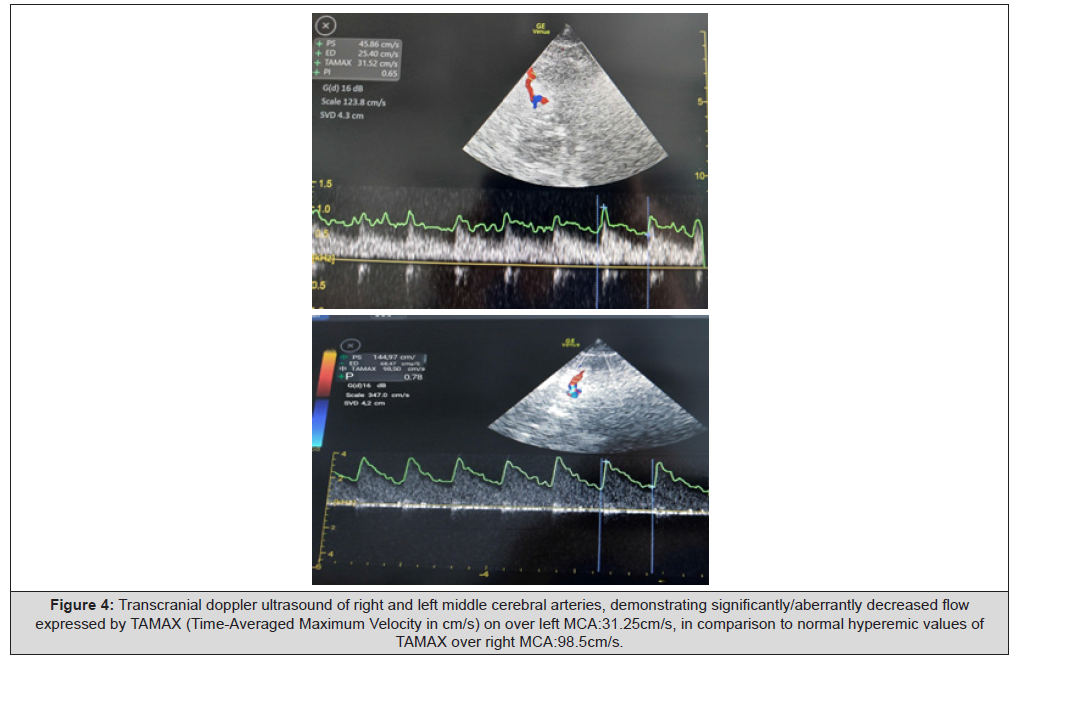
Figure 4:Transcranial doppler ultrasound of right and left middle cerebral arteries, demonstrating significantly/aberrantly decreased flow expressed by TAMAX (Time-Averaged Maximum Velocity in cm/s) on over left MCA:31.25cm/s, in comparison to normal hyperemic values of TAMAX over right MCA:98.5cm/s.
Ischemic and Haemorrhagic Stroke
Ischemic and Haemorrhagic Stroke Studies repeatedly demonstrated increased stroke incidence by up to 13% during the days of heightened pollutant levels and long term exposure with increased stroke incidence has been demonstrated [29]. For large atherosclerotic and small vessel ischemic strokes, the stroke increase was much higher in diabetic population. As per haemorrhagic stroke, not all studies agree on connection with PM (Particular Matter) exposure [30], associations are stronger from Asian countries, where air pollution is higher [31,32]. As much as 6.7 million excess deaths per year are attributed to air pollution, mainly of cardiovascular origin. The clinical manifestation of exposure depends on PM size. Larger particles are engulfed by resident pulmonary macrophages and trigger inflammation and ROS production, smaller gaseous substances enter the bloodstream via pulmonary veins. Upon reaction with nitric oxide, ROS are produced leading to endothelial damage and enhanced thrombogenicity. Autonomic respiratory reflex activation is proposed at eliciting arrhythmias, hypertensive reactions and vasospasms. In contrast, residential greenness was followed by decrease in CVD disease prevalence in 33 Chinese communities of 24845 inhabitants [33]. About 30% of neurology admissions in our cohort were patients diagnosed with ischemic stroke by structural design of admissions during 2024. Underlying literature emphasizes environmental associations with stroke directly and the rising prevalence of AF (Atrial Fibrillation), potentially leading to cardioembolic ischemic stroke. In the Mount Sinai Registry, New York metropolitan area between 2011 and 2019 the authors analysed association between ischemic stroke and individual components of PM2.5 pollutants, particularly of oil combustion related pollution. They found positive association for higher exposure with PM2.5 components of Nickel, Vanad [34].
In 2016 the prevalence of AF was 8.8 million in Europe, and the estimated growth by 2060 is by 9.9 million. Among the modifiable risk factors are DM (Diabetes Mellitus), obesity, HT, alcohol, smoking, and environmental toxins. As per the European Environment Agency, in 2020, the main source of air pollution was 44% PM10 and 56% PM 2.5, due to burning of sulphur containing fuel, 03 and NO2 from the interaction of sunlight and emissions, and waste incineration leading to PAH (Polycystic Aromatic Hydrocarbon) production. The mechanisms contributing to AF, the production of ROS, proinflammatory cytokine release, and sympathetic stress hormone activation [35]. The effect of PM2.5 is present already on embryonic level, transplacental transfer leading to hypermethylation, impaired DNA repair and increased cancer susceptibility in later life. Importantly endocrine disruptors contribute via epigenetic mechanisms. The staggering extent of male and female infertility (above 30%) is significantly associated with ETs, particularly Persistent Organic Pollutants (POPs), polychlorinated biphenyls with high level of carcinogenicity, endocrine disruptors, chlorinated water, heavy metals, air pollutants contribute to progressive loss of fertility, stillbirths and small body size [36]. A staggering number of over 1,2 million births had been evaluated, defining LBW below 2500g and significant associations were found with several PM2,5 and PM10 components [37]. The immune system is a particularly sensitive target, mast cells occupying eminent function in developmental effects of endocrine disruptor chemicals, influencing sexual orientation, behaviour, hormonal and metabolic pathways, commencing in utero [38].
Out of Hospital Cardiac Arrests (OHCA)
Out of Hospital Cardiac Arrests (OHCA) represent a high mortality and morbidity health problem [39]. In a Swedish case control crossover study of 29604 subjects, conducted between 2009 and 2019, a positive association had been found with the level of PM2.5 and PM10 in ambient air and number of OHCAs. The study was done in a country where PM2.5 levels are among the lowest in Europe and seldom surpass the 15ug/m3 high limits established by WHO Air Quality regulatory guidelines. There was a stronger association for initial VF/VT arrests in comparison to asystole/PEA arrests. The authors reported a 6% increased risk for every 10ug/m3 increase in PM2.5 with no clear distinction between urban and rural areas [40]. In a Singapore based study of 18 131 cases of OHCA, the effect of PM2.5 exposure was discernible on days. 0- 2 upon exposure, interpreted as a harvesting effect, since the following 3-5 days were characterised by decrease in OHCA, just to observe a sustained rise between days 1-45(for PM10) [41]. The WHO Air quality limits were decreased in 2021 from 10 to 5ug/m3 for PM2.5 and from 20 to 15ug/m3 for PM10 based on emerging data on adverse health effects [42].
Cardiovascular morbidity is intimately associated with toxins inducing aberrant production and clearance of reactive oxygen species and epigenetic mechanisms. Among them trace minerals occupy a significant place, produced during natural environmental processes, like volcanic eruptions and as a byproduct of human technical activity, and waste processing [43]. Overt levels of environmental toxins however have severe consequences particularly on cardiovascular health and on carcinogenesis. A significant contributor is lead, present in house paint, and as additive to gasoline. Increased ROS production, NF-kB activation, higher norepinephrine and endothelin levels were found associated with increased lead levels leading to vasoconstriction, hypertension and heart failure. Increased Nickel levels are associated with fuel burning and waste incineration, leading to atherosclerosis and worsening of CVDs. Chromium is used in paints, wood preservation, and is present in demolition sites. Chromium and other chemicals penetrate to underground waters, and may potentially become drinking water contaminants. Chromium (CrVI) is a potent carcinogen, particularly gastrointestinal and respiratory cancers are associated with increased Cr(VI) uptake. Cadmium can become dangerous due to cigarette smoking, during battery or pigment production. Similar and unique toxic pathomechanisms are described for mercury, arsenic, selenium, and copper [44]. These elements all together with dust mites and fungi upon insufficient air ventilation may contribute to sick building syndrome. Home environment optimally creates a nurturing niche lowering stress levels, hence indoor pollution can be hypothesized as a trigger for ischemic stroke eruption either due to paroxysmal vasoconstriction or a prothrombotic state. According to WHO, about 30% of buildings built between 1970 and 1984 have issues with air quality, leading to high workload absences [45]. Among common contributors are CO2, CO, formaldehyde, PM from carpeting, and volatile organic compounds due to poor air circulation. Among the most frequent symptoms are headaches, anxiety, cognitive and concentration defects, irritated eyes, asthma attacks. The confirmative, scientific literature on causative relationships is sparse and psychosocial stress is systematically overlooked. One should not estimate the detrimental effect of competitive and dissonant work environment related social interactions and noise on symptoms that are reminiscent of those related to sick building syndrome [46,47].
Conclusions
A substantial number of clinical studies had been carried out, with thoroughness and vast numerical patient contribution based on well established registries, filling the voids in our understanding on how an inconsiderate overload of environment by pollutants and environmental toxins in general created by human activity contributes to a large assortment of diseases. From an ICU perspective, pollution translates to high costs invested into a technically dominated, high precision medicine and an environment of immense human suffering, embedded in despair, humility and stigma. I could have been going on listing more eye opening arguments on how social stress, intertwined with pollution creates a vicious circle culminating in steeply rising healthcare costs. While we, healthcare professionals do not cease to search for improved ways of tackling diseases, as human beings we should reconsider our actions for less selfish objectives, and to acknowledge, that we do not rule, but we do share the Earth with plants and animals, and those deserve our proactive protection and consideration for unharmed living space and conditions. We have not inherited the Earth from our predecessors, however we were lent it from our children, to behave responsibly towards them.
Acknowledgements
None.
Conflicts of Interest
None.
References
- GBD 2016 Alcohol Collaborators (2018) Alcohol use and burden for 195 countries and territories, 1990-2016: a systematic analysis for the Global Burden of Disease Study 2016. Lancet 392(10152): 1015-1035.
- (2024) Alcohol use. world health organization.
- Maxwell DL, Oluwayiose OA, Houle E, Roth K, Nowak K, Sawant S, et al. (2024) Mixtures of per-and polyfluoroalkyl substances (PFAS) alter sperm methylation and long-term reprogramming of offspring liver and fat transcriptome. Environ Int 186: 108577.
- Newell ME, Aravindan A, Babbrah A, Halden RU (2025) Epigenetic Biomarkers Driven by Environmental Toxins Associated with Alzheimer's Disease, Parkinson's Disease, and Amyotrophic Lateral Sclerosis in the United States: A Systematic Review. Toxics 13(2): 114.
- Bolognesi G, Bacalini MG, Pirazzini C, Garagnani P, Giuliani C (2022) Evolutionary Implications of Environmental Toxicant Exposure. Biomedicines 10(12): 3090.
- Wu H, Eckhardt CM, Baccarelli AA (2023) Molecular mechanisms of environmental exposures and human disease. Nat Rev Genet 24(5): 332-344.
- Calluori S, Stark R, Pearson BL (2023) Gene-Environment Interactions in Repeat Expansion Diseases: Mechanisms of Environmentally Induced Repeat Instability. Biomedicines 11(2): 515.
- Hollingsworth JW 2nd, Cook DN, Brass DM, Walker JK, Morgan DL, Foster WM, et al. (2004) The role of Toll-like receptor 4 in environmental airway injury in mice. Am J Respir Crit Care Med 170(2): 126-132.
- Ma N, Ma D, Liu X, Zhao L, Ma L, et al. (2023) Bisphenol P exposure in C57BL/6 mice caused gut microbiota dysbiosis and induced intestinal barrier disruption via LPS/TLR4/NF-κB signaling pathway. Environ Int 175: 107949.
- Ma Q, Deng P, Lin M, Yang L, Li L, Guo L, et al. (2021) Long-term bisphenol A exposure exacerbates diet-induced prediabetes via TLR4-dependent hypothalamic inflammation. J Hazard Mater 402: 123926.
- Jaskulak M, Zimowska M, Rolbiecka M, Zorena K (2025) Understanding the role of endocrine disrupting chemicals as environmental obesogens in the obesity epidemic: A comprehensive overview of epidemiological studies between 2014 and 2024. Ecotoxicol Environ Saf 299: 118401.
- Frisancho Kiss S (2022) Cardiorespiratory Arrest, the Unmet Challenge. Adv Complement Alt Med 7(1): 648-650.
- Goutman SA, Hardiman O, Al Chalabi A, Chió A, Savelieff MG, et al. (2022) Recent advances in the diagnosis and prognosis of amyotrophic lateral sclerosis. Lancet Neurol 21(5): 480-493.
- Talbott EO, Malek AM, Arena VC, Wu F, Steffes K, et al. (2024) Case-control study of environmental toxins and risk of amyotrophic lateral sclerosis involving the national ALS registry. Amyotroph Lateral Scler Frontotemporal Degener 25(5-6): 533-542.
- Feldman EL, Goutman SA, Petri S, Mazzini L, Savelieff MG, et al. (2022) Amyotrophic lateral sclerosis. Lancet 400(10360): 1363-1380.
- Seelen M, Toro Campos RA, Veldink JH, Visser AE, Hoek G, Brunekreef B, et al. (2017) Long-Term Air Pollution Exposure and Amyotrophic Lateral Sclerosis in the Netherlands: A Population-based Case-control Study. Environ Health Perspect 125(9): 097023.
- Su FC, Goutman SA, Chernyak S, Mukherjee B, Callaghan BC, Batterman S, et al. (2016) Association of Environmental Toxins with Amyotrophic Lateral Sclerosis. JAMA Neurol 73(7): 803-811.
- Probert PM, Alistair C Leitch, Michael P Dunn, Stephanie K Meyer, Jeremy M Palmer, et al. (2018) Identification of a xenobiotic as a potential environmental trigger in primary biliary cholangitis. J Hepatology 69(5): (1123-1135).
- Meyer SK, Probert PM, Lakey AK, Leitch AC, Blake LI, et al. (2017) Environmental Xenoestrogens Super-Activate a Variant Murine ER Beta in Cholangiocytes. Toxicol Sci 156(1): 54-71.
- Purohit T, Cappell MS (2015) Primary biliary cirrhosis: Pathophysiology, clinical presentation and therapy. World J Hepatol 8;7(7): 926-941.
- Tanaka A, Ma X, Takahashi A, Vierling JM (2024) Primary biliary cholangitis. Lancet 404(10457): 1053-1066.
- Zhang H, Liu Y, Li Z, Liang N, Zhou X, Nie X, Zhang T, et al. (2019) Amyotrophic Lateral Sclerosis and Primary Biliary Cirrhosis Overlap Syndrome: Two Cases Report. Front Neurol 10: 890.
- Claassen J, Park S (2022) Spontaneous subarachnoid haemorrhage. Lancet 400(10355): 846-862.
- Thilak S, Brown P, Whitehouse T, Gautam N, Lawrence E, Ahmed Z, et al. (2024) Diagnosis and management of subarachnoid haemorrhage. Nat Commun 15(1): 1850.
- Mitsui K, Ikedo T, Kamio Y, Furukawa H, Lawton MT, et al. (2020) TLR4 (Toll-Like Receptor 4) Mediates the Development of Intracranial Aneurysm Rupture. Hypertension 75(2): 468-476.
- Aoki T, Nishimura M, Ishibashi R, Kataoka H, Takagi Y, et al. (2010) Toll-like receptor 4 expression during cerebral aneurysm formation. Laboratory investigation. J Neurosurg 113(4): 851-858.
- Frisancho Kiss Sylvia (2021) Innate Recognition and Signaling During Times of Pandemic and Beyond from Intensive Care Perspective. Journal of Advances in Medicine and Medical Research 33(12): 130-143.
- Lucas K, Maes M (2013) Role of the Toll Like receptor (TLR) radical cycle in chronic inflammation: possible treatments targeting the TLR4 pathway. Mol Neurobiol 48(1): 190-204.
- Verhoeven JI, Allach Y, Vaartjes ICH, Klijn CJM, de Leeuw FE. (2021) Ambient air pollution and the risk of ischaemic and haemorrhagic stroke. Lancet Planet Health 5(8): e542-e552.
- Wilker EH, Mostofsky E, Fossa A, Koutrakis P, Warren A, Charidimou A, et al. (2018) Ambient Pollutants and Spontaneous Intracerebral Hemorrhage in Greater Boston. Stroke 49(11): 2764-2766.
- Qian Y, Yu H, Cai B, Fang B, Wang C (2019) Association between incidence of fatal intracerebral hemorrhagic stroke and fine particulate air pollution. Environ Health Prev Med 24(1): 38.
- Krasnov H, Sachdev K, Knobel P, Colicino E, Yitshak Sade M (2025) The association between long-term exposure to PM2.5 constituents and ischemic stroke in the New York City metropolitan area. Chemosphere 378: 144390.
- Yang BY, Hu LW, Jalaludin B, Knibbs LD, Markevych, et al. (2020) Association Between Residential Greenness, Cardiometabolic Disorders, and Cardiovascular Disease Among Adults in China. JAMA Netw Open 3(9): e2017507.
- Kornej J, Börschel CS, Benjamin EJ, Schnabel RB (2020) Epidemiology of Atrial Fibrillation in the 21st Century: Novel Methods and New Insights. Circ Res 127(1): 4-20.
- GBD 2021 Stroke Risk Factor Collaborators. (2024) Global, regional, and national burden of stroke and its risk factors, 1990-2021: a systematic analysis for the Global Burden of Disease Study 2021. Lancet Neurol 23(10): 973-1003.
- Pizzorno J (2018) Environmental Toxins and Infertility. Integr Med (Encinitas) 17(2): 8-11.
- Ebisu K, Bell ML (2012) Airborne PM2.5 chemical components and low birth weight in the northeastern and mid-Atlantic regions of the United States. Environ Health Perspect 120(12): 1746-1752.
- Frisancho Kiss S (2021) Fine-tuning Mast Cells is Essential for the Maintenance and Regulation of the Systemic and Immune Homeostasis, December 2021, Journal of Integrative Medicine 10(2): 60.
- Halldorsdottir S, Finnbjornsdottir RG, Elvarsson BT, Gunnarsdottir OS, Gudmundsson G, et al. (2023) Ambient air pollution and emergency department visits and hospitalisation for cardiac arrest: a population-based case-crossover study in Reykjavik, Iceland. BMJ Open 13(5): e066743.
- Dahlquist M, Frykman V, Hollenberg J, Jonsson M, Stafoggia M, Wellenius GA, et al. (2023) Short-Term Ambient Air Pollution Exposure and Risk of Out-of-Hospital Cardiac Arrest in Sweden: A Nationwide Case-Crossover Study. J Am Heart Assoc 12(21): e030456.
- Ho AFW, Ho JSY, Tan BY, Saffari SE, Yeo JW, Sia CH, et al. (2022) Air quality and the risk of out-of-hospital cardiac arrest in Singapore (PAROS): a time series analysis. Lancet Public Health 7(11): e932-e941.
- https://www.theguardian.com/environment/2025/mar/11/only-seven-countries-worldwide-mee t-who-dirty-air-guidelines-study-shows.
- Mooyaart EAQ, Gelderman ELG, Nijsten MW, de Vos R, Hirner JM, et al. (2016) Outcome after hydrogen sulphide intoxication. Resuscitation 103: 1-6.
- KK Lundin, Yusuf Kamran Qadeer, Zhen Wang, Salim Virani, Roman Leischik, Carl J Lavie, et al. (2023) Contaminant minerals and cardiovascular health. Journal of Cardiovascular Development and Disease 2023 10(11): 450.
- Subri MSM, Arifin K, Sohaimin MFAM, Abas A (2024) The parameter of the Sick Building Syndrome: A systematic literature review. Heliyon 10(12): e32431.
- Nakayama Y, Nakaoka H, Suzuki N, Tsumura K, Hanazato M, Todaka E, et al. (2019) Prevalence and risk factors of pre-sick building syndrome: characteristics of indoor environmental and individual factors. Environ Health Prev Med 24(1): 77.
- Frisancho Kiss S (2023) Effect of Organization, Hygiene, Monitoring and Stress on Patient Safety. NRS 15(3).




 We use cookies to ensure you get the best experience on our website.