
Research Article 
 Creative Commons, CC-BY
Whether Elevated Values of Myeloperoxidase are Associated with Increased Risk of Manifestation or Worsening of Heart Failure in Patients with Ischemic Heart Disease and Chronic Kidney Disease Stage II-IIIB According to KDIGO Classification?
*Corresponding author:Borislava Ninova, Heart and Brain Hospital-Pleven, Pierre Curie Street 2, Pleven, Bulgaria.
Received:July 09, 2025; Published:July 11, 2025
DOI: 10.34297/AJBSR.2025.27.003601
Abstract
Background: Myeloperoxidase (MPO) is a pro-inflammatory enzyme, who is believed to be involved in the pathogenesis of both
Chronic Kidney Disease (CKD) and Cardiovascular Diseases (CVD). The study investigates whether elevated levels of MPO are associated
with increased risk of deterioration or de novo manifestation of heart failure, and a progression of Chronic Kidney Disease
(with known CKD) in patients ischemic heart disease.
Methods: A prospective observational study, including 49 patients with CKD, stage II-IIIB according to KDIGO classification and
ischemic heart disease. We measured NTproBNP, left ventricular ejection fraction, eGFR, creatinine levels at baseline and after six
months in a subset of patients. We stratified patients based on MPO levels (with normal MPO ≤ 94 or elevated > 94). We used Fisher’s
Exact Test, Mann–Whitney U Test, and logistic regression as a choice for statistical analysis.
Results: Patients with elevated MPO levels showed a non-significant trend of worsening in NTproBNP levels (OR ≈ 2.1; p=0.664)
and serum creatinine (OR ≈ 1.9; p=0.667). Logistic regression suggested an increased odds (OR ≈ 2.3; p=0.324) for worsening of
NTproBNP values in the high MPO group. No statistically significant associations were found between MPO levels and LVEF decline
(p=0.352) or eGFR changes.
Conclusion: While not clinically significant the study suggests a trend for heart failure progression or deterioration of CKD in patients
with elevated values of MPO. These finding support the need for further investigation of MPO as a prognostic marker for early
diagnose of heart failure and risk stratification of the patients.
Keywords:Myeloperoxidase, Chronic kidney disease, Heart failure, NTproBNP, Creatinine, Ischemic heart disease
Introduction
Myeloperoxidase is a member of hem-peroxidase superfamily, predominantly expressed on the neutrophils and monocytes. Elevated blood levels of myeloperoxidase are associated with increased oxidative stress and inflammation. Literature increasingly points a correlation between elevated MPO levels and cardiovascular diseases, such as ischemic heart disease, arterial hypertension and congestive heart failure [1]. Chronic kidney disease is well known to be associated with increased cardiovascular risk and mortality. Elevated MPO levels, in turn, are connected with worst outcomes in patients with mild to moderate CKD. Although oxidative stress and inflammation are implicated in the progression of both CKD and cardiovascular disease, the relationships between MPO concentration, CKD progression, and cardiovascular complications remain insufficiently understood.
Aim
Observing prospectively a cohort of patients who are diagnosed with ischemic heart disease and stage II-IIIb CKD (according to KDIGO classification). Also investigating whether elevated levels of MPO are associated with increased risk of de novo manifestation of heart failure or worsening of the existing one-measured by changes in NTproBNP levels and Left Ventricular Ejection Fraction (LVEF), as well as progression of CKD assessed with changes in serum creatinine and Estimated Glomerular Filtration Rate (eGFR).
Methods
We conducted a prospective observational study involving patient cohort hospitalized in “Heart and Brain” Hospital, Pleven over a three-month period. We examined these patients for signs or worsening of heart failure, mainly using NTproBNP values and changes in LVEF (initial and at six-month follow up).
A total number of 49 patients were included. The following parameters
were assessed at baseline:
a) NTproBNP
b) Left Ventricular Ejection Fraction (Simpson method)
c) Myeloperoxidase
d) Creatinine
e) eGFR (estimated glomerular filtration rate)
We followed these parameters at a six-month in part of the patients (n=26, echocardiographic follow up for 24 patients). Worsening of heart failure or de novo manifestation of the last one and CKD were assessed based on:
a) NTproBNP: increase from baseline
b) LVEF: decrease from baseline
c) Creatinine: increase from baseline
d) eGFR: decrease from baseline
Patients were stratified into two groups based on their baseline
MPO values (reference range: 0-94):
a) MPO > 94
b) MPO ≤ 94
We compared how many patients in each group exhibited worsening
in NTproBNP, eGFR, creatinine and LVEF.
Statistical methods used:
a) Fisher’s Exact Test
b) Logistic Regression
c) Mann-Whitney U Test
Results
We monitored 49 patients who were hospitalized at “Heart and Brain” Hospital in Pleven city over a three-month period (March to June 2024). All participants had a known diagnosis of ischemic heart disease and stage II–IIIb chronic kidney disease (as per KDIGO classification, with eGFR values ranging between 89ml/min and 30ml/min). During the hospitalization, NTproBNP, MPO, creatinine, and creatinine clearance levels were measured. A subset of the patients (n=26) was followed up at six months (limited follow-up due to personal or logistical reasons). During the follow-up, we re-evaluated the same parameters to identify potential pathological or worsening changes in NTproBNP (a key indicator for heart failure), reductions in LVEF, and any hospitalizations due to heart failure.
Demographic Characteristics
From all 49 patients, 35 were male (71%). The average age in the study population was 75 years and 6 months. All of them had a confirmed diagnose Ischemic heart disease-10 (approximately 20%) had undergone coronary artery bypass grafting (CABG). All participants had stage II–IIIb CKD per KDIGO, with eGFR ranging between 89 and 30ml/min. Of the 49 patients, 18(37%) had elevated MPO levels at baseline. Five patients were hospitalized for a decompensated heart failure, and three of them had an elevated MPO values. The average NTproBNP level in the group was 4161.48pg/ml, ranging from a minimum of 36pg/ml to a maximum of 32,310pg/ml. LVEF was assessed using the Simpson method. Patients with LVEF ≤ 40% were categorized as having reduced ejection fraction. Those with LVEF between 41% and 49% were considered to have mildly reduced systolic function. Patients with heart failure symptoms and/or signs, structural or functional cardiac abnormalities, and LVEF ≥ 50% were categorized as having heart failure with preserved ejection fraction (HFpEF) [2]. In Table 1 we present the demographic characteristics of the study group (Table 1 and 2). We followed some of the patients as we mentioned above at the six-month. Table 3 presents the distribution of patients based on whether or not they had elevated baseline myeloperoxidase levels. Eight of them had elevated values at baseline. The table also illustrates whether there was a subsequent worsening in NTproBNP levels. We analyze whether there is a statistically significant association between elevated MPO levels and worsening of the NTproBNP values, utilizing Fisher’s Exact Test (Table3).
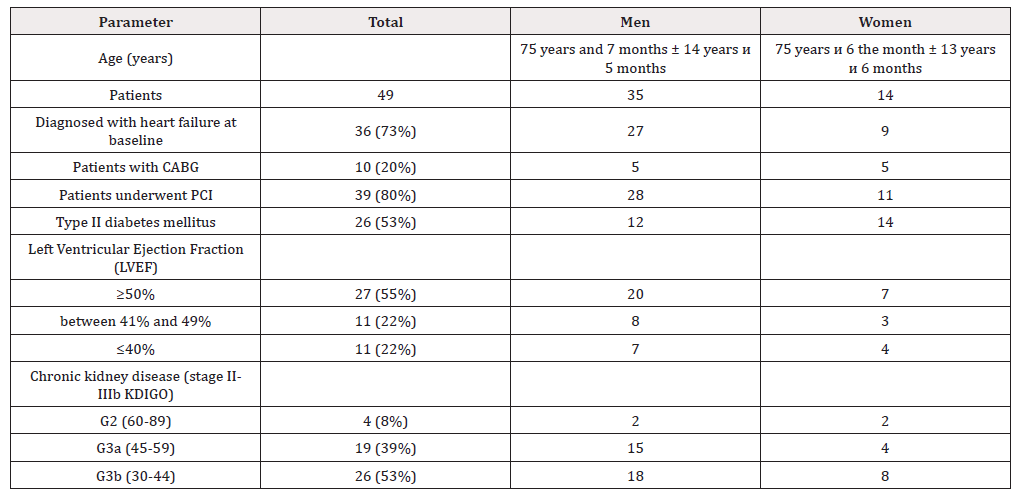
Table 1:Demographic characteristics of the patients at baseline (all of the patients).
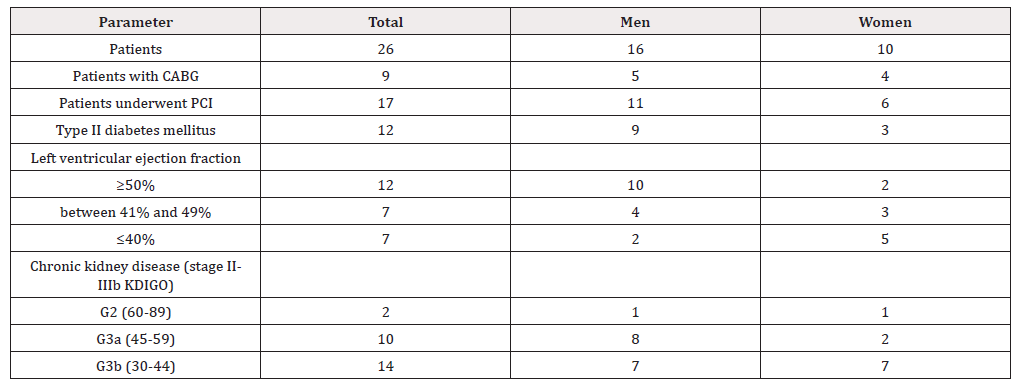
Table 2:Demographic characteristics of the followed patients.

Table 3:NTproBNP Worsening in relation to Myeloperoxidase levels.
Fisher’s Exact Test
a) Odds Ratio (OR): 2.1
b) p-value: 0.664
Patients with elevated baseline MPO levels (>94) have approximately twice higher risk of worsening NTproBNP values compared to those with lower ones. However, the result is not statistically significant- p>0.05). Subsequently, we proceed with the analysis of serum creatinine and eGFR levels. The values are presented in Table 4, illustrating whether there was a deterioration in creatinine levels in relation to MPO status (Table 4).
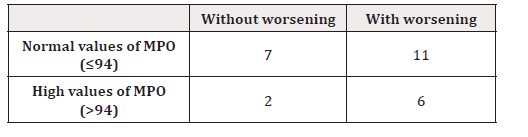
Table 4:Distribution of creatinine levels showing worsening or on in relation to myeloperoxidase values.
Fisher’s Exact Test:
a) Odds Ratio (OR): 1.9
b) p-value: 0.667
The test did not demonstrate a significant association between elevated baseline MPO levels and worsening in the creatinine values. The odds ratio (1.9) suggests that patients with high values of MPO have twice bigger risk of worsening of their CKD, assessed with the creatinine values, compared to those with normal ones MPO. The p-value is insignificant, suggesting no association. With regard to eGFR, no statistical analysis was performed due to insufficient variability in the data. Additionally, we performed a logistic regression analysis in order to evaluate the relationship between NTproBNP worsening and elevated MPO levels (>94) (Table 5).

Table 5:Analysis Using Logistic Regression.
a) Odds Ratio (OR) ≈ exp (0.83) ≈ 2.29
b) p-value=0.324→Statistically non-significant result (p>0.05)
Consequently, patients with elevated baseline Myeloperoxidase (MPO) levels >94 are exhibitingapproximately 2.3-fold increased risk of NTproBNP worsening, and therefore, potential manifestation or deterioration in heart failure status. However, the result is not statistically significant. Further studies are required to clarify this relationship. We also followed changes in left ventricular ejection fraction. Unfortunately, we do not have data for two of the patients (we evaluate 24 of them). Figure 1 illustrates the frequency of LVEF worsening in patients with normal versus with elevated MPO levels. Based on the analysis, elevated MPO levels are not statistically significantly associated with deterioration in LVEF (Fisher’s Exact Test: p-value=0.352; Odds Ratio=0.24) (Figure 1). We compared the changes in LVEF between patients with MPO levels >94 and those with MPO ≤94 using the Mann-Whitney U test. We calculate a p-value of 0.32. This indicates that there is no statistically significant difference in the change in LVEF between the two groups. Thus, it remains unclear whether elevated MPO levels are associated with LVEF deterioration. Table 6 summarizes the results obtained through the various statistical analyses. Overall, the data suggest a trend toward increased risk of heart failure onset or worsening in patients with elevated MPO levels. This may point to the potential utility of MPO as a biomarker for early detection or risk stratification in patients with heart failure (Table 6) (Figure 2).
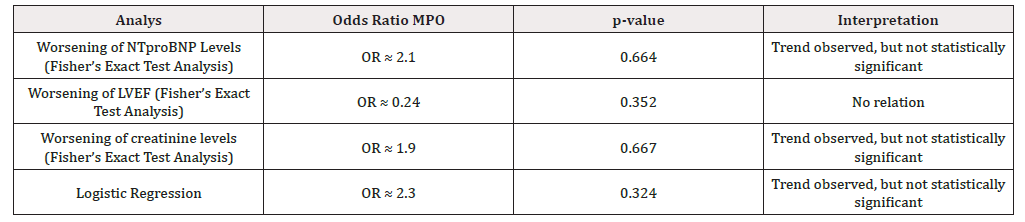
Table 6:Summary of the test results.

Figure 1:Frequency of LVEF deterioration in patients with elevated or normal MPO.

Figure 2:Statistical significance (p-values) for elevated MPO levels.
Discussion
The study highlights a trend suggesting the potential role of myeloperoxidase as a prognostic marker for manifestation or worsening of heart failure. MPO is a heme-containing protein, a component of the innate immune system within the heart and plays an important role in the inflammatory regulation [3]. It is known for a while that the inflammation, by its nature, significantly contributes the onset or progression of heart failure. MPO is primarily produced by neutrophils. The gene encoding myeloperoxidase is located on the long arm of chromosome 17, segment q23. In patients with heart failure, elevated plasma levels of MPO have been associated with poorer cardiac function and worse prognosis [4]. It is hypothesized that MPO inhibition reduces the generation of reactive oxygen species, prevents microvascular dysfunction, improves cardiomyocyte relaxation, reduces fibrosis, and may ultimately enhance cardiac function. Studies have been focusing on MPO not only as a biomarker but also as a therapeutic target. Experimental evidence has shown that MPO may causally contribute to cardiac remodeling and myocardial fibrosis, while MPO deficiency may preserve cardiac function and reduce the incidence of atrial fibrillation and ventricular tachycardia under profibrotic conditions. A murine model using a high fat diet mimicking the human phenotype of HFpEF (heart failure with preserved ejection fraction) demonstrated left ventricular hypertrophy, myocardial fibrosis, and impaired myocardial relaxation. A precursor drug, AZD4831 (also known as AZM198), was found to nearly abolish the systemic MPO activity in this model. However, the functional effects were most pronounced in adipose tissue and the liver, while the pathophysiological changes in the myocardium did not regress. The authors emphasized, once again, the need for further investigation [5].
The SATELLITE trial, a randomized, double-blind, placebo- controlled phase IIa study, investigates AZD4831 (mitiperstat) in patients with heart failure and left ventricular ejection fraction at least 40%. Among 41 participants enrolled in the clinical trial, AZD4831 demonstrated a favorable safety profile and successfully inhibited MPO activity to expected levels. The results suggest that further studies are needed to determine whether AZD4831 can reduce heart failure symptoms and improve functional status in this patient population [6]. Once again it is point out that there is need of further investigations concluding more clearly the relation between elevated MPO levels and both heart failure manifestations and progression of chronic kidney disease. Because of all mentioned above, we investigated a cohort of patients with ischemic heart disease and chronic kidney disease. MPO, on the other hand, is well-established biomarker, involved in the atherosclerotic process, including the initiation and progression of plaque formation, lipid peroxidation, the generation of atherogenic lipoproteins and dysfunctional high-density lipoproteins. MPO also contributes to the catalytic depletion of Nitric Oxide (NO), thereby limiting its bioavailability and promoting endothelial dysfunction [7].
In evaluating the early diagnostic efficiency of plasma MPO, either alone or in combination with cardiac troponin I(cTnI) for early detection of acute coronary syndrome in patients presenting with chest pain, Sawicki and colleagues report a sensitivity and specificity of 55% and 100% at the 97.5th percentile for MPO, with positive and negative predictive values of 100% and 47% respectively. For cTnI at the 99th percentile, sensitivity and specificity were 66% and 100%, with predictive values of 100% and 54%. The authors concluded that diagnostic accuracy is improved when MPO and cTnI are assessed in combination [8]. As a conclusion MPO is related with heart failure among its contribution to oxidative stress and inflammation. The potential as a biomarker is a promising opportunity for better treatment and early diagnosis of heart failure. Nevertheless, MPO is still seeking its place as a diagnostic marker and target for treatment in the context of chronic inflammation and its detrimental effects in patient with established heart failure or those at high risk.
Limitations
We should have in concern several limitations, regarding the study. The primary constraints include the short duration of the enrollment period (only three months) and the relatively small sample size of the followed-up patients. The investigation of heart failure progression or manifestation was based only on two parameters: NTproBNP and LVEF. For future studies we should consider comparative analysis among Kansas City Cardiomyopathy Questionnaire or 6-minutes walking test, echocardiographic strain assessment.
Future Directions for Investigation of MPO in Patients with Heart Failure
The present study demonstrates the need of further analysis of MPO as a diagnostic marker in patients with heart failure. MPO may serve as an early biomarker for stratifying high-risk individuals for manifestation or decompensation of heart failure-including cases of subclinical decompensation-as well as for the progression of chronic kidney disease. It would also be of interest to monitor the therapeutic responsiveness of MPO levels, particularly in relation to pharmacologic treatment with medications such as beta-blockers, SGLT-2 inhibitors, and ACE inhibitors, which are commonly used in the treatment of heart failure. Overall, MPO holds promising potential as an integrated biomarker in patients with heart failure, ischemic heart disease, and CKD. Nonetheless, we emphasize once again the importance of conducting additional multicenter studies involving larger patient populations.
Conclusion
In this small patient cohort elevated values of MPO (>94) from the beginning demonstrates a trend for higher risk for deterioration of the NTproBNP values, which may indicate a progression of heart failure. but the results are not statistically significant. Therefore, more studies are needed to be done in this direction, clarifying the potential role of MPO as prognostic biomarker.
Acknowledgement
None.
Conflict of Interest
None.
References
- Gjin Ndrepepa (2019) Myeloperoxidase-A bridge linking inflammation and oxidative stress with cardiovascular disease, Clinica Chimica Acta 493: 36-51.
- Theresa A McDonagh, Marco Metra, Marianna Adamo, Roy S Gardner, Andreas Baumbach, et al. (2021) 2021 ESC Guidelines for the diagnosis and treatment of acute and chronic heart failure. Eur Heart J 42(36): 3599-3726.
- Amirfakhryan, Hamideh, New Karl James (2024) The role of myeloperoxidase as a biomarker in atherosclerotic cardiovascular disease. Cardiology Plus 9(3): 195-209.
- Kargapolova Y, Geißen S, Zheng R, Baldus S, Winkels H, et al. (2021) The enzymatic and non-enzymatic function of myeloperoxidase (MPO) in inflammatory communication. Antioxidants (Basel) 10(4): 562.
- Piek A, Koonen DPY, Schouten EM, Eva L Lindtstedt, Erik Michaëlsson, et al. (2019) Pharmacological Myeloperoxidase (MPO) inhibition in an obese/hypertensive mouse model attenuates obesity and liver damage, but not cardiac remodeling. Sci Rep 9(1): 18765.
- Carolyn SP Lam, Lars H Lund, Sanjiv J Shah, Adriaan A Voors, David Erlinge, et al. (2024) Myeloperoxidase Inhibition in Heart Failure with Preserved or Mildly Reduced Ejection Fraction: SATELLITE Trial Results J Card Fail 30(1): 104-110.
- Nicholls SJ, Hazen SL (20019) Myeloperoxidase, modified lipoproteins, and atherogenesis. J Lipid Res 50(Suppl): S346-S351.
- Sawicki M, Sypniewska G, Kozinski M, Marzenna Gruszka, Magdalena Krintus, et al. (2011) Diagnostic efficacy of myeloperoxidase for the detection of acute coronary syndromes. Eur J Clin Invest 41(6): 667-671.




 We use cookies to ensure you get the best experience on our website.