
Case Study 
 Creative Commons, CC-BY
Comparative Study of Sleep as a Balance-like Mechanism in Humans and Animals: From Dynamic Homeostatic Regulation to Species-Specific Adaptations
*Corresponding author:Liu Zhaoyang, Yang Yang International Plaza, Block A, ShaanXi province, Xi’an city, China.
Received:August 23, 2025; Published:August 26, 2025
DOI: 10.34297/AJBSR.2025.28.003669
Abstract
Traditional sleep research has often emphasized the static “restoration-depletion” model within humans, overlooking the essential role of sleep as a dynamic, cross-species regulatory system. Inspired by human balance function-where posture stability is maintained through multi-system coordination- this study proposes the “balance-like mechanism of sleep” hypothesis. Sleep is conceptualized as a dynamic coordination process within the neuro-endocrine-immune network, counteracting circadian disruption, metabolic stress, and environmental threats. First, we construct the Sleep Homeostatic Threshold Model based on human sleep’s balance-like features (sensory input-central regulation-effector output loop). Next, we conduct a systematic cross-species comparison of sleep posture, duration, environment, and functional priorities, revealing species-specific adaptive strategies that tune this balance-like mechanism. Finally, we integrate the evidence into a Generalized Balance-like Framework, offering a novel perspective on the evolutionary conservation and functional diversity of sleep.
Introduction
Balance function is a core human ability to maintain upright posture. It is essentially a closed-loop system: multimodal sensory input (vestibular, proprioceptive, visual), central integration (cerebellum- vestibular nucleus networks), and effector output (musculoskeletal adjustments) cooperate to counteract gravitational and inertial perturbations, thereby ensuring postural stability [1]. Interestingly, sleep across humans and animals demonstrates similar dynamic adaptation to internal and external disturbances. For example, humans employ slow-wave sleep to repair synapses and clear metabolic waste; sloths sleep inverted to conserve energy; dolphins engage in unihemispheric sleep to remain vigilant against predators. All of these represent coordinated regulation within neuro-endocrine-immune networks, maintaining cognitive, metabolic, and defensive homeostasis [2-3].
Yet, significant differences exist: human sleep is shaped by so cio-cultural constraints (e.g., fixed schedules) and prioritizes cognitive recovery, while animal sleep is more tightly coupled to survival demands, showing diversity in posture, duration, and function [4]. This coexistence of commonality and divergence suggests that the essence of sleep may be understood as a Generalized Balance-like Mechanism-a conserved dynamic regulatory logic (e.g., stress perception, compensatory adjustment, threshold collapse) variably adapted by species-specific strategies (e.g., environmental risks, energy acquisition modes).
This Study Therefore:
a) Uses human sleep as a template to demonstrate balance-like
features (multimodal input, central integration, effector output)
and threshold-based regulation;
b) Compares humans and animals in terms of posture, time, environment,
and function, highlighting adaptive modulation;
c) Proposes a Generalized Balance-like Framework, explaining
both evolutionary conservation and adaptive diversity in sleep
function.
Balance-like Mechanisms in Human Sleep: Core Logic of Dynamic Homeostasis
Sensory Input Layer: Coordinated Monitoring of Environmental Signals
Circadian Signals (Visual Reference): The Suprachiasmatic Nucleus (SCN) receives retinal input (via ipRGCs), synchronizing circadian phases and regulating rhythmic melatonin and cortisol secretion [4].
Metabolic Pressure Signals (Proprioceptive Analogy): Cognitive activity, energy expenditure, and adenosine accumulation (increasing ~0.5μM/min during wakefulness) diffuse to the VLPO, signaling rising metabolic strain [5].
External Disturbance Signals (Vestibular Analogy): Noise, light, or social stimuli activate thalamo-cortical pathways and the Reticular Activating System (RAS), suppressing sleep propensity.
Central Regulation Layer: Feedback Balance Between Sleepand Wake-Promoting Systems
Sleep-Promoting Centers: VLPO and MNPO inhibit RAS activity via GABA and galanin, functioning as a “sleep switch” [6].
Wake-Promoting Centers: RAS activity depends on circadian input and metabolic state-orexin neurons sustain alertness during wake but downregulate during sleep [7].
Negative Feedback Loop: Accumulated adenosine during wakefulness suppresses RAS and activates VLPO; during sleep, adenosine clearance restores wake drive [5].
Effector Output Layer: Multi-System Functional Reconstruction
Neuroplasticity Repair: Slow-wave oscillations promote synaptic pruning and memory consolidation [8].
Metabolite Clearance: Glymphatic exchange increases by >60% during sleep, clearing Aβ and tau proteins [9].
Immune Reset: Sleep enhances NK cell activity and anti-inflammatory cytokine secretion, restoring immune homeostasis [10].
Sleep Homeostatic Threshold Model
We formalize these dynamics in the Sleep Homeostatic Threshold Model (Figure 1):
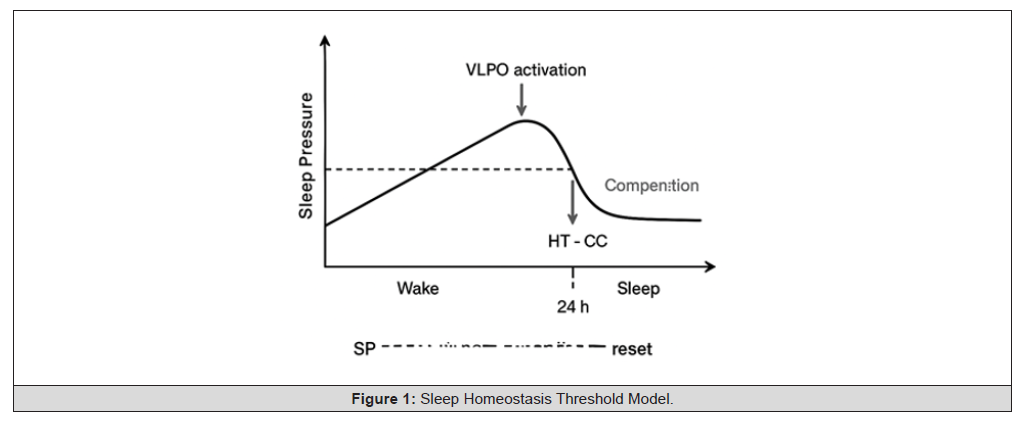
Figure 1:Sleep Homeostasis Threshold Model.
Core Parameters: Sleep Pressure (SP), Compensatory Capacity (CC, e.g., napping, caffeine), and Homeostatic Threshold (HT).
Regulation: SP rises linearly during wakefulness; when SP<HTCC,
wakefulness persists. Approaching HT-CC triggers VLPO activation;
exceeding HT induces uncontrollable sleep drive. During
sleep, SP is reduced via SWS-driven clearance. Incomplete sleep
lowers next-day HT [5].
Cross-Species Comparison: Adaptive Modulation of Balance-like Mechanisms
Although humans and animals share the core balance-like logic (input-integration-output), species-specific strategies produce distinctive adaptations.
Sleep Posture: Morphological Adaptations to Survival
Humans: Supine, lateral, or prone positions emphasize comfort and spinal protection.
Animals: Birds sleep standing on one leg to conserve energy; horses lock their limbs to enable rapid escape; sloths sleep inverted to exploit gravity; dolphins employ unihemispheric sleep to balance vigilance and rest [4].
Sleep Duration: Trade-offs Between Energy and Risk
Humans: Adults require 7-9h, constrained by social schedules.
Animals: Wide variation reflects ecological trade-offs-sloths (15-20h/day) conserve energy, giraffes sleep only 2-4h due to predation risk, bears hibernate for months, and dolphins compress sleep into 5-8h through unihemispheric strategies [4,11].
Sleep Environment: Evolutionary Choices for Safety and Comfort
Humans: Prefer quiet, dark, temperature-controlled environments, actively modified by cultural tools.
Animals: Environments are survival-driven hares sleep in burrows, lions cluster socially, bats roost inverted, penguins huddle in polar cold [4].
Functional Priorities: Evolutionary Differentiation
Humans: Sleep emphasizes cognitive restoration and emotional regulation, reinforced by cultural expectations of “high-quality sleep.”
Animals: Sleep prioritizes survival-defensive vigilance (dolphins, hares), energy conservation (sloths, bears), or reproductive regulation (birds, bees) [11-12].
Generalized Balance-like Framework: Integrative Cross-Species Perspective
This framework (Figure 2) defines sleep as a dynamic homeostatic process conserved across species.
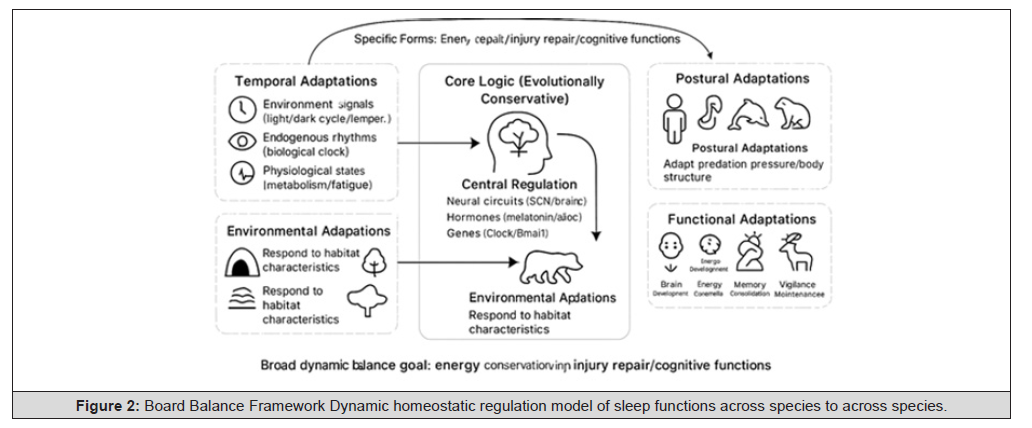
Figure 2:Board Balance Framework Dynamic homeostatic regulation model of sleep functions across species to across species.
Evolutionary Conservation
Neural Duality: VLPO-RAS antagonism is present in mammals, birds, and some reptiles [6].
Metabolic Regulation: Energy reduction (10-30%) and metabolite clearance are universal [9].
Circadian Synchronization: SCN-like structures and light entrainment are conserved across taxa [4].
Functional Diversity
High-Risk Environments: Unihemispheric sleep (dolphins) and group vigilance (lions).
Low-Energy Diets: Prolonged sleep and hibernation (sloths, bears).
High Cognitive Demand: Enhanced plasticity-related sleep functions in primates [8].
Discussion and Future Directions
This Study Highlights the Dual Essence of Sleep:
a. A conserved dynamic regulatory mechanism (balance-like homeostasis);
b. A system fine-tuned by species-specific adaptations (posture,
time, environment, functional priorities).
Implications include:
Evolutionary Roots of Sleep Disorders: Human insomnia may stem from cultural interference with natural rhythms, while disrupted hibernation may reflect climate change.
Future research:
Molecular Bases: Comparative genomics of VLPO-RAS networks and orexin homologs.
Ecological Drivers: Field experiments testing environmental manipulation (e.g., light/temperature on sloth sleep).
Translational Strategies: Applying adaptive features (e.g., dolphin unihemispheric mechanisms) to novel therapies for insomnia or sleep apnea [13].
In subsequent research, the author will adhere to the principle that “a sharp tool saves no time in the work” (proverbially meaning “preparation improves efficiency”), utilizing a diverse range of artificial intelligences with distinct characteristics to write academic papers.
Conflict of Interest
None.
Acknowledgments
During the preparation of this manuscript, I utilized Tencent Hunyuan’s large language model “Yuanbao” and the free version of GPT-5 to optimize the text, including grammar correction, sentence structure adjustment, and terminology standardization, as well as to design Figures 1 and 2. Parts of the content were assisted by artificial intelligence.
References
- Horak FB (2006) Postural orientation and equilibrium: what do we need to know about neural control of balance to prevent falls? Age Ageing 35(Suppl 2): ii7-ii
- Siegel JM (2009) Sleep viewed as a state of adaptive inactivity. Nat Rev Neurosci 10(10): 747-753.
- Walker MP (2017) Why We Sleep: Unlocking the Power of Sleep and Dreams. Scribner.
- Lesku JA, Roth TC 2nd, Amlaner CJ, et al. (2006) Phylogeny and the function of sleep. Funct Ecol 20(2): 247-253.
- Basheer R, Strecker RE, Thakkar MM, Robert W McCarley, et al. (2004) Adenosine and sleep-wake regulation. Prog Neurobiol 73(6): 379-396.
- Saper CB, Scammell TE, Lu J (2005) Hypothalamic regulation of sleep and circadian rhythms. Nature 437(7063): 1257-1263.s
- Brown RE, Basheer R, McKenna JT, Robert E Strecker, Robert W McCarley, et al. (2012) Control of sleep and wakefulness. Physiol Rev 92(3): 1087-1187.
- Tononi G, Cirelli C (2014) Sleep and the price of plasticity. from synaptic and cellular homeostasis to memory consolidation and integration. Neuron 81(1): 12-34.
- Xie L, Kang H, Xu Q, Michael J Chen, Yonghong Liao, et al. (2013) Sleep drives metabolite clearance from the adult brain. Science 342(6156): 373-377.
- Besedovsky L, Lange T, Born J (2012) Sleep and immune function. Pflugers Arch 463(1): 121-137.
- Capellini I, Barton RA, McNamara P, Brian T Preston, Charles L Nunn, et al. (2008) Phylogenetic analysis of mammalian sleep. Evolution 62(7): 1764-1776.
- Rattenborg NC, Lima SL, Amlaner CJ (1999) Half-awake to the risk of predation. Nature 397(6718): 397-398.
- Siegel JM (2005) Clues to the functions of mammalian sleep. Nature 437(7063): 1264-1271.




 We use cookies to ensure you get the best experience on our website.