
Case Report 
 Creative Commons, CC-BY
Dual Hematologic Disorders in a Pediatric Patient: Hemophilia a and Sickle Cell Anemia – a Case Report
*Corresponding author:Housam Almadani, Department of Pediatric, King Fahad Armed Forces Hospital, Ministry of Defense Health Services, Jeddah, Saudi Arabia.
Received:October 06, 2025; Published:October 14, 2025
DOI: 10.34297/AJBSR.2025.28.003724
Abstract
The co-inheritance of two distinct genetic hematologic disorders, such as Hemophilia A (HA) and Sickle Cell Anemia (SCA), presents a rare and clinically complex scenario. The pathophysiological interactions between a coagulopathy and a hemoglobinopathy can lead to unpredictable clinical manifestations and pose significant challenges for management. We report the case of an 8-month-old male infant diagnosed with both severe HA and SCA. His clinical course was marked by recurrent dactylitis, bruising, and suspected septic arthritis, complicated by prolonged bleeding post-circumcision. The patient has been managed effectively with Factor VIII (FVIII) prophylaxis. However, the role of hydroxyurea, a cornerstone therapy for SCA, in patients with concomitant HA is not well-established in the literature. This case underscores the need for further research into the optimal therapeutic strategies for this unique patient population, particularly regarding the potential synergistic or antagonistic effects of combined treatments. A multidisciplinary approach is essential to optimize care and improve long-term outcomes.
Introduction
The co-inheritance of two distinct genetic hematologic disorders, such as Hemophilia A (HA) and Sickle Cell Anemia (SCA), presents a rare and clinically complex scenario. The pathophysiological interactions between a coagulopathy and a hemoglobinopathy can lead to unpredictable clinical manifestations and pose significant challenges for management. We report the case of an 8-month-old male infant diagnosed with both severe HA and SCA. His clinical course was marked by recurrent dactylitis, bruising, and suspected septic arthritis, complicated by prolonged bleeding post-circumcision. The patient has been managed effectively with Factor VIII (FVIII) prophylaxis. However, the role of hydroxyurea, a cornerstone therapy for SCA, in patients with concomitant HA is not well-established in the literature. This case underscores the need for further research into the optimal therapeutic strategies for this unique patient population, particularly regarding the potential synergistic or antagonistic effects of combined treatments. A multidisciplinary approach is essential to optimize care and improve long-term outcomes.
Sickle Cell Anemia (SCA) is one of the most common monogenic disorders globally, caused by a homozygous mutation in the β-globin gene (HbSS), leading to the production of abnormal Hemoglobin S (HbS) [5]. This results in chronic hemolytic anemia and Vaso-Occlusive Crises (VOCs), which can affect virtually every organ system. Complications include acute chest syndrome, stroke, splenic sequestration, and increased susceptibility to infections, particularly from encapsulated bacteria [6]. It is estimated that over 300,000 infants are born with SCA annually, with the highest prevalence in sub-Saharan Africa, the Middle East, and parts of India [7]. The simultaneous occurrence of HA and SCA is exceptionally rare. The co-inheritance creates a pathophysiological paradox: a propensity for hemorrhage due to FVIII deficiency juxtaposed with a hypercoagulable and pro-thrombotic state driven by sickle cell pathophysiology. This interplay makes clinical management highly challenging. There is a paucity of literature guiding the use of mainstay SCA therapies, like hydroxyurea, in these patients. This case report contributes to the limited body of evidence by describing the presentation and initial management of a pediatric patient with both severe HA and SCA and reviews the existing literature on this unique clinical confluence.
Case Presentation
An 8-month-old Saudi male infant presented to King Fahad Armed Forces Hospital (KFAFH) with swelling of the left hand (dactylitis) and widespread bruising on the upper and lower limbs (ranging from 0.25 cm² to 0.5 cm²). His medical history was significant for a previous admission at another hospital for post-circumcision bleeding that required a blood transfusion. He also had a prior two-week admission at a hospital in Jizan for left knee swelling and ecchymosis on the chest and abdomen. During that admission, an MRI of the left knee was suggestive of septic arthritis. He was treated with Tazocin (piperacillin/tazobactam) and vancomycin for 13 days but was discharged against medical advice (DAMA).
Upon presentation to our ER, the infant had local ecchymosis at the left elbow and persistent bleeding from a blood sampling site. He was admitted for investigation of a possible bleeding disorder and septic arthritis. Antibiotic therapy with Tazocin and vancomycin was initiated. He received one unit of Packed Red Blood Cells (PRBCs) and one dose of Fresh Frozen Plasma (FFP), which controlled the active bleeding. Coagulation workup revealed a profoundly prolonged Activated Partial Thromboplastin Time (APTT). A mixing study corrected the APTT, indicating a factor deficiency. Specific factor assays confirmed a diagnosis of severe hemophilia A, with a FVIII level of 1%. Consequently, he was started on intravenous FVIII concentrate once daily for three days. During the admission, the patient was febrile but maintained a full range of motion in the left knee with no further bleeding episodes. A follow-up MRI of the knee was planned; however, the family again requested discharge against medical advice. The patient was discharged on a 28- day course of oral antibiotics (clindamycin and cefdinir).
Investigations
Key diagnostic findings are summarized in the table below.
(Table 1) The laboratory investigations confirmed the dual diagnosis of severe hemophilia A (FVIII: 1%) and sickle cell anemia (HbS: 48.1% post-transfusion). The patient was subsequently placed on regular FVIII prophylaxis and is reportedly doing well.
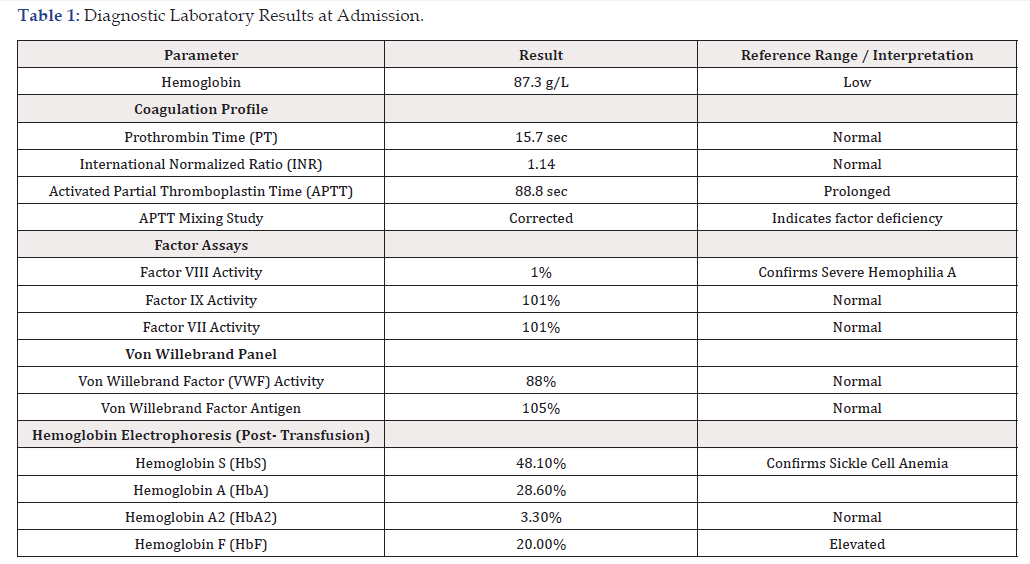
Table 1:Diagnostic Laboratory Results at Admission.
Discussion
The co-existence of sickle cell anemia and hemophilia A in a single patient represents a rare clinical entity, with only a handful of cases reported in the literature [8-12]. Our case of an 8-monthold infant highlights an early and severe presentation, complicated by both vaso-occlusive events (dactylitis) and a significant bleeding tendency. The management of such patients is fraught with complexity due to the opposing nature of the two diseases. HA necessitates proactive management to prevent bleeding, typically achieved through FVIII replacement prophylaxis. In contrast, SCA management focuses on preventing VOCs and hemolytic complications, often using hydroxyurea, which elevates Fetal Hemoglobin (HbF) levels and reduces sickling. A critical, unanswered question in this dual-diagnosis population is the safety and efficacy of hydroxyurea. While our patient is stable on FVIII prophylaxis, the potential addition of hydroxyurea in the future to manage SCA symptoms warrants careful consideration. There is a theoretical concern that hydroxyurea, which can cause mild myelosuppression, might interact unpredictably with the hemostatic balance in a hemophiliac patient, though no concrete evidence exists to support or refute this [12]. A review of similar cases reveals varied clinical experiences (Table 2). Some reports describe a “thrombohemorrhagic balance,” where the hypercoagulable state of SCA may paradoxically mitigate the bleeding tendency of hemophilia [8]. However, this is not a consistent finding, as other patients experienced significant hemorrhagic events [9, 10]. The successful use of Desmopressin (DDAVP) in one adult patient without triggering a VOC suggests that certain therapies can be safely applied [11]. This underscores the necessity of individualized treatment plans.
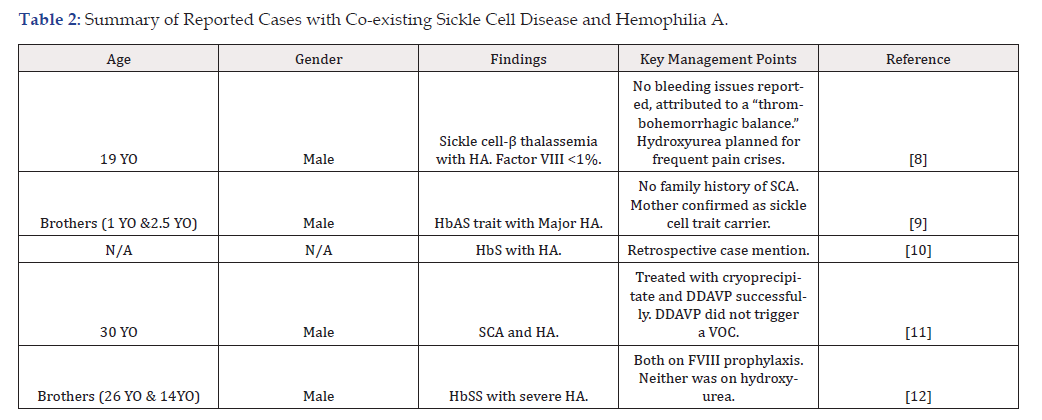
Table 2:Summary of Reported Cases with Co-existing Sickle Cell Disease and Hemophilia A.
This case illustrates the importance of a high index of suspicion for dual disorders in patients presenting with atypical or severe hematologic symptoms. A multidisciplinary team involving hematologists, pediatricians, pain specialists, and physiotherapists is crucial for managing the multifaceted complications of both diseases.
Conclusion
The concurrent diagnosis of hemophilia A and sickle cell anemia in a pediatric patient presents a unique and challenging management dilemma. While FVIII prophylaxis appears to be effective in controlling bleeding tendencies, the role of disease- modifying therapies for SCA, such as hydroxyurea, remains undefined in this context. This case report adds to the limited literature on this rare dual diagnosis and highlights the urgent need for further collaborative, multi-center studies to establish evidence-based guidelines. Such efforts are essential to elucidate the long-term outcomes, optimal therapeutic combinations, and overall quality of life for individuals navigating the complexities of these two lifelong hereditary conditions.
Acknowledgement
None.
Conflicts of Interest
None.
References
- Kizilocak H, Young G (2019) Diagnosis and treatment of hemophilia. Clin Adv Hematol Oncol 17(6): 344-351.
- Mehta P, Reddivari AKR (2023) Hemophilia. In: StatPearls. Treasure Island (FL): StatPearls Publishing.
- Migeon BR (2020) X-linked diseases: susceptible females. Genet Med 22(7): 1156-1174.
- Erik Berntorp, Kathelijn Fischer, Daniel P Hart, Maria Elisa Mancuso, David StephensenJ, et al. (2021) Haemophilia (Primer). Nat Rev Dis Primers 7(1): 45.
- Jastaniah W (2011) Epidemiology of sickle cell disease in Saudi Arabia. Ann Saudi Med 31(3): 289-293.
- Piel FB, Steinberg MH, Rees DC (2017) Sickle cell disease. N Engl J Med 376(16): 1561-1573.
- Weatherall DJ, Clegg JB (2001) Inherited haemoglobin disorders: an increasing global health problem. Bull World Health Organ 79(8): 704-712.
- Dhiman P, Chaudhary R, Sudha K (2015) Sickle cell-β thalassemia with concomitant hemophilia A: a rare presentation. Blood Res 50(4): 264.
- Amina F, Oukkache B (2018) Sickle cell trait and haemophilia: a rare association. Pan Afr Med J 30: 205.
- Swati Patel, V P Krishnan, Purva Kanvinde, Sangeeta Mudaliar, Nitin Shah, et al. (2020) Clinical course of patients with sickle cell anemia and co-inherited hematological disorders: experience at a tertiary hematological centre. Indian J Hematol Blood Transfus 36(4): 754-757.
- Glenn LD, Lovely RM, Goldsmith JC (1991) Combined sickle cell anemia and mild hemophilia A: successful treatment of hemorrhage with DDAVP. Am J Hematol 37(1): 64.
- Zaidi AU, Green NS, Sidonio RF (2019) Concurrent homozygous sickle-cell disease and severe haemophilia A: thromboelastography profiles. Haemophilia 25(6): e376-e379.




 We use cookies to ensure you get the best experience on our website.