
Research Article 
 Creative Commons, CC-BY
Exploring The Potential of Antimicrobial Peptides Against MDR Pathogens in Neonatal Ventilator- Associated Infections
*Corresponding author:Iqra Naz, Department of Microbiology, Jinnah University for Women, Karachi Pakistan
Received:August 29, 2025; Published:October 14, 2025
DOI: 10.34297/AJBSR.2025.28.003726
Abstract
The utilization of mechanical ventilation is crucial for neonates with compromised respiratory function, acting as a vital lifeline in critical care. However, this intervention increases the risk of Ventilator-Associated Pneumonia (VAP) and other respiratory infections, due to bacterial colonization in endotracheal tubes and tracheal secretions. This study investigates the potential of Antimicrobial Peptides (AMPs) derived from Lactobacillus acidophilus as a novel therapeutic strategy against these infections. Endotracheal Secretion samples were collected from neonates admitted to the NICU at the National Institute of Child Health (NICH), and 107 isolates were identified, including major MDR pathogens such as Staphylococcus aureus, Klebsiella pneumoniae, Acinetobacter baumannii, and Pseudomonas aeruginosa & enterobacter sp.. Antibiotic susceptibility testing revealed high resistance to commonly used antibiotics like Ampicillin, Azithromycin, and Ceftazidime, while Colistin and Meropenem proved to be more effective. AMPs were isolated from Lactobacillus acidophilus strains obtained from curd samples, and their molecular weights were determined via SDS-PAGE. These AMPs demonstrated strong antimicrobial activity, significantly inhibiting the growth of key MDR pathogens such as S. aureus, K. pneumoniae, and S. Typhimurium, though their activity was limited against Proteus mirabilis and P. aeruginosa. This study underscores the potential of Lactobacillus-derived AMPs as a promising alternative therapy to combat MDR pathogens, offering a new approach for managing VAP and other infections in neonates.
Keywords:Endotracheal secretions, Antimicrobial peptides, Neonates, Multi-drug resistant pathogens
Introduction
The neonate population admitted to Neonatal Intensive Care Units (NICU) is extremely fragile; premature newborns weighing between 24- and 30-weeks gestational age are particularly susceptible to infections related to medical care due to their inherent immunologic immaturity. One of the most prevalent illnesses acquired in hospitals that has a high fatality rate is Ventilator-Associated Pneumonia (VAP) [1]. Endotracheal Tubes (ETTs) have been shown to decrease mucociliary clearance, interfere with the cough reflex, and encourage the accumulation of tracheobronchial secretions in the lung, which may be independent risk factors for Ventilator- Associated Pneumonia (VAP) [2-4]. Pseudomonas aeruginosa, Enterobacter species, and Klebsiella species are among the most frequent gram-negative bacteria that cause VAP. Conversely, VAP could involve coagulase- negative staphylococci and Gram-positive bacte ria such as Staphylococcus aureus [5-8]. Cultures of polymicrobial species are frequently obtained through tracheal there has been a rapid global rise in pathogenic bacteria resistant to multiple antibiotics. This alarming increase in bacterial resistance to nearly all clinically effective antibacterial agents has emerged as one of the most critical public health challenges over the past decade. In many cases, infections caused by Multidrug-Resistant (MDR) strains are no longer treatable with existing antibiotics, creating an urgent need for the development of new antibiotics and novel antimicrobial agents [9]. Probiotic microbes and gut bacteria create a variety of chemicals, such as non-digestible molecules called Lipopolysaccharides (LPSs), Fructooligosaccharides (FOSs), and Galactooligosaccharides (GOSs). Prebiotics are substances that specifically promote the development and/or activity of gut flora. The ability of probiotics to create antimicrobial compounds that are hostile to other microorganisms is a key and crucial characteristic [10].
That lactic acid Gram-positive fermenting human-associated bacteria make up the vastly diverse group of bacteria, and some of them are also recognized to have probiotic qualities because they are part of the normal human microbiota. Catalase negative, non-spore-forming, anaerobic, cocci or bacillus format, without cytochromes or motility structures are the typical characteristics of these bacteria [11]. The use of probiotics can help prevent diarrhoea, infections, and stomach ulcers; it can also reduce allergies and lactose intolerance; it can boost systemic and intestinal immunity; it can have antimicrobial properties; it can inhibit some types of cancer; and it can improve cholesterol control [12-14]. L. acidophilus are thin rods, 2–10μm in length, with spherical tips. Lactobacillus acidophilus has an ideal pH range of 5.5–6.0 and a restricted heat tolerance because the majority of its strains are microaerobic. The growth properties of each strain also differ slightly from one another. L. acidophilus is eosinophilic by nature and exhibits strong resistance to bile and acids [15]. As with all Lactobacillus, L. acidophilus primarily fights pathogens through two mechanisms: either adhering to the epithelium and creating a barrier that stops colonization, which creates competition for receptors on epithelial cells, or producing antimicrobial substances like bacteriocins, hydrogen peroxide, acids, and Antimicrobial Peptides (AMPs) [11]. Antimicrobial Peptides (AMPs) are biologically active secondary metabolites, though they are not living entities. These peptides vary widely in their amino acid sequences and structures, and they are classified into several categories, including cecropins, defensins, and bacteriocins. Each group of AMPs has distinct characteristics and functions [10]. It is produced by both Gram-positive and Gram-negative bacteria, as well as by some probiotics. These peptides have a broad range of antibacterial activities and are considered safe alternatives to conventional antibiotics. Over the past twenty years, AMPs have gained significant attention as natural food preservatives and are increasingly utilized in food products for the biological control of spoilage and pathogenic bacteria [17,18]. These Antimicrobial Peptides (AMPs) typically act by first interacting electrostatically with the plasma membrane, leading to pore formation. This disruption causes leakage of intracellular contents and ultimately results in cell death [11,18]. However, certain peptides are also capable of interacting with intracellular targets, such as nucleic acids [11].
This study aimed to identify bacterial colonization in endotracheal tubes and tracheal secretions of neonates admitted to the NICUs of NICH hospitals. Additionally, it sought to evaluate the potential of Antimicrobial Peptides (AMPs) derived from Lactobacillus acidophilus as a novel therapeutic strategy to address ventilator-associated infections caused by Multidrug-Resistant (MDR) pathogens in neonates undergoing mechanical ventilation.
Methodology
Sample Collection
The endotracheal secretion samples were collected from neonates admitted to the Neonatal Intensive Care Unit (NICU) of National Institute of Child Health (NICH). The samples were obtained using the following techniques and stored at appropriate temperatures for further analysis.
a. Endotracheal Aspirate: To sample, a catheter was aseptically
inserted via the endotracheal tube, and secretions were aspirated
into a sterile syringe.
b. Endotracheal tube tip: The tip of the endotracheal tube was
aseptically clipped and placed in a sterile container [19].
Isolation and Identification of Pathogens
The collected endotracheal secretion samples were cultured on selective and differential media e.g, Blood agar and MacConkey agar, Chocolate agar, SS media to isolate potential pathogens. The isolated bacterial colonies were subjected to standard biochemical tests. E.g, Catalase, Coagulase, Oxidase, Indole, Citrate, Nitrate, Clarce, TSI for the identification of the pathogens. The isolated pathogens were stored using glycerol preservation method.
Antibiotic Susceptibility Testing
The disc diffusion method was used to evaluate each detected organism’s sensitivity to antibiotics in Mueller-Hinton agar supplemented with 5% sheep blood, in accordance with the guidelines set out by the Clinical and Laboratory Standards Institute [6,20].
Isolation of Lactobacillus
Lactobacillus is a common bacteria found in fermented food products like curd (also known as yogurt). Therefore, the isolation of Lactobacillus from curd samples can be one from both local and packed curd samples, meticulously labelled to distinguish the source of each sample.
a. Dilution and Serial Dilution: To determine the bacterial
count, serial dilutions of the curd samples were prepared by
mixing a small amount of curd with sterile water. Known volumes
of the diluted samples were transferred into successive
tubes containing the same volume of diluent.
b. Plating: The diluted curd samples were plated on selective
culture media, MRS (de Man, Rogosa, and Sharpe) agar, which
encourages the growth of Lactobacillus bacteria. To obtain
pure cultures of Lactobacillus, the selected colonies were
sub-cultured onto fresh MRS agar plates, ensuring the absence
of contamination from other microorganisms.
c. Identification: Further tests, including Gram staining and biochemical
tests, were performed to confirm the isolated colonies’
identity as Lactobacillus. The culture was then kept at 4 o
C in MRS broth with a pH of 5.5[21].
Purification and Characterization of Amps
Extraction of Amps
After the incubation period, 60% of the acetone was precipitated by centrifuging the broth and freezing the recovered supernatant. This involved constantly swirling a mixture of chilled acetone and cold supernatant and keeping overnight at −15°C in deep freeze. The mixture was centrifuged for 20 minutes at 4°C and 8000 rpm to get precipitate following an overnight precipitation interval. After that dissolving the precipitate in a 25mM phosphate buffer, s=dialysis was performed in that same buffer. [21].
Determination of Molecular Weight
Sodium dodecyl sulfate-polyacrylamide gel electrophoresis (SDS-PAGE) was used to quantify the molecular weight of the AMPs. A vertical slab gel technique with a 4% stacking gel and a 15% separating gel was used. Molecular weight markers and AMPs samples were run for eight hours at 100 V. After the trial was over, the gel was stained with Coomassie brilliant blue G-250 and then destained with a methanol: acetic acid solution. By calculating the relative mobility of molecular weight markers that were run concurrently, the molecular weight of the AMPs was determined [22].
Detection of Antagonistic Activity
In this study, the antagonistic activity of AMPs-producing isolates (test organisms) was assessed using the agar well diffusion method. The indicator organism, and pathogens was prepared in the form of a lawn on an MHA agar plate using the spread plate method. Clear wells with a 6 mm diameter were made in the agar using a sterile Pasteur pipette. Approximately 60μl of the supernatant enriched with AMPs from the Lactobacillus was carefully loaded into each clear well. The wells were labelled accordingly to ensure accurate identification. The plates were incubated at 37°C for 18-24 hours to allow for interaction between the AMPS and the isolated pathogens. After the incubation period, the plates were examined for the presence of clear zones surrounding the wells [23].
Hemolytic Activity of AMPs
The peptides’ haemolytic activity was measured by measuring the amount of haemoglobin released from sheep red blood cells. To isolate erythrocytes, the whole sheep blood was centrifuged at 400 g for 10 minutes at 4°C. After that, resuspended erythrocytes in PBS after washing them in Phosphate Buffered Saline (PBS) until the supernatant became clear. Pipette 20μL of each aliquot’s supernatant and serially diluted it 10 times with PBS. Absorbance of the solution was measured at 567nm [24,25].
Result & Discussion
Microbiological Analysis of Endotracheal Secretions
The microbiological analysis of endotracheal secretions from mechanically ventilated neonates revealed a significant presence of Staphylococcus aureus, Acinetobacter baumannii, and Klebsiella pneumoniae. Pseudomonas aeruginosa and Enterobacter sp. were also identified, indicating a diverse array of pathogens colonizing the respiratory tract. Additionally, Salmonella typhimurium, Proteus mirabilis, and Elizabethkingia meningoseptica & Moraxella sp. were detected, there are total 107 isolates that showcasing a varied microbial spectrum in these secretion, as shown in Fig:1, highlighting the complexity of Antimicrobial peptides against the MDR pathogens (Figure 1).
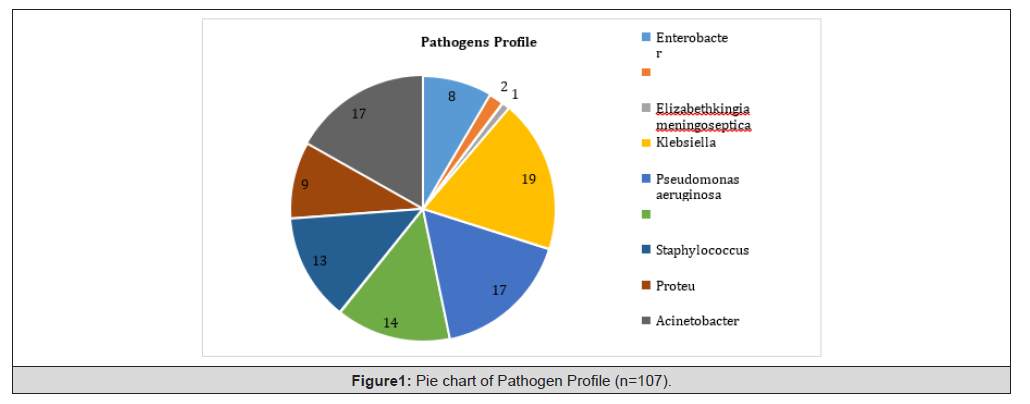
Figure 1: Pie chart of Pathogen Profile (n=107).
Antibiotic Susceptibility Testing
The analysis of antibiotic resistance in Gram-negative pathogens highlights a critical issue of Multidrug Resistance (MDR). The results show that Ampicillin (AMP) faces the highest resistance levels, rendering it largely ineffective for treating infections caused by these pathogens. This high resistance is mirrored in other antibiotics such as Azithromycin (AZM) and Ceftazidime (CAZ), both of which exhibit significant resistance across multiple bacterial strains. In contrast, Colistin (CST) and Meropenem (MEM), which belong to the polymyxin and carbapenem classes respectively, demonstrate more moderate resistance levels. CST remains a crucial last-resort antibiotic. Similarly, MEM continues to be effective against many pathogens. Imipenem (IPM), another carbapenem antibiotic, shows less pronounced resistance compared to AMP but still indicates a growing concern. The data underscores the prevalence of MDR pathogens, particularly in strains like Klebsiella pneumoniae, Acinetobacter baumannii, and Pseudomonas aeruginosa etc as shown in Figure 2. As well as 65% of gram positive organism S.aures strains are shown resistance with methicillin. These pathogens often exhibit resistance to multiple antibiotic classes, complicating treatment options. The resistance patterns observed highlight the urgent need for new antibiotics and effective management strategies to combat MDR infections and mitigate the public health impact (Figure 2).
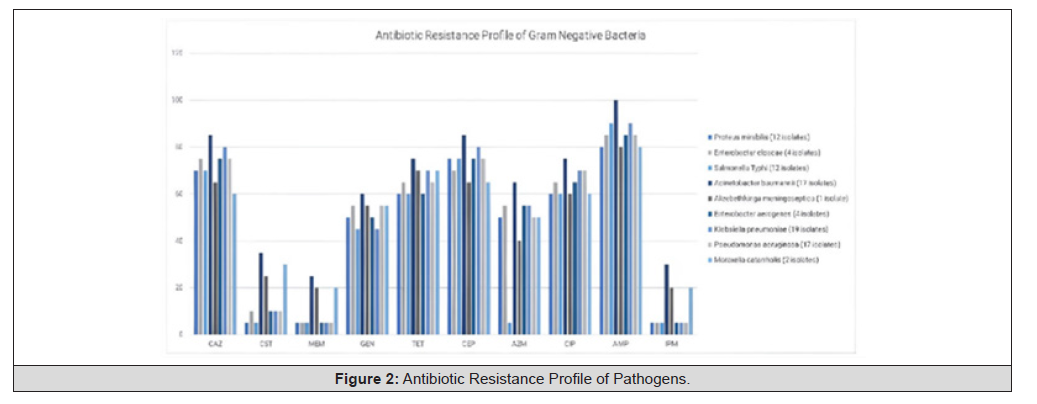
Figure 2: Antibiotic Resistance Profile of Pathogens.
Isolation and identification of Lactobacillus from Curd Sample
The isolation and cultivation of Lactobacillus—short, rodshaped, Gram-positive strains (as shown in Fig. 3, Gram stain image)- were successfully carried out from both local and packed curd samples. Interestingly, microbial analysis revealed that the abundance of Lactobacillus in local curd was significantly higher compared to packed curd. The electron microscopy image of the isolated Lactobacillus strains is shown in Figure 4 (Figure 3).

Figure 3: Gram positive Lacidophilus.

Figure 4: Electron Microscopy of L.acidophilus.
SDS-PAGE
SDS-PAGE analysis revealed well-defined bands as shown in fig 4, at molecular weights of 24 kDa, 31 kDa, and 18 kDa, signifying the size distribution of the antimicrobial peptides (AMPs) (Figure 5).

Figure 5: Molecular weight of isolated AMPs.
Antimicrobial Activity
The study demonstrated promising antimicrobial efficacy of the isolated AMPs across a diverse range of pathogens. Significant inhibitory activity was observed against S. aureus, K. pneumoniae, S. Typhimurium, and Enterobacter species, highlighting their potent antimicrobial potential. Additionally, the AMPs exhibited notable effectiveness against A. baumannii and M. catarrhalis. However, limited activity was recorded against P. mirabilis and P. aeruginosa, indicating varying levels of susceptibility among the tested organisms. These findings are illustrated in (Figure 6), with inhibition zones shown in (Figures 7,8).
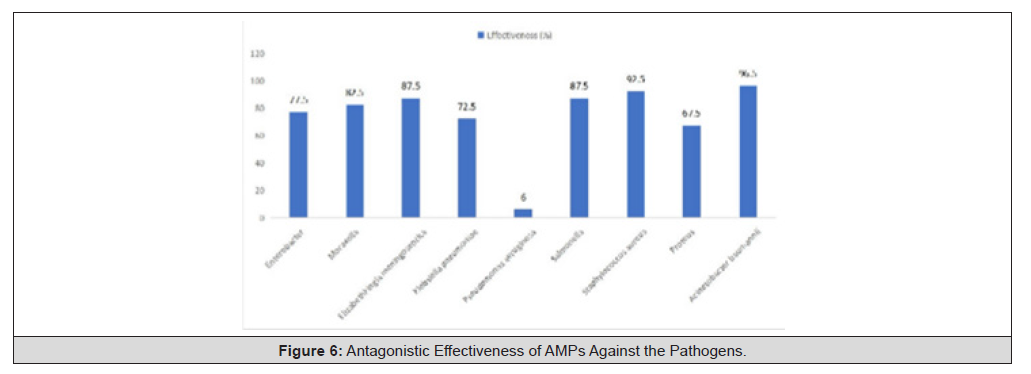
Figure 6: Antagonistic Effectiveness of AMPs Against the Pathogens
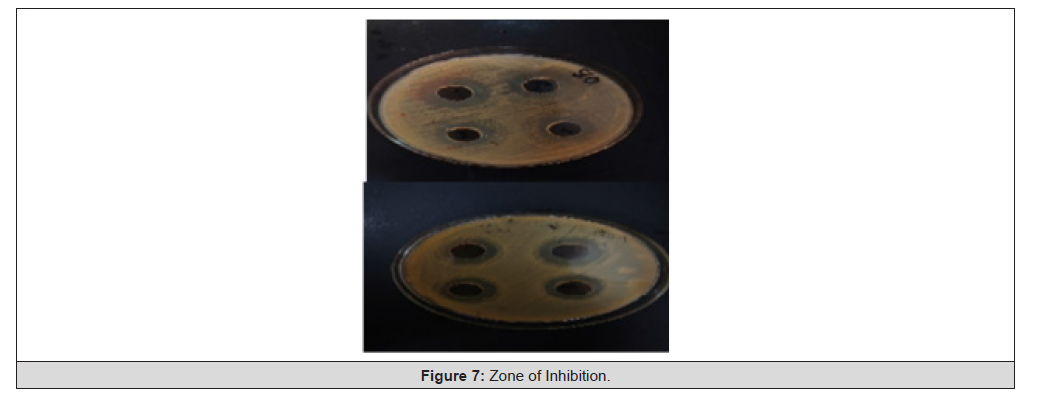
Figure 7:Zone of Inhibition

Figure 8: Hemolysis assay.
Haemolysis Assay
The Haemolysis assay results suggest low toxicity for the isolated antimicrobial peptides (AMPs) at concentrations of 100μg/ mL (5.26%), 50μg/mL (4.21%), 40μg/mL (3.16%), and 30μg/mL (1.05%) as shown in Figure 8. Notably, all values fall below a 5% threshold, indicating minimal haemolytic activity and suggesting a favourable safety profile.
Conclusion
The study’s findings underscore the potential of antimicrobial peptides (AMPs) derived from Lactobacillus acidophilus as a groundbreaking solution against multidrug-resistant (MDR) infections in mechanically ventilated neonates. The comprehensive approach adopted in this research involved screening endotracheal secretion samples from neonates at the National Institutes of Child Health (NICH) Hospital for MDR pathogens, followed by rigorous laboratory based assays to evaluate the efficacy of the selected peptides against these pathogens. Through techniques such as agar diffusion assays, minimum, and sodium dodecyl sulfate-polyacrylamide gel electrophoresis (SDS-PAGE), the study substantiated the antimicrobial activity, purity, and Structural integrity of AMPs. These findings offer a glimpse into the potential of AMPs to combat MDR infections effectively, attributed to their broad-spectrum activity and limited propensity for resistance development. The implications are ll (NICUs) to counter the escalating concern of MDR infections. This innovative approach presents hope for mitigating the vulnerability of mechanically ventilated neonates to nosocomial infections, thereby addressing a critical aspect of neonatal care. The study opens avenues for further research and development in harnessing AMPs as a viable strategy in combating MDR pathogens, potentially revolutionizing the landscape of neonatal healthcare.
Funding
No funding has been received for this study.
Transparency
None to declare.
Acknowledgement
None.
Conflict of Interest
None.
References
- Najafian B, Turkoman M, Shahverdi E, Noroozian R (2017) The main causes of bacterial colonization in endotracheal tubes and tracheal secretions in neonates admitted to the neonatal intensive care unit. Tanaffos 16(4): 277-282.
- Chastre J, FagonJY (2002) Ventilator-associated pneumonia. Am J Respir Crit Care Med 165(7): 867-903.
- Pneumatikos IA, Dragoumanis CK, Bouros DE, Warner DS, Warner MA (2009) Ventilator-associated pneumonia or endotracheal tube-associated pneumonia? An approach to the pathogenesis and preventive strategies emphasizing the importance of endotracheal tube. Anesthesiology 110(3): 673-680.
- Vassilakopoulos T (2009) The patient-ventilator interaction has a third player: the endotracheal tube. Chest 136(4): 957-959.
- Cernada M, Aguar M, Brugada M, Gutiérrez A, López JL, et al. (2013) Ventilator-associated pneumonia in newborn infants diagnosed with an invasive bronchoalveolar lavage technique: a prospective observational study. Pediatr Crit Care Med 14(1): 55-61.
- Kawanishi F, Yoshinaga M, Morita M, Shibata Y, Yamada T, et al. (2014) Risk factors for ventilator-associated pneumonia in neonatal intensive care unit patients. J Infect Chemother 20(10): 627-630.
- Tekin R, Dal T, Pirinccioglu H, Oygucu SE (2013) A 4-year surveillance of device-associated nosocomial infections in a neonatal intensive care unit. Pediatr Neonatol 54(5): 303-308.
- Zhou Q, Lee SK, Jiang SY, Chen C, Kamaluddeen M, et al. (2013) Efficacy of an infection control program in reducing ventilator-associated pneumonia in a Chinese neonatal intensive care unit. Am J Infect Control 41(11): 1059-1064.
- Rocha G, Soares P, Gonçalves A, Silva AI, Almeida D (2018) Respiratory care for the ventilated neonate. Can Respir J 2018(1): 7472964.
- Akter N, Hashim R, Pham HQ, Choi SD, Lee DW, et al. (2020) Lactobacillus acidophilus antimicrobial peptide is antagonistic to Aeromonas hydrophila. Front Microbiol 11: 570851.
- da Silva BS, Díaz Roa A, Yamane ES, Hayashi MA and Junior PIS (2023) Doderlin: Isolation and characterization of a broad-spectrum antimicrobial peptide from Lactobacillus acidophilus. Research in Microbiology 174(3): 103995.
- Gilliland SE (1990) Health and nutritional benefits from lactic acid bacteria. FEMS Microbiol Rev 7(1-2): 175-188.
- Masood MI, Qadir MI, Shirazi JH, Khan IU (2011) Beneficial effects of lactic acid bacteria on human beings. Critical reviews in microbiology 37(1): 91-98.
- De Vuyst L, Vandamme EJ (2012) Bacteriocins of lactic acid bacteria: microbiology, genetics and applications. Springer.
- Gao H, Li X, Chen X, Hai D, Wei C et al. (2022) The functional roles of Lactobacillus acidophilus in different physiological and pathological processes. J Microbiol Biotechnol 32(10): 1226-1233.
- Wannun P, Piwat S, Teanpaisan R (2016) Purification, characterization, and optimum conditions of fermencin SD11, a bacteriocin produced by human orally Lactobacillus fermentum SD11. Applied biochemistry and biotechnology 179: 572-582.
- Amiri S, Mokarram RR, Khiabani MS, Bari MR, Khaledabad MA (2022) Characterization of antimicrobial peptides produced by Lactobacillus acidophilus LA-5 and Bifidobacterium lactis BB-12 and their inhibitory effect against foodborne pathogens. Lwt 153: 112449.
- Nicolas P (2009) Multifunctional host defense peptides: intracellular‐targeting antimicrobial peptides. The FEBS journal 276(22): 6483-6496.
- Shen L, Wang F, Shi J, Xu W, Jiang T, et al. (2019) Microbiological analysis of endotracheal aspirate and endotracheal tube cultures in mechanically ventilated patients. BMC Pulm Med 19(1): 1-8.
- Nurahmed N, Kedir S, Fantahun S, Getahun M, Mohammed A, et al. (2020) Bacterial profile and antimicrobial susceptibility patterns of lower respiratory tract infection among patients attending selected health centers of Addis Ababa, Ethiopia. The Egyptian Journal of Chest Diseases and Tuberculosis 69(2): 399-406.
- Bhardwaj A, Puniya M, Sangu KPS, Kumar S, Dhewa T (2012) Isolation and biochemical characterization of Lactobacillus species isolated from Dahi. Research & Reviews: A Journal of Dairy Science and Technology 1: 18-31.
- Srinivasan R, Kumawat DK, Kumar S, Saxena AK (2013) Purification and characterization of a bacteriocin from Lactobacillus rhamnosus L34. Annals of microbiology 63: 387-392.
- Hassan MU, Nayab H, Rehman TU, Williamson MP, Haq KU, et al. (2020) Characterisation of bacteriocins produced by Lactobacillus spp. isolated from the traditional Pakistani yoghurt and their antimicrobial activity against common foodborne pathogens. Biomed Res Int 2020(1): 8281623.
- He J, Luo X, Jin D, Wang Y, Zhang T (2018) Identification, recombinant expression, and characterization of LGH2, a novel antimicrobial peptide of Lactobacillus casei HZ1. Molecules 23(9): 2246.
- Waghmare SR, Randive SA, Jadhav DB, Nadaf NH, Parulekar RS, et al. (2019) Production of novel antimicrobial protein from Bacillus licheniformis strain JS and its application against antibiotic-resistant pathogens. Journal of Proteins and Proteomics 10: 17-22.




 We use cookies to ensure you get the best experience on our website.