
Research Article 
 Creative Commons, CC-BY
Higher Cowpea (Vigna Unguiculate L. Walp) Production: Using Soil Type Series and Improve Cultivars
*Corresponding author:Olaniyan Mi, Oyo State College of Agriculture and Technology, Igboora, Oyo State, Nigeria.
Received:August 01, 2025; Published:August 14, 2025
DOI: 10.34297/AJBSR.2025.28.003644
Abstract
Study was conducted at Department of Soil Science Technology, Oyo State College of Agriculture and Technology, Igboora, during 2023 and 2024 cropping season to determine the influence of cultivars and different soil type on the growth and yield of cowpea (Vigna unguiculate). Four improved cowpea cultivars (JT89KQ 358-288, IT89KD-394 and IT97K-498-395 and IT97K-499-35) were obtained as a single batch from Agro-Permier store at Mokola Area, Ibadan, Oyo State, Nigeria, while the local cowpea cultivar (Danlla) was sourced from collaborated farmers at Ibarapa. Four improved cowpea cultivars and one local cultivar (Danlla) were cultivate on four different soil type series RSS1 (loamy sand), RSS2 (loamy fine sand), RSS3 (fine sand) and RSS4 (fine sand) on 6th of August 2023. The same experiment was repeated in the year 2024. The result showed that significant difference (P<0.005) existed among the improved varieties on growth characters measured. The percentage increase of grain yield of the improved cultivars JT89KQ 358-288, IT89KD-394 and IT97K-498-395 over local variety were 33.70%, 35.10% and 27.64% respectively. IT97K-499-35 and IT89KQ-288 cultivars performed best on RSS1 followed by RSS2 soil series. On the other hand, IT98KQ-288 performed optimally on RSS3 soil series. Based on the data from the study JT89KQ-288 Cultivars is recommended to be planted on sand loam or fine loam soil series by farmers in derived savanna agro-ecological zone at which the study station represents.
Introduction
Cowpea is one of the most important leguminous crops grown globally to the family fabaceae and sub-family, fabiodeae. It is helipued to have originated in West and Southern-Africa and is widely distributed in East and Central-Africa, India, Asia, South- and Central- America. It is grown extensively in the low lands and mid-altitude region of Africa (particularly in the dry savanna). Some times as sole crop but more often intercropped with cereals such as maize, sorghum, millet; according to Food and Agriculture Organization [1] the world production of cowpea is about 5.6 metric tonnes cultivated in an area of 12.6 million hectares of the world total cowpea production, Africa produced 95.3%, followed by Asia (2.8%), America (1.3%) and Europe (0.6%). The leading producers in Africa are Nigeria, Niger and Burkina Faso.
Among the legumes, cowpea is the most expensively grown, distributed and traded food crop consumed [2,3]. This is because the crop has a considerable nutritional and health value to man and livestock [3]. They form a major stable in the diet of African and Asian contributing to the overall protein intake of several rural and urban families, hence [3] regarded cowpea as the poor man’s major source of protein.
The grain contains high protein, carbohydrate, vitamins and fibre [4]. Their amino acid complements those of cereals [5,6]. Their mineral contents: calcium and iron are higher than that of milk; the vitamins – thiamin, riboflavin, niacin (water soluble) and their levels compared with that found in lean meat and fish [7-9] which make them very useful in blood cholesterol reduction [10]. Many researchers have demonstrated that daily consumption of 100 – 135gm of dry beans reduces serum cholesterol level by 20% thereby, reducing the risk of coronary heart diseases by 40% [10,11].
Cowpea is consumed either as a vegetable for the leaves, fresh pods, or grain. Cowpea is regarded as a cheap source of protein to poor resources farmers whose diet largely depends on starchy foods such as millet, sorghum, maize, and cassava, making it a potential crop to contribute to the alleviation of malnutrition [12].
Like many other legumes cowpeas can symbioses with nodule bacteria (Rhizobia) present in most, if not all tropical soils. The Rhizobia posses the nitrogenase complex, an enzyme capable of reducing atmospheric nitrogen into compounds assimilable by the host plant [13]. Legumes need a high phosphorous requirement for nodule development and optimal growth [14] and nodulation in cowpea is generally reduced in acid-aluminum – rich soils where even tolerant strains fail to infect root hairs [15]. Manganese (Mn) toxicity may also be involved in reducing cowpea nodulation at low – pH [10].
Cowpea plays an important role in soil fertility improvement, suppression of weeds and dry grain after maturity. Like most legumes, it has the ability of fixing atmospheric nitrogen, having the advantage of growing well even under poor and low levels of nitrogen and less fertile soils. Cowpea thrives in dry environments, due to its morphological as well as biochemical qualities. The deep-rooted system and less water loss through the stomata and its early maturity are some of the factors that make cowpea adaptable to hostile environments (Gumez, 2004). Although has a competitive niche in sandy soils, it is susceptible to excessively wet conditions and poorly drained soils [16]. It is an extreme resilient crop and cultivated under some extreme agricultural conditions in the World [17] cowpea can grown under rain fed condition as well as using irrigation (residual moisture along river or lake flood plains), during the dry season, provided that moisture along river or lake flood plains during the dry seasons is adequate.
The range of minimum and maximum temperatures is between 28-300C (night and day) during growing season for cowpea. Cowpea performs well in agro-ecological zones where the rainfall range is between 500-1200mm per year [18]. According to [19] cowpea is grown predominantly in the dry savannah’s to the Sahel in the frings of the Sahara Desert, where the annual rainfall is around 300mm or less annually. In the same development, one of the significant importance to the ecology is the ability to fix atmospheric nitrogen in marginal soils where farmers have no access to agricultural inputs such as fertilizers or manure. [20,21].
However, yield at farmers level is low averaging only 50 – 350kgha-1 [7,22], about 6.991,174 tonnes of dry cowpea grains are produced annually worldwide on about 12.316, 878ha. Despite the importance of cowpea, its productivity in typical sub-Sahara Africa farmers’ fields is very low, at less than 600kg/ha compared with a potential gain yield of over 2,000kg/ha [23].
The main causes of low yields are the use of unimproved varieties, inadequate application of inputs, drought and poor agronomic practices during crop production (Lydia et al; 2022).
In addition, cowpea production is constrained by many biotic and abiotic factors, including low soil fertility and a wide range of factors such as insects pests, diseases (fungai, viral and bacteria), parasites, weeds and unavailability of improved seeds [24-27] drought and soil salinity are major abiotic stress factors affecting crop production and food safety. In the same development, drought and high temperatures are identified as key stress factors that the researcher should emphasize more about the effects of climate change on plants.
In addition, cowpea production is constrained by many biotic and abiotic factors, including low soil fertility and a wide range of factors such as insects pests, diseases (fungai, viral and bacteria), parasites, weeds and unavailability of improved seeds [24-27] drought and soil salinity are major abiotic stress factors affecting crop production and food safety. In the same development, drought and high temperatures are identified as key stress factors that the researcher should emphasize more about the effects of climate change on plants.
Water scarcity causes a significant reduction in agricultural productivity and can led to total crop failure or reduce yield below 20 – 50% kgha-1 depending on stress severity, duration and timing. In addition, water deficit reduces leaf area index, ChlorophII content, number of pods per plant, and seed yield in cowpea (Bailey, 1990). Even though cowpea is regarded as a drought – tolerant crop and can grow under harsh climatic conditions with limited water, it is also affected by various climatic factors and often lead to low yields [30].
According to [31], cowpea’s growth period can range between 90 to 240 days, but this varies from variety to variety and climatic conditions. Bastos, 2011 reported that well-watered cowpea plants could produce more than 1,000kg grain ha-1, while in Ghana, an average yield of 1.25 metric tons per hectare was observed in farmer’s fields [32].
Drought has been reported as a major constraints in semiarid tropics due to erratic rainfall in the beginning and towards the end of the rainy season [33]. Water stress leads to a decrease in plant water content and turgor reduction and results in a decrease in cellular expansion (Iwuagwu et al; 2017). [33] noted that drought is one of the most important abiotic constraints threatening food security in the world. This is because the livelihood of African farmers depends on rain-fed agricultural systems that are seriously affected during periods of severe drought; thus drought is a serious phenomenon in Africa (Oladipo, 2008). Various adaptive measures are used by farmers to mitigate the effects or drought. From a survey conducted in the smallholder farmers preferred to change their cropping calendar or to use drought tolerant crops to mitigate the impact of drought. Some farmers opt to cultivate early maturing varieties as these are considered climate smart cultivars that can withstand terminal dry spell as well as pets and diseases damage that regularly occur later in the farming season. (Owugu et al; 2018). This work was carried out on production constraints and improvements strategic of Vigna unguiculata (L.) Walp using five cowpea cultivars (two released varieties, one introduced materials, one advance lines, and one local check) under imposing three different water regimes (water stress withholding irrigation 10% FC, moderate water stress (25% FC) and control with non-limiting water supply (75% FC, Control)) with hope to find out improvement strategic.
Materials and Methods
Study Site
The experiment was conducted in the main cropping seasons (July – November) of 2023 – 2024 at Teaching and Research Farm, Oyo State College of Agriculture and Technology, Igboora, Oyo State, Nigeria. Igboora is in Ibarapa Central Local Government Area of Oyo State. It located between 70 151 – 70 331 North and 30 361 – 30 571 East. The location enjoys the wetland dry seasons, average annual rainfall is estimated at 1278mm while sunshine hours range from 24 hours in August to 7hours in February. Base on the prevailing climate and soil characteristics, there vegetation zones are identified in the area, these include forest, savanna and derived savanna. The forest zone with high relative humidity favours the cultivation of tree crops such as cocoa and citrus, as well as arable crops such as cowpea, maize, millet, cassava and yam.
Igboora falls in the derived savanna agro-ecological zone of Nigeria, the area was characterized by adequate rainfall that spread for about seven months (Mid March – September) and dry period (October – May). The annual rainfall of the area is highly variables over the year due to recent global warming while average temperatures range between 150C to 380C.
Screen House Procedure and Soil Analysis
Four different soil series types, four improve cowpea varieties and one local variety were used.
Source of Planting Material
The four improved cultivars were purchased as a single batch from Agro Premier Store at Mokola, Ibadan, Oyo State, Nigeria. While the local cultivar (Danlla and IAR-48) were sourced from collaborated farmers in Ibarapa.
Procedure and Experimental Design
In the middle of July, six (6) large blocks dimension of 100cm x 100cm were ploughed thrice within 6 weeks and harrowed after two weeks at the six different sites soil was prepared by ridging at 0.7m spacing between ridges. The layout was marked by using tape, pegs, cutlass and rope. Within each ridge’s unit, a block of dimension 24cm x 28cm was prepared, and four subunits each measuring 17m x 11m were laid out within this block, for the four replicates of eight (8) randomized block design, which had eight (8) treatments (4 cultivars x 4 soil series). The individual treatments were laid out on plots (6m x 6m) separated by a 1m alley on all sides to overcome border effects within the replicates. Three (3) seeds of cowpea from each variety were planted per hole in August (main cropping season) by hand at 0.75m x 0.4m and thinning at two plants per hole was done at ten (10) days after emergence (666666 plants ha-1). Hoe-weeding was regularly carried out. Insect pests were controlled by karate 2.5 EC at two (2) weeks after seedling emergence and thereafter at 10days intervals. A dose of 20gNha-1 + 30kgPO2 O- 3 ha-1 was applied in 2023 on all the plots and at the beginning of the 2024 rainy season for the second planting.
The experiment was conducted in two series 2023 – 2024: 2023 – 2024 based on a complete block designs, four (4) replicates. Treatments consisted of a factorial combination of 4 improved cowpea varieties, 1 local cowpea varieties and 4 soil series.
Growth parameters measured were plant height, branches per plant, pods per plant, seeds per plant, grain yield, and straw yield.
Pod and Yield related Parameters
Dry grain yield (kgha-1): one hundred (100) seeds weight yield were weighed with triple beam balance (Haus Model) and extrapolated to hectares. Number of pods per plant were determined following the method of Egho (2009). One meter length of cowpea row was taken with 1 meter rule. The length was marked with 2 stakes and the pods and plants that fell within the distance were counted. The number of pods was then divided by the number of cowpea plants.
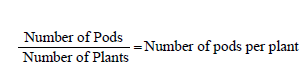
At maturity, commencing from 65 – 70 days after planting (DAP). Pods were harvested with hand, sun dried for one week and later shelled and winnowed. The dry grain yield in each plot were weighed and recorded. Pod load was assessed in the field by visual rating on a scale of 1 – 9 following the procedure of Egho (2009).
Statistical Analysis
Data collected were subjected to Anlaysis of Variance (ANOVA) while significant means were separated with the Duncan’s Multiple Range Tests, using SAS (2005). Procedure for RCBD significant difference in the treatment means were further analyzed using Least Significant Difference (LSD) values (Gomez and Goonez, 1984). Regression and correlation analyses were carried out to determine the relationships between nutrient and yields.
Results and Discussion
Soil Physical and Chemical Properties
The initial pre-planting soil properties of the area under study are shown in Table 1. The pre-planting soil analysis showed that the soil (RSS 1, RSS2, RSS3, RSS4, RSS5 and RSS6) were marginally fertile which implies that the soil is low in nitrogen content, organic matter, available phosphorus, exchangeable bases and exchangeable cations following the ratings of Federal Ministry of Agriculture and Natural Resources (FMANR) (1990). This further implies that the soil was poor in nutrients and of low fertility, therefore, response to organic manure would be encouraged (Table 1). The pH value of 6.10, 6.21 of the soil indicated that the soil was slightly acidic and this could be attributed to the high rainfall prevalent in the area leading to leaching of the soil. The low organic matter content and total nitrogen could be attributed to the effects of soil erosion, leaching and bush burning which are predominant in the study area. Similarly, the low exchangeable cations content of the soil. The higher base saturation indicates that the study site has low fertility status which may be due to the long usage of the area for serious cropping without replenishing the lost nutrient through fertilizer application Table 1.
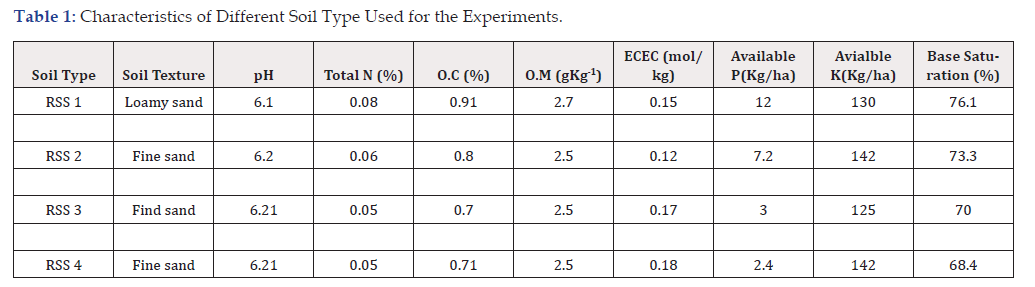
Table 1:Characteristics of Different Soil Type Used for the Experiments.
*Note: O.C = Organic Carbon; O.M = Organic Matter; ECEC = Effective Cation Exchange Capacity
The Growth and Yield of JT89KQ-288 Cultivars Under Moderate Water Stress
The performance of improved cultivar (JT89KQ-288) planted on plot with loamy sand (RSS1) texture of 65.50 and 72.20% and lower silt texture of 7.40 and 8.30% significantly (p<0.05) improved the length of the branches per plant from 8.35 to 9.00, pods per plant from 20.00 to 25.56; seed per plant, 8.80 to 10.25; grain yield, from 310.50 to 452.48 per hectare; straw yield was increased from 6.52 to 7.46 per hectare while the plant height of the local varieties (Danila) was higher over improve varieties (Table 2).
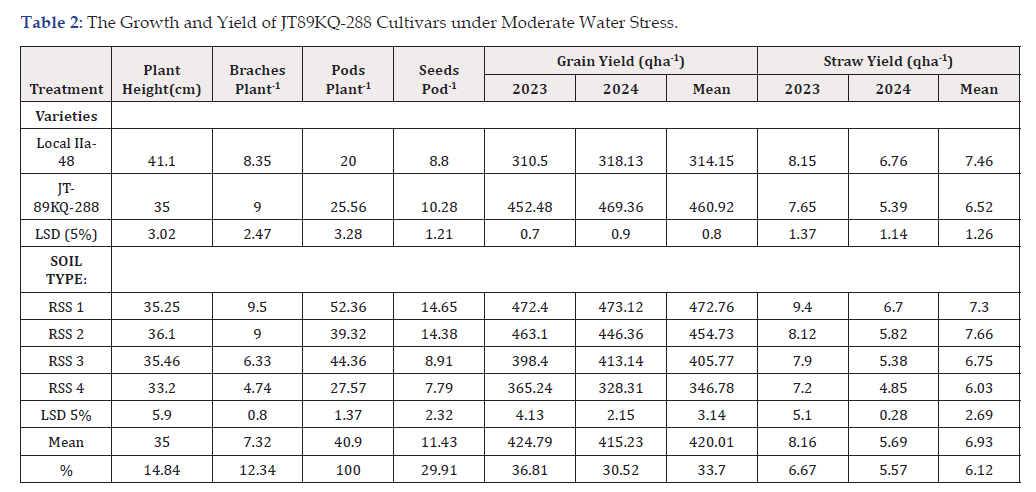
Table 2:The Growth and Yield of JT89KQ-288 Cultivars under Moderate Water Stress.
Data collected on crop yield and growth were in agreement with previous findings of various authors who found out that particles size distributions, pH and exchange acidity influence plant growth, productivity and yield during cropping season [34,35]. The local variety plant (Danila) were taller than that of JT89KQ-288 cultivars but branches per plant, pods per plant, seeds per pod, grain yield per hectare and straw yield per hectare were significantly higher in JT89KQ-288 as compared to local variety. However, straw yield which was significantly higher with local variety, might be due to more vegetable growth. The increase in seed yield due to improved variety (JT89KQ-288) was 29.91% over local variety. Variation in growth and yield of JT89KQ-288 was also observed due to soil type. Maximum seed and straw yield was recorded in RSS1 soil series followed by RSS2 soil series in both years (Table 2). The higher yield in RSS soil series was probably due to better soil fertility status. Soil fertility that has to do with soil water, nutrient, pH (soil reaction) and soil health in adequate amount/quantity Table 2.
Improved varieties of cowpea were shorter in height as compared to local variety, but branches plant-1, Pods Plant-1 and Seed Pod-1 were higher in IT89KD-394 resulting in higher seed yield by 47.86% over local variety (Table 3). However, the straw yield was higher in local variety. The higher seed yield and yield attributes of improved variety IT89KD-394 were probably due to its genetic characteristics. On the contrary the vegetative growth was more in local variety resulting in higher straw yield. Among soil series, the IT89KD-391 production performance was maximum in RSS 1 series which was significantly higher over RSS 2, RSS 3 and RSS 4 soil series in the year 2003 and 2004 Table 3.
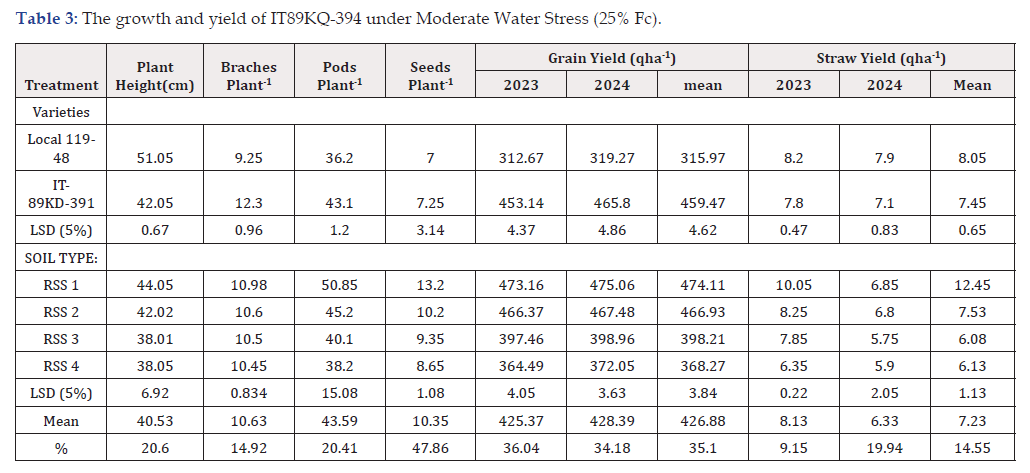
Table 3:The growth and yield of IT89KQ-394 under Moderate Water Stress (25% Fc).
Variation in Plant growth and yield parameter of IT97K-498-395 varieties were observed. It was found that plant height was higher in the local variety but branching and number of pods were more in IT97K-498-395. The seed yield was increased by 16.67% (Table 4) due to adoption of improved varieties of IT97K-498-395 was better in RSS2, RSS3 soil compared to RSS4 soil series Table 4.
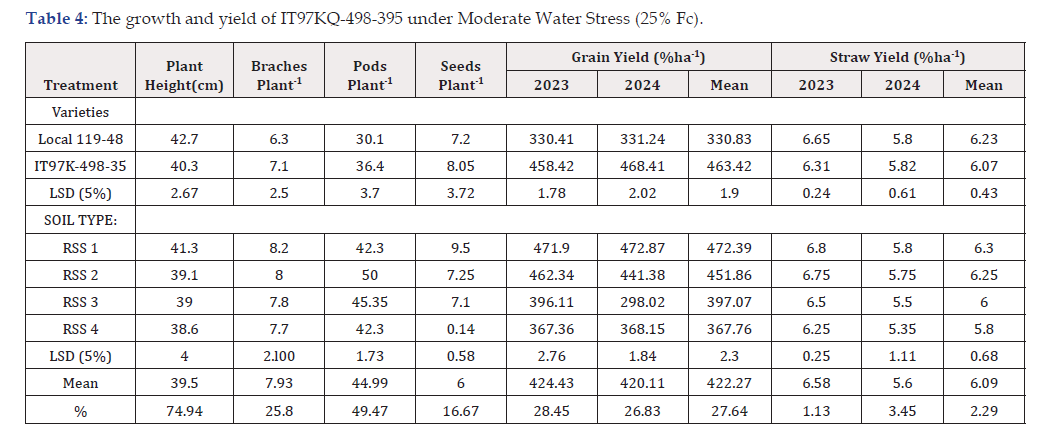
Table 4:The growth and yield of IT97KQ-498-395 under Moderate Water Stress (25% Fc).
Observations in this study, suggest a significant interaction between soil series and varieties. This was evidenced by the record of high grain yield in the cowpea cultivars (JT89KQ-288) that cultivate on soil series (RSS1), against low grain yield in the varieties that were planted on RSS2, 3 and 4. Significant difference at 5% probability level were observed in all the varieties of cowpea studied with JT89KQ-288 performing significant better in all the growth and yield characters measured when compared to the other varieties (Tables 2, 3 and 4). These four improved cowpea cultivars had appreciable accumulation of grain yield when compared to local varieties.
The pooled data revealed that, of all soil series considered, grain and straw yield were highest in all RSS1.
Conclusion
The combined effects of soil properties significantly resulted in better performance of improved cowpea varieties with respect to growth parameter and yield compared with the local varieties. Therefore, sand loam (RSS1) and silt (RSS2) were recommended for higher cowpea production in the studied agro-ecological growing environment condition.
Acknowledgement
None.
Conflict of Interest
None.
References
- Achuba FI (2006) The effect of subletethal concentration of crude oil on the growth and metabolism of cowpea (Vigna unguiculata) seedlings. Environmentalist 21(1): 17-20.
- Agbogidi OM (2010) Response of six cultivars of cowpea (Vigna unguiculata (L. Walp.) to spend engine oil. African Journal of Food Science and Technology 1(6): 139-142.
- Anderson JW (1985) Cholesterol lowering effects of canned beans for hypercholestrolmic Medical Clinical Resources 33(4): 871-875.
- Applebaum E (1990) The Rhizobium and Bradyrhizobium legume symbiosis pp. 131-158 in p. Gresshof (ed) Molecular biology of symbiotic Nitrogen fixation. CRC. Press Boca Raton, FL.
- Bado BV, Sedogo MP, Lompo F (2004) Long term effects of mineral fertilizers, phosphate rock, dolomite and manure on the characteristics of an ultisol and maize yield in Burkina Faso. In: Bationo A. (eds). Managing nutrient cycles to sustain soil fertility in sub-sharan Africa 608.
- Barrett Rp (1990) Legume species and leaf vegetable in: Advances in new crops. (Eds.) J. Janick and J.F. Simon. Timber Press. Portland.
- Bastos EA, Nascimento SP, Silva EM, Freire Filho FR, Gomide RI (2011) Identification of Cowpea Genotypes for Drought Tolerance [Identificacao de genotipos de feijao-caupitolerantes a seca]. Revista Ciencia Agronomica 42: 100-107.
- Bolarinwa KA, Ogunkanmi LA, Ogundipe OT, Agboola OO, Amusa OD (2021) An Investigation of Cowpea Production Constraints and Preferences among Smallholder Farmers in Nigeria. GeoJournal.
- Boukar O, Belko N, Chamarthi S, Togola A, Batieno J, et al. (2018) Cowpea (Vigna unguiculata): Genetics, Genomics and Breeding. Plant Breeding 138: 415-424.
- Carvalho M, Munoz Amatriain M, Castro I, Lino Neto T, Matos M, et al. (2017) Genetic Diversity and Structure of Iberian Peninsula Cowpeas Compared to World-Wide Cowpea Accessions Using High Density SNP Markers. BMC Genomics 18(1): 891.
- Ddungu SP, Ekere W, Bisikwa J, Kawooya R, Okello Kalule D, et al. (2015) Marketing and Market Integration of Cowpea (Vigna unguiculata L. Walp) in Uganda. Journal of Development and Agricultural Economics 7: 1-11.
- Ddungu SP, Ekere W, Bisikwa J, Kawooya R, Kalule DO, et al. (2015) Marketing and market integration of cowpea. J. Dev. Agric. Econs 7: 1-11.
- Duke JA (1981) Vigna uniguiculata (L.) Walp spp. Unguiculata. In: Okeson, O.N. (ed.). Legumes of world importance. Plenum Press New York 303-305.
- FAO (2002) World Agriculture: towards 2015/2030. Summary report, Rome.
- FAO STAT (2016) Food and Agriculture Organization of the United Nations, Rome.
- FAO, IFAD, UNICEF, WFP & WHO (2017) The state of food security and nutrition in the world 2017: Building resilience for peace and food security. Rome: FAO.
- Fashakin JB, Fasanya JI (1998) Chemical composition and nutritive changes of some improved varieties of cowpea (Vigna unguiculata L.): some selected varieties from IITA, Ibadan, Nigeria Tropical Science 28: 111-118.
- Fashakin JB, Ojo FA (1988) Chemical composition and nutritives changes of some improved varieties of cowpea (Vigna unguiculata (L.) Walp 2: new breeds of International Institute of Tropical Agriculture Tropical Science 28: 191-199.
- Gomez C (2004) Cowpea: post-harvest operations. Food and Agriculture Organization of the United Nations (FAO), Rome, Italy.
- Hall AE (2012) Phenotyping Cowpeas for Adaptation to Drought. Frontiers in Physiology 3:155.
- Horn L, Shimelis H, Laing M (2015) Participatory Appraisal of Production Constraints Preferred Traits and Farming System of Cowpea in Northern Namibia: Implications for Breeding. Legume Research: An International Journal 38: 691-700.
- Huynh BL, Matthews WC, Ehlers JD, Lucas MR, Santos JR, et al. (2016) A Major QTL. Corresponding to the Rk Locus for Resistance to Root-Knot Nematodes in Cowpea (Vigna ungciculata L. Walp.) Theoretical and Applied Genetics 129: 87-85.
- Karungi J, E Adipala, S Kyamanywa, MW Ogenga Latigo, N Oyobo, et al. (2000) Pest management in cowpea. part 1. Influence of planting time and plant density on cowpea field pests infestation in eastern Uganda. Crop Protection 19: 231-6.
- Larweh V, Akromah R, Amoah S, asibuo JY, Kusi F, et al. (2019) Effect of Striga gesnerioides on Cowpea (Vigna unguiculata L. Walp) Yield Components. Research Square.
- Mulongoy K (1985) Nitrogen fixing symbiosis and Tropical ecosystem in: Cowpea research production and utilization (eds) Singh, S.R. and Rachie, K.O. John Willey and Sons. New York.
- Ofuya AK (1993) Evaluation of selected cowpea varieties for resistance to Aphis caccivora Koch. (Homophera: Aphididae) at the seedling and pod stage.
- Olajide AA, Ilori CO (2017) Genetic variability, performance and yield potentials of ten varieties of cowpea (Vigna unguiculata (L) Walp) under drought stress. Legume Genom. Genet 8: 817-825.
- Owolade OF, Akande MO, Alabi BS, Adediran JA (2006) Phosphorus level effects on brown blotch disease, development and yield of cowpea. World Journal of Agricultural Science 2(1): 105 108.
- Philip RD, McWatters KH (1991) Contribution of cowpea to nutrition and health. Food Technology 9: 127-130.
- Platt BS (1962) Tables of representative value of foods commonly used in tropical countries. Med. Res. Counc. Special edition report series No. 302, London.
- Rachie KO (1985) Introduction in Cowpea and Utilization. Singh, S.R. and Rachie, K.O. (Eds.) Wiley and Sons, London.
- Rivas R, Falcao HM, Ribeiro RV, Machado EC, Pimentel C, et al. (2016) Drought Tolerance in Cowpea Species is Driven by Less Sensitivity of Leaf Gas Exchange to Water Deficit and Rapid Recovery of Photosynthesis after Rehydration. South African Journal of Botany 103: 101-107.
- Rugare JT, Mabasa S, Tsekenedza S (2013) Response of Cowpea (Vigna unguiculata L.) Genotypes to Witch Weed (Alectra vogelii Benth) Infection. Asian Journal of Agricultural and Rural Development 3: 667-673.
- Timko MP, Singh B (2008) Cowpea, a multifunctional legume. In: Moore P.H., Ming R. (eds) Genomics of tropical crop plants. Springer, New York 227-258.
- Valenzuela H, Smith J (2002) Cowpea, Sustainable Agriculture Green Manure Crops, Aug. 2002, SA-GM-6.




 We use cookies to ensure you get the best experience on our website.