
Review Article 
 Creative Commons, CC-BY
In Memory of Arseniy Vasil’yevich Rusakov – on the 140th Anniversary of his Birth
*Corresponding author:Alexander N Zubritsky, European Society of Pathology, Moscow, Russian Federation.
Received:September 02, 2025; Published:September 11, 2025
DOI: 10.34297/AJBSR.2025.28.003690
Objective
The article is devoted to the life and creative path of the outstanding domestic pathologist and forensic medical expert, scientist, educator and organizer, laureate of the USSR Academy of Medical Sciences Prize named after AI Abrikosov and the USSR State Prize, Doctor of Medical Sciences, Professor Arseniy Vasil’yevich Rusakov.
Keywords:Arseniy Vasil’yevich Rusakov, Pathologist, Forensic medical expert, Scientist, Educator, Organizer, Professor
Review
July 21, 2025 marked the 140th anniversary of the birth of the outstanding Russian pathologist and forensic medical expert, scientist, educator and organizer, laureate of the USSR Academy of Medical Sciences Prize named after AI Abrikosov and the USSR State Prize, Doctor of Medical Sciences, Professor Arseniy Vasil’yevich Rusakov [1] (Figure1).
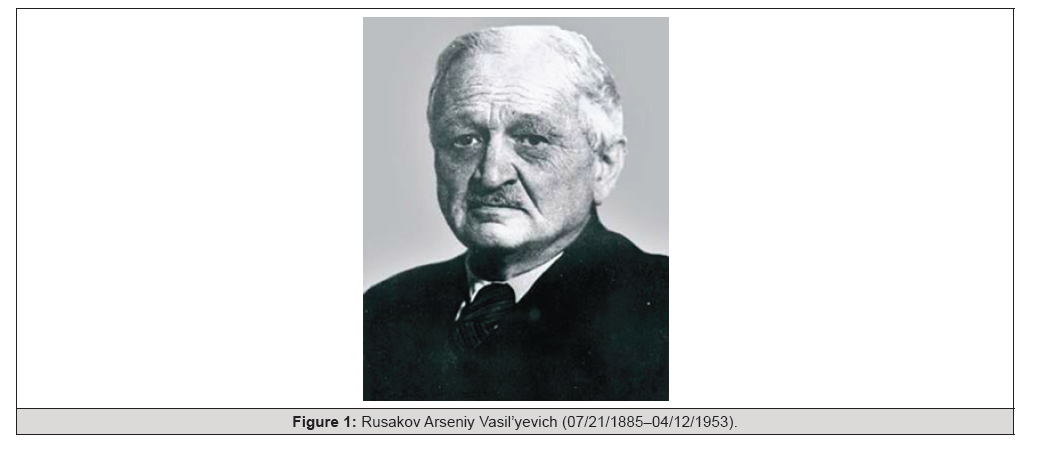
Figure 1:Rusakov Arseniy Vasil’yevich (07/21/1885–04/12/1953).
Arseniy Vasil’yevich Rusakov was born on July 21, 1885 in the city of Tver into a large peasant family of a factory manager. There were 8 children in the family: Maria (1869–1920), Vasily (1871– 1937), Sergei (1873–after 1944), Ivan (1877–1921), Ekaterina (1880–1943), Zinaida (1883–1976), Arseniy (1885–1953), Elikanida (1889–1970). Married. Wife: Rusakova (Vsesvyatskaya) Elizaveta Vasil’yevna (1890–1973). Children: Artemy (1918–2012), Taras (1926–1994) – both physicists [2].
Arseniy received his primary education up to the 4th grade in Tver, then studied at the Moscow Gymnasium, after graduating in 1903 he entered the Medical Faculty of the Imperial Moscow University (IMU), but in 1905 for participating in student unrest he was expelled from the 3rd year and exiled from Moscow. However, his brothers helped him to leave for Germany, where in 1906 Arseniy entered the Medical Faculty of the Ludwig Maximilian University of Munich, from which he successfully graduated in 1909. Returning to Russia, Arseniy Vasil’yevich first of all passed the exam for the title of physician at the IMU [3]. After that, he began an intensive medical career [4,5], namely: from 1909 to 1911 he worked as a clinician and epidemiologist, then as an assistant at the Children’s Hospital of St. Vladimir, from 1911 to 1913, Dr. Rusakov took part in the activities of the State Anti-Plague Commission in Transbaikalia, from 1913 to 1915 - prosector of the Pathology Department (PD) at the Sokolniki Hospital, from 1915 to 1918 – service in the army as head of the laboratory of the evacuation center, from 1918 to 1920 – prosector at the Moscow Prison Hospital, from 1920 to 1953 – head of the PD at the Sheremetev Hospital (now the N.V. Sklifosovsky Research Institute of Emergency Care)* [6]. Simultaneously, from 1919 to 1924 – he was an assistant at the PD at the Moscow Higher Medical School under the Communist Hospital, from 1930 to 1931 a senior research fellow, and from 1931 to 1953 – a forensic medical expert at the Physiological Institute of the People’s Commissariat of Education and the People’s Commissariat of Health, founded in 1929 in Moscow by the outstanding physiologist and biochemist Lina Solomonovna Shtern, who in 1939, looking ahead, was elected a full member of the USSR Academy of Sciences [7]. From 1940 to 1951 – head, of the forensic medicine department at the Central Institute for Advanced Medical Training of the People’s Commissariat of Health of the USSR (now the Russian Medical Academy of Continuous Professional Education – FSBEI CPE RMACPE of the Ministry of Health of the Russian Federation), then at the 1st (now the First Moscow State Medical University named after I.M. Sechenov) and 3rd Moscow Medical Institutes (now the Russian University of Medicine) [8]. In 1941 – Director, Deputy Director for Scientific Work, the first chairman of the Academic Council of this institute.
Throughout his scientific and professional career, A.V. Rusakov was distinguished by great diligence, extraordinary efficiency, purposefulness, amazing observation, simplicity, accessibility, goodwill, versatility of interests, extreme principledness, and an original lecturer. He was a rare soul, a biologist of great breadth, an innovator and a courageous fighter for the new, the progressive, an opponent of outdated dogmas. In a word, a scientist-thinker! [9,10] (Figure 2).

Figure 2:Arseniy Vasil’yevich Rusakov at work.
A man of science, at the same time, he never closed himself within the framework of his profession and throughout his life he was very fond of children, he was exceptional love of books, music, nature, touching relationships with animals [11]. A.V. Rusakov had a motto (credo), which he treasured and adhered to throughout his creative life, namely:” From practical work to science, and the results of scientific research into practice. We must hurry to fulfill our life’s duty to the end – to give to the future all the good things that we have taken from the past, and at the same time in multiplied quantities” [12].
A.V. Rusakov, in his relatively short life, was noted in his professional activity for the following achievements and awards [13,14]: in 1931, according to the plan developed by the scientist, a new pathoanatomical building of the N.V. Sklifosovsky Institute of Emergency Care was built. At that time, the building was equipped with the latest in science and technology: several large freezers, an operating room for experimental work, X-ray equipment for scientific research, an auditorium, etc. In essence, it was a scientific center, where scientists came not only from Moscow, but also from other cities of the country. In 1939, Arseniy Vasil’yevich defended a unique dissertation on the topic of “Essays on the normal and pathological physiology of bone tissue”, for which he was immediately awarded the academic degree of Doctor of Medical Sciences and the title of professor. A.V. Rusakov is the creator of a new original doctrine of physiology and pathological anatomy of the skeletal system, which considers pathological processes in bone tissue in close connection with the features of the functioning of the entire organism, for which in 1962 he was awarded the AI Abrikosov Prize of the USSR Academy of Medical Sciences and can rightfully be called the founder of Russian osteology.
The works of A.V. Rusakov and S.S. Yudin on cadaveric blood, which served as a theoretical basis for its transfusion, are of great practical importance. Thus, during the Great Patriotic War, scientists established the supply of preserved cadaveric blood with a set for drip infusions to front-line hospitals. For this work, A.V. Rusakov and S.S. Yudin were awarded the USSR State Prize in 1967. A.V. Rusakov has priority in explaining the essence of parathyroid osteodystrophy, he developed the problem of the physiological relationship between the kidneys, bone system and parathyroid glands and studied in detail and identified as independent nosological forms: osteomyelodysplasia, imperfect chondrogenesis and imperfect desmogenesis (also known as Chernogubov-Ehlers- Danlos syndrome, which is a rare hereditary connective tissue disease associated with disorders of the structure and function of collagen fibers). For the first time, the scientist described and studied the cell-free axillary resorption of bone associated with its rapid restructuring, as well as the development of aseptic bone necrosis, confirmed the possibility of extracellular formation of Para plastic fibers and the direct transformation of cartilage tissue into bone, and established the relationship between bone and bone marrow.
A.V. Rusakov created a unique museum of pathological anatomical preparations reflecting connective tissue dysplastic processes in the evolution of their development and clinical manifestations (Marfan syndrome, deformities, etc.), which is still functioning today. He described for the first time the syndrome of nephrogenic osteopathy, a pupillary test to determine the prescription of death, and a pathoanatomical sign of alimentary dystrophy: upon opening the abdominal cavity, air enters noisily (Rusakov’s symptom), created a new original pathogenetic classification of skeletal diseases, and performed a number of studies related to traumatic shock, wound exhaustion, alimentary dystrophy, and the biology of bone fracture healing. In the field of forensic medicine, Arseniy Vasil’yevich studied the pathological anatomy of poisoning with acetic acid, copper salts, as well as substances acting mainly on the central nervous system (methyl alcohol, antifreeze, dichloroethane) [15].
An important legacy of A.V. Rusakov is the creation of a scientific school of pathologists at the N.V. Sklifosovsky Research Institute of Emergency Care, who not only developed his ideas, but also implemented the organizational principles of the pathological anatomical service. Among his students are P.F. Kaliteevsky, TK Osipenkova - Vichtomova, N.K. Permyakov, M.A. Sapozhnikova, T.P. Vinogradova, and others [16]. A.V. Rusakov is the author of more than 60 scientific works, including the unique monograph “Pathological anatomy of diseases of the bone system (introduction to physiology and pathology of bone tissue)”. The book has two parts: I. Basic issues of physiology of the skeletal system. II. Basic issues of pathology of the skeletal system, consisting of three sections, Section 1. Traumatic diseases. Section 2. Dystrophic diseases and Section 3. Dysplastic diseases. He was the Chairman of the Moscow Scientific Society of Pathologists.
For his labor achievements, Arseniy Vasil’yevich was awarded the Order of Lenin and medals. It should be especially noted that in 1953, A.V. Rusakov took part in the study of the body of the deceased I.V. Stalin. This event occurred on the night of March 5, when AV Rusakov performed the autopsy together with well-known scientists A.P. Avtsyn, N.A. Kraevsky, A.I. Strukov and the attending professors, and after the autopsy he was the only one who, unlike those present, expressed and separately stated in writing his dissenting opinion on poisoning.
The official version of the cause of Stalin’s death is an extensive hemorrhage of the hematoma type in the left hemisphere of the brain on the background of hypertension and atherosclerosis of the cerebral arteries.
However, it is interesting that no one who wrote about this event after March 5 could prove the fact of poisoning, so this version, in the author’s own opinion, remains unproven to this day and this issue should be closed once and for all. On the other hand, to provide solid evidence of the true fact and not to be unfounded, it is necessary to conduct a thorough study using all available modern methods.
A.V. Rusakov died suddenly on April 12, 1953 in Moscow at the age of 67. He was buried at the Novodevichy Cemetery in Moscow (Figure 3).
*The Sheremetev Hospital at the Hospice was built with funds from the actual privy councilor, chief chamberlain Count Nikolai Petrovich Sheremetev (1751–1809), and opened in 1810, that is, after the death of the Count (Figure 4). The first chief physician was the Scotsman Ya.V. Kir. The hospital had a department for visiting patients, wards for the seriously ill, recovering and dying, and an infectious diseases department. The hospital was a clinical base for the Medical Faculty of Moscow University and the Medical-Surgical Academy.
During the war, it was used as a military hospital. In 1923, the Moscow City Research Institute of Emergency Care was opened on its basis. Currently, the N.V. Sklifosovsky Research Institute of Emergency Care is a large multidisciplinary scientific and practical center dealing with problems of emergency medical care, emergency surgery, resuscitation, combined and burn trauma, emergency cardiology and acute poisoning.
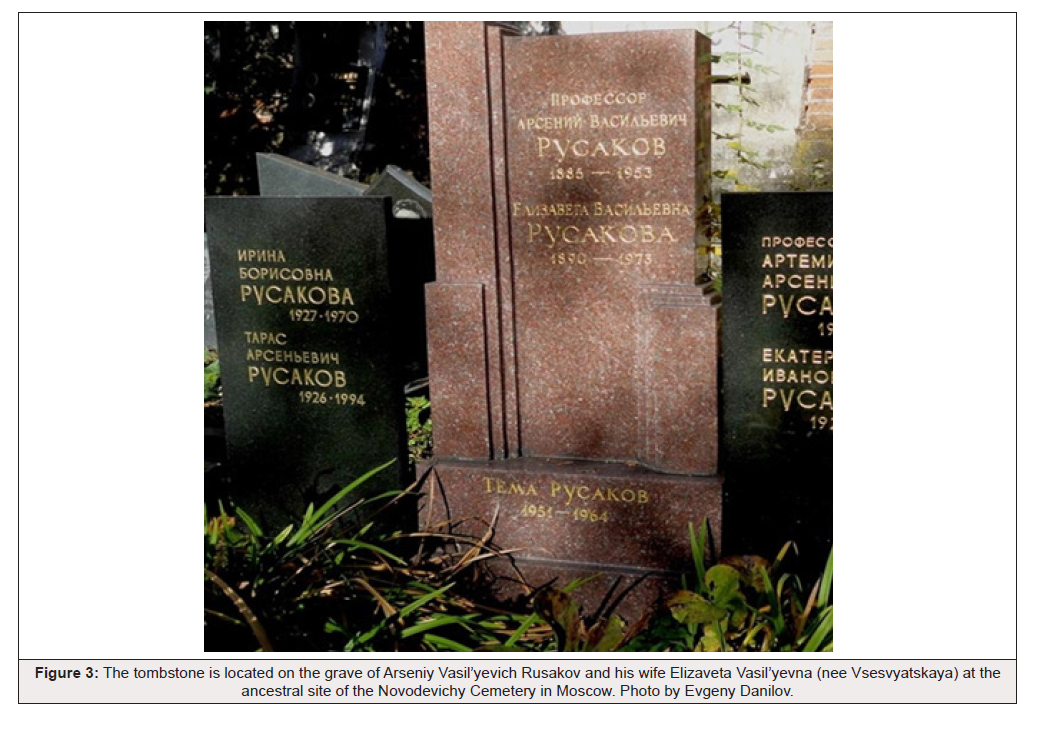
Figure 3:The tombstone is located on the grave of Arseniy Vasil’yevich Rusakov and his wife Elizaveta Vasil’yevna (nee Vsesvyatskaya) at the ancestral site of the Novodevichy Cemetery in Moscow. Photo by Evgeny Danilov.
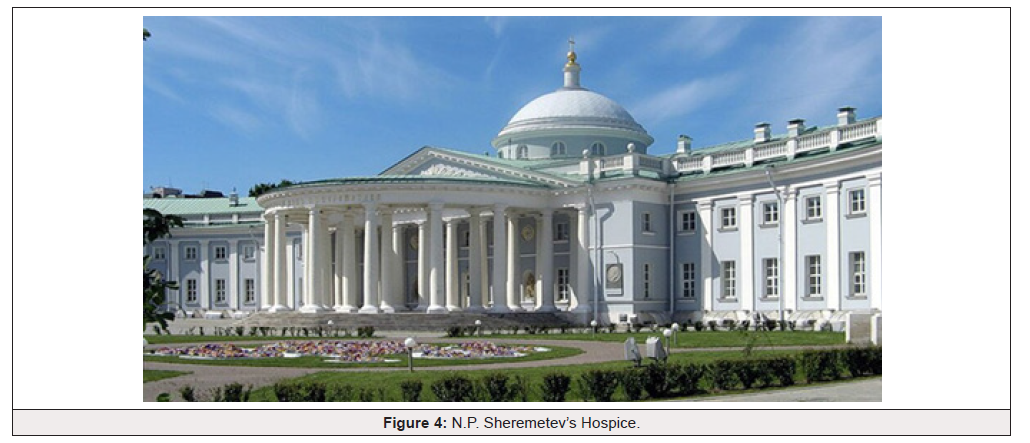
Figure 4:N.P. Sheremetev’s Hospice.
List of Some Scientific Works of A.V. Rusakov in Chronological Sequence
1. Rusakov A. An essay on the pathological examination of 3
cases fibrotic osteodystrophy. The Russian clinic. 1927; 7 (34):
157–175 (in Russian).
2. Rusakov A.V., Skundina M.G. On the coagulability of
cadaveric blood. Archives of pathological anatomy and
pathological physiology. 1935; 1 (2): 44 (in Russian).
3. Rusakov A.V. On osteogenic nephropathy and nephrogenic
osteopathy. Clinical Medicine. 1939; 17 (1): 46; (2–3): 41 (in
Russian).
4. Rusakov A.V. Essays on the pathological physiology of
bone tissue. Diss. M., 1939: 156 p. Supplement: 1st, 2nd, 3rd
books. Dissertation defense 19.04.1939. Code: B39–102 (in
Russian).
5. Rusakov A.V. Essays on infectology. Monograph. Moscow,
1953 (in Russian).
6. Rusakov A.V. On the etiology, pathogenesis and
classification of appendicitis. Proceedings of the N.V.
Sklifosovsky Moscow Research Institute of Emergency Care.
Moscow, 1957; Vol. 4, book 1: 26–51 (in Russian).
7. Rusakov A.V. Pathological anatomy of diseases of the bone
system. Introduction to physiology and pathology of the bone
system. In the book: Multivolume Handbook of Pathological
Anatomy: Vol. 5. Ed. T.P. Vinogradova. Moscow: “Medgiz”, 1959:
536 p. (in Russian).
8. Rusakov A.V. On the history of the theory of the
pathogenesis of primary hyperparathyroidism (parathyroid
osteodystrophy). Arkhiv Patologii. 1979; 41 (6): 58 (in Russian).
Acknowledgement
None.
Conflict of Interest
None.
References
- (2025) On the 140th anniversary of the birth of Professor Arseniy Vasil’yevich Rusakov. In: Zubritsky A.N. Memorable dates of Russian pathologists 2025. Monograph. Mathematical morphology. Electronic Mathematical and Biomedical Journal 24(3): 167-169.
- Rusakov Arseniy Vasil’yevich. Wikipedia. Available at: https://ru.wikipedia.org/wiki/Rusakov,_Arseniy_Vasilievich (accessed 08/08/2025) (in Russian).
- Arseniy Vasil’yevich RUSAKOV Join The World Biographical Encyclopedia. Prabook. Available at: https://prabook.com/web/arseniy.rusakov/740143 (accessed 08/10/2025).
- (2014) Osipenkova-Vichtomova TK Rusakov Arseniy Vasil’yevich: forensic physician, pathologist (1885–1953). Moscow :140 (in Russian).
- (2015) Rusakov Arseniy Vasil’yevich (07/21/1885–04/12/1953). In: Who is who in pathological anatomy in Russia. Biographical reference book. Editor-compiler AN Zubritsky. Moscow: Astrea-center: 156-158 (in Russian).
- Tarasenkov AT (1859) Historical description of the hospital of the Count Sheremetyev Hospice in Moscow, compiled by the chief doctor of the institution Alexei Tarasenkov. Moscow: Type. Moscow City Bulletin. City Police: 23 (in Russian).
- Osipenkova- Vichtomova TK, AV Rusakov (2002) outstanding domestic forensic physician and pathologist. Problems of expertise in medicine. “Expertise” 2(3): 53-56 (in Russian).
- (2017) Rusakov Arseniy Vasil’yevich (07/21/1885– 04/12/1953). In: Zubritsky AN Who's Who in pathological anatomy in Russia. Biographical reference book. Second edition, revised, corrected and supplemented. Moscow: Astrea-center :353-355 (in Russian).
- Osipenkova-Vichtomova TK (2003) In memory of Professor AV Rusakov. Arkhiv Patologii 65(2): 59-60 (in Russian).
- (2018) On the 130th anniversary of the birth of Professor Arseniy Vasil’yevich Rusakov. In: Zubritsky AN Jubilee and memorable dates of Russian pathologists for 4 years (2015, 2016, 2017 and 2018). Moscow: Astrea-center: 137-139 (in Russian).
- On the 65th anniversary of the death of Professor Arseniy Vasil’yevich Rusakov. In: Zubritsky AN Jubilee and memorable dates of Russian pathologists for 4 years (2015, 2016, 2017 and 2018). Moscow: Astrea-center, 2018: 658-660 (in Russian).
- Osipenkova-Vichtomova TK, Arseniy Vasil’yevich Rusakov (2010) (on the 125th anniversary of his birth). Forensic Medical Expertise 53(5): 49-51 (in Russian).
- Smolyannikov AV, Rusakov Arseniy Vasil yevich (1984) BME. Edited by BV Petrovsky, Vol.22. Moscow: “Soviet Encyclopedia”: 419-420 (in Russian).
- (2023) On the 135th anniversary of the birth of Professor Arseniy Vasil’yevich Rusakov. In: Zubritsky A.N. Jubilee and memorable dates of Russian pathologists for three years (2019–2021). Moscow: Probel-2000: 316-317 (in Russian).
- Rusakov Arseniy Vasil’yevich (07/21/1885–04/12/1953). Who's who in forensic medicine. Available at: https://www.forens-med.ru/pers.php ? id=846 (accessed 08/08/2025) (in Russian).
- Galankina IE, Arseniy Vasil’yevich Rusakov (2012) founder of the scientific school of pathologists of the NV Sklifosovsky Research Institute of Emergency Care. Emergency Medical Care (1): 74-79 (in Russian).




 We use cookies to ensure you get the best experience on our website.