
Case Report 
 Creative Commons, CC-BY
Nonoperative Management of a Colovaginal Fistula A Case Report
*Corresponding author:Atta Nawabi MD, MBA, MPH, FACS, FICS, Professor of Surgery Division of HPB, and Transplant, Department of Surgery 3901 Rainbow Boulevard Kansas City, KS 66160, USA.
Received:August 08, 2025; Published:August 13, 2025
DOI: 10.34297/AJBSR.2025.28.003643
Abstract
Colovaginal fistulae arise predominantly in the setting of patients with history of diverticulitis and hysterectomy. Symptoms can cause significant emotional and social distress. Management includes surgery. Medical and symptomatic management has limited efficacy. Here we present a case of a colovaginal fistula successfully managed non-operatively via embolization with a plug and fibrin glue. This case demonstrates that embolization is a low-risk option for definitive management in patients who are not surgical candidates.
Introduction
A fistula is defined as an abnormal connection between epithelium- lined surfaces. A colovaginal fistula is an abnormal connection between the colon and vagina, allowing passage of colonic material and bacteria into the vagina. Fistulae between the colon and vagina can be classified based on anatomic occurrence within the colon. Anovaginal occur distal to the dentate line, rectovaginal occur between the rectum and dentate line, and colovaginal occur proximal to the rectum [1]. Diverticulitis is by far the leading cause of colovaginal fistulae, with reports attributing 80-90% of cases [2,3]. Chron’s disease and gynecologic malignancies are other significant contributors [2,3]. Over 80% of individuals who develop a colovaginal fistula have had a previous hysterectomy [2,4,5]. Fistulae are frequently observed to be left-sided [2], consistent with origination from diverticula in the sigmoid colon.
The most common presenting symptoms include passage of fecal material or flatulence from the vagina, vaginal discharge, other symptoms include abdominal pain, dyspareunia, cystitis, and recurrent urinary tract infection [2,6]. Diagnosis involves evaluation of the vagina via speculum examination and evaluation of the sigmoid colon. For colonic evaluation, contrast enema is the preferred initial study, additional work up may include computed tomography, magnetic resonance imaging, endosonographic, fistula gram, or surgical exploration [2].
It is widely viewed that surgery is the optimal management of colovaginal fistulae. A variety of operations have been described based on the underlying cause [2,4,6,7]. This includes elective sigmoid colectomy, often with primary anastomosis performed during the same operation, when diverticulitis is the underlying cause [2]. In the case that a patient is not a surgical candidate, medical management may be pursued. This involves medical management of the patient’s predisposing condition and comorbidities, as well as symptomatic management. As this approach is not definitive, recurrence of symptoms, such as persistent vaginal leakage of colonic content, and complications, such as recurrent or chronic urinary tract infection, is common [8]. Ultimately, definitive management must be tailored to the patient, with consideration of fistula etiology, anatomy, and co-morbidities. In this report, we present a case of a cologvaginal fistula, definitively managed via embolization of the fistula tract with a vascular plug and fibrin glue.
Case Presentation
Our patient is an 80-year-old Caucasian female with multiple co morbidities, including but not limited to end stage renal disease on dialysis, multiple myeloma, severe peripheral vascular disease, CAD, CHF, MI, hypercholesterolemia, hyperparathyroidism, and hypothyroidism, and surgical history significant for hysterectomy, bilateral Salpingo-oophorectomy, rectocele, and cystocele repair, and renal transplant on immunosuppression.
She had been experiencing gross hematuria, vaginal drainage, and recurrent urinary tract infections with E. coli and Klebsiella. She was initially referred to urology and GYN at The University of Kansas Medical Center. Cystoscopy was performed and revealed no abnormalities. Speculum exam demonstrated a small area of granular tissue on the left fornix of the vaginal cuff, concerning for a fistula Colovaginal fistula. Ct Urogram demonstrated diverticula and a fistulous connection between the sigmoid colon and vaginal cuff (Figure 1) She was referred to colorectal surgery. However, due to multiple co morbidities and frailty she deems high risk for surgical intervention. She was elected for non-operative approach by Interventional radiology.
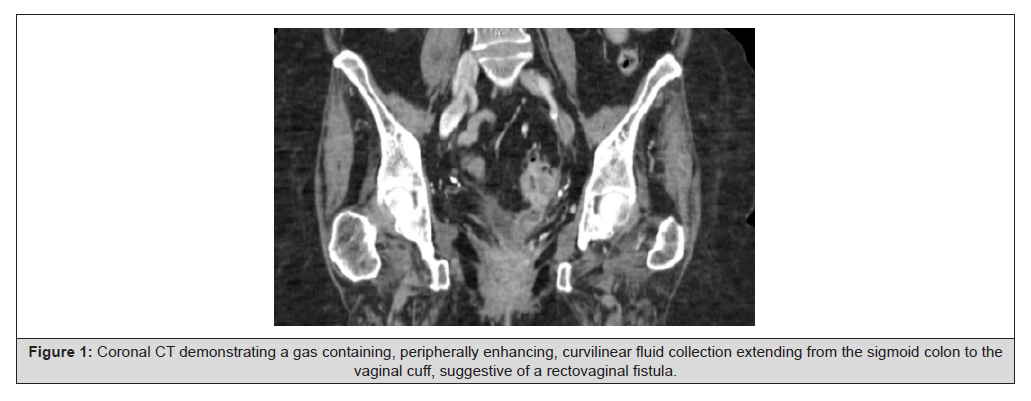
Figure 1:Coronal CT demonstrating a gas containing, peripherally enhancing, curvilinear fluid collection extending from the sigmoid colon to the vaginal cuff, suggestive of a rectovaginal fistula.
Procedure
The vaginal canal was accessed via speculum. A colovaginal fistula was identified. Next, direct cannulation of the fistula was performed in a retrograde fashion from the vagina into the rectum. A quick cross catheter was advanced into the rectal vault, and a contrast injection was performed (Figure 2). This demonstrated opacification of the bowel (Figure 3). Air was instilled to perform a double contrast examination of the colon. The catheter was observed to pass back out a second fistula to the right lateral aspect of the left sided fistula. Then a 6 French vascular sheath was advanced through the lateral aspect of the fistula. A 10mm IMPEDE vascular plug was advanced through the sheath to deploy along the lateral aspect of the fistula. Next, glue was prepared, and level was instilled into the medial and lateral aspect of the fistula (Figure 4). The catheter was then withdrawn. The patient tolerated this procedure well and did not experience recurrence of symptoms up to this point.
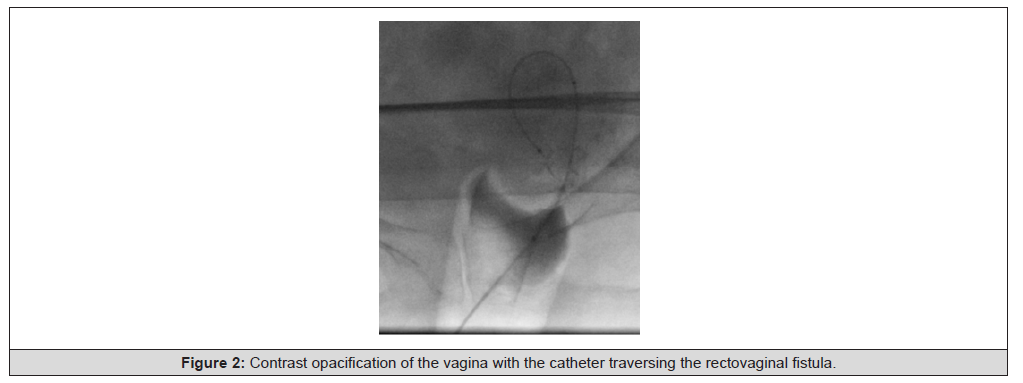
Figure 2:Contrast opacification of the vagina with the catheter traversing the rectovaginal fistula.
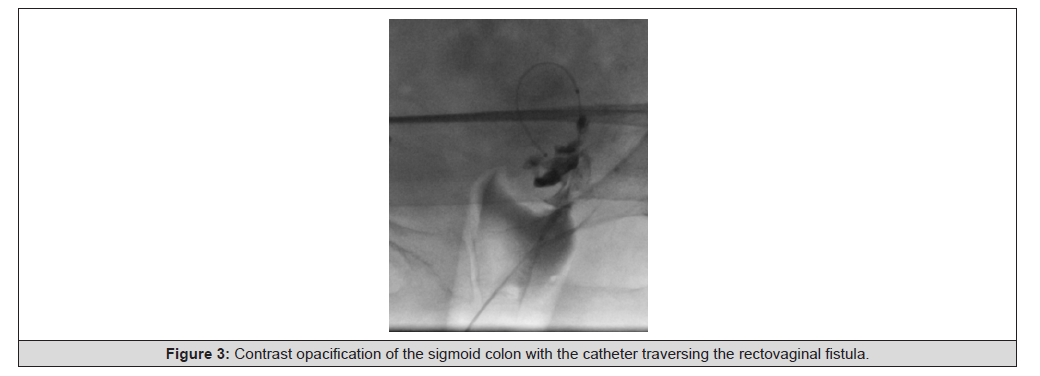
Figure 3:Contrast opacification of the sigmoid colon with the catheter traversing the rectovaginal fistula.
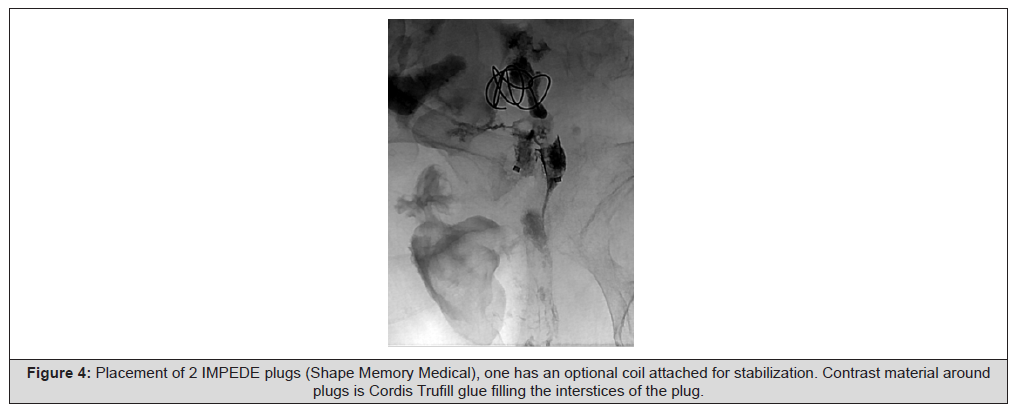
Figure 4:Placement of 2 IMPEDE plugs (Shape Memory Medical), one has an optional coil attached for stabilization. Contrast material around plugs is Cordis Trufill glue filling the interstices of the plug.
Discussion
Colovaginal fistulae present a frustrating problem for patients. The symptoms of these fistulae can cause substantial emotional and psychosocial stress, greatly impairing a patient’s quality of life. Limited alternatives exist for individuals who are not candidates for surgical repair. Patients treated with medical and symptomatic management frequently experience recurring symptoms [8]. In the case presented, our patient was initially a high-risk surgical candidate due to immunosuppression and prior abdominal surgeries. Later, the same patient was not a surgical candidate due to frailty and comorbidities. She had experienced long standing symptoms of vaginal discharge and recurring urinary tract infections leading to hospitalization and decreased quality of life. Following two embolization procedures, she had resolution of symptoms.
This case demonstrates that fistula embolization using fibrin glue and vascular plugs can be an effective treatment approach in individuals who are not candidates for surgical repair. Notably, this patient had zero adverse effects from placement of the vascular plug and fibrin glue. This case helps establish that embolization is a low-risk strategy that can be successfully employed for definitive management of colovaginal fistulae. This case additionally highlights the importance of multidisciplinary collaboration between surgery, gynecology, and interventional radiology in management and optimization of outcomes in this patient population.
Acknowledgement
None.
Conflict of Interest
None.
References
- Rosenshein NB, Genadry RR, Woodruff JD (1980) An anatomic classification of rectovaginal septal defects. Am J Obstet Gynecol 137(4): 439-442.
- Berger MB, Khandwala N, Fenner DE, Burney RE (2016) Colovaginal Fistulas: Presentation, Evaluation, and Management. Female Pelvic Med Reconstr Surg 22(5): 355-358.
- Bahadursingh AM, Longo WE (2003) Colovaginal fistulas. Etiology and management. J Reprod Med 48(7): 489-495.
- Coakley KM, Davis BR, Kasten KR (2020) Complicated Diverticular Disease. Clin Colon Rectal Surg 34(2): 96-103.
- Woods RJ, Lavery IC, Fazio VW, Jagelman DG, Weakley FL, et al. (1988) Internal fistulas in diverticular disease. Dis Colon Rectum 31(8): 591-596.
- Hjern F, Goldberg SM, Johansson C, Parker SC, Mellgren A, et al. (2007) Management of diverticular fistulae to the female genital tract. Colorectal Dis 9(5): 438-442.
- Tancer ML, Veridiano NP (1996) Genital fistulas caused by diverticular disease of the sigmoid colon. Am J Obstet Gynecol 174(5): 1547-1550.
- Andreani SM, Dang HH, Grondona P, Khan AZ, Edwards DP, et al. (2007) Rectovaginal fistula in Crohn's disease. Dis Colon Rectum 50(12): 2215-2222.




 We use cookies to ensure you get the best experience on our website.