
Research Article 
 Creative Commons, CC-BY
One-Year Prospective Study of Cases of Snake Bite Brought for Post-Mortem Examination at A Tertiary Care Centre
*Corresponding author:DR Vinod Vasant Rathod, Assistant Professor, Department of Forensic Medicine and Toxicology, Dr V. M. Government Medical College, Solapur, Maharashtra, India.
Received:July 30, 2025; Published:August 06, 2025
DOI: 10.34297/AJBSR.2025.28.003633
Abstract
Objective: Cases of snake bites are frequently reported in India; however, deaths due to snake bites have decreased in recent years due to the increased
availability of healthcare facilities. In India, being an agricultural land, there is a frequent encounter between working labourers and various
types of snakes. The study aimed to identify the significant factors and important post-mortem findings associated with deaths due to snake envenomation.
The objective was also to suggest any preventive measures to reduce them.
Materials and Methods: The present prospective study was carried out at the Department of Forensic Medicine and Toxicology of Dr V.M. Government
Medical College, Solapur, over a period from January 2019 to December 2019. A total of 26 cases of snake bites brought for post-mortem
examination were studied. Data was collected, analysed, and represented in graphic format.
Observation and Results: Maximum cases were recorded age group of 20 to 40 years with almost equal gender-wise distribution. Maximum incidences
occurred in the Farm area, especially in sugarcane fields. Most victims belonged to rural areas, and bites were common in the afternoon and
evening hours. Most cases were due to neurotoxic snake bites and brought dead to the hospital. Fingers were the most common sites of bites while
working in agricultural fields.
Conclusions: Labourers working in sugarcane farms in reproductive age groups were exposed to snake bites due to common encounters while cutting
sugarcane, and bites were common on their fingers. Hence, government agencies should implement educational awareness of safety measures
to reduce these incidents and thus mortality.
Keywords:Bite, Farm area, Health care facilities, Neurotoxic
Introduction
“Sight of any snake is more feared than visualised in the minds of people.” This saying applies to any region. In India, the ‘Vasuki’ snake is the ornament on the neck of Lord Shiva. People worship Lord Shiva; however, they neglect the fact that not all snakes are poisonous.
Cases of snake bites and deaths are commonly reported in every part of the world. The National Health Profile 2019, issued by the Central Bureau of Health Intelligence, reported 164031 cases of snakebites and 885 deaths in India in 2018 [1]. The World Health Organisation (W.H.O) estimated 81,000 to 138,000 deaths annually from snakebites [2].
Traditional thinking of ‘Fear and kill at first sight’ does not seem to have disappeared from the minds of people. Hence, it is necessary to conduct regular studies on snake bites to remove this social stigma from society and to develop awareness about this common problem, especially in rural areas. The ‘Big Four’ types of snakes, namely Saw scaled viper, Russell’s viper, Common cobra, and common krait, found in India, account for the maximum number of deaths [3].
Differentiating between poisonous and non-poisonous snake bites based on history, clinical examination and bite-mark analysis has been documented in forensic medicine literature by various authors in India [4-9].
They have also suggested that these findings are the central crux of knowledge to be shared with everyone for awareness in society and to reduce mortality and morbidity due to existing false beliefs and misconceptions. Antivenom treatment, even in a single case, can be used as a prototype for all others in need [5,8,9].
India, being an agricultural land with the majority of the population involved in farming, cultivation or related occupations, frequently encounters incidents between labourers and snakes, leading to snake bites and fatal consequences. The present study was conducted in a region where a large portion of the population is involved in sugarcane industries, and hence leaves a hefty impact on seasonal labourers involved in sugarcane cutting in farm areas.
A study conducted by Suraweera W, et al. [10] on trends in deaths due to snakebite in India from 2000 to 2019 reported an increase in the number of these cases over a decade.
Considering it a significant problem and its impact on society, the present study was undertaken to identify factors contributing to deaths, and preventive measures can be suggested to the government for implementation and integration with the National programs.
Materials and Methods
The current prospective study was conducted in the Forensic Medicine Department, Dr V.M. Government Medical College and Hospital, Solapur, Maharashtra, India. The study was a period of one year from January 2019 to December 2019. A total of 26 cases of fatal snake bites whose autopsy was done were recorded during the study period. Descriptive data were collected from hospital treatment records, police inquest, information obtained from relatives, and postmortem findings. The history and findings were recorded in a specially designed proforma. The data collected was analysed and presented in graphical format.
Observation and Results
A total of 26 autopsies of snake bites were performed during the study period. Most cases were recorded in the reproductive age group of 20 to 40 years (Table 1). Rural distribution was prominently seen (Figure 1). Most bites were recorded in the afternoon and evening hours (Table 2). Bites were common in farm, forest, and agricultural land areas due to frequent encounters between working labourers and various types of snakes, followed by bites in household premises. (Table 3&4). Neurotoxic snake bites were more frequent (Table 5), followed by non-poisonous snake bites that died later due to infections or multi-organ failures. Fingers and hands were common sites of bites, especially in sugarcane farm areas (Table 6). The survival period in hospitalised victims was greatly influenced by appropriate treatment with ASV and the type of snake bite (Figure 2) (Photograph Number 1-4).
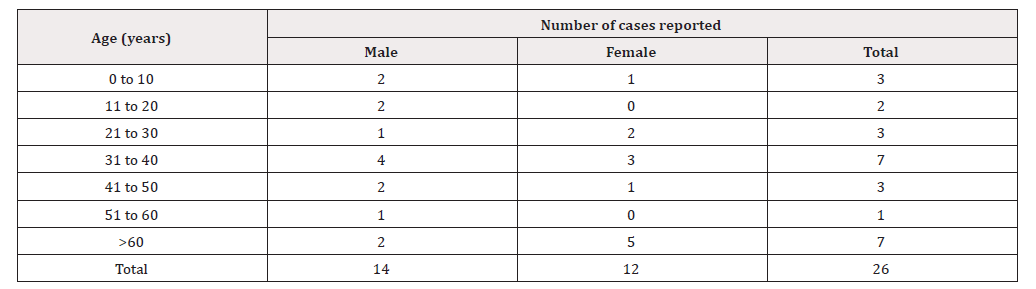
Table 1:Age and gender-wise cases of snake bite.
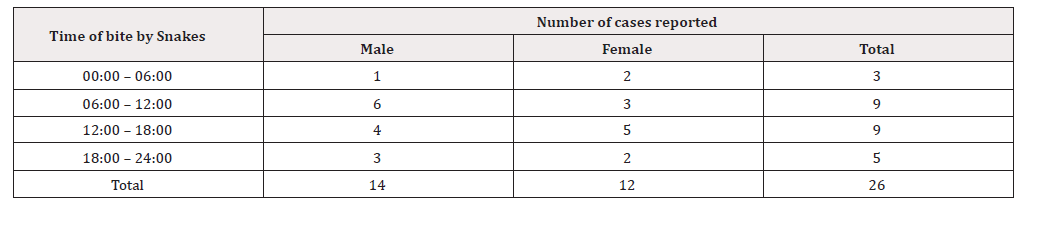
Table 2:Time of Bite.
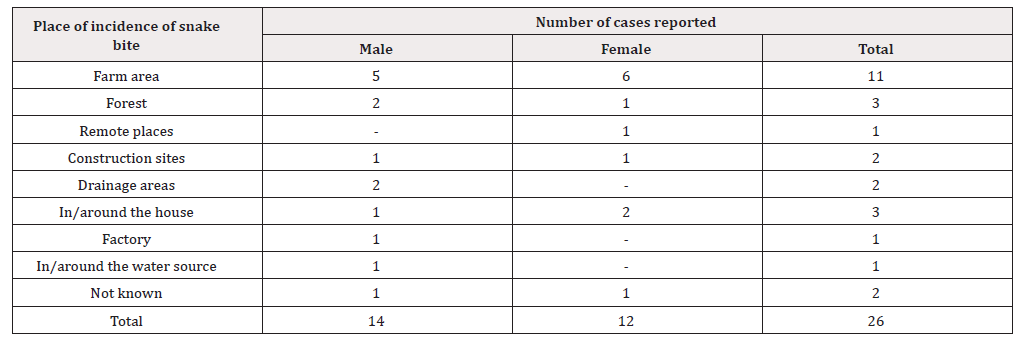
Table 3:Place of snake bite.
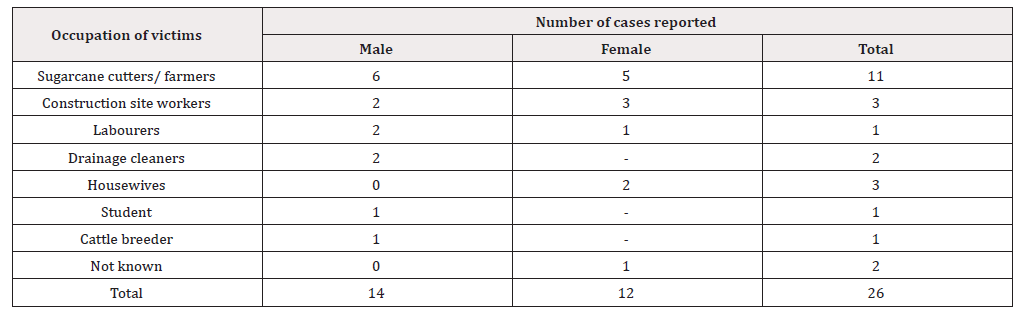
Table 4:Occupation of victims of snake bite:
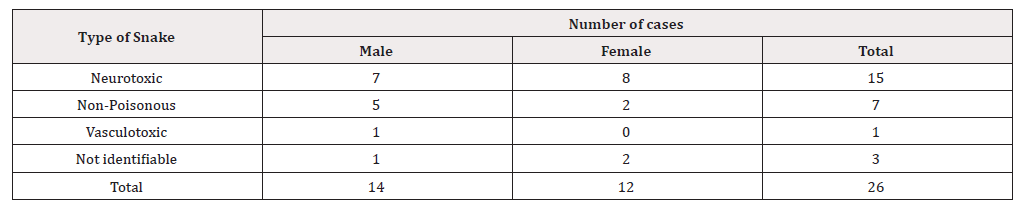
Table 5:Type of Toxicity of Snake.
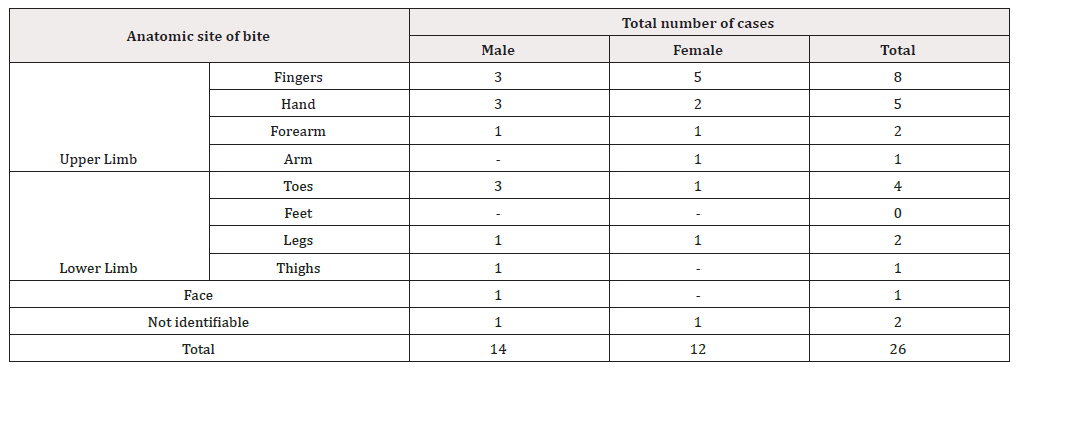
Table 6:Anatomic site of snake bite mark.

Figure 1:Residence-wise cases of snake bite.
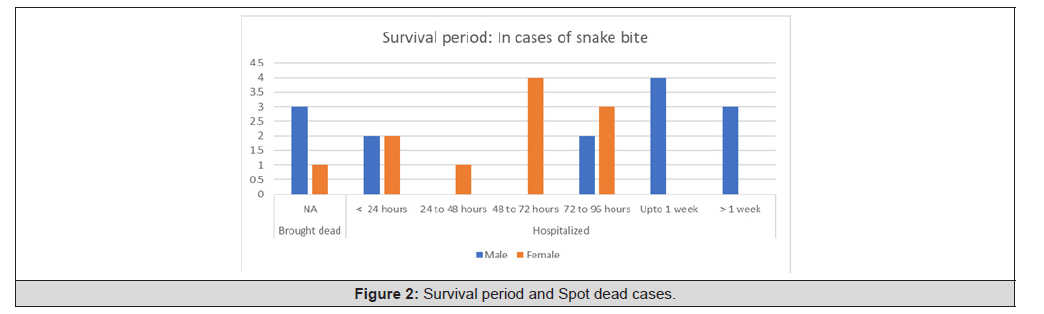
Figure 2:Survival period and Spot dead cases.
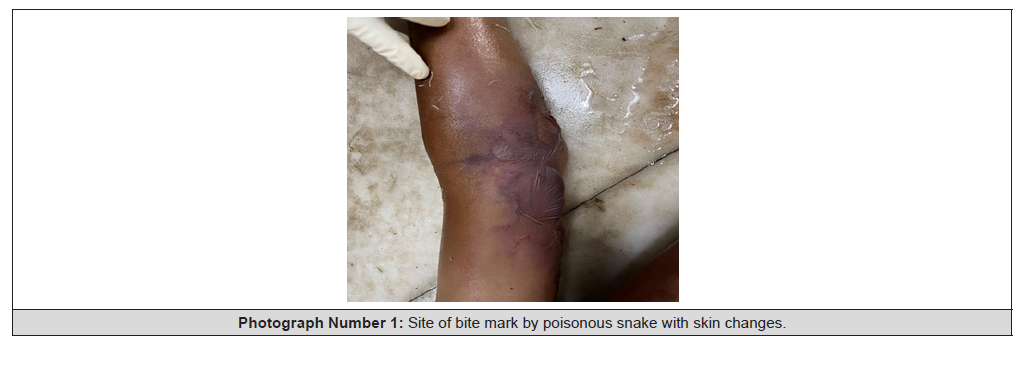
Photograph number 1:Site of bite mark by poisonous snake with skin changes.
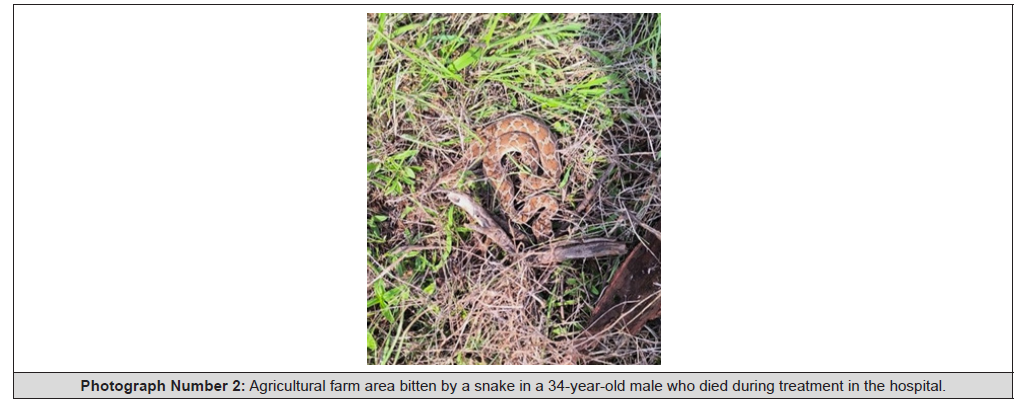
Photograph number 2:Agricultural farm area bitten by a snake in a 34-year-old male who died during treatment in the hospital.

Photograph number 3:Autopsy findings in a case of 28 years male who died of renal failure due to a Viper bite:
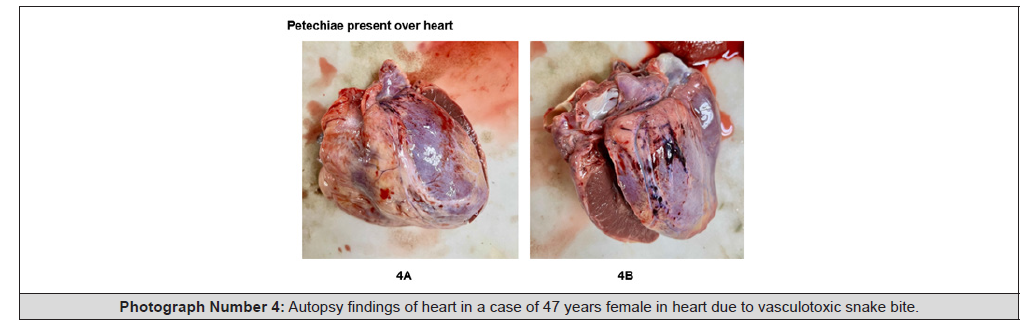
Photograph number 4:Autopsy findings of heart in a case of 47 years female in heart due to vasculotoxic snake bite.
Discussion
The study was conducted in the region of Maharashtra state, wherein a large number of sugarcane factories are present. Many labourers are involved in cutting sugarcane from farms. The incidence of autopsies was comparatively low due to the treatment facilities nearby.
Age-Wise Distribution
In the present study, most cases (7) out of a total of 26 were recorded in the age group of 31 to 40 years. As most of the cases were of middle-aged Labourers working in sugarcane farms to earn their livelihood.
Similar findings of age-wise distribution were observed in studies by Dake MD, et al. [11], Pusparaj Samantasinghar, et al. [12], Katta Sri Ram, et al. [13], Bhuyyar CB, et al. [14] and by Shanmugam K and Devnath GP [15]. However, in a study conducted by Vora DH, et al. [16], the majority of the victims were in the age group of 15 - 25 years, whereas in the study by Varma NK, et al. [17], victims were in the younger age groups of 10-20 and 20 TO 30 years. In studies conducted by Peranantham S and Jeyasingh T [18] and by Shanmugam K and Devnath GP [15], higher age groups of 40 years were also commonly involved.
Age-related factor of involvement is subject to the cases reported in which an autopsy was conducted. A higher number of admitted cases who were treated and discharged may be present. It also varies from region to region and is dependent on reporting cases properly, from time to time.
Urban vs Rural Distribution
In the present study, the majority of the victims, 22 cases of snake bite, were from rural areas. The study was conducted in an area where there is no scope for the presence of snakes, except in areas of construction sites or drainage pipelines. The majority of cases were referred from the nearby vicinity of fifty kilometres, where sugarcane factories are located, and hence commonly bitten by snakes while cutting sugarcane or in agricultural farm areas.
This findings in the present study correlate with the findings of studies of Dake MD, et al. [11], Pusparaj Samantasinghar, et al. [12], Katta Sri Ram, et al. [13], Bhuyyar CB, et al. [14], Shanmugam K and Devnath GP [15] and Navinkumar Varma and Kulkarni PR [17], which indicates that snake bite poisoning remains a major public health problem in rural population all over India. In contrast, a study by Mathipa, et al. [19] reported more cases in urban areas due to the location of their tertiary care centre and medical college in the city area, with comparatively fewer cases referred from the rural population.
Time of Bite
In the present study, 9 cases each were reported in the early morning, 06.00 to 12.00 hours, and in the afternoon, 12.00 to 18.00 hours, impacting the prominence of daytime bites by snakes during working hours.
These findings in the present study correlate with the findings of studies of Dake MD, et al. [11], Pusparaj Samantasinghar, et al. [12], Katta Sri Ram, et al. [13], Bhuyyar CB, et al. [14], Shanmugam K and Devnath GP [15] and Navinkumar Varma and Kulkarni PR [17]. However, bites during Night hours or early to sunrise were significantly reported in studies done by Vora DH, et al. [16] and by Jagtap NS, et al. [20].
Bites during early hours or in the afternoon are common due to the natural habitats of snakes and encounters with labourers during this time.
Place of Bite and Occupation of Victims
In the present study, spots of bites were in the agricultural farm areas, especially among seasonal labourers during the cutting of sugarcane, followed by bites to people at construction sites and in drainage areas.
Similar results were reported from the findings of studies of Katta Sri Ram, et al. [13], Bhuyyar CB, et al. [14] and Navinkumar Varma and Kulkarni PR [17]. Bites during Night hours or early to sunrise were reported in studies done by Vora DH, et al. [16] and by Jagtap NS, et al. [20]. However, Shanmugam K and Devnath GP [15] reported that cases of snake bites were common in and around the residential areas of victims due to location in remote or outer vicinity of civilisation.
India being an agricultural land majority of farmers and labourers working in farm areas are commonly exposed to bites by snakes due to their natural habitat and frequent encounters between them. Most of these people are illiterate, married, labourers seasonally belonging to lower strata of society, involved in sugarcane production farming or mostly seasonal cutting and supply to the factories.
Type of Toxicity of Bites by Snakes
Most cases 15 reported were of neurotoxic snake bites, followed by 7 cases of non-poisonous snakes. Pusparaj Samantasinghar, et al. [12] in their study reported non-poisonous bites more than Elapidae and Vipers. Jagtap NS, et al. [20] reported Vasculo-toxic bites as the leading cause of death. Deaths from Neurotoxic snake bites were common due to the higher toxicity of venom and delay in receiving health care. CR Ram Reddy and CR Vijay Bharath Reddy [21], Shanmugam K and Devnath GP [15] and Peranantham S and Jeyasingh T [18] reported Vasculo-toxic bites comparatively more than others.
The Anatomic Site of Bite Marks
Fingers were the most common sites of bites in 8 cases, followed by hands and toes in 5 and 4 cases, respectively. Bites on fingers are common due to people working in farm areas or remote hilly places, due to contact with the ground surface while working. Pusparaj Samantasinghar, et al. [12] found most bites on lower limbs, Choudhary, et al. [22] reported bites were common on dorsum of foot, malleolus, shoulders and toes, Dake MD, et al. [11] reported more bites on lower limbs as compared to upper limbs.
The anatomic site of bite depends highly on the way one comes in contact with snakes and is highly influenced by the position of the body. In the present study, labourers are usually in a kneeling or sitting position while involved in sugarcane cutting, hence hands and fingers are a common site of bites.
Survival Period
Most deaths occurred in hospitalised victims during treatment. Due to the easy availability of healthcare facilities in this region, spot deaths were relatively fewer. The findings in studies of Katta Sri Ram, et al. [13], Choudhary, et al. [22] and Navinkumar Varma and Kulkarni PR [17] on the number of brought dead cases and survival period in hospitalised patients who died during treatment were similar to those reported in our study. Survival period varied depending on the treatment received within the stipulated timeline.
Conclusion
Bites by snakes were common in seasonal Labourers involved in sugarcane cutting during daytime, and death was mostly due to neurotoxic snake bites during treatment in hospitalised patients.
Limitations
Study was on only autopsy cases of snake bite. Those cases which were discharged after treatment were comparatively more in number. Study involving these antemortem cases is necessary shortly.
Scope
A Study on antemortem and postmortem cases for more than three to five years is needed for better statistical analysis and better implementation of suggestions at the National level.
Suggestions
Preventive measures like hand gloves, above ankle shoes, stockings, etc, for labourers involved in sugarcane cutting.
Conflict of Interest
None to declare.
Authors Contribution
All authors contributed equally from initial study of study upto the level of research publication.
Acknowledgements
1. All working staff members of the Department of Forensic Medicine
and Toxicology of Dr V. M. Government Medical College,
Solapur.
2. Second year MBBS students Dr Rohit Bajranglal Taparia, Dr
Prathamesh Vijaykumar Patil and Dr Radhika Vinod Aher for
their valuable contribution in the collection of data, analysis
and Research Management.
References
- Central Bureau of Health Intelligence. National Health Profile (NHP) of India- 2019. Ministry of Health and Family Welfare India.
- World Health Organisation. Snakebite envenoming: Global strategy for prevention and control of snakebite envenoming. Accessed on 10/03/2021. Available from: https://www.who. int/news/item/23-05-2019-who-launches-global strategy-for-prevention-and-control-of-snakebite envenoming
- Agrawal Anil (2014) Essentials of Forensic Medicine and Toxicology, 1st ed, Sirmour. (HP): APC: 514-524.
- (1999) Modi’s medical jurisprudence and Toxicology, 22nd edition, Butterworths India, New Delhi: 77-101.
- Pillay VV (2013) Modern Medical Toxicology, 4th ed, New Delhi, Jaypee: 137-157.
- Reddy KSN (2017) The Essentials of Forensic Medicine and Toxicology, 34th ed, New Delhi, Jaypee: 519-526.
- Vij Krishan (2011) Textbook of forensic medicine and Toxicology Principles and practice, 6th ed, Haryana, Elsevier: 450-453.
- Kumar V, Abbas AK, Aster JC (2020) Robbins & Cotran Pathologic Basis of Disease. 10th ed. Philadelphia, PA: Elsevier.
- Kasper DL, Fauci AS, Hauser SL, Longo DL, Jameson JL (2018) Harrison's Principles of Internal Medicine. 20th New York: McGraw Hill Education.
- Suraweera, David Warrell, Romulus Whitaker, Geetha Menon et al. (2020) Trends in snakebite deaths in India from 2000 to 2019 in a nationally representative mortality study, e-Life 9: e54076.
- Godbole HV, Dake MD, Madewad SB, Patil SS (2023) Epidemiological Study of Snake-Bite Cases in Tertiary Care Teaching Institute of Maharashtra, India. Research Journal of Pharmaceutical, Biological and Chemical Sciences 14(4): 306- 312.
- Pusparaj Samantasinghar (2020) A comprehensive epidemiological study of Snake bites in a tertiary care hospital in Bhubaneswar, India. International Journal of Forensic Medicine 2(1): 31-35.
- Katta Sri Ram, YKC Rangaiah, L Ananda Kumar et al. (2023) Autopsy-Based Study of Snakebite Fatalities in Guntur Region: A Comprehensive Two-Year Analysis. Indian Journal of Forensic Medicine and Toxicology 17(4).
- Bhuyyar CB (2022) Epidemiology of snake bite cases at medical college in Karnataka. Indian Journal of Forensic Medicine and Pathology 15(4).
- Shanmugam K, Devnath GP (2021) Profile of snake bite deaths in South India: An Autopsy-based study, Medico-legal Update 21(4).
- Vora DH, Vora JH (2019) An Epidemiological Study of Venomous Snake Bites: A Hospital-based analysis. Natl J Community Med 10(8): 474-478.
- Navinkumar Varma, Kulkarni PR (2017) Post-mortem study of snake bite Cases. International Journal of current Medical and Applied sciences16(2): 110-116.
- Peranantham S, Jeyasingh T (2018) An autopsy-based analysis of deaths due to snakebite envenomation. Journal of South India Medico-Legal Association 10(2).
- Mathipa et al. (2023) Retrospective study of snake bite cases autopsied at Government Chengalpattu Medical College and Hospital. Journal of Cardiovascular Disease Research 13(3).
- Jagtap NS, Pawale DA, Patekar MB (2018) Autopsy-based study of fatal snake bites in Kolhapur Region. J For Med Sci Law 27(1): 3-6.
- CR Ram Reddy, CR Vijay Bharath Reddy (2015) A follow-up study on hospitalised cases of snake bite victims, Osmania General Hospital, Hyderabad. International Journal of Pharmaceutical and Medical Research 3(2).
- Choudhury JC, Sahu G, Prusty D (2018) Evaluation of Fatal Snakebite Cases in Coastal Odisha: An Autopsy-based Cross-sectional Study. Journal of Indian Society of Toxicology 14(1): 1-5.




 We use cookies to ensure you get the best experience on our website.