
Research Article 
 Creative Commons, CC-BY
Seminal Plasma Proteome Modulation in Male Fertility and Contraceptive Interventions
*Corresponding author:Prof. A. S. Ansari, PhD, FAMS, Reproductive Health Laboratory, Centre for Advanced Studies, Department of Zoology, University of Rajasthan, Jaipur, India.
Received:October 13, 2025; Published:October 21, 2025
DOI: 10.34297/AJBSR.2025.28.003732
Abstract
Seminal plasma plays a crucial role in supporting sperm function, capacitation, and successful fertilization. Proteomic profiling of seminal plasma can provide valuable insights into male fertility and the molecular effects of contraceptive interventions. In this study, we performed a comparative proteomic analysis of seminal plasma from fertile, infertile, vasectomized, and RISUG®-injected human subjects using two-dimensional gel electrophoresis (2DGE) followed by MALDI TOF/TOF mass spectrometry. Fertile individuals showed 472 protein spots, while infertile, vasectomized, and RISUG®-injected subjects exhibited 96, 325, and 235 spots, respectively. Several protein spots were differentially expressed among the groups, indicating distinct proteomic changes associated with infertility and male contraception. Four proteins were identified, Prolyl endopeptidase-like (PREPL), two isoforms of Prolactin-inducible protein (PIP), and Protein Tyrosine Kinase 2 (PTK2), also known as Focal Adhesion Kinase (FAK). These proteins are known to play roles in reproductive processes and cellular signaling pathways. These proteins may serve as potential biomarkers for assessing male fertility status and monitoring the effects of contraceptive methods. Our findings highlight significant alterations in seminal plasma protein profiles due to infertility and contraceptive interventions. This study contributes to a better understanding of the molecular landscape of male reproductive health and offers a foundation for developing diagnostic tools in fertility and contraception research.
Keywords:Seminal plasma, Male fertility, RISUG®, Proteomic analysis, Contraceptive biomarkers
Abbreviations:2DGE: Two-Dimensional Gel Electrophoresis; ANOVA: One Way Analysis of Variance; FSHLHDMSO: Dimethyl Sulfoxide; DTT: Dithiothreitol FSH: Follicle-Stimulating Hormone; ICMR: Indian Council of Medical Research; IEF: Isoelectric Focusing; IPG: Immobilized pH Gradient; LC-MS/MS: Liquid Chromatography–Tandem Mass Spectrometry; LH: Luteinizing Hormone; MALDI TOF/TOF: Matrix-Assisted Laser Desorption Ionization Time-of-Flight/Time-of-Flight; MS: Mass Spectrometry; MS BioTool: Mass Spectrometry BioTool; NSV: No-Scalpel Vasectomy; PIP: Prolactin- Inducible Protein; PMF: Peptide Mass Fingerprinting; PREPL: Prolyl Endopeptidase-Like; PTK2 (FAK1): Protein Tyrosine Kinase 2 / Focal Adhesion Kinase 1; RISUG®: Reversible Inhibition of Sperm Under Guidance; SDS-PAGE: Sodium Dodecyl Sulphate–Polyacrylamide Gel Electrophoresis; SPSS: Statistical Package for the Social Sciences; DEPs- Differentially Expressed Proteins.
Introduction
Seminal plasma, the fluid component of semen, plays a crucial role not only in the transport and protection of spermatozoa but also in modulating their functional maturation and interaction with the female reproductive tract [1,2]. Derived primarily from the seminal vesicles and prostate gland, along with contributions from other accessory glands, this complex biological fluid contains a diverse and dynamic array of proteins-estimated to number over 2,000-many of which exhibit roles in catalytic activity, immune modulation, transport, and cell signaling [3]. These proteins collectively support sperm viability, capacitation, and ultimately, successful fertilization [1].
Emerging evidence indicates that alterations in the seminal plasma proteome are closely linked to male infertility, underscoring its potential as a valuable diagnostic tool for evaluating reproductive health [4,5]. These proteomic modifications often mirror underlying pathophysiological mechanisms, including inflammation, oxidative stress, and impaired epididymal function [6]. Furthermore, significant shifts in seminal plasma protein profiles have been documented following contraceptive interventions-both surgical, such as vasectomy, and non-surgical approaches like RISUG® (Reversible Inhibition of Sperm Under Guidance) [7,8]. RISUG®, a polymer-based injectable contraceptive, functions by altering the ionic milieu of the vas deferens to immobilize sperm, and has been validated through clinical and experimental studies as an effective, safe, and reversible method of male contraception [7,9,10].
Emerging evidence indicates that alterations in the seminal plasma proteome are closely linked to male infertility, underscoring its potential as a valuable diagnostic tool for evaluating reproductive health [4,5]. These proteomic modifications often mirror underlying pathophysiological mechanisms, including inflammation, oxidative stress, and impaired epididymal function [6]. Furthermore, significant shifts in seminal plasma protein profiles have been documented following contraceptive interventions-both surgical, such as vasectomy, and non-surgical approaches like RISUG® (Reversible Inhibition of Sperm Under Guidance) [7,8]. RISUG®, a polymer-based injectable contraceptive, functions by altering the ionic milieu of the vas deferens to immobilize sperm, and has been validated through clinical and experimental studies as an effective, safe, and reversible method of male contraception [7,9,10].
In the present study, we expand on this foundation by performing a comprehensive comparative proteomic analysis of seminal plasma samples obtained from four distinct male cohorts: fertile, infertile, vasectomized, and RISUG*-treated individuals. Our objective is to identify differentially expressed proteins (DEPs) that not only distinguish between fertile and infertile men but also reveal the specific proteomic alterations induced by male contraceptive interventions. This dataset allows for the assessment of unique and overlapping protein expression patterns across physiological (fertility/ infertility) and intervention-induced (vasectomy/RISUG®) states. By mapping these proteomic signatures, we aim to uncover novel biomarkers and mechanistic insights into male reproductive function, contraceptive impact, and potential reversibility of these interventions.
Preliminary findings from our dataset indicate marked downregulation of several seminal plasma proteins involved in sperm motility and immune regulation in infertile individuals, while vasectomized samples exhibit a distinct loss of epididymal-origin proteins. Interestingly, RISUG®-treated samples display a unique proteomic profile, with specific enrichment of oxidative stress-related proteins and depletion of sperm-interaction mediators, suggesting a targeted mechanism of sperm incapacitation without systemic hormonal disruption. These insights reinforce the diagnostic and therapeutic potential of seminal plasma proteomics in both fertility management and contraceptive development.
Materials and Methods
Subject Recruitment and Selection
Participants were recruited from the Division of Infertility, Department of Urology & Renal Transplantation, SMS Medical College & Attached Group of Hospitals; Mahatma Gandhi University of Medical Science and Technology; and the Department of Zoology, University of Rajasthan, Jaipur (India). Informed consent was obtained from all participants prior to enrolment, in accordance with institutional ethical committee approvals.
A total of 208 male subjects, categorized as fertile, infertile, vasectomized, and reversible inhibition of sperm under guidance (RISUG®)-injected, were included. Demographic, clinical, and reproductive data-including occupation, infertility status, medical history, lifestyle, age, marital duration, family history, and anthropometric parameters-were recorded using a pre-designed proforma in case of infertile subjects. Vasectomized individuals were taken for study who visited the laboratory for fertility status. RISUG ® injected subjects were selected following ICMR protocols as described in Lohiya, et al. [7].
Semen Collection
Semen samples were collected via masturbation into sterile containers under aseptic conditions after 2-3 days of abstinence.
Two-Dimensional Gel Electrophoresis (2-DE)
Seminal plasma from 6 subjects per group (fertile, infertile, RISUG®) and 5 subjects (vasectomy) were pooled. Triplicate gels were run per group. Protein separation was performed using 2-DE based on the protocol of Görg, et al. (1991), standardized in-house [14].
IEF was performed on 17 cm IPG strips (pH 3-10) using a PROTEAN ® i12™ IEF cell (Bio-Rad). Rehydration buffer included EDTA, protease inhibitors, and destreak solution. IEF was run with a gradual voltage increase up to 8000 V, followed by holding at 1000 V.
Strips were equilibrated sequentially with buffers containing DTT and iodoacetamide, then subjected to SDS-PAGE (9-14% gradient gels). Proteins were visualized using modified silver nitrate staining [15].
Mass Spectrometry (MALDI TOF-TOF MS)
Protein spots from Coomassie-stained gels were excised and processed at MR Labs, Hyderabad. After trypsin digestion, peptides were extracted, desalted, and dried. Samples were mixed with α-Cyano-4-hydroxycinnamic acid matrix in TA solvent and spotted onto MTP AnchorChip™ 384 plates (Bruker Daltonics). Spectra were acquired on an Ultraflex III MALDI-TOF-TOF mass spectrometer (Bruker) in PMF mode. FlexControl and FlexAnalysis software (Bruker) were used for data acquisition and processing.
Database Search and Protein Identification
Peptide mass fingerprints were analyzed using MASCOT 2.2 via MS BioTool 3.2 (Bruker) against the Swiss-Prot database. Search parameters included: species-Homo sapiens, enzyme-trypsin, ≤1 missed cleavage, fixed modification-carbamidomethyl (C), variable modification-oxidation (M), and mass tolerance based on calibration. Proteins with >95% confidence (based on MASCOT scores) were considered identified.
Statistical Analysis
Results are presented as mean ± SD. One-way ANOVA followed by Holm-Sidak post hoc test was applied to assess intergroup differences using SPSS v11.5 (SPSS Inc., USA). A p-value < 0.05 was considered statistically significant.
Results and Discussion
In the present study, a comparative proteomic analysis of seminal plasma was undertaken across four distinct male cohorts: fertile controls, individuals with idiopathic infertility, vasectomized subjects, and participants administered the RISUG® contraceptive. Employing 2DGE in conjunction with MALDI TOF/TOF mass spectrometry, this investigation aimed to delineate both the global protein expression profiles and to identify specific differentially expressed proteins (DEPs) characterizing each reproductive condition.
In fertile control samples, we detected 472 distinct protein spots, which served as the reference proteomic “baseline” (Figure 1A). In infertile subjects, the proteomic complexity was markedly diminished: only 96 spots were resolved, of which 48 overlapped with the fertile samples (Figure 1B). Among the 96, 27 spots were identified as upregulated and 21 as downregulated relative to fertile controls. Such a drastic reduction in spot count suggests pervasive disruption in the processes of protein synthesis, secretion, trafficking, or stability-likely reflecting profound dysfunction in spermatogenesis, testicular support cells, or accessory gland secretions.
The vasectomized group yielded 325 protein spots, of which 89 were shared with fertile controls. Relative to fertile men, 51 proteins were upregulated and 38 downregulated in the vasectomy group (Figure 1C). Despite mechanical obstruction of sperm transport, this retention of many protein spots likely reflects continued secretory contributions from accessory glands (e.g., prostate, seminal vesicles) which still discharge into the ejaculate. However, the presence of substantial differential expression implies that vasectomy is not purely mechanical; downstream adaptive or compensatory changes in glandular secretomes, local inflammation, or endocrine feedback may underlie these proteomic shifts.
RISUG® is a reversible contraceptive developed by Prof. S. K. Guha, consisting of an SMA co-polymer in DMSO injected into the vas deferens (16,17). Its reversibility is achieved non-invasively or via DMSO and sodium bicarbonate treatments (8,18,19). In the RISUG®-treated cohort, 235 protein spots were detected, with 110 overlapping with the fertile profile (Figure 1D). The number of upregulated (53) versus downregulated (57) proteins was nearly balanced. This intermediate spot count and expression balance suggest that RISUG® induces targeted proteomic modulation rather than wholesale proteome collapse. Because RISUG® is designed as a reversible, non‑hormonal contraceptive, this pattern is consistent with selective suppression of sperm‑associated proteins while preserving certain baseline secretions.
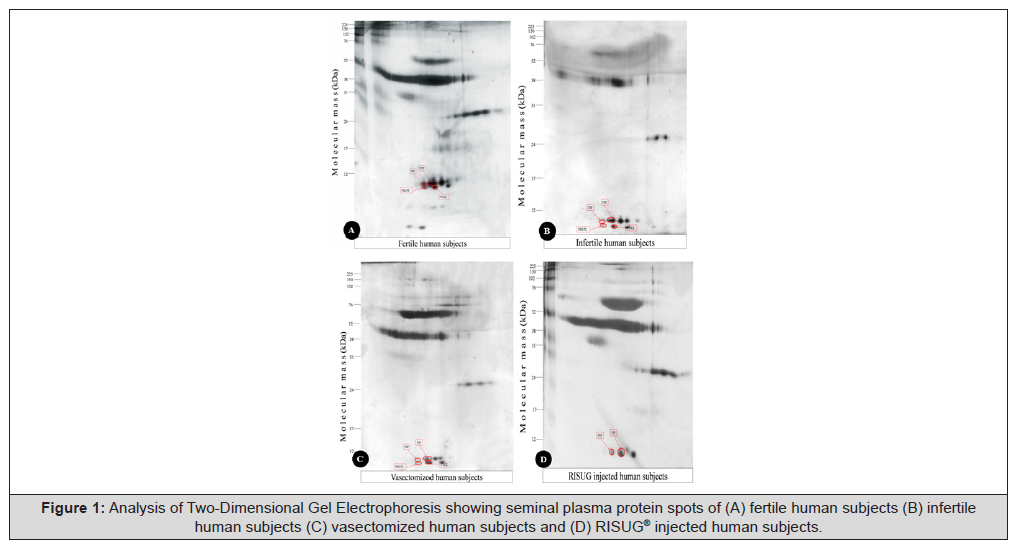
Figure 1:Analysis of Two-Dimensional Gel Electrophoresis showing seminal plasma protein spots of (A) fertile human subjects (B) infertile human subjects (C) vasectomized human subjects and (D) RISUG® injected human subjects.
Collectively, these distinct proteomic signatures across cohorts underscore that idiopathic infertility, surgical sterilization, and chemical contraception each impose unique molecular footprints on seminal plasma composition.
From the subset of differentially expressed spots, three proteins were unambiguously identified by MALDI TOF/TOF: Prolyl Endopeptidase‑Like (PREPL), Prolactin‑Inducible Protein (PIP), and Proline‑Rich Tyrosine Kinase 2 (PTK2, also known as FAK family member PYK2). Their expression trajectories across cohorts offer mechanistic clues regarding male reproductive physiology and the modes of contraceptive action (Figures 2,3).
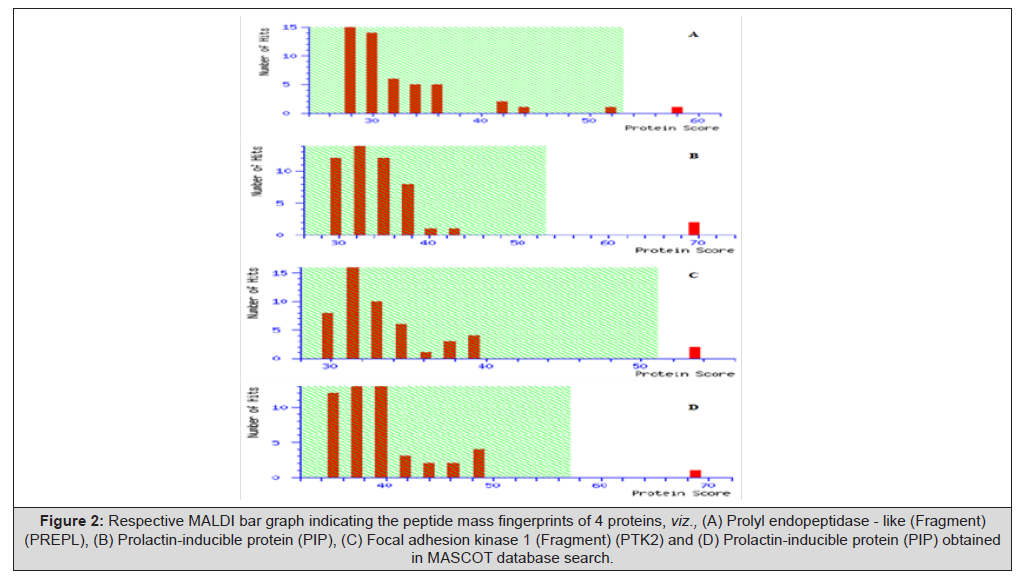
Figure 2:Respective MALDI bar graph indicating the peptide mass fingerprints of 4 proteins, viz., (A) Prolyl endopeptidase - like (Fragment) (PREPL), (B) Prolactin-inducible protein (PIP), (C) Focal adhesion kinase 1 (Fragment) (PTK2) and (D) Prolactin-inducible protein (PIP) obtained in MASCOT database search.
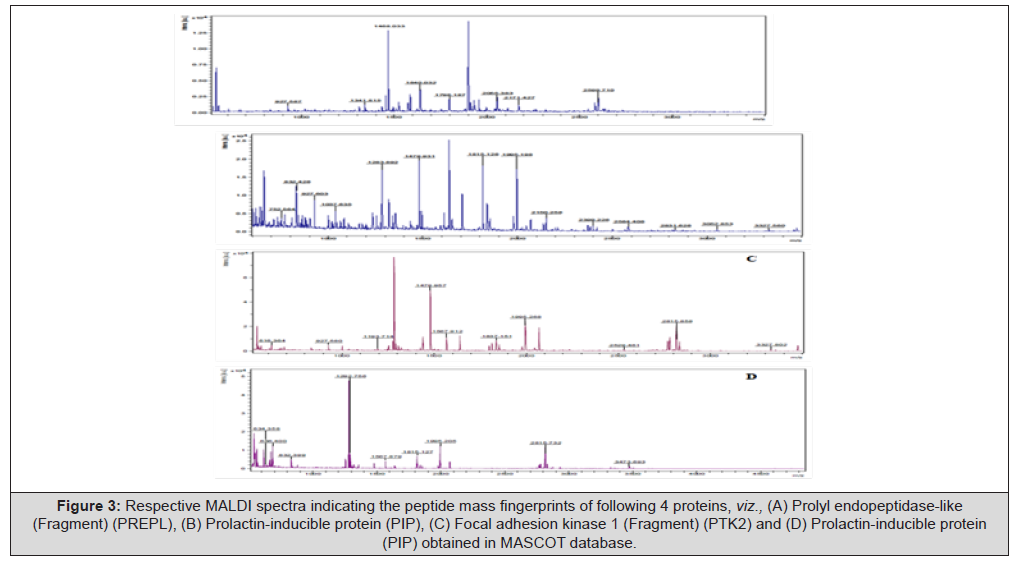
Figure 3:Respective MALDI bar graph indicating the peptide mass fingerprints of 4 proteins, viz., (A) Prolyl endopeptidase - like (Fragment) (PREPL), (B) Prolactin-inducible protein (PIP), (C) Focal adhesion kinase 1 (Fragment) (PTK2) and (D) Prolactin-inducible protein (PIP) obtained in MASCOT database search.
PREPL is a serine peptidase–like protein implicated in peptide processing and mitochondrial regulation. In our data, PREPL was downregulated in infertile and vasectomized groups and was entirely absent in RISUG®-treated samples. Given its known involvement in late spermiogenesis and cellular homeostasis, the progressive loss of PREPL suggests high sensitivity to disturbances in sperm maturation or testicular cellular architecture. Although direct evidence linking PREPL to human fertility is limited, Venditti, et al. had shown that PREP (a paralog) is dysregulated in human asthenoteratozoospermic sperm and in testicular tissues from infertile men [20,21]. In their work, PREP localization was disrupted in the mid‑piece and flagellar regions in infertile subjects. While PREPL is distinct from PREP, the shared nomenclature and related enzymatic domains motivate the hypothesis that PREPL may likewise be essential in sperm tail or mitochondrial integrity. PREPL, which is involved in mitochondrial function and peptide processing, was downregulated in both infertile and vasectomized individuals and completely absent in RISUG®-treated subjects. This pattern suggests that PREPL may be associated with late-stage spermatid development or sperm maturation, and its absence in RISUG® implies a profound suppression of sperm-associated proteins [22].
PIP, a glycoprotein known for its immunomodulatory role in seminal plasma, was consistently downregulated across all non-fertile groups, and nearly undetectable in infertile and vasectomized males. These findings support previous studies showing reduced PIP levels in hypogonadal and infertile men, and recent literature has proposed PIP as a potential biomarker for assessing male reproductive health and response to FSH therapy [23]. A study demonstrated that PIP levels increase following FSH treatment in idiopathic infertile males, correlating with improved sperm parameters [24]. Thus, the consistent reduction of PIP in our dataset reinforces its relevance as a diagnostic marker for impaired fertility or disrupted androgen regulation.
PTK2 (also represented in sperm as PYK2, a FAK family member) is a non-receptor protein tyrosine kinase involved in focal adhesion dynamics, cytoskeletal rearrangement, cell–cell adhesion, and signal transduction. PTK2) was downregulated in infertile and vasectomized groups and entirely absent in RISUG®-injected subjects. PTK2 plays a critical role in cell adhesion, cytoskeletal organization, and signal transduction, particularly during sperm capacitation and maturation [25]. Its loss suggests that focal adhesion pathways may be disrupted in both physiological and intervention- induced infertility, potentially impairing germ cell–support cell interactions or sperm motility. Recent studies have confirmed PTK2’s involvement in regulating actin polymerization during sperm capacitation, and inhibition of PTK2 leads to cytoskeletal disorganization and reduced sperm function [26]. The absence of PTK2 in RISUG® subjects could, therefore indicate a direct contraceptive mechanism involving the suppression of sperm structural integrity, consistent with the drug’s known effects on membrane destabilization and immobilization (Table 1).
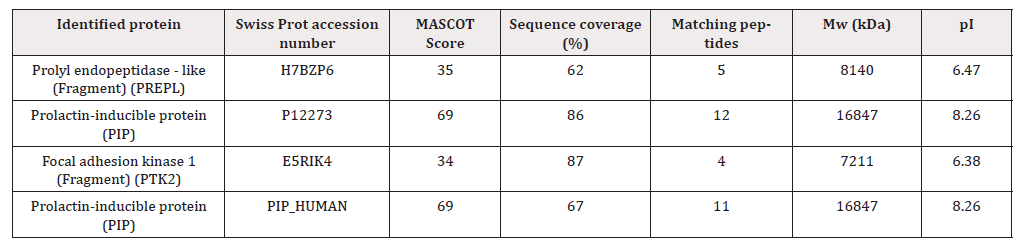
Table 1:Identified protein through MALDI-TOF.
Note*: Data obtained by Mascot online search engine using peptide mass finger print online tool.
Thus, the shared observation across the three proteins-progressive downregulation from infertile to vasectomized to RISUG® groups-supports a model wherein infertility and contraceptive intervention converge, at least in part, on suppression of sperm maturation and signalling machinery.
The comparison of proteomic overlap across groups further highlights the biological distinctions between natural infertility, surgical sterilization, and chemical contraception. The infertile group showed the fewest shared protein spots with fertile controls, reflecting broader systemic or testicular dysfunction. Vasectomy preserved more of the accessory gland proteome but still exhibited substantial divergence from the fertile profile. Interestingly, the RISUG ® group retained a higher number of shared proteins, suggesting partial preservation of normal protein expression. This intermediate pattern implies that RISUG® may interfere primarily with sperm viability and transit rather than causing irreversible structural changes, supporting prior reports of its reversibility in animal models [10]. The identification of proteins that are either uniquely absent or differentially regulated in RISUG® (as opposed to vasectomy) underscores potential molecular markers for distinguishing reversible and irreversible contraceptive interventions.
Despite the valuable insights gained, the study has limitations. Only a small subset of differentially expressed proteins was identified by mass spectrometry, leaving many altered spots uncharacterized. This restricts the ability to map entire pathways or understand broader systemic responses. Furthermore, the origin of many proteins- whether testicular, epididymal, or from accessory glands-remains uncertain, complicating the interpretation of changes across groups.
Conclusion
In conclusion, the proteomic profiles generated in this study reveal distinct molecular signatures associated with male fertility, infertility, vasectomy, and RISUG®-based contraception. The substantial downregulation or complete absence of PREPL and PTK2 in non-fertile groups, along with the consistent reduction of PIP, highlights their potential roles in sperm development, immune regulation, and cellular adhesion. These proteins may serve as valuable biomarkers for diagnosing male infertility and monitoring the physiological impact of contraceptive interventions. Notably, the RISUG® group exhibited a unique proteomic pattern that overlapped more closely with the fertile group than the infertile or vasectomized subjects, supporting its classification as a reversible contraceptive. The findings contribute to a growing body of literature suggesting that chemical contraception may preserve essential reproductive pathways while effectively inducing temporary infertility. Further research is warranted to validate these protein markers in larger cohorts, assess their functional roles in fertility restoration, and explore their utility in clinical diagnostics and personalized contraceptive strategies.
Our study demonstrates that seminal plasma proteomic profiles differ significantly among fertile, infertile, vasectomized, and RISUG®-injected individuals. Differential expression of key proteins such as PREPL, PIP, and PTK2 could serve as potential biomarkers for fertility status and contraceptive effect. Future studies using LC-MS/MS could provide deeper proteomic coverage, while parallel transcriptomic or immunohistochemical analyses could help localize the source of key proteins. Hormonal assays measuring testosterone, FSH, and LH would also be useful for correlating endocrine status with proteomic alterations.
Acknowledgments
SP, TCS, NKL and ASA conceived and designed the study; Sonu Pachera and RKP performed the investigations; Sonu Pachera, TC and BK analyzed data and wrote the paper. All authors read and approved the manuscript and all data were generated in-house and that no paper mill was used.
The Head, Department of Zoology, University of Rajasthan, Jaipur (India) provided infrastructural facilities is gratefully acknowledged. The Director, ICAR-Centre for Sheep and Wool Research Institute, Avikanagar (Rajasthan), India is thankful for providing the Two-Dimensional Gel Electrophoresis (2-DE) facility. The investigation was supported as a major research project (No. 5/10/11/2006-RHN) by the Ministry of Health and Family Welfare and Indian Council of Medical Research, New Delhi (India).
Conflict of Interest
The Head, Department of Zoology, University of Rajasthan, Jaipur (India) provided infrastructural facilities is gratefully acknowledged. The Director, ICAR-Centre for Sheep and Wool Research Institute, Avikanagar (Rajasthan), India is thankful for providing the Two-Dimensional Gel Electrophoresis (2-DE) facility. The investigation was supported as a major research project (No. 5/10/11/2006-RHN) by the Ministry of Health and Family Welfare and Indian Council of Medical Research, New Delhi (India).
References
- Samanta L, Parida R, Dias TR, Agarwal A (2018) The enigmatic seminal plasma: A proteomics insight from ejaculation to fertilization. Reprod Biol Endocrinol 16(1): 41.
- Juyena NS, Stelletta C (2012) Seminal plasma: An essential attribute to spermatozoa. J Androl 33(4): 536-551.
- Rodriguez Martinez H, Martinez EA, Calvete JJ, Pena Vega FJ, Roca J (2021) Seminal plasma: Relevant for fertility? Int J Mol Sci 22(9): 4368.
- Moustakli E, Zikopoulos A, Skentou C, Stavros S, Sofikitis N, et al. (2024) Integrative assessment of seminal plasma biomarkers: A narrative review bridging the gap between infertility research and clinical practice. J Clin Med 13(11): 3147.
- Camargo M, Intasqui P, Bertolla RP (2018) Understanding the seminal plasma proteome and its role in male fertility. Basic Clin Androl 28(1): 6.
- Selvam MKP, Agarwal A, Baskaran S (2019) Proteomic analysis of seminal plasma from bilateral varicocele patients indicates an oxidative state and increased inflammatory response. Asian J Androl 21(6): 544-550.
- Lohiya NK, Ansari AS, Sadasukhi TC, Pachera S, Khilwani B, et al. (2022) RISUG® offers early contraception: An experience during Phase III clinical trials. J Reprod Healthc Med 3(11).
- Khilwani B, Badar A, Ansari AS, Lohiya NK (2020) RISUG® as a male contraceptive: Journey from bench to bedside. Basic Clin Androl 30(1): 2.
- Parkes R, Garcia TX (2024) Bringing proteomics to bear on male fertility: Key lessons. Expert Rev Proteomics 21(4):181-203.
- Ansari AS, Hussain M, Khan SR, Badar A, Khilwani B, et al. (2022) Studies on biochemical, oxidative and genotoxicity alterations following vas blockage with reversible inhibition of sperm under guidance and reversal in rats. Indian J Pharmacol 54(1): 33-40.
- Fernandez Encinas A, Garcia-Peiro A, Del Rey J, Ribas Maynou J, Abad C, et al. (2020) Proteomic analysis in seminal plasma of fertile donors and infertile patients with sperm DNA fragmentation. Int J Mol Sci 21(14): 5046.
- Milardi D, Grande G, Vincenzoni F, Castagnola M, Marana R (2013) Proteomics of human seminal plasma: Identification of biomarker candidates for fertility and infertility and the evolution of technology. Mol Reprod Dev 80(5): 350-357.
- Panner Selvam MK, Agarwal A, Pushparaj PN, Baskaran S, Bendou H (2019) Sperm proteome analysis and identification of fertility-associated biomarkers in unexplained male infertility. Genes 10(7): 522.
- Gorg A, Postel W, Friedrich C (1991) Temperature dependent spot position variability in two-dimensional polypeptides patterns. Electrophoresis 12(9): 653-658.
- Blum H, Beier H, Gross HJ (1987) Improved silver staining of plant protein, RNA and DNA in polyacrylamide gel. Electrophoresis 8: 93-99.
- Guha SK (1996) Contraceptive for use by a male. USA Patent 5488075.
- Lohiya NK, Manivannan B, Mishra PK (2000) Repeated vas occlusion and non-invasive reversal with styrene maleic anhydride for male contraception in langur monkeys. Int J Androl 23(1): 36-42.
- Lohiya NK, Manivannan B, Mishra PK (1998) Ultrastructural changes in the spermatozoa of langur monkeys Presbytis entellus entellus after vas occlusion with styrene maleic anhydride. Contraception 57(2): 125-132.
- Lohiya NK, Manivannan B, Mishra PK, Pathak N, Balasubramanian SPA (1998) Intravasal contraception with styrene maleic anhydride and its non-invasive reversal in langur monkeys (Presbytis entellus entellus). Contraception 58(2): 119-128.
- Venditti M, Minucci S, Fasano C, Serino I, Sinisi AA, et al. (2019) Subcellular localization of prolyl endopeptidase during the first wave of rat spermatogenesis and in rat and human sperm. J Histochem Cytochem 67(4): 229-243.
- Venditti M, Fasano C, Minucci S, Serino I, Sinisi AA, et al. (2020) DAAM1 and PREP are involved in human spermatogenesis. Reprod Fertil Dev 32(5): 484-494.
- Martins AD, Panner Selvam MK, Agarwal A, Alves MG, Baskaran S (2020) Alterations in seminal plasma proteomic profile in men with primary and secondary infertility. Sci Rep 10(1):7539.
- Mancini F, Di Nicuolo F, Teveroni E, Vergani E, Bianchetti G, et al. (2024) Combined evaluation of prolactin-induced peptide (PIP) and extracellular signal-regulated kinase (ERK) as new sperm biomarkers of FSH treatment efficacy in normogonadotropic idiopathic infertile men. J Endocrinol Invest 47(2): 455-468.
- Cui Z, Agarwal A, da Silva BF, Sharma R, Sabanegh E (2018) Evaluation of seminal plasma proteomics and relevance of FSH in identification of nonobstructive azoospermia: A preliminary study. Andrologia 50(5): e12999.
- Signorelli J, Diaz ES, Morales P (2012) Kinases, phosphatases and proteases during sperm capacitation. Cell Tissue Res 349(3): 765-782.
- Roa-Espitia AL, Hernandez Rendon ER, Baltierrez Hoyos R, Munoz-Gotera RJ, Cote Velez A, et al. (2016) Focal adhesion kinase is required for actin polymerization and remodeling of the cytoskeleton during sperm capacitation. Biol Open 5(9): 1189-1199.




 We use cookies to ensure you get the best experience on our website.