
Research Article 
 Creative Commons, CC-BY
The Effect of Surgical Selection on Anal Sphincter Pressure in Perianal Fistulas
*Corresponding author:Dr. Musa DİRİ, Department of General Surgery, Istinye University Faculty of Medicine, Bahcesehir Liv Hospital, İstanbul- Turkey. E-mail: drmusadiri@hotmail.com. ORCID: 0000-0003-1336-3348
Received:August 23, 2025; Published:September 03, 2025
DOI: 10.34297/AJBSR.2025.28.003673
Abstract
Introduction: The aim of this study was to evaluate the impact of surgical choice in perianal fistulae on anal sphincter.
Patients And Method: One hundred patients operated on for perianal fistulae in our clinic were included into the study. The patients were divided
into three groups in terms of surgical technique. Seton was performed in the first group, fistulotomy in the second and laser ablation in the third
group.
Results: There was significant difference in terms of resting pressure between the groups on anal manometry measurements in the 12th month
postoperatively (p=0.035). Resting pressure in the first group was detected significantly low. There was no significant difference between the
groups in terms of squeezing pressure (p=0.411). The parameter of Retro-anal Inhibitor Reflex did not show normal distribution in the study group
(p<0.001). The parameter of First Sensation Volume did not show normal distribution in the study group (p<0.001). Other parameters did not show
any statistical difference.
Discussion and conclusion: That resting pressure was low in the seton group could be explained by the fact that internal sphincterotomy was
performed in this group. We detected that resting pressure was significantly low in the seton group by examining the positive and negative effects
of the surgical choice on anal sphincter tone using anal manometry in patients with perianal fistulae. Although seton use causes a decrease in anal
sphincter tone, it makes us think that laser ablation could be used in the first step.
Keywords:Perianal fistula, Anal manometry, Laser ablation, Loos seton
Introduction
Perianal fistula is an inflammatory process that has an important place among benign anorectal diseases, affects the anal region, and is a source of distinctive morbidity [1,2]. Its etiology almost always includes anorectal suppuration [1,2]. Parks and Eisenhammer put forward the cryptoglandular theory of etiology and this theory is still accepted in the literature [2-5]. While Eisenhammer has pointed out to the fact that blockage of the anal gland by infections developing in the gland and by all non-specific abscess and fistulae leads to the problem of defecation, Parks has reported that the abscessed gland is prone to forming fistula and becoming chronic following recovery [3,5]. Males have been shown to be two-seven times more inclined to perianal fistulas [1,2,6]. Therefore, hormonal differences are considered to contribute to fistula formation, or hormonal stimuli in men may increase sensitivity in the anal gland [7]. It is generally seen in the 30-50 years age group [7]. external anal sphincter that ensures continence is comprised of voluntary muscle fibers, internal anal sphincter is comprised of involuntary muscle fibers [3,5,6]. Both have serious effects on continence [2,8]. First imaging technique used to show internal and external sphincter muscles is anal endo sonography [9,10]. Intersphincteric fistulae and their relation with anal sphincters can be evaluated well with this technique. However, limited field of view is an important problem, and it is inadequate in demonstrating superficial, suprasphincteric and extra sphincteric paths, secondary tracts, and supralevator and ischiorectal abscesses [3,11].
Utilization of Magnetic Resonance Imaging (MRI) in perianal fistulae has a vital role in the detection of secondary paths and abscesses overlooked in examination and other techniques. Moreover, MRI ensures that the surgeon opts for the correct surgical method revealing the relation between the anal sphincter complex and fistula and promotes decrease in postoperative complications like incontinence and recurrences [11]. Seton technique is still the most commonly used surgical technique in perianal fistula treatment. The aim of this study was to investigate the impact of the surgical choice in perianal fistula disease on anal sphincter tone. Within this context, pre-and post-operative anal manometry parameters of the patients were compared separately between the groups.
Patients and Method
Our study was planned as a prospective randomized study upon having received approval from Local ethics committee (dated 18.10.2019 and numbered “2020.12.221”). Patients diagnosed with perianal fistula and planned to undergo surgery in our General Surgery Clinic between November 2019 and December 2020 were included into the study. Following anamnesis and physical examination in the all patients with a preliminary diagnosis of perianal fistula were assessed with lower abdominal MRI and colonoscopy. Furthermore, all patients were assessed with anal manometry 10 days prior to surgery since differences in pressures would be measured with anal manometry in our study. Inclusion criteria to the study were as follows: having perianal fistula, being aged 18- 80 years, and not having inflammatory bowel diseases that could have caused perianal fistula formation. Patients with inflammatory bowel diseases such as Crohn’s disease and ulcerative colitis, cancer patients, patients that had been previously operated on for perianal fistula, hemorrhoid, and anal fissure, and patients with the presence of another pathology (anal fissure, hemorrhoid) accompanying perianal fistula were excluded from the study. Furthermore, pregnant women and patients with a history of perianal radiotherapy, previous perianal and perineal trauma, malignancy, alcoholism and immunosuppression were excluded from the study. Patients who did not give informed consent for the participation into the study were also excluded.
Patients planned to undergo surgery were divided into three groups in terms of surgical technique. Seton was performed in the first group, fistulotomy in the second and laser ablation in the third group. The patients were operated on under spinal or general anesthesia. All patients were discharged on postoperative day 1. They were called to policlinic follow-up on the tenth postoperative day. All patients were called to follow-up in third and sixth months postoperatively, and fistula status was checked. Anal manometry was performed in all patients in the 12th month follow-up postoperatively. Age, duration of perianal fistula (month), classification of Parks and St. James University Hospital Classification (superficial, intersphincteric, transsphincteric, suprasphincteric, and extrasphincteric fistulae for Parks Classification), MRI findings, whether it was the primary disease or not, type of surgery, duration of discharge postoperatively (day), whether healing was achieved in the 3rd, 6th and 12th months postoperatively or not, whether recurrence of the fistula was seen or not, and distance of the fistula to the anus (cm) were noted for all patients included into the study. In addition, preoperative and postoperative anal manometry values were checked and recorded.
As the surgical technique, fistula tract was identified with a stile wire, two openings were revealed, and loose seton intervention was performed with Number 1 silk in the first group. In the second group, fistula tract was identified with a stile wire and two openings were revealed. With the help of cautery, fistulotomy was performed. In the third group, internal opening of the fistula was found by identifying the fistula tract with a stile wire. After having found the internal opening by anoscope, the fistula tract was cleaned with a brush curette and irrigated with serum physiologic. The laser probe was inserted from the external opening until submucosa of the internal opening has been reached. Afterwards, tract ablation was completed with the device with 9-14 burst and 550-1050 juole. Then, internal opening of the fistula was sutured with 2/0 vicryl. Laser ablation intervention was completed. In loose seton, seton change or fistulotomy was performed 30-45 days postoperatively. For statistical analysis, frequency and percentage were used for categorical variables, mean-standard deviation for normally-distributed continuous variables, and median, range, Q3 and IQR values for non-normally distributed continuous variables. Normality of the variables were analyzed by Shapiro-Wilk’s test. Kruskal Wallis test was used for independent intergroup comparisons of non-normally distributed continuous variables. One Way ANOVA test was used for dependent intergroup comparisons of normally distributed continuous variables. Post hoc analysis was performed using Dunn’s procedure with a Bonferroni correction test. Chi-square test was used in intergroup comparisons of categorical variables. All analyses were performed on Social Sciences Statistical package for Windows 22.0 (SPSS Inc., Chicago, Illinois, USA), and p<0.05 level was accepted as statistically significant.
Resultss
One hundred and thirty-six patients were included into the study. Twelve patients had been previously operated on for hemorrhoid and 15 for anal fissure and 2 patients received inflammatory bowel disease diagnoses, so they were excluded from the study. Seven of the patients were excluded since they did not want to participate in the study. In total, 100 patients were included into the study. Mean age of the patients was 43 years and showed normal distribution. The study included 12 female (12%) and 88 (88%) male patients. The distribution of study groups according to age, gender, recurrence and follow-up period is shown in Table 1.
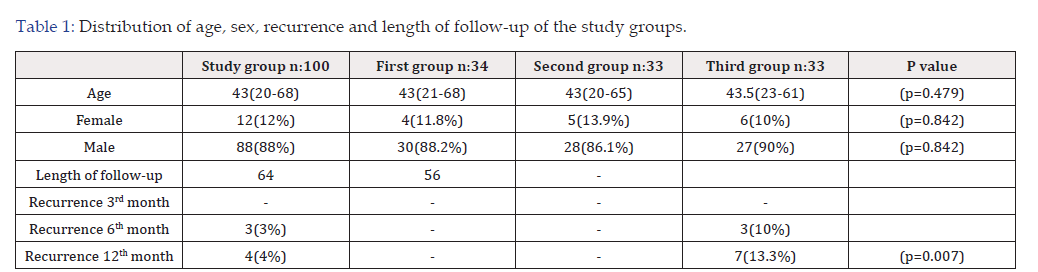
Table 1:Distribution of age, sex, recurrence and length of follow-up of the study groups.
When types of fistulae were evaluated, there were 64 (64%) Parks 1, 24 (%24) Parks 2, 7 (7%) Parks 3, and 5 (5%) Parks 4 types. A significant difference was established between the groups in terms of fistula type (p<0.001). The second group was found to have had more Parks 1 fistulae. The fistula type distribution was shown in Table 2.

Table 2:Distribution of fistula types between the groups according to Parks classification.
When MRI findings were evaluated, there were 3 absent fistula tracts (3%), 65 intersphincteric (65%), 23 transsphincteric (23%), 5 suprasphincteric (5%) and 4 extrasphincteric (4%) fistulas. Distribution of MRI findings between the groups are given in. A significant difference was observed between the groups in terms of MRI findings. (p<0.001). Intersphincteric fistulae were significantly more observed in the fistulotomy group. The pressures of the patients before the operation are shown in Table 3.
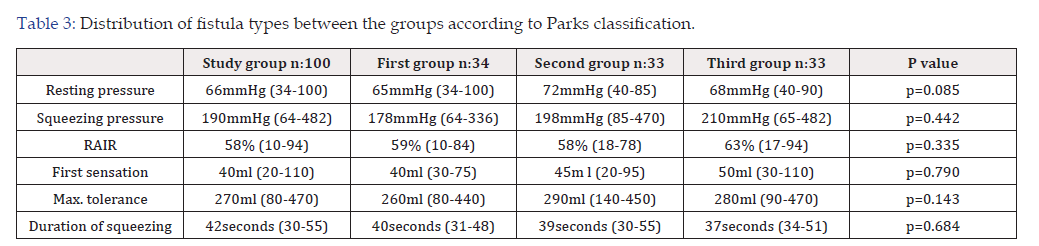
Table 3:Distribution of fistula types between the groups according to Parks classification.
Note*: RAIR: Recto-anal Inhibitory Reflex
Anorectal manometry measurements at the postoperative 12th month are shown in Table 4. The mean resting pressure was 64(21- 100) mmHg. Resting pressure measurements were detected significantly low in the seton group (p=0.035). Squeezing pressure was found as mean 183.50(18-482) mmHg in the study group. Although significant difference was not seen between the groups, pressures of the seton group was observed close to lower values of the reference range (p=0.442).
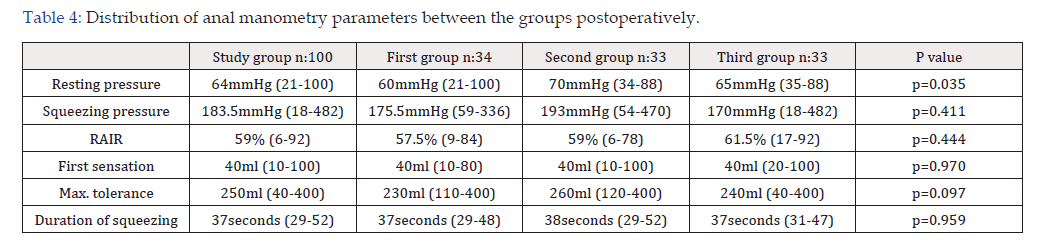
Table 4:Distribution of anal manometry parameters between the groups postoperatively.
Note*: RAIR: Retroanal Inhibitory Reflex.
Retro-anal inhibitor reflex (RAIR) was measured as mean 56.20% in the study group. A significant difference was not detected between the groups in terms of RAIR (p=0.444). First sensation volume was measured as 40(10-100) mmHg in the study group on anorectal manometry. A statistically significant difference was not seen between the groups in terms of first sensation volume parameters. Maximum Tolerance Volume parameter was measured as mean 250ml (40-400) in the study group. There was no significant difference between the groups in terms of maximum tolerance volume. Duration of squeezing was found as mean 37(29-52) seconds in the study group. There was no significant difference between the groups in terms of duration of squeezing (p=0.959).
Discussion
Perianal fistula is an inflammatory process that has an important place among benign anorectal diseases, affects the anal region, and is a source of distinctive morbidity Debates still continue on the treatment of perianal fistula disease, and a consensus is still not reached. Although many treatment modalities have been tried, there is no “gold standard”. Treatment choice is planned according to patient’s age, sex, previous treatment, fistula type, accompanying diseases, and anal incontinence condition. When the literature is reviewed, there seems to be a balance between anal continence and success of the fistula treatment, and anal continence is seen to be more imperfect in treatments with high success [12,13].
Putting forth a genuine anal incontinence rate following fistula surgery is quite difficult. Several series have reported fecal incontinence rate of 0-70% after seton technique in perianal fistulae [13]. However, since the external sphincter is preserved in nearly half of the patients in whom seton technique has been used, it can be said theoretically that lower incontinence rates are expected in these patients [14,15]. In the literature, long-term (median 8 years, 2-14 years) incontinence development was determined by using anorectal manometry and research questionnaire in 23 patients who underwent seton intervention. Even though recovery has been achieved in all patients and recurrence has not been seen, gas incontinence has developed in 13 of 23 patients, discharge in 8 and fecal incontinence in 3, and these have not ameliorated over time. The authors have stated that the anal deformity formed is a much more important factor for incontinence development than anal tone decrease and recommended external sphincter reconstruction in the early period following seton sphincterotomy [16].
Anal incontinence in 108 (31.0%) of 348 patients in whom seton has been performed due to transsphincteric fistula in a total of 20 studies. This rate has been found as 53.3% and 40% respectively in cases undergoing seton for suprasphincteric and extrasphincteric fistulae [17]. we performed loose seton with No. 1 silk in 34 patients in our seton group. Fistula types of the patients in the first group were Parks 1 in 13 (38.2%), Parks 2 in 12 (35.3%), Parks 3 in 6 (17.6%) and Parks 4 (8.8%) in 3 patients. Regarding distribution of general fistula types, high-grade intersphincteric, transsphincteric, suprasphincteric, and extrasphincteric fistula types were relatively more in number. All patients were regularly followed, and examination findings were recorded. In the first group, mean number of days for seton was detected as 67.47±26.68 days, and median number of days for seton was found as 60 in this group. Mean postoperative follow-up in the seton group was 367 days. Complete recovery was observed in these patients. There were no active complaints in this group of patients. In another study, they found that while 38% of their patients, who were followed up for 9-12 months after fistulotomy due to intersphincteric anal fistula, had no continence problems, the remaining patients had varying degrees of continence problems. In that study, the authors stated that both squeezing and resting pressures decreased in fistulas whose volume increased along the anal canal after fistulotomy [18].
we performed partial internal sphincterectomy in 33 patients of the second group. Thirty-nine Parks 1 (94.4%) and 2 Parks 2 (5.6%) were detected in the second group. Parks 1 was significantly higher in the second group of patients. All patients were regularly followed, and examination findings were recorded. Mean postoperative follow-up in the second group was 375 days. Complete recovery was achieved in all of the second group patients. There were no active complaints in this group of patients. No patient complained about recurrence postoperatively, and no significant findings was found on anal manometry. we operated 33 patients with laser ablation technique in the third group. Fistula types of the patients in the third group were Parks 1 in 17 (56.7%), Parks 2 in 11 (33.3%), Parks 3 in 2 (3.3%) and Parks 4 (6.7%) in 3 patients. Regarding distribution of general fistula types, Parks 1 and 2 were more common. All patients were regularly followed, and examination findings were recorded. Mean postoperative follow-up in the third group was 375 days. Complete recovery was observed in 26 patients (76.7%) in their 12-month follow-up. Recurrence was detected in 7 (23.3%) of these patients. While 3 of the recurrences occurred in the 6th month, 4 of them occurred after the 12th month. Following recurrence, while complete recovery was achieved in 4 of these patients with partial internal sphincterotomy with fistulotomy, the remaining 3 patients underwent seton with no 1 silk and then fistulotomy, and complete recovery was achieved. The other patients in this group had no active complaints in the 375-day follow up.
Intergroup demographic distribution was similar to the literature. We investigated if there was a statistical difference between minimal invasive procedures like laser ablation and invasive surgical interventions like loose seton and fistulotomy that are extensively preferred in patients operated on for perianal fistula disease and to what extent these options are effective on sphincter tone. Among invasive surgical options, loose seton application is still accepted as a vital choice preferred frequently in high-grade intersphincteric, transsphincteric, suprasphincteric, and extrasphincteric fistulae in terms of protecting perianal abscesses and the patient’s sphincters and proceeding step by step. Loose seton was applied to our patients in the first group with preoperative and peroperative assessments. When to change seton or perform fistulotomy was decided following postoperative evaluation of the patient, fistula type, and postoperative examination. In the light of regular follow-up and physical examination findings of our first group of patients, there were no recurrences and anal incontinence findings. However, resting pressure of our first group of patients was significantly low on anal manometry.
Laser ablation is highly favored since it is easily performed and reliable. Thus, this positive aspect of laser ablation makes it to be more preferred among surgeons. However, as in our study, high recurrence rate is the negative aspect of laser ablation. In our study, a statistically significant difference was observed between the groups in terms of recurrence in the 12th month (p=0.007). When compared to the literature, recurrence rates in our study were better. Even though LAFT receives harsh criticism due to recurrence rates, we are of the opinion that better outcomes will be reached in experienced centers and with correct patient choice. Preoperative anal manometry was performed in all of our patients, and no one was detected to have incontinence. In the literature, there was no study evaluating internal and external sphincter tone and anal incontinence following surgery due to perianal fistula. Anal manometry results of our patients having undergone invasive surgery and minimally invasive surgery due to perianal fistulae were compared. Six parameters of anal manometry were assessed.
In the first group, resting pressure was low than the other groups. There was a statistical difference between the groups in terms of resting pressure (p=0.035). We can speculate that due to loose seton application in this group of patients, resting pressure as a result of internal sphincterectomy was low. A statistically significant difference was not found between the groups in terms of squeezing pressure. When compared to the third group, data were quantitatively closer to lower values and the values were relatively lower in the first and second groups. However, external sphincter damage of volume loss was not found in any of our patients. A statistical difference was not found in terms of first sensation on anal manometry between the patient groups. When squeezing duration was evaluated, we found no significant difference in our study and between the groups when external sphincter squeezing duration was based on the reference range of 40-60 seconds (p=0.959). Independent of the groups, retro-anal inhibitor reflex was under 25% in some patients. However, there were no active complaints and findings in these patients, and a statistical difference was not found in our study and between the groups (p=0.444). When first sensation and maximum tolerance parameters were evaluated, we observed that the values in our patient groups were within the reference range and detected no statistical difference between the groups. In the literature, it was determined in 2018 according to the comparison results of 3D high-definition anorectal manometry and 3D anal ultrasonography that patients had deep local anal tone decrease on the fistula path in normal mean resting pressures. Fistulotomy may have an effect on local sphincter tone, which has been reported to affect surgical decision in the future [19].
Conclusion
We detected that resting pressure was significantly low in the seton group by examining the positive and negative effects of the surgical choice on anal sphincter tone using anal manometry in patients with perianal fistulae. Although seton use causes a decrease in anal sphincter tone and high recurrence rates, it makes us think that laser ablation could be used in the first step.
Acknowledgements
None.
Conflict of Interest
None.
References
- Akçal T, Perek A, Ertürk S, Sungurtekin U, Yüceyar S (2011) Anorektal Bölgenin Selim Hastalıkları. 2011(2): 73.
- Anorektal bögenin selim hastalıkları. TKRCD. Abshwebbook.
- Raizada V, Mittal RK (2008) Pelvic floor anatomy and applied physiology. Gastroenterol Clin N Am 37(3): 493-509.
- Barleben A, Mills S (2010) Anorectal anatomy and physiology. Surg Clin N Am 90(1): 1-15.
- Lindsey I, Guy R, Warren BF, Mortensen NJMcC (2000) Anatomy of Denonvilliers' fascia and pelvic nerves, impotence, and implications for the colorectal surgeon. Br J Surg 87(10): 1288-1299.
- Stoker J (2009) Anorectal and pelvic floor anatomy. Best Pract Res Clin Gatroenterol 23(4):463-475.
- Taylor SA (2009) Imaging pelvic floor dysfunction. Best Pract Res Clin Gatroenterol 23(4): 487-503.
- Milligan ETC, Morgan CN (1937) Surgical anatomy of the anal canal with special reference to ano-rectal fistulae. Lancet ii: 11506.
- Goligher JC, Leacock AG, Brossy JJ (1955) The surgical anatomy of the anal canal. Br J Surg 43(177): 51-61.
- Shafik A (1975) A new concept of the anatomy of the anal sphincter mechanism and the physiology of defecation. The external anal sphincter: a triple-loop system. Invest Urol 12(5): 412-419.
- Nivatvongs S, Gordon PH (1999) Surgical Anatomy. In: Principles and Practice of Surgery for the Colon, Rectum and Anus. St. Louis: Quality Medical Publishing Inc. pp: 340.
- Sangwan YP, Rosen L, Riether RD, Stasik JJ, Sheets JA, et al. (1994) Is simple fistula-in-ano simple. Dis Colon Rectum 37(9): 885-889.
- RW Golub, WE Wise Jr, BA Kerner, KS Khanduja, PS Aguilar (1997) Endorektal advancement flap: the preferred method for complex cryptoglandular fistula in-ano. J Gastrointest Surg 1(5): 487-491.
- Jaime de Miguel Criado, Laura García del Salto, Patricia Fraga Rivas, Luis Felipe Aguilera del Hoyo, Leticia Gutiérrez Velasco, et al (2012) MR imaging evaluation of perianal fistulas: spectrum of imaging features. Radiographics 32(1): p175-194.
- Enck P, Bielefeldt K, Rathmann W, Purrmann J, Tschöpe D, et al. (1991) Epidemiology of faecal incontinence in selected patient groups. Colorectal Dis 6(3): 143-146.
- Vial M, Parés D, Pera M, Grande L (2010) Faecal incontinence after seton treatment for anal fistulae with and without surgical division of internal anal sphincter: a systematic review. Colorectal Dis 12: 172-178.
- Ritchie RD, Sackier JM, Hodde JP (2009) Incontinence rates after cutting seton treatment for anal fistula. Colorectal Dis 11: 564-571.
- Chang SS, Lin JK (2003) Change in anal continence after surgery for intersphincteral anal fistula: a functional and manometric study. Int J Colorectal Dis 18(2): 111–115.
- Richelle JF Felt Bersma, Maarten S Vlietstra, Paul F Vollebregt, Ingrid JM Han Geurts, Vera Rempe Sorm, et al. (2018) 3D high-resolution anorectal manometry in patients with perianal fistulas: comparison with 3D-anal ultrasound. BMC Gastroenterol 18(1): 44.




 We use cookies to ensure you get the best experience on our website.