
Short Communication 
 Creative Commons, CC-BY
The Influence of Artificial Intelligence on the Stimulation of the Five Human Senses: An Integrated Approach with Multiple Intelligences
*Corresponding author:Fernando Cassinda Quissanga, José Eduardo dos Santos University, Huambo City, Angola.
Received:September 01, 2025; Published:September 05, 2025
DOI: 10.34297/AJBSR.2025.28.003685
Summary
This research proposes a critical and interdisciplinary analysis of the influence of Artificial Intelligence (AI) on the five human senses: sight, hearing, touch, smell, and taste, based on the foundations of neuropsychology, neurobiology, and neuroeducation. With the exponential growth of AI and its incorporation into various domains of daily life, it is imperative to understand its impacts on human sensory systems and cognitive processes. AI, as an algorithmic and pervasive technology, simulates cognitive and sensory functions through artificial neural networks, pattern recognition, and interactive interfaces. Despite technological advances, AI lacks consciousness, ethical judgment, creativity, or intentionality, and is distinct from and inferior to Human Intelligence (HI) in terms of complexity and cognitive depth. Human senses, in turn, are responsible for receiving and interpreting environmental stimuli, constituting the basis for perception, memory, and knowledge construction. With the advent of pervasive computing, sensory technologies such as tactile sensors, auditory interfaces, augmented reality, and artificial olfactory devices are being developed to replicate or expand these human capabilities. The study highlights the importance of a balanced integration between AI and HI, considering the psychogenetic, sensory, and affective-motivational uniqueness of individuals. The research concludes that AI should be understood as a complementary tool to human intelligence, not as its replacement. An ethical, critical, and educationally oriented approach to the use of AI is advocated, emphasizing the role of neuroscience and neuroeducation in technological mediation. The study also recommends the development of public policies and pedagogical practices that consider the limits and potential of AI, as well as the promotion of critical digital literacy. Future research is suggested to delve deeper into the sensory and cognitive effects of AI, especially on learning, emotion, attention, and memory.
Keywords:Artificial intelligence, Human senses, Neuroeducation, Human intelligence, Cognition, Technological ethics
Introduction
Artificial Intelligence (AI) has established itself as one of the most disruptive approaches today, promoting significant transformations in the global technological landscape. Its exponential growth has sparked both enthusiasm and apprehension, particularly regarding the ethical, cognitive, and social implications arising from its incorporation into the various contexts of everyday human life [4,21]. Therefore, it is essential to critically reflect on the advantages and limitations of this technological advancement, recognizing the need for conscious action by users, researchers, and public policymakers.
The development of AI, characterized by its ability to simulate human cognitive processes through algorithms, artificial neural networks, and interactive, transparent, and pervasive infrastructures, has a direct impact on how individuals perceive, interact, and process sensory information [13]. In this context, the analysis of the interface between AI and the five human senses: sight, hearing, touch, smell, and taste, gains relevance, considering the theoretical bases of neuropsychology, neurobiology, and neuroeducation.
Each of the human senses plays a crucial role in receiving and interpreting environmental stimuli, contributing to the construction of perceptual experience and cognition. Vision, for example, is associated with the decoding of visual stimuli, such as images, symbols, and patterns, while hearing enables the processing of language and environmental sounds. Touch enables tactile and kinesthetic perception and is essential for motor learning and physical interaction with the environment. Smell and taste, although often underestimated in technological approaches, are significantly important in triggering emotional responses and building sensory memory [17]. Pervasive computing, technologies such as tactile sensors, speech recognition, brain-machine interfaces, and kinesthetic systems have been implemented to replicate or expand these sensory capabilities, promoting increasingly natural and immersive interaction experiences [23]. Such advances also align with connectionist theory, according to which cognition emerges from the interconnection of procedural units, similar to human neural networks. In this sense, artificial neural networks, also called connectionist networks, model complex behaviours and mental processes, representing an essential paradigm for understanding AI from the perspective of computational neuroscience [19].
Furthermore, the application of AI in education and adaptive learning environments requires consideration of each individual’s psychogenetic, sensory, and cognitive characteristics, as postulated by neuroeducation. This emphasizes the importance of integrating the affective-motivational, self-regulatory, and cognitive systems for the full development of learning [1]. In this scenario, AI can both enhance personalized learning experiences and compromise subjective dimensions of cognition if a balance between technological innovation and biopsychological principles is not maintained.
Therefore, the central objective of this research is to critically analyse the influence of artificial intelligence on the five human senses, considering the interfaces between technology and neuroscience. This analysis is based on the premise that valuing individual differences, as well as a deep understanding of sensory and cognitive mechanisms, is fundamental to building ethically responsible and cognitively sustainable educational and social technologies.
Method
This research adopts a qualitative, interpretative approach, complemented by quantitative instruments, in accordance with the assumptions of mixed methods [5]. This methodological choice aims to respond to the complexity of the object of study, which involves both subjective aspects, such as beliefs, attitudes, and perceptions, and empirical data that allow for stratification and preliminary statistical analysis.
Data collection was conducted through bibliographic and documentary research, based on materials extracted from scientific journals, indexed articles, technical manuals, specialized books, and doctoral theses. These documents provided theoretical and empirical support for the comparative analysis of topics related to Artificial Intelligence (AI), the five human senses, multiple intelligences, and the connectivist and connectionist paradigms.
In this process, document analysis was adopted as the research technique, as defined by [13], who describes it as “[...] a scientific research methodology that adopts certain technical and scientific procedures to examine and understand the content of documents of various types [...].” This approach allowed us to identify patterns, categories, and conceptual relationships relevant to furthering the discussion. Secondary data from surveys and preliminary studies on the five senses and their relationship to AI were used, particularly considering tools such as ChatGPT, launched in 2022, whose application in scientific research is debated. The analysis of these data involved both human and artificial characterization of the senses, in light of neuroscience, cognition, and technology
The exploratory, descriptive, and explanatory nature of the research favoured the use of various methodological procedures, including comparative analysis, thematic analysis, data stratification, and indirect observation. At times, case study and action research approaches were used, always considering the variables involved and the specific contexts.
Finally, the methodological choice was guided by the research objectives, the complexity of the topic, the scientific context, and the available resources. This methodological plurality ensures greater depth, comprehensiveness, and rigor in the proposed analysis.
Theoretical and Clinical Foundation
In an interdisciplinary approach, this analysis incorporates the principles of neuroscience applied to education, associating them with the study of human temperaments, understood as genetically based structural traits that directly influence learning styles, sensory processing, and emotional responses. In this sense, the sanguine, choleric, melancholic, and phlegmatic temperaments are correlated with dominant sensory styles, creating an innovative bridge between the theory of multisensory stimuli, multiple intelligences (Gardner), and the strategic use of emerging cognitive technologies, such as AI [24,22].
From a clinical-cognitive perspective, the five senses are understood not only as physiological mechanisms, but also as neurosensory portals that shape an individual’s perception, cognition, and behaviour. Thus, any technology that interferes with or amplifies sensory stimuli, such as Artificial Intelligence, can also mediate, regulate, or redirect neural processes essential to learning and emotional self-regulation [2,9].
Artificial Intelligence as a Tool for Sensory and Cognitive Modulation
Artificial intelligence, known as AI, belongs to the branch of science linked to Information and Communication Technology (ICT), of computer engineers. Through technological means, it is capable of simulating human intelligence, allowing greater integration and interaction in various domains and sectors. In other words, it is present in almost all areas: military, aviation, transportation, health, especially telemedicine, education, specifically in the education system, among other productive and non-productive sectors. Several companies are using AI for Economics and Management, Human Resources, Recruitment and Selection, business as well as for data processing and management software, for projects such as Project Management. Management, Dashboard many online games, Visual Mind, and best known ChatGPT.
ChatGPT has monopolized the term AI, as it is the best known when it comes to it, it seems to be the only one or artificial intelligence itself, but AI is much more than one imagines, with several interactive and functional resources to respond to whether it is cognitive or 3D image resolution, pervasive, ubiquitous or mobile computing, the internet of things IoT, metaverse, augmented reality and robotics (Figure 1).
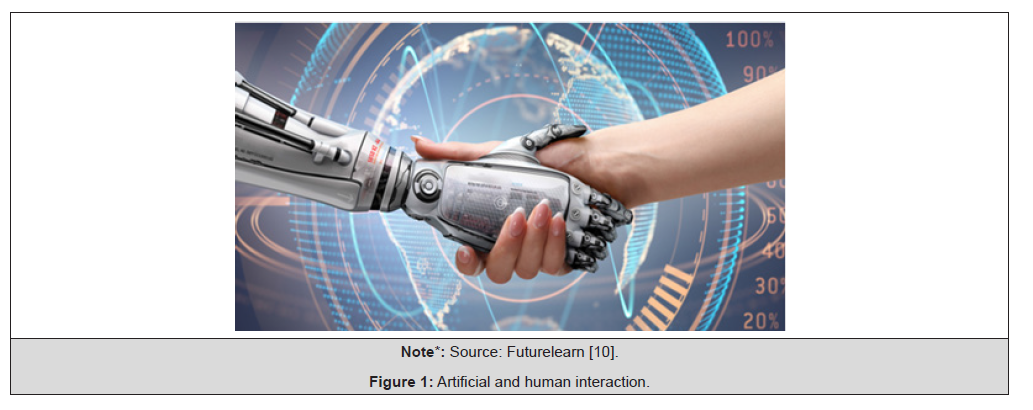
Figure 1:Artificial and human interaction.
AI, in this context, is not just a technological tool, but a catalyst for educational and neurobehavioral transformation. Through predictive algorithms, artificial neural networks, and adaptive systems, AI has the ability to accurately analyze behavioural patterns, temperamental traits, and sensory responses, thus enabling the customization of learning experiences in real time [18].
Furthermore, its application in the educational and clinical fields allows for the identification of sensory asymmetries, aiding in the early intervention of sensory processing disorders and adjusting stimuli according to the neuropsychological profile of each student, respecting their limits and enhancing their latent abilities.
Integrating the five senses as mediating channels for multiple intelligences exponentially expands the possibilities for personalized educational interventions. Below are applied examples of how AI can modulate sensory stimuli in line with temperamental traits, optimizing cognitive and emotional performance:
a) Hearing: Auditory stimuli, such as music, rhythms and sound
narratives, are especially effective for melancholic (reflective)
and sanguine (communicative) types, promoting focus, empathy
and information retention.
b) Vision: Visuals, such as interactive infographics and dynamic
videos, stimulate Cholerics (analytical and results-oriented)
and Sanguines (creative), facilitating symbolic decoding and
visual thinking.
c) Synesthetic learning.
d) Taste and Smell: Although traditionally less explored, these
senses have high affective and mnemonic value. In controlled
environments, such as culinary or sensory laboratories,
they are effective in anchoring positive emotions to content,
strengthening long-term memory.
Neuroplasticity and Personalized Learning
The clinical basis for this proposal is supported by brain neuroplasticity, which demonstrates that sensory experiences physically shape the brain, especially in adapted learning contexts. By providing multisensory stimuli aligned with the individual’s neurocognitive profile, it is possible to strengthen synapses, increase retention, and promote the construction of knowledge in an active, emotionally meaningful, and sustainable way [12,9].
In view of the above, this research proposes a new educational
and therapeutic paradigm, based on the convergence between:
a. Temperamental science;
b. The foundations of neuroeducation and neuroplasticity;
c. Sensory-cognitive integration based on multiple intelligences;
d. And the strategic use of advanced cognitive technologies, such
as AI.
The model not only respects the individual’s biopsychosocial complexity, but also provides more inclusive, effective and humanized interventions, promoting equitable, integrated and truly subject- centred learning.
Virtual Reality (VR) and Augmented Reality
Virtual reality has a foundation in the world of technology and uses intelligent 3D technology. Artificial intelligence and deep learning, are augmented reality technologies, which can be reproduced and augmented anywhere with the use of appropriate devices. This technology is gaining momentum, and we can use it for other perspectives in the teaching and learning process, such as pervasive computing, which transmits information interactively and transparently. It has both a logical and physical infrastructure. While virtual reality deals with digital immersion, augmented reality deals with the interaction of digital and physical realms (Figure 2).
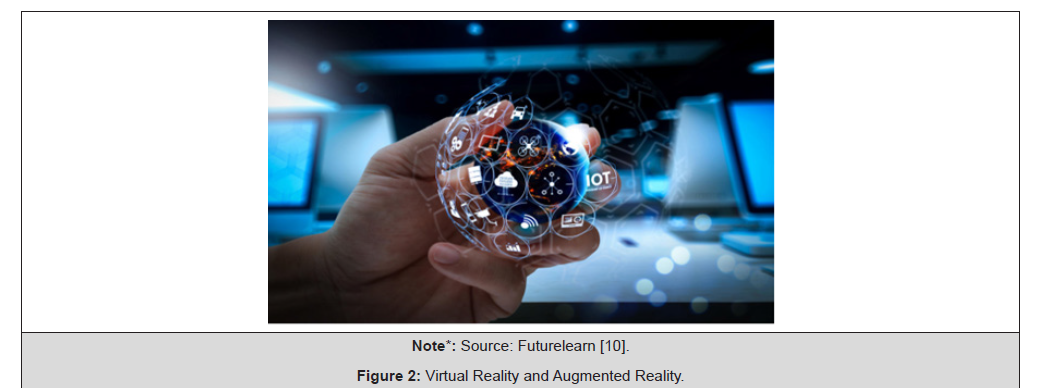
Figure 2:Virtual Reality and Augmented Reality
About the five senses emerge [3]:
a. Vision is the sense capable of perceiving light and the formation
of images (light stimuli), through photoreceptors located
in the eyes, more precisely in the retina.
b. Hearing is the sense capable of capturing and perceiving sound
waves, through photoreceptor’s located in a region of the ear
called the cochlea.
c. Smell is the sense capable of capturing the Odor of chemical
particles present in the air, through chemoreceptors located in
the olfactory epithelium, located at the top of the nasal cavity.
d. Taste is the sense capable of perceiving the flavours of food,
through chemoreceptors located in the taste buds, distributed
throughout the tongue, palate, pharynx, epiglottis, and larynx.
Smell also helps us perceive flavour.
e. Touch is the sense capable of perceiving textures, pain, temperature
and pressure, through mechanoreceptors present
throughout the skin, mucous membranes and some viscera
(Table 1).
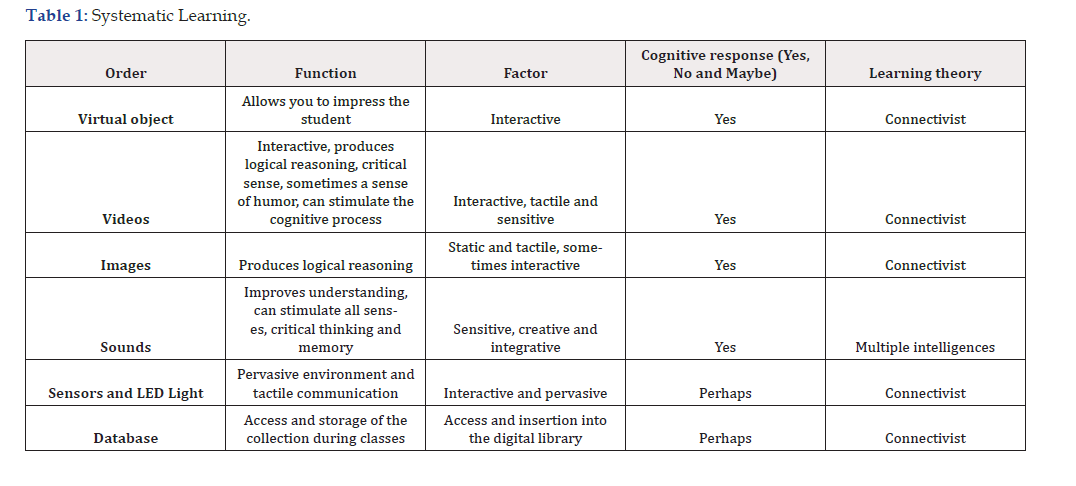
Table 1:Systematic Learning.
Note*: Source: Quissanga [18].
Table 1 demonstrates how the five senses intervene in artificial intelligence through technological convergence with various learning theories. In other words, the senses play a fundamental role in neuroscience. Our brain has an extraordinary function, enabling it to perform tasks and generate neural responses interconnected by synapses. The brain cannot distinguish between reality and imagination, but it does trigger a stimulus in human regulation and the process of cognition.
Results and Discussion
This research proposes an innovative approach to the influence of Artificial Intelligence (AI) on the stimulation of the five human senses, combining concepts from multiple intelligences, neuroeducation, and emerging cognitive technologies. This represents a new educational and therapeutic paradigm, anchored in the convergence of neuroscience, sensory cognition, and intelligent technologies, with the potential to significantly transform teaching, learning, and human development.
It has been found that, although AI, especially tools such as ChatGPT, has gained great prominence in the contemporary educational and scientific scenario, there is still distrust and resistance regarding its ethical and methodological use, especially with regard to its reliability as a scientific research tool [8]. Despite this, it is evident that the strategic use of AI can favour meaningful learning, personalized teaching and adaptive cognitive development [15].
The analyzed data reveal ten fundamental axes that emerge from the correlation between AI, the five human senses and multiple intelligences, [11]:
i. Temperamentology and cognition: The recognition of temperamental
profiles, in combination with AI, can help adapt sensory
and cognitive content to the individual’s neuropsychological
profile;
ii. Neuroeducation and neuroplasticity: AI can Favor the stimulation
of neural networks through multimodal sensory experiences,
reinforcing;
iii. Sensory-cognitive integration: The five senses act as primary
channels in the construction of perception, memory, and behaviour.
AI can model and simulate these experiences, promoting
embodied learning. learning);
iv. Cognitive technologies: AI tools such as ChatGPT represent
adaptive systems with the potential to support writing, reasoning
and the organization of ideas, activating neural circuits
associated with language, [6];
v. Educational transformation: AI acts as a catalyst for a paradigm
shift in education by enabling personalized teaching based on
predictive data and self-adjusting systems, [15];
vi. Knowledge reinforcement: Effective learning requires repetition
and sensory stimulation, aspects that can be reinforced
through interactions with AI systems programmed to provide
continuous feedback;
vii. Therapeutic potential: AI can be explored in sensory therapeutic
practices, such as in cases of neurocognitive rehabilitation,
taking advantage of multisensory stimulation and real-time
progress monitoring;
viii. Synapses and neural functions: Neuroscience supports that
frequent sensory stimulation strengthens synaptic connections,
and AI is a tool that can promote such stimulation, [17];
ix. Wisdom and repetition: Wisdom, according to [11], is built
through the internalization and practice of knowledge, and AI
can support this process by organizing content and creating
meaningful learning paths;
x. Sensory and cognitive education: The integration of the five
senses in the educational process enhances experiential learning.
AI can facilitate immersive environments, including with
technologies such as augmented reality and metaverse, [16].
Thus, the results suggest that AI, when ethically applied and aligned with the principles of neuroeducation and multiple intelligences, can not only facilitate learning but also contribute to the integral development of the human being, promoting cognitively enriching sensory experiences.
Conclusion
i. It is unequivocally clear that Artificial Intelligence (AI) has already
established itself as a structuring technological resource
of our time, constituting a true heritage of humanity. Its presence
is irreversible and increasingly integrated into social, educational,
professional, and cognitive practices, making it unrealistic
to consider its influence merely transitory or episodic;
ii. It is essential to recognize that AI, despite its increasing sophistication,
should primarily act as a tool to support human
performance, complementing the capabilities of Human Intelligence
(HI), not replacing it. AI remains superior in fundamental
domains such as ethical judgment, critical decision-making,
creativity, and empathy; attributes these are innate to human
beings and, to date, unattainable by artificial systems;
iii. AI operates through programmed algorithms based on data
and probabilistic patterns, and is therefore limited to its inferential
and non-conscious nature. In contrast, human intelligence
is characterized by its neural plasticity, reflective consciousness,
intentionality, and capacity for self-transcendence;
iv. Although Artificial Intelligence will play a central role in scientific
and technological development in the coming decades,
current knowledge does not suggest it will surpass the complexity,
depth, and uniqueness of human intelligence. Therefore,
it is imperative that technological advances are always
aligned with ethical, educational, and humanistic principles to
ensure that AI is used as an extension of human capabilities,
not as a replacement.
Acknowledgment
None.
Conflict of Interest
None.
References
- Ansari D, De Smedt B, Grabner RH (2012) Neuroeducation —a critical overview of an emerging field. Neuroethics 5(2): 105-117.
- Ayres Sensory Integration and neuroplasticity framework (2025) Neural Foundations of Ayres Sensory Integration®. Brain Sciences.
- Blanco O das GP, Navajas PF (2017) Neuroscience and the five senses in education: What is neuroscience in education. (RPGM academic journal) Multidisciplinary Postgraduate Journal 1(1): 361-368.
- Bostrom N (2014) Superintelligence: Paths, dangers, strategies. Oxford University Press.
- Creswell JW, Plano Clark VL (2018) Designing and conducting mixed methods research (3rd). SAGE Publications.
- Devlin J, Chang MW, Lee K, Toutanova K (2019) BERT: Pre-training of deep bidirectional transformers for language understanding. arXiv preprint arXiv:1810.04805.
- Dourish P (2004) Where the action is: The foundations of embodied interaction. MIT Press.
- Floridi L, Chiriatti M (2020) GPT-3: Its nature, scope, limits, and consequences. Minds and Machines 30(4): 681-694.
- K Pradeep, Rajalakshmi Sulur Anbalagan, Asha Priya Thangavelu, S Aswathy, et al. (2024) Neuroeducation: Understanding neural dynamics in learning and teaching. Frontiers in Education 9.
- (2018) Cyber Security for Small and Medium Enterprises: What can we learn from this attack? Deakin University. Futurelearn.
- Gardner H (2006) Multiple intelligences: New horizons in theory and practice. Basic Books.
- Greer K (2025) Introduction to the E‑Sense Artificial Intelligence System. MDPI 6(6).
- Goodfellow I, Bengio Y, Courville A (2016) Deep learning. MIT Press.
- Júnior EBL, Oliveira GS de, Santos ACO dos, Schnekenberg GF (2021) Document analysis as a methodological approach in qualitative research. Fucamp Notebooks - Mário Palmério University Center 20(44).
- Luckin R, Holmes W, Griffiths M, Forcier LB (2016) Intelligence unleashed: An argument for AI in education. Pearson Education.
- Medeiros MRF, Leite DP, Almeida SDF (2022) Augmented reality and metaverse in education: possibilities and challenges. Brazilian Journal of Informatics in Education 30(1): 1-20.
- Purves D, Augustine GJ, Fitzpatrick D, Hall WC, LaMantia AS, et al. (2018) The Therapeutic Role of Guided Mental Imagery in Treating Stress and Insomnia: A Neuropsychological Perspective. Neuroscience (6th). Oxford University Press.
- Quissanga FC (2023) Teaching and Learning Methodology using pervasive computing. ISBN. 979-8-88676-632-5. Publisher. Generis Publishing.
- Reza Flores RA, Reza Flores CM, Zamudio Palomar A (2024) Artificial intelligence and neuroeducation: The future of personalized learning. Lumen and Virtus 15(39): 2241-2251.
- Rumelhart DE, McClelland JL, PDP Research Group (1986) Parallel distributed processing: Explorations in the microstructure of cognition. MIT Press.
- Russell S, Norvig P (2021) Artificial Intelligence: A modern approach (4th) Pearson.
- Shiwlani A, Hasan SU, Kumar S (2024) Artificial Intelligence in Neuroeducation: A systematic review of AI applications aligned with neuroscience principles for optimizing learning strategies. Journal of Development and Social Sciences 5(IV): 50.
- Weiser M (1999) The computer for the 21st ACM SIGMOBILE Mobile Computing and Communications Review 3(3): 3-11.
- Weng J (2022) Foundations of Neuroeducational Technology. Neurocomputing Journal.




 We use cookies to ensure you get the best experience on our website.