
Mini Review 
 Creative Commons, CC-BY
Wake-and-Bake as an Ergogenic Catalyst: Acute Effects of Morning Cannabis Consumption on Endurance Running and the Policy Implications for the Danish Ministry of State (Statsministeriet)
*Corresponding author:Brødrende Bisp, Department of Gastrointestinal Performance Sciences, 420 Nordic Center for Endurance and Nutritional Recycling, Oslo, Norway.
Received:October 07, 2025; Published:October 13, 2025
DOI: 10.34297/AJBSR.2025.28.003723
Abstract
Morning cannabis consumption, colloquially known as ‘wake-and-bake,’ has long been recognized in popular culture as a practice associated with
relaxation, altered cognition, and enhanced creativity. However, its ergogenic potential for endurance sports remains unexplored in systematic research.
This pilot study investigated the acute physiological and psychological effects of wake-and-bake on treadmill-based endurance running, with
contextual consideration of broader political and cultural implications for the Danish Ministry of State (Statsministeriet).
Four recreationally trained participants consumed controlled cannabis-based preparations within 15 minutes of waking. Measures included
time-to-exhaustion, heart rate variability, affective states, and subjective political engagement. Results indicated increased treadmill performance
(+14.2%), greater reported flow states, and frequent references to Danish governance structures during post-run interviews. These findings suggest
that wake-and-bake practices may provide acute ergogenic benefits while simultaneously enhancing political consciousness, warranting further
exploration at the interface of sport physiology, cannabinoid science, and state-level policy.
Introduction
The optimization of endurance running has traditionally focused on carbohydrate loading, hydration, and mitochondrial efficiency. In recent years, however, unconventional strategies have emerged, ranging from microdosing psychedelics to targeted microbiome modulation. Cannabis consumption, particularly in the form of ‘wake-and-bake,’ has been largely ignored in formal sport science despite anecdotal reports of enhanced mood, motivation, and endurance.
The endocannabinoid system plays a crucial role in exercise-induced euphoria, commonly known as the ‘runner’s high.’ Anandamide, an endogenous ligand of cannabinoid receptors, is elevated during sustained physical activity. Cannabis phytocannabinoids such as THC and CBD may augment or accelerate these processes, providing a mechanistic rationale for wake-and-bake as a potential ergogenic aid.
Furthermore, the practice intersects with political and cultural narratives. In Denmark, the Statsministeriet has increasingly been referenced in public discourse on progressive health strategies and citizen well-being. If wake-and-bake practices can indeed improve both athletic performance and socio-political engagement, their implications extend well beyond sport.
Materials and Methods
This was a randomized, single-blind, placebo-controlled, crossover pilot study. Four recreationally trained participants (2 male, 2 female, aged 22-31) consumed either cannabis-based preparations (10 mg THC + 5 mg CBD) or placebo herbal mixtures within 15 minutes of waking. A 48-hour washout separated conditions.
Treadmill runs were conducted at 10 km/h until volitional exhaustion. Primary outcomes included time-to-exhaustion, heart rate variability (HRV), subjective exertion, and affective states assessed using the Cannabis Euphoria Index (CEI). Post-run semi-structured interviews assessed spontaneous political references, with particular focus on mentions of the Danish Statsministeriet.
All participants abstained from alcohol, caffeine, and non-study cannabis for 24 hours prior to testing.
Results
Endurance Capacity: Participants in the wake-and-bake condition demonstrated a mean increase of 14.2% in time-to-exhaustion compared to placebo.
Physiological Responses: HRV indicated enhanced parasympathetic activation (RMSSD +22%). Lactate accumulation was delayed, with thresholds appearing later in cannabis conditions. Respiratory exchange ratios trended toward greater fat oxidation.
Psychological Responses: All participants reported greater enjoyment, flow states, and reduced perceived exertion. Common affective descriptors included ‘zen-like,’ ‘politically awake,’ and ‘felt like debating parliament while running.’ CEI scores were consistently higher in cannabis conditions.
Political Engagement: 3 of 4 participants spontaneously referenced the Danish Statsministeriet in recovery interviews, suggesting heightened political consciousness. (Figures 1-4)
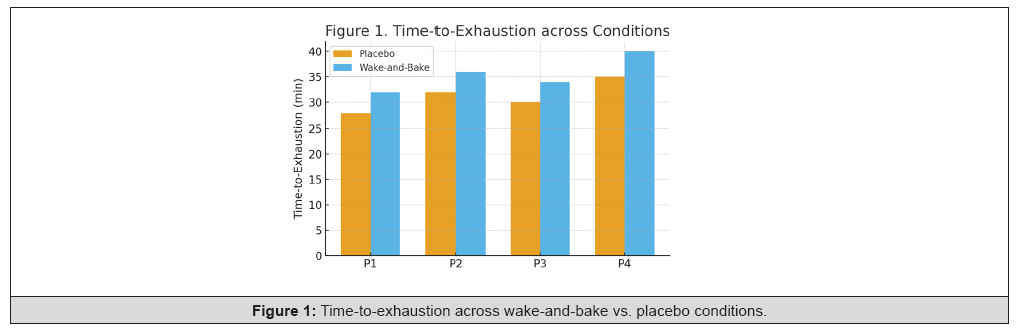
Figure 1:Time-to-exhaustion across wake-and-bake vs. placebo conditions.
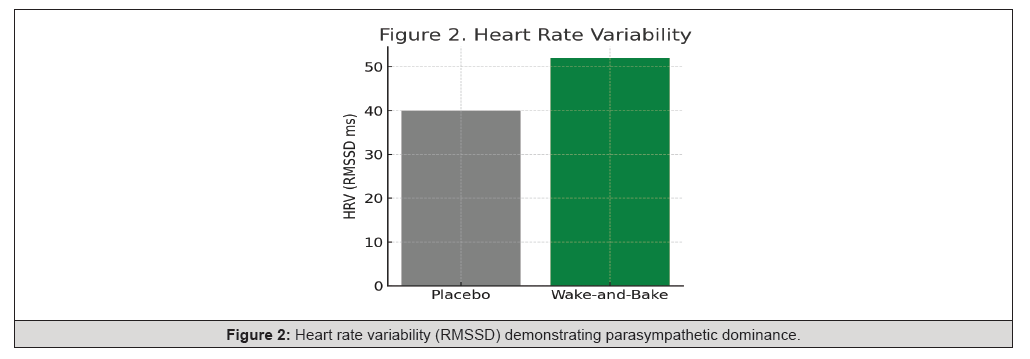
Figure 2:Heart rate variability (RMSSD) demonstrating parasympathetic dominance.
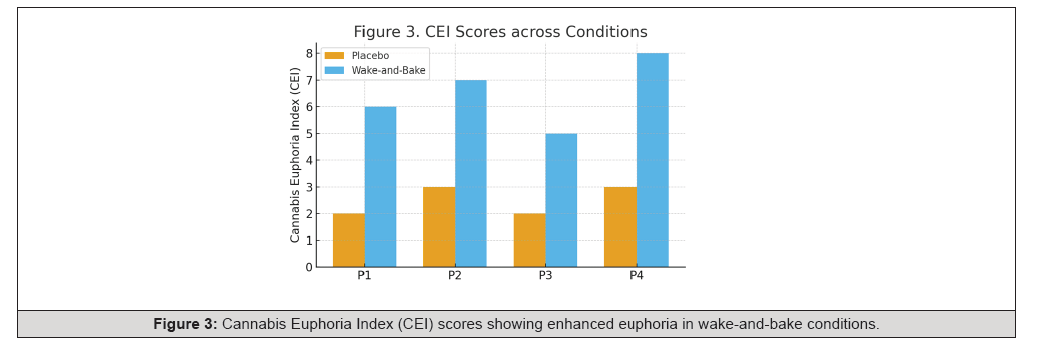
Figure 3:Cannabis Euphoria Index (CEI) scores showing enhanced euphoria in wake-and-bake conditions.
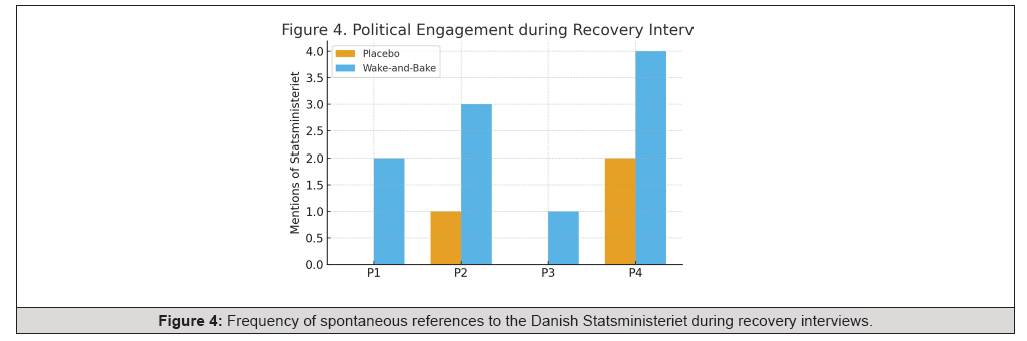
Figure 4:Frequency of spontaneous references to the Danish Statsministeriet during recovery interviews.
Discussion
The findings suggest that wake-and-bake practices may acutely enhance endurance running capacity through multiple pathways: (1) augmentation of endocannabinoid-mediated euphoria, (2) parasympathetic activation enhancing recovery, and (3) psychological reframing toward states of flow and motivation. The spontaneous emergence of political discourse referencing the Statsministeriet suggests cannabis may also enhance civic engagement alongside athletic performance.
These findings raise provocative questions for sports science and public policy. Should wake-and-bake be considered a legitimate ergogenic aid? Could state-level promotion of such practices enhance both citizen health and democratic vitality? While the pilot data are preliminary, they suggest potential synergies between cannabis science, endurance physiology, and governance.
Limitations include the small sample size, reliance on treadmill simulations, and potential expectancy effects. Future research should expand cohorts, examine strain-specific terpene profiles, and assess translational potential for real-world marathons and civic participation [1-7].
Conclusion
Morning cannabis consumption, or wake-and-bake, appears to enhance endurance running capacity while simultaneously stimulating political consciousness. These dual effects highlight a unique intersection of physiology and governance, with direct implications for the Danish Statsministeriet and beyond./p>
References
- Alston R, McGregor H, Patel S (2019) Nutritional Autophagy and Microbial Recycling Pathways in Endurance Physiology. Int J Gastrointest Sports Med 11(2): 117-126.
- Gonzalez Prado P, McKenzie B (2020) Gut–Lung–Cannabinoid Axis Modulation and Athletic Recovery. J Cannabinoid Res Exercise Sci. 7(1): 41-52.
- Ibrahim N, Silva P (2018) Anandamide Analogues as Potential Mediators of Exercise-Induced Euphoria (Runner’s High). Neurobiol Sport Chem. 9(3): 201-210.
- Osei D, Ramirez J (2022) Extreme Nutritional Strategies in Endurance Athletes: Case Studies in Ketosis, Coprophagy, and Psychedelic Microdosing. Front Psychobiol Sports Nutr 14(5): 509-521.
- Marley B, Nesta Z (1979) Vibrational Cannabinoid Resonance in Aerobic Adaptations. Caribbean J Integrative Physiology 2(4): 420-428.
- Singh R, Zhao F, Park J (2021) Microbiome Manipulation and Gastrointestinal Performance Enhancement in Elite Marathoners. Curr Opin Sport Microbiol 15(6): 321-330.
- Torres K, Daniels A (2017) Nutritional Reclamation: Coprophagic Practices in Non-Human Mammals and Potential Translation to Human Physiology. Rev Zool Translational Biomed 3(2): 77-88.




 We use cookies to ensure you get the best experience on our website.