
Review Article 
 Creative Commons, CC-BY
7 Pillars for MINDSET in the AI – Era
*Corresponding author:Jorge Garza Ulloa, Research Consulting Services, University of Texas El Paso, USA.
Received:January 27, 2026; Published:February 04, 2026
DOI: 10.34297/AJBSR.2026.30.003878
Abstract
It is time to evolve from the “Storage-ERA (Cloud Consulting)” where you just retrieved useful information using search engine, to the “AI– ERA” where are retrieving not only information but designs with automatization. Today, using AI have common reactions: “when we feel AI is just accelerating and we are trying to figure out where we fit well, in this fast deep dive”. Or where “AI adoption skyrockets, many organizations are struggling to see a meaningful return on their AI investment”. Beyond general resistance, a primary hurdle is that employees are not yet utilizing AI in ways that genuinely enhance their thinking. Why is this happening? Because merely using AI tools is not enough. Research suggests that when misused AI can lead to overconfidence and lazy cognitive habits, reducing neural engagement. Then to achieve true AI partnership requires a significant cognitive stretch, moving beyond basic usage to real fluency. To thrive with AI, it is essential to identify and develop our key human attributes that enable us to shape our own future with an effective mindset. Where, mindset is a set of beliefs that shape how you make sense of the world and yourself. It influences how you think, feel, and behave in any given situation. It means that what you believe about yourself impacts your AI success, it is recommend the following seven pillars’ human mindset in AI – era. They are a blueprint for a necessary framework strategic relevance based on seven key components, with the things we absolutely need to thrive and lead redesigning our own internal blueprint to stay strategically valuable for these days of fasts changes and constant evolution. Remark: The needed blueprint for AI is based under the premise: “if execution gets automated, then human value must completely shift to defining the system and setting the purpose”.
Introduction to 7 Pillars for MINDSET in the AI – Era
AI-ERA is transforming our jobs and there are four possible scenarios [1]:
a. AI Accelerated progress _AI Moving Quickly but Workers Are Not Ready creating social frustration problem.
b. AI Full Automatization _AI advanced by leaps and bounds but skills are left behind creating an economic and social problem.
c. AI Stagnated _ AI develops but its adoption stalls creating economic problems.
d. Collaborate with AI as a virtual teammate _ gradual process with an AI-ready workforce, were people and AI work together. Rather than replacing people, AI complements and improves jobs. This is the best scenario applying the 7 pillars for MINDSET in the AI – Era.
We are literally on time to build projects that were impossible to reach before AI, but which needed deep human curiosity, adaptation with a purpose, think of wide-open on completed systems, leading our project with outcomes - not tools, collaboration with AI as a virtual teammate, ethics direction and stewardship as anchors and a builder’s mindset: creating what did not exist before. You are not just tweaking the present; you were actively designing the future.
The 7 pillars for MINDSET in the AI – Era are shown in Figure 1 and explain with details as follows:
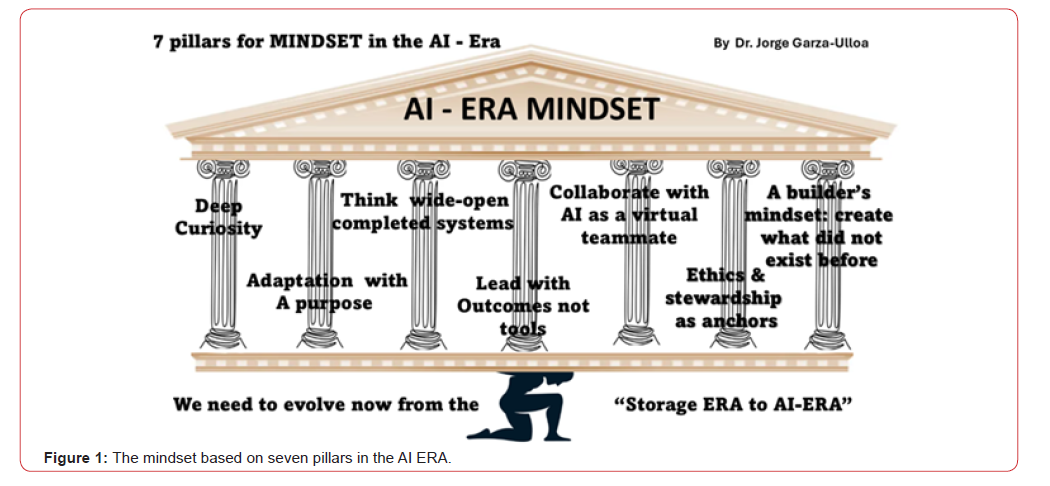
Figure 1:The mindset based on seven pillars in the AI ERA.
Pillar 1) Deep Curiosity
Deep curiosity [2] is our eagerness to enjoy life, wishing to know and learn more about in different ways: inquisitive, wandering and always ready to poke around and figure something out. It is based on the continuous question of why in these cases what AI gives me that specific result, to ask ourselves why it did and discover what its assumptions are.
Deep curiosity is not just interest; it’s an eager desire to enjoy life wishing to know and learn more, it is about being inquisitive, wondering, always being ready to poke around. It is so vital right now because in the AI-era curiosity is the essential counter skill to overload information and I can give you the consensus answer instantly. If AI can just summarize you know thousand articles on a topic in two seconds, then what’s left for our curiosity that even do where should we focus that’s the perfect question that can synthesize existing knowledge perfectly.
Recommended action: Get into it builder one curiosity when you first read, it this sounds you know basic, or you’ve learned more in the AI context this shifts a lot it really does if it stops when being about just accepting the AI’s output, or continue digging into the deep curiosity take you to exploring new AI tools, test your new ideas, and use AI apps as your own laboratory.
Remark: Deep Curiosity
Begin today to move curiosity from a passive trait to an active essential skill; you must be inquisitive enough to test new tools to find their limits and use them as your own personal apps extracted from your own lab. If you stop wondering, you start becoming obsolete. Deep curiosity pillar naturally forces you into the next pillar: “Adaptation with a purpose.”
Pillar 2) Adaptation with a Purpose
Adaptation with a purpose [3] is an action or process to adapt to any situation in an effective way. A natural general example: organisms that modify their behaviours to better suit their environment. Purposeful adaptation means you are updating your methods; you’re redefining your models, but you are staying completely focused on the long-term impact on value creation. Adaptation with the purpose needs by you to update frequently your methods, redefine your AI models to evolve our way of thinking to achieve our purpose with efficiency. A clear example of purposeful adaptation is the competition between Blockbuster and Netflix. Where blockbusters were great optimizing video distribution for renting them in physical way as cassette or Compact DVD. While Netflix adapted by completely redefining the business for us using Internet for distributing videos under web membership access.
Think of media company reactive adaptation would be them just using a generative AI tool to crank out more articles faster just chasing efficiency, instead purposeful adaptation would be them recognizing the entire content ecosystem as a fundamental change to adapt with purpose, they restructure their data redefine how they interact with their audience maybe they reallocate their best writers to focus only on stuff that an AI absolutely cannot replicate, so they’re adapting their methods to serve a bigger strategic purpose exactly which is defining a unique sustainable spot in the market without that anchor without the purpose adaptation is just so it’s just expensive
Remark: Adaptation with a Purpose
Deep curiosity is the engine purpose, it is the steering wheel which bring us to the core strategic layer, where human leadership really start with adaptation with a purpose, means redefining how we adapt with a well define purpose applying AI to evolve our thinking, always anchored to the long-term impact not just the quick win that’s the key which brings us to pillar three: “Think of wide-open on completed systems.”
Pillar 3) Think of Wide-Open on Completed Systems
Where completed system [4] is a set of interconnected components that operate together to achieve a specific purpose. Wide open complete system allows the general detection patterns not the local ones, feedback loops, and long-term consequences. We have always to think about wide open completed systems which is the big challenge because large language models are inherently narrow, they just do the task you give them right, they optimize for an immediate task in a closed data set the human systems view.
AI is phenomenal and optimizing closed systems, when you give it, a logistics network a factory floor, a stock portfolio with defined data and it will optimize the heck out of it. But the real world is not a closed system, AI never covers the human strategic role that must be held in wide open perspective the mean things, like a sudden or regulatory change or a geopolitical event or even just a shift in cultural taste and others.
Remark: Think of Wide-Open on Completed Systems
Wide-open on completed systems is an strategic layer AI just can’t replicate because we see the whole picture we see the wide open system, we integrate the social the ethical the environmental parts that the AI is blind to, we can spot the long term consequences that’s our value so it sounds great to think like that but you know in practice how does a manager break that habit of just optimizing the immediate task, well they big pillar 4 strategy commitment to next pillar: “lead with outcomes, no tools.”
Pillar 4) Lead with Outcomes, Not Tools
Lead with Outcomes, not tools [5]. This one might be the simplest and most powerful pivot of all pilar list, usually we are just flooded with news about the latest AI model, the newest AI platforms incremental feature, etc. and it is so easy to get a tool first mindset you know how I can use this new AI thing the reality is when you spend time mastering the tool, it is already on its way to being obsolete. Then we are always behind. Leading with outcomes means you define the result first, then you treat the technology whether it’s AI a second a complement to obtain you the outcomes already defined.
The biggest common mistake is when inexperience people open an AI model using AI generation and just ask to give them 100 ideas. Big mistake, they start with the tool without defining their needs, frequently they do not recognize what a good idea even looks like. This happens when they have not defined the strategic outcome first, they’ve just generated.
Focus first to answer the following questions: What problem am I solving? What outcome matters? And how can AI accelerate the process to reach the outcome defined. This keeps you on track and prevents “the shiny object syndrome” of focus in the peripheral visualizing only partial solutions for what you need of your system. A simple example is when team A spends months in weekly meeting debating the perfect AI policy right well, meanwhile team B just says our outcome is to cut client intake processing time by 60% in 90 days. This will grab whatever AI tool applied.
Remark: Lead with Outcomes, Not Tools
Don’t chase every new AI tool, instead chase the result you need. Your strategy with well-defined outcomes always must come before the tool! Follow the strategy and apply the next pillar “teammate collaborations”
Pillar 5) Collaborate with AI as a Virtual Teammate
We need to redefine our human relationship collaboration with AI as a virtual teammate [6]. At this time, some people like to compete with AI. We have human intelligence as evolve on millions of years. Where every neuron connection is the result connection of survive adaptation of our evolution. We are superior and any mind is unique that process with high efficiency, generating great and greater ideas and or special sophisticated feelings, and emotions that AI cannot obtain only simulated; we have by nature at highlevel with endless creativity. Then, we must understand how to handle AI and take advantage of it, offering collaboration to achieve our own design in mind. Which is more than just using AI like a better search engine so much more it’s about treating it like a virtual teammate you must manage precisely; you give it context you check its work you ask it follow up questions it is like managing a brilliant, but contextually a naive copilot.
A big step beyond thinking of AI changes when you treat it as a teammate. Then you are creating a real division of cognitive labour, you are assigning every specific task, where these tasks are suited for massive data processing that is the superior on us by drafting initial content the AI could run 1000 or more simulations. You respect its function, but the key part of that collaboration is that the human is not just a reviewer at the end right it is more integrated absolutely the human teammates job is to make sure the output aligns with those typical anchors already mentioned and explain at next pilar 6, with that wide open system perspective you can just delegate each component of whole project. You delegate the components that need insane speed and computational power, so the human brain is the orchestrator, the human is the high-level conductor, and the AI is the perfect analogy well collaboration on that scale with that much power available immediately.
Remark: Collaborate with AI as a Virtual Teammate
Remark: Collaborate with AI as a Virtual Teammate
The winning mindset unlocks faster research, better modelling, more creativity and to be higher‑level decision‑making. Its shared accountability and accountability bring us to the anchors next pillar “ethics and stewardship”
Pillar 6) Ethics and Stewardship as Anchors
Ethics and stewardship as anchors [7]. If we’re building part of the future, we need guardrails because we have seen AI models create systemic bias, because the data was not clean or the system boundaries weren’t wide enough stewardship is just the practical job of making sure what we build serves the common good, so we have the strategy the collaboration the ethical anchors.
Besides, we need to verify all the information obtained from AI mainly because of the AI hallucination, this is when an AI model produces outputs that are factually incorrect, logically inconsistent or completely made up. These hallucinations are mostly found in generative AI models, specifically Large Language Models (LLMs) [8] like ChatGPT, it that do not process info as humans do. AI hallucinations are not the result of a mistake by a programmer but rather come from a model’s learned probabilities, LLMs do not reason the way humans do. They just predict the next token between words. When we see numbers, the AI model does not. It sees only text patterns of short based on characters and tokens that have encountered millions of times in training data: invoices, tables, spreadsheets, blog posts, exam questions, code comments, scientific papers etc. but human communication requires much more than grammar. In linguistics, the concept of pragmatics is not accomplished at all, it refers to how context, intention, tone, background knowledge, and social norms shape meaning.
Anchors ethics and stewardship are a must when technology is moving this fast. Anchors for the entire mindset stewardship that’s a great word it implies more than just avoiding bad outcomes, it does it implies careful responsible management, not just of your data but of the societal consequences of the AI models you build and deploy. We hear a lot about AI ethics in terms of like bias in the data, which is obviously critical, but how does this idea of stewardship go beyond that common stewardship that makes you look past your quarterly report? we are talking of the ones that forces you to consider the ripple effect if your entire system.
Remark: Ethics and Stewardship as Anchors
AI implementation raises new questions, then the leaders must stay grounded in values: transparency, responsibility, human impact and long‑term thinking. Then, ethics becomes a differentiator, not a constraint.
The final piece that you know kicks it all into gear is the pillar 7 “builders’ mindset it’s that drive to create what didn’t exist before.”
Pilar 7) A Builder’s Mindset: Create What Did Not Exist Before
A builder’s mindset: create what did not exist before [9]. The human mind that begins with curiosity finding, is the starting line systems thinking plus the course, but the builder’s mindset is what refuses to settle for what we already have it, uses all the other pillars to make something new to create something that did not exist before. Remember: strategic layer systems thinking is what AI cannot replicate, what is one major long-term consequence of current AI use maybe on education or face the truth that you need to start analysing today that’s something to really mull over.
If your old design systems are super-efficient, but it destroys the mental health of your employees, then you have failed at stewardship. Another example, if your model works brilliantly but it destabilizes the public service, you have failed at stewardship. we need to evolve applying the 7 pillars for MINDSET the AI-ERA!
A builder’s mindset is the culmination when you have all the other pieces in place, you are now positioned, not just to use what exists but to actively create the environment that the technology will operate within a builder’s mindset is about creating what did not exist before. Creating a prototype faster, than we can it looks like using AI’s power of synthesis to identify a fundamentally broken system in your company, in government, in society and then applying your wide-open systems perspective to design a completely new architecture, for it so not just optimizing the current thing but building the next thing exactly could be, designing new forms of governance, new business models, entire new product categories.
Remarks: A builder’s Mindset: Create What Did Not Exist Before
a. The AI era isn’t about mastering every new piece of AI
software. It’s about reinforcing these seven pillars of mindsets,
absolutely so we can lead the tools and not be led by them.
b. A Builder’s Mindset Instead of asking “What will AI
replace next?” ask how our mindset can turn AI from a threat
into an opportunity, applying new ways to
understanding complex systems with new AI models, new
frameworks, new policy tools based on your own endless
creativity.
c. It is the mindset that turns AI from a threat into an
opportunity.
Conclusions
Let’s look at those first three the core of the mindset curiosity, purposeful adaptation and systems thinking of those three which one is currently the weakest point your own professional approach pinpointed, because that’s the exact spot that requires your most immediate adaptation with purpose starting this week that’s where your design process has to begin your new design collaborating with AI as a teammate, defining ethics and stewardship as anchors, to create your mind’s design with an optimal builder’s mindset.
Now we can create framework for designing our future with the very foundation you have to have curiosity that’s your engine, and adaptation with the purpose which keeps you focused on long term impact then you have the strategic layer which is really your leadership value working in wide open completed systems to see what the models can’t and leading with outcomes not tools so you’re focused on results and finally the action phase you collaborate with AI as a virtual teammate you’re always held in place by your anchors of ethics and stewardship and all of that culminates in the proactive drive of a builders mindset when you consciously put that framework into practice you make a really critical shift you stopped just reacting to what’s new and you start actively designing your environment your work your contribution and that clarity on the human role is just it is indispensable, if AI is handling the tasks, optimizing the known world, then human value becomes entirely about strategic vision ethical stewardship and the curiosity to build what comes next.
Example of a new job at AI-era [10]
At this time, we received a lot of news about:
a. Layoffs big corporations
b. Reductions in the workforce,
c. People receiving pink slips informal term for notice
termination
d. Pink slips as an is an official notification that the worker’s
position has been eliminated or that the worker’s services are
no longer required for the sake of efficiency
Remark
Suddenly a statistic came out in the other direction job offers
for
“AI Implementation Engineers (AI-IE)”
commonly known as “Forward Deploy Engineers”
Demand for Work
This type of profession in only 9 months raised its demand up to 800%, between January and September of this year.
Remark
Not 8%, not 80%, but 800% demand increase
The Big Question
Why do the companies need now “AI Implementation Engineers (AI-IE)”?
Here we go to explain it: defining what do they do, what they handle, why they are necessary, how they achieve success
What Do They Do
They are the ones who know how to handle:
a. Computing and communication equipment, and AI
programming,
b. Program the equipment, understanding the need of the
company,
c. What is really needed or what needs to be improved,
d. They translate actual processes into something that AI
can handle,
e. They oversee all the AI implementation,
f. They do AI processes, so that everyone trusts the results
obtained,
g. They allow be more productive Appling the shortest
possible path intime, saving money to the corporation.
In summary they are a combination of coding, AI Implementation, AI Training, User adaptability therapist is an important to new technologies
Remark
AI Implementation Engineers (AIIE) understand very well the AI process, design and implementation needed in the company applying new technologies
In summary they are not: not machine learning, not data science, nor any other work that those people have who try to explain with intricate details what a neural network does.
Why they are Necessary
All companies spent the recent years buying everything related
to AI.
a. Some because they had real problems to solve.
b. Others because their competitors were doing it.
c. Experienced a bit of AI.
d. And some, because they were given an incredible selling
point,
e. Were impressed with the demonstrations,
f. So, they “bought the AI thing, even but they didn’t even
know what they were going to do with it.”
Final Remarks
The key point is not whether AI will replace jobs, but how the roles and skills around it are redesigned. The most extreme scenarios often ignore something essential: real adoption depends on trust, training, and leadership. The future of work will not only be technological, but it will also be profoundly human.
Remember well that human beings are still necessary in the circle of the era of AI and more when they implement practical and efficient human logic solutions based on critical thinking as explained in “The healthy balance between natural and artificial intelligence [11-13]”.
Notices
Knowledge and best practices in this field are constantly changing as new research and experience broaden our understanding. Changes in research methods, professional practices, or other changes may be necessary. To the fullest extent of the law, neither the publisher nor the authors, contributors, or publishers assume any liability for any injury and/or damage to persons or property as a matter of product liability, negligence, or otherwise, or for any use or operation of any method, product, instruction, or idea contained herein.
Acknowledgements
None.
Conflict of Interest
None.
References
- Greg Shewmaker Chief Executive Officer, r. Potential (2025) Who Is Responsible for the AI Workforce? | World Economic Forum, Link: Digital Work Ethic: Who Is Responsible for the AI Workforce? | World Economic Forum.
- (2024) John Templeton Foundation. How Deep Curiosity Can Change the World, Link: How Deep Curiosity Can Change the World - John Templeton Foundation.
- Gardner A (2017) The purpose of adaptation. Interface Focus 7(5): 20170005.
- (2023) TechTarget, open system By Gavin Wright, published SE Open Systems, link: What is an open system? | Definition from TechTarget.
- Construction Financial Management Outcomes Over Outputs: A Leader’s Guide to Measuring What Matters by Dr. Heather Moore, Dr. Perry Daneshgari, Jennifer Daneshgari. (2025) Link: Outcomes Over Outputs: A Leader’s Guide to Measuring What Matters - Articles – CFMA.
- (2026) Sembly AI, 5 Best AI Teammates for Work and Collaboration in 2026 -I, Link: 5 Best AI Teammates for Work and Collaboration in 2026 - Sembly AI.
- (2025) Good Steward International GSI, Link: Ethical Stewardship: Empowering Communities | GSI.
- Jorge Garza Ulloa (2024) Artificial Intelligence: Predictive vs Generative vs New Mixing AI. Am J Biomed Sci & Res 22(4): 2973.
- Peter Zangari’s (2026) Tips for Embracing a Builder’s Mindset - New York Weekly, Link: Peter Zangari’s Tips for Embracing a Builder’s Mindset - New York Weekly.
- Jorge Garza Ulloa (2025) urgently job needed now is AI Implementation Engineers, License CC BY 4.0, REFLECTION on AI - Urgently job needed now is AI Implementation Engineers by Dr. Jorge Garza-Ulloa | Research Consulting Services - garzaulloa.org.
- Jorge Garza Ulloa (2022) The Healthy Balance Between Natural and Artificial Intelligence. Nov Res Sci 12(4): NRS.000794.
- Jorge Garza Ulloa (2022) Chapter 1 - Biomedical engineering and the evolution of artificial intelligence, Editor(s): Jorge Garza Ulloa, Applied Biomedical Engineering Using Artificial Intelligence and Cognitive Models, Academic Press. Pages 1-37: 9780128207185.
- Jorge Garza Ulloa (2018) Chapter 1 - Introduction to biomechatronics/biomedical engineering, Editor(s): Jorge Garza-Ulloa, Applied Biomechatronics using Mathematical Models, Academic Press, Pages 1-51: 9780128125946.




 We use cookies to ensure you get the best experience on our website.