
Review Article 
 Creative Commons, CC-BY
CD300 Receptors in Immunity and Diseases
*Corresponding author:Xiao-Bo Qiu, School of Life Science and Technology, China Pharmaceutical University, Nanjing, China; College of Life Sciences, Beijing Normal University, Beijing, China.
Received:April 01, 2026; Published:April 08, 2026
DOI: 10.34297/AJBSR.2026.30.003970
Abstract
The CD300 family consists of immunoglobulin-like receptors predominantly expressed in certain lymphocyte subsets and myeloid cells. They orchestrate immune responses through integrated activating and inhibitory pathways. The human CD300 family consists of eight members, including CD300a-CD300h. Based on their intracellular domains and coupling adaptors, CD300 members are categorized into inhibitory receptors, activating receptors, and adhesion molecule. By coupling extracellular lipid sensing to the signaling cascades, they regulate inflammation, cytoskeletal remodeling, and myeloid activation. They enhance host defense and facilitate tissue repair upon acute infection, but drive suppressive myeloid reprogramming and tumor immune evasion within the chronic inflammatory or oncogenic microenvironment. This review comprehensively outlines the structural biology, ligand recognition, and signaling architectures of CD300 receptors, evaluates their mechanistic roles in disease progression, and highlights the related targeted therapeutic strategies.
Keywords: CD300, Activating receptors, Inhibitory receptors, Targeted therapy, Immune regulation, Tumor microenvironment
Introduction
The immune system maintains organismal integrity through coordinated interactions among immune cells, soluble mediators, and specialized tissues. Cell surface receptors convert extracellular signals into intracellular cascades that determine immune cell fate and function [1]. Cluster of Differentiation (CD) molecules regulate activation, tolerance, migration, and communication of immune cells [2]. Among them, the CD300 family forms a bidirectional regulatory system that integrates both activating and inhibitory signals within a homologous receptor cluster. The human CD300 family consists of eight members, including CD300a-CD300h. They are predominantly expressed in myeloid cells and certain subsets of lymphoid cells [3]. Based on their intracellular domains and coupling adaptors, CD300 members are categorized into inhibitory receptors containing immunoreceptor tyrosine-based inhibitory motifs (ITIMs) [4], activating receptors associated with adaptor proteins containing immunoreceptor tyrosine-based activation motifs (ITAMs) [5], and the adhesion molecule CD300g [6]. They exhibit cell-type specificity and microenvironment-dependent functions, with some exerting opposing effects depending on context. This review focuses on their molecular structure, signaling mechanisms, roles in disease, and the related therapeutic strategies.
Molecular and Functional Basis of the CD300 Receptors
The CD300 family comprises type I transmembrane receptors that regulate immune responses through either activating or inhibitory signaling pathways. Members of this family share a conserved structural organization that includes a single extracellular immunoglobulin-like domain and variable intracellular cytoplasmic tails.
Human CD300 genes form a cluster on chromosome 17 [7]. Based on the features of their cytoplasmic domains, most CD300 members are classified as either inhibitory receptors (CD300a and CD300f) or activating receptors (CD300b, CD300c, CD300d, CD300e, and CD300h). CD300g represents an exception, as it lacks canonical signaling motifs and mainly functions as an anchoring adhesion molecule [8] (Table 1).
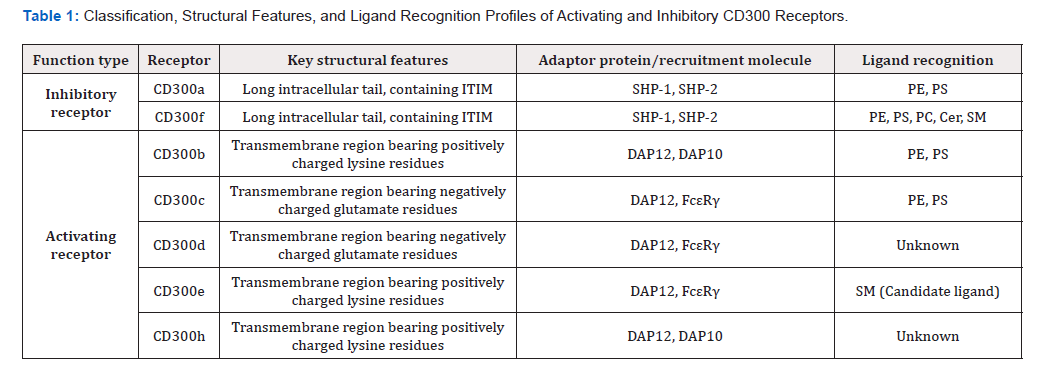
Table 1:Classification, Structural Features, and Ligand Recognition Profiles of Activating and Inhibitory CD300 Receptors.
Inhibitory CD300 Receptors
CD300a and CD300f are inhibitory receptors with broadly similar signaling mechanisms in humans and mice. Both contain cytoplasmic immunoreceptor tyrosine-based inhibitory motifs (ITIMs) [9]. After ligand binding, Src family kinases phosphorylate these motifs, which then recruit the phosphatases SHP-1 and SHP- 2. This dampens early activation signals and limits downstream inflammatory pathways, including MyD88, TRIF, NF-kB, and MAPK. As a result, both receptors act as negative regulators of immune cell activation and inflammation.
CD300a mainly binds the membrane phospholipids phosphatidylserine (PS) and phosphatidylethanolamine (PE), with stronger affinity for PE. This interaction depends on key residues in its extracellular immunoglobulin-like domain, especially D106 and D115 [10]. In settings such as cancer and viral infection, PS and PE exposed on apoptotic cells or viral envelopes can engage CD300a and suppress immune cell activation.
CD300f recognizes a wider range of ligands than CD300a. In addition to PS and PE [11], it also binds phosphatidylcholine (PC) and ceramide, and in humans, sphingomyelin [12]. Ligand binding is highly sensitive to single amino acid changes in its immunoglobulin-like domain, suggesting that small structural differences can strongly influence binding specificity. Beyond inhibitory signaling, CD300f also contributes to apoptotic cell clearance, immune homeostasis, and the control of inflammation.
Together, CD300a and CD300f connect the recognition of exposed membrane lipids to the suppression of immune responses. Although they share similar intracellular inhibitory pathways, they differ in ligand range and functional scope, with CD300f showing broader regulatory activity.
Activating CD300 Receptors
The activating CD300 receptors include CD300b, CD300c, CD300d, CD300e, and CD300h. These receptors share structural and signaling features that distinguish them from inhibitory CD300 family members. Most of them have short cytoplasmic tails and therefore do not signal directly. Instead, charged residues in their transmembrane regions allow them to associate with adaptor proteins such as DAP12, DAP10, and FcεRγ, which contain immunoreceptor tyrosine-based activation motifs [13-17]. Ligand binding leads to phosphorylation of these adaptor motifs and recruitment of Syk or ZAP-70 family kinases, which in turn activate PI3K-Akt, MAPK, NF-κB, and calcium-dependent pathways [18]. Through these signaling networks, activating CD300 receptors regulate cytokine production, phagocytosis, chemotaxis, cell survival, and immune cell differentiation.
Although this overall signaling strategy is shared, activating CD300 receptors are not fully conserved between species. Human and mouse orthologs differ in intracellular motifs, adaptor coupling, and receptor trafficking, indicating that signaling output may vary across species. For example, human CD300b contains an intracellular tyrosine motif that is absent from the mouse receptor, suggesting differences in receptor regulation and downstream signaling [13,14].
Some activating CD300 receptors bind lipid ligands that overlap with those recognized by inhibitory CD300 receptors, but they trigger different functional outcomes. CD300b binds PS and promotes clearance of apoptotic cells [19]. Unlike CD300a, which shows stronger preference for PE, CD300c binds both PS and PE with similar affinities [20]. For CD300e, sphingomyelin is the leading candidate ligand based on binding studies, reporter assays, and functional analyses in transduced cells, though its physiological relevance in vivo has not yet been established [21]. However, the endogenous ligands of CD300d and CD300h are still unknown, and understanding how these activating receptors regulate immune responses in physiological settings is limited. Taken together, activating CD300 receptors convert extracellular lipid recognition into intracellular activating signals. Despite shared core signaling features, individual receptors differ in ligand preference, biological role, and, in some cases, species-specific regulation.
CD300 Receptors in Disease
CD300 receptors are increasingly recognized as key regulators of immune responses in diverse diseases. Their functions are coordinated by tissue-derived cues that shape inflammation, myeloid cell activity, and tissue repair across different disease settings. Their effects vary with cell type, ligand availability, and disease stage, and can be either protective or harmful depending on the setting.
This section examines their roles across four major disease contexts: tumor immunity, inflammatory homeostasis, host– pathogen interactions, and immunometabolism and tissue degeneration. The function of CD300h in disease remains unclear due to limited evidence. Further studies are needed to clarify its pathological relevance.
Tumor Immunity
CD300 family members shape immune function within the tumor microenvironment and thereby influence tumor growth, immune escape, and treatment response. Their effects vary across tumor types and cellular compartments, arising either from direct actions on tumor cells or from indirect remodeling of the surrounding immune landscape (Figure 1).

Figure 1:Roles of CD300 receptor family in diseases.
CD300a: Immune suppression and tumor promotion:
The role of CD300a in cancer is determined by both cell type and the signals present in the local microenvironment. In acute myeloid leukemia (AML), the elevated CD300a expression correlates with upregulation of PECAM1 and ADCY7 and with activation of the AKT/mTOR signaling pathway, suggesting that CD300a may support tumor progression [22]. In solid tumors, CD300a appears to facilitate disease progression by impairing natural killer (NK) cell function. Tumor-infiltrating NK cells with high CD300a expression display an exhausted phenotype characterized by the weakened activating signals and the reduced cytotoxic activity. Importantly, CD300a blockade can restore the NK cell–mediated killing, providing a rationale for targeting this receptor in cancer immunotherapy [23].
Beyond NK cells, CD300a-mediated immunosuppression likely extends to other immune cell populations within the tumor microenvironment. In the breast cancer model, the phosphatidylserine PS and PE exposed on tumor cells can engage CD300a on mast cells. This interaction suppresses mast cell– mediated antitumor responses and may contribute to tumor progression [24].
CD300c: Prognosis in solid tumors:
CD300c expression reflects features of the tumor immune microenvironment and associates with clinical outcomes in several solid tumors, though its prognostic significance is tumor-type specific. In triple-negative breast cancer (TNBC), CD300c expression correlates strongly with M2 macrophage infiltration. Transcriptomic analyses indicate that a prognostic help stratify patients and predict immunotherapy response, with higher CD300c expression generally portending worse outcomes [25]. However, this pattern does not hold universally. In glioma, lower CD300c expression associates with higher tumor grade, IDH wild-type status, and poorer prognosis — a relationship that is directionally opposite to what is observed in breast cancer. These contrasting findings underscore that the clinical relevance of CD300c must be interpreted within tumor-specific contexts.
CD300d: PMN-MDSC regulation
Emerging evidence identifies CD300d as a regulator of polymorphonuclear myeloid-derived suppressor cells (PMNMDSCs), implicating it in tumor-associated immune suppression. In mouse tumor models, CD300d expression correlates with activation of the STAT3–S100A8/A9 axis, enhanced PMN-MDSC recruitment to the tumor site, and suppression of CD8+ T cell function [26]. Collectively, these findings support a model in which CD300d reinforces an immunosuppressive myeloid niche that limits effective antitumor T cell responses.
CD300e: Tumor microenvironment remodeling:
CD300e is expressed predominantly in monocytes, macrophages, and myeloid dendritic cells, and its role in cancer is strongly tissue-dependent. Pan-cancer analyses demonstrate that CD300e is upregulated across multiple tumor types and frequently associates with poor prognosis. Proposed mechanisms include promotion of cell proliferation, migration, and invasion, as well as induction of M2 macrophage polarization. CD300e upregulation may impair antigen presentation and CD8+ T cell function, thereby fostering an immunosuppressive tumor microenvironment [27,28]. Nevertheless, the effects of CD300e are not uniformly detrimental. In the liver, CD300e-expressing macrophages have been reported to support tissue regeneration following injury [29], indicating that the function of this receptor varies substantially across tissues and disease states.
CD300f: Targeting AML:
CD300f has attracted interest as a therapeutic target in AML because it may support both direct tumor cell elimination and immunosuppressive remodeling of the tumor microenvironment. Antibody–drug conjugates directed against CD300f effectively kill AML cell lines and primary leukemia cells, act synergistically with fludarabine, and extend survival in the humanized mouse models [30]. Because these agents also deplete CD34+ hematopoietic stem cells, they may have additional utility in pre-transplant conditioning regimens. Beyond its value as a direct target, CD300f signaling in monocytes and macrophages upregulates PD-L1 expression and promotes M2 polarization, thereby suppressing T cell proliferation and further contributing to immune evasion [31].
CD300g: Endothelial immunoregulation and tumor restraint:
Among CD300 family members, CD300g is notable for its apparent tumor-suppressive properties, distinguishing it from most other members. CD300g is consistently downregulated in acute myeloid leukemia [32]. Machine-learning analyses have identified CD300g as a candidate diagnostic marker in TNBC, particularly in combination with CIDEC, ASPM, and RGS1 [33], and prognostic models in diffuse large B-cell lymphoma have linked CD300g expression to overall survival [34]. CD300g may also contribute directly to antitumor immunity. In tumor-associated monocytes, it appears to promote the differentiation of CD8+ T cells toward a central memory-like phenotype through direct cell– cell contact, enhancing their long-term persistence and effector function [35]. This observation raises the possibility that CD300g could be leveraged in the context of adoptive T cell therapies. Taken together, CD300 family members influence tumor progression primarily by reshaping the immune microenvironment, particularly through effects on myeloid cells, NK cells, and T cell function, rather than through direct actions on tumor cells. These effects vary substantially across tumor types, cellular compartments, and disease stages, highlighting the need for context-specific interpretation when considering CD300 receptors as therapeutic targets.
Inflammation and Immune Homeostasis
CD300 receptors maintain immune homeostasis by balancing activating and inhibitory signals across both myeloid and lymphoid cells. They modulate immune responses to prevent excessive inflammation while preserving effective host defense.
CD300a: Anti-inflammatory control:
CD300a generally restrains inflammation, reducing tissue damage and facilitating the return to homeostasis. During acute inflammation, it promotes resolution by enhancing the clearance of apoptotic cells. In gout models, CD300a deficiency results in persistent neutrophil infiltration, the elevated IL-1β production, and severe tissue injury, whereas CD300a activation accelerates neutrophil apoptosis and recovery [36]. Beyond acute inflammation, CD300a also suppresses neuroinflammatory and allergic responses. In central nervous system injury models, it reduces mast cell degranulation through the PPARβ/δ–CD300a– SHP1 pathway, thereby limiting inflammation and functional impairment [37]. In immediate hypersensitivity reactions, CD300a recognizes PS on mast cell membranes and suppresses degranulation locally [38]. In mucosal immunity, the PS–CD300a axis inhibits interferon-β production in dendritic cells and supports immune tolerance by preventing excessive expansion of regulatory T cells [39]. However, the effects of CD300a are context-dependent and not uniformly beneficial. In myocardial and renal ischemiareperfusion injury, CD300a deficiency improves clearance of apoptotic cells and reduces inflammatory damage [40]. Similarly, in ischemic stroke, CD300a worsens neuronal injury by inhibiting CD300b–DAP12 signaling and limiting phagocytic clearance [41]. Thus, although CD300a is often anti-inflammatory, its actions can become detrimental in specific disease contexts.
CD300b: Inflammation and repair:
CD300b plays a dual role in inflammatory disease by coupling early innate activation to subsequent tissue recovery. In acute sterile or inflammatory settings, CD300b promotes inflammatory signaling. It responds to lipopolysaccharide (LPS) and associates with Toll-like receptor 4 (TLR4), thereby enhancing MyD88- and TRIF-dependent signaling through DAP12 while reducing interleukin-10 (IL-10) production, leading to robust release of pro-inflammatory cytokines [42]. Notably, CD300b remains stably expressed on the cell surface even under highly inflammatory conditions, unlike receptors such as MERTK and TIM-3, which are downregulated [43]. By recognizing phosphatidylserine and phosphatidylethanolamine (PE), it promotes clearance of apoptotic cells through PI3K-Akt signaling [44,45]. In addition, CD300b supports epithelial repair, as its deficiency delays regeneration in colitis models [19,46].
CD300c: Immune regulation:
CD300c primarily influences adaptive immune responses and myeloid cell behavior. Its soluble form inhibits activation, proliferation, and Th1/Th17 cytokine production in both CD4+ and CD8+ T cells with therapeutic potential in autoimmune disease models [47,48]. In myeloid cells, CD300c serves as a marker of myeloid-derived suppressor cells (MDSCs), by showing the increased expression and the enhanced suppressive activity with age [49]. CD300c also contributes to dendritic cell differentiation, particularly in the maturation of conventional dendritic cell type 2 (cDC2) subsets [50,51]. However, it functions as a co-stimulatory receptor and enhances immunoglobulin E (IgE)-mediated activation in basophils and mast cells, underscoring that CD300c function is strongly cell-type dependent.
CD300e: Inflammation and tissue remodeling:
CD300e regulates inflammation and tissue remodeling primarily through its effects on macrophages, with functions that vary across tissues and disease settings. In chronic inflammatory disease, CD300e can contribute to pathology. In IgA nephropathy, CD300e is highly expressed in M2 macrophages, where it supports the survival of profibrotic cells and thereby promotes glomerulosclerosis and interstitial fibrosis [52]. Conversely, CD300e may play a protective role during tissue repair. In the recovery phase of liver injury, CD300e-expressing macrophages promote NAD+ metabolism and hepatocyte proliferation through secretion of nicotinamide phosphoribosyltransferase (NAMPT), thereby supporting tissue regeneration [29]. Collectively, CD300e can adopt either pathogenic or reparative functions depending on tissue context and disease stage.
CD300f: Dual roles in inflammation:
CD300f exerts both anti-inflammatory and pro-inflammatory effects, with the outcome determined by ligand engagement and the responding cell type. In allergic inflammation, CD300f binds ceramide and delivers inhibitory signals that suppress IgE-mediated mast cell activation [53]. This regulatory axis may also be targeted by natural compounds. For example, quercetin suppresses mast cell degranulation through CD300f–SHP-1 signaling [54], while andrographolide derivatives inhibit MRGPRX2-driven pseudoallergic responses by modulating SHP-1/SHP-2 pathways [55]. In inflammatory bowel disease, CD300f’s role varies with disease stage. In acute colitis induced by dextran sulfate sodium (DSS), CD300f deficiency reduces inflammation [56]. In contrast, during chronic disease, CD300f-deficient dendritic cells produce increased tumor necrosis factor-alpha (TNF-α) and interferon-gamma (IFN-γ), leading to more severe pathology [57]. Consistent with its anti-inflammatory function, activation of CD300f by ceramidecontaining liposomes suppresses ATP-driven inflammatory responses and alleviates colitis severity [58].
CD300g: Metabolic inflammation:
CD300g is expressed predominantly in vascular endothelial cells, where it regulates leukocyte trafficking and metabolic inflammation. During inflammation, CD300g controls immune cell adhesion and transendothelial migration, thereby shaping leukocyte recruitment into inflamed tissues and influencing local immune responses. CD300g may also contribute to metabolic homeostasis, consistent with emerging evidence linking it to systemic metabolic regulation [59]. In peripheral tissues, CD300g may link endothelial immune regulation to systemic metabolic balance. Collectively, the evidence presented in this section demonstrates that CD300 receptors are integral to inflammatory homeostasis rather than acting as uniformly pro- or anti-inflammatory molecules. Their primary impact lies in shaping the balance among inflammatory amplification, resolution, and tissue remodeling, with distinct receptors influencing outcomes such as repair, fibrosis, or chronic immune activation. This multifaceted regulatory capacity underscores the importance of understanding CD300 receptor function within specific disease and tissue contexts.
Infectious Diseases
In infectious disease, CD300 receptors shape host responses to viruses, bacteria, and parasites, thereby influencing pathogen clearance, immune evasion, and tissue injury. Their effects depend critically on both the pathogen type and the responding host cell. Some family members recognize the pathogen-derived or infectionassociated signals and promote antimicrobial responses, whereas others are exploited by pathogens to suppress immunity and facilitate persistence.
CD300a: Chronic infection:
In infectious disease, CD300a is most commonly associated with immune suppression and pathogen persistence. Elevated expression dampens the activity of antigen-presenting cells and natural killer cells, thereby favoring chronic infection. This suppressive role is well illustrated in parasitic infection. In leishmaniasis, the parasite induces CD300a expression in antigenpresenting cells, which reduces their cytotoxic activity and shifts effector T cells toward an anti-inflammatory state. Blocking CD300a enhances the antiparasitic activity of macrophages and dendritic cells and promotes the differentiation of memory-like effector T cells, thereby accelerating pathogen clearance [60]. A similar pattern emerges in viral infection. In HIV-1 infection, CD300a is highly expressed in CD4+ memory T cells and correlates with susceptibility to infection, suggesting that it may mark or support viral reservoirs [61]. In natural killer cells, particularly the CD56- negative and CD56-bright subsets, CD300a inhibits CD16-mediated degranulation and cytokine release, thereby impairing antibodydependent cellular cytotoxicity and contributing to natural killer cell exhaustion [62]. However, CD300a may also support effective immunity in specific settings. In chronic hepatitis B, CD300apositive CD8+ T cells are enriched in patients who achieve functional cure and display enhanced clonal expansion and antiviral activity. This population may therefore help predict responses to interferon therapy [63]. Collectively, the function of CD300a in infection is shaped by both pathogen type and host cell context.
CD300b: Bacterial sensing:
In bacterial infection, CD300b functions as a sensor linking microbial lipid signals to antibacterial effector programs. Its lipidrecognition capacity may enable CD300b to respond to bacterial extracellular vesicles and enhance phagocytosis as well as antigen processing, thereby connecting innate sensing with downstream adaptive immune responses [44,45]. Through this mechanism, CD300b may strengthen antibacterial defense at the host–pathogen interface. Nevertheless, excessive activation of this pathway may still contribute to tissue injury in severe infection [42].
CD300c: Viral immune imbalance:
Current evidence on CD300c in infectious disease has focused primarily on COVID-19, in which its expression varies with disease severity and immune status. In patients with COVID-19, CD300c expression on monocytes is reduced in moderate disease but increases again in severe disease. This pattern is accompanied by lower HLA-DR expression and correlates with clinical features such as oxygen requirement and thrombotic events [64]. These changes may reflect shifts in monocyte function during disease progression. Reduced CD300c expression may indicate monocyte dysfunction, whereas increased expression in severe disease may reflect abnormal activation or a compensatory response. CD300c therefore appears to be a useful marker of immune imbalance and may aid patient stratification and prognosis.
CD300d: Host defense:
CD300d contributes to host defense in bacterial infection by regulating neutrophil function and may also have diagnostic value. In sepsis and other bacterial infections, CD300d expression correlates with neutrophil phagocytic capacity. By activating Rac2 signaling and promoting cytoskeletal rearrangement, CD300d enhances the uptake and clearance of pathogens such as Escherichia coli and Staphylococcus aureus. Accordingly, CD300d activation reduces bacterial burden and attenuates inflammation in sepsis [65].
CD300d may also have diagnostic relevance beyond bacterial sepsis. In tuberculosis, it is significantly upregulated in multidrugresistant and rifampicin-resistant disease and is co-expressed with TREML1 and FCGR family genes, consistent with an altered immune response to drug-resistant pathogens [66]. In viral infection, however, CD300d shows marked species specificity. Although it can mediate murine norovirus infection in vitro, receptor-blocking and organoid studies indicate that it does not serve as a functional receptor in humans [67,68]. Taken together, the studies reviewed here indicate that CD300 receptors do not function as uniform regulators of infection, but instead differentially shape pathogen sensing, leukocyte activation, and immune suppression across distinct infectious settings. This functional diversity is particularly evident in the contrast between receptors that enhance antimicrobial effector programs and those that are co-opted to support chronic infection or immune exhaustion. These observations position the CD300 family as an important framework for understanding why protective immunity and immune dysregulation diverge during infection.
Immunometabolism and Tissue Degeneration
Beyond their established roles in immunity, CD300 family members are increasingly recognized as regulators of metabolic and neurodegenerative processes. Emerging evidence indicates that these receptors connect immune cell function with metabolic signaling, tissue homeostasis, and neuroinflammation, extending their relevance well beyond classical inflammatory disease.
CD300c: Metabolic dysfunction and kidney disease:
Emerging evidence links CD300c to chronic kidney disease associated with metabolic dysfunction. In combined observational and Mendelian randomization analyses, CD300c was identified as a novel risk-associated protein for chronic kidney disease in individuals with metabolic abnormalities, suggesting that it may participate in the connection between metabolic dysregulation and renal injury [69]. The mechanisms responsible for this association, however, remain to be clarified.
CD300f: Brain metabolism and neural injury:
CD300f plays a key role in neuroimmune homeostasis, primarily through its effects on microglia—the resident immune cells of the brain. Loss of CD300f is associated with reduced cerebral glucose uptake, cognitive decline, accelerated microglial aging, and impaired protein quality control, collectively pointing to a role in sustaining neural and metabolic homeostasis [70]. CD300f is also required for effective microglial responses to brain injury. Its absence disrupts the detection of injury signals and the clearance of dying cells, resulting in the accumulation of cellular debris, defective intracellular degradation, and altered signaling through purinergic receptors. Although initial tissue damage may appear less pronounced, long-term recovery is significantly impaired, underscoring the importance of CD300f in neural repair [71]. Together, these findings position CD300f as a coordinator of brain metabolism, microglial activity, and tissue restoration.
CD300g: Metabolism and neurodegeneration:
CD300g appears to integrate systemic metabolic status with neurodegenerative processes. Large-scale cohort analyses show positive associations with physical activity and inverse associations with fasting glucose, post-load glucose, and glycated hemoglobin. Mendelian randomization analyses support a potential causal contribution of CD300g to glucose homeostasis, consistent with the impaired glucose tolerance observed in CD300g-deficient mice [59]. At the systemic level, CD300g has been linked to chronic kidney disease in individuals with metabolic dysfunction [72]. In addition, genetic analyses have associated CD300g polymorphisms with the age at onset of Alzheimer’s disease, suggesting that CD300g may also influence neurodegenerative progression [73]. However, its precise functions in these tissues remain unclear. Taken together, current evidence places the CD300 family within a broader disease network that extends beyond classical immunity to encompass metabolic regulation, renal injury, and neurodegeneration. CD300c and CD300g may link metabolic dysfunction to chronic kidney disease, while CD300f appears central to brain metabolism, microglial homeostasis, and neural repair. Although the underlying mechanisms are not yet fully resolved, these findings identify the CD300 family as a potential nexus between immunometabolic imbalance and neurodegenerative disease, warranting further investigation into their tissue-specific functions and therapeutic potential.
Therapeutic Targeting of CD300 Receptors
Therapeutic approaches targeting CD300 receptors fall into three main groups: antibody-based therapies, gene-silencing methods, and indirect regulation of downstream signaling. Because each CD300 family member has a distinct role in immune responses and disease, most therapeutic efforts have focused on individual receptors (Table 2).
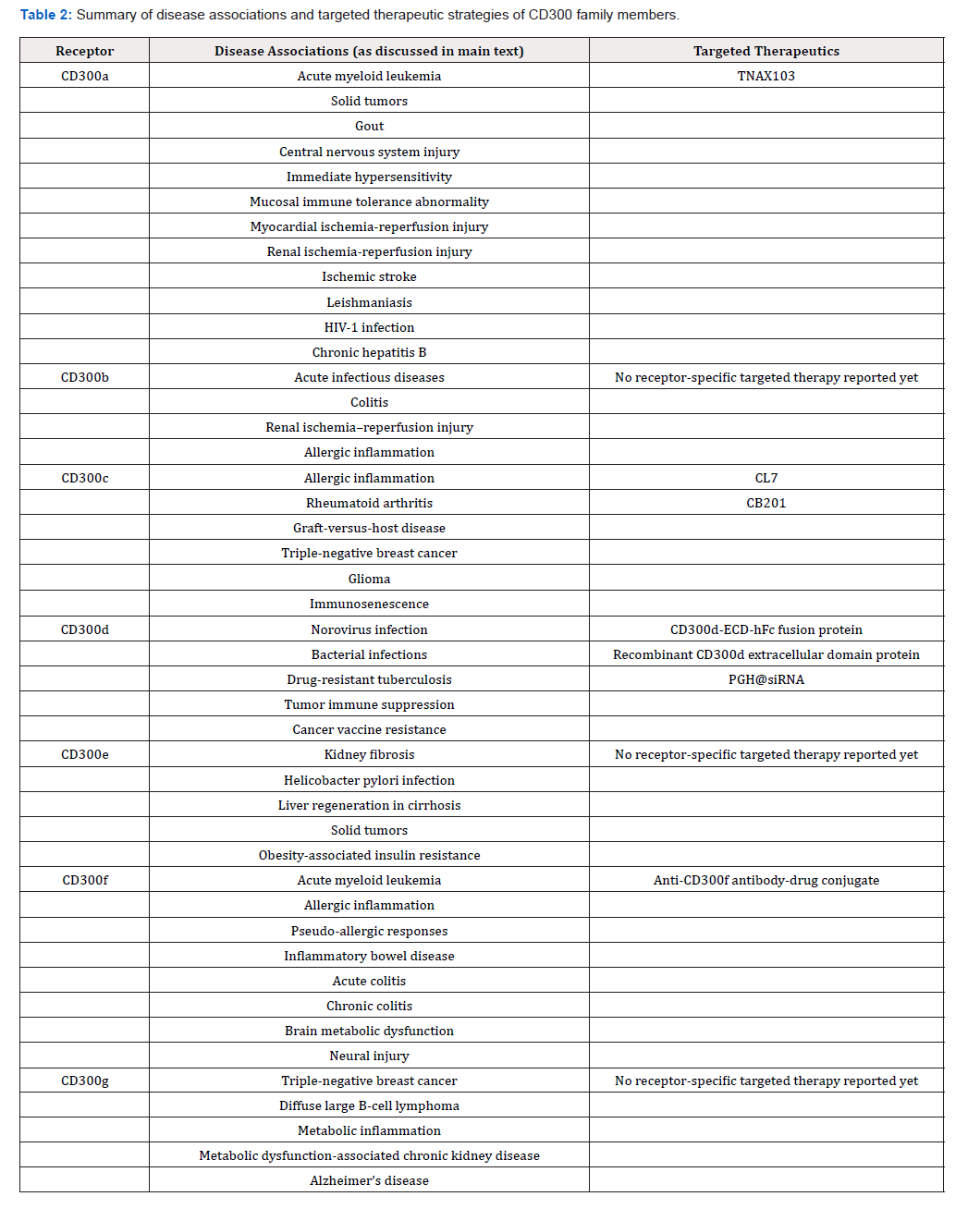
Table 2:Summary of disease associations and targeted therapeutic strategies of CD300 family members.
Among these receptors, CD300a has been studied mainly in acute neural injury. Blocking CD300a has shown protective effects in preclinical models, including better clearance of dying cells, less neuronal loss, and improved recovery. In models of ischemic stroke, the humanized monoclonal antibody TNAX103 improved neurological outcomes and survival, suggesting that CD300a may be a useful target for neuroprotection [74,75].
CD300c has emerged as a potential target in both cancer and neurodegenerative disease. In cancer models, the agonistic anti- CD300c monoclonal antibody CL7 drives macrophages toward a pro-inflammatory, tumor-fighting state. In preclinical models of triple-negative breast cancer and non-small cell lung cancer, CL7 reduced tumor growth and increased the presence of inflammatory macrophages and cytotoxic CD8+ T cells [76]. Its effects were stronger when combined with PD-1 blockade, suggesting that CD300c-targeted therapy may improve the response to immune checkpoint inhibitors [77,78]. Outside cancer, the anti-CD300c antibody CB201 has shown promise in Alzheimer’s disease models by promoting a phagocytic macrophage state, reducing amyloid-β buildup, and improving cognitive performance [79].
CD300d-targeted strategies have been developed to counter the immunosuppressive tumor microenvironment driven by PMNMDSCs. One approach focuses on receptor blockade. A CD300d- ECD-hFc fusion protein suppresses tumor growth and enhances the efficacy of anti–PD-1 therapy in preclinical models [26]. In line with this, the limited efficacy of STING-activating nanovaccines in advanced tumors has been linked to increased activity of the same pathway. Blocking this pathway with a recombinant CD300d extracellular domain protein reverses PMN-MDSC–mediated immunosuppression, restores CD8⁺ T cell function, and improves vaccine responses in advanced tumor models [80]. The second is selective gene silencing. An ultrasound-responsive nanocomposite, PGH@siRNA, was designed to deliver CD300d-targeting siRNA locally. When combined with sonodynamic therapy, this system triggered immunogenic cell death, reduced PMN-MDSC infiltration, and reshaped the tumor environment, leading to stronger antitumor effects [81].
In contrast, therapeutic work on CD300f has focused largely on hematologic cancers. In AML, antibody-drug conjugates targeting CD300f showed efficient internalization and selective killing of AML cells as well as hematopoietic stem and progenitor cells. Preclinical studies also reported improved survival, with greater benefit when these agents were combined with fludarabine [30,82].
CD300b and CD300e remain less well developed as therapeutic targets. For CD300e, current strategies are mostly indirect rather than receptor-specific. Glucocorticoids can increase CD300e expression, whereas imidazoline-based immunosuppressive agents inhibit this pathway and slow the progression of kidney disease [52]. Inhibition of the downstream PI3K-Akt pathway with Wortmannin has also been explored. However, these approaches are not specific to CD300e and may affect multiple pathways, raising concerns about off-target effects and toxicity.
Overall, different CD300 receptors appear to have distinct therapeutic roles in preclinical studies: CD300a in neuroprotection, CD300c and CD300d in cancer immunotherapy and immune remodeling, and CD300f in hematologic malignancies. Future work should focus on developing receptor-specific strategies with better selectivity, more precise delivery, and improved safety.
Conclusions
The CD300 receptor family comprises a group of lipid-sensing immune regulators that translate signals of cellular stress into diverse immune and disease responses. Rather than functioning uniformly, individual CD300 receptors influence distinct areas of pathology, including tumor-associated immune suppression, the resolution or persistence of inflammation, host–pathogen interactions, and immunometabolic and neurodegenerative diseases.
Although evidence for these roles continues to accumulate, several critical gaps remain. For some receptors, particularly CD300d and CD300h, the endogenous ligands and receptorspecific signaling pathways remain poorly characterized. Moreover, the same receptor can exert different effects depending on tissue context and disease stage, complicating the interpretation of its biological and therapeutic significance.
Future research should prioritize three key objectives: clarifying ligand specificity, elucidating signaling mechanisms in specific cell types, and determining how receptor function evolves during disease progression. These advances will be essential for translating knowledge of CD300 receptors into clinical biomarkers or targeted therapeutic interventions.
Acknowledgements
The authors would like to thank all individuals who contributed to this work. The figure was created using Figdraw (ID: WRSWY5dc5a). This study was supported by the National Natural Science Foundation of China (Grant Nos. 32330027 and 82350006).
Conflict of Interest
The authors declare that they have no known competing financial interests or personal relationships that could have appeared to influence the work reported in this paper.
References
- Nahrendorf M, Ginhoux F, Swirski FK (2025) Immune system influence on physiology. Science 389(6760): 594-599.
- Tian H fei, Xing J, Tang X qian, Chi H, Sheng X zhen, et al. (2022) Cluster of differentiation antigens: essential roles in the identification of teleost fish T lymphocytes. Mar Life Sci Technol 4(3): 303-316.
- Borrego F (2013) The CD300 molecules: an emerging family of regulators of the immune system. Blood 121(11): 1951-1960.
- Coxon CH, Geer MJ, Senis YA (2017) ITIM receptors: more than just inhibitors of platelet activation. Blood 129(26): 3407-3418.
- Aguilar OA, Fong LK, Lanier LL (2024) ITAM-based receptors in natural killer cells. Immunol Rev 323(1): 40-53.
- Umemoto E, Tanaka T, Kanda H, Jin S, Tohya K, et al. (2006) Nepmucin, a novel HEV sialomucin, mediates L-selectin–dependent lymphocyte rolling and promotes lymphocyte adhesion under flow. J Exp Med 203(6): 1603-1614.
- Clark GJ, Cooper B, Fitzpatrick S, Green BJ, Hart DN (2001) The gene encoding the immunoregulatory signaling molecule CMRF-35A localized to human chromosome 17 in close proximity to other members of the CMRF-35 family. Tissue Antigens 57(5): 415-423.
- Clark GJ, Ju X, Tate C, Hart DNJ (2009) The CD300 family of molecules are evolutionarily significant regulators of leukocyte functions. Trends Immunol 30(5): 209-217.
- Martínez Barriocanal Á, Arcas García A, Magallon Lorenz M, Ejarque Ortíz A, Negro Demontel ML, et al. (2017) Effect of Specific Mutations in Cd300 Complexes Formation; Potential Implication of Cd300f in Multiple Sclerosis. Sci Rep 7(1): 13544.
- Carnec X, Meertens L, Dejarnac O, Perera-Lecoin M, Hafirassou ML, et al. (2016) The Phosphatidylserine and Phosphatidylethanolamine Receptor CD300a Binds Dengue Virus and Enhances Infection. J Virol 90(1): 92-102.
- Choi SC, Simhadri VR, Tian L, Gil Krzewska A, Krzewski K, et al. (2011) Cutting edge: mouse CD300f (CMRF-35-like molecule-1) recognizes outer membrane-exposed phosphatidylserine and can promote phagocytosis. J Immunol 187(7): 3483-3487.
- Izawa K, Kaitani A, Ando T, Maehara A, Nagamine M, et al. (2020) Differential Lipid Recognition by Mouse versus Human CD300f, Inhibiting Passive Cutaneous Anaphylaxis, Depends on a Single Amino Acid Substitution in its Immunoglobulin-Like Domain. J Invest Dermatol 140(3): 710-713.e3.
- Martínez Barriocanal A, Sayós J (2006) Molecular and functional characterization of CD300b, a new activating immunoglobulin receptor able to transduce signals through two different pathways. J Immunol 177(5): 2819-2830.
- Yamanishi Y, Kitaura J, Izawa K, Matsuoka T, Oki T, et al. (2008) Analysis of mouse LMIR5/CLM-7 as an activating receptor: differential regulation of LMIR5/CLM-7 in mouse versus human cells. Blood 111(2): 688-698.
- Brckalo T, Calzetti F, Pérez Cabezas B, Borràs FE, Cassatella MA, et al. (2010) Functional analysis of the CD300e receptor in human monocytes and myeloid dendritic cells. Eur J Immunol 40(3): 722-732.
- Niizuma K, Tahara-Hanaoka S, Noguchi E, Shibuya A (2015) Identification and Characterization of CD300H, a New Member of the Human CD300 Immunoreceptor Family. Journal of Biological Chemistry 290(36): 22298-22308.
- Comas Casellas E, Martínez Barriocanal Á, Miró F, Ejarque Ortiz A, Schwartz S, et al. (2012) Cloning and characterization of CD300d, a novel member of the human CD300 family of immune receptors. J Biol Chem 287(13): 9682-9693.
- Murakami Y, Tian L, Voss OH, Margulies DH, Krzewski K, et al. (2014) CD300b regulates the phagocytosis of apoptotic cells via phosphatidylserine recognition. Cell Death Differ 21(11): 1746-1757.
- Avlas S, Kassis H, Itan M, Reichman H, Dolitzky A, et al. (2023) CD300b regulates intestinal inflammation and promotes repair in colitis. Front Immunol 14: 1050245.
- Dimitrova M, Zenarruzabeitia O, Borrego F, Simhadri VR (2016) CD300c is uniquely expressed on CD56 bright Natural Killer Cells and differs from CD300a upon ligand recognition. Sci Rep 6: 23942.
- Isobe M, Izawa K, Sugiuchi M, Sakanishi T, Kaitani A, et al. (2018) The CD300e molecule in mice is an immune-activating receptor. J Biol Chem 293(10): 3793-3805.
- Sun X, Huang S, Wang X, Zhang X, Wang X (2018) CD300A promotes tumor progression by PECAM1, ADCY7 and AKT pathway in acute myeloid leukemia. Oncotarget 9(44): 27574-27584.
- Li S, Wang T, Xiao X, Zheng X, Sun H, et al. (2024) Blockade of CD300A enhances the ability of human NK cells to lyse hematologic malignancies. Cancer Biol Med 21(4): 331-346.
- Ben-Zimra M, Levi-Schaffer F (2024) THE INHIBITORY RECEPTOR CD300A FUNCTIONS AS AN IMMUNE CHECKPOINT IN A 4T1 BREAST CANCER MODEL. Annals of Allergy, Asthma & Immunology 133(6, Supplement): S82-S83.
- Wu H, Feng J, Zhong W, Zouxu X, Xiong Z, et al. (2023) Model for predicting immunotherapy based on M2 macrophage infiltration in TNBC. Front Immunol 14: 1151800.
- Wang C, Zheng X, Zhang J, Jiang X, Wang J, et al. (2023) CD300ld on neutrophils is required for tumour-driven immune suppression. Nature 621(7980): 830-839.
- Luo Z, Zhu J, Xu R, Wan R, He Y, et al. (2024) Exercise-downregulated CD300E acted as a negative prognostic implication and tumor-promoted role in pan-cancer. Front Immunol 15: 1437068.
- Barizza A, Vassallo S, Masatti L, Laffranchi M, Giacometti S, et al. (2025) CD300e is a driver of the immunosuppressive tumor microenvironment and colorectal cancer progression via macrophage reprogramming. J Immunother Cancer 13(12): e013249.
- Yang T, Zhang Y, Duan C, Liu H, Wang D, et al. (2025) CD300E+ macrophages facilitate liver regeneration after splenectomy in decompensated cirrhotic patients. Exp Mol Med 57(1): 72-85.
- Abadir E, Silveira PA, Gasiorowski RE, Ramesh M, Romano A, et al. (2020) Targeting CD300f to enhance hematopoietic stem cell transplantation in acute myeloid leukemia. Blood Adv 4(7): 1206-1216.
- Sutherland SIM, Ju X, Silveira PA, Kupresanin F, Horvath LG, et al. (2023) CD300f signalling induces inhibitory human monocytes/macrophages. Cell Immunol 390: 104731.
- Xu ZJ, Jin Y, Zhang XL, Xia PH, Wen XM, et al. (2023) Pan-cancer analysis identifies CD300 molecules as potential immune regulators and promising therapeutic targets in acute myeloid leukemia. Cancer Med 12(1): 789-807.
- Rapier-Sharman N, Spendlove MD, Poulsen JB, Appel AE, Wiscovitch-Russo R, et al. (2024) Secondary Transcriptomic Analysis of Triple-Negative Breast Cancer Reveals Reliable Universal and Subtype-Specific Mechanistic Markers. Cancers (Basel) 16(19): 3379.
- Wu W, Liu S, Tian L, Li C, Jiang Y, et al. (2022) Identification of microtubule-associated biomarkers in diffuse large B-cell lymphoma and prognosis prediction. Front Genet 13: 1092678.
- Yang Z, Liu L, Zhu Z, Hu Z, Liu B, et al. (2024) Tumor-Associated Monocytes Reprogram CD8+ T Cells into Central Memory-Like Cells with Potent Antitumor Effects. Adv Sci (Weinh) 11(16): e2304501.
- Valiate BVS, Queiroz-Junior CM, Levi-Schaffer F, Galvão I, Teixeira MM (2021) CD300a contributes to the resolution of articular inflammation triggered by MSU crystals by controlling neutrophil apoptosis. Immunology 164(2): 305-317.
- Lu W, Huang J, Flores J, Li P, Wang W, et al. (2024) GW0742 reduces mast cells degranulation and attenuates neurological impairments via PPARβ/δ/CD300a/SHP1 pathway after GMH in neonatal rats. Exp Neurol 372: 114615.
- Wang Y, Nakahashi-Oda C, Okayama Y, Shibuya A (2019) Autonomous regulation of IgE-mediated mast cell degranulation and immediate hypersensitivity reaction by an inhibitory receptor CD300a. J Allergy Clin Immunol 144(1): 323-327.e7.
- Nakahashi-Oda C, Udayanga KGS, Nakamura Y, Nakazawa Y, Totsuka N, et al. (2016) Apoptotic epithelial cells control the abundance of Treg cells at barrier surfaces. Nat Immunol 17(4): 441-450.
- Nishiyama N, Koizumi H, Nakahashi-Oda C, Fujiyama S, Ng X, et al. (2025) Immunoreceptor CD300a regulates ischemic tissue damage and adverse remodeling in the mouse heart and kidney. J Clin Invest 135(19): e184984.
- Nakahashi-Oda C, Fujiyama S, Nakazawa Y, Kanemaru K, Wang Y, et al. (2021) CD300a blockade enhances efferocytosis by infiltrating myeloid cells and ameliorates neuronal deficit after ischemic stroke. Sci Immunol 6(64): eabe7915.
- Voss OH, Murakami Y, Pena MY, Lee HN, Tian L, et al. (2016) Lipopolysaccharide-Induced CD300b Receptor Binding to Toll-like Receptor 4 Alters Signaling to Drive Cytokine Responses that Enhance Septic Shock. Immunity 44(6): 1365-1378.
- Mytych JS, Pan Z, Lopez-Davis C, Redinger N, Lawrence C, et al. (2024) Peptidoglycan from Bacillus anthracis Inhibits Human Macrophage Efferocytosis in Part by Reducing Cell Surface Expression of MERTK and TIM-3. Immunohorizons 8(3): 269-280.
- Murakami Y, Tian L, Voss OH, Margulies DH, Krzewski K, et al. (2014) CD300b regulates the phagocytosis of apoptotic cells via phosphatidylserine recognition. Cell Death Differ 21(11): 1746-1757.
- Kavianpour AA, Ghasempour S, Meyer KJ, Le T, Cai R, et al. (2025) Phosphatidylethanolamine is a phagocytic ligand implicated in the binding and removal of apoptotic and bacterial extracellular vesicles. Curr Biol 35(17): 4276-4284.e5.
- Rodrigues PF, Kouklas A, Cvijetic G, Bouladoux N, Mitrovic M, et al. (2023) pDC-like cells are pre-DC2 and require KLF4 to control homeostatic CD4 T cells. Sci Immunol 8(80): eadd4132.
- Liu H, Zhao J, Su M, Tian X, Lai L (2022) Recombinant CD300c-Ig fusion protein attenuates collagen-induced arthritis in mice. Rheumatology (Oxford) 61(3): 1255-1264.
- Cui C, Su M, Lin Y, Lai L (2018) A CD300c-Fc Fusion Protein Inhibits T Cell Immunity. Front Immunol 9: 2657.
- Su Y, Wu R, Ai H, Zhong Z, Zou L, et al. (2025) Defining the marker and developmental trajectory of myeloid-derived suppressor cells in aging by single-cell transcriptomics. NPJ Aging 12(1): 18.
- Rodrigues PF, Trsan T, Cvijetic G, Khantakova D, Panda SK, et al. (2024) Progenitors of distinct lineages shape the diversity of mature type 2 conventional dendritic cells. Immunity 57(7): 1567-1585.e5.
- Rodrigues, Athanasios Kouklas, Grozdan Cvijetic, Nicolas Bouladoux, Mladen Mitrovic, et al. (2023) pDC-like cells are pre-DC2 and require KLF4 to control homeostatic CD4 T cells. Sci Immunol 8(80): eadd4132.
- Ikezumi Y, Yoshikane M, Kondoh T, Matsumoto Y, Kumagai N, et al. (2023) Mizoribine halts kidney fibrosis in childhood IgA nephropathy: association with modulation of M2-type macrophages. Pediatr Nephrol 38(6): 1831-1842.
- Izawa K, Kaitani A, Enomoto Y, Ando T, Yasuda Y, et al. (2026) IgE-dependent anaphylaxis is regulated by sphingolipid binding to activating and inhibitory CD300 family members. Cell Rep 45(3): 117054.
- Zhao C, Wang N, Wang C, Yuan Y, Du H, et al. (2025) Quercetin Alleviates Chronic Urticaria by Negatively Regulating IgE-Mediated Mast Cell Activation Through CD300f. Phytother Res 39(7): 3033-3045.
- Che D, Zheng Y, Hou Y, Li T, Du X, et al. (2022) Dehydroandrographolide targets CD300f and negatively regulated MRGPRX2-induced pseudo-allergic reaction. Phytother Res 36(5): 2173-2185.
- Moshkovits I, Reichman H, Karo Atar D, Rozenberg P, Zigmond E, et al. (2017) A key requirement for CD300f in innate immune responses of eosinophils in colitis. Mucosal Immunol 10(1): 172-183.
- Lee HN, Tian L, Bouladoux N, Davis J, Quinones M, et al. (2017) Dendritic cells expressing immunoreceptor CD300f are critical for controlling chronic gut inflammation. J Clin Invest 127(5): 1905-1917.
- Matsukawa T, Izawa K, Isobe M, Takahashi M, Maehara A, et al. (2016) Ceramide-CD300f binding suppresses experimental colitis by inhibiting ATP-mediated mast cell activation. Gut 65(5): 777-787.
- Lee Ødegård S, Hjorth M, Olsen T, Moen GH, Daubney E, et al. (2024) Serum proteomic profiling of physical activity reveals CD300LG as a novel exerkine with a potential causal link to glucose homeostasis. Elife 13: RP96535.
- Singh R, Anand A, Rawat AK, Saini S, Mahapatra B, et al. (2021) CD300a Receptor Blocking Enhances Early Clearance of Leishmania donovani From Its Mammalian Host Through Modulation of Effector Functions of Phagocytic and Antigen Experienced T Cells. Front Immunol 12: 793611.
- Vitallé J, Tarancón Díez L, Jiménez Leon MR, Terrén I, Orrantia A, et al. (2020) CD300a identifies a CD4+ memory T cell subset with a higher susceptibility to HIV-1 infection. AIDS 34(8): 1249-1252.
- Vitallé J, Terrén I, Orrantia A, Pérez Garay R, Vidal F, et al. (2019) CD300a inhibits CD16-mediated NK cell effector functions in HIV-1-infected patients. Cell Mol Immunol 16(12): 940-942.
- Zhang P, Wang WX, Li J, Lv Q, Zhu MM, et al. (2025) CD300A+ CD8+ T Cells as Predictive Biomarkers for Achieving Functional Cure in Chronic Hepatitis B Patients Undergoing Pegylated Interferon-Alpha Therapy. Aliment Pharmacol Ther 62(5): 512-525.
- Zenarruzabeitia O, Astarloa-Pando G, Terrén I, Orrantia A, Pérez-Garay R, et al. (2021) T Cell Activation, Highly Armed Cytotoxic Cells and a Shift in Monocytes CD300 Receptors Expression Is Characteristic of Patients With Severe COVID-19. Front Immunol 12: 655934.
- Akama Y, Murao A, Aziz M, Wang P (2025) CD300ld promotes neutrophil bacterial phagocytosis in sepsis. J Leukoc Biol 117(5): qiaf063.
- Madamarandawala P, Rajapakse S, Gunasena B, Madegedara D, Magana-Arachchi D (2023) A host blood transcriptional signature differentiates multi-drug/rifampin-resistant tuberculosis (MDR/RR-TB) from drug susceptible tuberculosis: a pilot study. Mol Biol Rep 50(4): 3935-3943.
- Haga K, Fujimoto A, Takai Todaka R, Miki M, Doan YH, et al. (2016) Functional receptor molecules CD300lf and CD300ld within the CD300 family enable murine noroviruses to infect cells. Proc Natl Acad Sci U S A 113(41): E6248-E6255.
- Graziano VR, Walker FC, Kennedy EA, Wei J, Ettayebi K, et al. (2020) CD300lf is the primary physiologic receptor of murine norovirus but not human norovirus. PLoS Pathog 16(4): e1008242.
- Li N, Liu J, Wu G, Zhang J, Liu L, et al. (2025) Integrative analysis identifies novel proteins associated with chronic kidney disease in participants with abnormal glucose metabolism. Diabetes Res Clin Pract 229: 112474.
- Evans F, Alí-Ruiz D, Rego N, Negro-Demontel ML, Lago N, et al. (2023) CD300f immune receptor contributes to healthy aging by regulating inflammaging, metabolism, and cognitive decline. Cell Reports 42(10): 113269.
- Negro-Demontel L, Evans F, Cawen FA, Fitzpatrick Z, Mason HD, et al. (2025) CD300f enables microglial damage sensing, efferocytosis, and apoptotic cell metabolization after brain injury. Brain Behav Immun 130: 106105.
- Li N, Liu J, Wu G, Zhang J, Liu L, et al. (2025) Integrative analysis identifies novel proteins associated with chronic kidney disease in participants with abnormal glucose metabolism. Diabetes Research and Clinical Practice 229: 112474.
- Li YJ, Nuytemans K, La JO, Jiang R, Slifer SH, et al. (2023) Identification of novel genes for age-at-onset of Alzheimer’s disease by combining quantitative and survival trait analyses. Alzheimers Dement 19(7): 3148-3157.
- Okuwaki S, Takahashi H, Nakahashi-Oda C, Sakashita K, Nakagawa T, et al. (2026) CD300a Immunoreceptor Blocking Attenuates Neuronal Apoptosis by Regulating Efferocytosis and Promotes Hindlimb Functional Recovery after Acute Spinal Cord Injury in Mice. J Neurotrauma: 8977151261415619.
- Abe F, Nakahashi Oda C, Lee H, Tran Duc BD, Shibuya K, et al. (2025) A Humanized Monoclonal Antibody Against CD300A Ameliorates Acute Ischemic Stroke in Humanized Mice. Monoclon Antib Immunodiagn Immunother 44(1): 2-7.
- Kim S, Han IH, Lee S, Park S, Jeon JW, et al. (2025) The CD300c antibody CL7 suppresses tumor growth by regulating the tumor microenvironment in non-small cell lung carcinoma. Front Oncol 15: 1698857.
- Kim S, Han IH, Lee S, Park D, Lee H, et al. (2025) The Combination of CD300c Antibody with PD-1 Blockade Suppresses Tumor Growth and Metastasis by Remodeling the Tumor Microenvironment in Triple-Negative Breast Cancer. Int J Mol Sci 26(11): 5045.
- Xu Y, Poggio M, Jin HY, Shi Z, Forester CM, et al. (2019) Translation control of the immune checkpoint in cancer and its therapeutic targeting. Nat Med 25(2): 301-311.
- Lee S, Lim CK, Kim J, Kim J, Jin HK, et al. (2025) Engagement of CD300c by a Novel Monoclonal Antibody Ameliorates Behavioral Deficits in a 5xFAD Mouse Model of Alzheimer’s Disease. Biomedicines 13(5): 1169.
- Wang X, Xue S, Li Y, Yang M, Yu H, et al. (2026) CD300ld blockade overcomes PMN-MDSC-mediated vaccine resistance in advanced tumors. J Immunother Cancer 14(1): e013336.
- Chen X, Li S, Lu Q, Li Y, Zhu M, et al. (2025) Sono-triggered endoplasmic reticulum-targeted ROS burst silencing CD300ld to alleviate polymorphonuclear myeloid-derived suppressor cells for breast cancer treatment. J Nanobiotechnology 23(1): 801.
- Abadir E, Silveira P, Gasiorowski R, Ramesh M, Romano A, et al. (2020) An Anti-CD300f Antibody Drug Conjugate Depletes Hematopoietic Stem Cells and Primary Acute Myeloid Leukemia (AML): Facilitating a Targeted Conditioning Regimen for Allogeneic Stem Cell Transplantation in AML. Biology of Blood and Marrow Transplantation 26(3, Supplement): S33.




 We use cookies to ensure you get the best experience on our website.