
Research Article 
 Creative Commons, CC-BY
Evaluating Heavy Metal Pollution in Soils at Letseng and Kao Villages in Lesotho; Sources, Soil Properties, and Potential Ecological and Agricultural Risks
*Corresponding author:Motsamai Tjakata, Department of Soil Science and Resource Conservation, National University of Lesotho (NUL), P. O. Roma 180, Lesotho.
Received:April 14, 2026; Published:April 22, 2026
DOI: 10.34297/AJBSR.2026.30.003988
Abstract
The study was aimed at determining the extent of soil contamination with heavy metals due to wastes (wind or air) from Kao and Letseng Diamond Mining and to find out the potential risks to the soils in nearby farmlands. A number of physical and chemical soil parameters were tested namely; texture, pH, Organic matter, and CEC to find out their impact on bioavailability of heavy metals in the soils around Kao and Letseng. Furthermore, studies were made to assess the effects of heavy metals on soil microbial activity, and to determine whether heavy metals in soils are mild, sufficient or toxic. The samples were collected from three sites, two of which are from contaminated sites (Kao and Lets’eng mining) and one from uncontaminated site ((Mokhotlong Agricultural Research Station) in Lesotho. Basic cations and metals were extracted by DTPA method and later determined using an AAS 500 model. The results indicated that there are higher concentrations of heavy metals around Letseng Environment/village in the order of Cr > Pb > Cd > Ni > Fe > Mn > Cu > Co > Zn. Around Kao Village, three metals were in the toxic range in the order of Cd > Pb > Cr. The Kao Diamond mining site is located within Kao Village, where the effluent from the mining drains into farmlands, which obviously poses health threat. Results of this study indicate that the heavy metal risk around the mining sites is alarming and hence appropriate measures need to be taken to rectify the situation.
Keywords: Heavy metals, Potential risks, Bioavailability, Toxic, Contaminated, Health threat
Introduction
Diamond mining in Lesotho began in the 1950s where Basotho were allowed to mine as artisanal miners, but a new Act in 2005 allowed small-scale miners [30]. Opencast mining negatively impacts the environment, causing soil destruction and material extraction. Young, unstable soils with a thin A horizon are easily exposed to water and air erosion [28].
Heavy metal contamination results from deposition of excess amounts of toxic metals in soil [29]. Excess heavy metals in soils can be a result of natural or human activities, such as volcanic eruptions and mining, and can become toxic if they exceed normal limits [37]. The interaction between toxic heavy metals and soil depends on the element and its speciation [42], as well as the form they exist in the environment [14].
Li, et al. [31] found out that soils around mining sites are contaminated by heavy metals emitted from mining activities that pose risks to public as well as crops grown or vegetation around. Zn, Cd and Pb are main anthropogenic accumulators of Potentially Toxic Elements (PTEs) in the diamond mining while Mn is mainly from natural sources [20]. Organic matter has an ability to retain more metals in an exchange form by supplying organic chemicals to the soil solution that act as chelates that have potential to make more metal available to the plant [34]. Changes in soil moisture content can alter metal availability [32].
Metal mobility, ion retention and leaching could be promoted by coarse texture, high CEC and high soil pH [24]. For instance, soil salinity has an influence on Cd mobility, thus does not mean it increases Cd availability [19].
The availability of toxic metals in soils leads to serious problems since the productivity of the land will be decreased (e.g. lead causing other nutrients to be unavailable) [3,48]. The effect of high metal contamination in soil is that if it increases, total bioactivity, richness and microbe activity also decrease [51]. This study was aimed to determine the extent of soil contamination with heavy metals in Kao and Letseng Villages and the potential risks to the soil in nearby farmlands. The objective was to examine the soil chemical properties, the role they are playing on the availability of heavy metals and the effects of heavy metals on microbial activity. It is also aimed at assessing the level of concentration of heavy metals in soils whether they are in the toxic, deficient or mild range.
Materials and Methods
Study Site

Figure 1:Map of Lesotho showing 2 mining sites that are of interest in the study.
The study was conducted in Kao Village (29o00’56’’ S and 28o37’19’’ E at 2378m elevation), and near Letseng Mining (29o00’45’’ S and 28o52’39’’ E at 2885m elevation) in Lesotho, along wastewater drainage lines at the mines’ outlets, and Mokhotlong Agricultural Research (29o17’14’’ S and 29o04’45’’ E at 2153m elevation) as reference point of study. Kao Village is affected by the wastewater from the Kimberlite Diamond mine, while Letseng Mining is the largest mining site in Lesotho, located at Mokhotlong, with a cold climate and frequent snowfall. The research aimed to understand the impact of mining on agricultural fields and environment (Figure 2-4).
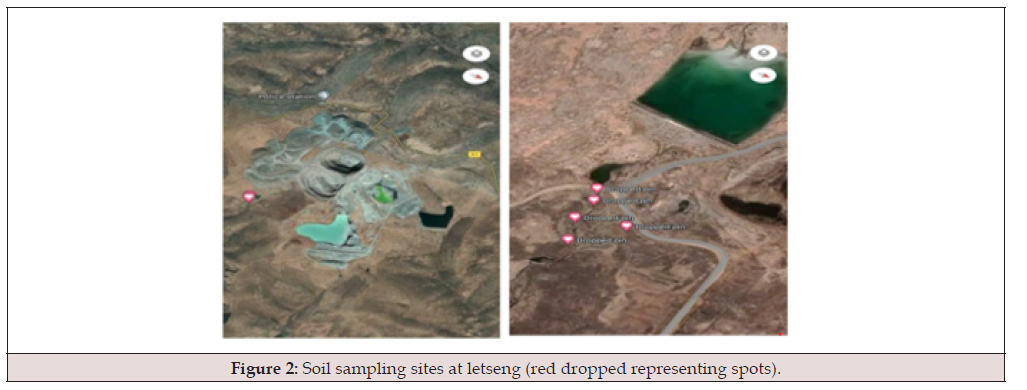
Figure 2:Soil sampling sites at letseng (red dropped representing spots).
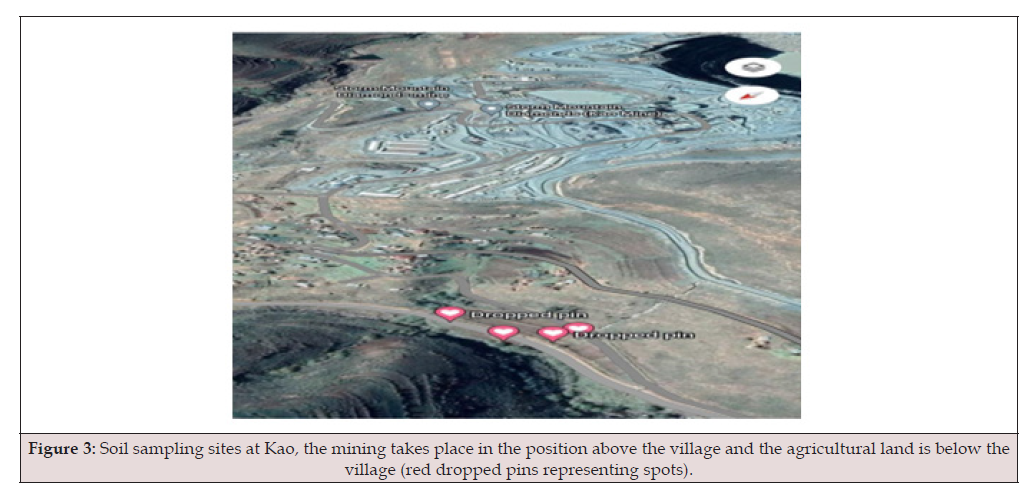
Figure 3:Soil sampling sites at Kao, the mining takes place in the position above the village and the agricultural land is below the village (red dropped pins representing spots).
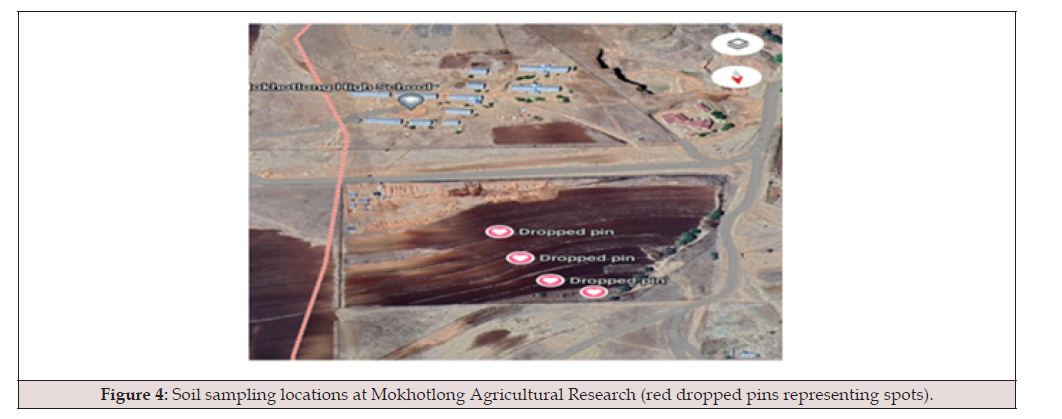
Figure 4:Soil sampling locations at Mokhotlong Agricultural Research (red dropped pins representing spots).
Soil Sampling
Soil samples were collected from three sites in Lesotho; namely, Letseng Village, Kao Village and the Agricultural Research Station in Mokhotlong. At Kao, the samples were collected from farmlands located alongside the drainage line of the wastewater. At Letseng, they were collected alongside an outlet on the southern side of Letseng Diamond.
The exact soil sampling locations at Kao and Letseng were at an interval of 20 meters alongside the slope from five different spots along the drainage route of contaminated wastewater that flows downward from the source and spreads during the rainy period. Soil samples were taken from surface (0-20 cm) depth and subsurface (2- 40 cm) depth.
Soil Preparation and Analysis: The soil samples were air dried in the laboratory for analysis and sieved through at 2 mm mesh sieve. pH in H2O and KCl was determined using calibrated pH meter. Organic matter was determined using Walkley-Black Titration method. Texture was determined using hydrometer method based on Stokes’ law and CEC was determined using NH4OAc extractable method.
For heavy metal (Cr, Cd, Pb, Co, Ni, Mn, Fe and Cu) determination, DTPA extraction method was followed (Lindsay and Norvell, 1978) using the AAS analyst 500 model. 20.0g soil was weighed, added into 100 ml polythene bottles and 40.0 ml of DTPA extractant was added and the mixture shaken for 2 hours, and filtered.
Soil microbes were identified in the Crop Science Laboratory at the National University of Lesotho. The serial dilution technique was used which is a classical microbiological procedure. Nutrient agar was used for isolating bacteria and potato dextrose agar was used for fungi isolation.
Analysis of Data: Data was analyzed using SPSS software. Means, standard deviation and coefficient of variation (CV %) were determined for each treatment.
Significant differences between treatments from the mining sites and control were estimated, where p values less than 0.05 were considered as significant (P<0.05) allowing only a 5% chance error in the results.
Single contamination index of each metal pollutant was calculated using the following equation to assess the pollution degree of each metal in the area,
Pf = Cf/Sf
where Pf is the single contamination index of heavy metal pollutant, Cf is sample concentration, and Sf is regional value, using the soil contamination index of heavy metal pollutant [10,16,2,27] and according to allowable heavy metal levels in soil and crops [50,49] (Table 1,2).
Results
Soil Analyses
Letseng Diamond Mining (LDM) at both surface and subsurface has very low amount of Zn in the soil (Table 3) and thus shows there is no contamination of Zn in the environment. The pollution index of zinc in LDM is < 0 which implies that there is no toxicity of zinc on the environment or soil. LDM has a very low amount of copper in the soil in both layers (Table 3). The pollution index is below zero which means that the area of the study is not contaminated by copper. There is variability on copper found at different elevations or positions. There is no contamination with copper at LDM (< 36 mg/kg).
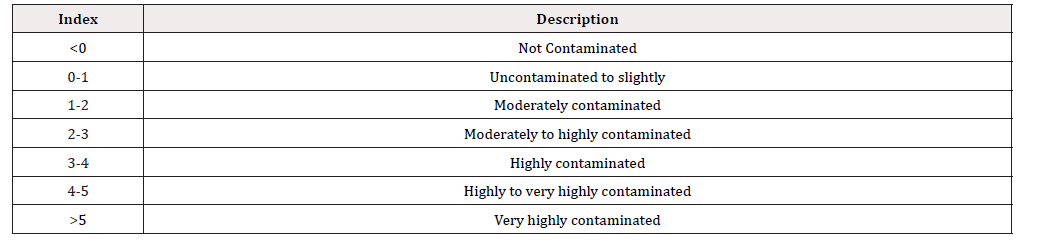
Table 1:Soil contamination index of heavy metal pollutant.
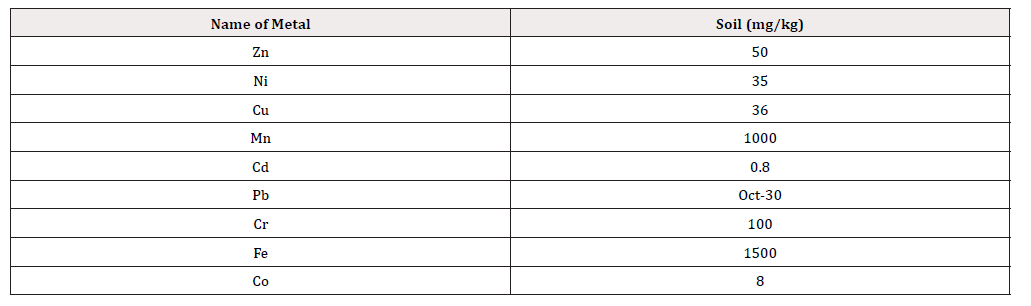
Table 2:Allowable heavy metal levels in soils and crops [49,50].
The surface soil (0-20 cm) at LDM, has manganese ranging from 43.26 mg/kg to 133.70 mg/kg in soil (Table 3). There is no contamination in LDM but manganese should be controlled before the levels could be increased higher than critical level. The subsurface soil (20 - 40 cm) in LDM has manganese ranging from 59.40 mg/kg to 138.71 mg/kg in soil (Table 3). There is no contamination in the area due to manganese toxicity in Letseng. LDM has sufficient chromium in soil and can be considered as slightly contaminated by chromium in the environment (Table 3). The presence of chromium in soil can also be toxic to plants once available in the environment. The level of chromium in both depths is likely similar at LDM.
At both depths in LDM, there is low concentration of soil iron (Table 3). There is no contamination of iron in LDM. LDM has high amount of lead in soil and can be considered as highly contaminated by lead (Table 3). At LDM, in both layers, the lead values exceeded 30 mg/kg, which is the allowable amount of lead in soil and the spot 4 (apart from stream by 50 m) as well exceeded the limits.
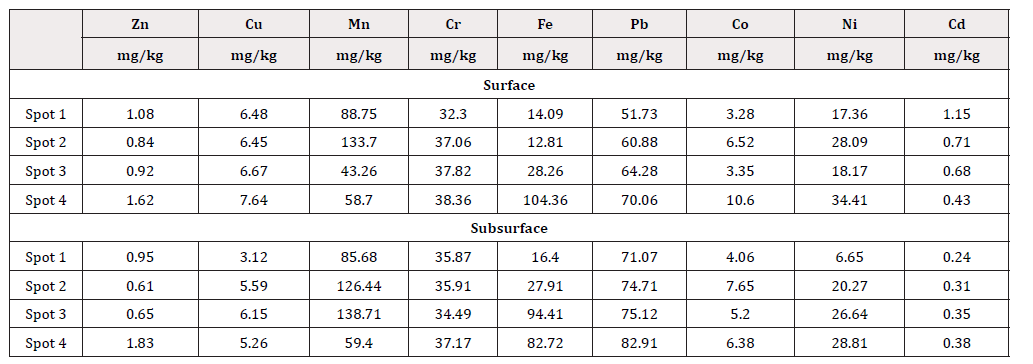
Table 3:Soil heavy metals found in Letseng Diamond Mining where the samples were taken.
LDM has low amounts of cobalt in both layers which shows slight or no contamination except at spot 4 and at spot 3 Co exceeded limits of 8 mg/kg indicating moderate to high contamination (Table 3). The excess presence of cobalt in soils can also be toxic to plants.
The amount of nickel in LDM shows that there is no contamination at both depths (Table 3). The availability of nickel in soils can also be toxic to plants when it exceeds background limits. The level of nickel in both depths is similar at LDM. LDM has cadmium that is slightly contaminating the site, with the exception of the surface soil of spot 1, indicating potential of cadmium contamination of the environment (Table 3). Hence, it makes sense to predict that in few years, the environment could be of concern with cadmium contamination.
Kao Diamond Mining (KDM) has very low mean of soil Zn (mg/ kg) ranging from 3.85 mg/kg to 23.37 mg/kg at both depths or layers (Table 4). The pollution index is below zero which implies that at KDM zinc does not pose any problem to the environment. KDM has very low amount of copper at both depths (Table 4). The content of copper in this study area is very low implying that the mining has no or little contribution to contamination with copper. There is no contamination of manganese in this area, since the values of manganese do not even approach the allowable amount of manganese in soils (Table 4).
KDM has chromium in the surface soil ranging from 34.85 mg/ kg to 76.90 mg/kg (Table 4). The KDM is slightly contaminated with chromium. In few years, the level of Cr contamination in KDM, could reach moderate, unless timely control measures are taken into consideration. The subsurface soil has chromium ranging from 24.16 mg/kg to 94.10 mg/kg, indicating that the subsurface of KDM is slightly contaminated with chromium. In spot 3 subsurface layer shows that the pollution index is above 3 thus the spot is highly contaminated with chromium. KDM has very low amount of iron in soil (Table 4). There is no contamination of iron rather there is higher deficiency of iron on this environment.
KDM at spots 1-5 has lead ranging from 71 to 88.10 mg/kg, which shows that the surface soil is very contaminated (Table 4). Spot 2 and 3 subsurface soil shows the pollution index being less than 2 which implies that there is no or little contamination of Lead. The adverse presence of lead in soil can also be toxic to plants. The surface soil has more lead than the subsurface soil in Kao Diamond Mining and the area is high with lead.
At KDM, in both layers/depths, there are low amounts of cobalt showing that that there is no risk of Co contamination in the area (Table 4). The excess presence of cobalt in soil can also be toxic (when it exceeds allowable limits) or beneficial to plants when available in normal concentrations.
At some spots in KDM, nickel is in low concentrations, indicating that there is no contamination (Table 4). However, at spot 6 at both depths and spot 3 (subsurface soil) there is high amount of nickel in KDM implying there is also contamination that need to be taken care of before it can make more harm. KDM is contaminated with cadmium (Table 4) except spot 1 that shows no contamination. Cadmium exceeded 0.8 mg/kg which is the allowable limit in the soil from both layers.
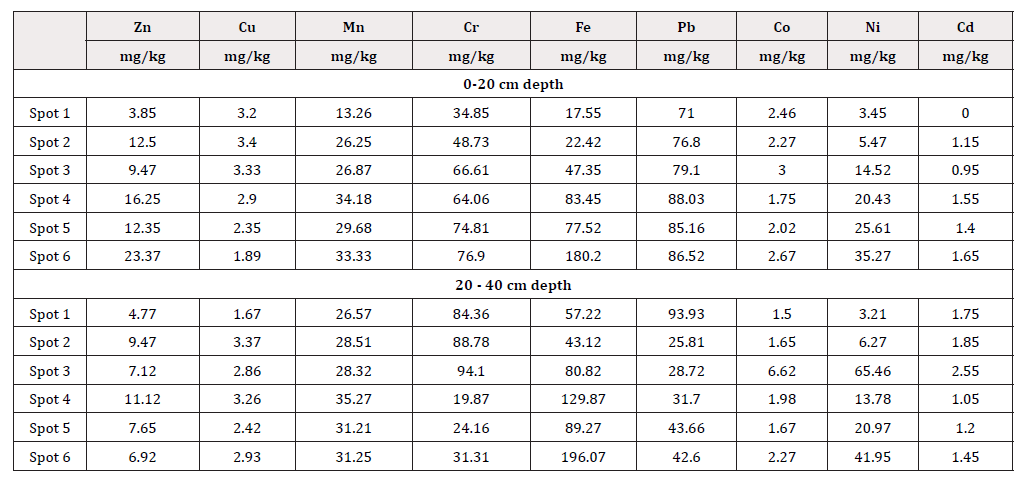
Table 4:Soil heavy metals found in Kao Diamond Mining at different depths (KDM).
Mokhotlong Agricultural Research (MAR), which is the control site, has low zinc ranging from 10.28 mg/kg to 21.06 mg/kg (Table 5). MAR has low zinc in soil but the zinc found in MAR is higher than the one found in LDM and KDM likely due to fertilization. MAR has Cu mg/kg ranging from 26.91 mg/kg to 32.89 kg/mg at different spots (Table 5). There is high amount of copper at MAR that shows no contamination rather sufficient amount of copper at MAR. MAR has higher amount of copper compared to KDM and LDM. MAR at all spots has very low manganese ranging from 52.05 mg/kg to 63.81 mg/kg (Table 5). There is no contamination of manganese at MAR. Since many experiments are conducted at MAR, manganese toxicity could immediately be resolved.

Table 5:Heavy metals concentrations in soils at MAR.
MAR has very low amount of chromium therefore it is not contaminated by chromium (Table 5). KDM has more chromium in the soil followed by LDM and lastly MAR, with low amount of chromium in soil. MAR has very low amount of iron (Table 5). KDM have higher amount of iron compared to MAR and LDM from the soil samples analyzed in the laboratory. MAR has sufficient lead level in soil and can be considered as no or slightly contaminated by lead (Table 5). KDM has high amount of lead followed by LDM and lastly MAR. MAR has insufficient amount of cobalt, showing that there is no contamination in the area (Table 5). LDM has high amount of cobalt in the soil, followed by MAR and KDM.
MAR has very high amount of nickel, except spot 3 (Table 5). MAR is contaminated by nickel due to use of agrochemicals and plants that can be grown on the environment should be ones that require more nickel. MAR has amount of nickel in soil followed by LDM and lastly KDM.
MAR has no contamination of cadmium at both depths and shows there are no sources of cadmium at all in the environment. KDM has high amount of cadmium followed by LDM and then followed by MAR, that has no amount cadmium at all (Table 5).
Discussion
Metals that Do Not Pose Risk to the Environment Surrounding the Mining Sites
The allowable or maximum permissible level of Zn in soil is 50 mg/kg [40,52]. All sites have low amount of zinc. Zn is likely to be found in the earth’s crust but also regarded as an essential element for plant protein but mainly in the function of protein synthesis [23].
The allowable or maximum permissible level of Cu in the soil is 36 mg/kg [40,52]. The contamination index of Cu to the environment in MAR is 0.18, which implies there is very slight or no contamination of Cu on the agricultural land while LDM and KDM show that their environments are not contaminated. Cu is also potentially toxic above critical concentration range level however Copper (Cu) is an essential metal for human, animals and plants. Toxic Cu levels in soils reduce oxidative stress within plants through enabled production of reactive oxygen species [45]. The Cu content in the soil is very low and plants would likely have the deficiency of copper if grown in all study areas.
Manganese oxides are capable of oxidizing some metal cations such as Pb, Co, Cu, and Ni on Mn mineral surface [9]. If the soil pH would be reduced, manganese availability will be increased, becoming more available to the plants, or could be become toxic if its concentration continues accumulating in the soil [22]. Kao and Letseng are not at risk of having manganese toxicity.
Iron content in the mining sites is very low but in LDM and KDM iron is higher compared to MAR. It should be noted here that, MAR experimental site is cultivated every year, because the soil type contributes to immobilization of heavy metals [15]. At MAR, the iron content is low, likely because high calcium may have contributed to low iron. Iron is essential in photosynthesis and chlorophyll synthesis in the plant but its availability to environment controls the distribution of plant species, restricts yield and also has greater influence on nutrition and food quality [44].
According to Barałkiewicz, and Siepak [6], most world soils have an average cobalt concentration in soil of 8 mg/kg in average and this implies that Letseng Diamond Mining is slightly less contaminated by cobalt with contamination factor of 0.721. Adsorption has a big influence on the mobility of cobalt when its reactivity is increased under oxidative reaction since cobalt exists in soil as free metal and found in forms of ores [41]. MAR and Kao diamond Mining sites have little contamination of cobalt and it could also be insufficient to plants if grown in that particular environment.
Metals that Pose Risk to the Environment Surrounding the Mining Sites
The maximum allowable concentration of Chromium in soil is 100 (mg/kg) and at both sites (LDM and KD), which are the main study sites, chromium does not pose that much risk to the plant. Due to its toxicity, chromium when in its hexavalent form must be eliminated or controlled as early as possible, since it causes oxidative stress due to production of free radicals because it appears in variety of different oxidation states [53]. Chromium is very high in the sites studied, likely because Cr (VI) has the tendency to be decreased to Cr (III) in soil when organic matter content is high [17].
Lead is very high in the Letseng Diamond Mining and Kao Diamond Mining sites. This is because the maximum allowable concentration of lead naturally is 10 mg/kg to 30 mg/kg in soil [49]. The mining operating trucks can have leakages of fuel and may add lead to soil; this is because lead can be added to the petrol through organo-lead compounds [39]. It may be from compounds that are used in diamond processing, or after the wastewater is released or it may have reacted with minerals that release Pb.
The Letseng Diamond Mining is heavily contaminated with lead in the study area and this implies that animals and also sheperds living near the mining site are likely exposed to lead, which could reduce growth and reproduction in plants and animals, and neurological impact in vertebrates [46].
The permissible concentration of nickel in soil is 35 mg/ kg according to [49]. Letseng Diamond Mining site shows very high contamination index or factor which implies the soils there are contaminated with nickel, since the nickel levels are above allowable limits in the soil. It should be noted that in lighter soils, concentrations of Nickel should be lower and the permissible concentration is 15 mg/kg [6]. However, taking the maximum Ni value of Letseng Diamond Mining site, the Ni contamination factor becomes 2.29 implying that the environment is moderately contaminated. Nickel is essential in growth of higher plants. It should be noted that nickel can be found in soil in different forms which are adsorbed or complexed on organic cation surfaces or on inorganic cation exchange surfaces [25].
Kao Diamond Mining is moderately to highly contaminated by lead. Lead is not an essential element and if found in the environment, it is still toxic, and at higher amounts it can even kill [7] [Ren, et al. 2022]. Mokhotlong Agricultural Research shows no contamination of lead, since its concentration is way lower than the allowable limit. Lead is highly dangerous to living organisms mainly microorganisms and plants since it destroys biological functions such as morphological, physiological, and biochemical dysfunctions in plants as well as deactivation or damaging enzymes of organisms [18].
Kao Diamond Mining is moderately to highly contaminated by lead. Lead is not an essential element and if found in the environment, it is still toxic, and at higher amounts it can even kill [7] [Ren, et al. 2022]. Mokhotlong Agricultural Research shows no contamination of lead, since its concentration is way lower than the allowable limit. Lead is highly dangerous to living organisms mainly microorganisms and plants since it destroys biological functions such as morphological, physiological, and biochemical dysfunctions in plants as well as deactivation or damaging enzymes of organisms [18].
The factors that regulate the accumulation of Cd in soil and its availability are: organic material/organic matter, texture, Fe and manganese (Mn) oxide and hydroxides, Zn, Carbonates, chlorine, Cation Exchange Capacity and lastly the soil pH [11]. Cadmium despite being very toxic is also carcinogenic and teratogenic which have effects of diseases such as Itai-itai which is short term disease but very acute. It also has effect on microorganisms such as bacteria where-by it will affect its diversity, community structure and its metabolic functioning [13].
Metals in the Control Site (MAR)
In table 5, tested micronutrients have high concentrations. This is due to fertilization in the station because of the experiments that are taking place by different researchers [43]. Soil pH at the station is acidic, thus the uptake and accumulation of micronutrients is influenced by the soil pH; whereby, higher soil pH has low concentration of micronutrients [8].
The other reason for high content of micronutrients in the station is that the place is under protection, no animals are grazing within the station. Build-up of SOM in soil changes adsorbed fractions to more plant-accessible forms of micronutrients. The addition of organic matter to the soil raises the concentration of water soluble and exchangeable forms of micronutrients, which in turn promotes increased uptake of these nutrients. A high SOM content in soils facilitates the different interactions of micronutrients, leading to the production of more stable micronutrient complexes. Because Zn, Cu, B, and Mo are less sensitive to redox changes than Fe and Mn, soil organic matter binds more of these elements [12].
The existence of other heavy metals is due to the construction that is under operation at the station which could act as source of toxic heavy metals. Artificially, they (heavy metals) could arise from human activities such as mining or discharging of agricultural wastes as well as construction. These heavy metals are transported from their sources either by wind or water and later accumulate in the soil [35].
The Trend of Metal Distribution Along the Gradient
In Table 3, it can clearly be seen that the content of heavy metals decreases with decreasing depth. This is because sediments and associated metals are deposited shortly after the stream overtops during moderate-sized floods [33]. The metals from spot 1 to 3 increase down the stream. This is due to metal deposits along route of wastewater disposal and the steepness of the slope since at spot 3, there is more flatness. In table 3, 4 and 5, it can be observed that the concentration of metals is high in surface than subsurface soil. This is because the surface soils normally have greater adsorption of heavy metals due to organic matter as well as provide greater stability to adsorbed metals, especially for Cu compared to underlying soil [21]. The spread of heavy metals can reach places that are not even expected, since their distribution can reach up to 260 km to be precise [20].
Some trends of heavy metals between the spots and within their depths are very dynamic. The behaviour of lead is that it increased with depth which means that there are essential adsorbents for lead such as organic matter, clay minerals as well as iron oxides [47].
Soil Microorganisms
Soil Bacteria from Nutrient Agar
Kao Diamond Mining site has the least bacterial population likely because of the contamination level of some of the heavy metals such as Cadmium. Letseng Diamond mining site has less but not least bacteria population among the three, and the reason is because of elevated levels of Pb and Cr in the soil. MAR has no heavy metal contamination therefore the bacterial population is very high and also the environmental conditions favour the prevalence of microbes. Heavy metals such as Cadmium have a very serious effect on genetic structure of bacteria. Lead and cadmium normally destroy cell membranes and totally damage the structure of DNA [38] (Figure 5).
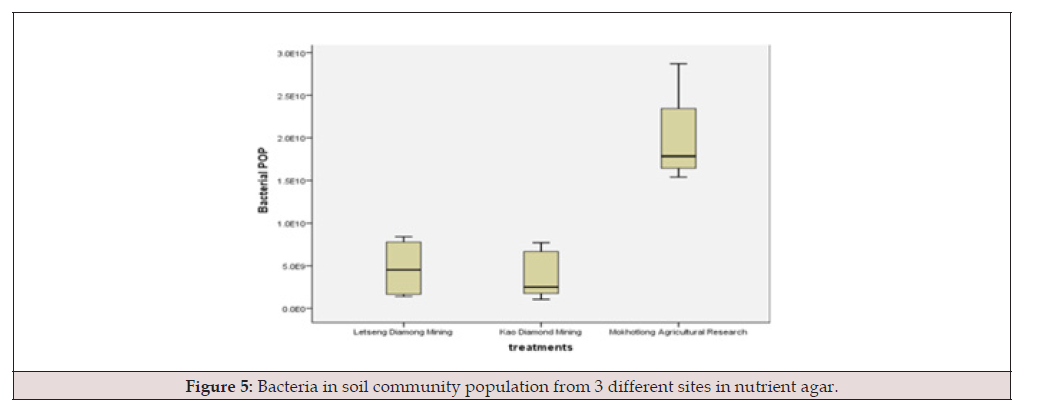
Figure 5:Bacteria in soil community population from 3 different sites in nutrient agar.
In Letseng Diamond Mining and Kao Diamond Mining sites, the bacterial population is very low and the main contributor to low bacterial population in the mining sites is excess heavy metals in the contaminated soil. Other factors such as low amount of organic matter in the mining sites reduces the habitation of soil microorganisms. The few populations of bacteria that persist, could have developed the mechanisms to adopt to the adverse heavy metal conditions, becoming more tolerant bacteria [26].
Fungi Detection in Contaminated Soil
Fungi were detected in all sites. The fungi were detected in the potato nutrient agar making some moulds where some were darker in colour, some were green to grey colour. Cadmium, lead and some other heavy metals at higher concentrations actually restrict antioxidant enzymes to work properly. Toxic heavy metals could easily be phyto-stabilized by mycorrhizal fungi in the environment [5]. Fungi usually develop set of response mechanisms that will restrict the toxicity of the metal to their cells so that it will adapt to higher concentration of heavy metals.
Most fungi depend heavily on extracellular enzymes for nutrient acquisition, and some of fungi such as saprotrophic fungi are highly sensitive to heavy metals and those enzymes usually are a target of heavy metal toxicity [4]. It was found that the fungus Trichoderma harzianum can easily survive where there is excessive Cd, Pb and Cu [36].
Conclusion
Letseng Diamond Mining is mainly affected by high concentrations of Cr in the soil as well as lead. These heavy metals are non-essential and their presence in the environment affected the crops. The contamination level of heavy metals in Letseng Diamond Mining site is moderate with low microbial population and the soils from Letseng had higher amount of sand compared to soils of Kao Diamond Mining and MAR sites. It was found that the soils are acidic which allow rapid movement or mobility of heavy metals and also had direct impact on heavy metal availability.
The microbial population in the soils from the mining sites are lower compared to the control soil from MAR, which indicates that the microbial population is reduced or affected, due to excess heavy metals in the contaminated sites. The sources of these heavy metals in the Kao Diamond Mining village are mainly from the tailings that reach the sampled points through the atmospheric dust. The study discovered that these heavy metals reach the sampled points through the wastewater from the industry, especially during the heavy rains which flow down the stream.
Recommendation
It is recommended that this study should be taken further because there is a need for identifying the heavy metal species since not all the species of heavy metals impose risk to the environment. The mining sites must have to research more on how to recover the contaminated sites. Phytoremediation is well recommended as to recover the contaminated area.
Acknowledgement
I would like to thank the Agricultural Productivity Program for Southern Africa (APPSA) Project for the resources provided to execute the research.
Conflict of Interest
None.
References
- Abt E, Robin LP (2020) Perspective on cadmium and lead in cocoa and chocolate. J Agric Food Chem 68(46): 13008-13015.
- Adelegan J (2002) Environmental policy and slaughterhouse waste in Nigeria. Lagos Nigeria.
- Ashraf R, Ali TA (2007) Effect of heavy metals on soil microbial community and mung beans seed germination. Pak J Bot 39(2): 629-636.
- Baldrian P (2010) Effect of heavy metals on saprotrophic soil fungi. Soil heavy metals: 263-279.
- Bano SA, Ashfaq D (2013) Role of mycorrhiza to reduce heavy metal stress. Natural Science 5(12A): 16-20.
- Barałkiewicz D, Siepak J (1999) Chromium, nickel and cobalt in environmental samples and existing legal Polish journal of environmental studies 8(4): 201-208.
- Bouida L, Rafatullah M, Kerrouche A, Qutob M, Alosaimi AM, et al (2022) A review on cadmium and lead contamination: Sources, fate, mechanism, health effects and remediation methods. Water 14(21): 3432.
- Bose S, Bhattacharyya AK (2008) Heavy metal accumulation in wheat plant grown in soil amended with industrial sludge. Chemosphere 70(7): 1264-1272.
- Caporale AG, Violante A (2016) Chemical processes affecting the mobility of heavy metals and metalloids in soil environment. Current Pollution Reports 2 :15-27.
- Chukwu O, Mustapha HI, Abdul-Gafar HB (2008) The effect of Minna abattoir waste on surface water quality. Environmental research journal 2(6): 334-338.
- Contaminants CDCS, Les Aliments DANS (2019) Discussion document on the development of a code of practice for the prevention and reduction of contamination of cocoa by cadmium.
- Dhaliwal SS, Naresh RK, Mandal A, Singh R, Dhaliwal MK, et al. (2019) Dynamics and transformations of micronutrients in agricultural soils as influenced by organic matter build-up: A review. Environmental and Sustainability Indicators 1: 100007.
- Duan C, Liu Y, Zhang H, Chen G, Song J, et al. (2020) Cadmium pollution impact on the bacterial community of haplic cambisols in Northeast China and inference of resistant genera. Journal of Soil Science and Plant Nutrition 20: 1156-1170.
- Dube A, Zbytniewski R, Kowalkowski T, Cukrowska E, Buszewski B, et al. (2001) Adsorption and migration of heavy metals in Soil. Polish journal of environmental studies 10(1): 1-10.
- Dwevedi A, Kumar P, Kuma Y, Sharma YK, Kayastha AM, et al. (2017) Soil sensors: detailed insight into research updates, significance, and future prospects. In New pesticides and soil sensors: 561-594.
- Egaspin DPR (2002) Environmental Guidelines and Standards for the Petroleum Industry in Nigeria (EGASPIN). Department of Petroleum Resources, Lagos, Nigeria.
- Ertani A, Mietto A, Borin M, Nardi S (2017) Chromium in agricultural soils and crops: a review. Water, Air, & Soil Pollution 228(5): 1-12
- Fahr M, Laplaze L, Bendaou N, Hocher V, Mzibri ME, et al. (2013) Effect of lead on root growth. Frontiers in plant science 4: 175.
- Filipović L, Romić M, Romić D, Filipović V, Ondrašek G, et al. (2018) Organic matter and salinity modify cadmium soil (phyto) Ecotoxicology and Environmental Safety 147: 824-831
- Gololobova A, Legostaeva Y, Popov V, Makarov V, Shadrinova O, et al. (2022) Geochemical Characteristics of Soils to the Impact of Diamond Mining in Siberia (Russia). Minerals 12(12): 1518.
- Hossain MA, Furumai H, Nakajima F (2009) Competitive adsorption of heavy metals in soil underlying an infiltration facility installed in an urban area. Water Science and Technology 59(2): 303-310.
- Humphries JM, Stangoulis JC, Graham RD (2016) Manganese. In Handbook of plant nutrition: 367-390.
- Hussain S, Khan M, Sheikh TMM, Mumtaz MZ, Chohan TA, et al., (2022) Zinc essentiality, toxicity, and its bacterial bioremediation: A comprehensive insight. Frontiers in Microbiology 13: 900740.
- Itanna F, Breuer J, Olsson M (2008) The fate and bioavailability of some trace elements applied to two vegetable farms in Addis Ababa. African Journal of Agricultural Research 3(11): 797-807.
- Iyaka YA (2011) Nickel in soils: A review of its distribution and impacts. Scientific Research and Essays 6(33): 6774-6777.
- Jarosławiecka AK, Piotrowska-Seget Z (2022) The Effect of Heavy Metals on Microbial Communities in Industrial Soil in the Area of Piekary Śląskie and Bukowno (Poland). Microbiology Research 13(3): 626-642.
- Lacutusu R (2000) Appraising levels of soil contamination and pollution with heavy metals. Heinike HJ, Eckselman W, Thomasson AJ, Jones RJA, Montanarella L: 393-403.
- Legostaeva YB, Gololobova AG (2021) Long-term geochemical monitoring of the soil cover in the impact zone of diamond mining enterprises: a case study in the Nakyn kimberlite field, Russia. Environmental Monitoring and Assessment 193(6): 337.
- Su C, Jiang LQ, Zhang WJ (2014) A review on heavy metal contamination in the soil worldwide: situation, impact and remediation Environ Skep Crit 3(2): 24-38.
- Lerotholi T (2021) Large-scale Diamond Mining in Lesotho: unpacking its impact on adjacent communities. Maluti Community Development Forum (MCDF).
- Li Z, Ma Z, van der Kuijp TJ, Yuan Z, Huang L, et al. (2014) A review of soil heavy metal pollution from mines in China: pollution and health risk assessment. Science of the total environment 468: 843-853.
- Li Z, Wu L, Zhang H, Luo Y, Christie P, et al. (2015) Effects of soil drying and wetting-drying cycles on the availability of heavy metals and their relationship to dissolved organic matter. Journal of soils and sediments 15: 1510-1519.
- Martin CW (2000) Heavy metal trends in floodplain sediments and valley fill, River Lahn, Germany. Catena 39(1): 53-68.
- McCauley A, Jones C, Jacobsen J (2009) Soil pH and organic matter. Nutrient management module 8(2): 1-12
- Mirsal IA (2008) Soil pollution: 117-136.
- Mohammadian E, Ahari AB, Arzanlou M, Oustan S, Khazaei SH, et al. (2017) Tolerance to heavy metals in filamentous fungi isolated from contaminated mining soils in the Zanjan Province, Iran. Chemosphere 185: 290-296.
- Monga A, Fulke AB, Dasgupta D (2022) Recent development in essentiality of trivalent Cr and toxicity of hexavalent Cr: implication on human and remediation strategies. Journal of Hazordous Merters advance: 100113.
- Naz M, Dai Z, Hussain S, Tariq M, Danish S, et al. (2022) The soil pH and heavy metals revealed their impact on soil microbial community. Journal of Environmental Management 321: 115770.
- Needleman H, Gee D (2013) Lead in petrol makes the mind give way. Late lessons from early warnings: science, precaution, innovation: 46-75.
- Olobatoke RY, Mathuthu M (2016) Heavy metal concentration in soil in the tailing dam vicinity of an old gold mine in Johannesburg, South Africa. Canadian journal of soil science 96(3): 299-304.
- Ponti J, Sabbioni E, Munaro B, Broggi F, Marmorato P, et al. (2009) Genotoxicity and morphological transformation induced by cobalt nanoparticles and cobalt chloride: an in vitro study in Balb/3T3 mouse fibroblasts. Mutagenesis 24(5): 439-445.
- Saha JK, Selladurai R, Coumar MV, Dotaniya ML, Kundu S, et al. (2017) Major inorganic pollutants affecting soil and crop Soil pollution-1a emerging threat to agriculture: 75-104.
- Shuman LM (2017) Micronutrient fertilizers. In Nutrient use in crop production: 165-195.
- Schmidt W, Thomine S, Buckhout TJ (2020) Editorial: Iron nutrition and interactions in plants. Frontiers in plant science 10: 1670.
- Shabbir Z, Sardar A., Shabbir A, Abbas G, Shamshad S, et al. (2020) Copper uptake, essentiality, toxicity, detoxification and risk assessment in soil-plant environment. Chemosphere 259: 127436.
- Siddiqua A, Hahladakis JN, Al-Attiya WAK (2022) An overview of the environmental pollution and health effects associated with waste landfilling and open dumping. Environmental Science and Pollution Research 29(39): 58514-58536.
- Sipos P, Németh T, Mohai I, Dódony I (2005) Effect of soil composition on adsorption of lead as reflected by a study on a natural forest soil profile. Geoderma 124(3-4): 363-374.
- Stazi SR, Marabottini R, Papp R, Moscatelli MC (2015) Arsenic in Soil: Availability and Interactions with Soil Microorganisms in I. Sherameti, A. Varma (eds.), Heavy Metal Contamination of Soils, Soil Biology 44: 113-130.
- World Health Organization (2007) Health risks of heavy metals from long-range transboundary air pollution.
- World Health Organization (WHO) (1996) Permissible limits of heavy metals in soil and plants. Geneva, Switzerland.
- Xie Y, Fan J, Zhu W, Amombo E, Lou Y, et al. (2016) Effect of heavy metals pollution on soil microbial diversity and bermudagrass genetic variation. Frontiers in plant science 7: 755.
- Yu E, Liu H, Dinis F, Zhang Q, Jing P, et al. (2022) Contamination evaluation and source analysis of heavy metals in karst soil using UNMIX model and Pb-Cd isotopes. International Journal of Environmental Research and Public Health 19(19): 12478.
- Zulfiqar U, Haider FU, Ahmad M, Hussain S, Maqsood MF, et al. (2023) Chromium toxicity, speciation, and remediation strategies in soil-plant interface: A critical review. Frontiers in Plant Science 13: 1081624.




 We use cookies to ensure you get the best experience on our website.