
Mini Review 
 Creative Commons, CC-BY
Hand Hygiene and Its Importance in Public Health
*Corresponding author:Dr. Sayan Bhattacharyya, Professor, Department of Microbiology, AIIH&*PH, Kolkata, India.
Received:February 18, 2026; Published:March 02, 2026
DOI: 10.34297/AJBSR.2026.30.003916
Abstract
Hand hygiene and hand washing helps in infection prevention and control. It is very important in public health. It can stop disease transmission. Proper hand hygiene is quite essential to know and follow. Sometimes, people need to use soap while at other times they need to use alcohol-based hand rub or sanitizer. One should know when to use soap and when to use sanitizer, especially if the hands are soiled. Generally, hand hygiene is able to remove transient skin flora and not resident or permanent flora. All these important things have been discussed here in some details.
Keywords: Hand hygiene, Soap, Public health
Introduction
Hand hygiene is one of the simplest yet most powerful and often most neglected tools in public health. Washing hands can keep one healthy and prevent the spread of respiratory and diarrheal infections [1]. Despite its modest nature, proper handwashing with soap and water has been proven to prevent countless infections, reduce disease transmission, especially transmission of nosocomial infections, and save millions of lives globally. In an era where infectious diseases spread rapidly across communities and borders, hand hygiene is really a cornerstone of disease prevention as well as health promotion. Handwashing is one of the best ways to stop infections from spreading [2].
The Science Behind Hand Hygiene
Transmission of pathogens: Our hands frequently come into contact with contaminated surfaces, food, and other people. Pathogens such as bacteria, viruses, and parasites can easily get transferred from hands to mouth, eyes, or nose, and also from external nose to hands, leading to infections. Effectiveness of soap and wa ter: Soap molecules break down oils and dirt that trap microbes, while running water physically removes them. Soap molecules have a unique dual structure that allows them to interact with both water and fats [3]. Alcohol-based sanitizers are effective against many pathogens, though less so against certain ones like norovirus. Evidence suggests that hand sanitization significantly reduces the transmission of healthcare-associated pathogens and the incidence of HCAI (healthcare associated infections) [4]. Isopropyl alcohol is a better sanitizer than ethanol.
i. Critical diseases which are prevented by hand hygiene:
ii. Diarrheal diseases (Cholera, Rotavirus, E. coli)
iii. Respiratory infections (influenza, pneumonia, COVID-19)
iv. Hospital-acquired infections (MRSA, sepsis)
Steps and Duration
1. Hands to be rinsed first with warm or cold running water. Running water is recommended because standing water containers may be contaminated, while the temperature of the water
does not seem to make a difference, however some experts
suggest warm, tepid water may be superior
2. Lathering of hands by rubbing them with a generous
amount of soap, including the backs of hands, between fingers,
and under nails is needed [5]. Soap lifts pathogens from the
skin, and studies show that people tend to wash their hands
more thoroughly when soap is used rather than water alone.
3. Scrubbing with liquid soap for at least 20 seconds is a
must. Scrubbing hands with soap creates friction, which helps
remove pathogens mechanically from skin, and scrubbing for
longer periods removes more pathogens [6]. According to the
CDC, scrubbing with soap for at least 20 seconds is necessary
to remove most germs effectively, regardless of water temperature.
4. Rinsing well under running water. Rinsing in a basin with
stagnant water can recontaminate hands
5. Dry with a clean towel or allow to air dry. Wet and moist
hands are more easily recontaminated.
The most commonly missed areas are the thumb, the wrist, the areas between the fingers, and under fingernails. Artificial nails and chipped nail polish may harbor microorganisms.
Hand hygiene and related steps are highlighted in Figures 1 and 2 below.

Figure 1:Hand hygiene. (source: Internet).
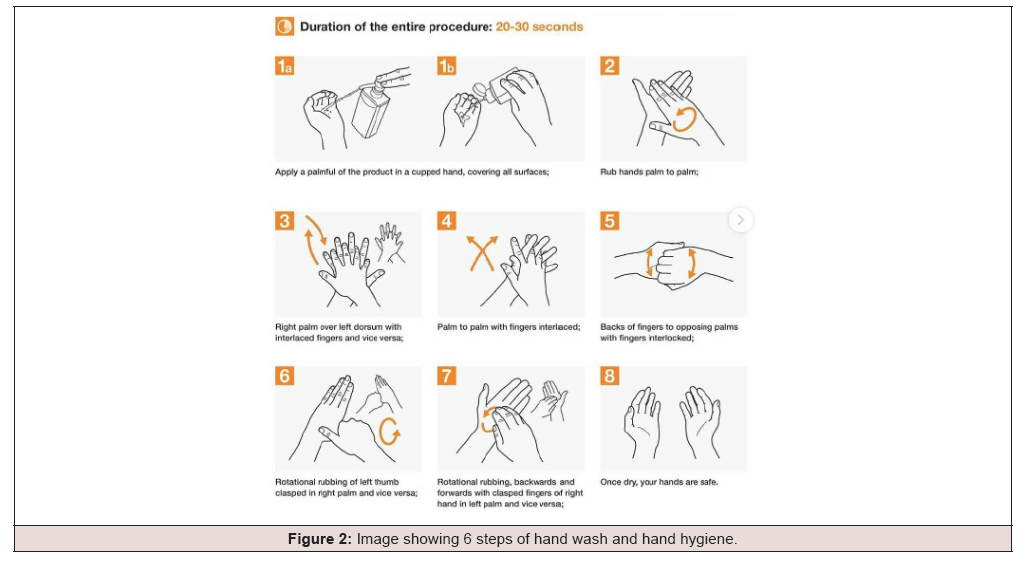
Figure 2:Image showing 6 steps of hand wash and hand hygiene
Cleaning Agents
1. liquid soap: - This is better and more widely used.
2. Solid soap: - Using this is discouraged now. Surface of solid
soap is more easily colonized by bacteria.
3. Antiseptic disinfectant sanitizer
Moments or Points for Hand Hygiene
a. Before touching patient.
b. After touching patient.
c. Before procedure.
d. After procedure.
e. After touching patient’s belongings.
Important Things
How to perform hand hygiene when hands are visibly soiled and dirty: This is done by washing with soap. The anaerobic bacteria hidden in dirt are shielded from spirit present in hand sanitizers.
How to perform hand hygiene when hands are not visibly soiled and dirty: This can be done by alcohol-based hand sanitizer if needed.
There are 3 types of hand washing: social hand washing, surgical hand washing and antiseptic hand washing. Social hand washing is done up to wrist and is done before eating food and after defecation. People should scrub their wet hands for thirty seconds in a circular motion as a proper hand washing method to clean thoroughly [7]. Surgical hand washing is done before any surgical procedure and is done up to elbow level.
Hand Hygiene in Public Health
Hand hygiene is not just a personal responsibility. It is a public health priority. Its importance can be understood in several dimensions:
1. Reducing Disease Burden
Diarrheal diseases and respiratory infections are leading causes
of child mortality worldwide. Proper handwashing can reduce
diarrheal disease incidence by up to 30%-40% and respiratory
infections by about 20% [8].
2. Cost-Effectiveness
Hand hygiene is one of the most affordable interventions in
public health that prevents transmission of pathogens [9].
Compared to expensive medical treatments, soap and water are
inexpensive and yet highly effective tools in preventing illness.
3. Equity and Access
Despite its importance, 2.3 billion people globally lack access to
basic handwashing facilities at home, and nearly half of schools
worldwide do not have adequate facilities [10]. This inequality
exacerbates health disparities and hinders progress toward
universal health coverage.
Community and Institutional Settings
i. Schools: Teaching children proper handwashing habits by
teachers reduces sickness, absenteeism and improves learning
outcomes. The same can also be done in colleges.
ii. Workplaces: Promoting hygiene reduces sick days and
boosts productivity.
iii. Healthcare facilities: Adherence to principles of hand hygiene
among healthcare workers plays a decisive role in preventing
hospital-acquired infections and protects vulnerable
patients.
Global Guidelines and Initiatives
i. WHO and UNICEF Guidelines (2025): These emphasize
hand hygiene as a public good and government responsibility,
urging countries to ensure sustainable access to hygiene facilities
in homes, schools, and public spaces.
ii. Global Handwashing Day: It is celebrated annually on October
15, it raises awareness and promotes behavior change
worldwide. Global hand hygiene day is observed in the month
of May every year.
iii. WASH (Water sanitation and Hygiene) Programs: Integrated
water, sanitation, and hygiene initiatives focus on infrastructure,
education, and community engagement.
Behavioral and Cultural Dimensions
i. Behavioral challenges: Even when facilities are available,
consistent use is not advisable. Studies show men are less likely
than women to wash hands regularly.
ii. Cultural practices: In some communities, traditional beliefs
or lack of awareness hinder adoption of proper hygiene.
iii. Behavior change strategies (behavior change and communication):
iv. Public campaigns using media and schools
v. Nudges such as visual reminders near sinks, street plays
vi. Role models (like teachers and healthcare workers) who
can demonstrate proper practices
Hand Hygiene During Pandemics
The COVID-19 pandemic stressed upon the critical role of hand hygiene in slowing transmission. Governments and health organizations promote frequent 6- step handwashing lasting for a minimum of 25-40 seconds, as a first line of defense against germs. This renewed global focus has underscored the need for permanent infrastructure and cultural shifts toward hygiene.
Challenges and Future Directions
a) Infrastructure gaps: Rural and low-income communities
may lack running water and soap.
b) Sustainability: Ensuring long-term access requires investment
in water systems and supply chains.
c) Innovation: Low-cost handwashing stations, touchless
dispensers, and community-driven solutions are being developed.
d) Policy support: Governments should prioritize hygiene in
public health strategies, education systems, and healthcare regulations.
e) We can also perform IEC and set up things like sensor-
based alcohol or sanitizer dispensers for hand sanitization.
Conclusion
Hand hygiene is a simple act but with several profound implications for public health. It prevents disease, saves lives, reduces healthcare costs, and promotes equity. Yet, global disparities in access and inconsistent practices remain major challenges. To truly harness its potential, governments, institutions, and individuals must work together to make hand hygiene universal, habitual, and sustainable. More compliance with hand hygiene is the need of the hour. Clean hands are not just a matter of personal responsibility; they are a collective shield against disease and a foundation for healthier societies.
References
- About Handwashing (2024) https://www.cdc.gov/clean-hands/about/index.html.
- https://my.clevelandclinic.org/health/articles/17474-hand-washing.
- The Science Behind Soap. How Soap and Water Remove Harmful Microbes.
- Sickbert Bennett EE, DiBiase LM, Willis TM, Wolak ES, Weber DJ, et al. (2016) Reduction of Healthcare-Associated Infections by Exceeding High Compliance with Hand Hygiene Practices. Emerg Infect Dis 22(9): 1628-16
- About Handwashing. https://www.cdc.gov/clean-hands/about/index.html.
- Handwashing Facts. https://www.cdc.gov/clean-hands/data-research/facts-stats/index.html.
- 3 Types of Handwashing: Social, Antiseptic & Surgical.
- 2025 NFID State of Handwashing Report.
- MacLeod C, Braun L, Caruso BA, Chase C, Chidziwisano K, et al. (2023) Recommendations for hand hygiene in community settings: a scoping review of current international guidelines. BMJ Open 13(6):
- Global Hygiene. https://www.cdc.gov/global-water-sanitation-hygiene/about/about-global-hygiene.html
https://www.swo.today/our-research/thesciencebehindsoap.
https://enviro-master.com/commercial-cleaning-information/3-types-of-handwashing-social-antiseptic-and-surgical/
https://www.nfid.org/wp-content/uploads/2025/05/2025-NFID-State-of-Handwashing-Report.pdf.




 We use cookies to ensure you get the best experience on our website.