
Review Article 
 Creative Commons, CC-BY
Is Lipoprotein(a) a Modifiable Risk Factor?
*Corresponding author:John Bolodeoku, JB Consulting MDP Limited, Building 3, Level 1, Regus, 111 Concorde Road, Maidenhead, Berkshire SL6 4BY, UK, john.1.bolodeoku@kcl.ac.uk
Received:February 16, 2026; Published:February 25, 2026
DOI: 10.34297/AJBSR.2026.30.003908
Abstract
Lipoprotein(a) [Lp(a)] has emerged as an important cardiovascular risk factor, with elevated levels associated with increased risk of coronary artery disease, stroke, and aortic stenosis. While traditionally considered a non-modifiable risk factor due to its strong genetic determination, recent advances in pharmacological interventions have challenged this paradigm. This review examines current evidence regarding the modifiability of Lp(a) levels and discusses emerging therapeutic strategies that may transform Lp(a) from a genetic burden into a treatable cardiovascular risk factor
Introduction
Lipoprotein(a) consists of a Low-Density Lipoprotein (LDL)-like particle covalently bound to apolipoprotein(a) [apo(a)], a unique glycoprotein with structural homology to plasminogen [1]. First described by Berg in 1963, Lp(a) has gained significant attention as an independent cardiovascular risk factor, with plasma concentrations varying dramatically between individuals and populations [2]. The Lp(a) particle combines the atherogenic properties of LDL with potential antifibrinolytic effects arising from its plasminogen-like structure, creating a dual mechanism of cardiovascular harm [3].
Genetic Determinants and Population Variability
Genetic Architecture
Lp(a) levels are primarily determined by the LPA gene, which encodes apo(a). The gene exhibits remarkable structural variability, particularly in the kringle IV type-2 (KIV-2) copy number repeats, which inversely correlate with plasma Lp(a) concentrations [4]. Genetic factors account for approximately 90% of the inter-individual variation in Lp(a) levels, making it one of the most heritable lipoproteins [5].
Population Differences
Significant ethnic disparities exist in Lp(a) distribution, with individuals of African descent having median levels 2-3 times higher than those of European ancestry [6]. These differences reflect distinct evolutionary pressures and genetic variants that have accumulated across populations over millennia [7].
Cardiovascular Risk Association
Coronary Artery Disease
Multiple large-scale studies have established Lp(a) as an independent risk factor for coronary artery disease. The Copenhagen City Heart Study demonstrated that individuals with Lp(a) levels >50 mg/dL had a 2-fold increased risk of myocardial infarction compared to those with levels <10 mg/dL [8]. Meta-Multiple large-scale studies have established Lp(a) as an independent risk factor for coronary artery disease. The Copenhagen City Heart Study demonstrated that individuals with Lp(a) levels >50 mg/dL had a 2-fold increased risk of myocardial infarction compared to those with levels <10 mg/dL [8]. Meta
Stroke and Peripheral Arterial Disease
Elevated Lp(a) levels are also associated with increased risk of ischemic stroke and peripheral arterial disease. The EPIC-Norfolk study found that individuals in the top quartile of Lp(a) distribution had 40% higher stroke risk compared to the bottom quartile [10].
Aortic Stenosis
Emerging evidence suggests that Lp(a) plays a role in the development and progression of calcific aortic stenosis. Mendelian randomisation studies have provided causal evidence linking elevated Lp(a) with aortic valve disease [11].
Traditional Approaches: Limited Modifiability
Lifestyle Interventions
Unlike other lipoproteins, Lp(a) levels show minimal response to traditional lifestyle modifications. Dietary changes, exercise, and weight loss typically result in less than 10% change in Lp(a) concentrations [12]. This resistance to lifestyle intervention reflects the genetic dominance in Lp(a) regulation.
Conventional Lipid-Lowering Therapy
Most conventional lipid‑lowering drugs (statins, ezetimibe,
fibrates, bile acid sequestrants, bempedoic acid) do not meaningfully
lower Lp(a); some may slightly increase it.
a. Statins: Generally, increase Lp(a) levels by 10-20%, potentially
through upregulation of LPA gene expression [13]
b. Ezetimibe: Minimal effect on Lp(a) levels [14]
c. Fibrates: Modest reductions of 10-15% in some studies [15]
d. Niacin: Reduces Lp(a) by approximately 20–40% [1,2]. However,
large outcome trials failed to show incremental cardiovascular
benefit when added to contemporary background therapy,
and its use is limited by flushing, hepatotoxicity, and glucose
intolerance. As a result, niacin is not recommended solely for
Lp(a) lowering in current practice [16,17].
Hormone Replacement Therapy
Postmenopausal hormone replacement therapy can reduce Lp(a) levels by 20-50%, but the associated cardiovascular risks limit its utility as a specific Lp(a)-lowering intervention [18].
PCSK9 Inhibitors
PCSK9 inhibitors provide modest but consistent Lp(a) reductions of 20-30% on average, in addition to their 50–60% LDL‑C reduction. Outcome trials (FOURIER, ODYSSEY OUTCOMES) suggest that part of the residual risk reduction may be mediated through Lp(a) lowering, particularly in patients with high baseline Lp(a). While not primarily Lp(a)-targeting agents, they offer an additional benefit for patients with elevated levels [21]. The mechanism appears independent of LDLR-mediated pathways and may involve effects on apo(a) production or clearance [22]. Inclisiran, a PCSK9‑targeting siRNA, appears to have a similar magnitude of Lp(a) reduction. PCSK9 inhibitors are currently the most clinically relevant Lp(a)‑lowering lipid drugs in routine use [16,19-21].
Emerging Therapeutic Strategies
The development of antisense oligonucleotides (ASOs) targeting LPA mRNA represents a breakthrough in Lp(a) modification. Pelacarsen (formerly IONIS-APO(a)-LRx) has demonstrated dosedependent reductions in Lp(a) levels of up to 80% in phase II trials [22]. The ongoing HORIZON trial will determine whether Lp(a) reduction with pelacarsen translates to cardiovascular benefit [23]. Small interfering RNA (siRNA) therapies offer another promising approach. Olpasiran, a siRNA targeting LPA mRNA, achieved Lp(a) reductions of up to 95% in phase II studies with quarterly dosing [24]. A phase 1 trial of 48 individuals with elevated lipoprotein(a) demonstrated that lepodisiran was well tolerated and achieved dose‑dependent, long‑lasting reductions in serum lipoprotein(a) levels [25].
Muvalaplin: An oral small molecule that disrupts apo(a)-apoB binding, preventing Lp(a) formation [26]
Lipoprotein Apheresis
For patients with extremely elevated Lp(a) levels (typically >60 mg/dL) and progressive cardiovascular disease, lipoprotein apheresis can acutely reduce Lp(a) by 60-80% [27]. However, the procedure is invasive and expensive, and levels return to baseline within days to weeks [28].
Gene Therapy
Approaches targeting hepatic LPA expression show promise in preclinical studies [29].
Clinical Implications and Guidelines
Risk Assessment
Current guidelines increasingly recognize Lp(a) measurement for cardiovascular risk stratification, particularly in intermediaterisk patients or those with premature cardiovascular disease [30]. The 2019 ESC/EAS guidelines recommend measuring Lp(a) at least once in every adult’s lifetime [31]. Lp(a) estimation in high-risk patients undergoing treatment in a lipid clinic in the UK revealed 54% of the patients had Lp(a) had /= 32 nmol/L and when stratified using the HEART UK cut off, 54%, 12%, 18%, 15%, and 1% were stratified into normal, minor risk,, moderate risk, high risk and very high risk, respectively (see Figure 1) [32].
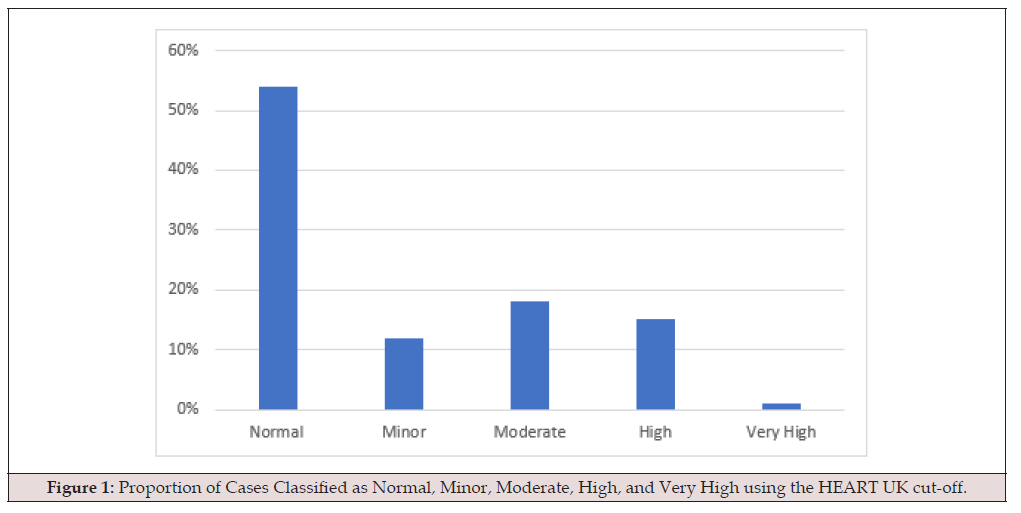
Figure 1:Proportion of Cases Classified as Normal, Minor, Moderate, High, and Very High using the HEART UK cut-off.
Treatment Thresholds
While optimal target levels remain debated, many experts consider Lp(a) >50 mg/dL (125 nmol/L) indicative of increased cardiovascular risk, warranting enhanced risk factor modification [33]. Some suggest lower thresholds of >30 mg/dL in high-risk populations [34].
Risk Communication
The genetic nature of elevated Lp(a) has implications for family screening and risk communication. Cascade testing of family members may identify additional individuals with elevated levels who could benefit from enhanced cardiovascular prevention [35].
Future Perspectives
Precision Medicine
The strong genetic component of Lp(a) makes it an ideal target for precision medicine approaches. Genetic risk scores incorporating LPA variants could identify individuals most likely to benefit from specific Lp(a)-lowering therapies.
Combination Therapy
Future strategies may involve combining different Lp(a)- lowering mechanisms to achieve optimal reduction while minimizing side effects. The synergy between different therapeutic approaches remains an active area of investigation.
Prevention vs. Treatment
The preventive potential of Lp(a)-lowering therapy in asymptomatic individuals with elevated levels represents an important frontier. Early intervention during the subclinical phase of atherosclerosis may yield the greatest benefit.
Conclusion
Lipoprotein(a) is transitioning from a non-modifiable genetic risk factor to a potentially treatable therapeutic target. While traditional approaches have shown limited efficacy, novel RNA-based therapies and other innovative strategies demonstrate unprecedented efficacy in reducing Lp(a). The ongoing cardiovascular outcome trials will determine whether these dramatic biochemical changes translate into meaningful clinical benefit. If successful, these therapies could transform the management of cardiovascular risk for millions of individuals worldwide with elevated Lp(a) levels.
The answer to whether Lp(a) is a modifiable risk factor appears to be evolving from “no” to “yes, but with the right tools.” As these therapeutic advances move from clinical trials to clinical practice, Lp(a) may finally shed its designation as an “untreatable” risk factor and join the ranks of modifiable cardiovascular risk factors.
Declaration of Conflicting Interests
The author(s) declared no potential conflicts of interest with respect to the research, authorship, and/or publication of this article.
Funding
The author(s) received no financial support for the research, authorship, and/or publication of this article.
Credit Author Statement
J Bolodeoku (writing, original draft, reviewing) T Gbaa (reviewing, analysis).
References
- McLean JW, Tomlinson JE, Kuang WJ, Eaton DL, Chen EY, et al. (1987) cDNA sequence of human apolipoprotein(a) is homologous to plasminogen. Nature 330(6144): 132-137.
- Berg K (1963) A new serum type system in man--the Lp system. Acta Pathol Microbiol Scand 59: 369-382.
- Nordestgaard BG, Langsted A (2016) Lipoprotein (a) as a cause of cardiovascular disease: insights from epidemiology, genetics, and biology. J Lipid Res 57(11): 1953-1975.
- Schmidt K, Noureen A, Kronenberg F, Utermann G (2016) Structure, function, and genetics of lipoprotein (a). J Lipid Res 57(8): 1339-1359.
- Boerwinkle E, Leffert CC, Lin J, Lackner C, Chiesa G, et al. (1992) Apolipoprotein(a) gene accounts for greater than 90% of the variation in plasma lipoprotein(a) concentrations. J Clin Invest 90(1): 52-60.
- Guan W, Cao J, Steffen BT, Post WS, Stein JH, et al. (2015) Race is a key variable in assigning lipoprotein(a) cutoff values for coronary heart disease risk assessment: the Multi-Ethnic Study of Atherosclerosis. Arterioscler Thromb Vasc Biol 35(4): 996-1001.
- Clarke R, Peden JF, Hopewell JC, Kyriakou T, Goel A, et al. (2009) PROCARDIS Consortium. Genetic variants associated with Lp(a) lipoprotein level and coronary disease. N Engl J Med 361(26): 2518-2528.
- Kamstrup PR, Tybjaerg Hansen A, Steffensen R, Nordestgaard BG (2009) Genetically elevated lipoprotein(a) and increased risk of myocardial infarction. JAMA 301(22): 2331-2339.
- Erqou S, Kaptoge S, Perry PL, Di Angelantonio E, Thompson A, et al. (2009) Lipoprotein(a) concentration and the risk of coronary heart disease, stroke, and nonvascular mortality. JAMA 302(4): 412-423.
- Gurdasani D, Sjouke B, Tsimikas S, Hovingh GK, Luben RN, et al. (2012) Lipoprotein(a) and risk of coronary, cerebrovascular, and peripheral artery disease: the EPIC-Norfolk prospective population study. Arterioscler Thromb Vasc Biol 32(12): 3058-3065.
- Thanassoulis G, Campbell CY, Owens DS, Smith JG, Smith AV, et al. (2013) CHARGE Extracoronary Calcium Working Group. Genetic associations with valvular calcification and aortic stenosis. N Engl J Med 368(6): 503-512.
- Nordestgaard BG, Chapman MJ, Ray K, Borén J, Andreotti F, (2010) European Atherosclerosis Society Consensus Panel. Lipoprotein(a) as a cardiovascular risk factor: current status. Eur Heart J 31(23): 2844-2853.
- Tsimikas S, Gordts PLSM, Nora C, Yeang C, Witztum JL (2020) Statin therapy increases lipoprotein(a) levels. Eur Heart J 41(24): 2275-2284.
- Ballantyne CM, Houri J, Notarbartolo A, Melani L, Lipka LJ, et al. (2003) Ezetimibe Study Group. Effect of ezetimibe coadministered with atorvastatin in 628 patients with primary hypercholesterolemia: a prospective, randomized, double-blind trial. Circulation 107(19): 2409-2415.
- Sahebkar A, Simental Mendía LE, Watts GF, Serban MC, Banach M, et al. (2017) Lipid and Blood Pressure Meta-Analysis Collaboration (LBPMC) Group. Comparison of the effects of fibrates versus statins on plasma lipoprotein(a) concentrations: a systematic review and meta-analysis of head-to-head randomized controlled trials. BMC Med 15(1): 22.
- Tan DSY, Ooi ZH, Lew CSF (2025) Targeting lipoprotein(a): Pharmacotherapy in focus. Eur Heart J Cardiovasc Pharmacother 11(2): 114–115.
- Tsimikas S (2017) A test in context: Lipoprotein(a). J Am Coll Cardiol 69(6): 692-711.
- Shlipak MG, Simon JA, Vittinghoff E, Lin F, Barrett Connor E, et al. (2000) Estrogen and progestin, lipoprotein(a), and the risk of recurrent coronary heart disease events after menopause. JAMA 283(14): 1845-1852.
- Raal FJ, Giugliano RP, Sabatine MS, Koren MJ, Blom D, et al. (2016) PCSK9 inhibition-mediated reduction in Lp(a) with evolocumab: an analysis of 10 clinical trials and the LDL receptor's role. J Lipid Res 57(6): 1086-1096.
- Katsiki N, Vrablik M, Banach M, Gouni Berthold I (2023) Inclisiran, Low-Density Lipoprotein Cholesterol and Lipoprotein (a). Pharmaceuticals (Basel) 16(4): 577.
- Watts GF, Chan DC, Dent R, Somaratne R, Wasserman SM, et al. (2017) Factorial Effects of Evolocumab and Atorvastatin on Lipoprotein Metabolism. Circulation 135(4): 338-351.
- Tsimikas S, Viney NJ, Hughes SG, Singleton W, Graham MJ, et al. (2015) Antisense therapy targeting apolipoprotein(a): a randomised, double-blind, placebo-controlled phase 1 study. Lancet 386(10002): 1472-1483.
- Nissen SE, Wolski K, Balog C, Swerdlow DI, Scrimgeour AC, et al. (2022) Single Ascending Dose Study of a Short Interfering RNA Targeting Lipoprotein(a) Production in Individuals with Elevated Plasma Lipoprotein(a) Levels. JAMA 327(17): 1679-1687.
- Koren MJ, Moriarty PM, Baum SJ, Neutel J, Hernandez Illas M, et al. (2022) Preclinical development and phase 1 trial of a novel siRNA targeting lipoprotein(a). Nat Med 28(1): 96-103.
- Nissen SE, Linnebjerg H, Shen X, Wolski K, Ma X, et al. (2023) Lepodisiran, an Extended-Duration Short Interfering RNA Targeting Lipoprotein(a): A Randomised Dose-Ascending Clinical Trial. JAMA 330(21): 2075-2083.
- Hooper AJ, Fernando PM, Burnett JR (2024) Potential of muvalaplin as a lipoprotein(a) inhibitor. Expert Opinion on Investigational Drugs 33(1): 5-7.
- Jaeger BR, Richter Y, Nagel D, Heigl F, Vogt A, et al. (2009) Group of Clinical Investigators. Longitudinal cohort study on the effectiveness of lipid apheresis treatment to reduce high lipoprotein(a) levels and prevent major adverse coronary events. Nat Clin Pract Cardiovasc Med 6(3): 229-239.
- Thompson GR, HEART-UK LDL Apheresis Working Group (2008) Recommendations for the use of LDL apheresis. Atherosclerosis 198(2): 247-255.
- Chemello F, Bassel Duby R, Olson EN (2021) LPA gene therapy: translating genetics to the clinic. J Clin Invest 131(20): e154251.
- Nicholls SJ, Nissen SE, Prati F (2022) Assessment of lipoprotein(a) as a therapeutic target for atherosclerotic cardiovascular disease. J Am Coll Cardiol 80(11): 1096-1116.
- Mach F, Baigent C, Catapano AL, Koskinas KC, Casula M, et al. (2020) 2019 ESC/EAS Guidelines for the management of dyslipidaemias: lipid modification to reduce cardiovascular risk. Eur Heart J 41(1): 111-188.
- Gbaa T, Bolodeoku J, Morris K, Whitehead S (2025) Assessment of the trends in lipoprotein(a) concentration in high-risk cardiovascular patients: A retrospective study. Qatar Med J 1: 16.
- Kronenberg F, Mora S, Stroes ESG, Ference BA, Arsenault BJ, et al. (2022) Lipoprotein(a) in atherosclerotic cardiovascular disease and aortic stenosis: a European Atherosclerosis Society consensus statement. Eur Heart J 43(39): 3925-3946.
- Wilson DP, Jacobson TA, Jones PH, Koschinsky ML, McNeal CJ, et al. (2019) Use of Lipoprotein(a) in clinical practice: A biomarker whose time has come. A scientific statement from the National Lipid Association. J Clin Lipidol 13(3): 374-392.
- Patel AP, Wang M, Pirruccello JP, Ellinor PT, Ng K, et al. (2021) Lp(a) (Lipoprotein[a]) Concentrations and Incident Atherosclerotic Cardiovascular Disease: New Insights from a Large National Biobank. Arterioscler Thromb Vasc Biol 41(1): 465-474.




 We use cookies to ensure you get the best experience on our website.