
Research Article 
 Creative Commons, CC-BY
Neurophysiological Study of Self-Regulation under Stress
*Corresponding author:Olga Jafarova, Biofeedback Computer Systems Laboratory, Institute of Molecular Biology and Biophysics, Federal Research Center of Fundamental and Translational Medicine, Novosibirsk, Russia.
Received:February 26, 2026; Published:March 05, 2026
DOI: 10.34297/AJBSR.2026.30.003923
Abstract
The aim of the study was to investigate the dynamics of the individual maximum alpha peak frequency and spectral power in the individually defined EEG alpha range, along with its alpha1 and alpha2 subranges, during a biofeedback game session as a test of self-regulation ability under stress. The study was conducted in groups that differed in the nature and intensity of stressors: students and hazardous occupation persons (firefighters). It was shown that the dynamics of individually defined alpha rhythm characteristics were expressed variously in groups differing in the nature of the stressors. The stability of the alpha rhythm in hazardous occupation persons can be viewed not as a lack of response, but as a sign of highly organized and adapted brain functioning under stress. A decrease of alpha 2 power after a biofeedback session under stress in the firefighters group indicated effective use of the body’s adaptive reserves and fast restoration of physiological functions. An increase of alpha 2 power in students may indicate insufficient self-regulation under stress. Thus, changes in alpha 2 power can be considered as a neurophysiological marker of stress resistance.
Keywords: Self-regulation, Heart rate game biofeedback, EEG alpha rhythm, Alpha-2 band, Individual Alpha Peak Frequency, Stress Resistance
Abbreviations: EEG: Electroencephalogram; IMAPF: Individual Maximum Alpha Peak Frequency ; HR: Heart Rate.
Introduction
Self-regulation plays a significant role in stressful situations. The success, reliability, and productivity of overall coping behavior depend on the perfection of self-regulation processes [1,2].
To test self-control abilities under stressful conditions the biofeedback technology is applied, using stress-induced tasks. This technology simulates a virtual environment that triggers emotional stress and is controlled by physiological parameters [3].
The relevance of neurophysiological studies of the characteristics of self-regulation under stressful conditions is undeniable. It is known, for example, that functional indicators of the alpha rhythm of the Electroencephalogram (EEG) are studied as neurophysiological markers of stress-induced states [4]. Compared with autonomic indicators of stress, the alpha rhythm has a number of advantages: 1) high temporal resolution allows monitoring the dynamics of the stress state in real time [5,6]; 2) unlike heart rate or galvanic skin response, which are mediated by the autonomic nervous system, the alpha rhythm is a direct reflection of cortical activity [7]. The alpha rhythm is the dominant oscillatory pattern of the EEG in a state of quiet wakefulness with eyes closed [8]. Traditionally, it is associated with relaxation, or a state of quiet wakefulness, and the absence of active cognitive processing [9]. On the other hand, modern studies demonstrate its high sensitivity to various forms of psychophysiological stress, which allows it to be considered as an informative neurophysiological marker [10]. Alpha rhythm power, topographic distribution, and lateralization reflect the processes of cortical inhibition and activation that underlie the cognitive and emotional assessment of stressors [11].
A comprehensive analysis of alpha activity characteristics provides the opportunity for an objective quantitative assessment of self-regulation capacity, the degree of relaxation, and the level of stress and fatigue during prolonged cognitive load.
Thus, the ambiguous interpretation of alpha rhythm characteristics requires a more detailed study of the functional characteristics of the alpha rhythm in the process of self-regulation under stressful conditions, which integrates the opposing processes of physical relaxation and mental tension to monitor the body’s reactions. To address this issue, experimental stress models developed at the Computer Biofeedback Systems Laboratory of the Federal Research Center of Fundamental and Translational Medicine (FRC FTM) were selected. These models are based on heart rate monitoring biofeedback and present the virtual competitive game “Vira-Rally,” where the avatar’s win/lose depends on the player’s ability to regulate their physiological characteristics, in particular, the duration of cardiac intervals that is an integral indicator of stress level [3].
The aim of this study was to investigate the dynamics of the Individual Maximum Alpha Peak Frequency (IMAPF) and the spectrum power in the individually defined alpha range, and its subranges, alpha1 (from the left border to IMAPF) and alpha2 (from IMAPF to the right border) during a biofeedback game session as a test of the self-regulation ability under stress. The study was conducted in groups that differed in the nature and intensity of stressors: university students and hazardous occupation persons (firefighters). Differences in the response to stress between these two groups may be caused, first of all, by a fundamental difference in the activity context: for students, this is primarily an informational and social environment, while for hazardous profession persons, this is physical and vital environment that may be life-threatening [12]. The hypothesis of the study was that the dynamics of IMAPF and power in the individually determined alpha range and in the alpha1 and alpha2 subranges in groups that may differ in their selfregulation strategies under stress would also be different.
Materials and Methods
Study Participants
The study involved undergraduate, graduate, and postgraduate students of Novosibirsk State University aged 18 to 38 (Group – Students, N=30) and hazardous occupation persons - students of the Novosibirsk Regional Firefighter Training Center of EMERCOM of Russia aged 18 to 40 (Group – EMERCOM, N=28). All participants were male, right-handed, and had normal or corrected-tonormal vision. There were no differences in key anthropometric characteristics (height, weight) between the two groups (p > 0.05). The study was conducted according to the principles of the Helsinki Declaration for medical research involving human subjects and was approved by the Biomedical Ethics Committee of the FRC FTM (Decision No. 2 of January 14, 2025). Each subject signed an informed consent form and completed a specially designed questionnaire.
Research Protocol
To assess the ability to self-regulate under simulated stress conditions, one session of the VIRA-RALLY biofeedback game was conducted. None of the study participants had prior experience of self-regulation training using biofeedback. EEG recordings were made to determine the IMAPF and alpha range power before and after the session. EEG was recorded using a Neuron-Spectrum-5 encephalograph (Neurosoft LLC, Russia) using 21 leads, including the reference electrode, according to the International 10-20 System. Resistance was maintained at ≤ 5 kOhm. Pz, P3, and P4 leads were used for EEG data analysis. These leads were chosen because a test-retest study showed that the alpha rhythm characteristics are most stable and reproducible when recorded in the parietal-occipital region [9]. Electroencephalographic signals were processed using the ‘EDF Spectrum’ software developed at the FRC FTM for processing and calculating the amplitude-frequency characteristics of the EEG in individual and group studies. The alpha range boundaries were set individually by comparing the EEG spectra recorded with eyes closed and open [13]. The IMAPF was determined in an individually set alpha range by comparing the EEG spectra recorded with eyes closed (60 seconds) and eyes open (20 seconds) [9]. To assess changes BEFORE-AFTER the session in groups, as well as intergroup comparisons, the values of relative power in the selected range relative to the total power of the EEG spectrum within the range of 6-22 Hz were used. The VIRA-RALLY heart rate biofeedback session was conducted using the BOS-Pulse hardware and software system (Comsib Ltd., Novosibirsk, Russia). HR was recorded using a photoplethysmographic sensor attached to a player’s finger to monitor pulse. One biofeedback session consisted of 5 VIRA trials and 5 RALLY trials [3]. Statistical analysis of the data was performed using Student t-test for independent and paired (dependent) samples, and the χ2-test for 2x2 tables.
Results and Discussion
The participants of both groups were divided into subgroups according to the effectiveness of the strategies used in the “VIRARALLY” game [1]:
Subgroup 1 (intermediate strategies)-”Pendulum Strategy,” “Strategy of successive impairment of results”.
Subgroup 1 (effective strategies)-”Trial and Error with Achievement of Results,” “Sequential Learning”.
It should be noted that none of the participants were identified as having non-effective strategies.
When comparing the groups of students and hazardous occupation persons (Figure 1) it was found that, in total, hazardous occupation individuals completed a single session of self-regulation training more effectively than students (χ2 = 4.38; p = 0.036).

Figure 1:Distribution of self-regulation strategies in Vira-Rally Session.
The dynamics of neurophysiological indicators during the VIRARALLY session in the groups of students and hazardous occupation persons are presented in Table 1.
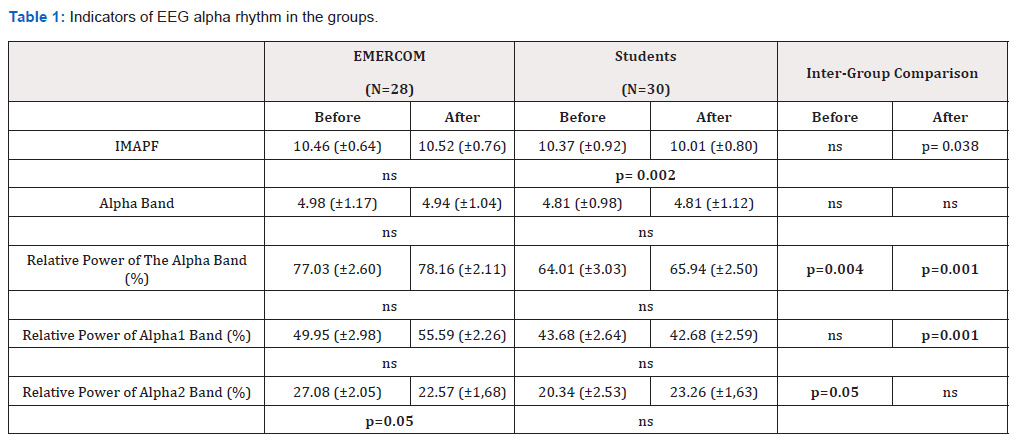
Table 1:Indicators of EEG alpha rhythm in the groups.
The following results were obtained when analyzing the data for each group. The alpha band width remained unchanged in both groups. The IMAPF after one biofeedback game session in the group of students significantly decreased: from 10.37 (±0.92) to 10.01 (±0.80), p=0.002. No such changes were observed in the group of hazardous occupation persons, showing their resilience to such a load, and indicating that the activity of controlling and volitionally reducing heart rate did not cause problems for the AE kadets.
Overall, the relative spectrum power in the alpha band remained unchanged in neither group. At the same time, in the EMERCOM group, the proportion of the alpha1 rhythm, which characterizes a state of calm wakefulness [5,6] and superficial relaxation, increased, consistent with the objectives of the training session. This observation is consistent with the fact that the firefighter cadets indeed completed the training task more effectively. The alpha2 rhythm in this group significantly decreased, further supporting the hypothesis that the task did not require additional focus or cognitive processing [10] and was relatively simple for participants of this group. In other words, the individuals of hazardous occupations possess certain self-regulation skills and are prepared to use them in challenging situations.
Additionally, an analysis of the change in power in the alpha band after the VIRA_RALLY session in groups was conducted, using the formula:
The students group showed an increase in alpha2-band power after the VIRA_RALLY session. It should be noted that the increase (Δ% Alpha2) in this group was significantly different from the changes in the EMERCOM group, p=0.035 (Figure 2). This result may indicate a fatigue during intense mental activity [14] related to controlling one’s functional state (heart rate control task).
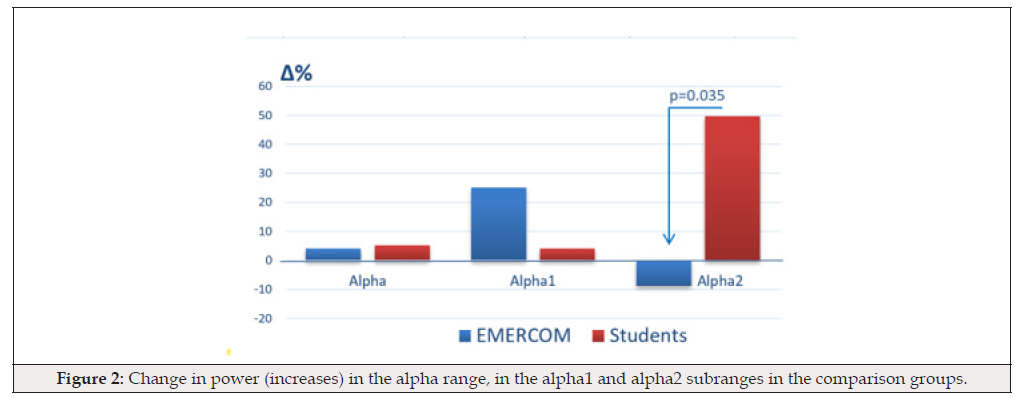
Figure 2:Change in power (increases) in the alpha range, in the alpha1 and alpha2 subranges in the comparison groups.
Conclusion
The dynamics of individually determined alpha rhythm characteristics was expressed differently in groups depending on the nature of stress impact. The stability of the alpha rhythm in hazardous occupation persons can be viewed not as a lack of response, but rather as a sign of highly organized and adapted brain functioning under stress. A decrease in alpha2 band power after a biofeedback session with a stress load, that can be interpreted as the completion of the stressful task, indicates an effective use of the body’s adaptive reserves, and a fast restoration of physiological functions. On the other hand, an increase in alpha2 band power after such a session may be an indicator of insufficient self-regulation capacity under stressful conditions. Thus, changes in alpha2 band power can be considered as a neurophysiological marker of the resistance to stress.
Acknowledgement
The work was carried out as part of the state assignment of FRC FTM.
Conflict of Interest
Authors declare they have no conflicts of interests.
References
- Folkman S (2011) Stress, health, and coping: synthesis, commentary, and future directions. In S. Folkman (Ed.) The Oxford handbook of stress, health, and coping. Oxford University Press: 453-462.
- Shcheblanov VY, Bobrov AF, Jafarova OA, Nadorov SA (2010) The relationship between individual self-regulation mechanisms and the stress resistance abilities. Bulletin of Siberian Medicine V9(2): 134-139.
- Jafarova O, Bazanova O, Nikolenko E (2025) The Relationship between Individual Alpha Peak Frequency and the Effectiveness of Coping with Stress Load. Am J Biomed Sci & Res 27(2).
- He B, Yang L, Wilke C, and Yuan H (2011) Electrophysiological imaging of brain activity and connectivity—Challenges and opportunities. IEEE Trans. Biomed. Eng 58(7): 1918-1931.
- Bazanova O, Nikolenko E, Zakharov A, Barry R (2025) Roadmap for enhancing the efficiency of neurofeedback. NeuroRegulation V12(2): 112-131.
- Attar ET, Balasubramanian V, Subasi E, Kaya M (2021) Stress Analysis Based on Simultaneous Heart Rate Variability and EEG Monitoring. IEEE J Transl Eng Health Med 9(2700607): 7-9.
- Klimesch W, Sauseng P, Hanslmayr S (2007) EEG alpha oscillations: The inhibition-timing hypothesis. Brain Res Rev 53(1): 63-88.
- Bazanova OM , Vernon D (2014) Interpreting EEG alpha activity. Neurosci Biobehav Rev 44: 94-110.
- Ehrhardt NM, Fietz J, Kopf Beck J, Kappelmann N, Brem AK (2022) Separating EEG correlates of stress: Cognitive effort, time pressure, and social-evaluative threat. Eur J Neurosci 55(9-10): 2464-2473.
- Périard IA, Dierolf AM, Lutz A, Vögele C, Voderholzer U,et al. (2024) Frontal alpha asymmetry is associated with chronic stress and depression, but not with somatoform disorders. Int J Psychophysiol 200: 112342.
- Bulygina VG, Shport SV, Dubinsky AA, Pronicheva MM (2017) Occupational risk factors affecting mental health of professionals with dangerous jobs (a review of foreign studies). Medico-Biological and Socio-Psychological Problems of Safety in Emergency Situations N (3): 93-100.
- Klimesch W (1999) EEG alpha and theta oscillations reflect cognitive and memory performance: a review and analysis. Brain Res. Rev 29(2-3): 169-195.
- Jafarova O, Mazhirina K, Sokhadze E, Shtark M (2020) Self-regulation Strategies and Heart Rate Biofeedback Training. Appl Psychophysiol Biofeedback. 45(2): 87-98.
- Boksem MA, Meijman TF, Lorist MM (2006) Mental fatigue, motivation and action monitoring. Biol Psychol. 72(2): 123-132.




 We use cookies to ensure you get the best experience on our website.