
Research Article 
 Creative Commons, CC-BY
The Effects of Mechanical Chest Compression Devices on Pulmonary Dynamics During Resuscitation: A Laboratory Study
*Corresponding author:Matej Mažič1,3* and Andrej Markota2,3
Received:March 25, 2026; Published:April 08, 2026
DOI: 10.34297/AJBSR.2026.30.003971
Abstract
Introduction: Inspiratory tidal volume is directly dependent on the compliance of the lung and the pressure in the airways. Lung compliance is the ratio between tidal volume and pressure (tidal volume/plateau pressure minus PEEP) and is inversely proportional to elastance. The use of mechanical devices for performing chest compressions increases intrathoracic pressure, which reduces tidal volume and reduces alveolar ventilation. In our study, we compared two mechanical chest compression devices with different biomechanical effects. We monitored lung dynamics and mechanical ventilation effectiveness during resuscitation.
Methods: In the experimental study, we performed mechanical ventilation with a ventilator on a high-performance manikin via an endotracheal tube in the control group. In the first test group, in addition to mechanical ventilation with a ventilator, we also performed asynchronous chest compressions with Lucas®, and in the second test group with Autopulse®. The experiment lasted 4 minutes, with three repetitions. We measured the parameters inspiratory tidal volume, maximum inspiratory pressure and static lung compliance instrumentally. We used descriptive statistics tests, Kolmogorov-Smirnov test, Mann Whitney test, correlation tests and a simple linear regression model.
Results: In the control group, there were no clinically significant differences between the set (Vt: 500 ml) and measured inspiratory tidal volumes (498 ml ± 0.19). The device with active decompression enabled statistically significantly higher tidal volumes (365 ml ± 8.59) than the device without active decompression (237 ml ± 83.7). With the device with active decompression, the relationship between lung compliance and inspiratory tidal volumes was weak (R = 0.14). With the device without active decompression, this relationship was extremely strong (R = 0.937), the regression model explained 93% of the variability in volumes relative to static lung compliance.
Discussion and Conclusion: The results clearly show that mechanical chest compressions significantly affect the effectiveness of mechanical ventilation. A device with active decompression reduces the negative impact of increased intrathoracic pressure and allows for better alveolar ventilation. In contrast, a device without active decompression causes a marked decrease in inspiratory tidal volumes, which are strongly dependent on lung compliance. The study thus fills an important gap in the understanding of the interaction between mechanical compressions and ventilation and emphasizes the need for further clinical research and the development of recommendations for optimal ventilation when using mechanical devices for performing chest compressions during resuscitation.
Keywords:Resuscitation, Pulmonary dynamics, Mechanical chest compression devices
Introduction
The interaction of compressions and mechanical ventilation during resuscitation is complex. The goal of performing quality chest compressions is to ensure adequate tissue and organ perfusion during resuscitation and adequate oxygen delivery [1,2]. Lucas®3 Chest Compression System (Physio-Control Inc., USA) uses a piston that moves up and down to provide active compression and active decompression. The piston is mounted on a frame that is attached to a rigid board that is placed underneath the patient. Autopulse® device (Autopulse® Resuscitation System, Zoll Circulation Inc., USA) consists of a strap that contracts and expands around the chest with an equal load distribution, thus imitating the performance of manual chest compressions. The strap is placed on the baseboard on which the patient lies. Depending on the circumference of the chest, the device automatically shortens or lengthens this strap, ensuring effective compressions. The compression phase is therefore active and occurs when the strap contracts or tightens, while the decompression phase is passive, when the device releases pressure on the strap. Due to these two different operating effects, their impact on ventilation is also different. Two adverse effects of mechanical ventilation occur during chest compressions. With an unprotected airway, the risk of regurgitation of gastric contents and the possibility of esophageal or gastric rupture increases due to higher intrathoracic pressures. With a definitive airway with an endotracheal tube, the risk of pulmonary barotrauma increases due to high inspiratory pressures caused by chest compressions [3]. Positive pressure ventilation increases intrathoracic pressure, reduces venous blood flow to the right heart, and increases resistance to ejection [4]. The recommended tidal volume for adults remains 500-600 ml. At a tidal volume of approximately 380 ml, chest rise is observed, which is a criterion for the clinical assessment of the adequacy of tidal volume [5]. Increasing tidal volumes during resuscitation increases intrathoracic pressure and decreases venous return to the right heart, increases pulmonary vascular resistance, decreases cardiac output and coronary blood flow, and lowers aortic pressure [6]. Hypoxia impairs myocardial contractility and increases susceptibility to arrhythmias. Hypercapnia and the resulting acidosis also reduce myocardial contractility, increase pulmonary vascular resistance, and cause cerebral vasodilation [7]. The inspiratory tidal volume is indirectly dependent on lung compliance and airway pressure. Lung compliance is the ratio of tidal volume to pressure (tidal volume/ plateau pressure minus PEEP) and is inversely proportional to elastance. When using a mechanical device for performing chest compressions without active decompression (Piston®), with volume-controlled ventilation with transport ventilators (Medumat®, Oxylog 3000®, Monnal T60®), significantly lower tidal volumes than set were achieved, but their values exceeded the anatomical dead space and probably provided part of the effective alveolar ventilation [8]. Hypoxia and hypercapnia may be the result of ineffective ventilation due to the influence of mechanical devices for performing chest compressions during resuscitation. Despite the known negative effects of hypoxia during resuscitation, there are few studies with evidence of achieving sufficient tidal volumes when using mechanical devices for performing chest compressions during resuscitation. Therefore, in our study, we aimed to examine the biomechanical effect of the Lucas® and Autopulse® devices on pulmonary dynamics during resuscitation.
Methods
We made the research with a quantitative methodological approach. We used a descriptive causal experimental research method, with a control and two test groups. The experiment was conducted in a controlled simulation environment. A repeated measures design was used. The principles of reliability, validity and repeatability were taken into account. A high-performance resuscitation manikin was intubated using the direct laryngoscopy method with an endotracheal tube ID 8.0. The Cuff was inflated and the pressure in the cuff was set to 25 cmH2O using Tracoe® (Tracoe® cuff pressure monitor, GmbH, Germany). The tube was then secured at a depth of 21 cm. A Hamilton G5® ventilator (Hamilton G5®, Hamilton Medical Inc., USA) was used for mechanical ventilation. In the control group, we selected the volume-controlled type of mechanical ventilation (S)CMV and set the following parameters: frequency 10 x/min, Vt 500 ml, I: E = 1:5, FiO2 100%, pmax 60 cmH2O. Mechanical ventilation was performed for 4 minutes. The experiment was repeated three times.
In the first test group, during mechanical ventilation, the Lucas® device was installed, as required by the device manufacturer in the instructions for use. We selected the asynchronous mode of operation (i.e., continuous mode without pauses for breaths). The experiment was performed for 4 minutes, with three repetitions. We measured the inspiratory tidal volume, static lung compliance and maximum inspiratory pressure instrumentally via a flow sensor (Hamilton® flow sensor, Hamilton Medical Inc., USA). In the second test group, during mechanical ventilation, the Autopulse® device (Autopulse® Resuscitation System, Zoll Circulation Inc., USA) was installed, as required by the device manufacturer in the instructions for use. We selected the asynchronous mode of operation (i.e., continuous mode without pauses for breaths). The experiment was performed for 4 minutes, with three repetitions. We measured the inspiratory tidal volume, static lung compliance and maximum inspiratory pressure instrumentally via a flow sensor (Hamilton® flow sensor, Hamilton Medical Inc., USA). The data were analyzed using the IBM SPSS Statistics, version 27.0 statistical program (SPSS Inc., Chicago, 2021). Numerical variables were analyzed using descriptive statistics. The normal distribution was evaluated as a comparison between the skewness and kurtosis coefficients. The comparison of the frequency of occurrence of the studied variable in the sample data (empirical frequencies) with the frequency of occurrence of the normal distribution of the variable with the same arithmetic mean and standard deviation of the studied empirical distribution was checked using the Kolmogorov-Smirnov test. To check the relationship between the dependent variable (tidal volume) and the independent variable (lung compliance), a statistical test using linear regression was used. The strength of the linear relationship between the variables was assessed using the values of the correlation and determination coefficients. The quality of the regression model as a whole was checked using the F test, and the statistically significant influence of the independent variable (explanatory) was checked using the t test.
Results
Control Group Results
In the control group, the set tidal volume was 500 ml. The mean value of the measured tidal volumes (n=123) was 497 ± 2.15 ml. The median value of the measured tidal volumes (n=123) was 498 ml (IQR=2). The mean value and the median are approximately the same. The skewness parameter is 0.714, and the kurtosis parameter is 2.782. The mean value of the measured static lung compliance (n=123) was 44.26 ± 1.02 ml/cmH2O. The median value of the measured static lung compliance (n=123) was 44 ml/cmH2O (IQR=2). The mean value and the median are approximately the same. The skewness parameter is 0.30, and the kurtosis parameter is -0.84. The average measured value of the maximum inspiratory pressure (n=123) is 16 ± 0.00 cmH2O. The median of the measured values of the maximum inspiratory pressure (n=123) is 16 cmH2O (IQR=0). The average value and the median are the same. The skewness parameter is 0.00, and the kurtosis parameter is also 0.00. To check the normality of the distribution of the variable tidal volume in the control group, the Kolmogorov–Smirnov test with Lilliefors correction and the Shapiro–Wilk test was used. The results of the Kolmogorov–Smirnov test (D=0.173, N=123, p<0.05) and the Shapiro-Wilk test (W=0.903, N=123, p<0.001) show that the distribution of the variable inspiratory tidal volume in the control group deviates statistically significantly from the normal distribution.
First Test Group Results
The mean value of the measured tidal volumes in the first test group (n=123) is 365 ± 8.59 ml. The median value of the measured tidal volumes (n=123) is 368 ml (IQR=3). The mean value and the median are approximately the same. The skewness parameter is -2.393, and the kurtosis parameter is 5.396. The mean value of the measured static lung compliance in the first test group (n=123) is 43.95 ± 0.19 ml/cmH2O. The median of the measured static lung compliance values (n=123) is 43.9 ml/cmH2O (IQR=1.2). The mean value and the median are approximately the same. The skewness parameter is 0.018, and the kurtosis parameter is 21.55. The average measured value of the maximum inspiratory pressure in the first test group (n=123) is 16.16 ± 0.033 cmH2O. The median of the measured values of the maximum inspiratory pressure (n=123) is 16 cmH2O (IQR=0). The average value and the median are approximately the same. The skewness parameter is 1.85, and the kurtosis parameter is 1.45. Based on descriptive statistics and graphical representation, we assessed that the measured values of tidal volume were not normally distributed, which was proven with the Kolmogorov-Smirnov test. The results showed a statistically significant deviation from the normal distribution (D = 0.321; p < 0.001).
Second Test Group Results
The mean value of the measured tidal volumes in the test group (n=123) is 273 ± 83.711 ml. The median of the measured tidal volumes (n=123) is 211 ml (IQR=50). The mean value and the median are not approximately equal. The skewness parameter is 0.877, and the kurtosis parameter is 0.396. The mean value of the measured static lung compliance in the test group (n=123) is 30.27 ± 3.33 ml/cmH2O. The median of the measured static lung compliance values (n=123) is 12.3 ml/cmH2O (IQR=1.2). The mean value and the median are not approximately equal. The skewness parameter is 1.388, and the kurtosis parameter is 0.035. The average measured value of the maximum inspiratory pressure in the test group (n=123) is 44.75 ± 0.264 cmH2O. The median of the measured values of the maximum inspiratory pressure (n=123) is 45 cmH2O (IQR=0). The average value and the median are approximately the same. The skewness parameter is 0.148, and the kurtosis parameter is 1.079. Based on descriptive statistics and graphical display, we estimated that the measured values of the tidal volume are not normally distributed, which was proven by the Kolmogorov-Smirnov test. The test showed a statistically significant deviation from the normal distribution (D = 0.253; p < 0.001). The data are shown in Table 2.
Correlation between Lung Compliance and Tidal Volume in First and Second Test Group
Using a bivariate correlation test, we examined the relationship between lung compliance variables and tidal volume in the first and second test groups and compared them with each other. Pearson correlation analysis showed a statistically significant positive correlation between the variables inspiratory tidal volume and static lung compliance within each control group. In the second test group using the Autopulse® device (Autopulse® Resuscitation System, Zoll Circulation Inc., USA), a very strong positive correlation was found (r = 0.937; p < 0.001), indicating a high degree of linear correlation between the two variables. In the first test group using the Lucas®3 device (Lucas®3, Chest Compression System, Physio- Control Inc., USA), a moderate positive correlation was found between inspiratory tidal volume and static lung compliance (r = 0.380; p < 0.001), which is also statistically significant (Graphs 1 & 2).
Linear Regression of the Dependence of Tidal Volume on Static Lung Compliance in The First Test Group
The regression constant is 297.148 and the regression coefficient is 1.55. The obtained data of the regression constant and the regression coefficient were inserted into the equation of the linear function, and the linear regression model was written as: y (VTINSPLucas®3) = 297 + 1.55 x cstat Lucas®3
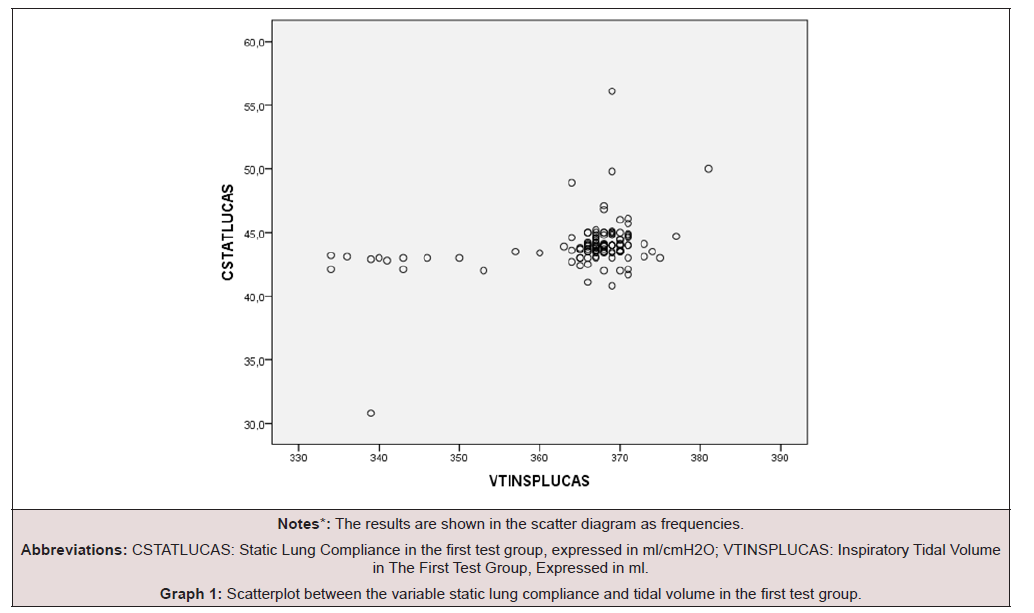
Figure 1:Scatterplot between the variable static lung compliance and tidal volume in the first test group.
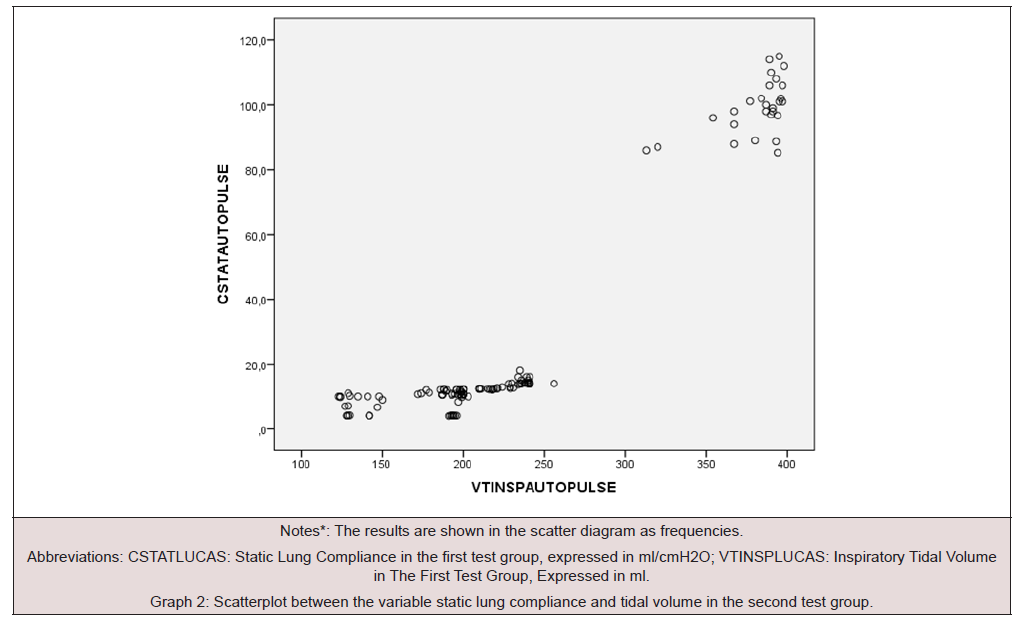
Figure 2:Scatterplot between the variable static lung compliance and tidal volume in the second test group.
The data are shown in Table 1..
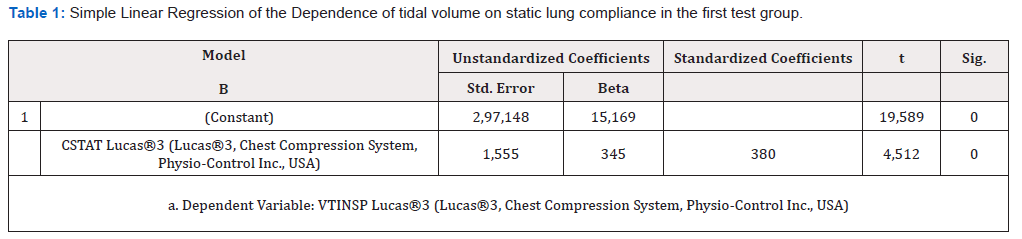
Table 1:Simple Linear Regression of the Dependence of tidal volume on static lung compliance in the first test group.
Notes*: Static lung compliance has a positive and statistically significant effect on the achieved tidal volume in the first test group. An increase in static lung compliance by 1 unit leads to an increase in inspiratory tidal volume by approximately 1.56 units. The standardized coefficient (Beta = 0.38) indicates that the effect is moderately strong.
Abbreviations: B: Coefficient of the Regression Equation (Indicates how much the dependent variable changes when the independent variable increases by one unit); Std. Error: Standard Error (Of the B Coefficient, Which Measures the precision of the Estimate); Beta: Standardized Coefficient (Shows the Strength of the Influence of the Independent Variable Regardless of the Units of Measurement); t: Test Statistic (To check whether the Coefficient is Statistically Different From 0); p: Statistical Significance.
Linear Regression of the Dependence of Tidal Volume on static lung compliance in the second test group
The regression constant is 172.862, and the regression coefficient is 2.119. The obtained data of the regression constant and the regression coefficient were inserted into the equation of the linear function, and the linear regression model was written as: y (VTINSP Autopulse®) = 172.862 + 2.119 x the value of cstat Autopulse®
The data are shown in Table 2.
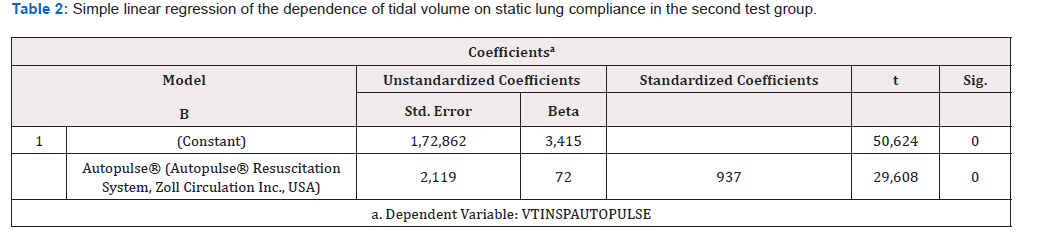
Table 2:Simple linear regression of the dependence of tidal volume on static lung compliance in the second test group.
Notes*: A change in the independent variable static lung compliance in the second test group by one unit increases the inspiratory tidal volume by 2.119 units. The Beta value of 0.937 indicates a very strong positive effect. The effect is extremely statistically significant (p < 0.001).
Abbreviations: B: Coefficient of the Regression Equation (Means How Much the Dependent Variable Changes If the Independent Variable Changes By 1 Unit); Std. Error: Standard Error of the B Coefficient (Measures the Precision of the Estimate); Beta: Standardized Coefficient (Shows the Strength of the Influence of the Independent Variable Regardless of the Units of Measurement); t: Test Statistic (To Check whether the Coefficient Is Statistically Different From 0); p: Statistical Significance.
Discussion
The main findings in our study are: 1. There are no clinically significant differences between set and achieved tidal volumes when using ventilation without chest compressions; 2. A mechanical chest compression device with active decompression allows for statistically significantly higher tidal volumes compared to a chest compression device without active decompression; 3. When using a mechanical chest compression device with active decompression, the relationship between lung compliance and tidal volume is weak (R = 0.14); 4. When using a mechanical chest compression device without active decompression, the relationship between compliance and volume is extremely strong (R = 0.937).
For effective alveolar ventilation, after establishing a secure airway in patients in cardiac arrest, a maximum of 10 breaths per minute and inspiratory tidal volumes between 500 and 600 ml should be provided to ensure adequate minute alveolar ventilation [9]. In our experiment, we found that the average tidal volume achieved, where there was no effect of chest compressions, was 497 ± 2.15 ml. Taking into account the fact that the dead space in mechanical ventilation of adults is 150 ml, we can state that the tidal volume of alveolar ventilation in this case is 347 ml, which represents 70% of the total tidal volume. Average tidal volume where the Lucas®3 device was used (Lucas®3, Chest Compression System, Physio- Control Inc., USA) was 365 ± 8.59 ml. Taking into account the fact that the dead space in mechanical ventilation of adults is 150 ml, we can say that the tidal volume of alveolar ventilation is 215 ml (which represents 59% of the total tidal volume). The average tidal volume, where the Autopulse® device was used (Autopulse® Resuscitation System, Zoll Circulation Inc., USA), was 273 ± 83.711 ml. Taking into account the fact that the dead space in mechanical ventilation of adults is 150 ml, we can state that the tidal volume of alveolar ventilation is 123 ml (which represents 45% of the total tidal volume). The Autopulse® device works by moving the entire chest over the compression belt and without an active decompression component. As a result, the chest passively returns to its original position after compression, which in conditions of low compliance causes a significant reduction in intrathoracic expansion (chest expansion) and limits the delivered tidal volume [10]. Passive rebound of the chest wall is therefore the only force that causes decompression of the chest after the cessation of compression. Importantly, oxygen delivery to the brain during resuscitation does not differ between patients receiving manual chest compressions and those receiving mechanical devices during resuscitation [11,12]. Similarly, survival after discharge from hospital of patients who have suffered out-of-hospital cardiac arrest does not differ between those receiving mechanical devices for compressions [13]. Lung compliance is the ratio of tidal volume to pressure (tidal volume/plateau pressure minus PEEP) and is inversely proportional to elastance [14]. Thus, if tidal volume increases at constant pressure, static lung compliance will increase and vice versa. Increased tidal volumes and increased inspiratory pressures during resuscitation lead to increased morbidity and mortality from acute lung injury [15], and limiting peak inspiratory pressure poses a risk of inadequate tidal volumes during resuscitation. Measuring lung compliance during controlled ventilation provides a good insight into the mechanics of the lungs and chest and the dynamics of lung inflation. In addition, the driving pressure at a selected tidal volume depends on lung compliance. This is a key risk indicator for ventilator-induced lung injury. The product of lung compliance and resistance represents a time constant that represents the opening of the alveoli per unit of time [16]. According to literature data, static lung compliance in patients during resuscitation is 22-51 cmH2O, which is comparable to the results of static lung compliance from our study. Also, under simulated resuscitation conditions, an average static lung compliance value of 36 cmH2O was measured on the Laerdal Resusci AnneTM manikin (Laerdal AS, Copenhagen, Denmark) [17], which is also comparable to the data from our study. A simple linear regression test showed that the regression constant was 172.862 and the regression coefficient was 2.119. Such a high correlation indicates that the Autopulse® mechanical device (Autopulse® Resuscitation System, Zoll Circulation Inc., USA) does not have biomechanical mechanisms that would compensate for the low static lung compliance. As a result, the volumes are highly dependent on the stiffness of the lung model. The mechanics of the belt, which compresses the entire chest, cause a significant increase in intrathoracic pressure, which further reduces the inspiratory tidal volume during the delivery of the tidal volume. The literature on the use of mechanical devices for performing chest compressions without active decompression similarly emphasizes the high sensitivity of these devices to chest elasticity, lower inspiratory tidal volumes with reduced static lung compliance, and greater variability of maximum inspiratory pressures, which was also demonstrated in our study. The mean values of maximum inspiratory pressures measured in the test group are comparable to the values in cadavers, where the mean value of maximum inspiratory pressures was 32.4 cmH2O [18].
Mann-Whitney test demonstrated statistically significant differences in the average values of the inspiratory tidal volumes between the first and second test groups (U=2739.500; p=0.000), and in addition, to assess the adequacy of alveolar ventilation, it is necessary to take into account the fact that in the second test group it is lower than the tidal volume of dead space. In this case, effective alveolar ventilation is not ensured, the ventilation-perfusion ratio, which is the basic condition for gas exchange, is disrupted. The results of our study have important implications for clinical practice, especially in situations where resuscitation is performed in conditions of reduced compliance, such as: acute respiratory distress, severe bronchoconstriction, pulmonary edema and traumatic chest injuries. A limitation of the study is that the lungs in the simulation model are do not completely reflect the human lung in a human at cardiac arrest [19].
Conclusion
Our study clearly shows that mechanical devices for performing chest compressions significantly affect the effectiveness of mechanical ventilation. Therefore, monitoring of mechanical ventilation parameters during the performance of chest compressions with mechanical devices is justified. We have demonstrated that a mechanical chest compression device with active decompression enables statistically and clinically significant more stable ventilation compared to mechanical chest compression devices without active decompression. This stability is reflected in higher values of inspiratory tidal volumes and significantly lower variability of these values, which is crucial for maintaining adequate alveolar ventilation and oxygenation during cardiopulmonary resuscitation. Adequate ventilation during this period directly affects gas exchange, intrathoracic pressures and indirectly also the hemodynamic efficiency of resuscitation. We have found that mechanical chest compression devices without active decompression can cause a marked decrease in delivered tidal volume. Such a decrease has important pathophysiological consequences in real clinical situations, as it can lead to hypoventilation, carbon dioxide accumulation (hypercapnia), and poor oxygenation, all of which negatively affect the outcome of resuscitation. Of particular concern is the fact that the decrease in tidal volume when using mechanical devices for chest compressions without active decompression is not necessarily clinically apparent and is difficult to detect without careful monitoring of ventilation parameters, which increases the risk of inadequate oxygenation and ventilation during cardiopulmonary resuscitation. The strong correlation between the inspiratory tidal volume and static lung compliance when using mechanical devices without active decompression indicates that the functioning of these systems is strongly dependent on the biomechanical properties of the chest and lungs. Such devices are therefore more suitable for patients with normal or increased static lung compliance, and significantly less so for patients with reduced lung compliance or a rigid chest, such as patients with acute respiratory distress syndrome, pulmonary edema, or patients after long-term mechanical ventilation. Our study thus provides important biomechanical and ventilatory insights that have potential implications for clinical practice, future research development, and the selection and use of resuscitation devices. The results emphasize the importance of an individualized approach to ventilation during resuscitation and the necessity of adapting ventilation strategies according to the mechanical chest compression system used and the characteristics of the patient’s respiratory system and lungs. Further research in clinical models will be needed to confirm these findings and to define optimal ventilation protocols in combination with different mechanical chest compression devices.
Limitation
As with all simulation studies, caution is required when interpreting the results and applying them to a clinical setting. An artificial chest model cannot fully mimic the elastic properties of the human chest. Lung compliance in the simulation model is stable, but in real patients it changes dynamically during resuscitation. The influence of intrathoracic pressures and lung perfusion cannot be accurately assessed in this simulation model. Nevertheless, the simulation model allows for a very precise analysis of the mechanics of ventilation and is therefore relevant.
Acknowledgements
None.
Conflict of Interest
None.
References
- Olasveengen TM, Semeraro F, Ristagno G, Castren M, Handley A, et al. (2021) European Resuscitation Council Guidelines 2021: Basic Life Support. Resuscitation. Elsevier Ireland Ltd 161: 98-114.
- Soar J, Böttiger BW, Carli P, Jiménez FC, Cimpoesu D, et al. (2025) European Resuscitation Council Guidelines 2025 Adult Advanced Life Support. Resuscitation 215: Suppl 1:110769.
- Fuest K, Dorfhuber F, Lorenz M, von Dincklage F, Mörgeli R, et al. (2021) Comparison of volume-controlled, pressure-controlled, and chest compression-induced ventilation during cardiopulmonary resuscitation with an automated mechanical chest compression device: A randomized clinical pilot study. Resuscitation. Elsevier Ireland Ltd 166: 85-92.
- Kill C, Manegold RK, Fistera D, Risse J. (2024) Airway management and ventilation techniques in resuscitation during advanced life support: an update. Journal of Anesthesia, Analgesia and Critical Care BioMed Central Ltd 4(1): 58.
- van Schuppen H, Boomars R, Kooij FO, den Tex P, Koster RW, et al. (2021) Optimizing airway management and ventilation during prehospital advanced life support in out-of-hospital cardiac arrest: A narrative review. Best Practice and Research: Clinical Anaesthesiology Bailliere Tindall Ltd 35(1): 67-82.
- Newell C, Grier S, Soar J. (2018) Airway and ventilation management during cardiopulmonary resuscitation and after successful resuscitation. Critical Care BioMed Central Ltd 22(1): 190.
- van Eijk JA, Doeleman LC, Loer SA, Koster RW, van Schuppen H, et al. (2024) Ventilation during cardiopulmonary resuscitation: A narrative review. Resuscitation 203: 110366.
- Orlob S, Wittig J, Hobisch C, Auinger D, Honnef G, et al. (2021) Reliability of mechanical ventilation during continuous chest compressions: a crossover study of transport ventilators in a human cadaver model of CPR. Scand J Trauma Resusc Emerg Med. BioMed Central Ltd 29(1).
- Long B, Gottlieb M. (2025) Emergency medicine updates: Cardiopulmonary resuscitation. Vol. 93, American Journal of Emergency Medicine W.B. Saunders 93: 86-93.
- Gao Y, Sun T, Yuan D, Liang H, Wan Y, Yuan B, et al. (2021) Safety of mechanical and manual chest compressions in cardiac arrest patients: A systematic review and meta-analysis. Vol. 169, Resuscitation Elsevier Ireland Ltd 169: 124-135.
- Baloglu Kaya F, Acar N, Ozakin E, Canakci ME, Kuas C, et al. (2021) Comparison of manual and mechanical chest compression techniques using cerebral oximetry in witnessed cardiac arrests at the emergency department: A prospective, randomized clinical study. American Journal of Emergency Medicine. W.B. Saunders 41: 163-169.
- Primi R, Bendotti S, Currao A, Sechi GM, Marconi G, et al. (2023) Use of Mechanical Chest Compression for Resuscitation in Out-Of-Hospital Cardiac Arrest—Device Matters: A Propensity-Score-Based Match Analysis. J Clin Med 12(13): 4429.
- Jung E, Park JH, Lee SY, Ro YS, Hong KJ, et al. (2020) Mechanical Chest Compression Device for Out-Of-Hospital Cardiac Arrest: A Nationwide Observational Study. Journal of Emergency Medicine. Elsevier USA 58(3): 424-431.
- Hu J, Hirao Y. (2024) Alveolar mechanics at the bedside. Journal of Mechanical Ventilation. Journal of Mechanical Ventilation 5(1): 31-36.
- Palácio MÂG, de Paiva EF, de Figueiredo Oliveira GB, de Azevedo LCP, Pedron BG, et al. (2023) Use of a Portable Mechanical Ventilator during Cardiopulmonary Resuscitation is Feasible, Improves Respiratory Parameters, and Prevents the Decrease of Dynamic Lung Compliance. Arq Bras Cardiol. Sociedade Brasileira de Cardiologia 120(7): e20220564.
- Tawfik P, Syed MKH, Elmufdi FS, Evans MD, Dries DJ, et al. (2022) Static and Dynamic Measurements of Compliance and Driving Pressure: A Pilot Study. Front Physiol. Frontiers Media S A 13: 773010.
- Winkler BE, Muellenbach RM, Wurmb T, Struck MF, Roewer N, et al. (2017) Passive continuous positive airway pressure ventilation during cardiopulmonary resuscitation: a randomized cross-over manikin simulation study. J Clin Monit Comput. Springer Netherlands 31(1): 93-101.
- Segond N, Terzi N, Duhem H, Bellier A, Aygalin M, et al. (2023) Mechanical ventilation during cardiopulmonary resuscitation: influence of positive end-expiratory pressure and head-torso elevation. Resuscitation. Elsevier Ireland Ltd 185: 109685.
- Bray J, Rea T, Parnia S, Morgan RW, Wik L, et al. (2024) Wolf Creek XVII Part 6: Physiology-Guided CPR. Resusc Plus 18: 100589.




 We use cookies to ensure you get the best experience on our website.