
Research Article 
 Creative Commons, CC-BY
Validation of One Level Agar Diffusion Bioassay for Estimation of Potency and Bioactivity of Erythromycin in Pharmaceutical Oral Preparations
*Corresponding author:Amita Gaurav Dimri, Shriram Institute for Industrial Research, 19, University Road, Delhi-110007, India.
Received:May 07, 2026; Published:May 19, 2026
DOI: 10.34297/AJBSR.2026.31.004019
Abstract
Erythromycin, the first-generation antibiotic is used extensively to treat a variety of bacterial infections. Despite its extensive clinical application, a validated microbiological assay for determining erythromycin content in pharmaceutical oral formulations has not been reported. This study aimed to validate a one-level agar diffusion bioassay for assessing the bioactivity of erythromycin and potency in oral dosage forms. The bioassay relies on the inhibitory action of Erythromycin on the specific strain of test bacterium, Kocuria rhizophila ATCC 9341 formerly classified as Micrococcus luteus. The results of the proposed bioassay validation displayed high linearity, accuracy, precision, repeatability and robustness. Validation parameters demonstrated acceptable performance: linearity was established over the concentration range of 0.64–1.5625 μg/mL with a correlation coefficient (R²) of 0.999. The method exhibited satisfactory accuracy (101.2% recovery) and precision, with intermediate precision expressed as between-day RSD of 1.6% and between-analyst RSD of 1.2%. Repeatability with 0.2% RSD and robustness with different challenged conditions as inoculum concentration, incubation temperature and standard/sample solvent lies within the acceptance criteria of validation (RSD=1.5%). The results demonstrated a valid proposed bioassay, which allows reliable Erythromycin quantitation in oral pharmaceutical preparation. In addition to protecting the public health, regular adherence to approved testing guidelines also boosts consumer confidence and promotes the long-term viability of the sector. The validated method was successfully applied to commercially available test samples of Erythromycin Ethylsuccinate for oral suspension samples, yielding potency values within acceptable limits (80-125% of label potency) and thus can be utilized as a routine quality control methodology for Erythromycin estimation in pharmaceutical oral preparation.
Keywords:Bioassay, Erythromycin, Oral preparation, Potency, Validation
Introduction
With the continuous rise in global human population, the administration of adequate antimicrobial medications becomes increasingly crucial due to compromised immune systems and unhealthy lifestyles [1]. Antimicrobial treatments are among the most essential and often used pharmaceuticals employed in combating microbial infections that affect human health; in severe situations, they can be fatal [2]. Testing for antibiotic resistance patterns in isolated microorganisms is becoming more and more crucial as multi-drug-resistant organisms proliferate. It encourages the development of potent antimicrobial treatments and provides information for risk evaluations of product safety [3]. Erythromycin (ERY), which has a broad antibacterial spectrum, holds a foundational position within the macrolide class of antibiotics (characterized by a large macrocyclic lactone ring). It is produced by biosynthesis during fermentation from species of Saccharopolyspora erythraea, a Gram-positive bacterium formerly known as Streptomyces erythraeus [4]. ERY A, B, C, D, E, F, and G are the many structural variants of the Erythromycin group produced by bacterial strains (Figure 1) [4,5]. Since its discovery in 1952, immediately it became popular due to its ability to treat infections that are resistant to other drugs [6]. It has demonstrated significant therapeutic use in treating several bacterial infections affecting the skin, respiratory system, intestines, bones, and other biological systems [7]. Additionally, it can be used to assist delayed stomach emptying and prevent Group B streptococcal infection in the fetus.

Figure 1:Chemical structure of Erythromycin
Although modern analytical techniques like HPLC and UPLC are highly effective and widely used for quantifying various compounds as specified in official monographs, they cannot accurately evaluate the antibacterial activity of the active antibiotic ingredient, particularly when it is present in combination with other components [7]. Consequently, the microbiological antibiotic assay is still frequently employed to determine the true potency of particular antimicrobials by analyzing their biological inhibitory activity against the growth of specific microorganisms as stated in the compendial monographs [8]. Furthermore, neither highly toxic reagents nor sophisticated equipment are needed for microbiological bioassay. Owing to the aforementioned challenges, this study establishes a robust validation framework for antibiotic bioassays. The objective was to confirm that the assay design is fit for routine use and consistently meets predefined acceptance criteria. Furthermore, the study aims to quantify the biological potency of antimicrobial compounds, ensuring high reproducibility and analytical confidence [9]. The pharmaceutical industry ensures product integrity and patient safety by integrating rigorous microbiological testing into its quality control frameworks. However, quality control procedures are required by regulatory bodies worldwide in order to reduce risk, preserve batch uniformity, and guarantee that all pharmaceutical products fulfill defined microbiological safety standards [10]. This study aims to validate a cylindrical plate agar diffusion bioassay for the quantification of Erythromycin. In the current study we evaluated the method selectivity, linearity, precision, accuracy, and robustness to ensure its reproducibility and suitability for routine analysis. Finally, the validated method was applied to assess the potency of commercially available Erythromycin samples.
Material and Methods
Chemicals and Reagents
The chemicals and reagents utilized were analytical quality. Ultra-pure water produce by Milli-Q System (Millipore Advantage A10) was used to prepare solutions. Reference Standard (Erythromycin, Cat. No. E-020, IPRS, Indian Pharmacopeia Reference Standards, India) was used for standard solution preparation. Three commercially available test samples (Batch Nos. 2508001416, 2408000529, and 16/028/102) of Erythromycin Ethylsuccinate for oral suspension 200 mg per 5 mL labelled claim according to United States Pharmacopeia (USP) were used as test samples [11]. For preparation of median concentration of Erythromycin, buffer (dibasic potassium phosphate- 16.73 g/L; monobasic potassium phosphate- 0.523 g/L) was used.
Erythromycin Reference Solution
Accurately weigh 25 milligrams of reference standard of Erythromycin and dissolve in 25mL of methanol to obtain 1000μg/ mL or 1mg/mL and further dilute in buffer (1:100 and 10:100, v/v) as to produce a median dose of 1μg/mL of Erythromycin. The doses range 0.64 to 1.5625μg/mL of Erythromycin standard solutions was used for the validation bioassay which included five standard dilutions S1 (0.64), S2 (0.8), S3 (1.0), S4 (1.25), S5 (1.5625) in the ratio of 1: 1.25. Dilution S3 was considered as the median concentration level of Erythromycin standard solutions.
Sample Solutions Preparation
The sample of Erythromycin Ethylsuccinate for oral suspension USP 200mg/5 mL was taken in the study. A quantity equivalent to 25 mg was taken in volumetric flask (25 mL) and volume made up to a concentration of 1mg/mL by dissolve in methanol. To achieve a nominal concentration that matched the median concentration of the standard S3 (1 μg/mL), the sample (T) was diluted.
Microbiological Media Preparation
Antibiotic assay medium 11 (HiMedia Laboratories Private Limited) was taken as the bioassay medium. Media preparation and sterilization done as per instructions provided in Certificate of Analysis (CoA).
Standardization of Microbial Inoculum
Kocuria rhizophila ATCC 9341 (procured from the National Collection of Industrial Microorganisms, NCIM, Pune) was selected as the test organism. Its sensitivity to Erythromycin produces distinct, well-defined zones of inhibition, ensuring high measurement accuracy [11]. The strain was maintained on Soybean Casein Digest Agar (HiMedia) slants and incubated at 35 ± 2 °C for 24 h. Following incubation, the growth was suspended in 3 mL of sterile saline, with the cell density adjusted to a 0.5 McFarland standard using a densitometer in accordance with United States and British Pharmacopeia protocols [11,12].
Bioassay Method
The 5+1 bioassay was performed using the cylinder-plate method. The recommended bioassay employs five concentrations of a standard antibiotic (S1-S5) and one concentration of test sample designed as a “One-level” bioassay. The method relies on the vertical diffusion of the antibiotic from cylinders through a solidified agar layer. This inhibits the growth of the seeded indicator microorganism, forming distinct circular “zone of inhibition” around each cylinder containing the antibiotic solution of specific concentration [11]. Inoculated plates were prepared by seeding 1.5 mL of the Kocuria rhizophila test culture into 100 mL of antibiotic assay medium no. 11. Six sterile stainless-steel cylinders were then placed on the agar surface, ensuring even spacing at a 2.8 cm radius. The plates were immediately covered to prevent contamination. Each plate contained three cylinders: 1, 3, 5 are the reference concentration (S3) and other three: 2, 4, 6 as one of the standard concentrations (S1, S2, S4, S5). Thus, a total of 12 plates were prepared. Similarly, 3 plates containing three cylinders 1, 3, 5 are the reference concentration (S3) and other three: 2, 4, 6 as Test Sample Concentration (T) were prepared (Figure 2). The respective cylinders were filled with assigned antibiotic concentrations. Incubated all plates at 32°C for 18 hours. After incubation zone of diameter (in mm) was measured with the help of calibrated digital Vernier calipers and recorded. The assay was performed in triplicate, yielding nine measurements each for standards S1, S2, S4, and S5, as well as the Test Sample (T). To ensure robust data fitting across all plates, the reference standard (S3) was tested 36 times at the lowest and highest concentration ranges and nine times alongside the test sample. Mean values, Standard Deviations (SD), and Relative Standard Deviations (RSD) were calculated for all datasets [11].

Figure 2:In a 5+1 plate assay, five Petri dishes represent the reference solutions S1 (0.64 μg/mL), S2 (0.8 μg/mL), S3 (1.0 μg/mL), S4 (1.25 μg/mL and S5 (1.5625 μg/mL) and test sample Erythromycin solution T (1.0 μg/mL) against Kocuria rhizophila (ATCC 9341).
Validation of Test Method
To ensure optimal assay performance, all experimental parameters were optimized and standardized prior to the validation phase [13]. The method was subsequently validated by evaluating key performance characteristics, including range, precision, accuracy, linearity, and robustness [14,15].
a) Linearity: The linearity study was conducted across five independent assays, with each standard concentration of Erythromycin (ranging from 0.64 to 1.5625μg/mL) tested in triplicate (n=3). The calibration curve was constructed by plotting the antibiotic concentrations on the x-axis against the response measured as the zone of inhibition diameter (mm) on the y-axis [16]. Adhering to standard acceptability criteria, the Relative Standard Deviation (RSD) was restricted to ≤5%, while the correlation coefficient (R2) should not be less than 0.99 [17].
b) Precision: The precision of the bioassay was evaluated in terms of repeatability by analyzing six independent Erythromycin test solutions at identical concentrations on the same day. Intermediate precision was assessed by analyzing the same sample in triplicate across two different days with two separate analysts [18]. In accordance with validation protocols, the acceptance criteria for precision, RSD should be no more than 5%.
c) Accuracy: The accuracy was determined through recovery studies by spiking the test sample with known concentrations of Erythromycin of documented potency. To assess the accuracy of the 5+1 design, experimental determinations were performed across three concentration levels (80%, 100%, and 120%). Following validation guidelines, the acceptance criterion for accuracy was defined as an RSD ≤5%.
d) Range: The assay range was established based on the selected dose levels for the calibration curve and subsequently confirmed through the evaluation of method precision, accuracy, and linearity.
e) Robustness: Method robustness was evaluated by analyzing the same sample under varied experimental conditions [2]. The parameters assessed included inoculum concentration, incubation temperature, and the dilution factor using buffer. For each variation, the method reliability was confirmed against an acceptance criterion of RSD ≤5%.
Calculation of Activity [11]

Where
S = mean zone measurement of respective standard
L5= high concentration of standard used
L1= low concentration of standard used
The log of the concentration of the sample is found using

Where Lu is natural log of the sample concentration
Sample concentration (Cu) = e Lu
Percentage of reference concentration= Cu/median
concentration x 100
Results and Discussion
In recent years, regulatory agencies have focused a lot of work on validating analytical methods for potency determination due to their significance in pharmaceutical analysis [19,20]. The selection of an appropriate analytical technique is essential for the quality control of pharmaceuticals and depends on a number of variables, including the drug sources, complexity, equipment and reagent availability. In current instance, microbiological antibiotic assay was suggested as a most suitable method for determining potency of Erythromycin in oral suspension to precisely ascertain the assay performance, the experimental conditions were examined and modified. The strain of Kocuria rhizophila ATCC 9341 was a suitable test microbe due to its Erythromycin sensitivity and ability to create distinct inhibitory growth zones, which allowed for accurate measurement (Figure 2). Under appropriate experimental conditions, antibiotic potency is determined by comparing the growth inhibition of susceptible indicator microorganisms against known concentrations of a reference standard [21]. For such bioassays, validating the experimental design is essential to ensure that the activity is quantified with sufficient analytical confidence [22].
Linearity
A calibration curve was constructed by plotting the inhibition zones (mm) against five Erythromycin concentration levels (μg/mL). The mean zone diameters exhibited a variance of approximately 2 mm across the 0.64, 1, and 1.5625μg/mL range (Table 1). Low RSD values confirmed minimal variation in the bioassay response, indicating high reproducibility. The resulting linear regression equation was y = 2.389x + 14.69, with a correlation coefficient (R2 = 0.999) confirming significant linearity (Figure 3).
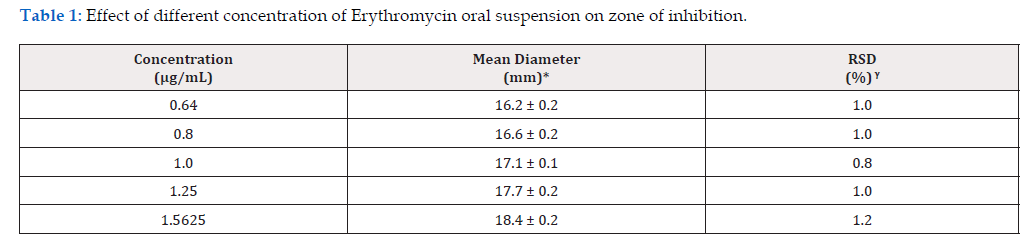
Table 1:Effect of different concentration of Erythromycin oral suspension on zone of inhibition.
*Note: *Calibrated digital caliper was used in reading the diameter of inhibition zones measures in mm
Values are mean ± Standard deviation (n=3)
γ Relative Standard Deviation (RSD) within an assay.
Precision
Erythromycin activity for repeatability evaluation ranged from 98.57% to 99.11%, with a corresponding RSD of 0.2%. The determination coefficient was established to be R2=0.999. These low RSD values confirm the methods capacity to generate highly reproducible results with minimal variance across independent runs (Table 2). Intermediate precision, assessed through dualanalyst (between-analyst) and inter-day (between-day) trials, yielded RSD values of 1.2% and 1.6%, respectively as depicted in (Table 3).

Figure 3:Linearity curve of Erythromycin showing average reading points of Inhibition zone (mm) with standard deviation against five concentrations (μg/mL). The linear equation is shown along with the coefficient of determination value.

Table 2:Repeatability validation data of bioassay of Erythromycin oral suspension.

Table 3:Intermediate precision data of bioassay of Erythromycin oral suspension.
*Note: ß Relative Standard Deviation (RSD) different assay determination for potency.
Accuracy
The mean accuracy was 101.2% with an RSD of 1.0%, indicating that the microbiological assay results closely align with the actual concentrations of the tested samples. These data demonstrate the method capability for the precise quantification of Erythromycin across both low and high concentration ranges (Table 4).

Table 4:Accuracy of microbial bioassay determine for Erythromycin oral suspension.
Robustness
Among the critical variables in an agar diffusion assay, three parameters incubation temperature (32–35°C), inoculum concentration (1.5%), and the use of Buffer 3 for standard/sample dilution were selected for robustness testing. These factors directly influence microbial growth kinetics and antibiotic diffusibility. Under these varied conditions, the method demonstrated high resilience, with recovery values ranging from 96.21% to 99.52% and an RSD of 1.5% (Table 5). Microbiological assays provide more accurate and realistic potency evaluations by measuring the actual reaction of antibiotics on a biological system as in contrast to chemical approaches [23]. Microbiological assays play a pivotal role ensuring the safety, effectiveness, and sustainability of antibiotic treatments at every stage, from drug development to quality control and surveillance. The current investigation of microbiological method for Erythromycin potency evaluation in pharmaceutical oral dosage was thus verified and validated dosage forms proved to be reliable, reproducible, and specific analytical tool, fully compliant with the requirements of standards. The validated method was applied to three batches of commercially available test samples of Erythromycin Ethylsuccinate for oral suspension USP available in the market (Table 6 and Figure 2). All the samples complied with the pharmacopeial limits (80-125% of labeled potency). Results were reproducible across replicate assays. The successful application of test samples confirms the method practical utility [24].
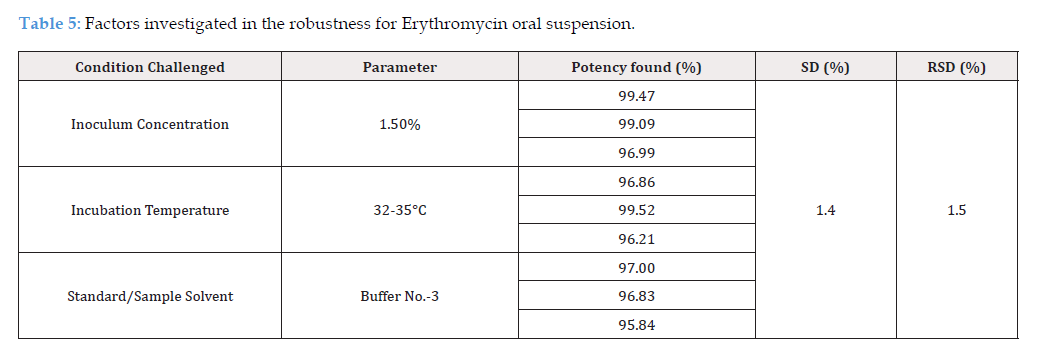
Table 5:Factors investigated in the robustness for Erythromycin oral suspension.

Table 6:Results on Microbiological Assay of Erythromycin in Oral Suspensions.
*Note: *Data represent mean ± SD of three values
Regulatory specification of Erythromycin is 80-125 %.
Conclusion
In conclusion, microbiological assay is a basic method for the quantitative evaluation of the effectiveness and potency of antibiotics. By harnessing these bioassays, which utilize the concepts of microbial growth inhibition, offer crucial information about the pharmacological effectiveness of antibiotics against specific pathogens. The quantitative determination of active compounds requires analytical techniques that produce dependable and repeatable data. The investigated bio assay design showed the acceptable design and validation parameters as range, linearity, precision, accuracy and robustness. The validated method was effectively applied to determine the potency of commercially available test Erythromycin Ethylsuccinate for oral suspension samples. Therefore, the suggested bioassay may prove to be a valuable insight for Erythromycin quality control in oral suspensions under pharmaceutical products and raw materials.
Acknowledgments
The authors express their sincere gratitude to the management of the Shriram Institute for Industrial Research for providing the necessary infrastructure and technical support for this research. This manuscript has been assigned the internal reference number: SRI-MS#20260511-01.
Conflict of Interest
None.
References
- Eissa ME, Rashed ER, Eissa DE (2021) Microbiological Antibiotic Assay Validation of Gentamicin Sulfate Using Two-Dose Parallel Line Model (PLM). High Tech Innov 2 (4): 306-319.
- Eissa DE, Rashed ER, Eissa ME (2022) Validation of Microbiological Assay Design of Neomycin Sulfate in 30 x 30 cm Rectangular Antibiotica Plate. J Adv Bio Pharma Sci 5: 54-63.
- Gumudavelli S, Srinija G, Palem CR (2025) A Comprehensive Review on Microbiological Testing in the Pharmaceutical, Nutraceutical and Cosmetics Industries: Safety Assurance and Regulatory Standards 14 (05): 78-96.
- Platon, V. M., Dragoi, B. & Marin, L. (2022). Erythromycin formulations—A journey to advanced drug delivery. Pharm, 14(10): 2180.
- The American Society of Health-System Pharmacists (2015). Archived from the original on 2015-09-06. Retrieved Aug 1, 2015.
- Kroboth, P. D., Brown, A., Lyon, J. A., Kroboth, F.J. & Juhl, R.P. (1982). Pharmacokinetics of single-dose erythromycin in normal and alcoholic liver disease subjects. Antimicrob Agents Chemo, 21(1): 135-140. doi: 10.1128/AAC.21.1.135.
- Pauter K, Szultka Młýnska M, Buszewski B (2020) Determination and identification of antibiotic drugs and bacterial strains in biological samples. Mol 25(11): 2556.
- (2016) European Treaty Series. European Pharmacopoeia (50th). Council of Europe.
- Dafale NA, Semwal UP, Rajput RK, Singh GN (2016) Selection of appropriate analytical tools to determine the potency and bioactivity of antibiotics and antibiotic resistance. J Pharm Anal 6(4): 207-213.
- Gumudavelli, S., Srinija, G. & Palem, C. R. (2025). A Comprehensive Review on Microbiological Testing in the Pharmaceutical, Nutraceutical and Cosmetics Industries: Safety Assurance and Regulatory Standards. Int J Curr MicrobioL Appl Sci, 4(05): 78-96.
- The U.S. Pharmacopeia, Chapter <81> (2025). Antibiotics- Microbial Assays. The United States Pharmacopeia. U.S. Pharmacopeial Convention: Rockville, MD, USA 2025.
- (2025) British Pharmacopeia Commission. British Pharmacopeia (BP).
- (2023) The International Council for Harmonization of Technical Requirements of Pharmaceuticals for Human Use (ICH) Q2 (R2). Validation of analytical Procedures- Scientific Guideline. Revision 1, Geneva, Switzerland.
- The U.S. Pharmacopeia, Chapter <1225> (2025). Validation of compendial procedures. The United States Pharmacopeia. U.S. Pharmacopeial Convention: Rockville, MD, USA, 2025.
- The International Council for Harmonization of Technical Requirements of Pharmaceuticals for Human Use (ICH) Q2 (R1) (2005). In Proceedings of International Conference on Harmonisation, Geneva, Switzerland.
- Nahar S, Khatun MS, Kabir MS (2020) Application of microbiological assay to determine the potency of intravenous antibiotics. S J Microbiol 10(1): 25-29.
- (2023) Official Methods of Analysis, 22th AOAC Int. Gaithersburg, MD, USA.
- Oppe TP, Menegola J, Schapoval EE (2018) Microbiological assay for the determination of Cefpirome in raw material and injectable preparation. Drug Anal Res 2(1): 29-35.
- Moreno AR, Salgado HRN (2007) Microbiological assay for Ceftazidime injection. J AOAC Int 90 (5): 1379-1382.
- Tozo GCG, Salgado HRN (2007) Microbiological assay for Cefoxitin sodium in dosage form. J AOAC Int 90: 452-455.
- Edith CL Cazedey, Herida RN Salgado (2011) Development and Validation of a Microbiological Agar Assay for Determination of Orbifloxacin in Pharmaceutical Preparations. Pharm 3(3): 572-81.
- Leonel M, Soares C, Siqueira A (2012) Comparison of pharmacopeial statistical methods applied in microbiological assay for antibiotics potency determination using parallel lines and three-dose level. Braz J Pharm Sci 48 (3): 565-576.
- Dafale NA, Semwal UP, Agarwal PK, Sharma P, Singh GN (2015) Development and validation of microbial bioassay for quantification of Levofloxacin in pharmaceutical preparations. J Pharm Anal 5 (1): 18-26.
- Luo C (2024) Comprehensive Insights into Microbiological Assays for Antibiotics. Pharm Anal Chem 9 (3): 1000239.




 We use cookies to ensure you get the best experience on our website.