
Review Article 
 Creative Commons, CC-BY
Ambient Fine Particulate Matter and Assisted Reproduction: A Narrative Review of Gamete, Implantation and Fetal Evidence
*Corresponding author:Raouf Roshdy, Egypt Health Foundation, Egypt.
Received:October 27, 2026; Published:November 06, 2026
DOI: 10.34297/AJBSR.2026.32.004199
Abstract
Background: Fine Particulate Matter (PM2.5) is a candidate modifiable risk factor in Assisted Reproductive Technology (ART), but published estimates disagree on size, timing and even direction.
Methods: Narrative review. We searched PubMed on 27 October 2026 for human and experimental studies linking PM2.5 and related air-pollution metrics to ovarian reserve, gametes, implantation, early loss, placental function, fetal outcomes and mitigation. Records were screened by title and abstract; reported estimates were taken from abstracts. No formal risk-of-bias scoring was done.
Findings: In a single-clinic cohort of 3659 frozen embryo transfers, highest-quartile PM2.5 in the three months before oocyte retrieval carried 34% lower odds of live birth (OR 0.66, 95% CI 0.47-0.92) than the lowest quartile. A meta-analysis of five studies (about 282,000 participants) found a 6% lower probability of live birth per 10 μg/m³ of fine particulate matter in the year before retrieval (RR 0.94, 95% CI 0.92-0.97). A US registry analysis of 253,528 fresh cycles found no association between PM2.5 and any reproductive outcome. Cohorts of 5354 and 29,610 ART patients linked particulate exposure to lower antral follicle count. In 21,851 US semen samples, PM2.5 was associated with sperm DNA fragmentation, with a non-linear pattern peaking near 11 μg/m³. Cell and rodent studies show trophoblast, granulosa-cell and follicle injury, but they do not establish human effect sizes. Evidence for fetal harm is modest for preterm birth (pooled OR 1.07 for whole-pregnancy PM2.5 in China) and mixed for neurodevelopment. Air-purifier trials show limited benefits.
Conclusion: The association between PM2.5 and poorer ART outcomes is plausible and repeatedly observed, but the evidence is observational, heterogeneous and partly null. [Inference] Counselling on exposure is reasonable; claims of proven causation or of clinical benefit from specific interventions are not yet supported.
Keywords:PM2.5, Air pollution, Assisted reproductive technology, IVF, Ovarian reserve, Live birth, Sperm DNA fragmentation, Placenta
Introduction
Assisted reproduction already gives patients a precise exposure window: gonadotropin start, retrieval, transfer, hCG test. That window makes ART cohorts a useful setting for asking whether ambient air pollution changes reproductive outcomes. Early reviews pointed out that way. A 2016 systematic review reported lower live birth and higher miscarriage among IVF patients exposed to higher pollutant concentrations [1], and a 2018 review reached a similar but cautious conclusion [2]. The field has since grown fast, and it has not converged. A 2025 meta-analysis pooled five studies and reported a small decrease in live birth per 10 μg/m³ of fine particulate matter [3]. Yet the largest single analysis, 253,528 fresh US cycles, found no association between PM2.5 and implantation, pregnancy or live birth [4]. Studies also disagree on which exposure window matters: the three months before retrieval [5], the year before retrieval [6], or the period around transfer [7]. Teaching material and conference talks often compress this literature into a single message, that PM2.5 is a proven reproductive toxicant. This review asks a narrower question. For each stage from ovarian reserve to neurodevelopment, what do the primary sources report, how large is the effect, and where do studies disagree?.
Methods
This is a narrative review, not a systematic review. On 27 October 2026 we searched PubMed only, using combinations of PM2.5, particulate matter, air pollution, assisted reproductive technology, IVF, live birth, ovarian reserve, antral follicle count, sperm DNA fragmentation, frozen embryo transfer, biochemical pregnancy, placenta, trophoblast, intellectual disability, preterm birth, DNA methylation and air purifier. We screened titles and abstracts and kept human studies, systematic reviews and mechanistic experiments that addressed a stage of the reproductive pathway. Effect sizes are taken from abstracts as indexed in PubMed. Where PubMed text lost the subscript in PM2.5 or PM10, we do not assign a size fraction to the estimate. We did not search other databases, grey literature or non-English sources, did not score risk of bias, and did not pool data. [Inference] Selection of studies may therefore favour positive findings that are easier to retrieve.
Evidence by Reproductive Stage
Ovarian Reserve, Oocytes and Sperm
In 5354 women undergoing ART in eastern China, particulate matter of three aerodynamic diameters was linked to lower Antral Follicle Count (AFC) and to lower odds of live birth (ORs 0.908 to 0.924). AFC explained 6.49%, 9.16% and 6.79% of live-birth failures attributed to the three fractions [8]. In 29,610 infertile women in Shaanxi, PM2.5 was associated with lower AFC across several follicle-development periods (adjusted β -0.123 to -0.190), most strongly in the earliest stages, with sulfate the leading constituent [9]. A systematic review of 40 cohort reports concluded that longterm PM2.5 and PM10 exposure is associated with reduced ovarian reserve, while stating that heterogeneous exposure assessment and residual confounding limit confidence [10]. [Unverified]. The abstracts we accessed did not give AMH-specific pooled estimates, so the AMH association is supported here only at the level of that review. Experimental work points in the same direction. Maternal PM2.5 exposure shrank the primordial follicle pool of mouse offspring through PI3K/AKT/FoxO3a activation and ROSdependent NF-κB signalling [11]. Chronic concentrated PM2.5 increased follicular atresia and granulosa-cell apoptosis in mice [12]. In hyperlipidaemic mice, 12 weeks of exposure reduced primordial, primary and secondary follicles by 45%, 40% and 17% [13]. [Inference] These doses and species cannot be translated into a human effect size. Oocyte-level effects are smaller. In 1237 women, one particulate fraction was associated with a 1.01% lower maturation rate and a 1.42% lower fertilization rate per Interquartile-Range (IQR) increase, with no significant link to clinical pregnancy outcomes [14]. In 8048 women, a mixture of pollutants in the 90 days before oocyte pick-up was associated with fewer total oocytes (-1.27%) and mature oocytes (-1.42%) per unit of a weighted index, but gaseous pollutants drove much of that mixture [15]. For sperm, a cross-sectional analysis of 21,851 US semen samples found higher PM2.5 associated with greater sperm DNA fragmentation (estimate 0.45; P = 0.0025), with a non-linear pattern peaking near 11 μg/m³ and a stronger effect in lower socioeconomic areas (interaction P = 0.0148) [16]. The sample came from men seeking fertility evaluation, so it may not represent the general population. An earlier systematic review of 17 studies judged the evidence on DNA fragmentation limited but suggestive [17]. In 238 men in an IVF cohort, exposure during spermatogenesis was associated with fewer good-quality day-3 embryos and lower fertilization, yet not with pregnancy, loss or live birth [18]. [Inference] A paternal contribution is plausible; its downstream clinical effect is unproven.
Timing Windows, Implantation and Early Loss
The most cited single estimate comes from 3659 Frozen Embryo Transfers (FET) in 1835 patients at one clinic. PM2.5 in the three months before oocyte retrieval was associated with a trend to lower live birth (P = 0.011); the highest quartile had 34% lower odds than the lowest (OR 0.66, 95% CI 0.47-0.92). The direction was consistent in other pre-retrieval windows, exposure was citylevel, and air quality was described as excellent [5]. A meta-analysis of five studies estimated a 6% lower probability of live birth per 10 μg/m³ of fine particulate matter in the year before retrieval (RR 0.94, 95% CI 0.92-0.97) [3]. Other studies disagree about timing. In 12,665 women in the Yangtze River Delta, the one-year window before retrieval showed a stronger negative association than the 90- day window, and FET cycles were more vulnerable [6]. In 255 FET patients, exposure in the year before transfer was associated with live birth, while the pre-retrieval period was not [19]. A US analysis of 253,528 fresh cycles found no association between PM2.5 and implantation, pregnancy or live birth [4]. [Inference] Differences in exposure assessment (county averages versus city monitors), pollution range, cycle type and window definition probably explain part of the disagreement; this review cannot test that. Around transfer, a mixture of pollutants between embryo transfer and the hCG test was associated with 12% lower odds of clinical pregnancy (aOR 0.89, 95% CI 0.79-0.99) in 5208 patients, with SO₂ and NO₂ contributing most [7]. [Inference] Because pre-retrieval PM2.5 predicted live birth after FET independent of conditions at transfer [5], the signal their points to the oocyte rather than the endometrium; the FET data do not by themselves implicate the uterine environment. On early loss, a prospective cohort of 2431 women found that each 10 μg/m³ increase in PM2.5 from the hCG test to 30 days after transfer was associated with a borderline higher risk of biochemical pregnancy loss (RR 1.06, 95% CI 1.00- 1.13), more clearly after fresh transfer, with no association with implantation failure or live birth [20]. A meta-analysis of 20 studies reported significant pooled reductions in biochemical pregnancy for CO and NO₂; its abstract reports no significant pooled PM2.5 result [21]. [Unverified] Placentation failure or lipid peroxidation as the cause of such losses was not tested in these cohorts.
Placenta, Fetal Growth, Neurodevelopment and Epigenetics
Placental evidence is experimental. In a first-trimester trophoblast line, urban PM2.5 was taken up by cells and localised to mitochondria, which showed vacuolisation and disrupted cristae; at 48 hours hCG secretion fell while IL-6 and progesterone secretion rose [22]. A second study reported rapid endocytosis, reduced hCGβ, higher IL-6 and endoplasmic-reticulum stress proteins, with the hCGβ effect at high doses (500 to 5000 ng/ mL) [23]. A review attributes direct placental translocation to ultrafine particles, and oxidative stress and inflammation to fine particles [24]. [Inference] Passage of PM2.5 itself into human fetal tissue is therefore not established by these sources. [Unverified] We did not locate primary data on TNF-α, vascular thrombosis or chorioamnionitis in PM2.5-exposed placentas. For birth outcomes, a meta-analysis of 29 studies (9,283,110 people) in China reported higher preterm birth with whole-pregnancy PM2.5 (OR 1.07, 95% CI 1.05-1.10) and smaller associations in mid-pregnancy and late pregnancy (OR 1.03 each); the authors called the associations weak and confounding-prone [25]. In a Scottish IVF cohort of 2069 babies, a particulate-matter metric in the post-transfer windows was associated with preterm birth, whereas low birth weight and small-for-gestational-age were associated with NO₂ rather than particulates [26]. [Inference] Growth restriction from PM2.5 is therefore not supported in this ART cohort.
Neurodevelopmental findings are mixed. In a Utah casecontrol study, each day above the WHO 24-hour guideline of 15 μg/m³ raised the odds of Intellectual Disability (ID) by 2.3% in the preconception period (OR 1.023, 95% CI 1.011-1.040) and 3.2% in the first trimester (OR 1.032, 95% CI 1.017-1.047), with no association in the second or third trimester [27]. A follow-up found that long-term PM2.5 in preconception and the first trimester raised odds of ID alone and of ID with autism [28]. A Medicaid cohort of 1,547,244 mother-child pairs linked prenatal PM2.5 to ID only among Hispanic children (HR 1.57, 95% CI 1.02-2.43) and found no association for most other disorders [29]. Per-day odds are small, and neuroinflammation in humans was not demonstrated in these studies. On epigenetics, reviews report that prenatal air pollution is associated with altered placental DNA methylation in genes for circadian rhythm, energy metabolism and DNA repair, and that some changes accompany low birth weight [30,31]. [Unverified] We did not find human data naming CLOCK or BMAL1 methylation in cord blood, or showing that such changes predispose offspring to metabolic syndrome.
Mitigation
The best evidence on indoor filtration is the UGAAR randomised trial in Ulaanbaatar, where 540 pregnant women received HEPA air cleaners or none; indoor PM2.5 fell by 29%. Birth weight did not differ overall (18 g; 95% CI -84 to 120) but was 85 g higher (95% CI 3-167) among term births [32]. Child BMI z-score was 0.16 lower (95% CI -0.35 to 0.04) and overweight or obesity odds were 0.59 (95% CI 0.31-1.12), both compatible with no effect [33]. Behaviour scores did not differ between arms [34]. These are modest, partly null results from a coal-heating setting, and they do not show that purifiers reduce adverse outcomes in ART populations elsewhere. For the laboratory, a Bordeaux cohort of 10,763 IVF attempts linked proximity of a biomass boiler to the laboratory to lower clinical pregnancy (OR 0.75, 95% CI 0.61-0.91) [35]. After an Oregon wildfire, the laboratory-exposure cohort (n = 15) had a median of 2 blastocysts versus 4.5 in unexposed cycles (n = 44), without a significant change in blastulation rate [36]. [Unverified] We did not identify controlled studies showing that HEPA or VOC filtration in IVF laboratories improves clinical outcomes, nor trials of patient counselling to limit outdoor activity (Table 1).
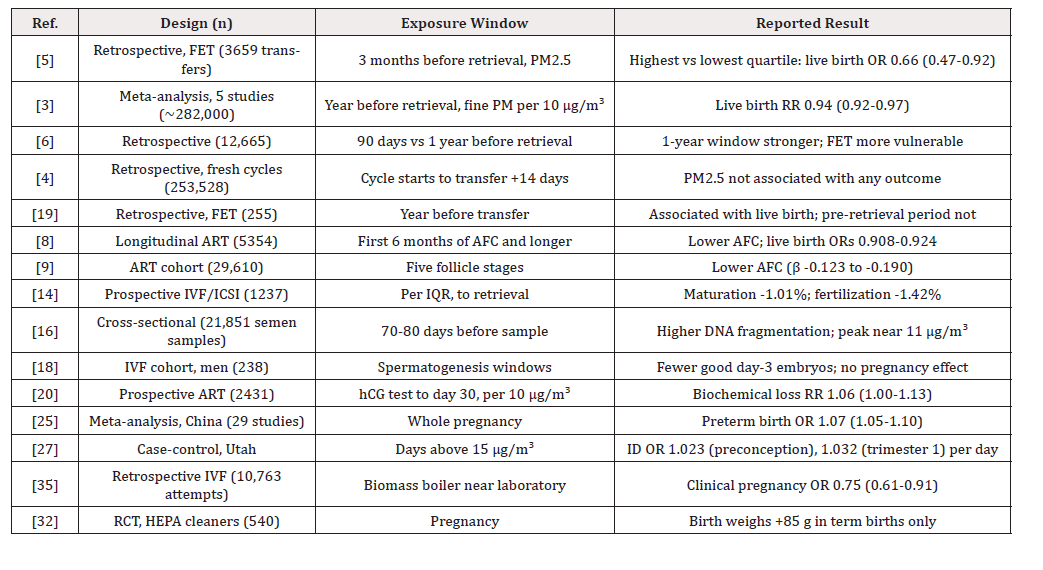
Table 1:Key human studies on particulate matter and reproductive outcomes (estimates as reported in PubMed abstracts).
Discussion
Three findings recur. Higher particulate exposure is associated with lower live birth in several large cohorts [3,5,6]; with lower antral follicle count in two independent ART populations [8,9]; and with higher sperm DNA fragmentation in one large cross-sectional sample [16]. Against that, the largest cohort found nothing for PM2.5 [4], the effect on oocyte maturation and fertilization is a percentage point or two [14], and the early-loss signal sits at the edge of significance [20]. The timing question is unresolved. Estimates point to three months [5], one year [6] or the year before transfer [19]. [Inference] If the oocyte is the main target, the relevant window should span follicle recruitment, which lasts longer than three months; the one-year findings fit that better than a single 90-day window, but no included study tests it directly. Several claims that circulate in teaching material did not survive checking. We found no primary source for a 7.5% fall in mature oocytes per IQR of PM2.5, for specific mitochondrial-fission, tightjunction or adhesion-molecule changes in ART patients, or for placental thrombosis in exposed tissue. Reported effects on fetal growth in ART depend on the pollutant [26]. Air-purifier benefit rests on one trial series with mostly non-significant estimates [32- 34].
Limitations
The included studies are observational, so confounding by season, temperature, socioeconomic status and clinic practice is likely; [Inference] heat and cold may independently predict ART outcomes in the same cohorts. Exposure is mostly residential or city-level and ignores time indoors. Pollutants are correlated, so PM2.5 effects are hard to separate from NO₂, SO₂ and ozone. Our own review used one database, abstract-level data and no risk-ofbias scoring, and subscript loss in indexed abstracts forced us to leave some size fractions unassigned.
Clinical Implications
[Inference] Advising patients to check local air-quality indices, to reduce high-pollution outdoor exposure in the months before stimulation, and to consider indoor filtration is low-risk, but it rests on association rather than trial evidence. Clinics near combustion sources should audit laboratory air handling [35,36]. Research priorities are prospective ART cohorts with personal or indoor monitoring, pre-specified windows, and trials of filtration with live birth as the outcome.
Conclusions
Particulate exposure is repeatedly associated with lower ovarian reserve, lower live birth after ART and higher sperm DNA fragmentation, but effects are modest, timing is disputed and one very large cohort found none. The data support cautious exposure counselling and better trials, not claims of proven toxicity or of benefit from any single intervention.
Declarations
Use of AI: An AI model (Claude, Anthropic) was used to search
PubMed, and to draft text. It is not an author.
Ethics: Not applicable; the review uses published literature
only.
Competing Interests: None.
Funding: None.
Conflict of Interest
None.
References
- Checa Vizcaíno MA, González Comadran M, Jacquemin B (2016) Outdoor air pollution and human infertility: a systematic review. Fertil Steril 106(4): 897-904.e1.
- Conforti A, Mascia M, Cioffi G, De Angelis C, Coppola G, et al. (2018) Air pollution and female fertility: a systematic review of literature. Reprod Biol Endocrinol 16(1):
- Hu J, Zheng H, Wu Y, Yan Q, Zhang M, et al. (2025) Meta-analysis of studies testing the association between air pollution and live birth rates in women undergoing assisted reproductive technology. Toxicol Res (Camb) 14(1):
- Boulet SL, Zhou Y, Shriber J, Kissin DM, Strosnider H, et al. (2019) Ambient air pollution and in vitro fertilization treatment outcomes. Hum Reprod 34(10): 2036-43.
- Leathersich SJ, Roche CS, Walls M, Nathan E, Hart RJ, et al. (2025) Particulate air pollution at the time of oocyte retrieval is independently associated with reduced odds of live birth in subsequent frozen embryo transfers. Hum Reprod 40(1): 110-8.
- Zhang C, Yao N, Lu Y, Ni J, Liu X, et al. (2022) Ambient air pollution on fecundity and live birth in women undergoing assisted reproductive technology in the Yangtze River Delta of China. Environ Int 162:
- Liu RL, Wang T, Yao YL, Lv XY, Hu YL, et al. (2024) Association of ambient air pollutant mixtures with IVF/ICSI-ET clinical pregnancy rates during critical exposure periods. Hum Reprod Open 2024(3):
- Huang K, Hu M, Zhang Z, Li Z, Hu C, et al. (2024) Associations of ambient air pollutants with pregnancy outcomes in women undergoing assisted reproductive technology and the mediating role of ovarian reserve: a longitudinal study in eastern China. Sci Total Environ 958:
- Jin C, Wu Q, Shi W, Li Y, Wang L, et al. (2026) Ambient PM2.5 and its chemical constituents exposure with ovarian reserve among 29,610 infertile women in Shaanxi Province, China. Environ Epidemiol 10(4):
- An L, Huang Y, Wang Y, Shen S, Luo X, et al. (2025) Assessment of ovarian dysfunction induced by environmental toxins: a systematic review. Front Public Health 13:
- Chen Y, Xi Y, Li M, Wu Y, Yan W, et al. (2022) Maternal exposure to PM2.5 decreases ovarian reserve in neonatal offspring mice through activating PI3K/AKT/FoxO3a pathway and ROS-dependent NF-κB pathway. Toxicology 481:
- Yang M, Tian F, Tao S, Xia M, Wang Y, et al. (2022) Concentrated ambient fine particles exposure affects ovarian follicle development in mice. Ecotoxicol Environ Saf 231:
- Luderer U, Lim J, Ortiz L, Nguyen JD, Shin JH, et al. (2022) Exposure to environmentally relevant concentrations of ambient fine particulate matter (PM2.5) depletes the ovarian follicle reserve and causes sex-dependent cardiovascular changes in apolipoprotein E null mice. Part Fibre Toxicol 19(1):
- Liu J, Yin J, Han Z, Zhang Y, Zhao S, et al. (2025) Exposure to ambient particulate matter and reproductive outcomes among women undergoing in vitro fertilization/intracytoplasmic sperm injection: a prospective cohort study in China. Ecotoxicol Environ Saf 303:
- Deng L, Chen G, Duan T, Xie J, Huang G, et al. (2024) Mixed effects of ambient air pollutants on oocyte-related outcomes: a novel insight from women undergoing assisted reproductive technology. Ecotoxicol Environ Saf 280:
- Fouks Y, Vaughan DA, Bortoletto P, Chang JC, Lantsberg D, et al. (2025) Fine particulate matter exposure and sperm DNA fragmentation in US men: a spatial cross-sectional study. Hum Reprod 40(10):1850-9.
- Lafuente R, García Blàquez N, Jacquemin B, Checa MA (2016) Outdoor air pollution and sperm quality. Fertil Steril 106(4): 880-96.
- Russo LM, Pilsner JR, Canty TP, Perkins NJ, Mendola P, et al. (2026) Men's exposure to ambient air pollution and in vitro fertilization outcomes among an infertility treatment population. Int J Hyg Environ Health 274: 114796.
- Crouzat A, Cremoni M, Boukaïdi S, Seitz Polski B, Gauci PA, et al. (2025) Chronic air pollution exposure is associated with lower chance of live birth after frozen embryo transfer. Reprod Biomed Online 52(4):
- Wang Y, Qiu Y, Huang B, Du J, Liu L, et al. (2023) Association between PM2.5 exposure and the outcomes of ART treatment: a prospective birth cohort study. Sci Total Environ 889:
- Qiao JC, Sun LJ, Xie PP, Li ZY, Zhang MY, et al. (2025) Association between ambient air pollution exposure and pregnancy outcomes in women treated with assisted reproductive technology: an updated systematic review and meta-analysis. BMC Public Health 25(1):
- Nääv Å, Erlandsson L, Isaxon C, Åsander Frostner E, Ehinger J, et al. (2020) Urban PM2.5 induces cellular toxicity, hormone dysregulation, oxidative damage, inflammation, and mitochondrial interference in the HRT8 trophoblast cell line. Front Endocrinol (Lausanne) 11:
- Familari M, Nääv Å, Erlandsson L, de Iongh RU, Isaxon C, et al. (2019) Exposure of trophoblast cells to fine particulate matter air pollution leads to growth inhibition, inflammation and ER stress. PLoS One 14(7):
- Johnson NM, Hoffmann AR, Behlen JC, Lau C, Pendleton D, et al. (2021) Air pollution and children's health-a review of adverse effects associated with prenatal exposure from fine to ultrafine particulate matter. Environ Health Prev Med 26(1):
- Guo B, Jiang X (2025) Association between atmospheric particulate matter pollution during pregnancy and premature birth in China: a meta-analysis. Front Public Health 13:
- Song H, Clemens T, Doherty RM, Stocker J, Bhattacharya S, et al. (2025) Assessing ambient air pollution's effects on birth outcomes: a Scottish IVF cohort study (2010-2018). Environ Health 24(1):
- Grineski SE, Renteria RA, Collins TW, Bakian AV, Bilder D, et al. (2024) 5 threshold exceedances during the prenatal period and risk of intellectual disability. J Expo Sci Environ Epidemiol 34(5): 861-7.
- Renteria RA, Grineski SE, Gomez J, Bilder D, Collins TW, et al. (2025) Associations between prenatal PM2.5 exposures and intellectual disability: are there differential impacts based on co-occurrence of autism spectrum disorder?. Environ Res 289:
- Shupler M, Qiu X, Huybrechts KF, Hernandez Diaz S, Huang W, et al. (2026) Preconception, prenatal and postnatal PM2.5 exposure and neurodevelopmental disorder risk among Medicaid recipients. Environ Sci Technol 60(40): 28312-24.
- Ghazi T, Naidoo P, Naidoo RN, Chuturgoon AA (2021) Prenatal air pollution exposure and placental DNA methylation changes: implications on fetal development and future disease susceptibility. Cells 10(11):
- Saenen ND, Martens DS, Neven KY, Alfano R, Bové H, et al. (2019) Air pollution-induced placental alterations: an interplay of oxidative stress, epigenetics, and the aging phenotype? Clin Epigenetics 11(1):
- Barn P, Gombojav E, Ochir C, Boldbaatar B, Beejin B, et al. (2018) The effect of portable HEPA filter air cleaner use during pregnancy on fetal growth: the UGAAR randomized controlled trial. Environ Int 121(Pt 1): 981-9.
- Tamana SK, Gombojav E, Kanlic A, Banzrai C, Batsukh S, et al. (2021) Portable HEPA filter air cleaner use during pregnancy and children's body mass index at two years of age: the UGAAR randomized controlled trial. Environ Int 156:
- Enkhbat U, Gombojav E, Banzrai C, Batsukh S, Boldbaatar B, et al. (2021) Portable HEPA filter air cleaner use during pregnancy and children's behavior problem scores: a secondary analysis of the UGAAR randomized controlled trial. Environ Health 20(1):
- Tartaglia M, Chansel Debordeaux L, Rondeau V, Hulin A, Levy A, et al. (2022) Effects of air pollution on clinical pregnancy rates after in vitro fertilisation (IVF): a retrospective cohort study. BMJ Open 12(11):
- Kornfield M, Rubin E, Parker P, Garg B, O Leary T, et al. (2024) Unhealthy air quality secondary to wildfires is associated with lower blastocyst yield. Fertil Steril 121(5): 842-52.




 We use cookies to ensure you get the best experience on our website.