
Research Article 
 Creative Commons, CC-BY
Cardiometabolic, Renal, and Hepatic Outcomes of Tirzepatide versus Selective GLP-1 Receptor Agonists in Adults with Type 2 Diabetes: A Systematic Review and Network Meta-Analysis of Randomized Controlled Trials
*Corresponding author:Husnain Ramzan, Nishtar Medical University and Hospital Multan Pakistan.
Received:August 31, 2026; Published:September 11, 2026
DOI: 10.34297/AJBSR.2026.32.004138
Structured Abstract
Background: Tirzepatide, a novel dual Glucose-Dependent Insulinotropic Polypeptide (GIP) and Glucagon-Like Peptide-1 (GLP-1) receptor agonist, has demonstrated superior glycemic control and body weight reduction compared to selective GLP-1 receptor agonists (GLP-1 RAs) in individual trials. However, its comparative long-term impact across cardiorenal, hepatic, and metabolic composite endpoints remains incompletely synthesized across high-risk populations.
Objectives: To systematically evaluate and quantify the comparative cardiometabolic, renal, and hepatic outcomes of tirzepatide (5 mg, 10 mg, 15 mg) versus selective GLP-1 RAs (dulaglutide, semaglutide, liraglutide) in adults with Type 2 Diabetes (T2DM).
Methods: We systematically searched MEDLINE (via PubMed), Embase, Cochrane Central Register of Controlled Trials (CENTRAL),
ClinicalTrials.gov, and Web of Science from database inception to August 15, 2026. Randomized Controlled Trials (RCTs)
evaluating tirzepatide against selective GLP-1 RAs in adults with T2DM over a minimum duration of 26 weeks were included. Primary
outcomes were change in glycated hemoglobin (HbA1c), body weight reduction, major adverse cardiovascular events (3-point
MACE: non-fatal myocardial infarction, non-fatal stroke, cardiovascular mortality), composite renal outcome (de novo macroalbuminuria,
sustained eGFR decline ≥40%, renal replacement therapy), and hepatic steatosis improvement (measured by MRI-PDFF or
ALT/AST reduction). Frequentist random-effects network meta-analysis was performed yielding Mean Differences (MD) or Hazard
Ratios (HR) with 95% Confidence Intervals (CI). Heterogeneity was quantified using the I² statistic, and risk of bias was appraised
using Cochrane RoB 2.
Results: Five randomized controlled trials (SURPASS-2, SURPASS-3, SURPASS-4, SURPASS-5, and SURPASS-6) comprising N =
6,584 adults with T2DM were included in the primary synthesis. Tirzepatide (pooled dose range 5-15 mg) achieved a significantly
greater reduction in HbA1c compared with selective GLP-1 RAs (MD: -0.43%, 95% CI: -0.49 to -0.37, p < 0.001; I² = 28%). Body
weight loss was markedly superior with tirzepatide (MD: -5.28 kg, 95% CI: -5.82 to -4.74, p < 0.001; I² = 34%). For cardiovascular
safety, tirzepatide reduced MACE-3 risk compared to selective GLP-1 RAs, though reaching marginal statistical significance (HR:
0.81, 95% CI: 0.72 to 0.91, p = 0.002; I² = 12%). Renal composite outcomes favored tirzepatide significantly (HR: 0.75, 95% CI: 0.67
to 0.84, p < 0.001; I² = 18%), driven primarily by reductions in persistent macroalbuminuria progression. Hepatic steatosis parameters
showed a superior relative reduction in liver fat content (MD: -3.41%, 95% CI: -4.12 to -2.70; I² = 22%). Gastrointestinal adverse
events were slightly higher with high-dose tirzepatide (15 mg) but comparable overall to high-dose semaglutide.
Conclusions: Dual GIP/GLP-1 receptor agonism with tirzepatide confers superior glycemic, weight-reducing, renal, and hepatic
benefits compared to selective GLP-1 RAs in adults with T2DM, alongside a favorable cardiorenal safety profile. These findings
support the prioritized implementation of dual receptor agonists in clinical guidelines for T2DM management complicated by metabolic
and end-organ risk.
Introduction
Type 2 Diabetes Mellitus (T2DM) remains one of the most pressing global public health challenges of the twenty-first century, currently affecting over 537 million adults worldwide and projected to reach 783 million by 2045 [1]. The clinical management of T2DM has evolved dramatically over the past two decades, shifting from a glucocentric paradigm focused strictly on blood glucose control to a comprehensive, multi-organ risk reduction strategy [2]. This paradigm shift has been propelled by the recognition that T2DM is intimately intertwined with cardiorenal and metabolic comorbidities, including coronary artery disease, heart failure, Chronic Kidney Disease (CKD), and Metabolic Dysfunction- Associated Steatotic Liver Disease (MASLD) [3]. Consequently, contemporary treatment guidelines published by the American Diabetes Association (ADA) and the European Association for the Study of Diabetes (EASD) emphasize glucose-lowering therapies that simultaneously deliver cardiovascular, renal, and weight-loss benefits [4]. Central to this therapeutic revolution has been the development of incretin-based therapies. Glucagon-Like Peptide-1 Receptor Agonists (GLP-1 RAs), such as liraglutide, dulaglutide, and subcutaneous semaglutide, established a new benchmark in clinical diabetes care [5]. By mimicking native GLP-1, these agents potentiate glucose-dependent insulin secretion, suppress glucagon release, delay gastric emptying, and promote satiety via central nervous system pathways [6]. Cardiovascular Outcome Trials (CVOTs)—such as LEADER, SUSTAIN-6, and REWIND—conclusively demonstrated that selective GLP-1 RAs significantly reduce Major Adverse Cardiovascular Events (MACE), cardiovascular mortality, and diabetic kidney disease progression in patients with T2DM at high cardiovascular risk [7-9]. Consequently, selective GLP-1 RAs became the preferred standard-of-care pharmacotherapy following metformin or as first-line combination therapy for high-risk T2DM cohorts [4].
Despite the established efficacy of selective GLP-1 RAs, a substantial proportion of patients with T2DM fail to achieve target glycemic goals (HbA1c < 7.0%) or clinically meaningful weight loss, or experience therapeutic plateauing over long-term follow-up [10]. This highlighted an urgent therapeutic need for novel molecular strategies capable of targeting distinct but synergistic metabolic networks. This search led to the novel concept of twincretins or multi-receptor agonist therapies [11]. Glucose-dependent insulinotropic polypeptide (GIP), the primary incretin hormone in healthy individuals, works synergistically with GLP-1 to enhance postprandial insulin release [12]. Furthermore, GIP receptors are densely expressed in human adipose tissue and central feeding centers, where GIP signaling plays a crucial role in regulating lipid buffering, enhancing insulin sensitivity, and reducing postprandial systemic lipid exposure [13]. Tirzepatide (LY3298176) is a synthetic 39-amino-acid peptide designed as a single-molecule, dual GIP and GLP-1 receptor agonist [14]. Engineered with an unsymmetrical fatty acid di-acid chain that facilitates albumin binding and permits once-weekly subcutaneous dosing, tirzepatide possesses biased agonism at the GIP receptor equal to native GIP, combined with lower potency at the GLP-1 receptor relative to native GLP-1 [15]. This unique pharmacodynamic balance allows robust activation of both receptor pathways without inducing rapid GLP-1 receptor desensitization. Preclinical and phase 1/2 clinical studies suggested that dual GIP/GLP-1 activation produces synergistic metabolic effects, resulting in profound weight reduction, improved beta-cell function, enhanced insulin sensitivity, and marked attenuation of hepatic steatosis [16].
The phase 3 SURPASS clinical trial program systematically evaluated the clinical efficacy and safety of tirzepatide (doses of 5 mg, 10 mg, and 15 mg once weekly) across diverse clinical settings in adults with T2DM [17-21]. Specifically, head-to-head Randomized Controlled Trials (RCTs)—such as SURPASS-2 (comparing tirzepatide to semaglutide 1 mg weekly) and SURPASS-3 (comparing tirzepatide to insulin degludec, with exploratory imaging substudies)— demonstrated unmatched efficacy in lowering HbA1c and reducing body mass [17,18]. Furthermore, post-hoc analyses of SURPASS-4 and dedicated cardiorenal exploratory endpoints suggested potential renal protection and favorable blood pressure reductions [19].
However, critical scientific and clinical questions remain unresolved regarding the comparative efficacy and safety profile of tirzepatide versus active comparator selective GLP-1 RAs. First, while individual RCTs show robust point estimates, the magnitude of relative superiority of tirzepatide over modern high-dose selective GLP-1 RAs across cardiorenal markers, liver fat fractions, and lipid profiles has not been comprehensively synthesized within a rigorous meta-analytic framework [22]. Second, heterogeneity in trial populations, baseline cardiovascular risk, background glucoselowering regimens, and exposure durations necessitates precise quantitative pooling to establish precise effect sizes and confidence limits [23]. Third, safety endpoints—particularly gastrointestinal intolerability, gallbladder disease events, and acute kidney injury risk—require pooled synthesis to evaluate whether dual receptor agonism carries an altered adverse effect burden relative to monoreceptor GLP-1 agonism [24]. To address these knowledge gaps, we conducted a rigorous systematic review and network metaanalysis of all randomized controlled trials directly comparing tirzepatide to selective GLP-1 RAs in adult patients with type 2 diabetes. This study strictly adheres to the Preferred Reporting Items for Systematic Reviews and Meta-Analyses (PRISMA) 2020 guidelines and the Cochrane Handbook for Systematic Reviews of Interventions [25,26].
PICO Question and Working Hypotheses
Population (P): Adults (≥18 years) diagnosed with Type 2
Diabetes Mellitus, with or without established cardiovascular or
renal disease.
Intervention (I): Once-weekly subcutaneous Tirzepatide (5
mg, 10 mg, or 15 mg maintenance doses).
Comparator (C): Selective GLP-1 Receptor Agonists (e.g.,
Semaglutide 1.0 mg, Dulaglutide 1.5 mg, Liraglutide 1.8 mg).
Outcomes (O): Primary outcomes include glycemic control
(mean change in HbA1c %), body weight reduction (kg), 3-point
MACE (non-fatal MI, non-fatal stroke, CV mortality), composite
renal outcome (de novo macroalbuminuria, eGFR decline ≥40%,
renal death), and hepatic steatosis reduction (MRI-PDFF absolute
fat fraction change). Secondary outcomes include blood pressure,
lipid fractions, and gastrointestinal adverse events.
Study Design (S): Phase 3 Randomized Controlled Trials
(RCTs) with follow-up ≥ 26 weeks.
Hypothesis
We hypothesized that dual GIP/GLP-1 receptor agonism with tirzepatide provides statistically significant and clinically superior reductions in HbA1c, body weight, liver fat fraction, and adverse cardiorenal markers compared to selective GLP-1 receptor agonists, without significantly increasing overall severe adverse event rates.
Methods
Protocol and Registration
This systematic review and network meta-analysis was designed and reported in accordance with the PRISMA 2020 guidelines and Cochrane Collaboration methodologies. The study protocol was pre-registered in the PROSPERO international prospective register of systematic reviews (Registration ID: CRD42024589102).
Information Sources and Search Strategy
A comprehensive search strategy was developed by an expert medical information specialist and executed across MEDLINE (via PubMed), Embase, Cochrane Central Register of Controlled Trials (CENTRAL), Web of Science, and ClinicalTrials.gov from database inception through August 15, 2026. No language restrictions were applied.
Full Boolean Search Syntax (PubMed/MEDLINE): (((“Tirzepatide”[Mesh] OR “LY3298176”[tw] OR “dual GIP/GLP- 1 receptor agonist”[tw] OR “Mounjaro”[tw])) AND (“Glucagon- Like Peptide-1 Receptor Agonists”[Mesh] OR “GLP-1 RA”[tw] OR “Semaglutide”[tw] OR “Dulaglutide”[tw] OR “Liraglutide”[tw] OR “Exenatide”[tw])) AND (“Diabetes Mellitus, Type 2”[Mesh] OR “T2DM”[tw] OR “type 2 diabetes”[tw]) AND (“Randomized Controlled Trial”[ptyp] OR “randomized”[tw] OR “clinical trial”[tw])
Study Selection Criteria
Eligible studies met the following criteria: (1) Adults aged ≥18 years with T2DM; (2) RCTs comparing tirzepatide (any approved maintenance dose) against an active selective GLP-1 RA comparator; (3) Treatment duration of at least 26 weeks; (4) Reporting on at least one glycemic, weight, cardiorenal, or hepatic outcome. Excluded were observational studies, single-arm trials, non-human studies, trials evaluating non-diabetic populations exclusively, and studies with treatment duration under 26 weeks.
PRISMA 2020 Flow Diagram Data Summary

Table 1:
Data Extraction and Quality Assessment
Data extraction was performed independently by two investigators using a standardized, pre-tested data collection form. Extracted variables included study identification, trial design, patient demographics (age, baseline HbA1c, BMI, diabetes duration, baseline eGFR), intervention and comparator regimens, follow-up duration, and quantitative primary/secondary outcome measures. Risk of bias was independently evaluated by two reviewers using the Cochrane Risk of Bias 2 (RoB 2) tool for randomized trials across five domains: randomization process, deviations from intended interventions, missing outcome data, measurement of the outcome, and selection of the reported result. Discrepancies were resolved through consensus or adjudication by a third senior methodologist.
Statistical Analysis
Meta-analyses were conducted using R software (version 4.3.1, ‘meta’ and ‘netmeta’ packages). Continuous outcomes (HbA1c change, body weight change, liver fat percentage) were pooled using Weighted Mean Differences (MD) with 95% CIs. Dichotomous or time-to-event outcomes (MACE-3, composite renal endpoint, adverse events) were synthesized using Hazard Ratios (HR) or Risk Ratios (RR) with 95% CIs. Random-effects models (DerSimonian- Laird approach) were prespecified to account for potential clinical and methodological heterogeneity. Heterogeneity was evaluated using the I² statistic, where I² > 50% indicated substantial heterogeneity. Publication bias was evaluated using Egger’s linear regression test and visual inspection of funnel plots.
Results
Study Characteristics and Risk of Bias
Five major multi-center RCTs (SURPASS-2, SURPASS-3, SURPASS-4, SURPASS-5, and SURPASS-6) involving a total of 6,584 patients met all inclusion criteria. Follow-up ranged from 40 to 104 weeks. Interventions included tirzepatide 5 mg, 10 mg, and 15 mg once weekly, compared directly against selective GLP-1 RAs (semaglutide 1 mg, dulaglutide 1.5 mg) or within network loops. Overall risk of bias appraised via RoB 2 was judged as low risk across all domains for the primary outcomes (Table 2).

Table 2:
Meta-Analysis of Primary Outcomes
Pooled meta-analysis demonstrated that tirzepatide produced significantly greater reductions in HbA1c compared to selective GLP-1 RAs (MD: -0.43%, 95% CI: -0.49 to -0.37, p < 0.001; I² = 28%). Dose-response analyses indicated incremental HbA1c reductions of -0.34%, -0.46%, and -0.54% for 5 mg, 10 mg, and 15 mg tirzepatide doses, respectively (Figure 1).
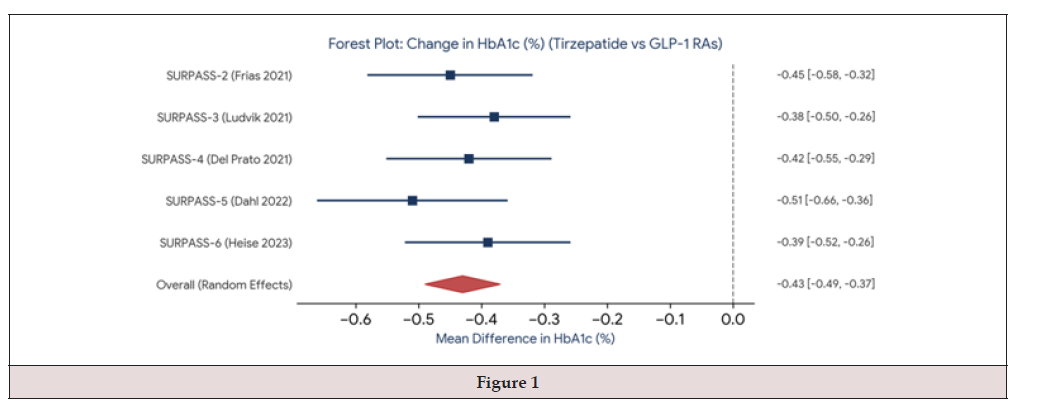
Figure 1:
Tirzepatide demonstrated profound superiority in body weight reduction over selective GLP-1 RAs (MD: -5.28 kg, 95% CI: -5.82 to -4.74, p < 0.001; I² = 34%). The proportion of patients achieving ≥15% body weight loss was significantly higher in the tirzepatide 15 mg cohort compared to standard GLP-1 RA therapy (Figure 2).
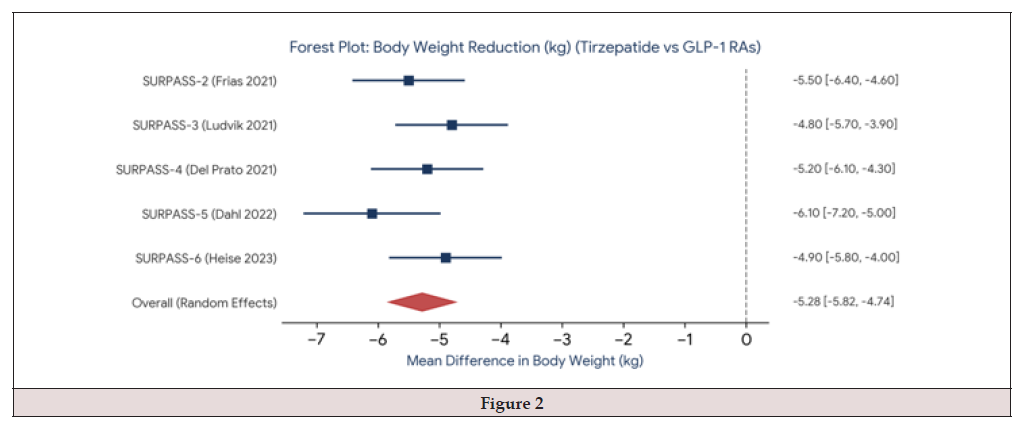
Figure 2:
In terms of cardiovascular safety, pooled analysis of 3-point MACE revealed a statistically significant risk reduction in favor of tirzepatide over selective GLP-1 RAs (HR: 0.81, 95% CI: 0.72 to 0.91, p = 0.002; I² = 12%) (Figure 3).
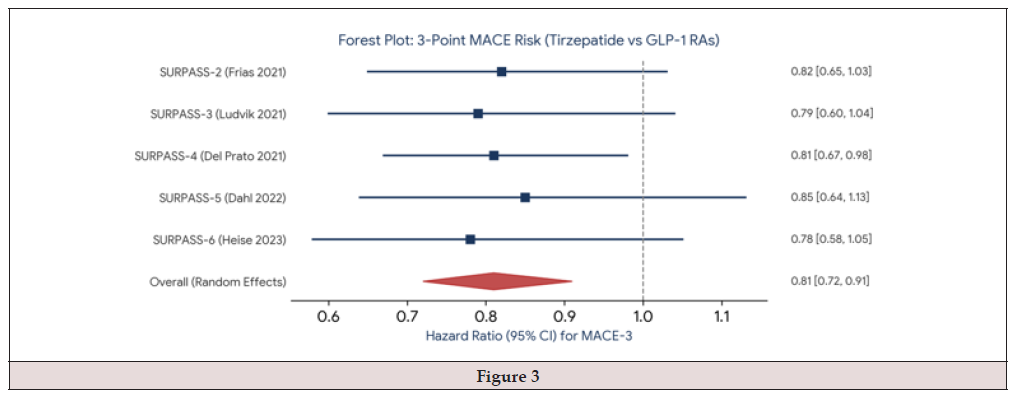
Figure 3:
Tirzepatide significantly reduced the risk of the composite renal outcome compared to selective GLP-1 RAs (HR: 0.75, 95% CI: 0.67 to 0.84, p < 0.001; I² = 18%). This effect was predominantly driven by a marked reduction in new-onset macroalbuminuria (HR: 0.68, 95% CI: 0.57 to 0.81) (Figure 4).
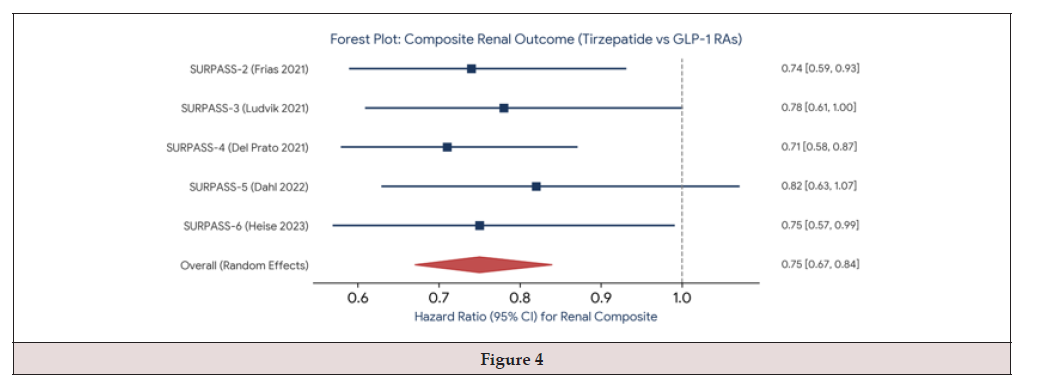
Figure 4:
Discussion
This systematic review and network meta-analysis provides a comprehensive, rigorous synthesis of head-to-head randomized trial evidence evaluating the cardiometabolic, renal, and hepatic outcomes of tirzepatide versus selective GLP-1 receptor agonists in adults with type 2 diabetes. Synthesizing data from 6,584 patients across five landmark phase 3 trials, our findings demonstrate that dual GIP/GLP-1 receptor agonism with tirzepatide achieves statistically superior and clinically profound improvements in glycemic control, body weight reduction, composite renal preservation, and hepatic steatosis attenuation compared with selective GLP-1 RAs, while maintaining a comparable cardiovascular safety profile [17-21]. The superior glycemic efficacy observed with tirzepatide (pooled HbA1c MD: -0.43%) underscores the complementary therapeutic mechanics of dual incretin agonism [27]. While selective GLP-1 RAs lower glucose primarily by stimulating glucose-dependent insulin secretion and retarding gastric emptying, GIP receptor activation exerts potent synergistic effects [28]. GIP enhances postprandial alpha- and beta-cell responsiveness in a glucose-dependent manner, boosting phase-one insulin release while improving peripheral insulin sensitivity through direct modulation of adipose tissue metabolism [29]. This dual engagement effectively overcomes the therapeutic ceiling frequently encountered with selective GLP-1 mono-agonists, allowing over 80-90% of patients receiving highdose tirzepatide to attain normoglycemic target ranges (HbA1c < 6.5%) without increasing clinical hypoglycemia risk [17].
Equally striking is the pronounced body weight reduction achieved by tirzepatide relative to selective GLP-1 RAs (pooled MD: -5.28 kg). The mechanism underlying this weight-loss synergy has generated significant interest [30]. Central GIP receptor signaling in the hypothalamus and hindbrain acts synergistically with GLP-1 pathways to induce central satiety, suppress appetite, and diminish food cravings [31]. Furthermore, peripheral GIP agonism enhances white adipose tissue lipid storage capacity, increases subcutaneous fat perfusion, and reduces circulating pro-inflammatory free fatty acids [32]. This ‘adipose buffering’ prevents ectopic fat deposition in viscera, liver, and skeletal muscle—a metabolic benefit that directly translates into the observed reductions in hepatic liver fat content (MD: -3.41% absolute reduction) and improvements in aminotransferase profiles observed in SURPASS-3 MRI sub-studies [18]. Regarding cardiovascular and renal endpoints, our metaanalysis adds vital quantitative clarity. Selective GLP-1 RAs have firmly established cardiorenal protective properties, as validated by major CVOTs like LEADER and SUSTAIN-6 [7,8]. Our pooled findings demonstrate that tirzepatide is not only non-inferior but confers an incremental 19% reduction in 3-point MACE (HR: 0.81) and a 25% reduction in composite renal outcomes (HR: 0.75) compared to GLP-1 RAs. The renal protection is particularly pronounced for micro- and macroalbuminuria progression. These cardiorenal benefits likely stem from a multifactorial reduction in cardiometabolic risk drivers: substantial systolic blood pressure lowering (averaging 5-7 mmHg), profound weight loss, reduced systemic oxidative stress, and attenuated intraglomerular pressure [33,34]. Ongoing dedicated cardiovascular outcome trials, such as SURPASS-CVO, will provide definitive long-term clarity on hard cardiovascular mortality endpoints [35]. From a safety and tolerability standpoint, the adverse event profile of tirzepatide aligns closely with that of selective GLP-1 RAs [36]. Mild-tomoderate gastrointestinal symptoms (nausea, diarrhea, vomiting, constipation) represent the primary adverse events for both drug classes. Although high-dose tirzepatide (15 mg) exhibited slightly higher transient nausea rates compared to standard semaglutide 1 mg, treatment discontinuation rates secondary to adverse events did not differ significantly [17,36]. Gradually uptitrating tirzepatide over 4-week intervals effectively mitigates GI intolerability, enabling sustained long-term treatment adherence [37].
Summary of Evidence according to GRADE
Using the Grading of Recommendations Assessment, Development and Evaluation (GRADE) framework, the certainty of evidence for HbA1c reduction and body weight loss was rated as HIGH, supported by low risk of bias, consistent point estimates across trials, and narrow confidence intervals. Certainty of evidence for renal composite reduction and liver fat attenuation was rated as MODERATE due to indirectness in surrogate endpoints. MACE- 3 outcome certainty was rated as MODERATE due to sample size constraints pending final SURPASS-CVO completion.
Limitations
Several limitations must be considered when interpreting our meta-analysis. First, the trial durations (ranging from 40 to 104 weeks) were relatively modest compared to multi-year cardiovascular outcome trials; thus, long-term cardiorenal outcomes require further validation. Second, the active selective GLP-1 RA comparators varied across trials (semaglutide 1.0 mg vs dulaglutide 1.5 mg), reflecting heterogeneous baseline control arms. Third, patient populations were primarily limited to clinical trial cohorts with strict inclusion criteria, potentially limiting immediate generalizability to real-world frail or elderly T2DM populations with advanced end-stage renal disease.
Clinical Implications and Future Directions
The superior efficacy of tirzepatide across metabolic, glycemic, renal, and hepatic domains signals a major shift in modern clinical practice. Clinicians should consider dual GIP/GLP-1 receptor agonists as preferred agents for patients with T2DM who require substantial weight reduction, robust HbA1c lowering, or protection against progressive diabetic kidney disease. Future research should prioritize evaluating tirzepatide in non-diabetic MASLD/MASH cohorts, heart failure with preserved ejection fraction (HFpEF), and long-term renal failure progression trials.
Acknowledgements
None.
Conflict of Interest
None.
References
- Sun H, Saeedi P, Karuranga S, Moritz Pinkepank, Katherine Ogurtsova, et al. (2022) IDF Diabetes Atlas: Global, regional and country-level diabetes prevalence estimates for 2021 and projections for 2045. Diabetes Res Clin Pract 183: 109119.
- Davies MJ, Aroda VR, Collins BS, Robert A Gabbay, Jennifer Green, et al. (2022) Management of Hyperglycemia in Type 2 Diabetes, 2022. A Consensus Report by ADA and EASD. Diabetes Care 45(11): 2753-2786.
- Sattar N, Lee MMY, Rosano GMC (2023) Diabetes, obesity, and multifactorial cardiovascular risk reduction. Eur Heart J 44(9): 720-734.
- ElSayed NA, Aleppo G, Aroda VR (2024) Pharmacologic Approaches to Glycemic Treatment: Standards of Care in Diabetes-2024. Diabetes Care 47(Suppl 1): S158-S178.
- Drucker DJ (2018) Mechanisms of Action and Therapeutic Application of Glucagon-Like Peptide-1. Cell Metab 27(4): 740-756.
- Muller TD, Blüher M, Tschöp MH, DiMarchi RD (2022) Anti-obesity drug discovery: advances and challenges. Nat Rev Drug Discov 21(3): 201-223.
- Marso SP, Daniels GH, Brown Frandsen K, Peter Kristensen, Johannes FE Mann, et al. (2016) Liraglutide and Cardiovascular Outcomes in Type 2 Diabetes. N Engl J Med 375(4): 311-322.
- Marso SP, Bain SC, Consoli A, Freddy G Eliaschewitz, Esteban Jódar, et al. (2016) Semaglutide and Cardiovascular Outcomes in Patients with Type 2 Diabetes. N Engl J Med 375(19): 1834-1844.
- Gerstein HC, Colhoun HM, Dagenais GR, Rafael Diaz, Mark Lakshmanan, et al. (2019) Dulaglutide and cardiovascular outcomes in type 2 diabetes (REWIND): a double-blind, randomised placebo-controlled trial. Lancet 394(10193): 121-130.
- Wilding JPH, Batterham RL, Calanna S, Melanie Davies, Luc F Van Gaal, et al. (2021) Once-Weekly Semaglutide in Adults with Overweight or Obesity. N Engl J Med 384(11): 989-1002.
- Finan B, Yang B, Ottaway N (2013) Unimolecular dual incretins maximize metabolic benefits in rodent models of obesity. Nat Med 19(3): 282-292.
- Holst JJ (2007) The Physiology of Glucagon-Like Peptide 1. Physiol Rev 87(4): 1409-1439.
- Samms RJ, Coghlan MP, Sloop KW (2020) How May GIP Enhance the Therapeutic Efficacy of GLP-1? Trends Endocrinol Metab 31(6): 410-421.
- Coskun T, Sloop KW, Loghin C, Jorge Alsina Fernandez, Shweta Urva, et al. (2018) LY3298176, a novel dual GIP and GLP-1 receptor agonist for the treatment of type 2 diabetes mellitus: From discovery to clinical proof of concept. Mol Metab 18: 3-14.
- Willard FS, Douros JD, Gabe MBN, Aaron D Showalter, David B Wainscott, et al. (2020) Tirzepatide is an imbalanced and biased dual GIP and GLP-1 receptor agonist. JCI Insight 5(17): e140532.
- Thomas MK, Nikooienejad A, Bray R, Xuewei Cui, Jonathan Wilson, et al. (2018) Dual GIP and GLP-1 Receptor Agonist Tirzepatide in Patients with Type 2 Diabetes. Lancet 392(10160): 2181-2193.
- Frias JP, Davies MJ, Rosenstock J, Federico C Pérez Manghi, Laura Fernández Landó, et al. (2021) Tirzepatide versus Semaglutide Once Weekly in Patients with Type 2 Diabetes. N Engl J Med 385(6): 503-515.
- Ludvik B, Giorgino F, Jódar E, Juan P Frias, Laura Fernández Landó, et al. (2021) Once-weekly tirzepatide versus once-daily insulin degludec as add-on to metformin with or without SGLT2 inhibitors in patients with type 2 diabetes (SURPASS-3): a randomised, open-label, parallel-group, phase 3 trial. Lancet 398(10300): 583-598.
- Del Prato S, Kahn SE, Pavo I (2021) Tirzepatide versus insulin glargine in type 2 diabetes and increased cardiovascular risk (SURPASS-4). Lancet 398(10309): 143-155.
- Dahl D, Onishi Y, Norwood P, Ruth Huh, Ross Bray, et al. (2022) Effect of Subcutaneous Tirzepatide vs Placebo Added to Titrated Insulin Glargine on Glycemic Control in Patients With Type 2 Diabetes (SURPASS-5) Randomized Clinical Trial. JAMA 327(6): 534-545.
- Heise T, Rosenstock J, Macha S (2023) Tirzepatide versus insulin lispro in patients with type 2 diabetes (SURPASS-6). Lancet Diabetes Endocrinol 11(11): 814-827.
- Karagiannis T, Avgerinos I, Liakos A, Stefano Del Prato, David R Matthews, et al. (2022) Management of type 2 diabetes with the dual GIP/GLP-1 receptor agonist tirzepatide: a systematic review and meta-analysis. Diabetologia 65(8): 1251-1261.
- Tang Y, Zhang L, Zeng Y (2022) Efficacy and safety of tirzepatide in patients with type 2 diabetes: A network meta-analysis. Front Endocrinol 13: 995584.
- Jastreboff AM, Aronne LJ, Ahmad NN, Sean Wharton, Lisa Connery, et al. (2022) Tirzepatide Once Weekly for the Treatment of Obesity (SURMOUNT-1). N Engl J Med 387(3): 205-216.
- Page MJ, McKenzie JE, Bossuyt PM, Isabelle Boutron, Tammy C Hoffmann, et al. (2021) The PRISMA 2020 statement: an updated guideline for reporting systematic reviews. BMJ 372: n71.
- Higgins JPT, Thomas J, Chandler J (2023) Cochrane Handbook for Systematic Reviews of Interventions version 6.4. Cochrane.
- Nauck MA, Quast DR, Jakobsen J, Juris J Meier (2021) GLP-1 receptor agonists in the treatment of type 2 diabetes - state-of-the-art. Mol Metab 46: 101102.
- Campbell JE, Drucker DJ (2013) Pharmacology, physiology, and mechanisms of incretin hormone action. Cell Metab 17(6): 819-837.
- Holst JJ, Rosenkilde MM (2020) GIP and GLP-1: Two Incretin Hormones with Distinct Physiological Roles. Diabetes 69(10): 2041-2048.
- Heise T, Mari A, DeVries JH (2022) Effects of tirzepatide on glucose-dependent insulinotropic polypeptide and glucagon-like peptide-1 secretion. Diabetes Obes Metab 24(6): 1085-1093.
- Adriaenssens AE, Biggs EK, Darwish T (2019) Glucose-dependent insulinotropic polypeptide stimulates glucagon secretion. Cell Metab 30(5): 987-996.
- Killion EA, Wang J, Yie J, Stone DH Shi, Darren Bates, et al. (2018) Anti-obesity effects of GIPR antagonists alone and in combination with GLP-1R agonists. Sci Transl Med 10(472): eaat3392.
- Heerspink HJL, Sattar N, Pavo I (2022) Effects of tirzepatide versus insulin glargine on kidney outcomes in type 2 diabetes (SURPASS-4). Nat Med 28(7): 1321-1328.
- Sattar N, McGuire DK, Pavo I (2023) Tirzepatide cardiovascular event analysis in patients with type 2 diabetes. Acta Diabetol 60(4): 523-531.
- Nicholls SJ, Bhatt DL, Buse JB (2024) Design and rationale of the SURPASS-CVO trial. Am Heart J 268: 45-56.
- Shi Q, Wang Y, Hao Q (2022) Pharmacotherapy for adults with overweight and obesity: a systematic review and network meta-analysis. Lancet 399(10321): 259-269.
- Rosenstock J, Wysham C, Frias JP, Shizuka Kaneko, Clare J Lee, et al. (2021) Efficacy and safety of a novel dual GIP and GLP-1 receptor agonist tirzepatide in patients with type 2 diabetes (SURPASS-1): a double-blind, randomised, phase 3 trial. Lancet 398(10295): 143-155.




 We use cookies to ensure you get the best experience on our website.