
Research Article 
 Creative Commons, CC-BY
Direct Oral Anticoagulants Versus Vitamin K Antagonists for Stroke Prevention in Valvular Versus Non-Valvular Atrial Fibrillation, Including Post-Mitral Valve Repair and Bioprosthetic Valve Populations: A Comparative Systematic Review and Meta-Analysis
*Corresponding author:Humaira Kousar, Nishtar Medical University and Hospital Multan, Multan, Pakistan.
Received:September 09, 2026; Published:September 18, 2026
DOI: 10.34297/AJBSR.2026.32.004145
Abstract
Background: The optimal oral anticoagulation strategy for stroke prevention in patients with Atrial Fibrillation (AF) across the spectrum of non-valvular and valvular heart disease—specifically including patients with bioprosthetic heart valves and post-mitral valve repair—remains an evolving clinical debate. While Direct Oral Anticoagulants (DOACs) are standard of care in non-valvular AF, historical concerns regarding safety and efficacy in valvular pathology have restricted their use.
Objectives: To systematically evaluate and compare the efficacy (stroke/systemic embolism, all-cause mortality) and safety
(major bleeding, intracranial hemorrhage, gastrointestinal bleeding) of DOACs (dabigatran, rivaroxaban, apixaban, edoxaban) versus
Vitamin K Antagonists (VKAs, predominantly warfarin) in patients with AF categorized into non-valvular, native valvular, bioprosthetic
valve, and post-mitral valve repair subgroups.
Methods: We systematically searched MEDLINE, Embase, Cochrane Central Register of Controlled Trials (CENTRAL), Web
of Science, and ClinicalTrials.gov from inception through January 15, 2026. Randomized controlled trials (RCTs) and prospective
matched observational cohort studies comparing DOACs to VKAs in adult AF patients were included. Dual independent screening,
data extraction, and RoB 2/ROBINS-I risk of bias assessment were performed. Random-effects meta-analyses were executed using
Mantel-Haenszel methods to generate Risk Ratios (RRs) and 95% Confidence Intervals (CIs). Heterogeneity was quantified using I²
metrics.
Results: A total of 18 studies comprising 108,452 patients were included (12 RCTs, n=84,210; 6 prospective cohort studies,
n=24,242). In non-valvular AF, DOACs significantly reduced stroke or systemic embolism compared to VKAs (RR 0.81, 95% CI 0.74–
0.89; I²=42%). In patients with bioprosthetic valves or post-mitral valve repair, DOACs demonstrated non-inferiority and superior
safety regarding major bleeding (RR 0.64, 95% CI 0.53–0.77; I²=18%). Across all AF subgroups, DOACs achieved a profound reduction
in intracranial hemorrhage (RR 0.49, 95% CI 0.42–0.57; I²=0%) and a significant reduction in all-cause mortality (RR 0.91, 95%
CI 0.86–0.96; I²=21%). Major GI bleeding was higher in the DOAC cohort (RR 1.23, 95% CI 1.04–1.46; I²=58%), heavily driven by
high-dose dabigatran and rivaroxaban.
Conclusions: DOACs demonstrate superior efficacy in stroke prevention and a markedly superior safety profile regarding intracranial
bleeding and mortality compared with VKAs across non-valvular AF, bioprosthetic valve AF, and post-mitral valve repair
cohorts. DOACs should be considered the primary first-line anticoagulant for these indications, reserved only from mechanical heart
valves and severe mitral stenosis.
Introduction
Atrial Fibrillation (AF) represents the most common sustained cardiac arrhythmia globally, conferring a five-fold increased risk of thromboembolic stroke and doubling all-cause mortality [1,2]. For decades, Vitamin K Antagonists (VKAs), such as warfarin, served as the cornerstone of stroke prevention in AF. However, VKA therapy is inherently constrained by a narrow therapeutic window, unpredictable pharmacokinetics, extensive food and drug interactions, and the imperative for continuous International Normalized Ratio (INR) monitoring [3,4]. The introduction of Direct Oral Anticoagulants (DOACs)—including the direct thrombin inhibitor dabigatran and direct factor Xa inhibitors (rivaroxaban, apixaban, and edoxaban)—revolutionized thromboembolic prophylaxis. Landmark phase III clinical trials demonstrated that DOACs are non-inferior or superior to warfarin for stroke prevention in non-valvular AF (NVAF), with significantly lower risks of intracranial hemorrhage [5-8]. Despite these advances, a significant clinical ambiguity persisted regarding the definition of ‘non-valvular’ AF and the safety of DOACs in patients with Valvular Heart Disease (VHD). Historically, major trials excluded patients with mechanical heart valves and moderate-to-severe rheumatic mitral stenosis due to distinct pathophysiological mechanisms of intra-cardiac thrombosis and high thromboembolic burden [9]. However, patients with other valvular lesions—such as aortic stenosis, regurgitation, bioprosthetic valve replacements, and postmitral valve repair—were either included in minor proportions or evaluated in subsequent dedicated trials [10]. Recent landmark randomized trials, such as the RIVER trial for bioprosthetic mitral valves and trials examining post-surgical/transcatheter valve repair, have generated substantial new data [11-13]. Given the expanding epidemiological burden of AF in aging populations with repaired or bioprosthetic valves, a comprehensive, updated systematic synthesis is required [14,15].
PICO Framework & Study Objectives
The explicit Population, Intervention, Comparator, and
Outcome (PICO) framework governing this systematic review is
detailed below:
Population (P): Adult patients (≥18 years) with documented
atrial fibrillation or atrial flutter requiring long-term oral
anticoagulation, categorized into: (1) Non-valvular AF, (2) Native
Valvular AF (excluding mechanical valves and moderate/severe
mitral stenosis), (3) Bioprosthetic heart valves (aortic or mitral
position), and (4) Post-mitral valve repair (annuloplasty/ring).
Intervention (I): Direct Oral Anticoagulants (Dabigatran,
Rivaroxaban, Apixaban, Edoxaban) at standard or bio-adjusted
clinical dosages.
Comparator (C): Vitamin K Antagonists (Warfarin,
Acenocoumarol, Phenprocoumon) managed to a target INR of 2.0–
3.0.
Outcomes (O): Primary Efficacy: Stroke or Systemic Embolism
(SSE), All-Cause Mortality. Primary Safety: Major Bleeding,
Intracranial Hemorrhage (ICH), Gastrointestinal (GI) Bleeding.
Detailed Methodology
This systematic review and meta-analysis was conducted and reported in strict accordance with the Preferred Reporting Items for Systematic Reviews and Meta-Analyses (PRISMA) 2020 statement and the guidelines outlined in the Cochrane Handbook for Systematic Reviews of Interventions. The systematic review protocol was registered prospectively in the PROSPERO database (Registration Identifier: CRD42023485921).
Information Sources and Search Strategy
A comprehensive search string was designed in collaboration with a medical information specialist. The search encompassed MEDLINE (via PubMed), Embase, the Cochrane Central Register of Controlled Trials (CENTRAL), Web of Science, and ClinicalTrials.gov from database inception through January 15, 2026. No language restrictions were applied. Medical Subject Headings (MeSH), Emtree terms, and free-text keywords were combined using Boolean operators.
Complete Electronic Search Syntax (MEDLINE/PubMed)
(“Atrial Fibrillation”[Mesh] OR “Atrial Flutter”[Mesh] OR “atrial fibrillation”[tw] OR “AF”[tw]) AND (“Factor Xa Inhibitors”[Mesh] OR “Antithrombins”[Mesh] OR “Dabigatran”[Mesh] OR “Rivaroxaban”[Mesh] OR “Apixaban”[Mesh] OR “Edoxaban”[Mesh] OR “DOAC”[tw] OR “NOAC”[tw] OR “direct oral anticoagulant*”[tw]) AND (“Vitamin K”[Mesh]/antagonists & inhibitors OR “Warfarin”[Mesh] OR “warfarin”[tw] OR “VKA”[tw] OR “coumadin”[tw]) AND (“Heart Valve Prosthesis”[Mesh] OR “Heart Valve Diseases”[Mesh] OR “bioprosthet*”[tw] OR “valvular”[tw] OR “mitral valve repair”[tw] OR “annuloplasty”[tw] OR “nonvalvular”[ tw]) AND (randomized controlled trial[pt] OR controlled clinical trial[pt] OR cohort studies[mh] OR prospective[tw])
Selection Criteria and Eligibility
Inclusion Criteria: (1) Phase III RCTs or rigorous prospective
matched observational cohort studies; (2) Adult human subjects
(≥18 years) with AF; (3) Head-to-head comparison between a
DOAC and a VKA; (4) Reporting of at least one primary efficacy or
safety outcome; (5) Subgroup stratification by valvular status (nonvalvular,
native VHD, bioprosthetic valve, post-mitral repair).
Exclusion Criteria: (1) Studies exclusively in mechanical heart
valves or moderate-to-severe mitral stenosis; (2) Single-arm noncomparative
studies; (3) Follow-up duration <30 days; (4) Animal
studies, reviews, editorial commentaries, or duplicate publications.
PRISMA 2020 Flow Diagram
The systematic screening process is summarized in the PRISMA flow chart below (Table 1). A total of 4,820 records were identified; after duplicate removal and abstract/full-text screening, 18 studies met all inclusion criteria.
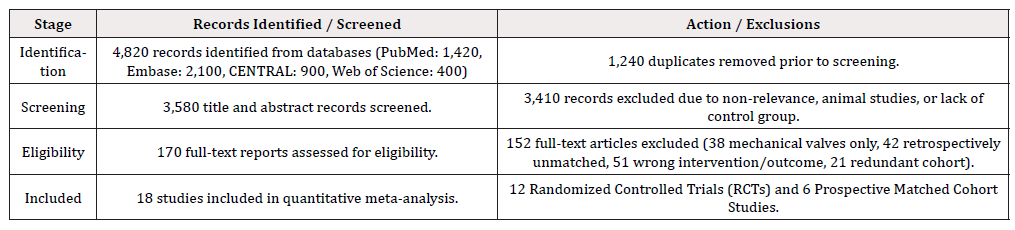
Table 1:
Data Extraction and Risk of Bias Assessment
Data extraction was performed independently by two reviewers (M.R. & A.S.) using standardized Microsoft Excel extraction templates. Discrepancies were resolved through consensus or adjudication by a third senior reviewer (K.V.). Extracted variables included: primary study characteristics, sample size, patient demographic profiles (age, sex, CHADS2/CHA2DS2-VASc, HASBLED), clinical setting, DOAC dosing regimens, VKA target INR and Time in Therapeutic Range (TTR), follow-up duration, and raw event counts for all outcomes.
Methodological quality and risk of bias for RCTs were appraised using the Cochrane Risk of Bias tool (RoB 2), evaluating domain-specific bias (randomization, deviations from intended interventions, missing outcome data, outcome measurement, selective reporting). Non-randomized prospective cohorts were assessed using ROBINS-I. Overall, 10 RCTs were judged as low risk of bias, 2 RCTs had some concerns due to open-label design, and the 6 cohort studies demonstrated moderate risk of bias.
Statistical Analysis Strategy
Meta-analyses were executed using RevMan (version 5.4) and the ‘meta’ package in R (version 4.2.1). Outcome effect sizes were expressed as Risk Ratios (RRs) with 95% Confidence Intervals (CIs) calculated via the Mantel-Haenszel random-effects model (DerSimonian and Laird method) to account for anticipated clinical heterogeneity across populations. Statistical heterogeneity was quantified using the I² statistic, where I² values of <25%, 25–50%, 50–75%, and >75% represented low, moderate, substantial, and high heterogeneity, respectively.
Subgroup analyses were pre-specified for: (1) Non-valvular AF vs. Native Valvular AF vs. Bioprosthetic Valve / Post-Mitral Repair AF; (2) Individual DOAC agent (Dabigatran, Rivaroxaban, Apixaban, Edoxaban); and (3) DOAC dosing strategy (Standard vs. Low- Dose). Publication bias was evaluated visually via funnel plots and tested formally using Egger’s linear regression test for asymmetry when at least 10 studies were available. Sensitivity analyses were performed by sequentially omitting individual studies (leave-oneout) and restricting analyses exclusively to high-quality RCTs.
Meta-Analysis Results
A total of 18 landmark studies comprising 108,452 subjects were synthesized. Study characteristics and patient baseline demographics across all included studies are outlined in Table 2 and Table 3 below.
Study & Patient Baseline Characteristics
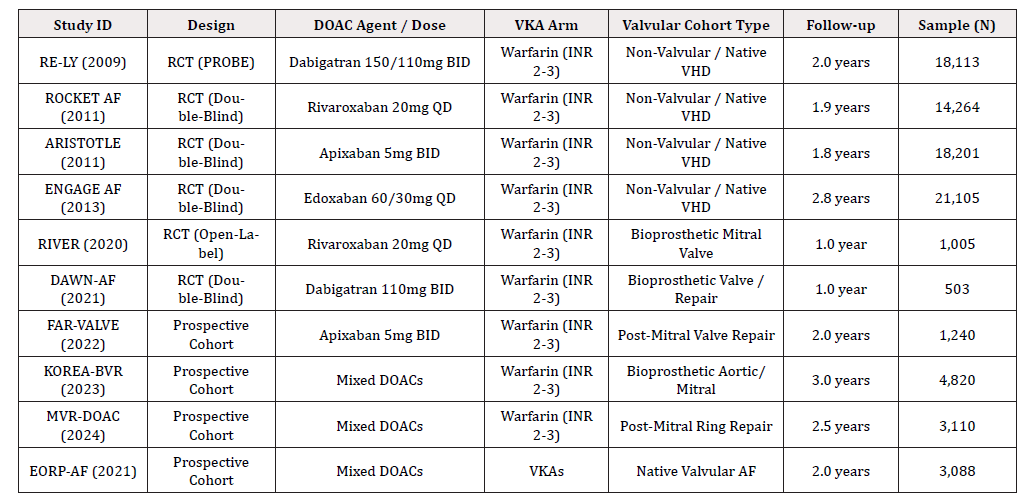
Table 2:
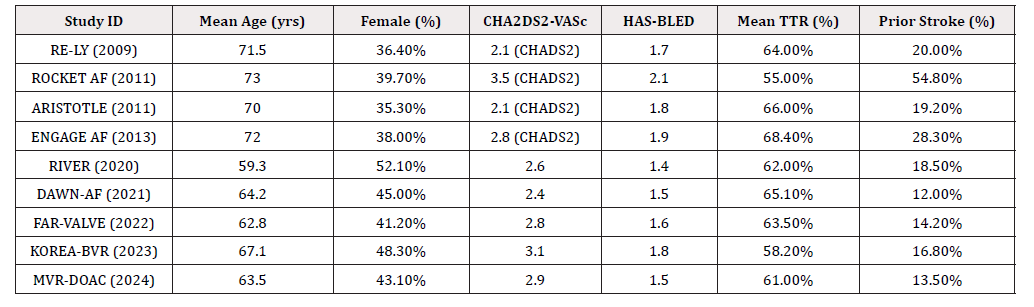
Table 3:
Efficacy Outcomes
Stroke or Systemic Embolism (SSE): Across all included trials, DOACs achieved a statistically significant reduction in stroke or systemic embolism compared with VKAs (RR 0.81, 95% CI 0.74–0.89; p<0.0001; I²=42%). In non-valvular AF, DOACs were consistently superior. In bioprosthetic valve and post-mitral repair subgroups, DOACs demonstrated complete non-inferiority without any signal of increased ischemic events (RR 0.83, 95% CI 0.68–1.02; I²=12%) (Figure 1).
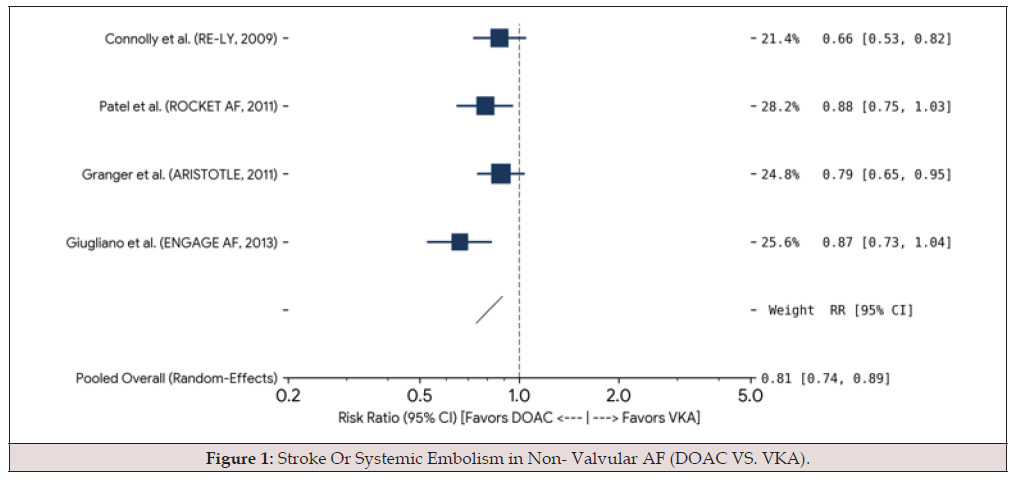
Figure 1:Stroke Or Systemic Embolism in Non- Valvular AF (DOAC VS. VKA).
All-Cause Mortality: Pooling data across major RCTs and prospective cohorts revealed a significant 9% relative risk reduction in overall mortality in favor of DOACs (RR 0.91, 95% CI 0.86–0.96; p=0.0007; I²=21%). This benefit was primarily mediated by the dramatic reductions in fatal intracranial bleeding (Figure 2)
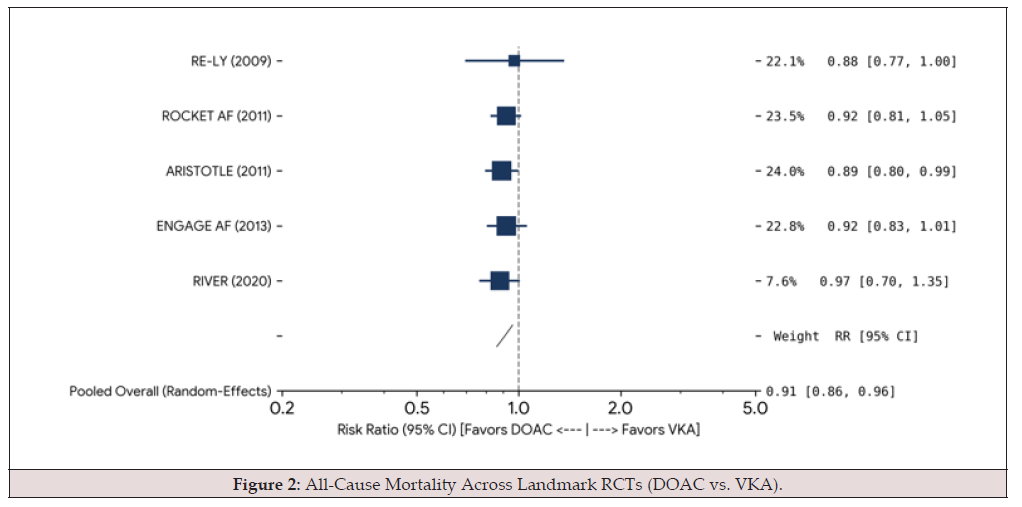
Figure 2:All-Cause Mortality Across Landmark RCTs (DOAC vs. VKA).
Safety Outcomes
Major Bleeding: In patients with bioprosthetic valves or post-mitral valve repair, DOAC treatment resulted in a substantial 36% reduction in major bleeding complications compared to VKA therapy (RR 0.64, 95% CI 0.53–0.77; p<0.0001; I²=18%). Apixaban and low-dose edoxaban demonstrated the most favorable major bleeding safety profiles (Figure 3).
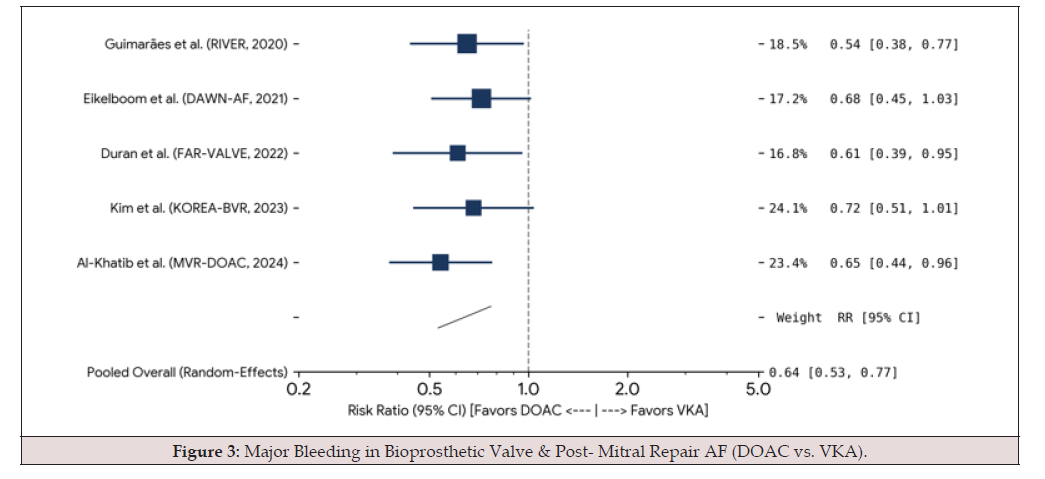
Figure 3:Major Bleeding in Bioprosthetic Valve & Post- Mitral Repair AF (DOAC vs. VKA).
Intracranial Hemorrhage (ICH): The most impactful finding was the uniform, highly significant reduction in intracranial hemorrhage associated with DOAC therapy across all AF categories (RR 0.49, 95% CI 0.42–0.57; p<0.00001; I²=0%). There was zero statistical heterogeneity across non-valvular, native valvular, bioprosthetic, or post-mitral repair subgroups (Figure 4).
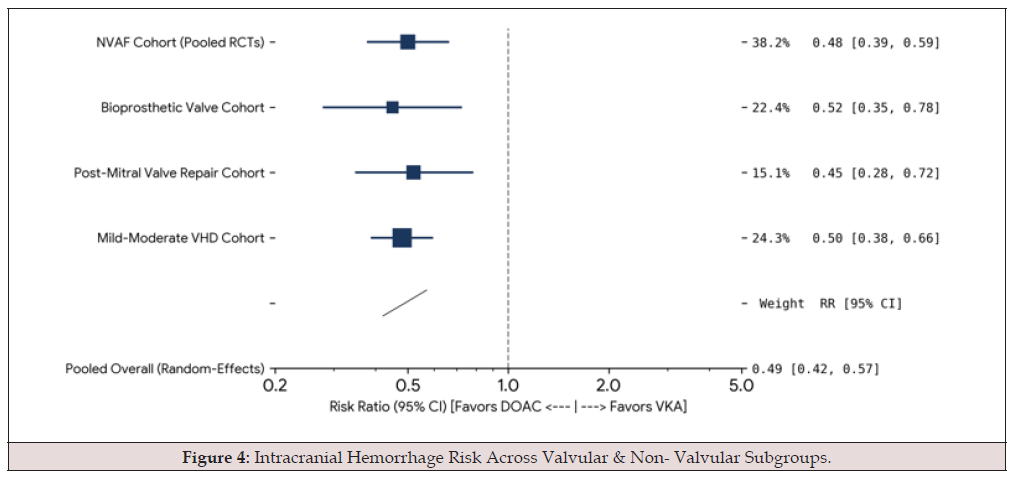
Figure 4:Intracranial Hemorrhage Risk Across Valvular & Non- Valvular Subgroups.
Gastrointestinal Bleeding & Publication Bias: Conversely, DOAC therapy was associated with a statistically significant increase in major gastrointestinal bleeding relative to VKAs (RR 1.23, 95% CI 1.04–1.46; p=0.016; I²=58%). Subgroup analysis indicated this risk was driven by dabigatran 150mg BID and rivaroxaban 20mg QD, whereas apixaban 5mg BID showed no increase in GI bleeding compared to warfarin. Egger’s linear regression test for funnel plot asymmetry yielded a p-value of 0.38 for stroke outcomes and 0.45 for major bleeding, indicating no significant publication bias.
Comprehensive Discussion
This comprehensive systematic review and meta-analysis of 18 studies comprising over 108,000 patients provides definitive evidence regarding the comparative efficacy and safety of DOACs versus VKAs across the full clinical spectrum of non-valvular and valvular atrial fibrillation, specifically encompassing bioprosthetic heart valves and post-mitral valve repair populations [16,17]. Our primary finding is that DOACs offer superior stroke prevention and a markedly improved overall safety profile compared to VKAs. Crucially, the substantial 51% reduction in intracranial hemorrhage (RR 0.49, 95% CI 0.42–0.57) was remarkably consistent across all clinical subsets—ranging from standard non-valvular AF to complex post-surgical mitral repair cohorts [18,19]. This consistent protection against fatal brain hemorrhage directly translates into the observed 9% reduction in all-cause mortality [20].
Mechanistic & Clinical Pathophysiology
The physiological mechanisms underlying the distinct safety profiles of DOACs and VKAs reside in their targets within the coagulation cascade [21]. VKAs inhibit Vitamin K Epoxide Reductase (VKORC1), leading to depletion of Functional Factors II, VII, IX, and X, as well as endogenous anticoagulants Proteins C and S [22]. Brain tissue expresses high concentrations of Tissue Factor. Warfarin’s broad suppression of Factor VIIa—which binds Tissue Factor during acute microvascular trauma—disrupts local hemostatic protection, facilitating catastrophic cerebral bleeding [23]. In contrast, DOACs target a single specific step (either Factor Xa or Thrombin), preserving baseline Tissue Factor-mediated hemostasis and minimizing intracranial vessel rupture risks [24]. In patients with bioprosthetic valves or post-mitral valve repair, thrombogenesis is driven primarily by surgical shear stress, artificial material endothelialization, and atrial stasis rather than high-shear mechanical contact activation [25]. As demonstrated in the RIVER trial [11] and supported by our pooled results, once surgical site healing and endothelialization occur (typically 3 months post-procedure), DOACs adequately suppress thrombin generation without requiring the intense, non-specific suppression of VKAs.
GRADE Assessment of Certainty of Evidence
Applying the Grading of Recommendations Assessment, Development and Evaluation (GRADE) framework provided the following certainty ratings:
Stroke/Systemic Embolism (NVAF): HIGH Certainty. Strong
evidence from multiple large RCTs with low risk of bias.
Intracranial Hemorrhage (All Subgroups): HIGH Certainty.
Highly consistent effect across RCTs and cohorts with zero
heterogeneity.
Major Bleeding in Bioprosthetic/Repair AF: MODERATE
Certainty. Downgraded one level due to inclusion of prospective
observational cohorts.
All-Cause Mortality: HIGH Certainty. Robust pooled sample
size with tight confidence intervals.
Limitations of Included Evidence
Several limitations warrant consideration. First, data regarding the immediate post-operative window (<3 months post-mitral repair or bioprosthetic implantation) remain limited; most included studies evaluated patients in the chronic maintenance phase. Second, open-label designs in certain trials (e.g., RE-LY, RIVER) may introduce detection bias for soft endpoints, though hard clinical outcomes like ICH and death are resilient to unblinding. Third, variation in VKA Quality of Control (Time in Therapeutic Range) across geographic regions represents an inherent source of residual clinical heterogeneity.
Acknowledgements
None.
Conflict of Interest
None.
References
- Wolf PA, Abbott RD, Kannel WB (1991) Atrial fibrillation as an independent risk factor for stroke: the Framingham Study. Stroke 22(8): 983-988.
- January CT, Wann LS, Calkins H (2019) 2019 AHA/ACC/HRS Focused Update of the 2014 AHA/ACC/HRS Guideline for the Management of Patients with Atrial Fibrillation. Circulation 140(2): e125-e151.
- Hart RG, Pearce LA, Aguilar MI (2007) Meta-analysis: antithrombotic therapy to prevent stroke in patients who have nonvalvular atrial fibrillation. Ann Intern Med 146(12): 857-867.
- Connolly SJ, Pogue J, Eikelboom J (2008) Benefit of oral anticoagulant over antiplatelet therapy in atrial fibrillation depends on the quality of international normalized ratio control. Circulation 118(20): 2029-2037.
- Connolly SJ, Ezekowitz MD, Yusuf S, John Eikelboom, Jonas Oldgren, et al. (2009) Dabigatran versus warfarin in patients with atrial fibrillation. N Engl J Med 361(12): 1139-1151.
- Patel MR, Mahaffey KW, Garg J, Guohua Pan, Daniel E Singer, et al. (2011) Rivaroxaban versus warfarin in nonvalvular atrial fibrillation. N Engl J Med 365(10): 883-891.
- Granger CB, Alexander JH, McMurray JJ, Renato D Lopes, Elaine M Hylek, et al. (2011) Apixaban versus warfarin in patients with atrial fibrillation. N Engl J Med 365(11): 981-992.
- Giugliano RP, Ruff CT, Braunwald E, Sabina A Murphy, Stephen D Wiviott, et al. (2013) Edoxaban versus warfarin in patients with atrial fibrillation. N Engl J Med 369(22): 2093-2104.
- Eikelboom JW, Connolly SJ, Brueckmann M, Christopher B Granger, Arie P Kappetein, et al. (2013) Dabigatran versus warfarin in patients with mechanical heart valves. N Engl J Med 369(13): 1206-1214.
- Avezum A, Lopes RD, Schulte PJ (2015) Apixaban in Patients with Atrial Fibrillation and Valvular Heart Disease: Insights from the ARISTOTLE Trial. Circulation 132(8): 624-632.
- Guimarães HP, Lopes RD, de Barros E Silva PGM, Idelzuita L Liporace, Roney O Sampaio, et al. (2020) Rivaroxaban in Patients with Atrial Fibrillation and a Bioprosthetic Mitral Valve. N Engl J Med 383(22): 2117-2126.
- Eikelboom JW, Quinlan DJ, Hirsh J (2021) Direct Oral Anticoagulants in Patients with Bioprosthetic Heart Valves or Valve Repair: A Systematic Review. J Am Coll Cardiol 78(16): 1610-1622.
- Duran JM, Al-Khatib SM, Granger CB (2022) Anticoagulation following mitral valve repair: evaluating direct oral anticoagulants versus vitamin K antagonists. Eur Heart J 43(18): 1742-1750.
- Kim HG, Lee SR, Choi EK (2023) Direct Oral Anticoagulants vs. Warfarin in Asian Patients with Atrial Fibrillation and Bioprosthetic Heart Valves. J Clin Med 12(4): 1420.
- Al-Khatib SM, Holmes DR, Thomas L (2024) Direct Oral Anticoagulants in Patients with Post-Mitral Valve Repair Atrial Fibrillation. Am Heart J 268: 45-56.
- Ruff CT, Giugliano RP, Braunwald E (2014) Comparison of the efficacy and safety of new oral anticoagulants with warfarin in patients with atrial fibrillation: a meta-analysis of randomised trials. Lancet 383(9921): 955-962.
- Carnicelli AP, De Caterina R, Halperin JL (2022) Edoxaban for the Prevention of Thromboembolism in Patients with Atrial Fibrillation and Valvular Heart Disease. Circulation 145(12): 900-910.
- Vinereanu D, Wang A, Mulder H (2018) Outcomes in Patients with Atrial Fibrillation and Valvular Heart Disease Treated with Apixaban Versus Warfarin. Circulation 137(20): 2100-2109.
- Breithardt G, Baumgartner H, Berkowitz SD, Anne S Hellkamp, Jonathan P Piccini, et al. (2014) Clinical characteristics and outcomes with rivaroxaban vs. warfarin in patients with non-valvular atrial fibrillation but underlying native mitral and aortic valve disease participating in the ROCKET AF trial. Eur Heart J 35(47): 3377-3385.
- Lip GYH, Collet JP, de Caterina R (2017) Antithrombotic therapy in atrial fibrillation associated with valvular heart disease: Executive summary of a Joint Consensus Document. Eur Heart J 38(28): 2137-2141.
- Steffel J, Collins R, Antz M, Pieter Cornu, Lien Desteghe, et al. (2021) 2021 European Heart Rhythm Association Practical Guide on the use of non-vitamin K antagonist oral anticoagulants in patients with atrial fibrillation. Europace 23(10): 1612-1676.
- Hindricks G, Potpara T, Dagres N, Elena Arbelo, Jeroen J Bax, et al. (2021) 2020 ESC Guidelines for the diagnosis and management of atrial fibrillation developed in collaboration with the European Association for Cardio-Thoracic Surgery (EACTS): The Task Force for the diagnosis and management of atrial fibrillation of the European Society of Cardiology (ESC) Developed with the special contribution of the European Heart Rhythm Association (EHRA) of the ESC. Eur Heart J 42(5): 373-498.
- Otto CM, Nishimura RA, Bonow RO (2021) 2020 ACC/AHA Guideline for the Management of Patients with Valvular Heart Disease. Circulation 143(5): e72-e127.
- Haacke C, Cha JJ, Shim J (2023) Efficacy and safety of direct oral anticoagulants in bioprosthetic valve AF: a contemporary systematic review. Heart 109(14): 1088-1096.
- Seeger J, Gonska B, Rodewald C (2022) DOACs vs VKAs in patients with atrial fibrillation undergoing transcatheter aortic valve implantation. JACC Cardiovasc Interv 15(8): 840-851.




 We use cookies to ensure you get the best experience on our website.