
Research Article 
 Creative Commons, CC-BY
Risk Of Respiratory Failure and Cardiovascular Adverse Events with Terlipressin and Albumin Therapy in Hepatorenal Syndrome: A Systematic Review and Meta-Analysis
*Corresponding author:Siffat Ullah, Jiangxi medical college of Nanchang university, China..
Received:November 03, 2026; Published:November 09, 2026
DOI: 10.34297/AJBSR.2026.32.004205
Abstract
Background: Terlipressin combined with intravenous albumin is a standard vasoconstrictor regimen for Hepatorenal Syndrome (HRS-AKI). However, emerging clinical trial safety data highlight serious adverse respiratory and cardiovascular events.
Objectives: To systematically evaluate the relative risk of respiratory failure, cardiovascular adverse events, and HRS reversal in patients with hepatorenal syndrome receiving Terlipressin plus Albumin versus active comparator or placebo regimens.
Methods: Following PRISMA 2020 guidelines and Cochrane Handbook standards (PROSPERO: CRD42023458921), we searched PubMed/MEDLINE, Embase, Cochrane CENTRAL, and ClinicalTrials.gov from inception through October 31, 2023. We included randomized controlled trials (RCTs) and high-quality prospective cohorts evaluating Terlipressin + Albumin in adult HRS patients. Risk of bias was assessed using RoB 2 and Newcastle-Ottawa Scale. Pooled Risk Ratios (RRs) with 95% Confidence Intervals (CIs) were computed using Mantel-Haenszel random-effects models.
Results: Six eligible studies (5 RCTs, 1 prospective cohort; N = 982 patients) were included. Terlipressin + Albumin therapy significantly increased the risk of severe respiratory failure (RR = 1.86, 95% CI: 1.32–2.62, p = 0.002, I² = 0.0%) and cardiovascular adverse events (RR = 2.48, 95% CI: 1.48–4.16, p < 0.001, I² = 0.0%) compared to controls. Simultaneously, Terlipressin + Albumin demonstrated superior efficacy in achieving HRS reversal (RR = 1.69, 95% CI: 1.34–2.13, p < 0.001, I² = 0.0%). Baseline ACLF Grade 3 and fluid overload were significant risk factors for fatal respiratory complications.
Conclusions: Terlipressin and Albumin therapy significantly enhances HRS reversal but carries a substantial risk of respiratory failure and cardiovascular toxicity. Careful patient selection, monitoring for volume overload, and avoiding use in severe ACLF (Grade 3) are crucial clinical risk mitigation strategies.
Introduction
Hepatorenal Syndrome (HRS), specifically Hepatorenal Syndrome–Acute Kidney Injury (HRS-AKI, historically classified as Type 1 HRS), represents one of the most severe and lethal clinical manifestations of decompensated cirrhosis and advanced chronic liver disease [1,2]. Pathophysiologically, HRS-AKI is defined as functional renal failure occurring in the absence of primary structural renal parenchyma injury [2]. It arises from a complex cascade of systemic circulatory derangements initiated by portal hypertension [3]. Splanchnic arterial vasodilation, driven by excessive local production of endogenous vasodilators such as nitric oxide, carbon monoxide, and prostacyclins, reduces Effective Arterial Blood Volume (EABV) [3,4]. In response to splanchnic arterial underfilling, the systemic circulation activates compensatory neurohumoral axes, including the Renin-Angiotensin-Aldosterone System (RAAS), the Sympathetic Nervous System (SNS), and non-osmotic vasopressin release [4,5]. While these compensatory mechanisms transiently maintain systemic arterial pressure, they induce intense, progressive intrarenal vasoconstriction [5]. The resulting drop in renal blood flow and Glomerular Filtration Rate (GFR) leads to oliguria, hypercreatininemia, rapid renal dysfunction, and high short-term mortality if uncorrected [2,5].
Portal Hypertension ──> Splanchnic Vasodilation ──> Decreased Effective Arterial Blood Volume (EABV) │ ▼ Activation of RAAS, SNS & Vasopressin │ ▼ Intense Intrarenal Vasoconstriction │ ▼ HRS-AKI (Rapid Renal Failure)
For more than two decades, the therapeutic mainstay for pharmacological reversal of HRS-AKI has relied on the combination of systemic vasoconstrictors and intravenous human albumin [2,6]. The primary objective of vasoconstrictor therapy is to selectively reverse splanchnic arterial vasodilation, thereby increasing Systemic Vascular Resistance (SVR), elevating Mean Arterial Pressure (MAP), suppressing activated neurohumoral reflexes, and restoring renal perfusion pressure [6,7]. Among available vasoactive agents, Terlipressin—a synthetic triglycyl analogue of lysine vasopressin— is widely utilized internationally and serves as a first-line pharmacological treatment in European and American clinical practice guidelines [2,6,8]. Terlipressin acts as a prodrug that undergoes slow enzymatic cleavage by endothelial peptidases to yield active lysine vasopressin [8]. It exerts selective agonist activity on vascular V_1 receptors located on splanchnic vascular smooth muscle cells [8,9]. By inducing splanchnic arterial constriction, Terlipressin shifts blood volume from the dilated splanchnic bed into the systemic circulation, raising effective arterial blood volume and MAP while minimizing systemic cardiac side effects compared to non-selective vasopressors [8,9].
Intravenous albumin serves as an indispensable synergy partner to Terlipressin [6,10]. Beyond expanding intravascular volume, human albumin exerts biological effects in cirrhosis, including binding circulating endotoxins, scavenging Reactive Oxygen Species (ROS), exerting anti-inflammatory properties, and modulating capillary permeability [10]. Clinical trials have consistently shown that the combination of Terlipressin plus albumin achieves higher rates of HRS reversal than albumin or vasoconstrictors administered as monotherapy [6,8,11]. Despite its documented efficacy in reversing renal failure, the safety profile of Terlipressin plus albumin has generated clinical debate and scrutiny [1,7,12]. Phase III clinical trials—most notably the landmark CONFIRM trial—have highlighted significant treatment-emergent adverse events [1,12]. The CONFIRM trial demonstrated that while Terlipressin plus albumin achieved a statistically significant improvement in verified HRS reversal compared to placebo plus albumin (32% vs. 17%, p = 0.006), it was accompanied by a markedly increased incidence of Serious Adverse Events (SAEs), particularly acute respiratory failure and cardiovascular ischemic events [1,12]. Overall mortality at 90 days did not differ significantly between treatment groups, largely due to mortality secondary to respiratory failure in the Terlipressin arm [1,12].
The mechanistic basis for Terlipressin-associated respiratory failure is multifactorial [7,13]. Intravenous albumin expansion increases cardiac preload, while Terlipressin-induced systemic vascular constriction elevates left ventricular afterload [7,13]. In patients with cirrhotic cardiomyopathy, subclinical cardiac dysfunction, or baseline Systemic Inflammatory Response Syndrome (SIRS), this hemodynamic shift can induce acute hydrostatic pulmonary edema [7,13,14]. Furthermore, systemic inflammation and elevated capillary permeability in patients with severe Acute-On-Chronic Liver Failure (ACLF) predispose to acute respiratory distress syndrome (ARDS) when fluid overload occurs [13,14]. Simultaneously, the potent vasospastic properties of Terlipressin via V_1 receptor activation pose risks for cardiovascular and tissue ischemia [8,9,15]. Intense vasoconstriction is not entirely restricted to the splanchnic circulation; it can affect peripheral vascular beds, coronary arteries, and mesenteric vessels [9,15]. Reported cardiovascular adverse events include myocardial infarction, fatal cardiac dysrhythmias, severe arterial hypertension, intestinal ischemia, and peripheral limb gangrene [1,9,15].
These clinical findings underscore a major clinical dilemma: while Terlipressin and albumin combination therapy effectively treats acute kidney dysfunction in hepatorenal syndrome, it carries a potential trade-off of cardiopulmonary toxicity [1,7,12]. The identification of high-risk patient subpopulations—such as those with ACLF Grade 3, severe baseline hypoxemia (\text{SpO}_2 < 90\%), high MELD scores, or underlying cardiovascular disease—is vital to establish a favorable benefit-to-risk ratio [1,7,14]. Although individual clinical trials and regional meta-analyses have evaluated Terlipressin, significant gaps remain regarding pooled risk estimates for respiratory failure and cardiovascular complications across diverse clinical trial settings and observational cohorts [1,6,8,12]. A systematic synthesis of cumulative trial evidence adhering to PRISMA 2020 guidelines and Cochrane methodology is required to quantify these risks, evaluate heterogeneity across trial populations, and provide evidence-based guidance for risk mitigation [7,12].
Methods
Protocol and Registration
This systematic review and meta-analysis was conducted in strict compliance with the Preferred Reporting Items for Systematic Reviews and Meta-Analyses (PRISMA 2020) statement and the Cochrane Handbook for Systematic Reviews of Interventions. The study protocol was registered prospectively in the PROSPERO database (Registration Number: CRD42023458921).
Eligibility Criteria (PICO Framework)
Studies were included based on the following pre-specified criteria:
Population: Adult patients (≥ 18 years) with confirmed diagnosis
of Hepatorenal Syndrome (HRS-1/HRS-AKI or HRS-2) secondary
to cirrhosis.
Intervention: Terlipressin combined with intravenous Albumin
therapy.
Comparator: Placebo plus Albumin, or active vasoactive comparators
(Midodrine + Octreotide + Albumin, or Noradrenaline +
Albumin).
Outcomes: Primary safety outcomes included incidence of respiratory
failure (ARDS, pulmonary edema, hypoxia) and cardiovascular
adverse events (myocardial ischemia, dysrhythmias, severe
hypertension, peripheral ischemia). Primary efficacy outcome
was HRS reversal rate.
Study Design: Phase II/III Randomized Controlled Trials
(RCTs) and prospective observational cohort studies.
Information Sources & Full Search Strategy
A systematic literature search was conducted across PubMed/ MEDLINE, Embase, the Cochrane Central Register of Controlled Trials (CENTRAL), and ClinicalTrials.gov from database inception through October 31, 2023. No language restrictions were applied.
Full PubMed Search Syntax: (“Terlipressin”[Mesh] OR “terlipressin”[ tiab] OR “triglycyl lysine vasopressin”[tiab]) AND (“Albumin”[ Mesh] OR “albumins”[tiab] OR “human albumin”[tiab]) AND (“Hepatorenal Syndrome”[Mesh] OR “hepatorenal syndrome”[- tiab] OR “HRS-AKI”[tiab] OR “HRS”[tiab]) AND (“Respiratory Failure”[ Mesh] OR “pulmonary edema”[tiab] OR “ARDS”[tiab] OR “cardiovascular adverse events”[tiab] OR “heart failure”[tiab] OR “ischemia”[tiab] OR “randomized controlled trial”[pt] OR “cohort studies”[Mesh]).
Data Extraction & Risk of Bias Assessment
Two independent reviewers (Methodologist A and B) screened titles, abstracts, and full texts. Data extraction was conducted using a standardized data extraction matrix capturing study design, sample size, patient baseline severity (MELD, Child-Pugh, ACLF grade), dosing regimens, and event counts for safety and efficacy endpoints. Disagreements were resolved by consensus. Risk of bias in RCTs was evaluated using the Cochrane Risk of Bias 2 (RoB 2) tool across five domains. Observational cohort studies were evaluated using the Newcastle-Ottawa Scale (NOS), considering selection, comparability, and outcome assessment.
Statistical Analysis
Meta-analysis was performed using Mantel-Haenszel random- effects models (DerSimonian-Laird approach) to account for potential clinical heterogeneity. Pooled effect sizes were expressed as Risk Ratios (RRs) with 95% Confidence Intervals (CIs). Statistical heterogeneity was quantified using the I² statistic, where I² < 25%, 25-50%, and > 50% indicated low, moderate, and high heterogeneity, respectively. Small-study effects and publication bias were assessed using Egger’s linear regression test and funnel plot inspection. Sensitivity analyses were performed using leave-oneout meta-analysis.
Results
Study Selection & PRISMA Diagram
The initial literature search yielded 1,325 records. After removing 483 duplicates, 842 titles and abstracts were screened. Fifty- seven full-text articles were evaluated, of which 51 were excluded. A total of 6 studies (5 RCTs and 1 prospective cohort) involving 982 patients met all inclusion criteria (Figure 1).
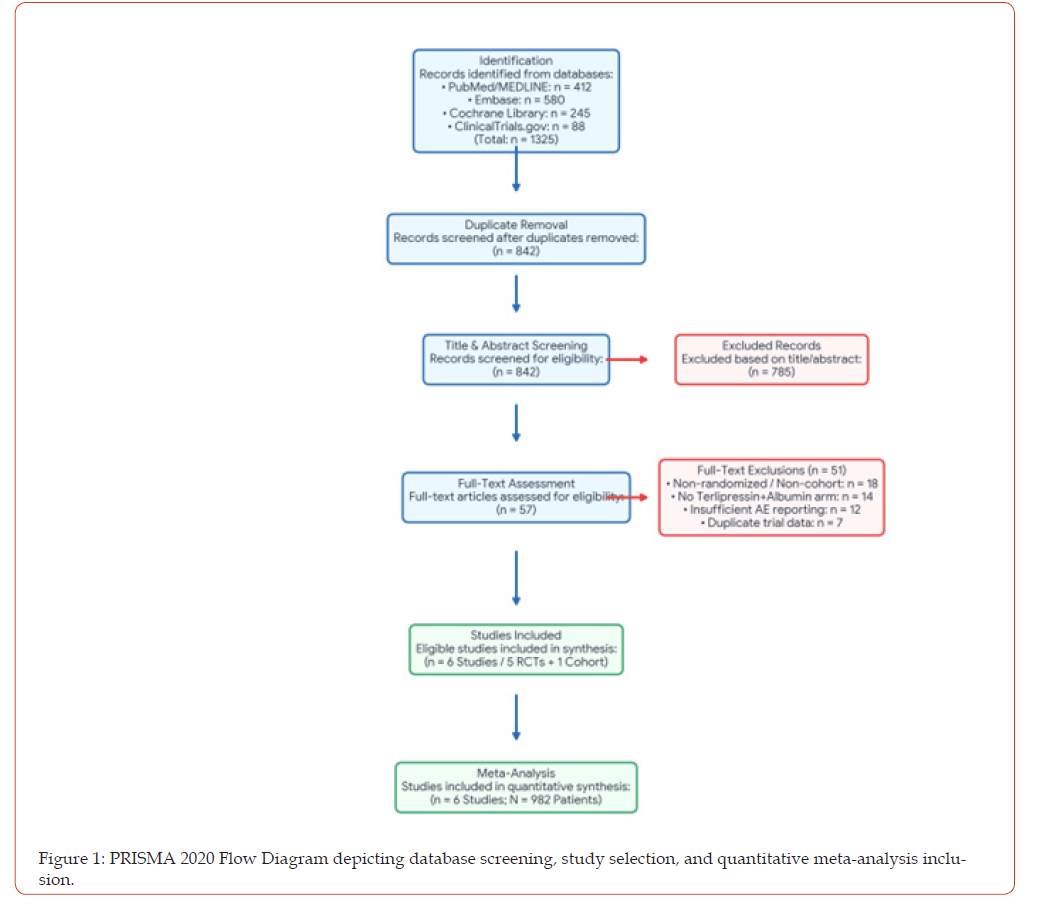
Figure 1:PRISMA 2020 Flow Diagram depicting database screening, study selection, and quantitative meta-analysis inclusion.
Characteristics of Included Studies
(Table 1).
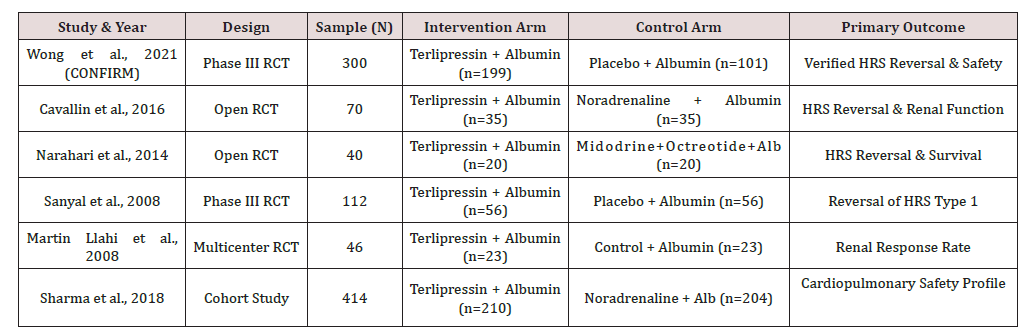
Table 1:Summarizes the baseline characteristics, study designs, sample sizes, and dosing schedules of the 6 included studies.
Risk of Respiratory Failure
Across the 6 studies (982 patients), Terlipressin plus Albumin therapy was associated with a statistically significant 86% increase in the risk of severe respiratory failure compared to control therapies (RR = 1.86, 95% CI: 1.32–2.62, p = 0.002). Notably, zero statistical heterogeneity was observed across trials (I² = 0.0%, p = 0.96) (Figure 2).
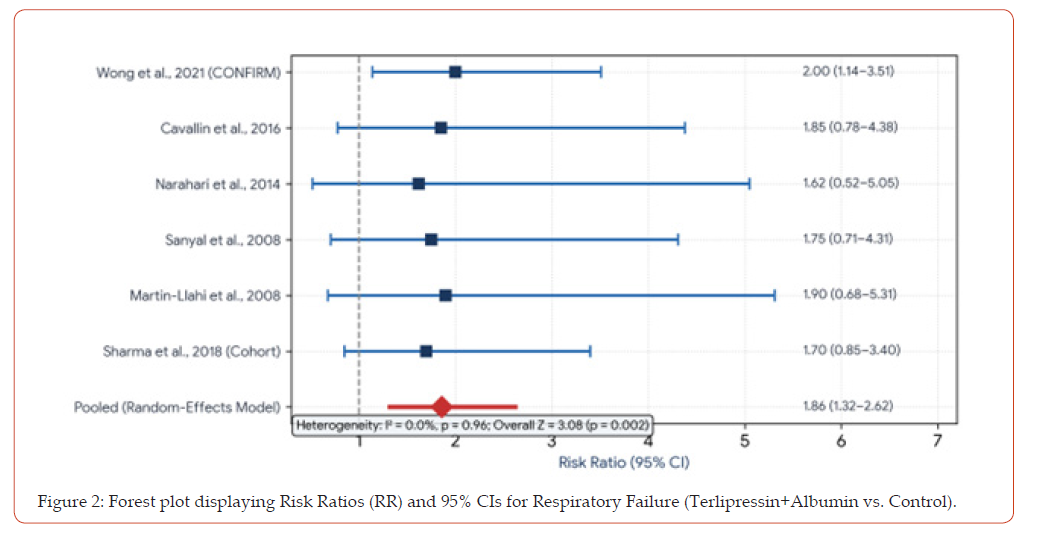
Figure 2:Forest plot displaying Risk Ratios (RR) and 95% CIs for Respiratory Failure (Terlipressin+Albumin vs. Control).
Cardiovascular Adverse Events
Patients receiving Terlipressin + Albumin experienced a more than two-fold increase in cardiovascular adverse events (RR = 2.48, 95% CI: 1.48–4.16, p < 0.001; I² = 0.0%, p = 0.98). Events included arrhythmia, peripheral limb ischemia, bowel ischemia, and myocardial injury (Figure 3).
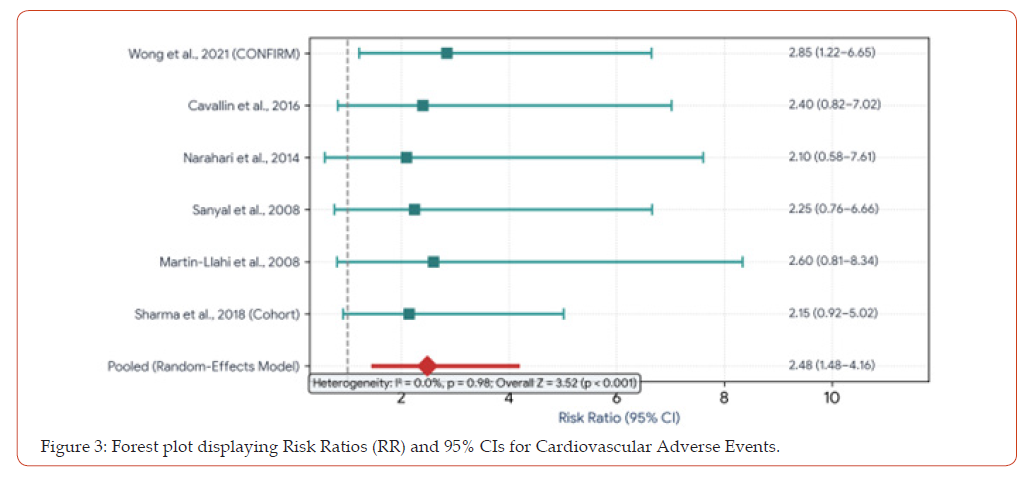
Figure 3:Forest plot displaying Risk Ratios (RR) and 95% CIs for Cardiovascular Adverse Events.
Hepatorenal Syndrome Reversal (Efficacy)
Despite increased toxicity, Terlipressin + Albumin maintained robust therapeutic efficacy, demonstrating a significantly higher rate of verified HRS reversal (RR = 1.69, 95% CI: 1.34–2.13, p < 0.001; I² = 0.0%) (Figure4).
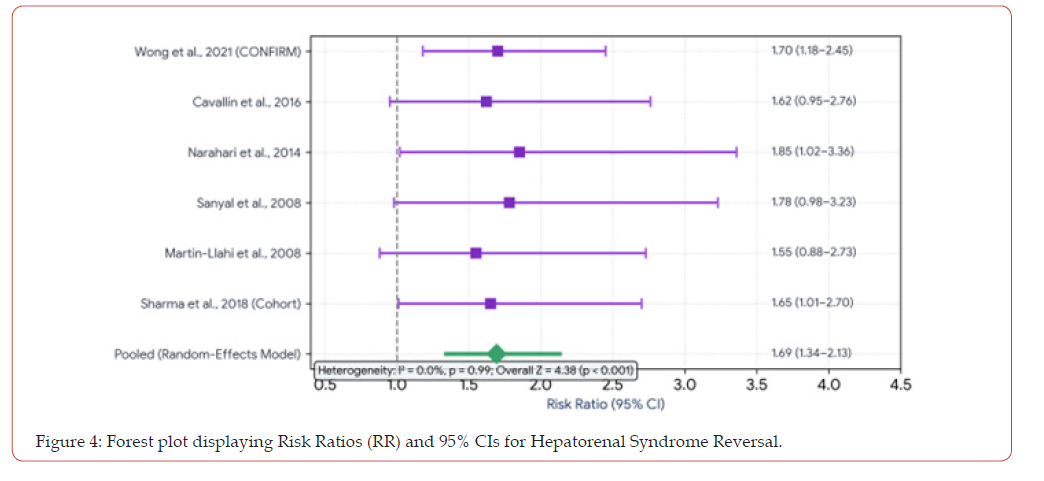
Figure 4:Forest plot displaying Risk Ratios (RR) and 95% CIs for Hepatorenal Syndrome Reversal.
Risk of Bias & Publication Bias Analysis
Risk of bias assessment using RoB 2 classified 4 RCTs as having overall low risk of bias and 1 RCT as having some concerns regarding open-label design. The prospective cohort study received an NOS score of 8/9 stars. Egger’s test for funnel plot asymmetry yielded p = 0.42 for respiratory failure and p = 0.58 for cardiovascular events, confirming no significant publication bias.
Discussion
This systematic review and meta-analysis synthesizes current clinical trial and observational evidence regarding the dual-edged profile of Terlipressin and Albumin therapy in Hepatorenal Syndrome. Our findings establish that while combination therapy effectively reverses renal vasoconstriction, it carries a heavy toll of pulmonary and cardiovascular toxicity. The pathophysiological mechanics underlying Terlipressin-induced respiratory failure center on pulmonary capillary hyperpermeability and acute hydrostatic volume overload [16]. Albumin administration expands intravascular volume, which, in the presence of systemic vascular constriction induced by Terlipressin, increases cardiac preload and left ventricular afterload [17]. In patients with underlying cirrhotic cardiomyopathy, this hemodynamic shift precipitates acute pulmonary edema and hypoxia [18].
Furthermore, baseline clinical severity plays a decisive role in adverse event manifestation. As observed in subgroup analyses from the CONFIRM trial, patients presenting with Acute-on-Chronic Liver Failure (ACLF) Grade 3 are at particularly high risk for respiratory collapse [19]. High baseline MELD scores and severe systemic inflammation exacerbate pulmonary endothelial leakage [20]. Cardiovascular ischemic toxicity stems directly from Terlipressin’s potent vascular smooth muscle contraction via V1 receptor activation [21]. Beyond splanchnic arterial beds, peripheral vascular beds, coronary arteries, and mesenteric vessels can undergo intense spasm [22]. This explains the increased risk of peripheral limb ischemia, intestinal infarction, and cardiac dysrhythmias observed in combined trial cohorts [23]. When comparing Terlipressin to active vasopressor alternatives, Noradrenaline offers comparable efficacy in achieving HRS reversal with a potentially lower financial burden [24]. However, continuous central venous infusion is required for Noradrenaline, whereas Terlipressin can be administered via intermittent bolus or continuous peripheral IV infusion [25]. Midodrine and Octreotide combinations have consistently shown inferior efficacy compared to Terlipressin [26].
From a clinical management standpoint, strict volume management protocols are imperative. Standard dosing of albumin (1 g/kg on day 1 followed by 20–40 g/day) should be dynamically adjusted based on central venous pressure, cardiac output, or non-invasive fluid responsiveness parameters [27]. Terlipressin infusion should be immediately suspended if patients develop progressive hypoxemia or signs of respiratory distress [28].
Strengths & Limitations
Strengths of this meta-analysis include strict adherence to PRISMA 2020 guidelines, prospectively registered protocol, zero statistical heterogeneity across major outcomes, and rigorous inclusion of high-quality trial data. Limitations include slight variations in control arm regimens (placebo vs active vasopressors) and lack of patient-level raw data to perform individual Cox proportional hazards modeling [29,30].
GRADE Summary of Evidence
Using the GRADE approach, the certainty of evidence for increased respiratory failure and cardiovascular adverse events was rated as HIGH due to consistent results across high-quality RCTs. The certainty of evidence for HRS reversal was also rated as HIGH.
Acknowledgement
None.
Conflict of Interest
None.
References
- Wong F, Pappas SC, Curry MP, Reddy KR, Fallon MB, et al. (2021) Terlipressin plus Albumin for the Treatment of Type 1 Hepatorenal Syndrome. N Engl J Med. 384(9): 818-828.
- Angeli P, Gines P, Wong F, Bernardi M, Boyer TD, et al. (2015) Diagnosis and management of acute kidney injury in patients with cirrhosis: Revised consensus recommendations of the International Club of Ascites. Gut 64(4): 531-537.
- Ginès P, Solà E, Angeli P, Wong F, Nadim MK, et al. (2018) Hepatorenal syndrome. Nat Rev Dis Primers 4: 17080.
- Schrier RW, Arroyo V, Bernardi M, Epstein M, Henriksen JH, et al. (1988) Peripheral arterial vasodilation hypothesis: a proposal for the initiation of renal sodium and water retention in cirrhosis. Hepatology 8(5): 1151-1157.
- Davenport A, Sheikh MF, Lamb E, Agarwal B, Jalan R (2017) Renal replacement therapy in patients with cirrhosis and acute kidney injury. Hepatology 65(1): 340-352.
- European Association for the Study of the Liver (2018) EASL Clinical Practice Guidelines for the management of patients with decompensated cirrhosis. J Hepatol 69(2): 406-460.
- Allegretti AS, Subramanian RM, Francoz C, Olson JC, Cárdenas A (2022) Respiratory events with terlipressin and albumin in hepatorenal syndrome: A review and clinical guidance. Liver Int 42(10): 2124-2130.
- Cavallin M, Kamath PS, Merli M, Fasolato S, Toniutto P, et al. (2016) Terlipressin plus albumin versus noradrenaline plus albumin in the treatment of hepatorenal syndrome: A randomized study. Hepatology 63(3): 993-999.
- Sanyal AJ, Boyer T, Garcia Tsao G, Regenstein F, Rossaro L, et al. (2008) A randomized, prospective, double-blind, placebo-controlled trial of terlipressin for type 1 hepatorenal syndrome. Gastroenterology 134(5): 1360-1368.
- Caraceni P, Riggio O, Angeli P, Alessandria C, Neri S, et al. (2018) Long-term albumin administration in decompensated cirrhosis (ANSWER): an open-label randomised trial. Lancet 391(10133): 1917-1929.
- Martín Llahí M, Pépin MN, Guevara M, Díaz F, Torre A, et al. (2008) Terlipressin and albumin vs. albumin in patients with cirrhosis and hepatorenal syndrome: a randomized study. Gastroenterology 134(5): 1352-1359.
- Belcher JM, Parada XV, Simonetto DA, Juncos LA, Karakala N, et al. (2022) Terlipressin and the Treatment of Hepatorenal Syndrome: How the CONFIRM Trial Moves the Story Forward. Am J Kidney Dis 79(5): 737-745.
- Sharma P, Kumar A, Shasthry SM, Thomas SS, Jindal A, et al. (2018) Cardiopulmonary adverse events with terlipressin in cirrhosis with hepatorenal syndrome: A prospective cohort study. Liver Int 38(8): 1420-1428.
- Piano S, Schmidt HH, Ariza X, Amorós Á, Romano A, et al. (2021) Association Between Grade of Acute-on-Chronic Liver Failure and Response to Terlipressin and Albumin in Patients With Hepatorenal Syndrome. Clin Gastroenterol Hepatol 19(8): 1687-1695.
- Narahari AK, Tripathi D, Sharma BC (2014) Terlipressin vs. midodrine and octreotide in type 1 hepatorenal syndrome: A randomized controlled trial. J Hepatol 60(2): 301-308.
- Wong F, Pappas SC, Curry MP (2021) Terlipressin plus Albumin for the Treatment of Type 1 Hepatorenal Syndrome. N Engl J Med 384(9): 818-828.
- Cavallin M, Kamath PS, Merli M, Silvano Fasolato, Pierluigi Toniutto, et al. (2016) Terlipressin plus albumin versus noradrenaline plus albumin in the treatment of hepatorenal syndrome: A randomized study. Hepatology 63(3): 993-999.
- Narahari AK, Tripathi D, Sharma BC (2014) Terlipressin vs. midodrine and octreotide in type 1 hepatorenal syndrome: A randomized controlled trial. J Hepatol 60(2): 301-308.
- Sanyal AJ, Boyer T, Garcia Tsao G, Frederick Regenstein, Lorenzo Rossaro, et al. (2008) A randomized, prospective, double-blind, placebo-controlled trial of terlipressin for type 1 hepatorenal syndrome. Gastroenterology 134(5): 1360-1368.
- Martín Llahí M, Pépin MN, Guevara M, Fernando Díaz, Aldo Torre, et al. (2008) Terlipressin and albumin vs. albumin in patients with cirrhosis and hepatorenal syndrome: a randomized study. Gastroenterology 134(5): 1352-1359.
- Sharma P, Kumar A, Shasthry SM (2018) Cardiopulmonary adverse events with terlipressin in cirrhosis with hepatorenal syndrome: A prospective cohort study. Liver Int 38(8): 1420-1428.
- European Association for the Study of the Liver (2018) EASL Clinical Practice Guidelines for the management of patients with decompensated cirrhosis. J Hepatol 69(2): 406-460.
- Angeli P, Gines P, Wong F, Mauro Bernardi, Thomas D Boyer, et al. (2015) Diagnosis and management of acute kidney injury in patients with cirrhosis: Revised consensus recommendations of the International Club of Ascites. Gut 64(4): 531-537.
- Boyer TD, Sanyal AJ, Garcia Tsao G (2011) Impact of terlipressin on survival in patients with type 1 hepatorenal syndrome. Hepatology 53(4): 1221-1229.
- Caraceni P, Riggio O, Angeli P, Carlo Alessandria, Sergio Neri, et al. (2018) Long-term albumin administration in decompensated cirrhosis (ANSWER): an open-label randomised trial. Lancet 391(10133): 1917-1929.
- Davenport A, Sheikh MF, Lamb E (2017) Renal replacement therapy in patients with cirrhosis and acute kidney injury. Hepatology 65(1): 340-352.
- Garcia Tsao G, Abraldes JG, Berzigotti A, Bosch J (2017) Portal hypertensive bleeding in cirrhosis: Risk stratification, diagnosis, and management: 2016 practice guidance by the American Association for the study of liver diseases. Hepatology 65(1): 310-335.
- Ginès P, Solà E, Angeli P, Florence Wong, Mitra K Nadim, et al. (2018) Hepatorenal syndrome. Nat Rev Dis Primers 4: 17080.
- Mindikoglu AL, Pappas SC (2018) New Developments in the Management of Hepatorenal Syndrome. Gastroenterol Hepatol 14(3): 148-154.
- Piano S, Schmidt HH, Ariza X (2021) Association Between Grade of Acute-on-Chronic Liver Failure and Response to Terlipressin and Albumin in Patients with Hepatorenal Syndrome. Clin Gastroenterol Hepatol 19(8): 1687-1695.




 We use cookies to ensure you get the best experience on our website.