
Case Study 
 Creative Commons, CC-BY
High-Efficiency Contaminant and Pathogen Removal from Ganga River Water Using Ceramic Membranes
*Corresponding author:SN Roy, Department of Civil Engineering, Swami Vivekananda University, Barrackpore, Kolkata-700121, India.
Received:August 24, 2025; Published:September 02, 2025
DOI: 10.34297/AJBSR.2025.28.003682
Abstract
Water pollution from heavy metals, cyanides, dyes, and other toxicants is a growing global concern, directly threatening freshwater availability. The
Ganga River, one of India’s most vital water sources, faces severe contamination from industrial effluents, municipal sewage, and agricultural runoff,
posing serious public health risks. Conventional treatment methods for Ganga water —sedimentation, coagulation – flocculation, filtration, and
disinfection are time-intensive, require large land areas, and involve multiple stages.
This study evaluates the application of indigenously developed ceramic membranes as a compact and efficient alternative for Ganga water purification.
Microfiltration (MF) and titanium dioxide (TiO₂) coated ultrafiltration (UF) ceramic membranes were tested after primary screening. Key water
quality parameters—Dissolved Oxygen (DO), biochemical oxygen demand (BOD₅), Chemical Oxygen Demand (COD), turbidity, Total Suspended
Solids (TSS), Hardness, Oil and Grease, Conductivity, and most probable number (MPN) were measured before and after treatment.
Results indicate significant improvements: BOD₅ reduced from 43 mg/L to 8 mg/L, COD from 320 mg/L to 60 mg/L, turbidity from 43 NTU to 0.55
NTU, TSS from 120 mg/L to 0 mg/L, hardness from 78 mg/L to 52 mg/L, and MPN from 37 to <2. The TiO₂-coated UF membranes demonstrated
superior removal efficiency compared to MF membranes. Water Quality Index (WQI) analysis confirmed that ceramic membrane-treated water
achieved substantial quality improvements compared to both raw Ganga water and conventionally treated samples reported by the Public Health
Engineering Directorate (PHED), Govt. of West Bengal. This work establishes ceramic membrane technology as a cost-effective, space-efficient, and
high-performance alternative for large-scale water purification, with strong potential for addressing India’s pressing water quality challenges.
Keywords:Ceramic microfiltration (MF) membrane, TiO₂-coated ultrafiltration (UF) membrane, Ganga River water, Crossflow filtration, River water treatment, Coagulation-flocculation, Water quality improvement, Pathogen removal, etc.
Introduction
Water is the most critical natural resource for sustaining life, second only to air. Although nearly 71% of the Earth’s surface is covered with water, about 97% is saline and unsuitable for direct consumption or most human uses. Only 3% is freshwater, and of this, a very limited fraction is accessible as surface water or groundwater [1]. With a rapidly growing population, the demand for clean and safe water has increased dramatically over the past three decades. India, with 16% of the world’s population but only 4% of its freshwater resources, faces an acute water stress. Each year, ap proximately 37.7 million Indians suffer from waterborne diseases, and an estimated 1.5 million children die of diarrheal infections [2].
Worldwide, researchers have explored a range of technologies for river water treatment. For instance, in Poland’s Upper Silesia region, raw water from the Czarna Przemsza River was treated using a coagulation–ultrafiltration hybrid process with FeCl₃, Fe₂(SO₄)₃, and Al₂(SO₄)₃ as coagulants. Aluminum-based coagulation showed the highest efficiency in removing contaminants [3-5]. Similarly, studies conducted in Uttarakhand, India, across four rivers (Alaknanda, Mandakini, East Nayar, and Pinder) demonstrated that River Bank Filtration (RBF) is a natural, sustainable, and low-cost pre-treatment technology that reduces reliance on chemical dosing such as alum or chlorine [6]. In Brunei, comparative studies on river water near industrial and forested regions revealed significantly higher bacterial populations (1.6 × 10⁴ to 3.0 × 10⁴ cfu/mL) in industrially influenced waters, underscoring the impact of urban and industrial discharges [7, 8].
Several remediation strategies—including physical, chemical, and bioremediation techniques—have been proposed for mitigating river water pollution [9]. Emerging biological approaches such as the Moving Bed Biofilm Reactor (MBBR) and Integrated Fixed- Film Activated Sludge (IFAS) systems, when integrated with conventional processes, have shown promise for improving the treatment of urban river water [10]. In China, however, studies revealed that organic and inorganic pollutants in many rivers exceed their self-purification capacity. For example, in the Juma River, although aquatic ecosystems demonstrated the ability to reduce organic loads such as Total Nitrogen (TN) and Total Phosphorus (TP), the removal of heavy metals such as mercury (Hg) remained inadequate [11].
Membrane-based processes are gaining traction as advanced river water purification technologies. Ceramic membranes, in particular, offer high resistance to chemicals, pressure, and abrasion, as well as excellent thermal stability, long operational lifespans, and reusability [12-15]. Hybrid systems combining coagulation with ceramic microfiltration (MF) and ultrafiltration (UF) have been successfully tested in China (Xinghua, Jiangsu Province), where pilot-scale experiments confirmed their feasibility for producing potable water [12]. Similarly, pilot-scale ultrafiltration studies in Vietnam demonstrated that UF membranes, with or without coagulation as a pre-treatment, consistently produced water meeting national drinking standards [13].
Compared to conventional treatment methods, ceramic membrane systems offer significant advantages: reduced land and manpower requirements, shorter treatment times, and compact operation. The present study applies indigenously developed ceramic MF and TiO₂-coated UF membranes for treating Ganga River water, with the goal of producing potable-quality water in a more efficient and sustainable manner.
Experiments and Methodology
Conventional Treatment Process
The Ganga River water sample used in this study (Figure 1) was first characterized and treated using conventional methods, which involve sequential stages of screening, primary sedimentation, coagulation, flocculation, sand filtration (slow or rapid), and disinfection. While effective, this multi-step process is time-intensive, land-demanding, and economically less viable for large-scale applications. In contrast, ceramic membrane filtration integrates four of these major steps into a single unit operation, thereby offering significant savings in time, space, and cost. A comparative schematic of the conventional process versus the membrane-based process is presented in (Figure 2).

Figure 1:Ganga River - Near Kolkata, West Bengal.
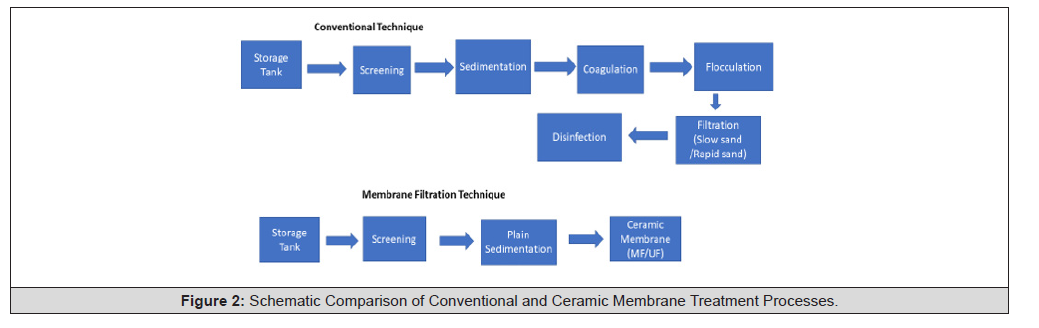
Figure 2:Schematic Comparison of Conventional and Ceramic Membrane Treatment Processes.
Key water quality parameters—including Dissolved Oxygen (DO), Biological Oxygen Demand (BOD₅), Chemical Oxygen Demand (COD), pH, Total Dissolved Solids (TDS), Total Suspended Solids (TSS), Hardness, Conductivity, Oil and Grease, and Most Probable Number (MPN)—were analyzed before and after treatment using standard methods prescribed by the American Public Health Association (APHA, 2017).
Preparation of Ceramic UF Membrane
The membrane fabrication process consisted of two stages: development of a microfiltration (MF) support and subsequent coating to obtain a TiO₂-based ultrafiltration (UF) layer.
a) MF Membrane Support Tube: A low cost alumina-clay based
19-channel ceramic MF support tube (Figure 3A) was used as
the base. The support was prepared with an average pore size
of ~845 nm, as confirmed by Scanning Electron Microscopy
(SEM) and bubble point porometry (Anton Paar, Model: 3Gzh).
b) TiO₂ UF Coated Membrane: A homogeneous slurry of TiO₂
nanopowder was deposited on the inner walls of the MF support
tube, followed by heat treatment at 700°C. The resulting
TiO₂ UF coating exhibited an average thickness of ~4.0 μm, as
observed in SEM micrographs (Figure 4). The coated UF membrane
(Figure 3B) demonstrated an average pore size centered
at ~320 nm, further validated using a bubble point porometer
(Anton Paar, Model: 3Gzh) (Figure 3) (Figure 4).
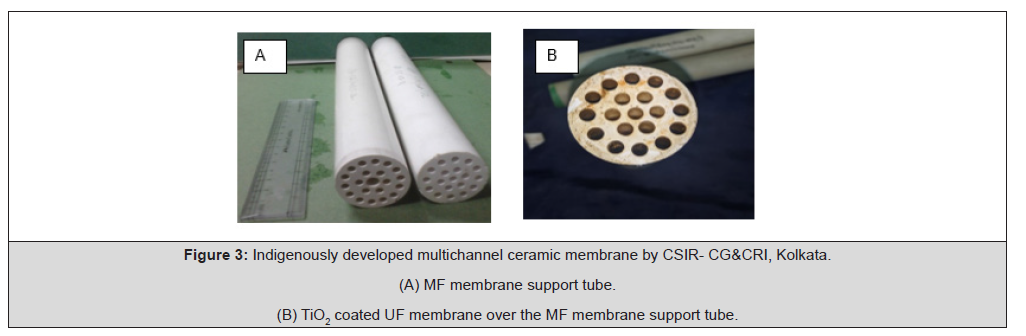
Figure 3:Indigenously developed multichannel ceramic membrane by CSIR- CG&CRI, Kolkata.
(A) MF membrane support tube.
(B) TiO2 coated UF membrane over the MF membrane support tube.
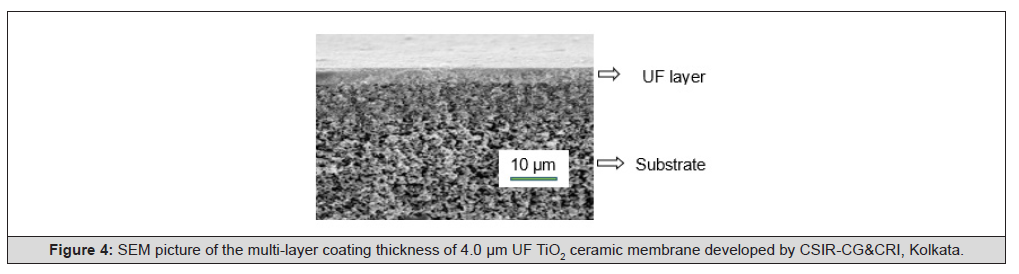
Figure 4:SEM picture of the multi-layer coating thickness of 4.0 μm UF TiO2 ceramic membrane developed by CSIR-CG&CRI, Kolkata.
Membrane Module and Filtration Setup
The TiO₂-coated UF membranes were assembled into a stainless- steel housing designed for crossflow operation (Figure 5). The laboratory-scale experimental setup comprised a 100 L capacity feed tank connected to an adjustable outflow pump, two pressure gauges to monitor inlet and outlet pressures, and a multi-channel ceramic membrane module with the following dimensions: Inner Diameter (ID) 4.1 mm, Outer Diameter (OD) 34.5 mm, length 202 mm, and effective surface area 247.05 cm². A schematic diagram of the setup is provided in (Figure 6A), while (Figure 6B) illustrates the flow of raw water through the membrane channels. Filtration experiments were conducted in crossflow mode under varying Transmembrane Pressures (TMP) between 0 and 1 kg/cm². This configuration minimized fouling and concentration polarization, thereby maintaining steady flux and improving separation efficiency (Figure 6).
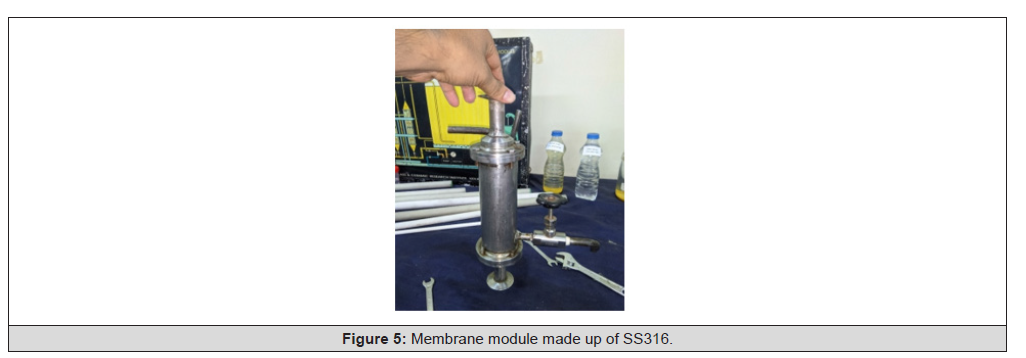
Figure 5:SEM picture of the multi-layer coating thickness of 4.0 μm UF TiO2 ceramic membrane developed by CSIR-CG&CRI, Kolkata.
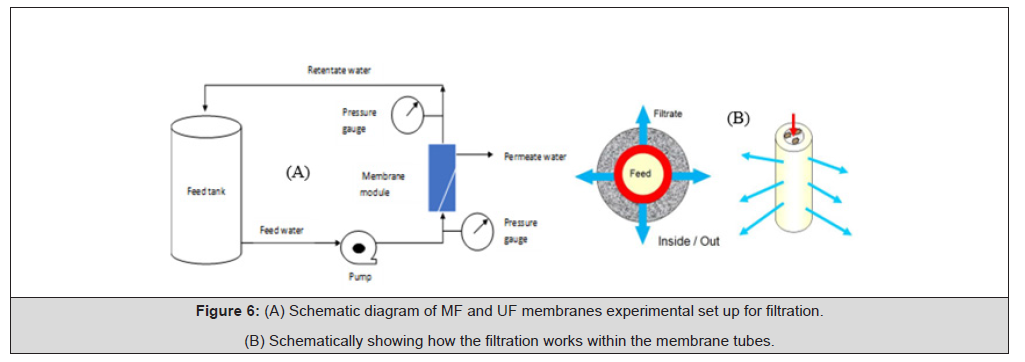
Figure 6:(A) Schematic diagram of MF and UF membranes experimental set up for filtration.
(B) Schematically showing how the filtration works within the membrane tubes.
Water Quality Analysis Methods
The raw and treated water samples were analyzed for a suite of physicochemical and microbiological parameters following APHA Standard Methods (2017). Dissolved Oxygen (DO) was measured using the Winkler titration method, while Biochemical Oxygen Demand (BOD₅) was determined by incubating samples at 20°C for five days. Chemical Oxygen Demand (COD) was analyzed using the dichromate reflux method. Turbidity was measured using a nephelometer, pH using a calibrated pH meter, and conductivity with a conductivity probe. Total Suspended Solids (TSS) and Total Dissolved Solids (TDS) were determined gravimetrically. Hardness was measured by EDTA titration, oil and grease content by gravimetric extraction, and microbial contamination quantified using the Most Probable Number (MPN) technique. All measurements were carried out in triplicate to ensure reproducibility and statistical reliability.
Results
Water Quality Improvement
The water quality of raw Ganga River samples was evaluated after treatment with indigenously developed ceramic MF and TiO₂-coated UF membranes and compared with conventional treatment data from the Public Health Engineering Department (PHED), West Bengal (Table 1). The UF membrane consistently outperformed both MF membranes and PHED treatment across most parameters.
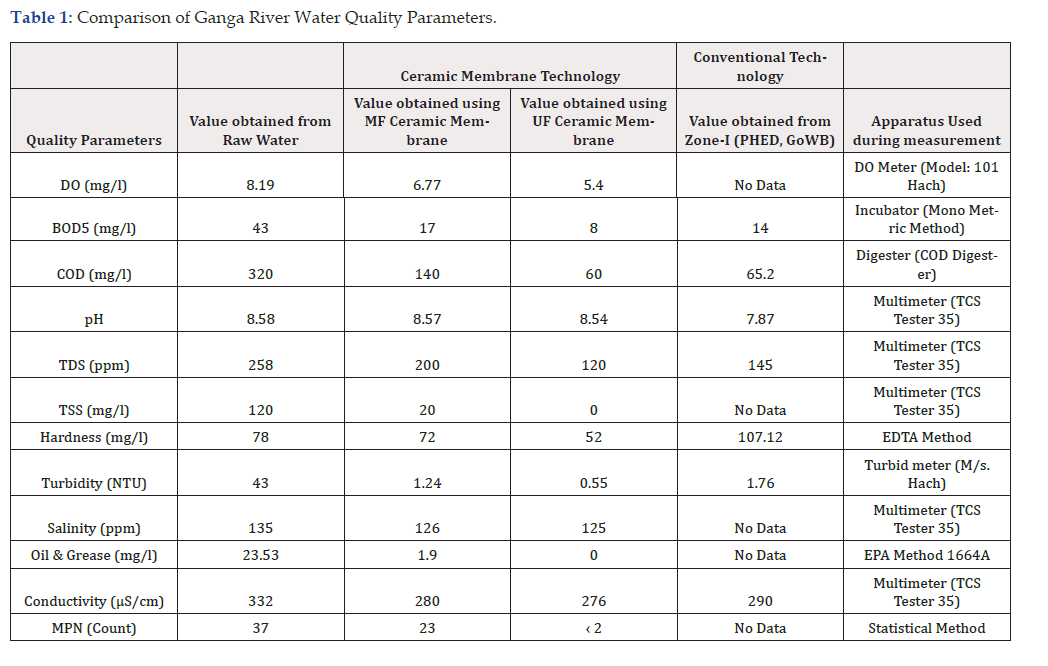
Table 1:Comparison of Ganga River Water Quality Parameters.
Organic Pollutants Were Significantly Reduced: BOD₅ decreased from 43 mg/L in raw water to 8 mg/L after UF treatment, compared to 14 mg/L for PHED-treated water. Similarly, COD declined from 320 mg/L to 60 mg/L, slightly better than the 65.2 mg/L achieved via conventional treatment. Suspended solids were completely removed (TSS: 120 → 0 mg/L), and turbidity decreased from 43 NTU to 0.55 NTU (MF: 1.24 NTU; PHED: 1.76 NTU). Total Dissolved Solids (TDS) were lowered from 258 ppm to 120 ppm (MF: 200 ppm; PHED: 145 ppm), and hardness decreased from 78 mg/L to 52 mg/L, outperforming PHED (107.12 mg/L). Oil and grease were completely removed (23.53 → 0 mg/L). pH remained stable (8.58 → 8.54), while electrical conductivity improved from 332 to 276 μS/cm. Dissolved Oxygen (DO) decreased slightly from 8.19 mg/L to 5.4 mg/L post-treatment, a known effect of membrane filtration.
Microbial contamination, quantified by the Most Probable Number (MPN), decreased drastically from 37 in raw water to <2 after UF treatment, whereas MF treatment achieved 23 MPN and PHED does not report microbial counts. This indicates a critical public health advantage of UF membranes for pathogen removal.
Permeate Flux Vs. Transmembrane Pressure (TMP)
Flux performance was evaluated under a TMP of 1 kg/cm² (Figures 7 and 8). The MF support tube reached a maximum flux of 226.68 LMH within 60 minutes, stabilizing thereafter. In contrast, the TiO₂-coated UF membrane reached a lower maximum flux of 46.55 LMH at 80 minutes before plateauing for the subsequent 40 minutes. The lower flux in UF membranes is attributed to the smaller effective pore size (~320 nm), which enhances contaminant rejection but increases fouling. This underscores the necessity of routine backwashing to maintain long-term performance.
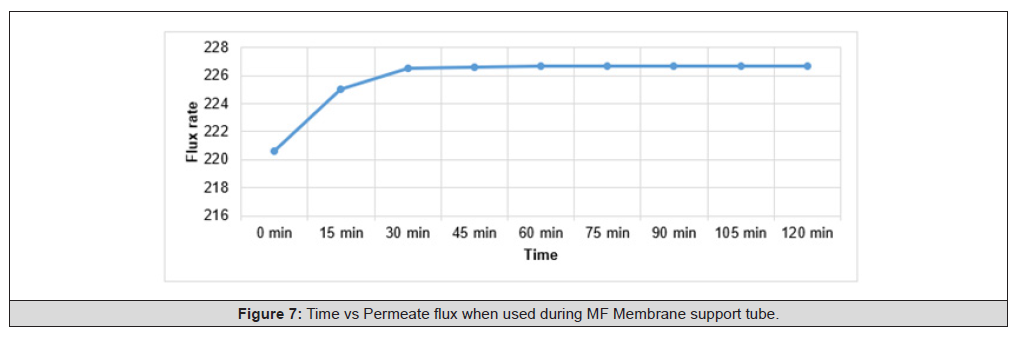
Figure 7:Time vs Permeate flux when used during MF Membrane support tube.
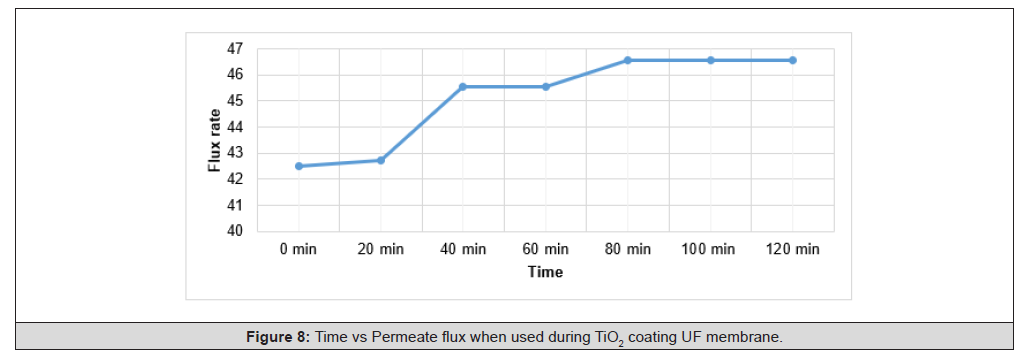
Figure 8:Time vs Permeate flux when used during TiO2 coating UF membrane.
Analysis
Table 1 presents a comprehensive comparison of raw water, MF membrane, UF membrane, and conventional PHED treatment for Ganga River water. The analysis highlights both quantitative improvements and operational advantages of ceramic membrane technologies.
A. Organic Load Reduction: UF membranes demonstrated superior removal of organic pollutants. BOD₅ decreased from 43 mg/L in raw water to 8 mg/L, significantly better than MF membranes (17 mg/L) and PHED treatment (14 mg/L). COD was reduced from 320 mg/L to 60 mg/L with UF membranes, compared to 140 mg/L for MF and 65.2 mg/L for PHED. These reductions indicate that UF membranes effectively remove both biodegradable and recalcitrant organic matter, improving overall water quality for potable purposes.
B. Suspended and Dissolved Solids: The UF membrane achieved complete removal of total suspended solids (TSS: 120 → 0 mg/L), whereas MF reduced TSS to 20 mg/L. Turbidity dropped from 43 NTU in raw water to 0.55 NTU after UF treatment, compared to 1.24 NTU with MF and 1.76 NTU with PHED. Total Dissolved Solids (TDS) were reduced from 258 ppm to 120 ppm with UF, surpassing MF (200 ppm) and PHED (145 ppm). This demonstrates the ability of UF membranes to enhance clarity, improve aesthetic water quality, and reduce downstream filtration or chemical disinfection needs.
C. Pathogen Removal: Microbial contamination, measured as Most Probable Number (MPN), was reduced from 37 in raw water to <2 after UF treatment, whereas MF achieved 23. PHED data were not reported for microbial counts. The near-complete pathogen removal using UF membranes is particularly significant in regions like India, where waterborne diseases are prevalent. This highlights a major public health advantage of ceramic UF technology over conventional processes, which often rely on chemical disinfection that may not completely eliminate pathogens.
D. Physicochemical Parameters: Hardness was reduced from 78 mg/L in raw water to 52 mg/L using UF membranes, outperforming MF (72 mg/L) and PHED (107.12 mg/L). Oil and grease were completely removed (23.53 → 0 mg/L), demonstrating the UF membrane’s capacity to eliminate hydrophobic contaminants without chemical additives. Conductivity decreased from 332 μS/cm (raw) to 276 μS/cm, while pH remained stable (8.58 → 8.54), indicating minimal chemical alteration and maintenance of water stability. Dissolved oxygen decreased slightly (8.19 → 5.4 mg/L), a known effect of particulate and microbial removal during membrane filtration.
E. Operational Insights: Compared to conventional PHED treatment, ceramic membranes require significantly less physical space, manpower, and processing time. UF membranes integrate multiple treatment steps—screening, sedimentation, filtration, and disinfection—into a single stage, eliminating the need for chemical dosing. While MF membranes offer higher permeate flux (226.68 LMH) compared to UF (46.55 LMH), UF membranes achieve superior water quality due to smaller pore size (~320 nm) and TiO₂ coating, emphasizing the tradeoff between throughput and rejection efficiency.
Key Observations
I. Enhanced Performance Across Multiple Parameters: UF membranes consistently outperform MF membranes and conventional PHED treatment in removing organic load (BOD₅, COD), suspended solids (TSS, turbidity), and dissolved solids (TDS), Hardness, Oil and Grease, and microbial pathogens (MPN). This demonstrates their broad-spectrum contaminant removal capability.
II. Public Health Significance: The reduction of MPN to <2 MPN/100 mL indicates near-complete pathogen elimination, crucial for reducing incidences of waterborne diseases. This represents a major advantage over conventional treatments, which may leave residual pathogens despite chemical disinfection.
III. Operational Efficiency and Sustainability: UF membranes consolidate multiple conventional treatment steps into a single stage, reducing land use, manpower requirements, and processing time. The absence of chemical additives (coagulants, disinfectants) reduces operational costs and secondary pollution, making the process more sustainable.
IV. Trade-Offs and Limitations:
1) Permeate Flux: UF membranes exhibit lower flux than MF
due to smaller pore size, necessitating periodic backwashing
and cleaning to maintain throughput.
2) Dissolved Oxygen: Slight reductions in DO may require
post-treatment aeration for applications sensitive to oxygen
levels.
3) Maintenance Considerations: While UF membranes offer
high contaminant rejection, their fouling propensity requires
monitoring and preventive maintenance.
V. Scalability and Practical Implications: The compact footprint and high durability of ceramic membranes, combined with chemical-free operation and effective multi-contaminant removal, make them suitable for full-scale deployment in river water treatment systems, particularly in highly polluted rivers such as the Ganga.
Observations and Conclusion
The study demonstrates that TiO₂-coated UF ceramic membranes provide superior performance compared to both MF membranes and conventional PHED treatment. Key observations include:
a. Enhanced Contaminant Removal: UF membranes achieve broad-spectrum reductions across critical water quality parameters. BOD₅ decreased from 43 to 8 mg/L, COD from 320 to 60 mg/L, turbidity from 43 NTU to 0.55 NTU, TSS from 120 to 0 mg/L, hardness from 78 to 52 mg/L, and oil and grease from 23.53 to 0 mg/L. Microbial contamination, measured by MPN, was reduced from 37 to <2, ensuring near-complete pathogen removal without chemical disinfectants.
b. Operational Efficiency and Sustainability: UF membranes consolidate multiple conventional treatment steps - screening, sedimentation, filtration, and disinfection into a single stage, reducing land use, manpower requirements, and processing time. The chemical-free operation minimizes secondary pollution and lowers operational costs.
c. Trade-Offs and Limitations: The smaller pore size of UF membranes reduces permeate flux (maximum 46.55 LMH) compared to MF membranes (226.68 LMH), necessitating periodic backwashing and cleaning. Slight reductions in dissolved oxygen may require post-treatment aeration in sensitive applications. Routine maintenance is needed to manage fouling and sustain long-term performance.
d. Scalability and Practical Implications: The compact footprint, high durability, and chemical-free operation of ceramic UF membranes make them suitable for full-scale deployment in river water treatment systems, particularly for heavily polluted rivers like the Ganga.
In conclusion, ceramic UF membranes offer a compact, efficient, and sustainable alternative to conventional river water treatment, achieving superior water quality, enhanced public health safety, and operational efficiency. Their robustness, reusability, and ability to consistently meet potable water standards make them a scalable solution capable of transforming river water treatment in India.
Acknowledgement
The authors sincerely thank the Hon’ble Director of CSIR-CGCRI, Kolkata, and the Hon’ble Vice Chancellor of Swami Vivekananda University, Kolkata, for supporting the research work. The authors also acknowledge the contribution of a one-year M.Tech. Student who conducted his research at CSIR-CGCRI, Kolkata, during 01/11/2021, in accordance with the official permission granted on 24/11/2021 (CGCRI OM). The authors also express their heartfelt gratitude to Mrs. Indrani Sarkar for her continuous encouragement throughout the research. Special thanks are extended to Hon’ble Mr. Saurabh Adhikari, COO, Swami Vivekananda University, Kolkata, for his constant guidance and support.
Conflict of Interest
None.
References
- Earth Reminder. Water treatment plant: Its importance.
- Centers for Disease Control and Prevention (CDC). Water treatment.
- Bodzek M, Konieczny K, Rajca M (2005) Hybrid membrane processes in removal of pollutants from natural water. In Monographs of Environmental Engineering Committee of Polish Academy of Science 32: 143-153.
- Konieczny K, Bodzek M, Keller K, Rajca M (2006) Coagulation “in-line”-UF/MF hybrid system in the removal of pollutants from natural water. In Proc Water Supply and Water Quality Zakopane 1: 565-576.
- Konieczny K, Sąkol D, Płonka, J, Rajca M, Bodzek M (2019) Institute of Water and Wastewater Engineering. Silesian University of Technology.
- Tyagi S, Dobhal R, Kimothi PC, Adlakha LK, Singh P, et al. (2013) River bank filtration for water supply in semi-arid environment. Journal of Engineering Sciences 41(3): 840-850.
- Arcia Armisen T, Servais P (2004) Enumeration of viable E. coli in rivers and wastewaters by fluorescent in situ hybridization. J Microbiol Methods 58: 269-279.
- Yanagishita H, Kitamoto D, Haraya K (2001) Separation performance of polyimide composite membrane prepared by dip coating process. Journal of Membrane Science 188: 165-172.
- Wang J, Liu XD, Lu J (2012) Urban river pollution control and remediation. Procedia Environmental Sciences 13: 1856-1862.
- Lariyah MS, Mohiyaden HA, Hayder G, Hussein A, Basri H, et al. (2016) Application of moving bed biofilm reactor (MBBR) and integrated fixed activated sludge (IFAS) for biological river water purification system: A short review. IOP Conference Series: Earth and Environmental Science 32(1): 012005.
- Tian S, Wang Z, Shang H (2011) Study on the self-purification of Juma River. Procedia Environmental Sciences 11: 1328-1333.
- Zhang H, Zhong Z, Li W, Xing W, Jin W, et al. (2014) River water purification via a coagulation-porous ceramic membrane hybrid process. Chinese Journal of Chemical Engineering 22(1): 113-119.
- Nakanishi H, Yabuno Y, Nishikawa T, Yasui T, Pham AT, et al. (2020) River water treatment using ceramic membranes. IOP Conference Series: Materials Science and Engineering 869: 042025.
- Majumdar S, Sarkar S, Ghosh S, Bhattacharya P, Bandyopadhyay S, et al. (2018) New trends for wastewater treatment and their reuse using ceramic membrane technology: A case study. In Water Quality Management 79: 339-348.
- Bandyopadhyay S, Kundu D, Roy SN, Ghosh BP, Maiti HS, et al. (2006) Process for preparing water having an arsenic level of less than 10 PPB. US Patent 7014771.




 We use cookies to ensure you get the best experience on our website.